
Technical Contents
Engineering Guide: Fridge Magnetic Seal
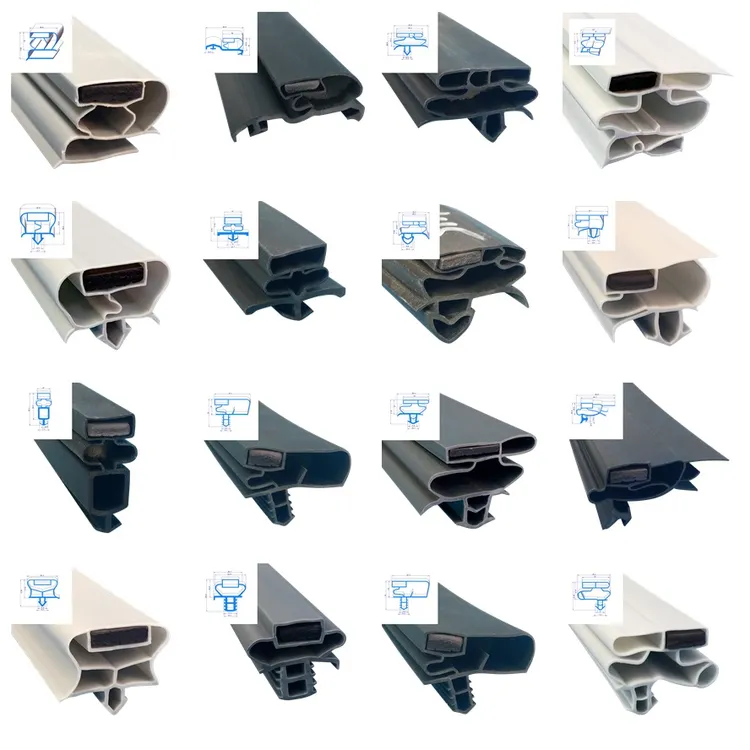
Material Selection in Refrigeration Magnetic Seals: Engineering for Long-Term Performance
In the precision engineering of refrigerator magnetic seals, material selection is not a secondary consideration—it is the foundation of functional reliability, energy efficiency, and product longevity. At Suzhou Baoshida Trading Co., Ltd., we emphasize that off-the-shelf rubber compounds frequently fail to meet the stringent demands of modern refrigeration systems. These failures stem from inadequate resistance to environmental stressors such as temperature cycling, ozone exposure, moisture, and repeated mechanical compression. A one-size-fits-all approach to elastomer selection compromises sealing integrity, leading to increased energy consumption, premature failure, and customer dissatisfaction.
The core function of a fridge magnetic seal is dual: it must provide a continuous, low-compression-force seal while integrating a magnetic strip to ensure door closure integrity. This requires a composite material system where the rubber profile and magnetic core are chemically and mechanically compatible. Standard thermoplastic elastomers (TPEs) or generic EPDM compounds, often used in mass-produced seals, lack the tailored crosslink density and additive package needed for sustained performance below 0°C and above 40°C. Over time, these materials harden, crack, or lose resiliency, resulting in air leakage and condensation.
At Baoshida, we engineer custom EPDM formulations with high saturation levels and optimized sulfur-cure systems to enhance flexibility at low temperatures and resistance to thermal aging. The inclusion of specialty antioxidants and antiozonants further extends service life in urban and industrial environments where ozone concentrations accelerate polymer degradation. Additionally, the durometer is precisely controlled between 55–65 Shore A to balance sealing force with ease of door operation, a critical factor in consumer usability.
Equally important is the compatibility between the rubber compound and the embedded magnetic strip, typically composed of strontium ferrite or flexible magnetic rubber. Poor interfacial adhesion leads to delamination during flexing, compromising both magnetic retention and structural integrity. Our co-extrusion processes ensure molecular bonding between the elastomer and magnetic core, achieved through primers and adhesion promoters engineered at the polymer interface.
Below is a comparison of material performance characteristics critical to fridge magnetic seal design:
| Property | Standard Off-the-Shelf TPE | Baoshida-Engineered EPDM |
|---|---|---|
| Operating Temperature Range | -10°C to +60°C | -40°C to +100°C |
| Compression Set (22 hrs at 70°C) | 35–45% | ≤20% |
| Tensile Strength | 8–10 MPa | 14–16 MPa |
| Elongation at Break | 350–400% | 550–650% |
| Ozone Resistance (25 pphm, 200 hrs) | Poor (surface cracking) | Excellent (no cracking) |
| Adhesion to Magnetic Core | Moderate (prone to delamination) | High (co-extrusion bonded) |
Off-the-shelf solutions may offer short-term cost savings, but they invariably lead to higher total cost of ownership due to warranty claims and reduced appliance efficiency. In contrast, precision-engineered rubber seals from Baoshida deliver consistent performance across global climate zones and usage profiles. Material science is not an overhead—it is the decisive factor in refrigeration seal reliability.
Material Specifications
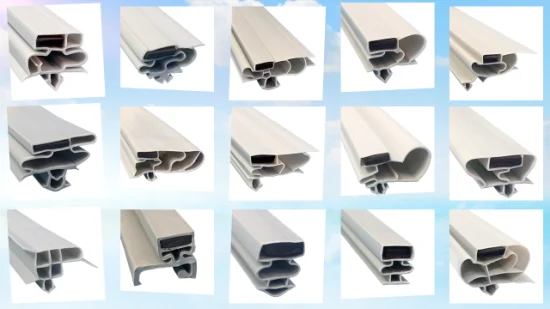
Material Specifications for Refrigeration Magnetic Seals
Precision material selection is critical for refrigerator magnetic door seals due to stringent operational demands including thermal cycling, chemical exposure from refrigerants and cleaning agents, and persistent compression set resistance. At Suzhou Baoshida Trading Co., Ltd., our engineered elastomer compounds undergo rigorous ASTM D2000 and ISO 37 testing to ensure dimensional stability and longevity exceeding 15 years under continuous load. The three primary materials employed—Viton (FKM), Nitrile (NBR), and Silicone (VMQ)—exhibit distinct performance profiles tailored to specific refrigeration architectures and environmental conditions.
Viton fluorocarbon elastomers deliver unparalleled resistance to modern HFC/HFO refrigerants and synthetic compressor oils, with continuous service temperatures ranging from -20°C to 230°C. Its molecular stability prevents swelling in R-134a and R-1234yf systems, though higher compound costs necessitate strategic application in commercial refrigeration units operating above 80°C ambient. Nitrile remains the industry standard for household appliances due to its optimal balance of oil resistance (-40°C to 120°C range), low compression set (≤25% per ASTM D395), and cost efficiency. Our proprietary NBR formulations incorporate hydrogenated variants (HNBR) to enhance ozone resistance without sacrificing flexibility at -40°C. Silicone excels in ultra-low-temperature applications (-60°C to 200°C) and food-contact scenarios requiring FDA 21 CFR 177.2600 compliance, though its lower tensile strength demands precision molding to prevent extrusion under magnetic strip pressure.
Critical performance metrics for OEM qualification are summarized below:
| Material | Continuous Temp Range (°C) | Compression Set (70°C/22h) | Refrigerant Resistance | Ozone Resistance | Key Application Scope |
|---|---|---|---|---|---|
| Viton (FKM) | -20 to 230 | ≤15% | Excellent (All HFC/HFO) | Exceptional | Commercial freezers, medical refrigeration |
| Nitrile (NBR/HNBR) | -40 to 120 | ≤25% | Good (Mineral oils) | Moderate (HNBR: High) | Household refrigerators, beverage coolers |
| Silicone (VMQ) | -60 to 200 | 20-30% | Fair (Limited to R-600a) | Good | Laboratory cold storage, food-grade units |
Material selection directly impacts seal fatigue life and energy efficiency. Viton’s low gas permeability reduces refrigerant leakage in high-pressure systems but requires tighter tolerance control during magnetic strip insertion due to higher hardness (70-80 Shore A). Nitrile’s formulation versatility allows Shore A adjustments from 55-75 to optimize door closure force, while Silicone mandates secondary bonding processes for magnetic core adhesion. All compounds incorporate custom filler systems to minimize outgassing that could compromise vacuum insulation panels (VIPs). Suzhou Baoshida provides OEM-specific material datasheets with accelerated aging protocols per ISO 188, ensuring seamless integration into global refrigerator production lines. Final validation requires testing under dynamic load conditions replicating 100,000+ door cycles at 85% compression.
Manufacturing Capabilities
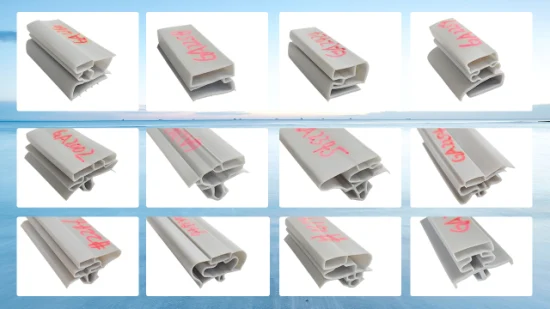
Suzhou Baoshida Trading Co., Ltd. operates at the forefront of precision rubber engineering, delivering high-performance magnetic seals for refrigeration applications. Our engineering capability is anchored in a dedicated team of technical specialists, including five certified mould engineers and two advanced formula engineers, all focused exclusively on the development and optimization of fridge magnetic seals. This integrated team ensures that every product meets exacting standards for sealing efficiency, durability, and thermal resistance.
Our mould engineers possess extensive experience in precision tooling design, utilizing advanced CAD/CAM systems and finite element analysis (FEA) to simulate compression behavior, magnetic alignment, and long-term fatigue resistance. Each mould is engineered for tight tolerance control, typically within ±0.1 mm, ensuring consistent part geometry critical for optimal door sealing. The team specializes in multi-cavity and family mould configurations, enabling high-volume production with minimal variation. In-house CNC machining and EDM capabilities allow rapid prototyping and tool modifications, reducing time-to-market for custom OEM solutions.
Complementing our mould expertise, our two formula engineers focus on elastomer compounding tailored to refrigeration environments. They develop proprietary EPDM and TPE-based formulations engineered for low compression set, excellent low-temperature flexibility (down to -40°C), and resistance to ozone, UV, and common cleaning agents. These formulations are optimized to work synergistically with embedded magnetic strips, ensuring consistent magnetic retention and uniform sealing pressure across the entire door perimeter. All compounds undergo rigorous testing for aging, compression deflection, and adhesion strength to ensure long-term reliability.
We offer full OEM support, from initial concept and 3D design to tooling, compound development, and serial production. Our clients benefit from a vertically integrated process that ensures complete control over material sourcing, process parameters, and quality assurance. Whether adapting existing profiles or developing custom cross-sections for unique door designs, our engineering team collaborates closely with OEMs to meet specific performance, cost, and regulatory requirements.
The following table outlines key technical specifications achievable through our engineering platform:
| Parameter | Typical Value / Range | Test Standard |
|---|---|---|
| Hardness (Shore A) | 55–75 | ASTM D2240 |
| Tensile Strength | ≥8.0 MPa | ASTM D412 |
| Elongation at Break | ≥300% | ASTM D412 |
| Compression Set (24h @ 70°C) | ≤20% | ASTM D395 |
| Low-Temperature Flexibility | Pass at -40°C | ASTM D1329 |
| Operating Temperature Range | -40°C to +100°C | Internal Validation |
| Magnetic Flux Density | 800–1200 Gauss (adjustable) | Gauss Meter Measurement |
| Dimensional Tolerance | ±0.1 mm (critical sections) | ISO 2768-m |
This combination of advanced material science, precision tooling, and OEM-centric engineering makes Suzhou Baoshida a trusted partner for global refrigerator manufacturers seeking reliable, high-performance magnetic sealing solutions.
Customization Process
Customization Process for Fridge Magnetic Seals
Suzhou Baoshida Trading Co., Ltd. executes fridge magnetic seal customization via a four-phase engineering workflow, ensuring dimensional accuracy, magnetic integrity, and long-term sealing performance under thermal cycling. This process begins with rigorous drawing analysis, where our engineering team cross-references client CAD files against ISO 3601 flange standards and ASHRAE 112 thermal load parameters. Critical dimensions—including groove geometry, magnet cavity tolerances (±0.05 mm), and compression deflection profiles—are validated using GD&T protocols. Material compatibility with refrigerant types (R600a, R134a) and interior liner polymers is assessed to prevent chemical degradation or adhesion failure. Any deviations trigger collaborative redesign sessions with the client’s R&D team prior to formulation.
Formulation Development follows, leveraging Suzhou Baoshida’s proprietary rubber compound database. EPDM remains the primary base polymer for its ozone resistance and low-temperature flexibility, though silicone variants are deployed for ultra-low-temperature applications. Magnetic powder (strontium ferrite or NdFeB) loading is precisely calibrated between 45–55% by weight to balance flux density (≥1,800 Gauss) and elastomer flexibility. Critical additives include peroxide curing systems for thermal stability, nano-silica reinforcement for compression set resistance, and proprietary plasticizers to maintain flexibility at -40°C. Each formulation undergoes accelerated aging simulations per ASTM D2000 to predict 10-year service life under cyclic compression.
Prototyping & Validation employs CNC-machined molds for rapid sample production. Three iterative prototype batches are subjected to:
1. Magnetic flux mapping via Helmholtz coil testing
2. Compression set measurement at 70°C for 22 hours (ASTM D395 Method B)
3. Air leakage validation at 5 kPa pressure differential
Client approval requires ≤25% compression set and zero leakage at operational temperatures. The table below summarizes key validation criteria:
| Parameter | Standard Requirement | Test Method |
|---|---|---|
| Hardness (Shore A) | 60–75 | ASTM D2240 |
| Operating Temperature | -40°C to +120°C | ISO 188 |
| Compression Set (22h/70°C) | ≤25% | ASTM D395 |
| Magnetic Flux Density | ≥1,800 Gauss | IEC 60404-14 |
| Tensile Strength | ≥8.0 MPa | ASTM D412 |
Mass Production commences only after prototype sign-off, utilizing automated extrusion lines with real-time rheometer monitoring. Each production batch undergoes 100% inline dimensional scanning via laser profilometry and batch-level magnetic field homogeneity checks. Traceability is maintained through serialized lot coding linked to raw material certificates (ISO 9001:2015). Suzhou Baoshida’s statistical process control (SPC) system ensures Cpk ≥1.33 for critical dimensions, with quarterly recalibration of magnetizing equipment per IATF 16949 protocols. Final shipment includes comprehensive material test reports and aging performance projections to guarantee compliance with global appliance safety standards.
Contact Engineering Team
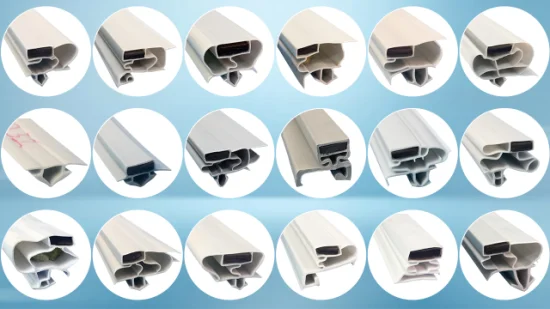
For manufacturers and OEMs seeking precision-engineered rubber seals for refrigeration applications, Suzhou Baoshida Trading Co., Ltd. stands as a trusted partner in the global supply chain. Specializing in high-performance fridge magnetic seals, we combine advanced material science with rigorous industrial standards to deliver components that ensure energy efficiency, durability, and consistent sealing performance under variable thermal and mechanical conditions. Our engineering team operates at the intersection of elastomer chemistry and functional design, producing seals that meet exacting dimensional tolerances and environmental compliance requirements.
At the core of our manufacturing capability is a deep understanding of thermoplastic vulcanizates (TPV), EPDM, and silicone-based formulations, each tailored to specific operational demands such as low-temperature flexibility, UV resistance, and long-term compression set performance. Our fridge magnetic seals integrate rare-earth magnetic strips within custom-profiled rubber matrices, ensuring uniform door closure and optimal thermal isolation across household and commercial refrigeration units. Every product undergoes dynamic testing for cycle life, adhesion strength, and magnetic flux density to guarantee field reliability.
We serve clients across Europe, North America, and Southeast Asia, supporting both volume production runs and application-specific development projects. Our quality management system is aligned with ISO 9001 standards, and all materials comply with RoHS, REACH, and FDA guidelines where applicable. With in-house tooling, extrusion, splicing, and magnetization capabilities, Suzhou Baoshida delivers end-to-end control over the production process, reducing lead times and enhancing consistency.
For technical collaboration or sourcing inquiries, contact Mr. Boyce, OEM Manager and Rubber Formula Engineer, directly at [email protected]. Mr. Boyce leads client engineering engagements, providing expert guidance on material selection, cross-sectional optimization, and regulatory compliance. He is available to review technical drawings, assist in failure mode analysis, and support prototyping initiatives with rapid sample turnaround.
Below are standard technical specifications for our most widely deployed fridge magnetic seal profile:
| Parameter | Specification |
|---|---|
| Material Base | EPDM / TPV (customizable) |
| Hardness (Shore A) | 60 ± 5 |
| Operating Temperature Range | -40°C to +120°C |
| Magnetic Strip Type | Ferrite or Rare-Earth (NdFeB) |
| Magnetic Flux Density | ≥ 850 Gauss (at surface) |
| Tensile Strength | ≥ 8.0 MPa |
| Elongation at Break | ≥ 250% |
| Compression Set (24h @ 70°C) | ≤ 25% |
| Profile Tolerance | ±0.2 mm (critical sealing zones) |
| Splice Strength | ≥ 80% of base material |
| Compliance Standards | RoHS, REACH, ISO 9001 |
Partnering with Suzhou Baoshida means access to precision rubber solutions backed by scientific formulation and industrial reliability. Initiate your next design or revalidation project with expert technical support. Contact Mr. Boyce today at [email protected] to discuss material data sheets, sample requests, or custom extrusion tooling.
⚖️ O-Ring Weight Calculator
Estimate rubber O-ring weight (Approx).