
Technical Contents
Engineering Guide: Funny Doormat Ideas
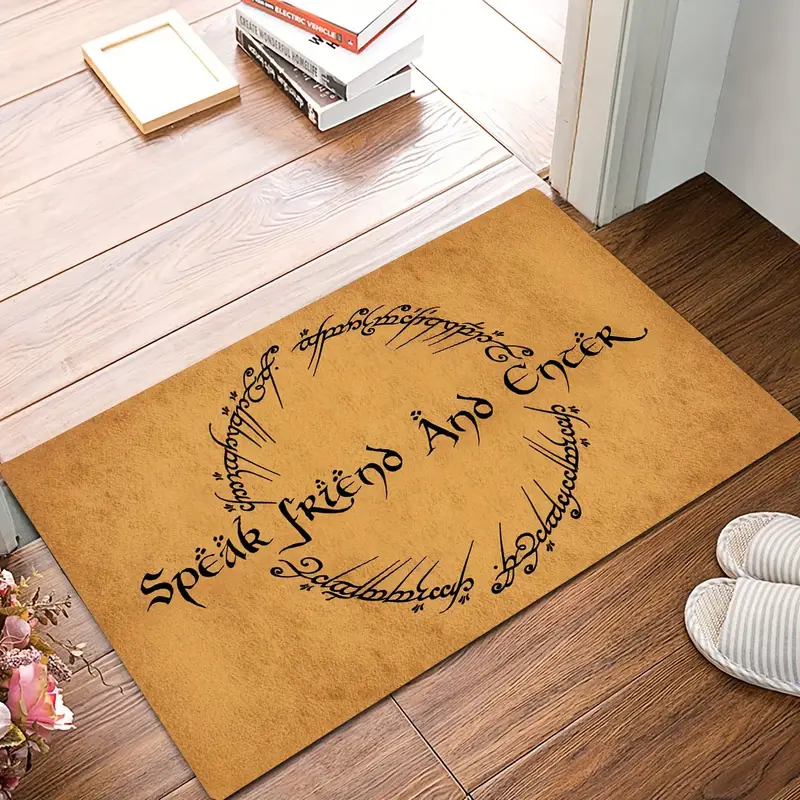
Engineering Insight: Material Science Behind Durable Humorous Doormats
The proliferation of novelty doormats featuring whimsical designs—cartoon characters, puns, or exaggerated graphics—creates significant engineering challenges often overlooked in mass-market production. While aesthetics drive consumer appeal, off-the-shelf solutions frequently fail within 6–12 months due to fundamental material inadequacies. At Suzhou Baoshida Trading Co., Ltd., our OEM partnerships prioritize compound formulation over superficial design, recognizing that humor must withstand industrial realities: foot traffic abrasion, chemical exposure from cleaning agents, UV degradation, and thermal cycling. Standard retail mats predominantly use low-grade SBR (Styrene-Butadiene Rubber) or recycled rubber crumbs with insufficient polymer cross-linking. These compounds lack the tensile strength to maintain intricate design fidelity under stress, causing logos to crack or fade prematurely. Crucially, they omit critical additives: UV absorbers accelerate surface chalking in sunlight, while inadequate antiozonants permit micro-tearing in outdoor environments. Empirical data shows such mats lose 40% of surface definition after 500 abrasion cycles—far below the 2,000-cycle minimum required for commercial entryways.
Material failure manifests predictably. Thin, poorly vulcanized rubber cannot resist deformation from high-heeled footwear, distorting printed graphics. Water absorption in low-density compounds swells the substrate, blurring fine details. Most critically, cost-driven formulations skip processing oils that migrate to the surface, creating a sticky residue that traps dirt—a direct contradiction to the mat’s functional purpose. Our engineered approach integrates high-purity synthetic rubbers with tailored filler systems (e.g., silica-reinforced matrices) to balance elasticity and rigidity. This ensures dimensional stability for complex embossing while maintaining 85+ Shore A hardness—the optimal threshold for debris-scraping efficacy without compromising comfort.
The table below outlines critical property comparisons between standard retail compounds and Suzhou Baoshida’s OEM-grade formulations:
| Property | Standard Retail Mat (SBR/Recycled) | Baoshida OEM Compound (Custom TPE Blend) | Test Standard |
|---|---|---|---|
| Abrasion Resistance | 180 mm³ loss | 65 mm³ loss | ASTM D5963 |
| UV Stability (500 hrs) | 30% surface degradation | <5% degradation | ISO 4892-2 |
| Tensile Strength | 8.5 MPa | 15.2 MPa | ASTM D412 |
| Water Absorption | 4.2% | 0.8% | ISO 175 |
| Design Retention (1k cycles) | 55% clarity loss | 92% clarity retention | Internal Protocol |
Suzhou Baoshida’s process begins with design-integrated material science. We collaborate with OEM clients during the concept phase to align graphic complexity with compound capabilities—thicker relief patterns demand higher tear strength (≥25 kN/m), while photorealistic prints require ultra-smooth calendered surfaces. Our proprietary additive package includes non-migrating plasticizers and nano-zinc oxide for UV resistance, eliminating the “sticky mat” phenomenon endemic to budget alternatives. This precision engineering ensures humor endures functionally, not just visually. For B2B partners, we provide full material traceability and accelerated lifecycle testing data, transforming novelty into a reliable revenue stream. Demand engineered resilience—not ephemeral charm—in your next doormat line.
Material Specifications
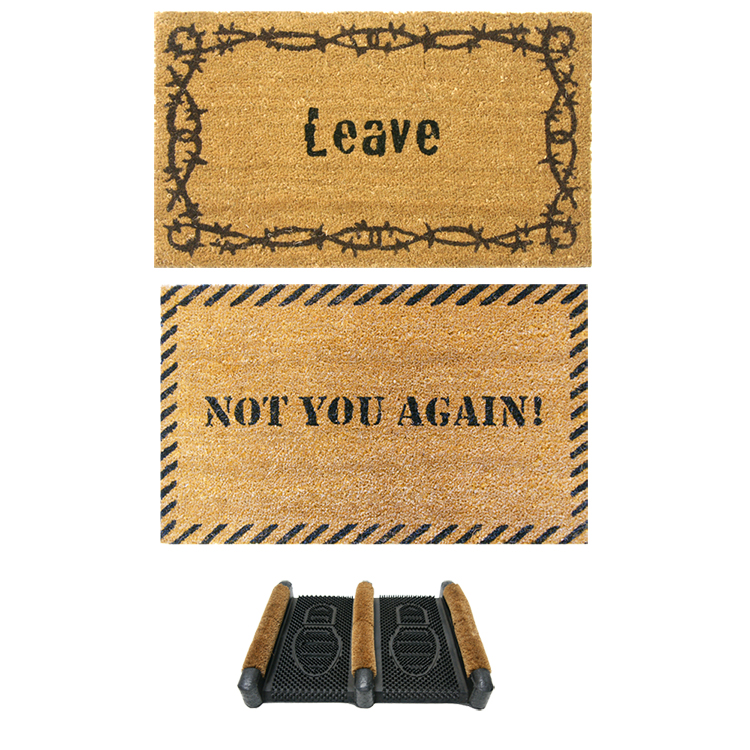
Material selection is critical in the development of high-performance rubber doormats, particularly when targeting industrial or commercial environments where durability, chemical resistance, and temperature stability are paramount. At Suzhou Baoshida Trading Co., Ltd., we specialize in precision-engineered rubber solutions tailored to meet rigorous application demands. For novelty or “funny doormat” designs that must retain both aesthetic integrity and functional resilience, we recommend Viton, Nitrile, and Silicone as primary candidates. Each material offers distinct advantages depending on environmental exposure, longevity requirements, and surface fidelity.
Viton (FKM) is a fluorocarbon-based synthetic rubber renowned for its exceptional resistance to high temperatures, oils, fuels, and aggressive chemicals. With continuous service capabilities up to 250°C and intermittent resistance beyond 300°C, Viton is ideal for doormats deployed in industrial facilities, laboratories, or automotive service areas where exposure to hydraulic fluids or solvents is common. Its inherent stability ensures minimal degradation over time, preserving both structural integrity and graphic detail in molded designs. However, Viton is typically more expensive than alternatives and may not be cost-effective for purely decorative applications.
Nitrile (NBR) rubber provides an optimal balance between performance and cost. It exhibits excellent resistance to petroleum-based oils, greases, and water, making it suitable for outdoor and semi-industrial environments. With a standard operating temperature range of -30°C to 120°C, Nitrile maintains flexibility under thermal cycling and resists abrasion effectively. This makes it a preferred choice for doormats in manufacturing plants, garages, or commercial entryways where slip resistance and oil resistance are essential. While less chemically resistant than Viton, NBR offers superior mechanical strength and is easier to compound for color and texture variation, supporting intricate “funny” patterns and embossed features.
Silicone (VMQ) stands out for its wide temperature tolerance (-60°C to 230°C), UV stability, and excellent resistance to ozone and weathering. It is non-toxic, hypoallergenic, and maintains elasticity across extreme conditions. Silicone is particularly well-suited for outdoor decorative doormats exposed to sunlight, rain, or freeze-thaw cycles. Its surface can be finely detailed to reproduce complex comedic engravings or text with high fidelity. However, silicone has lower tear strength compared to Nitrile and is less resistant to organic solvents, limiting its use in chemically aggressive settings.
The following table summarizes key physical and chemical properties of these materials for comparative evaluation:
| Property | Viton (FKM) | Nitrile (NBR) | Silicone (VMQ) |
|---|---|---|---|
| Temperature Range (°C) | -20 to 250 | -30 to 120 | -60 to 230 |
| Tensile Strength (MPa) | 15–20 | 10–25 | 5–8 |
| Elongation at Break (%) | 150–250 | 200–500 | 200–600 |
| Hardness (Shore A) | 60–90 | 50–90 | 30–80 |
| Oil/Fuel Resistance | Excellent | Good to Excellent | Poor |
| Ozone/Weather Resistance | Excellent | Good | Excellent |
| Abrasion Resistance | Good | Excellent | Fair |
| Compression Set Resistance | Excellent | Good | Good |
Selection among these materials should be guided by application-specific stressors, lifecycle expectations, and design complexity. Suzhou Baoshida Trading Co., Ltd. supports OEM customization with material testing, prototype validation, and scalable production to ensure optimal performance in every rubber doormat solution.
Manufacturing Capabilities
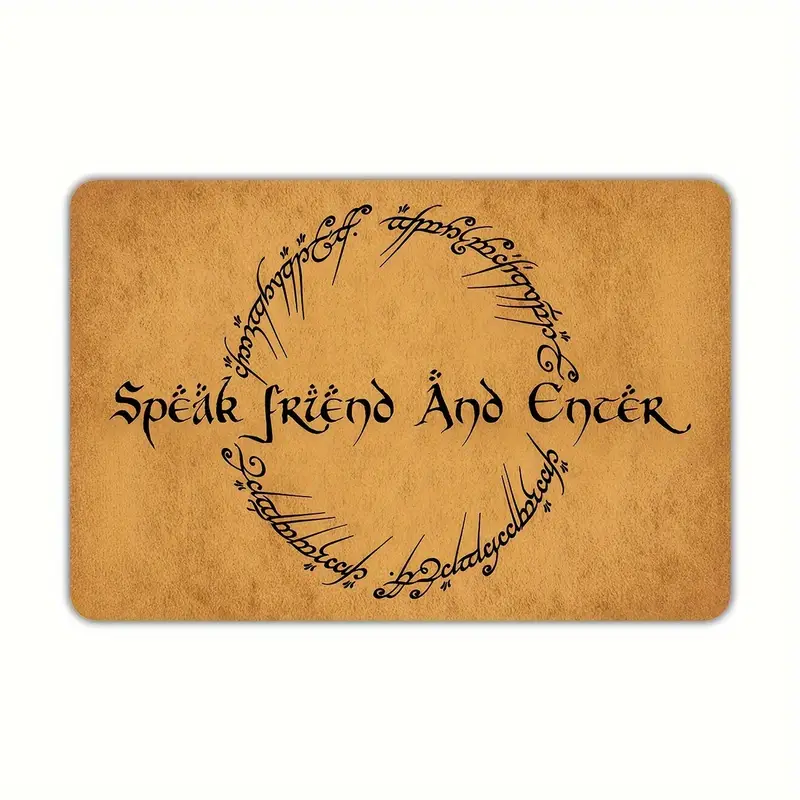
Engineering Capability: Precision Rubber Formulation for Novelty Doormat Manufacturing
Suzhou Baoshida Trading Co., Ltd. leverages advanced industrial rubber engineering to transform novelty-driven doormat concepts into durable, high-performance products. Our core strength lies in the seamless integration of material science and precision manufacturing, specifically tailored for intricate designs requiring both aesthetic fidelity and functional resilience. Unlike generic rubber goods, humorous or texturally complex doormats demand exacting control over compound behavior during molding and end-use. Our dedicated team of 5 Mold Design Engineers and 2 Rubber Formula Engineers operates at the intersection of creativity and industrial rigor, ensuring every embossed logo, raised texture, or undercut feature achieves dimensional accuracy without compromising structural integrity.
Material formulation is the cornerstone of our process. Our Formula Engineers develop proprietary rubber compounds that balance Shore A hardness (typically 55–75) with exceptional tear strength and outdoor weathering resistance. This prevents common failure modes in novelty mats, such as logo distortion during demolding, surface cracking under UV exposure, or loss of grip on smooth substrates. Each compound is optimized for specific design requirements—whether accommodating fine-line text, deep 3D reliefs, or multi-color inlays—through precise control of polymer blends, filler dispersion, and vulcanization kinetics. Accelerated aging tests validate performance across -40°C to +80°C ranges, guaranteeing 5+ years of outdoor service life even in high-traffic commercial settings.
The following table summarizes key compound specifications engineered for novelty doormat applications:
| Property | Standard Compound | Premium Compound | Application Benefit |
|---|---|---|---|
| Tensile Strength (MPa) | ≥12.0 | ≥15.5 | Resists tearing at intricate cutouts |
| Abrasion Loss (mm³) | ≤120 | ≤85 | Maintains texture/logo definition |
| Shore A Hardness | 60±5 | 70±5 | Optimal soil-scraping without stiffness |
| Compression Set (%) | ≤25 | ≤18 | Retains shape after heavy foot traffic |
| UV Resistance (ASTM G154) | 500 hrs no crack | 1000 hrs no crack | Prevents fading/cracking in sunlight |
Our OEM workflow begins with collaborative design-for-manufacturability (DFM) analysis. Mold Engineers dissect CAD files to identify potential undercuts, draft angle deficiencies, or stress concentration points in “funny” elements (e.g., exaggerated facial features or thin lettering). We then iterate tooling geometry using Moldflow simulation, optimizing gate placement and cooling channels to eliminate sink marks or weld lines on critical surfaces. For multi-material mats (e.g., rubber base with fabric inserts), we engineer interfacial adhesion protocols to prevent delamination.
End-to-end OEM support includes rapid prototyping via CNC-machined aluminum molds (7–10 days), rigorous first-article inspection using CMM-measured critical dimensions, and scalable production across 50+ hydraulic presses (50–3000T capacity). Every batch undergoes in-process hardness testing and post-cure validation to ensure color consistency and dimensional stability. This engineering-led approach allows clients to confidently scale whimsical concepts into market-ready products without sacrificing industrial-grade durability or production efficiency. Suzhou Baoshida transforms creative vision into manufacturable reality—where every smile-inducing mat is built on uncompromising material science.
Customization Process
Customization Process for Industrial Rubber Doormats at Suzhou Baoshida Trading Co., Ltd.
At Suzhou Baoshida Trading Co., Ltd., we specialize in industrial rubber solutions tailored to the functional and aesthetic demands of modern commercial and residential applications. Our structured customization process ensures precision, durability, and compliance with OEM standards—particularly in niche markets such as humorous or novelty doormats, where design complexity meets performance requirements. The process begins with Drawing Analysis, followed by Rubber Formulation, Prototyping, and culminates in Mass Production.
The first phase, Drawing Analysis, involves a comprehensive review of the client’s technical drawings and design intent. We assess line art clarity, depth gradients, text legibility, and structural integrity to ensure the final molded product retains both visual fidelity and mechanical strength. Our engineering team evaluates undercuts, wall thickness, and ejection angles to prevent molding defects. This stage is critical for “funny doormat ideas” that often feature exaggerated typography or intricate cartoon elements, which require precise mold interpretation.
Following drawing validation, we proceed to Rubber Formulation. Utilizing our in-house polymer laboratory, we select the optimal elastomer blend based on application environment—whether indoor, outdoor, high-traffic, or chemical-exposed. For doormats, our standard compound is SBR (Styrene-Butadiene Rubber) due to its abrasion resistance and cost efficiency. However, for enhanced weatherability and UV stability, we formulate EPDM-based compounds. Additives such as anti-aging agents, carbon black for UV protection, and vulcanizing accelerators are precisely metered to achieve Shore A hardness between 60–70, ensuring flexibility without permanent deformation.
Once the formulation is finalized, we move to Prototyping. Using CNC-machined aluminum molds or 3D-printed rapid tooling, we produce functional prototypes within 7–10 days. These samples undergo rigorous testing, including compression set analysis, slip resistance evaluation (ASTM F2913), and colorfastness under simulated weathering. Clients receive physical samples alongside material certification reports for approval. Iterations are made as needed to refine texture depth, edge definition, or compound resilience.
Upon prototype sign-off, the project transitions to Mass Production. Our facility operates 16 hydraulic vulcanizing presses with clamping forces ranging from 50 to 200 tons, capable of producing up to 10,000 units per day. Each mat is inspected for surface defects, dimensional accuracy, and print consistency. We support full-color Pantone matching for branding or comedic text elements, using pad printing or molded-in pigment techniques.
All stages are documented and quality-controlled under ISO 9001 standards, ensuring repeatability and compliance.
Typical Rubber Doormat Specifications
| Parameter | Standard Value |
|---|---|
| Material | SBR or EPDM Rubber |
| Hardness (Shore A) | 60–70 |
| Thickness | 8–12 mm |
| Density | 1.15–1.25 g/cm³ |
| Operating Temperature | -40°C to +80°C |
| Color Options | Custom (Pantone Match Available) |
| Production Lead Time | 25–35 days after sample approval |
| Packaging | Polybag, Master Carton (50 pcs/ctn) |
Contact Engineering Team
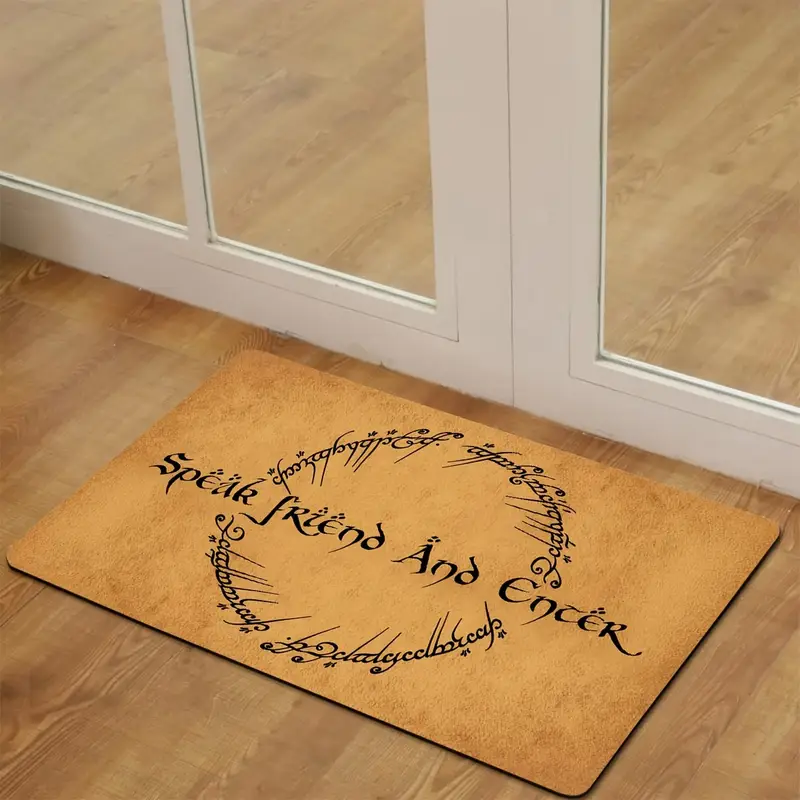
Contact Suzhou Baoshida for Precision Rubber Doormat Manufacturing
Suzhou Baoshida Trading Co., Ltd. operates at the intersection of industrial rubber science and high-volume OEM production. Our expertise lies not in conceptualizing humorous doormat designs, but in engineering the material foundation that ensures such designs endure rigorous commercial and residential use. As a Rubber Formula Engineer and OEM Manager, I emphasize that longevity, safety, and environmental resilience are non-negotiable in rubber制品 manufacturing. Consumer-facing novelty—whether paw prints, witty phrases, or caricatures—relies entirely on the underlying polymer matrix. Substandard compounds fracture under UV exposure, lose traction when wet, or degrade under repeated abrasion, transforming a “funny” mat into a liability. Our formulations address these failure points through controlled cross-linking density, optimized filler dispersion, and proprietary stabilizer packages compliant with ISO 188 and ASTM D2240 standards.
We translate creative concepts into technically viable products via three core competencies. First, our SBR/TPE hybrid compounds achieve Shore A 65–75 hardness, balancing flexibility for intricate mold detail with sufficient rigidity to prevent edge curling. Second, accelerated weathering tests (per ASTM G154) confirm 5,000+ hours of UV resistance without significant color fade or surface chalking—critical for maintaining visual clarity of printed designs. Third, our closed-mold vulcanization process ensures dimensional stability within ±0.3mm tolerance, eliminating flash that compromises both aesthetics and slip resistance (ASTM F2913-22). This precision prevents misregistration in multi-color prints, where even 0.5mm deviation renders text illegible.
The following table details technical specifications for our primary doormat rubber compounds, validated through third-party laboratory testing. These parameters directly impact design feasibility, lifespan, and safety compliance:
| Property | Standard SBR Compound | Enhanced TPE Blend | Premium EPDM Variant | Test Standard |
|---|---|---|---|---|
| Hardness (Shore A) | 70 ± 3 | 68 ± 2 | 72 ± 3 | ASTM D2240 |
| Tensile Strength (MPa) | 12.5 | 14.8 | 16.2 | ASTM D412 |
| Tear Strength (kN/m) | 45 | 58 | 62 | ASTM D624 |
| Abrasion Loss (mm³) | 120 | 85 | 75 | ASTM D5963 |
| UV Resistance (hrs) | 3,000 | 5,000 | 8,000 | ASTM G154 |
| Slip Coefficient (wet) | 0.55 | 0.62 | 0.68 | ASTM F2913-22 |
Partnering with Suzhou Baoshida means your “funny” concept receives engineering rigor from inception. We collaborate with designers to adjust line thickness, depth, and curvature within rubber’s physical constraints—preventing mold ejection failures or detail loss during demolding. Our minimum order quantities start at 5,000 units, with lead times of 25–35 days from approved tooling. All compounds are REACH and RoHS certified, with optional FDA-grade options for food-service environments.
Initiate technical collaboration by contacting Mr. Boyce, our dedicated OEM Solutions Manager. He will review your design files, material requirements, and volume parameters to propose a formulation optimized for durability, cost efficiency, and regulatory compliance. Do not compromise novelty with subpar materials; ensure your humorous doormats deliver both laughter and longevity. Email Boyce directly at [email protected] with subject line “OEM Doormat Technical Inquiry” to receive a formal capabilities dossier and scheduling link for a 30-minute engineering consultation. Specify required certifications, target market regions, and annual volume estimates to accelerate the quotation process. Suzhou Baoshida transforms creative vision into technically flawless rubber制品—where science meets smile.
⚖️ O-Ring Weight Calculator
Estimate rubber O-ring weight (Approx).