
Technical Contents
Engineering Guide: Garage Floor Vinyl Roll
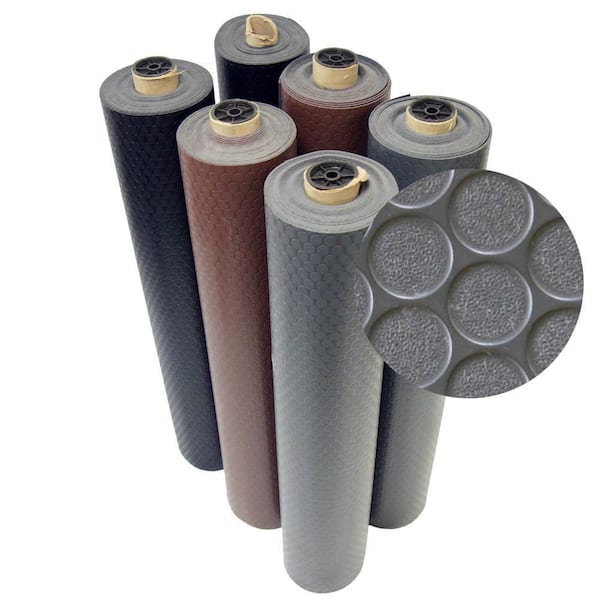
Engineering Insight: Material Selection in Garage Floor Vinyl Roll Applications
In industrial and high-usage commercial environments, garage floor vinyl rolls are subjected to extreme mechanical, chemical, and thermal stresses. While consumer-grade or off-the-shelf vinyl flooring products may appear cost-effective initially, they frequently fail to meet the performance thresholds required in demanding applications. The root cause lies in inadequate material selection during formulation. At Suzhou Baoshida Trading Co., Ltd., we emphasize engineered rubber solutions designed for durability, resilience, and long-term structural integrity.
Standard vinyl rolls commonly utilize plasticized polyvinyl chloride (PVC) with minimal reinforcement. These materials are prone to plasticizer migration, leading to embrittlement, cracking, and loss of flexibility over time. Additionally, they exhibit poor resistance to hydrocarbons, UV exposure, and temperature fluctuations—conditions routinely encountered in automotive workshops, manufacturing bays, and storage facilities. Once compromised, these floors present safety hazards and increase lifecycle costs due to premature replacement and downtime.
In contrast, high-performance garage floor vinyl rolls require a precisely balanced elastomeric compound. Our formulations integrate cross-linked PVC or thermoplastic olefin (TPO) matrices reinforced with fiberglass or polyester scrim layers. This structural reinforcement enhances tensile strength and dimensional stability, preventing warping and delamination under load. The inclusion of UV stabilizers and antioxidant packages ensures prolonged service life in both indoor and semi-exposed environments.
Another critical factor is abrasion resistance. Standard vinyl typically achieves 1,500–2,000 cycles on the Taber Abrasion Test (ASTM D4060), whereas industrial-grade materials exceed 8,000 cycles. This difference translates directly into service life, especially in areas with frequent forklift or vehicular traffic. Furthermore, static dissipation and slip resistance must be engineered into the compound, not merely surface-treated. Surface coatings wear off, but intrinsic properties remain consistent throughout the product’s lifespan.
Adhesion compatibility with subfloors is another area where generic products fall short. Industrial-grade vinyl must bond reliably to concrete substrates with high moisture content or residual contaminants. Our formulations are optimized for use with reactive adhesives and include moisture-blocking barriers to prevent blistering and mold growth.
The table below outlines key performance specifications differentiating standard and engineered garage floor vinyl rolls.
| Property | Standard Vinyl Roll | Engineered Industrial Vinyl Roll |
|---|---|---|
| Thickness | 1.5 – 2.0 mm | 3.0 – 5.0 mm |
| Tensile Strength | 8 – 12 MPa | 18 – 25 MPa |
| Elongation at Break | 150 – 250% | 300 – 450% |
| Taber Abrasion (CS-10, 1000 g, 1000 cycles) | < 200 mg loss | < 80 mg loss |
| Temperature Range | -10°C to +60°C | -40°C to +90°C |
| Chemical Resistance | Limited (oils, solvents cause swelling) | High (resistant to aliphatic oils, mild acids, alkalis) |
| Reinforcement | None or scrim mesh | Fiberglass or woven polyester core |
Material selection is not a commodity decision—it is a precision engineering requirement. Off-the-shelf solutions fail because they are not designed for sustained industrial loads or environmental exposure. At Suzhou Baoshida Trading Co., Ltd., our rubber formulations are developed through iterative testing and application-specific customization, ensuring reliability, safety, and cost efficiency over the product lifecycle.
Material Specifications
Material Specifications for Industrial-Grade Garage Floor Vinyl Rolls
Suzhou Baoshida Trading Co., Ltd. delivers precision-engineered garage floor vinyl rolls designed for demanding industrial environments. Our formulations leverage advanced elastomer science to balance durability, chemical resistance, and operational safety. Critical material selection directly impacts service life under exposure to automotive fluids, thermal cycling, and mechanical abrasion. Below we detail the core polymer options: Viton (FKM), Nitrile (NBR), and Silicone (VMQ), each optimized for specific performance thresholds.
Viton (FKM) represents the pinnacle of chemical resistance in fluorocarbon elastomers. Its molecular structure provides exceptional stability against aggressive automotive fluids including synthetic oils, brake fluids, and solvents. Operating continuously at -20°C to +230°C, Viton maintains integrity where hydrocarbon-based elastomers degrade. This material is ideal for high-end commercial garages servicing performance vehicles or chemical handling facilities. However, its premium cost necessitates targeted application where extreme fluid resistance is non-negotiable.
Nitrile (NBR) remains the industry-standard solution for cost-effective oil and fuel resistance. Engineered with acrylonitrile content between 34-45%, our NBR formulations achieve optimal balance between flexibility and hydrocarbon resistance. Serviceable from -30°C to +120°C, it withstands repeated exposure to conventional motor oils, greases, and hydraulic fluids. NBR’s superior abrasion resistance and tensile strength (15-25 MPa) make it the dominant choice for general automotive repair facilities and warehouse flooring where budget efficiency and mechanical robustness are prioritized.
Silicone (VMQ) excels in extreme temperature applications but requires careful implementation for floor surfaces. With an operational range of -60°C to +200°C, it resists thermal degradation unmatched by organic rubbers. However, its inherently low tear strength and poor resistance to hydrocarbons limit suitability for standard garage environments. Silicone is recommended only for specialized facilities requiring ultra-wide thermal stability, such as aerospace component storage, where fluid exposure is strictly controlled.
The following table quantifies critical performance parameters for informed material selection:
| Material Type | Key Properties | Temperature Range (°C) | Chemical Resistance Profile | Abrasion Resistance | Primary Applications |
|---|---|---|---|---|---|
| Viton (FKM) | High fluorine content, low gas permeability | -20 to +230 | Excellent: Oils, acids, solvents, fuels | Moderate | High-performance auto shops, chemical handling |
| Nitrile (NBR) | Tunable acrylonitrile levels, high tensile | -30 to +120 | Excellent: Hydrocarbons, greases; Poor: Ozone | High | General repair facilities, warehouses |
| Silicone (VMQ) | High purity, electrical insulation | -60 to +200 | Poor: Oils/fuels; Good: Water, steam, oxygen | Low | Thermal-critical non-fluid zones |
Material selection must align with facility-specific exposure profiles. Suzhou Baoshida’s OEM engineering team conducts fluid compatibility testing per ASTM D471 and ISO 1817 to validate performance against client-specified contaminants. Our vinyl rolls integrate proprietary fillers and crosslinking systems to enhance dimensional stability under load, ensuring consistent coefficient of friction (0.6-0.85 per DIN 51130) across all formulations. For garage applications involving routine oil spills and heavy equipment traffic, NBR provides optimal lifecycle value. Viton is reserved for extreme chemical exposure scenarios, while Silicone serves niche thermal applications. Consult our technical team to match material properties with your operational demands.
Manufacturing Capabilities
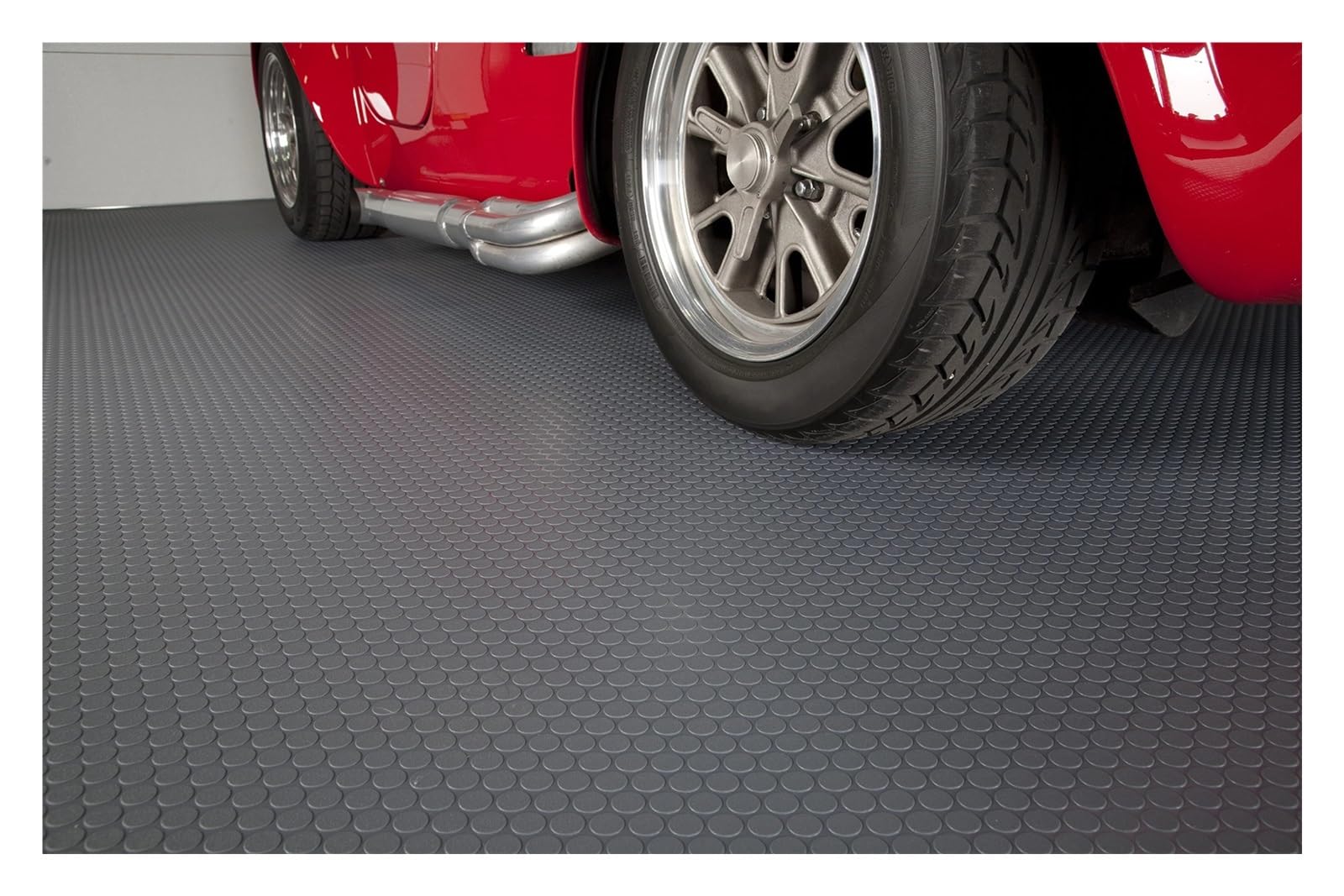
Engineering Excellence in Industrial Rubber Solutions
At Suzhou Baoshida Trading Co., Ltd., our engineering capability forms the backbone of our industrial rubber manufacturing expertise, particularly in high-performance applications such as garage floor vinyl rolls. Our dedicated team comprises five specialized mould engineers and two advanced formula engineers, enabling us to deliver precision-engineered rubber products tailored to the demanding requirements of commercial and industrial environments. This integrated technical team ensures seamless development from concept to final production, with a strong focus on material science, structural integrity, and long-term durability.
Our formula engineers specialize in polymer chemistry and elastomer compounding, allowing us to develop proprietary rubber blends optimized for abrasion resistance, UV stability, and low-temperature flexibility—critical performance factors for garage flooring exposed to mechanical stress, chemical spills, and fluctuating climates. By fine-tuning filler systems, crosslinking agents, and anti-aging additives, we achieve a balanced performance profile that extends service life while maintaining ease of installation and maintenance.
Complementing this, our five mould engineers bring extensive experience in precision tooling design and roll-form manufacturing. They utilize advanced CAD/CAM software and finite element analysis (FEA) to simulate deformation, stress distribution, and thermal behavior during both production and end-use conditions. This ensures that every garage floor vinyl roll maintains dimensional accuracy, surface consistency, and interlocking performance where applicable. Our in-house tooling capacity significantly reduces lead times and allows for rapid prototyping, iterative design validation, and cost-effective scaling for OEM partners.
We operate as a full-service OEM manufacturer, offering end-to-end solutions from material formulation and tooling development to large-scale extrusion, calendaring, and roll packaging. Our production lines are calibrated for tight tolerance control, ensuring uniform thickness, surface texture, and roll length across batch runs. This level of consistency is essential for contractors and distributors who require reliable logistics and predictable installation outcomes.
Our engineering-driven approach enables us to support custom specifications including color matching, surface profiles (e.g., anti-slip textures), roll width and thickness variations, and performance additives such as flame retardants or static-dissipative compounds. All formulations and designs undergo rigorous in-house testing to meet international standards for tensile strength, elongation, hardness, and environmental resistance.
Technical Specifications of Standard Garage Floor Vinyl Roll
| Property | Test Method | Typical Value |
|---|---|---|
| Material Composition | ASTM D2000 | SBR/EPDM Blend |
| Hardness (Shore A) | ASTM D2240 | 75 ± 5 |
| Tensile Strength | ASTM D412 | ≥ 10 MPa |
| Elongation at Break | ASTM D412 | ≥ 250% |
| Thickness Tolerance | ISO 3302 | ±0.2 mm |
| Roll Width Options | Custom | 1.0 m, 1.2 m, 1.5 m, 2.0 m |
| Standard Roll Length | Custom | 10 m, 20 m, 30 m |
| Operating Temperature Range | ISO 1817 | -30°C to +80°C |
| UV Resistance | ASTM G154 | Pass (1000 hrs QUV) |
| Abrasion Resistance | DIN 53516 | Volume Loss ≤ 120 mm³ |
Through a synergistic integration of material science and precision engineering, Suzhou Baoshida delivers technically superior garage floor vinyl rolls that meet the exacting standards of global industrial and construction markets.
Customization Process
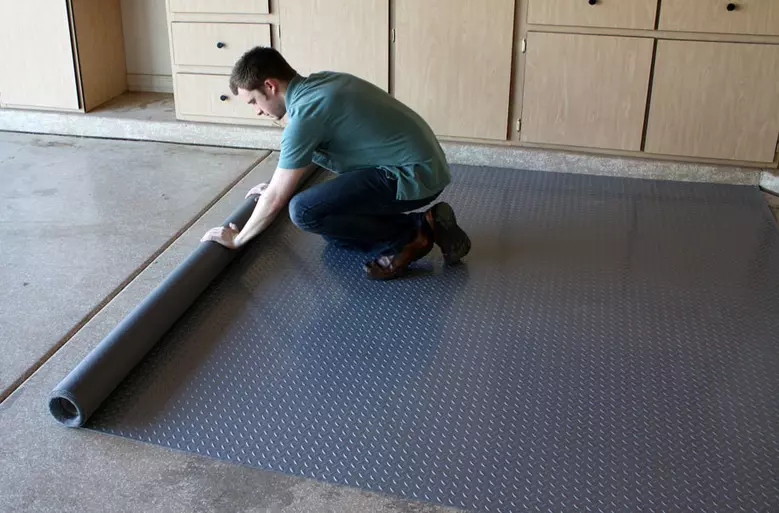
Customization Process for Industrial Garage Floor Vinyl Rolls
At Suzhou Baoshida Trading Co., Ltd., our customization process for garage floor vinyl rolls integrates rigorous engineering protocols to transform client specifications into high-performance industrial flooring solutions. This four-phase methodology ensures dimensional accuracy, material resilience, and seamless scalability from concept to volume production.
Drawing Analysis initiates the workflow, where our engineering team conducts a granular review of client-provided CAD drawings and technical schematics. We validate critical parameters including substrate compatibility, dimensional tolerances, and environmental exposure requirements. This phase identifies potential manufacturing constraints such as edge-seaming specifications or load-bearing zones, ensuring the design aligns with ISO 9001-certified production capabilities. Tolerances are verified to ±0.2mm for thickness and ±0.5° for angular cuts, preventing field installation failures.
Formulation follows, leveraging our proprietary rubber compounding expertise. Based on the drawing analysis, our lab engineers select polymer bases (EPDM, SBR, or PVC blends) and calibrate additive ratios for UV stabilizers, plasticizers, and fillers. For garage applications, we prioritize abrasion resistance and thermal stability, targeting Shore A hardness between 65–85 and tensile strength ≥12 MPa. Each formulation undergoes dynamic mechanical analysis (DMA) to simulate -40°C to +70°C operational ranges, ensuring crack resistance under thermal cycling.
Prototyping validates the formulation through small-batch production. Three 1m² samples undergo accelerated aging tests per ASTM D573, 5,000-cycle Taber abrasion trials, and oil/fuel resistance checks per ISO 1817. Client feedback on texture, color consistency (ΔE ≤1.5), and slip resistance (COF ≥0.5 wet) triggers iterative refinements. Only after third-party lab certification and client sign-off does the batch proceed.
Mass Production commences with full-scale extrusion and calendaring under real-time SPC monitoring. In-line systems track thickness uniformity (laser micrometers), vulcanization temperature (±2°C tolerance), and surface finish. Every 500m roll undergoes destructive testing per ISO 37 for tensile properties, with non-conforming batches quarantined. Final rolls are vacuum-sealed with humidity indicators for transit stability.
Critical customization parameters and their industrial benchmarks are summarized below:
| Parameter | Standard Range | Customization Limit | Test Standard |
|---|---|---|---|
| Thickness | 2.0–5.0 mm | 1.5–6.0 mm | ISO 2286-2 |
| Shore A Hardness | 65–85 | 50–90 | ISO 7619-1 |
| Tensile Strength | ≥12 MPa | ≥8 MPa | ISO 37 |
| Abrasion Loss | ≤80 mg/1000 cycles | ≤120 mg | ASTM D1044 |
| Operating Temp | -40°C to +70°C | -50°C to +85°C | ISO 188 |
This structured approach eliminates guesswork, delivering garage floor vinyl rolls that meet exacting industrial demands while maintaining Suzhou Baoshida’s 99.2% on-time delivery record. All custom formulations are documented for full traceability under our ERP-controlled batch management system.
Contact Engineering Team

For industrial-grade performance and long-term durability in demanding environments, garage floor vinyl roll solutions must meet rigorous standards of chemical resistance, tensile strength, and dimensional stability. At Suzhou Baoshida Trading Co., Ltd., we specialize in high-performance rubber and polymer-based flooring systems engineered for commercial garages, automotive service centers, warehouses, and light industrial facilities. Our garage floor vinyl rolls are formulated using advanced compounding techniques to ensure optimal resilience under heavy foot and vehicle traffic while maintaining ease of installation and low maintenance requirements.
Our manufacturing process integrates strict quality control protocols, from raw material selection to final product inspection. Each roll is subjected to comprehensive testing for abrasion resistance, oil and grease resistance, tensile strength, and thermal stability. We utilize premium-grade PVC and rubber composites reinforced with scrim layers to prevent tearing and promote dimensional integrity over time. The surface texture is calibrated to provide slip resistance without compromising cleanability—critical for safety and hygiene in service environments.
We understand that every client has unique operational demands. Whether you require custom thickness, width, color coding for zone demarcation, or anti-static properties for sensitive environments, Suzhou Baoshida offers tailored formulation and roll-to-order production capabilities. Our technical team works directly with OEMs, distributors, and facility managers to ensure the final product aligns precisely with functional and aesthetic requirements.
To support global clients, we maintain scalable production capacity with efficient lead times and flexible packaging options for containerized shipping. All products comply with international environmental and safety standards, including REACH and RoHS, ensuring suitability for export to North America, Europe, and Asia-Pacific markets.
For immediate technical consultation or custom quotation, contact Mr. Boyce, OEM Manager and Rubber Formula Engineer at Suzhou Baoshida Trading Co., Ltd. With over 15 years of experience in industrial rubber formulation and polymer application engineering, Mr. Boyce leads client-driven innovation and ensures every product delivery meets exact performance benchmarks. He is available to discuss substrate compatibility, installation protocols, lifecycle expectations, and cost-optimized material alternatives.
| Specification | Performance Value |
|---|---|
| Thickness Range | 1.5 mm – 4.0 mm |
| Width Options | 1.0 m, 1.22 m, 1.5 m, 2.0 m (custom widths available) |
| Length per Roll | 10 m, 20 m, 25 m (custom lengths on request) |
| Tensile Strength | ≥ 10 MPa (ASTM D412) |
| Elongation at Break | ≥ 250% |
| Shore A Hardness | 75 ± 5 |
| Oil & Grease Resistance | No cracking or delamination after 72 hrs (ASTM D471) |
| Slip Resistance (COF) | ≥ 0.6 (wet/dry, ASTM F2913) |
| Temperature Range | -20°C to +70°C |
| Fire Rating | Class B1 (GB 8624), self-extinguishing |
Contact Mr. Boyce directly at [email protected] to initiate a technical review of your application requirements. Include details such as intended use, environmental exposure, expected load conditions, and desired dimensions for rapid response and sample provisioning. Partner with Suzhou Baoshida for engineered flooring solutions built to last.
⚖️ O-Ring Weight Calculator
Estimate rubber O-ring weight (Approx).