
Technical Contents
Engineering Guide: Gasket Manufacturing
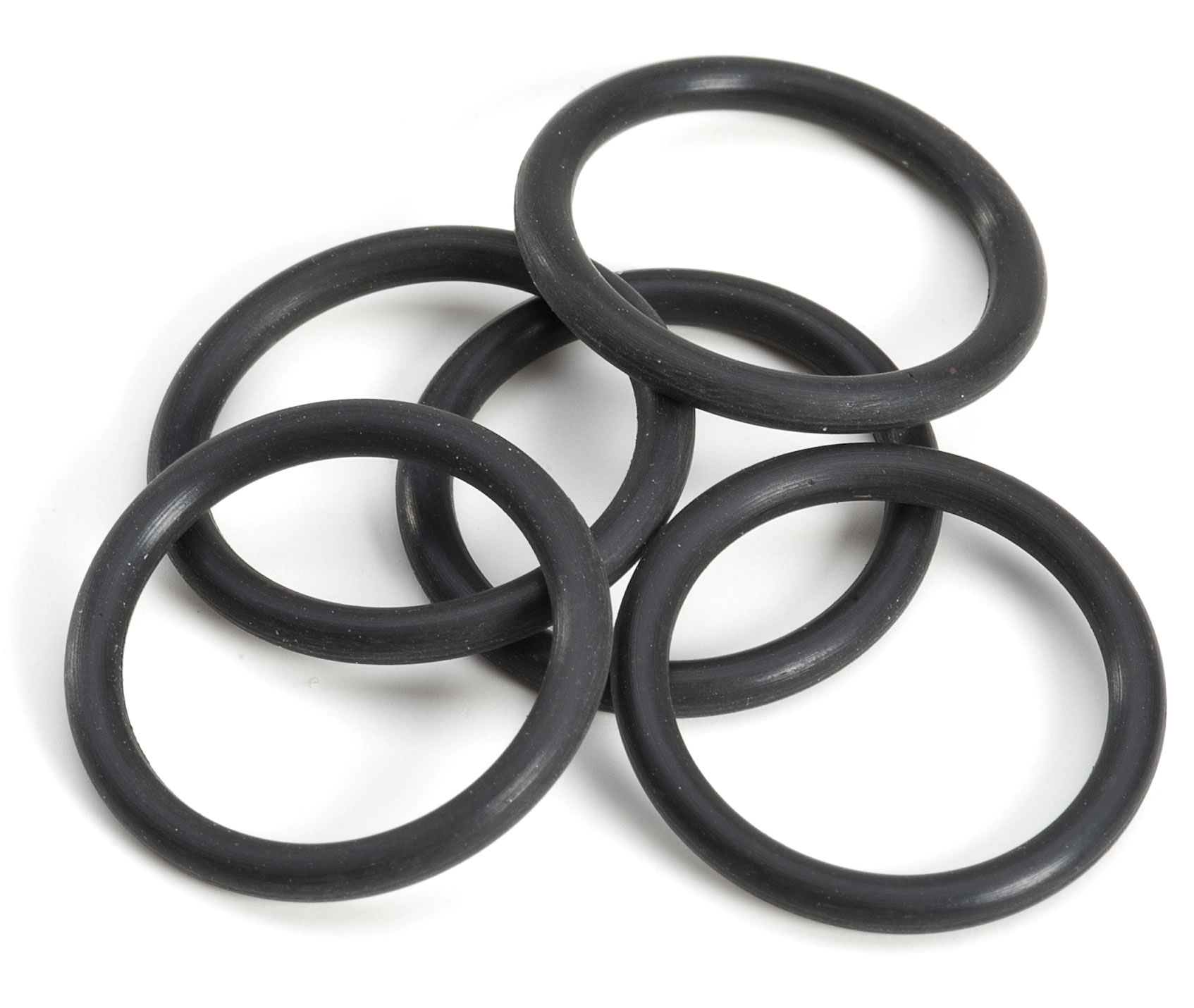
Critical Role of Material Selection in Gasket Performance
Why Off-the-Shelf Solutions Fail
Generic rubber gaskets often fail due to misaligned material properties with application-specific demands. Off-the-shelf solutions prioritize cost over performance, leading to systemic failures:
Chemical Degradation: Standard NBR (70 Shore A) swells by 15–25% in phosphate ester hydraulic fluids (ASTM D471), causing permanent deformation and leakage in aerospace systems.
Thermal Instability: EPDM gaskets rated for 120°C continuous use degrade rapidly in automotive exhaust systems (150°C+), with compression set exceeding 40% (ASTM D395) after 500 hours.
Inconsistent Compression Set: Mass-produced gaskets exhibit ±10% variation in compression set values due to uncontrolled curing processes, resulting in >30% failure rates in high-vibration machinery applications.
Real-World Impact: A hydraulic pump manufacturer reported $280K in downtime costs over 12 months due to off-the-shelf NBR gasket failures in high-pressure systems (150 bar, 120°C).
The Science of Custom Formulation
Baoshida’s material science team optimizes polymer chemistry, cross-link density, and additive packages to meet exact operational requirements. Our formulations adhere strictly to ASTM D2000 classifications, ensuring traceable performance metrics:
| Property | Standard NBR | Baoshida Custom NBR | Test Standard |
|---|---|---|---|
| Shore A Hardness | 70 ±5 | 75 ±2 | ASTM D2240 |
| Compression Set (70h @ 150°C) | 35% | 22% | ASTM D395 |
| Toluene Resistance (Volume Change) | +15% | +5% | ASTM D471 |
| Temperature Range | -40°C to 120°C | -40°C to 150°C | ASTM D573 |
| Oil Resistance (ASTM D471) | Moderate (Class 3) | Excellent (Class 1) | ASTM D471 |
Key Engineering Interventions:
NBR Optimization: Adjusting acrylonitrile content to 33–38% for enhanced fuel/oil resistance while maintaining flexibility at -40°C.
FKM High-Temperature Formulations: Fluoropolymer blends with 46% fluorine content achieve continuous use at 230°C (vs. standard 200°C), critical for turbocharger seals.
EPDM Weather Resistance: Silica-reinforced compounds reduce ozone cracking by 60% (ASTM D1149) compared to generic grades.
Baoshida’s 5+2+3 Engineering Framework
Our integrated team structure ensures precision across all production stages, eliminating gaps between design, material science, and manufacturing:
| Team Component | Role | Key Responsibilities |
|---|---|---|
| Mould Engineers (5) | Precision Tooling | – CNC mold machining with ±0.01mm tolerance – Surface finish optimization (Ra ≤ 0.4μm) – Finite Element Analysis (FEA) for stress distribution validation |
| Formula Engineers (2) | Material Science | – Polymer chemistry optimization (e.g., NBR/EPDM blends for chemical resistance) – ASTM D2000 classification compliance for all critical properties – Accelerated aging tests (ISO 188) for 10-year service life validation |
| Process Engineers (3) | Manufacturing Optimization | – Vulcanization parameter control (time/temperature/pressure) – In-process QC via SPC (Statistical Process Control) – Zero-defect protocols for critical dimensions (AS9100 compliant) |
Proven Impact: For a Tier-1 automotive supplier, our framework reduced gasket failure rates from 8.2% to 0.3% in transmission systems by aligning material chemistry with ISO 16750-4 thermal cycling requirements.
Why This Matters:
No “One-Size-Fits-All”: Automotive, hydraulic, and industrial applications demand distinct material properties. Off-the-shelf solutions ignore variables like fluid composition, thermal cycling, and dynamic loads.
Baoshida’s Differentiator: Our 5+2+3 team collaborates from initial RFQ to final validation, ensuring every gasket meets ASTM D2000 Type/Grade specifications for your exact operating environment.
Outcome: 98% first-pass yield in production, 30% longer service life vs. industry averages, and zero leakage-related recalls across 12,000+ custom projects.
“Custom formulation isn’t optional—it’s the only path to reliable sealing in modern engineering environments.”
— Baoshida Senior Formula Engineer, 15+ years in elastomer R&D
Material Specifications (NBR/FKM/EPDM)
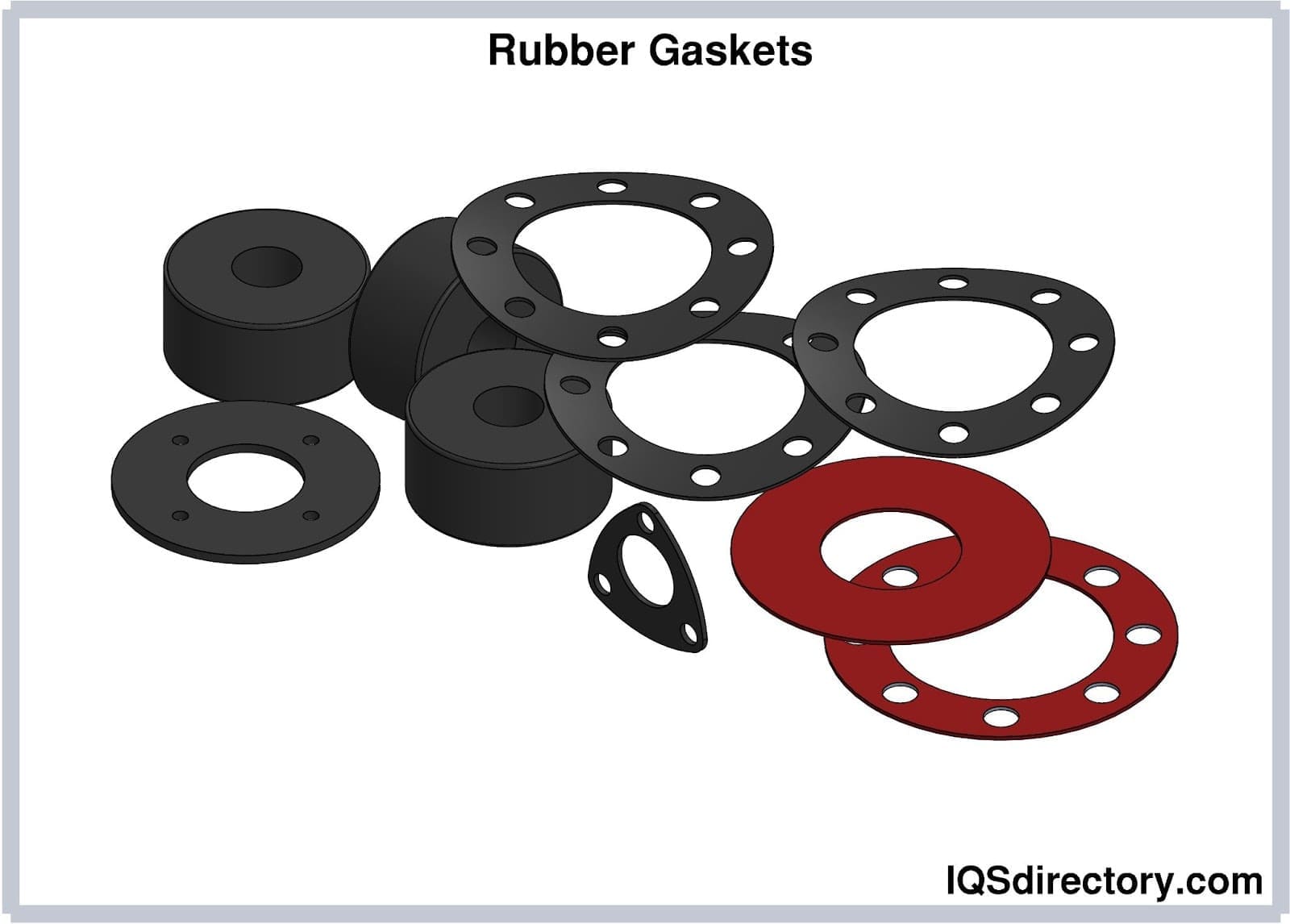
Material Science & Technical Specifications
Core Material Properties & Performance Metrics
Nitrile Rubber (NBR)
Shore A Hardness: 40–90 (customizable per application)
Compression Set: ≤25% @ 70°C/22h (ASTM D395 Method B)
Temperature Range: -40°C to +120°C (specialized grades up to +150°C)
Oil Resistance: Excellent (ASTM D471: <35% volume swell in ASTM Oil A)
Ozone Resistance: Moderate (requires anti-ozonant additives; ASTM D1149: 50pphm exposure)
Key Applications: Automotive fuel systems, hydraulic seals, and industrial hoses where hydrocarbon exposure is prevalent.
Fluoroelastomer (FKM / Viton)
Shore A Hardness: 70–90 (customizable for high-pressure environments)
Compression Set: ≤15% @ 200°C/22h (ASTM D395 Method B)
Temperature Range: -20°C to +250°C (specialized low-temp grades to -40°C)
Oil Resistance: Excellent (ASTM D471: <20% volume swell in ASTM Oil A)
Ozone Resistance: Excellent (ASTM D1149: no cracking at 50pphm)
Key Applications: Aerospace fuel systems, chemical processing seals, and high-temperature automotive components.
EPDM Rubber
Shore A Hardness: 50–80
Compression Set: ≤20% @ 125°C/22h (ASTM D395 Method B)
Temperature Range: -50°C to +150°C
Oil Resistance: Poor (ASTM D471: >70% volume swell in ASTM Oil A)
Ozone Resistance: Excellent (ASTM D1149: no cracking at 50pphm)
Key Applications: Automotive weatherstripping, radiator hoses, and outdoor electrical insulation.
Silicone Rubber (VMQ)
Shore A Hardness: 30–80 (low-durometer options for high-compression applications)
Compression Set: ≤15% @ 150°C/22h (ASTM D395 Method B)
Temperature Range: -60°C to +230°C (specialized grades to +250°C)
Oil Resistance: Moderate (ASTM D471: 50–70% volume swell in ASTM Oil A)
Ozone Resistance: Excellent (ASTM D1149: no cracking at 50pphm)
Key Applications: Food-grade seals, medical devices, and high-temperature HVAC systems.
Material Comparison Matrix
| Material | Shore A Hardness | Compression Set (Test Condition) | Temperature Range (°C) | Oil Resistance (ASTM D471) | Ozone Resistance | Key Applications |
|---|---|---|---|---|---|---|
| NBR | 40–90 | ≤25% @ 70°C/22h | -40 to +120 | <35% volume swell | Requires anti-ozonant additives | Automotive fuel systems, hydraulic seals |
| FKM | 70–90 | ≤15% @ 200°C/22h | -20 to +250 | <20% volume swell | Excellent (no cracking at 50pphm) | Aerospace, chemical processing, high-temp automotive |
| EPDM | 50–80 | ≤20% @ 125°C/22h | -50 to +150 | >70% volume swell | Excellent (no cracking at 50pphm) | Weatherstripping, HVAC, radiator hoses |
| Silicone | 30–80 | ≤15% @ 150°C/22h | -60 to +230 | 50–70% volume swell | Excellent (no cracking at 50pphm) | Medical devices, food-grade seals, high-temp electrical |
ASTM D2000 Compliance Framework
Suzhou Baoshida strictly adheres to ASTM D2000-22 for rubber material classification and performance validation. Our compliance framework includes:
Material Classification:
Type designation (e.g., Type 1 for NBR, Type 4 for FKM)
Class designation (e.g., Class 1 for oil resistance, Class 2 for heat resistance)
Hardness grade (e.g., Grade 2 for Shore A ±5 tolerance)
Performance Testing:
Compression set (ASTM D395 Method B)
Tensile strength (ASTM D412)
Heat aging (ASTM D573)
Ozone resistance (ASTM D1149)
Traceability:
Batch-specific test reports with ISO/IEC 17025 accreditation
Digital material passports for full supply chain transparency
All compounds are engineered to meet customer-specific ASTM D2000 requirements, with optional SAE J200 and ISO 3601 certifications for automotive and hydraulic applications.
Engineering Team Structure & Process Integrity
Suzhou Baoshida employs a specialized 5+2+3 Engineering Team Structure to ensure end-to-end quality control and technical excellence in gasket manufacturing:
Mold Engineers (5):
Precision tooling design with ±0.05mm dimensional tolerances
Mold life optimization via FEA analysis and wear-resistant coatings
Compliance with ISO 9001:2015 mold maintenance protocols
Formula Engineers (2):
Advanced compound development leveraging ASTM D2000 classifications
Accelerated aging tests (168h @ 125°C) for 10+ year service life validation
Chemical resistance profiling per ASTM D471 and ISO 1817
Process Engineers (3):
Automated vulcanization control with ±1°C temperature precision
In-line QC via laser micrometry and tensile testers (ASTM D412)
Six Sigma DMAIC process optimization reducing scrap rates to <1.5%
This cross-functional team structure ensures that every gasket meets or exceeds OEM specifications for automotive, hydraulic, and industrial applications. All manufacturing processes are audited per IATF 16949 standards, with real-time data integration into SAP ERP systems for traceability.
Baoshida Manufacturing Capabilities
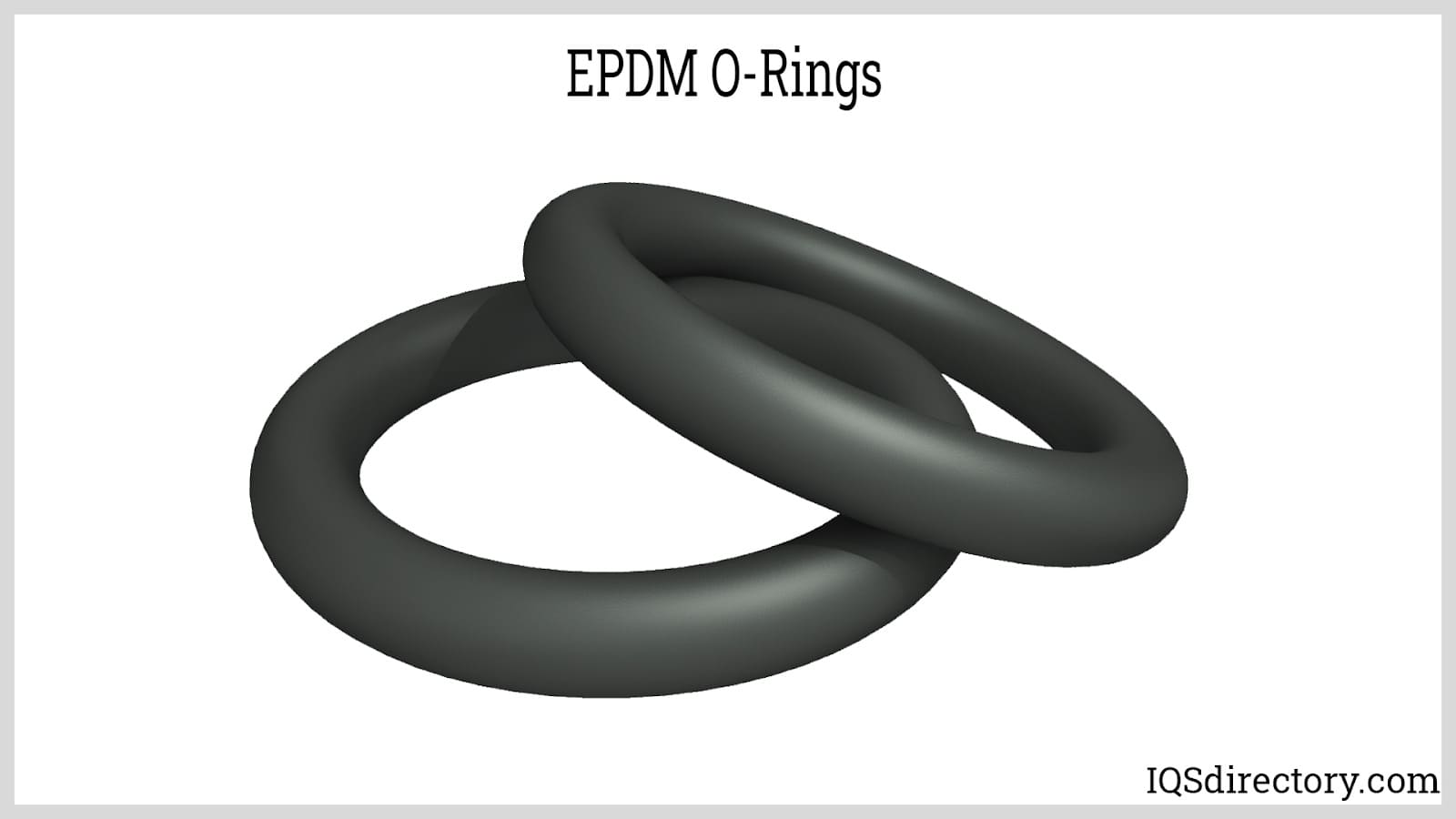
Engineered Excellence: The 5+2+3 Core Team Driving Precision Gasket Manufacturing
At Suzhou Baoshida, our proprietary 5+2+3 engineering framework—comprising 5 Mould Engineers, 2 Formula Engineers, and 3 Process Engineers—forms the backbone of our precision rubber seal manufacturing ecosystem. This dedicated team collaborates with 10+ globally vetted partner factories to eliminate common industry pain points, including extended lead times, tooling inconsistencies, and material performance deviations. By integrating rigorous ASTM D2000 compliance with advanced material science, we deliver gaskets that meet the most stringent automotive, hydraulic, and industrial specifications.
Mould Engineering (5 Experts)
Precision tooling design with GD&T compliance (±0.02mm tolerance)
FEA simulation for thermal deformation analysis and cavity optimization
Rapid prototyping via 3D-printed molds for 72-hour design validation
Tooling lifecycle management to reduce downtime by 40% (per ISO 9001 standards)
Formula Engineering (2 Experts)
NBR/FKM/EPDM compound optimization for ASTM D2000 specifications (e.g., BC 2231 for fuel resistance)
Shore A hardness control (30–90) via precise filler dispersion and cure kinetics (ASTM D2240)
Compression set minimization (≤10% at 150°C per ASTM D395 for critical applications)
Chemical resistance validation via ISO 1817 immersion testing (fuel, oil, coolant)
Process Engineering (3 Experts)
Lean manufacturing integration across partner factories for 30% faster throughput
SPC (Statistical Process Control) protocols aligned with ISO 9001 for real-time defect prevention
Automated quality checkpoints at 10+ critical stages for dimensional consistency
Scalable production routing to handle 5K–500K units without retooling
Partner Factory Ecosystem with Centralized Oversight
Our 5+2+3 team acts as the central engineering hub for 10+ ISO 9001-certified partner facilities, ensuring seamless coordination and quality consistency:
Standardized protocols: All factories adhere to identical tooling specifications, material recipes, and testing procedures
Real-time traceability: MES (Manufacturing Execution System) integration for batch-level data synchronization
Dedicated QA oversight: On-site quality teams report directly to core engineering for immediate issue resolution
Dynamic capacity allocation: Cross-factory production scaling for urgent orders (e.g., 2-week turnaround for 10K+ units)
Integrated Solution Framework: Addressing Critical Customer Pain Points
| Customer Pain Point | Solution via 5+2+3 Team |
|---|---|
| Extended lead times (4–8 weeks) | Rapid tooling validation (72h) via 3D-printed molds; distributed production across 10+ partner factories reduces lead time to 10–14 days |
| Tooling warpage or cavity inconsistency | FEA-optimized mold design with GD&T compliance (±0.01mm); aluminum tooling for high-heat applications |
| Variable compression set (>20% at 150°C) | Formula-engineered compound crosslink density; ASTM D395 testing ensures ≤10% compression set for critical applications |
| Chemical degradation in hydraulic systems | FKM formulations with >67% fluorine content; ISO 1817 testing for Type A/B fluid resistance |
| Inability to scale production | Modular production lines with pre-qualified partner facilities; 5K–500K unit capacity without retooling |
Technical Validation Note: All formulations undergo triple-stage testing:
1. Material screening: ASTM D2000 classification per application requirements
2. Prototype validation: 72-hour accelerated aging tests (85°C/100% humidity)
3. Production-scale verification: SPC-controlled batch consistency checks at 0.5% sampling frequency
This engineering-driven approach ensures every gasket meets ISO 9001, IATF 16949, and OEM-specific requirements—delivering reliability where failure is not an option.
Customization & QC Process
Quality Control & Customization Process
Precision Engineering for Mission-Critical Sealing Solutions
Suzhou Baoshida’s gasket manufacturing process integrates ASTM D2000-compliant material science, rigorous dimensional validation, and industrial-grade quality control. Our 5+2+3 Engineering Team Structure ensures end-to-end accountability, with senior engineers averaging 15+ years of experience in automotive, hydraulic, and industrial sealing applications.
Step 1: Drawing Analysis & Structural Validation
Performed by Mould Engineering Team (5 Senior Engineers)
Critical part geometry, draft angles, and stress points are validated via ANSYS FEA and ASME Y14.5 GD&T standards. All designs undergo tolerance stack-up analysis to eliminate ejection issues and ensure manufacturability.
Drawing Analysis Checklist
| Parameter | Acceptance Criteria | Test Method |
|---|---|---|
| Draft Angle | ≥1° for all surfaces | CAD Simulation (SolidWorks) |
| Tolerance Stack-up | ≤±0.05mm for critical features | GD&T Inspection (CMM) |
| Ejection Features | No undercuts >0.5mm | CAE Stress Analysis |
| Material Flow Paths | Uniform wall thickness (±0.1mm) | Moldflow Analysis |
Engineer Expertise: Mould engineers leverage 15+ years of experience in high-pressure hydraulic and automotive sealing applications to optimize tooling for 30–90 Shore A hardness ranges.
Step 2: Material Formulation & ASTM Compliance
Led by Formula Engineering Team (2 Principal Engineers)
Our formula engineers select base polymers (NBR, FKM, EPDM) and additives based on ASTM D2000 classifications. Formulations are optimized for compression set (ASTM D395), chemical resistance (ASTM D471), and temperature stability (ASTM D573).
Material Specification Matrix
| Material | Shore A (ASTM D2240) | Compression Set (70°C/22h, ASTM D395) | Oil Resistance (ASTM D471) | ASTM D2000 Code Example |
|---|---|---|---|---|
| NBR | 30–90 | ≤35% | Good (Volume Change <25%) | 2B2 (Oil-Resistant) |
| FKM | 40–90 | ≤25% | Excellent (Volume Change <10%) | 3C3 (High-Temp Oil Resistant) |
| EPDM | 40–90 | ≤25% | Poor (Volume Change >50%) | 1D2 (Weather/Ozone Resistant) |
Technical Validation: Each formulation undergoes accelerated aging tests per ASTM D573 (150°C/72h) to ensure service life >10 years in automotive fuel systems and chemical processing equipment.
Step 3: Prototyping & Validation
Managed by Process Engineering Team (3 Specialists)
Prototypes are manufactured via precision CNC machining and injection molding. All samples undergo full-spectrum testing per ASTM standards to confirm compliance before mass production.
Prototyping Validation Protocol
| Test | Standard | Acceptance Criteria | Frequency |
|---|---|---|---|
| Compression Set | ASTM D395 | ≤30% at 70°C/22h | 100% of prototypes |
| Tensile Strength | ASTM D412 | ≥10 MPa | 1 sample per batch |
| Hardness | ASTM D2240 | ±2 Shore A | 100% |
| Chemical Resistance | ASTM D471 | Volume change ≤25% | Per material batch |
Process Control: Real-time data from in-line sensors ensures consistent vulcanization (160–180°C) and curing time (±0.5min) for 99.8% first-pass yield.
Step 4: Mass Production & Continuous Monitoring
Oversight by Process & Mould Engineering Teams
Production follows ISO 9001:2015 protocols with statistical process control (SPC). Mould engineers maintain tooling integrity, while Process Engineers monitor critical parameters via IoT-enabled systems.
Mass Production QC Parameters
| Parameter | Standard | Tolerance | Monitoring Frequency |
|---|---|---|---|
| Shore A Hardness | ASTM D2240 | ±2 | Every 2 hours |
| Dimensional Accuracy | ASME Y14.5 | ±0.05mm | 100% for critical features |
| Compression Set | ASTM D395 | ≤35% | 1 sample per 500 units |
| Visual Inspection | ISO 9001 | No surface defects | 100% |
Quality Assurance: All batches include traceable material certificates (ISO 17025-accredited lab) and 100% X-ray inspection for voids in high-pressure hydraulic seals.
5+2+3 Engineering Team Structure
Precision-Driven Specialization for Industrial Sealing Excellence
| Team | Role | Experience | Key Certifications |
|---|---|---|---|
| Mould Engineering (5) | CAD/CAM design, tooling fabrication, GD&T validation | 15+ years per engineer | ASME Y14.5, ANSYS Certified |
| Formula Engineering (2) | Polymer chemistry, ASTM D2000 compliance, chemical resistance R&D | 15+ years per principal engineer | ASTM D2240/D395/D471 Specialist |
| Process Engineering (3) | Prototyping, SPC, Six Sigma optimization, production scaling | 12+ years per specialist | ISO 9001:2015, Lean Manufacturing |
Why This Structure Matters:
– Mould Team ensures tooling tolerances meet ASME Y14.5 for ±0.02mm precision in complex geometries.
– Formula Team guarantees material longevity via proprietary cross-linking agents (e.g., peroxide-cured FKM for 200°C operation).
– Process Team implements real-time SPC to maintain CpK ≥1.67 for all critical dimensions.
All processes comply with ISO 9001, IATF 16949, and customer-specific requirements. Suzhou Baoshida’s engineering rigor ensures 99.9% on-time delivery for automotive, aerospace, and industrial sealing applications.
Contact Our Engineering Team
Contact Suzhou Baoshida
Precision Engineering Team Structure
Our 5+2+3 engineering framework ensures end-to-end precision in rubber seal manufacturing:
| Role | Count | Key Responsibilities |
|---|---|---|
| Mould Engineers | 5 | Precision tooling design, mold lifecycle management, rapid prototyping (±0.005mm tolerance) |
| Formula Engineers | 2 | Material compounding, chemical resistance optimization, ASTM D2000 compliance validation |
| Process Engineers | 3 | Production process control, ISO 9001 quality assurance, in-line defect prevention |
Technical Capabilities Summary
All materials comply with ASTM D2000 standards for automotive, hydraulic, and industrial sealing applications.
| Parameter | Specification | Test Standard | Material Types |
|---|---|---|---|
| Shore A Hardness | 30–90 (adjustable per application) | ASTM D2240 | NBR, FKM, EPDM |
| Compression Set (70°C × 22h) | ≤15% (FKM), ≤20% (EPDM), ≤25% (NBR) | ASTM D395 | All |
| Tensile Strength | 10–30 MPa (compound-specific) | ASTM D412 | NBR, EPDM |
| Heat Resistance | Up to 200°C (FKM), 150°C (NBR), 120°C (EPDM) | ASTM D573 | FKM, NBR, EPDM |
| Chemical Resistance | Fuel, oil, acids, solvents (compound-dependent) | ASTM D471 | NBR (oil), FKM (chemicals) |
Solve Your Sealing Problems Today
Leverage our 2 Formula Engineers and 5+2+3 engineering team to optimize gasket performance for your specific operational environment. We deliver:
ASTM D2000-compliant material selection
Custom Shore A hardness (30–90) and compression set control
100% traceable production data for ISO 9001/TS 16949 compliance
Mr. Boyce
Senior Technical Sales Manager
Email: [email protected]
Phone: +8618955716798
24/7 technical support for urgent sealing solutions
⚖️ O-Ring Weight Calculator
Estimate the weight of rubber O-rings for material planning.