
Technical Contents
Engineering Guide: Graphite Bushings
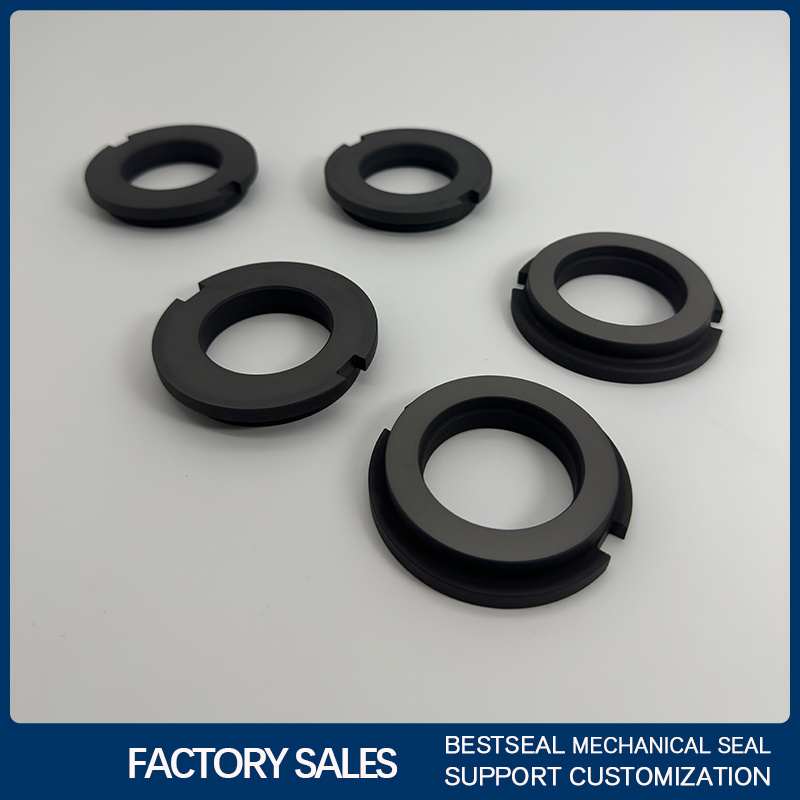
Engineering Insight: Material Selection in Graphite Bushings
In high-performance industrial applications, the reliability of mechanical components hinges on precise material engineering. Among these components, graphite bushings serve a critical function in environments characterized by high temperatures, dry running conditions, and corrosive media. While often perceived as interchangeable commodity parts, graphite bushings are far from generic. The failure of off-the-shelf solutions in demanding applications underscores the necessity of tailored material selection, a principle central to advanced rubber and polymer engineering.
Graphite bushings are typically composed of a self-lubricating composite, combining graphite particles with a polymer or resin matrix such as PTFE, epoxy, or phenolic resins. The graphite provides dry lubrication, reducing friction and wear without the need for external oils or greases. However, the performance of these bushings is not solely dependent on the presence of graphite—it is dictated by the compatibility of the matrix material with operational parameters including temperature, load, speed, and chemical exposure.
Standardized, mass-produced bushings frequently fail because they are engineered for average conditions, not application-specific extremes. For instance, a phenolic-based graphite bushing may perform adequately in moderate-temperature applications but will degrade rapidly above 180°C due to resin breakdown. Conversely, a PTFE-graphite composite offers superior chemical resistance and a broader temperature range but may lack the compressive strength required in high-load rotary systems. These mismatches lead to premature wear, galling, or catastrophic mechanical failure.
At Suzhou Baoshida Trading Co., Ltd., we emphasize engineered material solutions over generic replacements. Our approach integrates application diagnostics with material science to match bushing composition with operational demands. This includes evaluating thermal expansion coefficients, modulus of elasticity, and wear rates under simulated service conditions. By tailoring the resin matrix and graphite dispersion, we achieve optimized friction coefficients and extended service life.
The following table outlines key performance characteristics of common graphite bushing materials:
| Material Composition | Max Continuous Temp (°C) | Compressive Strength (MPa) | Coefficient of Friction | Chemical Resistance | Typical Applications |
|---|---|---|---|---|---|
| Phenolic-Graphite | 180 | 80–100 | 0.12–0.18 | Moderate | Pumps, Valves, Food Processing |
| PTFE-Graphite | 260 | 50–70 | 0.08–0.12 | Excellent | Chemical Seals, Vacuum Systems |
| Epoxy-Graphite | 150 | 90–110 | 0.14–0.20 | Good | Light-Duty Bearings, Instruments |
| Carbon-Graphite | 350 (in inert atm) | 60–80 | 0.10–0.16 | Excellent | High-Temp Furnaces, Aerospace |
Material selection is not a secondary consideration—it is the foundation of functional integrity. Off-the-shelf graphite bushings, while cost-attractive initially, often result in unplanned downtime, increased maintenance, and higher total cost of ownership. Precision engineering begins with understanding the environment, then selecting or formulating a material system that meets those exact demands. At Baoshida, we deliver not just components, but engineered reliability.
Material Specifications
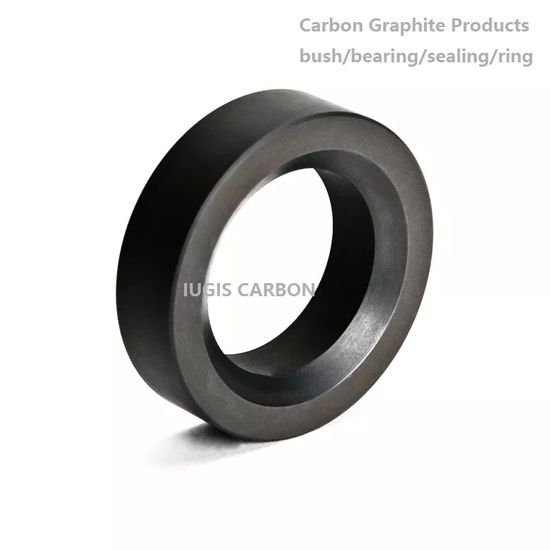
Material Specifications for Graphite Bushing Applications
Selecting the optimal elastomer compound is critical for graphite bushing performance in dynamic sealing environments. At Suzhou Baoshida Trading Co., Ltd., we engineer rubber formulations to withstand mechanical stress, thermal cycling, and chemical exposure while maintaining dimensional stability. Graphite-impregnated bushings rely on the elastomer matrix to provide structural integrity and complementary lubrication, making material compatibility non-negotiable for OEM manufacturing standards. Viton (FKM), Nitrile (NBR), and Silicone (VMQ) represent industry-preferred solutions, each with distinct thermodynamic and chemical resistance profiles. Precision in compound selection directly impacts service life, friction coefficients, and operational safety margins in hydraulic systems, pumps, and rotating machinery.
Viton fluorocarbon rubber delivers exceptional resistance to high temperatures, aggressive fuels, and synthetic lubricants. Its molecular structure maintains stability up to 230°C continuous service, with intermittent peaks at 260°C. Viton formulations exhibit minimal swelling in aromatic hydrocarbons and chlorinated solvents, making them ideal for aerospace and chemical processing bushings. However, cost considerations and lower flexibility at sub-zero temperatures necessitate application-specific validation. Nitrile butadiene rubber offers an optimal balance for general industrial use, particularly in petroleum-based fluid environments. With a standard operating range of -30°C to 120°C, NBR provides excellent abrasion resistance and tensile strength (15–25 MPa). Its affordability and robust performance in hydraulic oils and greases make it a staple for cost-sensitive OEM designs, though ester-based fluids and ozone exposure require careful evaluation. Silicone rubber excels in extreme temperature variance, functioning reliably from -60°C to 200°C. Its inertness suits food-grade and pharmaceutical applications, but lower mechanical strength and poor resistance to concentrated acids limit use in high-load bushing scenarios. Silicone’s gas permeability also demands scrutiny in vacuum systems.
All compounds undergo rigorous graphite integration protocols at Baoshida. Graphite particles (5–15% by weight) are homogenously dispersed to reduce friction without compromising elastomer cohesion. Compression set values below 25% after 70 hours at maximum service temperature ensure long-term sealing force retention. Below is a comparative analysis of critical parameters per ASTM D2000 standards.
| Property | Viton (FKM) | Nitrile (NBR) | Silicone (VMQ) |
|---|---|---|---|
| Temperature Range (°C) | -20 to +230 | -30 to +120 | -60 to +200 |
| Tensile Strength (MPa) | 12–20 | 15–25 | 6–12 |
| Compression Set (%)* | 15–25 | 20–35 | 20–40 |
| Fuel Resistance (BUNA) | Excellent | Good | Poor |
| Acid/Alkali Resistance | Excellent | Moderate | Fair |
| Graphite Compatibility | High | High | Moderate |
*Tested at 150°C for 70 hours per ASTM D395 Method B
OEM partners must correlate these specifications with bushing geometry, shaft finish, and duty cycles. Viton remains unmatched for high-temperature chemical exposure, NBR dominates cost-driven oil-handling systems, and Silicone serves niche cryogenic or biocompatible needs. Suzhou Baoshida Trading Co., Ltd. provides customized compound validation through accelerated life testing and FEA-backed material modeling. Contact our engineering team to optimize elastomer-graphite synergy for your application’s critical tolerances and regulatory requirements. Precise material science translates to reduced downtime and extended Mean Time Between Failures in demanding industrial ecosystems.
Manufacturing Capabilities
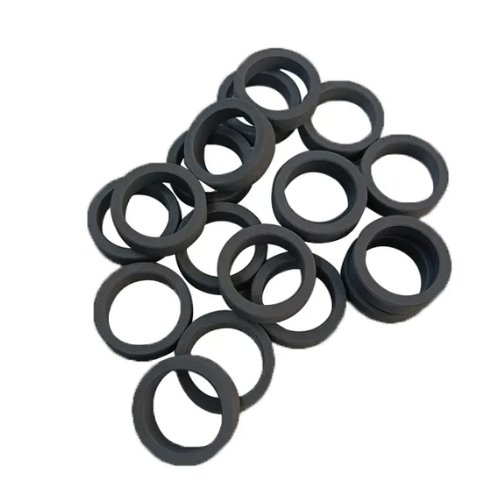
Suzhou Baoshida Trading Co., Ltd. maintains a robust engineering foundation in the development and production of industrial rubber components, with specialized expertise in graphite bushings. Our engineering capability is anchored by a dedicated team of five mould engineers and two advanced rubber formula engineers, enabling us to deliver high-performance, application-specific solutions under strict OEM standards. This integrated team ensures seamless coordination from material formulation to precision tooling, guaranteeing optimal mechanical performance, dimensional accuracy, and long-term reliability in demanding environments.
Our rubber formula engineers specialize in elastomer chemistry, focusing on optimizing formulations for thermal stability, wear resistance, and compatibility with graphite reinforcement. By tailoring polymer matrices—such as nitrile rubber (NBR), hydrogenated nitrile (HNBR), and fluorocarbon (FKM)—to integrate graphite for low friction and self-lubricating properties, we produce bushings capable of operating efficiently in high-temperature, low-lubrication, or chemically aggressive conditions. These formulations are validated through rigorous laboratory testing, including compression set, dynamic mechanical analysis (DMA), and tribological evaluation, ensuring compliance with international performance benchmarks.
Complementing material development, our five mould engineers ensure precision manufacturing through advanced CAD/CAM design, mold flow simulation, and tolerance optimization. Each graphite bushing mould is engineered for consistent cavity filling, minimal flash, and repeatability across large production runs. Utilizing hardened tool steels and precision CNC machining, we maintain tight tolerances down to ±0.05 mm, critical for sealing and rotational applications. The integration between material science and mould design allows for rapid prototyping, reduced cycle times, and seamless scale-up to high-volume OEM production.
We support full OEM collaboration, offering design for manufacturing (DFM) feedback, co-engineering services, and IP-protected development. Our systems are aligned with ISO 9001 quality standards, and we maintain full traceability across batches, materials, and tooling revisions. Whether adapting existing designs or developing new solutions from concept, our engineering team ensures technical alignment with client specifications, regulatory requirements, and operational demands.
The following table outlines key engineering specifications and capabilities relevant to our graphite bushing production:
| Parameter | Specification |
|---|---|
| Material Types | NBR, HNBR, FKM, EPDM with graphite filler |
| Hardness Range (Shore A) | 50–90 |
| Operating Temperature Range | -30°C to +250°C (depending on compound) |
| Tolerance Capability | ±0.05 mm (standard), ±0.02 mm (precision) |
| Mould Design Software | SolidWorks, AutoCAD, MoldFlow |
| Production Volume Flexibility | Prototypes to 500,000 units/month |
| OEM Documentation Support | Full DFM reports, material certifications, PPAP |
With a vertically integrated engineering approach, Suzhou Baoshida delivers technically superior graphite bushings tailored to the exact needs of industrial OEMs. Our expertise ensures performance, durability, and manufacturing efficiency across automotive, aerospace, and heavy machinery applications.
Customization Process
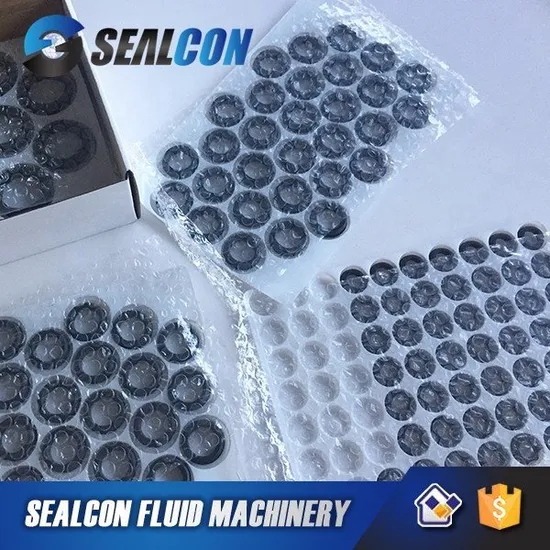
Graphite Bushing Customization Process: Precision Engineering from Concept to Volume Production
At Suzhou Baoshida Trading Co., Ltd., our graphite bushing customization follows a rigorously controlled sequence to ensure dimensional accuracy, material integrity, and performance reliability under industrial operating conditions. This process eliminates guesswork and aligns with OEM quality management systems, specifically ISO 9001:2015 protocols.
Drawing Analysis Protocol
Initial engineering review focuses on geometric tolerances, surface finish requirements, and interface specifications provided by the client. We validate critical parameters such as shaft clearance, load distribution zones, and thermal expansion allowances against ASTM D3188 standards. Any ambiguities in GD&T callouts or material callouts trigger immediate clarification loops with the client’s design team. This phase includes finite element analysis (FEA) simulations to predict stress concentrations under cyclic loads, ensuring the bushing design accommodates real-world dynamic forces without premature wear.
Material Formulation Engineering
Based on the operational environment defined in the drawing analysis, our rubber compounding laboratory develops a proprietary elastomer matrix. Graphite content is precisely calibrated between 15–25% by weight to optimize self-lubrication while maintaining structural resilience. Key variables include:
Base polymer selection (typically nitrile or hydrogenated nitrile for oil resistance)
Graphite particle size distribution (45–75 microns for optimal film formation)
Additive package for thermal stability (up to 150°C continuous service)
Compression set modifiers to sustain load-bearing capacity
Prototyping and Validation
Three functional prototypes undergo accelerated life testing per ASTM D2000. Critical performance metrics are measured under simulated field conditions, including PV limit validation, friction coefficient analysis, and dimensional stability checks after 500+ thermal cycles. Client-supplied test rigs are utilized whenever possible to mirror actual application dynamics.
Transition to Mass Production
Upon client approval of prototype validation data, production shifts to our ISO-certified manufacturing cell. Each batch undergoes:
Real-time rheometer monitoring during curing to ensure crosslink density consistency
100% dimensional inspection via coordinate measuring machines (CMM)
Lot-traceable material certifications with full formulation disclosure
The following table summarizes critical specification controls maintained throughout production:
| Parameter | Critical Value Range | Validation Method |
|---|---|---|
| Graphite Content | 18.0% ± 1.5% by weight | ASTM D297 (Muffle Furnace) |
| Shore A Hardness | 70 ± 5 | ASTM D2240 |
| PV Limit | ≥ 35,000 psi-fpm | ASTM D3702 (Thrust Washer Test) |
| Thermal Conductivity | 0.25–0.35 W/m·K | ISO 22007-2 (Laser Flash) |
| Compression Set (70h/100°C) | ≤ 22% | ASTM D395 Method B |
This structured approach ensures Suzhou Baoshida delivers graphite bushings that meet exacting OEM performance criteria while minimizing supply chain risk. Our closed-loop feedback system between R&D, production, and quality departments guarantees continuous improvement from prototype to high-volume output, with full documentation available for audit trails. Industrial clients benefit from reduced downtime through scientifically validated material solutions engineered for their specific mechanical interfaces.
Contact Engineering Team
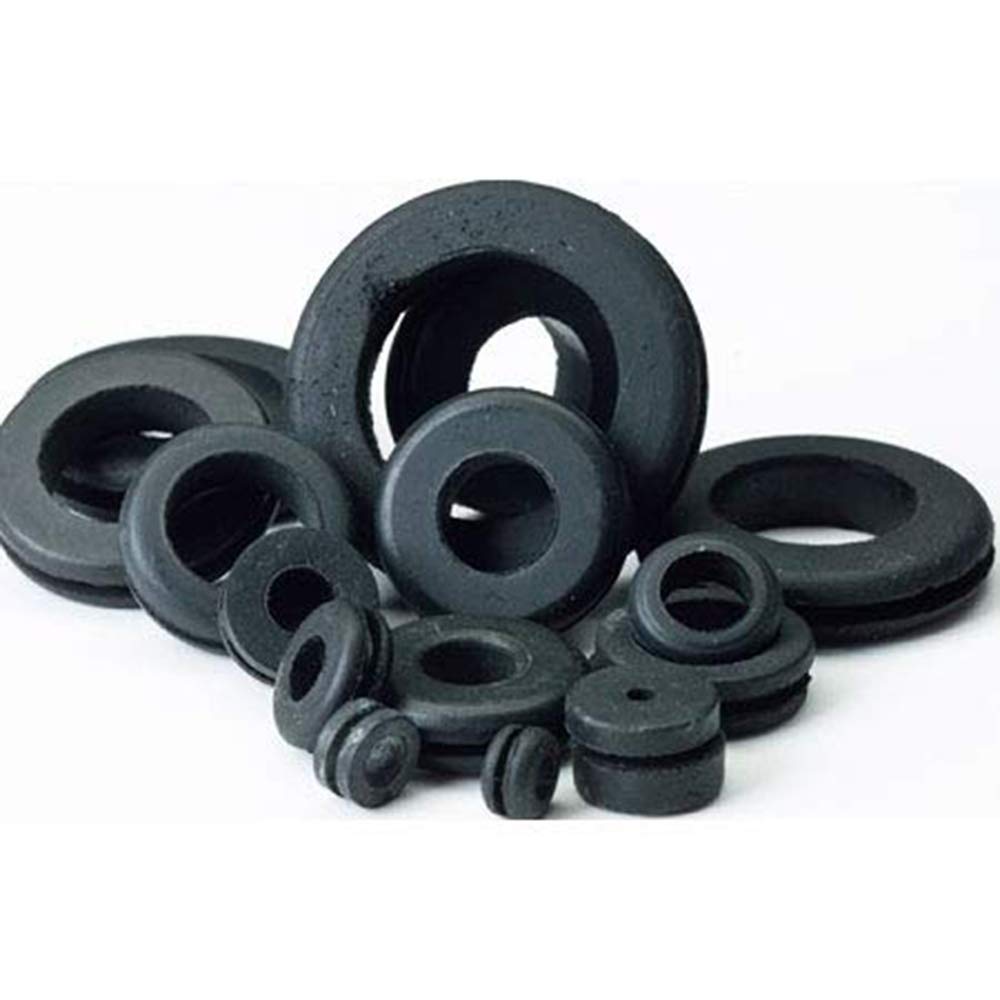
Contact Suzhou Baoshida for Premium Graphite Bushings and Industrial Rubber Solutions
Suzhou Baoshida Trading Co., Ltd. stands at the forefront of industrial rubber component manufacturing, delivering engineered solutions that meet the rigorous demands of global OEMs and industrial maintenance teams. As a trusted partner in precision rubber technology, we specialize in high-performance graphite bushings designed for durability, low friction, and reliability under extreme operating conditions. Our expertise spans material formulation, custom molding, and strict quality assurance, ensuring every component exceeds industry benchmarks.
Graphite bushings play a critical role in applications requiring self-lubrication, thermal stability, and resistance to wear in dry or high-temperature environments. Whether deployed in automotive drivetrains, heavy machinery, or industrial automation systems, our graphite-impregnated rubber bushings offer consistent performance with minimal maintenance. At Suzhou Baoshida, we combine advanced elastomer science with precision engineering to deliver bushings that enhance system efficiency and longevity.
We invite technical buyers, procurement managers, and engineering teams to contact Mr. Boyce, our dedicated OEM and Technical Sales Manager, to discuss your specific application requirements. Mr. Boyce brings over 15 years of experience in industrial rubber solutions and is equipped to guide you through material selection, dimensional customization, and compliance with international standards such as ISO 9001 and RoHS. From prototype support to full-scale production, we ensure seamless integration of our components into your manufacturing workflow.
Our facility in Suzhou operates state-of-the-art vulcanization and mixing lines, enabling precise control over rubber compound properties and graphite dispersion. This level of process control translates into bushings with uniform density, optimal load distribution, and extended service life. We support a range of elastomeric bases including Nitrile (NBR), EPDM, and silicone, each modified with graphite to achieve superior anti-friction characteristics.
Below is a representative specification table for our standard graphite bushing offerings. Custom dimensions, hardness profiles, and temperature ratings are available upon request.
| Parameter | Value |
|---|---|
| Material Base | NBR, EPDM, Silicone with Graphite |
| Hardness (Shore A) | 50–90 ±5 |
| Operating Temperature | -30°C to +150°C (up to +250°C intermittent) |
| Maximum Load (Static) | Up to 50 MPa |
| Coefficient of Friction | 0.12–0.18 (dry running) |
| Linear Speed Tolerance | Up to 2.5 m/s |
| Standard Tolerances | ISO 3302-1 Class M2 or custom |
| Color | Black (graphite-impregnated) |
Partnering with Suzhou Baoshida means gaining access to technical rigor, scalable production capacity, and responsive customer support. To request samples, technical data sheets, or a direct consultation, please contact Mr. Boyce at [email protected]. We respond to all inquiries within 12 business hours and offer virtual or on-site technical meetings for strategic accounts. Let us help you optimize your mechanical systems with engineered rubber solutions built to perform.
⚖️ O-Ring Weight Calculator
Estimate rubber O-ring weight (Approx).