
Technical Contents
Engineering Guide: Graphite Exhaust Gasket Material
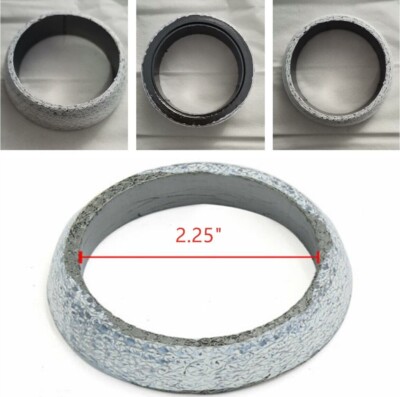
Engineering Insight: Graphite Exhaust Gasket Material – The Critical Role of Material Selection
In high-temperature sealing applications such as exhaust systems, material selection is not a secondary consideration—it is the foundation of functional reliability. Graphite exhaust gasket material, while widely available in off-the-shelf configurations, often fails prematurely when deployed without rigorous engineering evaluation. This failure stems from a fundamental misunderstanding: that all flexible graphite materials are functionally equivalent. In reality, performance variance between grades can be dramatic, particularly under sustained thermal cycling, mechanical load, and exposure to corrosive exhaust byproducts.
Graphite, in its flexible form, offers exceptional thermal stability, chemical resistance, and compressibility, making it ideal for exhaust manifold, turbocharger, and downpipe gasketing. However, unmodified or low-density graphite sheets lack sufficient resilience and creep resistance under prolonged stress. Off-the-shelf gaskets frequently utilize standard-grade graphite with minimal reinforcement, leading to compression set, blowout, and leakage within thousands of operating miles. These failures are not inherent to graphite as a material class, but to improper formulation and structural design.
At Suzhou Baoshida Trading Co., Ltd., our engineered graphite solutions integrate high-purity expandable graphite with optimized particle size distribution and strategic reinforcement—typically via embedded stainless steel cores or alloy carriers. This hybrid construction ensures dimensional stability, enhanced recovery, and resistance to thermal shock. For example, a 1.5 mm reinforced graphite laminate with a 304 stainless steel insert demonstrates up to 40% lower creep relaxation at 750°C compared to non-reinforced equivalents after 500 thermal cycles.
Moreover, OEM-grade performance demands precise control over density, tensile strength, and thermal conductivity. A gasket material that performs adequately in a low-flow passenger vehicle may catastrophically fail in a heavy-duty diesel application due to differences in exhaust gas velocity and temperature gradients. Therefore, material selection must be application-specific, factoring in peak operating temperature, flange surface finish, bolt load consistency, and expected service life.
The following table outlines key performance parameters for engineered graphite exhaust gasket material versus standard off-the-shelf alternatives:
| Property | Engineered Graphite (OEM Grade) | Standard Graphite (Off-the-Shelf) |
|---|---|---|
| Density (g/cm³) | 1.7 – 2.0 | 1.3 – 1.6 |
| Compressive Strength (MPa) | 18 – 25 | 10 – 14 |
| Max Continuous Temp (°C) | 750 (inert), 650 (oxidizing) | 600 (inert), 500 (oxidizing) |
| Thermal Conductivity (W/mK) | 15 – 25 | 8 – 12 |
| Creep Relaxation (after 500h at 650°C) | ≤ 22% | ≥ 45% |
| Reinforcement | 304/316 Stainless Steel Core | None or PET Film |
| Chemical Resistance | Excellent (acids, oils, exhaust condensates) | Moderate (prone to oxidation) |
Relying on generic solutions introduces unacceptable risk in mission-critical sealing environments. True performance is achieved not through material substitution, but through precision engineering—aligning material characteristics with operational demands. At Baoshida, we deliver not just graphite, but engineered sealing systems designed for endurance.
Material Specifications
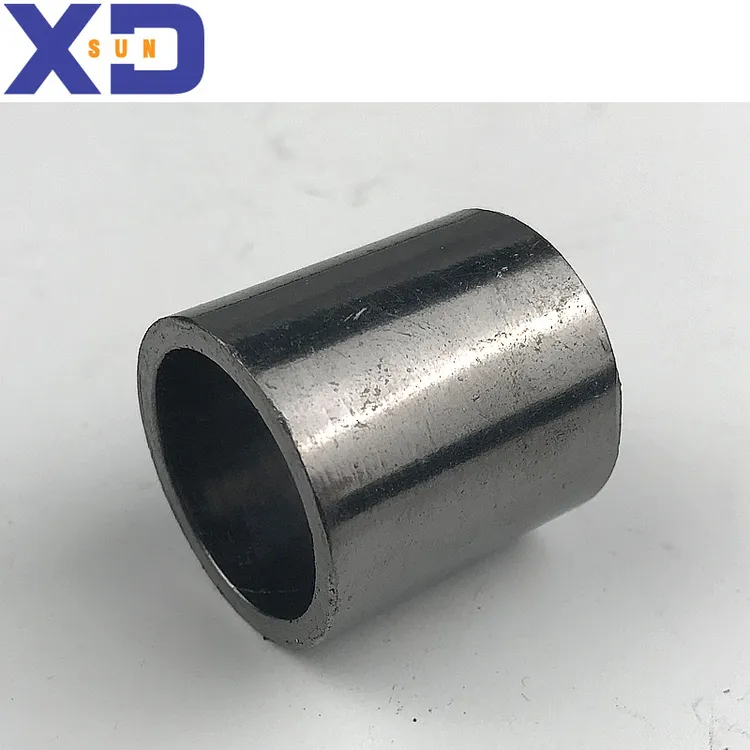
Material Specifications for Graphite Exhaust Gasket Applications
Graphite exhaust gasket materials must withstand extreme thermal cycling, aggressive chemical exposure, and mechanical stress in automotive exhaust systems. At Suzhou Baoshida Trading Co., Ltd., we engineer precision rubber seals using three primary elastomers—Viton®, Nitrile (NBR), and Silicone—each optimized for specific operational demands. These materials are compounded with high-purity graphite fillers to enhance thermal conductivity, reduce creep, and maintain sealing integrity under fluctuating pressure conditions. Critical selection hinges on temperature profiles, fluid compatibility, and long-term resilience against oxidation and compression set.
The following table details key technical specifications per ASTM D2000 standards for exhaust gasket formulations. All materials incorporate 15–25% graphite by weight to improve heat dissipation and dimensional stability.
| Material | Continuous Temperature Range | Key Fluid Resistance | Compression Set (22 hrs/150°C) | ASTM D2000 Reference Line |
|---|---|---|---|---|
| Viton® | -20°C to +250°C | Excellent: Fuels, oils, acids, ozone | ≤ 25% | HK 7375 EC 314 B14 EF 21 |
| Nitrile (NBR) | -30°C to +120°C | Good: Oils, greases; Poor: Ozone, fuels, ketones | ≤ 30% | BK 7474 EC 314 B14 EF 11 |
| Silicone | -60°C to +200°C | Fair: Oils; Excellent: Water, ozone | ≤ 40% | LK 7775 EC 314 B14 EF 31 |
Viton® fluorocarbon elastomers deliver superior performance in high-temperature exhaust manifolds exceeding 200°C, resisting thermal degradation and maintaining seal force against turbocharger emissions. Its molecular stability ensures longevity in contact with biodiesel blends and sulfur-containing exhaust gases, though raw material costs are elevated. Nitrile remains cost-effective for lower-temperature applications like diesel particulate filters, where oil resistance is paramount but sustained heat exposure is limited. However, NBR’s vulnerability to ozone cracking necessitates protective additives in turbocharged systems. Silicone excels in cold-start environments due to exceptional low-temperature flexibility but exhibits higher compression set, making it suitable for non-critical exhaust joints with moderate thermal loads.
OEM validation must prioritize dynamic compression testing under simulated exhaust pulsation (per SAE J2208). Viton® formulations achieve optimal balance for Tier 1 exhaust flange seals, while NBR suits secondary components like oxygen sensor ports. Silicone’s limitations in oil resistance restrict its use to water-cooled exhaust sections. Suzhou Baoshida provides custom durometer adjustments (60–90 Shore A) and graphite particle sizing (5–50μm) to meet OEM leakage rate requirements. Always verify material compatibility against specific exhaust aftertreatment chemistries, as modern SCR systems introduce urea and ammonia that accelerate elastomer swelling in non-fluorinated compounds. Field failures typically originate from underestimating thermal transients—design margins must exceed peak operational temperatures by 20%.
Manufacturing Capabilities
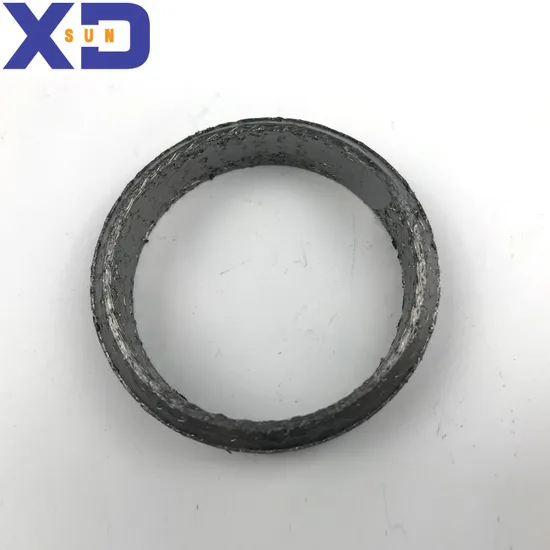
Suzhou Baoshida Trading Co., Ltd. operates at the forefront of precision rubber seal manufacturing, with a specialized focus on high-performance graphite exhaust gasket materials for demanding industrial and automotive applications. Our engineering capability is anchored by a dedicated team of five mould engineers and two advanced formula engineers, enabling us to deliver technically superior, application-specific sealing solutions under strict OEM requirements.
The integration of material science and precision tooling defines our engineering approach. Our two formula engineers possess deep expertise in elastomer chemistry, with a particular focus on compounded rubber formulations enhanced with graphite for superior thermal stability, oxidation resistance, and sealing integrity under extreme exhaust conditions. These formulations are engineered to withstand continuous operating temperatures up to 650°C, resist blowout under high-pressure cyclic loading, and maintain resilience across variable thermal gradients. Each compound is developed through iterative lab-scale testing and real-world simulation, ensuring optimized compression set, tensile strength, and creep resistance tailored to specific client environments.
Complementing our material development, our team of five mould engineers ensures dimensional precision and manufacturing repeatability. Utilizing advanced CAD/CAM software and precision CNC machining, we design and produce custom moulds that meet tight tolerances (±0.05 mm) required in modern exhaust systems. Our engineers apply flow analysis and thermal modeling to optimize material distribution and cure uniformity, minimizing flash and part variation. This synergy between formulation and mould design allows us to produce complex multi-layer gaskets, embossed seals, and cut-sheet materials with consistent quality across high-volume production runs.
We support full OEM collaboration, from initial concept and material selection through prototyping, validation, and serial production. Our technical team works directly with client engineering departments to interpret performance requirements, conduct joint FEA analysis, and deliver samples compliant with ASTM, ISO, and OEM-specific standards. With in-house testing facilities including high-temperature compression set, stress relaxation, and permeability analysis, we ensure every formulation and component meets rigorous durability benchmarks.
Our graphite-enhanced rubber gasket materials are designed for applications in heavy-duty diesel engines, turbocharger systems, and high-efficiency combustion platforms where reliability under thermal cycling is critical. By combining advanced elastomer formulation with precision tooling and OEM-aligned development processes, Suzhou Baoshida delivers engineered sealing solutions that enhance system efficiency and longevity.
| Property | Test Method | Typical Value |
|---|---|---|
| Maximum Continuous Use Temperature | ASTM E1356 | 650°C |
| Tensile Strength | ASTM D412 | ≥12 MPa |
| Elongation at Break | ASTM D412 | ≥150% |
| Compression Set (22 hrs, 500°C) | ASTM D395 | ≤35% |
| Hardness (Shore A) | ASTM D2240 | 75 ±5 |
| Specific Gravity | ASTM D792 | 1.75 g/cm³ |
| Thermal Conductivity | ASTM C168 | 0.35 W/m·K |
Customization Process
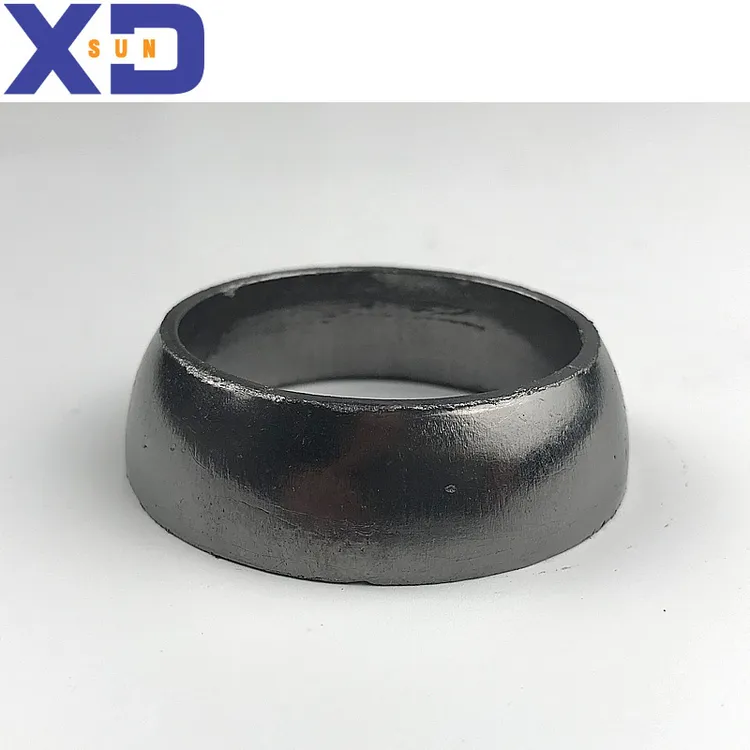
Graphite Exhaust Gasket Material Customization Process
At Suzhou Baoshida Trading Co., Ltd., our customization process for graphite exhaust gasket materials adheres to stringent industrial protocols, ensuring optimal performance under extreme thermal and chemical conditions. This systematic approach guarantees seamless integration with OEM engine architectures while meeting global emission and durability standards.
Drawing Analysis
Initial engagement begins with rigorous technical drawing review. Our engineering team scrutinizes dimensional tolerances, surface finish requirements (Ra ≤ 1.6 μm per ISO 3301), flange geometry, and bolt load specifications. Critical parameters such as interfacial pressure distribution, thermal expansion coefficients of mating surfaces, and potential distortion zones are modeled using finite element analysis (FEA). This phase identifies material stress points and validates compatibility with exhaust manifold alloys, preventing premature failure due to creep relaxation or thermal fatigue.
Formulation Development
Based on drawing insights, our rubber chemistry lab designs a proprietary graphite-rubber composite. Key considerations include operating temperature range (-40°C to 1000°C intermittent), exposure to sulfuric acid condensates, and vibration damping requirements. The formulation balances flexible graphite filler (85-95% by weight) with specialized elastomer matrices—typically hydrogenated nitrile (HNBR) or fluorosilicone—to achieve target compression set (<25% at 300°C/24h) and thermal conductivity (15-30 W/m·K). Additives for oxidation resistance and oil swell mitigation are precisely dosed to meet OEM fluid compatibility matrices. Material properties are defined in the table below.
| Critical Property | Target Range | Test Standard |
|---|---|---|
| Max Continuous Temp | 650°C | ASTM D573 |
| Compression Set (300°C/24h) | ≤22% | ASTM D395 Method B |
| Thermal Conductivity | 22-28 W/m·K | ASTM E1461 |
| Tensile Strength | ≥8.0 MPa | ASTM D412 |
| Fluid Resistance (AEM) | ΔV ≤ +15% | ISO 1817 |
Prototyping & Validation
Prototypes are manufactured using precision die-cutting or CNC water-jet processes to maintain edge integrity. Each sample undergoes multi-stage validation: torque retention testing under thermal cycling (-40°C ↔ 850°C, 500 cycles), exhaust gas leakage quantification per SAE J2229, and dynamic fatigue simulation matching real-world engine vibration profiles. Data from these tests refines the formulation and geometry before final sign-off. Clients receive comprehensive validation reports including stress-strain curves and microstructural analysis via SEM imaging.
Mass Production Control
Transition to volume production leverages our ISO/TS 16949-certified facility. Raw material batches undergo spectrometric verification of graphite purity (≥99.5% carbon). In-line process monitoring tracks vulcanization kinetics via moving die rheometry (MDR), ensuring consistent crosslink density. Every gasket is 100% inspected for thickness uniformity (±0.05mm) using laser micrometry and surface defects via automated optical inspection (AOI). Statistical process control (SPC) maintains Cp/Cpk >1.67 for critical dimensions, with full traceability from material lot to finished part. This closed-loop system guarantees zero-defect delivery for high-volume OEM assembly lines.
Our end-to-end customization framework transforms complex exhaust sealing challenges into reliable, high-performance solutions, backed by 15+ years of Tier-1 automotive validation expertise.
Contact Engineering Team

For industrial manufacturers seeking high-performance sealing solutions, Suzhou Baoshida Trading Co., Ltd. stands at the forefront of precision rubber engineering. Specializing in advanced materials for extreme environments, we deliver technically superior graphite exhaust gasket materials engineered to meet the rigorous demands of automotive, aerospace, power generation, and heavy industrial applications. Our proprietary formulations combine flexible graphite with reinforced elastomeric binders to achieve optimal thermal stability, chemical resistance, and mechanical resilience under fluctuating pressure and temperature cycles.
Graphite exhaust gasket material from Suzhou Baoshida is designed for durability in continuous service up to 650°C in oxidizing environments and 850°C in inert atmospheres. This exceptional thermal performance, combined with low creep relaxation and excellent recovery characteristics, ensures long-term sealing integrity even in high-vibration and thermally cycled systems. The material exhibits outstanding resistance to exhaust gases, hydrocarbons, acids, and steam, making it ideal for turbocharger manifolds, diesel particulate filters, exhaust gas recirculation (EGR) systems, and other critical emission control components.
Our manufacturing process adheres to ISO 9001 quality management standards, with every batch subjected to stringent physical and chemical testing. Each roll of graphite exhaust gasket material is precision-calendered to exact thickness tolerances, ensuring uniform compression and reliable torque retention during installation. We offer standard sheet sizes and custom die-cut configurations to meet OEM specifications, supporting both high-volume production lines and specialized repair markets.
Below are the key technical specifications of our standard graphite exhaust gasket material:
| Property | Test Method | Value |
|---|---|---|
| Density | ASTM F1414 | 1.6 – 1.8 g/cm³ |
| Compressibility | ASTM F36 | 12 – 16% |
| Recovery | ASTM F36 | ≥ 40% |
| Tensile Strength | ASTM D412 | ≥ 3.5 MPa |
| Thickness Range | ISO 2768 | 0.4 mm – 3.0 mm |
| Temperature Resistance | DIN 53508 | -200°C to +650°C (oxidizing), up to 850°C (inert) |
| Fluid Resistance | ISO 1817 | Excellent resistance to oils, fuels, exhaust gases, and weak acids |
Partnering with Suzhou Baoshida means gaining access to not only premium materials but also deep technical expertise in sealing dynamics and failure analysis. Our engineering team collaborates directly with clients to optimize gasket design, recommend material grades, and support qualification testing.
For technical inquiries, sample requests, or volume quotations, contact Mr. Boyce, OEM Manager and Rubber Formula Engineer, at [email protected]. Mr. Boyce leads material development and client integration projects, ensuring that every solution is tailored to the operational demands of your application. Prompt response, technical clarity, and engineering accountability define our customer engagement.
Secure your supply chain with a trusted partner in precision rubber seals. Contact Suzhou Baoshida Trading Co., Ltd. today to discuss your graphite exhaust gasket material requirements.
⚖️ O-Ring Weight Calculator
Estimate rubber O-ring weight (Approx).