
Technical Contents
Engineering Guide: Graphite Sheet

Engineering Insight Graphite Sheet Material Selection Failures in Critical Applications
Off-the-shelf graphite sheets frequently fail in demanding industrial sealing and thermal management applications due to fundamental mismatches between generic material properties and specific operational requirements. Standard commercial grades prioritize cost reduction over performance fidelity, leading to premature field failures that incur significant downtime and replacement costs. As an OEM manager handling global supply chains, I consistently observe these failures stem from inadequate thermal conductivity stability under cyclic loads, insufficient chemical resistance to process media, and poor mechanical recovery after compression. Generic graphite often utilizes inconsistent filler particle sizes and non-optimized binder systems, resulting in unpredictable thermal expansion coefficients that compromise seal integrity during temperature transients. This lack of precision engineering becomes catastrophic in applications like fuel cell bipolar plates or semiconductor processing equipment, where micron-level dimensional stability directly impacts system efficiency and safety.
Thermal conductivity limitations represent a primary failure vector. Standard graphite sheets exhibit variable through-plane conductivity due to uncontrolled flake orientation and binder distribution. During thermal cycling, this inconsistency causes localized hot spots and thermal runaway conditions, particularly in high-power electronics cooling. Concurrently, chemical resistance is frequently underestimated; many off-the-shelf formulations degrade when exposed to aggressive coolants, acids, or solvents common in chemical processing plants. The binder systems in generic grades lack polymer matrix compatibility, leading to swelling, embrittlement, or extractables contamination. Mechanical property deficiencies further accelerate failure. Standard graphite demonstrates poor compression set recovery under sustained load, causing permanent deformation in gasket applications. This loss of sealing force allows critical fluid or gas leakage paths to develop, especially in high-vibration environments like automotive turbocharger systems.
The performance gap between standard and engineered graphite is quantifiable through rigorous material characterization. Key specifications reveal why precision formulation matters:
| Property | Standard Graphite Sheet | Baoshida Engineered Graphite | Performance Impact |
|---|---|---|---|
| Through-Plane Conductivity | 15-25 W/mK (±20%) | 35-45 W/mK (±5%) | Eliminates thermal gradients in power modules |
| Compression Set (24h/260°C) | 35-45% | ≤12% | Maintains sealing force in exhaust systems |
| Tensile Strength | 4-6 MPa | 8-10 MPa | Resists handling damage during assembly |
| Sulfur Content | ≤3000 ppm | ≤50 ppm | Prevents corrosion in fuel cell stacks |
Suzhou Baoshida Trading Co., Ltd. addresses these failure modes through OEM-centric material engineering. Our graphite sheets utilize controlled particle size distribution, proprietary binder chemistries, and application-specific density tuning to achieve predictable performance envelopes. We collaborate with clients during the design phase to model thermal stress profiles and chemical exposure scenarios, ensuring the graphite formulation matches the actual service environment rather than minimum industry standards. This precision approach prevents the hidden costs of field failures—unplanned maintenance, warranty claims, and reputational damage—by delivering material performance that aligns with the engineered system requirements. For mission-critical applications, material selection is not a commodity decision but a foundational engineering parameter requiring scientific validation and process-specific optimization.
Material Specifications
Graphite sheets are critical components in high-performance industrial sealing and thermal management applications, particularly where resistance to extreme temperatures, chemical exposure, and mechanical stress is required. At Suzhou Baoshida Trading Co., Ltd., we specialize in advanced rubber formulations engineered to meet stringent OEM and industrial standards. When combined with graphite sheets, elastomeric materials such as Viton, Nitrile, and Silicone play a pivotal role in enhancing sealing integrity, durability, and operational reliability. The selection of the appropriate elastomer depends on specific application parameters including temperature range, chemical environment, compression set resistance, and mechanical loading.
Viton, a fluorocarbon-based rubber (FKM), offers exceptional resistance to high temperatures, oils, fuels, and a broad range of aggressive chemicals. It is ideal for applications in aerospace, automotive, and chemical processing industries where long-term performance under extreme conditions is non-negotiable. With a continuous service temperature range up to 230°C, Viton maintains its physical properties and sealing capability where many other elastomers fail. Its low gas permeability and excellent aging characteristics further enhance its suitability for critical sealing systems integrated with graphite sheets.
Nitrile rubber (NBR) is widely used in industrial environments involving exposure to oils, hydraulic fluids, and aliphatic hydrocarbons. It provides good abrasion resistance and mechanical strength at a more economical cost than Viton. While its upper temperature limit is approximately 120°C, Nitrile remains a preferred choice for dynamic and static seals in machinery, pumps, and valves where cost-efficiency and reliable oil resistance are paramount. When paired with graphite sheets in gasketing applications, NBR delivers robust performance in moderate thermal and chemical conditions.
Silicone rubber (VMQ) stands out for its outstanding thermal stability across a wide range, from -60°C to 200°C, and exceptional resistance to ozone and UV radiation. Although it exhibits lower mechanical strength compared to Nitrile or Viton, silicone is unmatched in applications requiring flexibility at low temperatures and long-term thermal aging resistance. It is commonly used in electrical insulation, food processing, and pharmaceutical industries where purity and thermal resilience are essential. When combined with graphite sheets, silicone-based composites offer reliable performance in thermal interface materials and low-stress sealing applications.
The following table summarizes key material properties to guide selection in industrial rubber-graphite composite applications:
| Property | Viton (FKM) | Nitrile (NBR) | Silicone (VMQ) |
|---|---|---|---|
| Temperature Range (°C) | -20 to 230 | -30 to 120 | -60 to 200 |
| Tensile Strength (MPa) | 15–20 | 10–25 | 5–8 |
| Elongation at Break (%) | 200–300 | 200–500 | 200–600 |
| Hardness (Shore A) | 60–90 | 50–90 | 30–80 |
| Fluid Resistance | Excellent (oils, fuels, acids) | Good (oils, aliphatic hydrocarbons) | Fair (water, some chemicals) |
| Compression Set Resistance | Excellent | Good | Moderate |
| Electrical Insulation | Good | Fair | Excellent |
Material selection must be based on comprehensive evaluation of operating conditions. Suzhou Baoshida Trading Co., Ltd. supports OEMs with precision-engineered rubber-graphite solutions tailored to exact performance criteria.
Manufacturing Capabilities
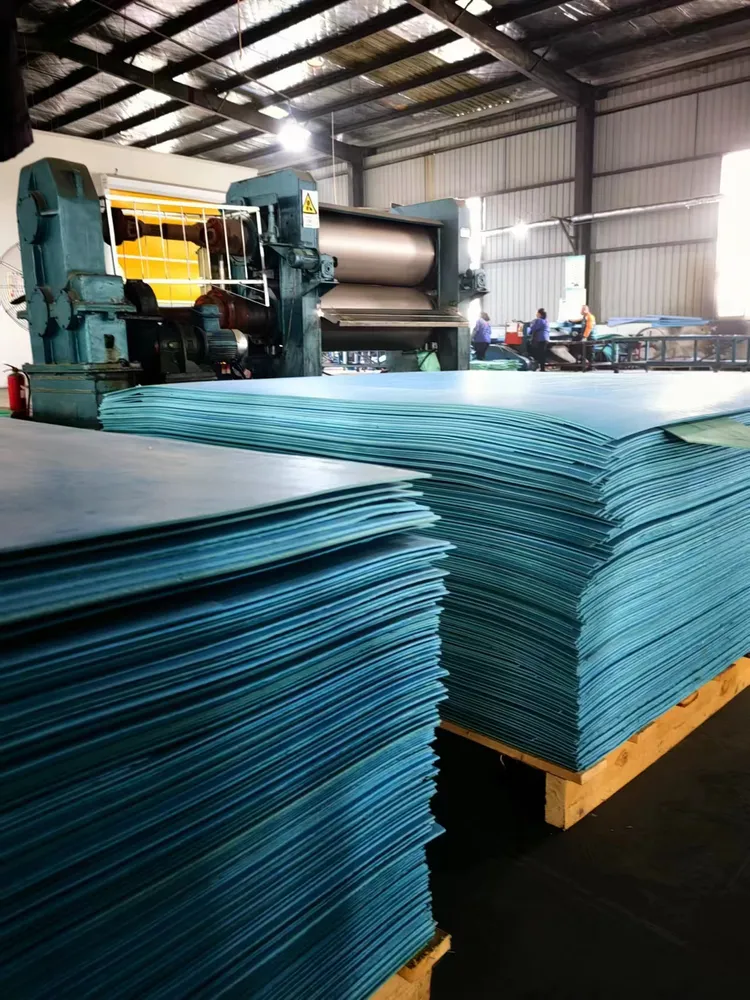
Engineering Capability: Precision-Driven Graphite Sheet Development
At Suzhou Baoshida Trading Co., Ltd., our engineering framework for graphite sheet manufacturing integrates advanced material science with industrial pragmatism. Central to this capability is a dedicated team of five Mould Engineers and two Rubber Formula Engineers, each bringing specialized expertise to optimize performance, durability, and cost-efficiency for demanding industrial applications. This structure ensures seamless alignment between raw material formulation and precision tooling—critical for graphite sheets requiring exact thermal, electrical, and mechanical properties.
Our Rubber Formula Engineers focus on tailoring polymer matrices and graphite filler systems to achieve target specifications. Through iterative lab-scale compounding and rigorous testing, we fine-tune variables such as particle size distribution, binder-resin ratios, and crosslinking density. This process directly influences key metrics like thermal conductivity stability under compression, electrical resistivity consistency, and resistance to chemical degradation in harsh environments. Simultaneously, our Mould Engineering team designs and validates production tooling that maintains dimensional tolerances within ±0.05mm, ensuring uniform sheet thickness and edge integrity across high-volume runs. The synergy between these disciplines eliminates common industry pitfalls, such as filler segregation or anisotropic property variation, by synchronizing material behavior with mould flow dynamics.
As an OEM partner, we execute end-to-end project ownership—from conceptual sketch to validated production. Clients provide application parameters (e.g., operating temperature range, load conditions, regulatory standards), and our engineers develop proprietary formulations and tooling solutions meeting those exact needs. This includes rapid prototyping using CAD/CAM-optimized moulds, followed by accelerated life testing to validate performance against real-world stressors. Our facility supports custom sheet geometries, multi-layer laminates, and surface treatments (e.g., anti-adhesive coatings), all produced under ISO 9001-controlled workflows.
The following table summarizes critical performance specifications achievable through our engineered graphite sheet solutions:
| Property | Standard Range | High-Performance Range | Test Method |
|---|---|---|---|
| Thermal Conductivity | 35–100 W/m·K | 120–180 W/m·K | ASTM D5470 |
| Electrical Resistivity | 5–20 µΩ·m | 1–3 µΩ·m | ASTM D257 |
| Max. Continuous Temp. | 350°C (air) | 450°C (inert) | ASTM E1356 |
| Density | 1.6–1.9 g/cm³ | 2.0–2.2 g/cm³ | ASTM D792 |
| Compression Set (24h, 250°C) | ≤25% | ≤15% | ASTM D395 Method B |
Quality assurance is embedded at every phase. Raw material batches undergo spectroscopic verification of graphite purity (>99.5% carbon), while in-process checks monitor viscosity profiles and cure kinetics. Final sheets are subjected to non-destructive ultrasonic scanning for internal defects and laser micrometry for thickness uniformity. This systematic approach reduces client validation cycles by up to 40% and ensures batch-to-batch repeatability essential for automotive, semiconductor, and energy sector supply chains.
By converging formula innovation with precision tooling, Suzhou Baoshida delivers graphite sheets that exceed functional requirements while optimizing total cost of ownership. Our engineering team’s collaborative model transforms complex material challenges into reliable, scalable manufacturing outcomes—proving that industrial rubber solutions demand both scientific rigor and production acumen.
Customization Process

Customization Process for Graphite Sheet Manufacturing at Suzhou Baoshida Trading Co., Ltd.
At Suzhou Baoshida Trading Co., Ltd., our industrial rubber solutions are engineered to meet the precise performance demands of advanced manufacturing sectors, including automotive, aerospace, and electronics. The customization process for graphite sheet production follows a rigorous four-stage workflow: Drawing Analysis, Formulation, Prototyping, and Mass Production. This structured approach ensures dimensional accuracy, material integrity, and compliance with OEM specifications.
The process begins with Drawing Analysis, where technical blueprints provided by the client are subjected to comprehensive evaluation. Our engineering team reviews critical parameters such as thickness tolerance, surface finish, cut pattern geometry, and functional requirements. Finite element analysis (FEA) tools are employed to simulate stress distribution and thermal behavior under operational conditions. This stage confirms feasibility and identifies potential design optimizations before material development begins.
Following drawing validation, we proceed to Formulation. Our rubber formula engineers develop a proprietary elastomer matrix tailored to the thermal conductivity, electrical resistivity, and mechanical resilience required by the application. Graphite sheets are typically compounded with nitrile rubber (NBR), silicone (VMQ), or fluorocarbon (FKM) bases, depending on temperature range and chemical exposure. Additives such as carbon black, ceramic fillers, or anti-oxidants are precisely metered to enhance performance. Each formulation is documented under strict batch control for traceability and repeatability.
Prototyping is the third phase, where small-batch samples are produced using precision die-cutting or water-jet cutting methods. These prototypes undergo a battery of quality tests, including compression set, thermal cycling, dielectric strength, and outgassing analysis. Clients receive physical samples along with a full test report for validation. Any required adjustments to formulation or geometry are implemented at this stage to ensure full compliance with performance benchmarks.
Upon client approval, we transition to Mass Production. Our automated production lines operate under ISO 9001-certified protocols, ensuring consistency across large volumes. In-line monitoring systems track thickness variation, weight per unit area, and surface defects in real time. Final inspection includes 100% visual checks and statistical sampling for mechanical and electrical properties. All graphite sheets are vacuum-sealed and labeled with lot-specific data for supply chain transparency.
Below is a representative specification table for a standard conductive graphite sheet formulation:
| Parameter | Value | Test Method |
|---|---|---|
| Base Material | Silicone (VMQ) + Expanded Graphite | ASTM D1418 |
| Thickness Range | 0.5 mm – 3.0 mm | ASTM D374 |
| Thermal Conductivity | 15–20 W/m·K | ASTM E1461 |
| Electrical Resistivity | ≤ 0.01 Ω·cm | ASTM D257 |
| Compression Set (22 hrs, 150°C) | ≤ 20% | ASTM D395 |
| Operating Temperature | -60°C to +250°C | ASTM D573 |
| Hardness (Shore A) | 55 ± 5 | ASTM D2240 |
This systematic customization process enables Suzhou Baoshida Trading Co., Ltd. to deliver high-performance graphite sheets that meet exacting industrial standards, ensuring reliability and longevity in mission-critical applications.
Contact Engineering Team
Technical Engagement for Precision Graphite Sheet Solutions
Suzhou Baoshida Trading Co., Ltd. operates at the intersection of advanced material science and industrial reliability, specializing in engineered graphite sheet formulations for critical sealing, thermal management, and EMI shielding applications. Our expertise extends beyond conventional rubber compounding to integrate high-purity graphite into elastomeric matrices, delivering solutions that withstand extreme temperatures, chemical exposure, and mechanical stress. As your OEM partner, we prioritize ASTM, ISO, and customer-specific performance benchmarks, ensuring every graphite sheet batch meets stringent dimensional tolerances and functional requirements. Our in-house R&D lab validates material behavior under real-world conditions—from cryogenic seals in semiconductor manufacturing to 500°C exhaust gaskets in heavy machinery—providing data-driven confidence in your supply chain.
Graphite sheets require precise control over density, particle orientation, and binder chemistry to achieve optimal anisotropic properties. Below are key technical parameters for our standard industrial-grade flexible graphite sheets, validated per ASTM F149 and DIN 28090 testing protocols:
| Parameter | Test Standard | Typical Value Range | Significance for Industrial Applications |
|---|---|---|---|
| Density | ASTM D482 | 1.1–1.8 g/cm³ | Directly impacts compressibility and recovery in dynamic seals |
| Thermal Conductivity | ASTM D5470 | 80–150 W/m·K (in-plane) | Critical for heat dissipation in battery thermal management systems |
| Maximum Service Temperature | ASTM D3584 | 450°C (continuous) | Ensures stability in high-heat automotive/exhaust environments |
| Compression Set (25% def.) | ASTM F36 | ≤15% @ 300°C/24h | Predicts long-term sealing force retention under load |
| Electrical Resistivity | ASTM D257 | 5–15 μΩ·m | Enables EMI shielding efficacy in electronic housings |
These metrics reflect our commitment to repeatability; lot-to-lot variance is maintained below 3% through automated calendering and controlled pyrolysis processes. Unlike commodity suppliers, we tailor graphite flake size distribution and polymer binder ratios to your operational demands—whether optimizing for low-outgassing in vacuum systems or chemical resistance against concentrated acids. Our OEM workflow includes collaborative DFM analysis, rapid prototyping, and PPAP documentation, reducing time-to-qualification by 30% for Tier-1 automotive and energy sector clients.
When standard specifications cannot address your thermal runaway mitigation or fugitive emissions challenges, our engineering team initiates a structured material development protocol. We begin with your operational boundary conditions—pressure cycles, media compatibility, and lifecycle expectations—to formulate a graphite-elastomer composite that exceeds ISO 2230 or TA Luft compliance. Recent case studies include hydrogen fuel cell bipolar plates with 99.95% purity graphite and low-leakage flange gaskets for LNG cryogenic valves.
Initiate your graphite sheet qualification process with Suzhou Baoshida. Contact Mr. Boyce, our dedicated OEM Technical Manager, to submit material requirements, review application-specific test data, or schedule a virtual factory audit. Provide your thermal profile, dimensional constraints, and performance targets for a customized formulation proposal within 72 hours. Mr. Boyce coordinates cross-functional support from compounding to logistics, ensuring seamless integration into your production ecosystem.
Direct Technical Engagement
Mr. Boyce
OEM Technical Manager
Suzhou Baoshida Trading Co., Ltd.
Email: [email protected]
Response Time: Within 4 business hours for engineering inquiries
Include project code “GRAPHITE-2024” in your subject line for expedited material review
Partner with precision. Demand graphite solutions engineered for zero-compromise performance.
⚖️ O-Ring Weight Calculator
Estimate rubber O-ring weight (Approx).