
Technical Contents
Engineering Guide: Half Round Doormat Outdoor
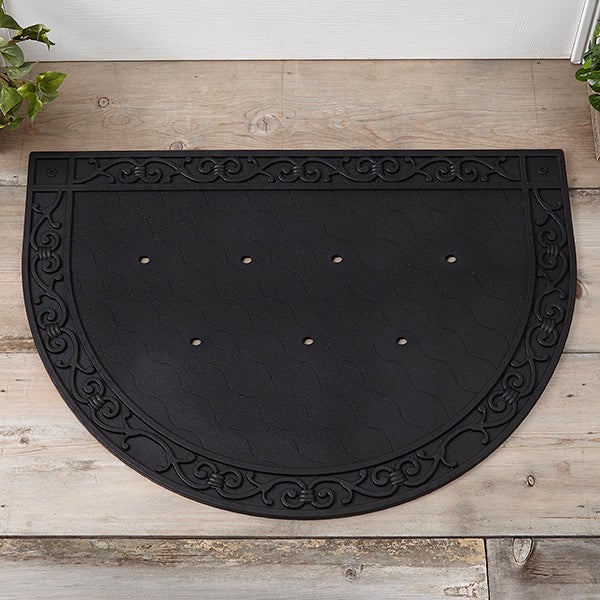
Engineering Insight: Material Selection for Half Round Doormat Outdoor Applications
In the domain of industrial rubber solutions, the performance of a half round doormat for outdoor use is fundamentally governed by material selection. While many suppliers promote off-the-shelf rubber mats as universal solutions, these often fail under real-world environmental and mechanical stress. The root cause lies in inadequate polymer formulation and insufficient consideration of operational parameters such as UV exposure, temperature fluctuation, abrasion, and moisture ingress.
Standard commodity rubber compounds, typically based on natural rubber (NR) or low-grade styrene-butadiene rubber (SBR), degrade rapidly when exposed to prolonged sunlight and seasonal weather cycles. These materials lack sufficient ozone and UV resistance, leading to surface cracking, embrittlement, and loss of mechanical integrity. Additionally, their limited tensile strength and poor rebound resilience result in accelerated wear, particularly in high-traffic commercial or industrial entries.
At Suzhou Baoshida Trading Co., Ltd., we engineer half round doormats using high-density ethylene propylene diene monomer (EPDM) rubber, specifically formulated for outdoor durability. EPDM offers superior resistance to weathering, ozone, and temperature extremes ranging from -40°C to +135°C. Its non-polar molecular structure prevents water absorption and inhibits mold and mildew growth—critical for maintaining hygiene and slip resistance in wet conditions.
Furthermore, reinforcement with carbon black and specialty fillers enhances abrasion resistance and structural stability. The cross-linking density during vulcanization is precisely controlled to balance flexibility and compression set performance, ensuring long-term shape retention even under continuous load.
Off-the-shelf alternatives often compromise on raw material quality to reduce cost, using recycled rubber content above 30%. While economically appealing, such formulations exhibit inconsistent physical properties, poor colorfastness, and premature fatigue. In industrial or commercial environments, where safety and longevity are paramount, these shortcomings translate into frequent replacement, increased maintenance costs, and potential liability risks.
To illustrate the performance differential, consider the following comparative specification:
| Property | Standard SBR Mat (Off-the-Shelf) | Engineered EPDM Mat (Baoshida) |
|---|---|---|
| Base Polymer | SBR / Recycled Rubber | Virgin High-Density EPDM |
| UV & Ozone Resistance | Low | Excellent |
| Operating Temperature Range | -10°C to +70°C | -40°C to +135°C |
| Tensile Strength (MPa) | 8–10 | 15–18 |
| Elongation at Break (%) | 250–300 | 400–450 |
| Hardness (Shore A) | 60–65 | 68–72 |
| Water Absorption (24h, %) | 1.8–2.5 | 0.3–0.5 |
| Recycled Content | >30% | <5% |
The engineered approach ensures that half round doormats maintain functional integrity across diverse climates and usage profiles. Material selection is not a cost variable—it is a performance determinant. For OEMs and industrial buyers, specifying high-grade EPDM-based solutions is essential to achieving durability, safety compliance, and lifecycle cost efficiency in outdoor entrance applications.
Material Specifications
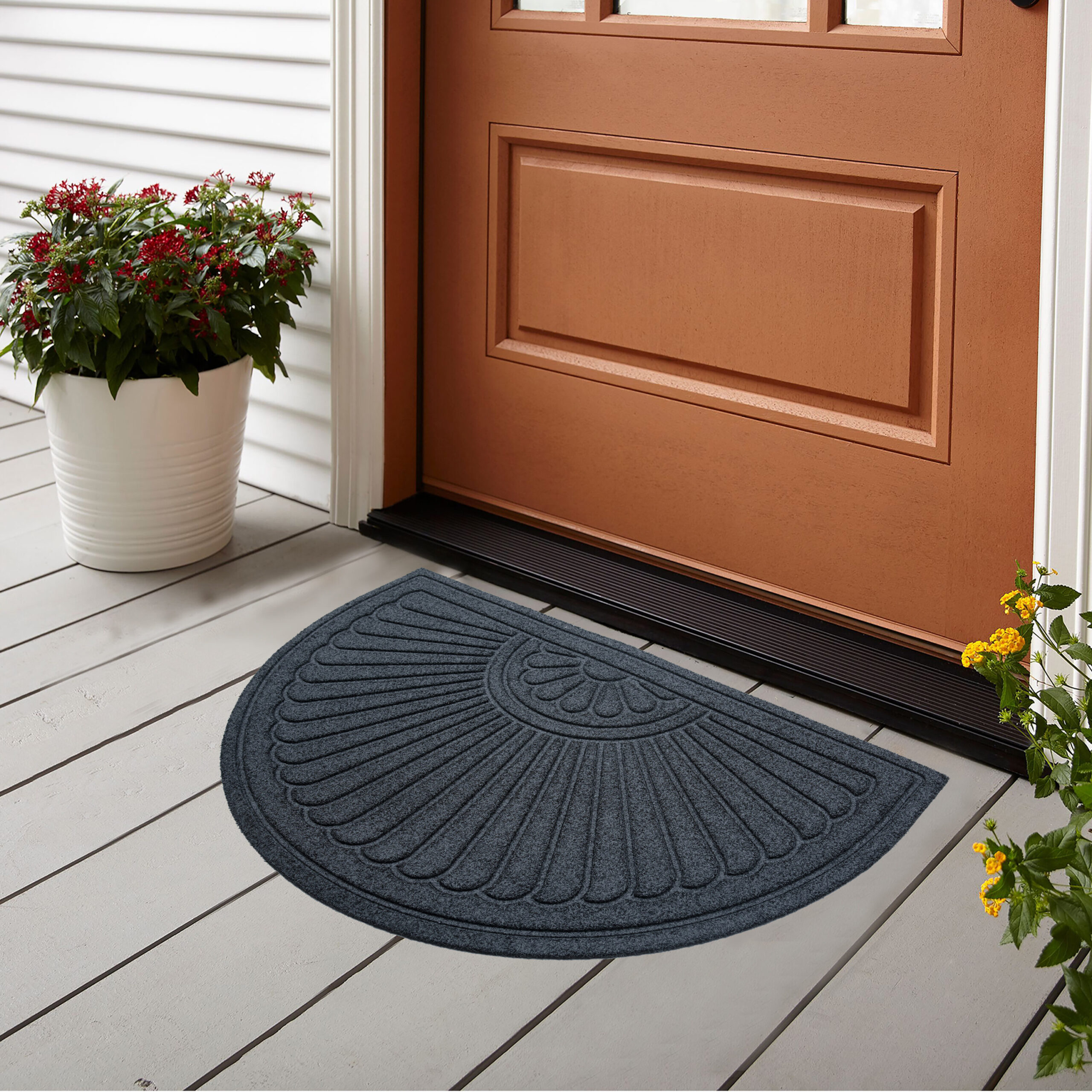
Material Specifications for Half Round Outdoor Doormat Manufacturing
Selecting the optimal elastomer is paramount for half round outdoor doormats subjected to UV exposure, moisture, temperature extremes, and abrasive contaminants. At Suzhou Baoshida Trading Co., Ltd., our OEM formulations prioritize longevity, dimensional stability, and slip resistance under harsh conditions. Viton fluoroelastomer (FKM) delivers exceptional resistance to ozone, weathering, and petroleum-based contaminants. Its molecular structure maintains integrity between -20°C and 230°C, making it ideal for industrial zones or fuel-handling facilities where hydrocarbon exposure occurs. However, its higher density and cost necessitate targeted application. Nitrile rubber (NBR), an acrylonitrile-butadiene copolymer, offers the best balance for general commercial use. With a temperature tolerance of -30°C to 120°C and superior abrasion resistance, it withstands foot traffic and grit abrasion effectively. Its moderate oil resistance and cost efficiency suit high-traffic retail or warehouse entrances. Silicone rubber (VMQ) excels in extreme temperature cycling (-60°C to 200°C) and UV stability, providing unmatched flexibility in freezing conditions. Its inherent hydrophobicity prevents water absorption, reducing mold risk, though lower abrasion resistance requires careful tread design for high-wear zones.
All materials undergo rigorous validation per ASTM D2000 standards for outdoor service. Hardness is precision-engineered between 60–80 Shore A to ensure debris-scraping efficacy without compromising flexibility. Compression set resistance below 25% after 70 hours at 100°C guarantees long-term sealing against door sweeps. Critical additives include UV stabilizers (HALS type) for all compounds and custom filler packages to enhance tensile strength beyond 15 MPa. Surface texture formulation incorporates controlled grit dispersion to maintain slip coefficients above 0.6 on wet surfaces per DIN 51130.
The following technical comparison details core performance parameters for informed OEM selection
| Material Type | Temperature Range (°C) | Hardness Range (Shore A) | Key Properties | Primary Applications |
|---|---|---|---|---|
| Viton (FKM) | -20 to 230 | 65–80 | Exceptional ozone/weathering resistance; High chemical resistance (fuels, oils); Low gas permeability | Industrial facilities; Fuel stations; Chemical handling areas |
| Nitrile (NBR) | -30 to 120 | 60–75 | Superior abrasion resistance; Good oil/fuel resistance; Cost-effective durability | Retail entrances; Warehouses; Commercial building lobbies |
| Silicone (VMQ) | -60 to 200 | 60–70 | Extreme low-temperature flexibility; Highest UV resistance; Hydrophobic surface | Cold storage facilities; Coastal installations; Architectural applications requiring color stability |
Material choice directly impacts lifecycle cost in outdoor environments. NBR remains our recommended standard for 80% of commercial deployments due to its abrasion resilience and economic viability. Viton is reserved for specialized industrial interfaces where chemical exposure justifies the premium. Silicone is specified for geographies with severe freeze-thaw cycles or where aesthetic retention is critical. Suzhou Baoshida provides OEM formulation adjustments to meet exact regional climate profiles and traffic loads, ensuring optimal performance through compound-specific accelerator systems and reinforced polymer architectures. Partner with our engineering team to validate material selection against your specific environmental stressors and longevity targets.
Manufacturing Capabilities
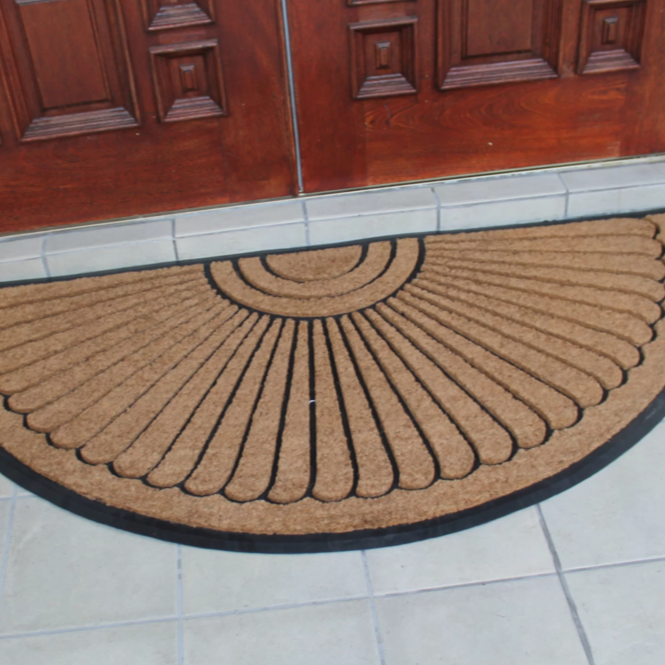
Suzhou Baoshida Trading Co., Ltd. operates at the forefront of industrial rubber engineering, delivering precision-crafted solutions tailored to the functional and environmental demands of outdoor applications. Our Engineering Capability division is anchored by a team of five dedicated mould engineers and two specialized rubber formula engineers, enabling us to offer fully integrated OEM services for products such as the half round doormat for outdoor use. This technical synergy between material science and precision tooling ensures that every product meets exacting performance standards while maintaining cost-efficiency and durability.
Our mould engineers possess extensive experience in designing complex, high-tolerance rubber compression and transfer moulds. Each mould is developed using advanced CAD/CAM software and validated through finite element analysis (FEA) to optimize flow dynamics, curing uniformity, and wear resistance. This engineering rigor ensures consistent part replication, dimensional stability, and extended tool life—critical factors in high-volume outdoor mat production. Furthermore, our team specializes in multi-cavity and family mould configurations, enabling scalable manufacturing without compromising quality.
Complementing our tooling expertise, our two in-house rubber formula engineers focus on developing proprietary elastomer compounds tailored to outdoor environmental stressors. These include UV exposure, thermal cycling, moisture ingress, and mechanical abrasion. By controlling the formulation process—from selecting base polymers (such as SBR, EPDM, or natural rubber blends) to curatives, fillers, and anti-degradants—we engineer compounds that deliver optimal hardness, tensile strength, and slip resistance. For the half round doormat, this translates into a product that maintains structural integrity and functional performance across diverse climatic conditions, including prolonged sun exposure and freeze-thaw cycles.
Our OEM capabilities are built on a foundation of technical collaboration. Clients benefit from end-to-end development support, from initial concept and 3D modelling to prototype validation and mass production. We conduct rigorous in-house testing, including Shore A hardness measurement, compression set analysis, and accelerated weathering, to ensure compliance with international durability standards. This closed-loop engineering process allows for rapid iteration and customization, whether adjusting tread depth for enhanced debris-scraping efficiency or modifying edge geometry for seamless integration with architectural thresholds.
The following table outlines the standard technical specifications achievable for our half round doormat outdoor series, based on current engineered formulations and mould designs:
| Parameter | Standard Specification | Test Method |
|---|---|---|
| Material | SBR/EPDM Blend | ASTM D412 |
| Hardness (Shore A) | 65 ± 5 | ASTM D2240 |
| Tensile Strength | ≥ 10 MPa | ASTM D412 |
| Elongation at Break | ≥ 250% | ASTM D412 |
| Compression Set (22 hrs, 70°C) | ≤ 20% | ASTM D395 |
| Operating Temperature Range | -40°C to +80°C | Internal Validation |
| UV Resistance (300 hrs QUV) | No cracking, minimal fading | ASTM G154 |
| Slip Resistance (DIN 51130) | R9 (suitable for outdoor use) | DIN 51130 |
Through the integration of advanced rubber chemistry and precision mould engineering, Suzhou Baoshida delivers technically superior, application-specific solutions for the outdoor doormat market. Our OEM model ensures that every product is not only manufactured to specification but engineered for real-world performance.
Customization Process
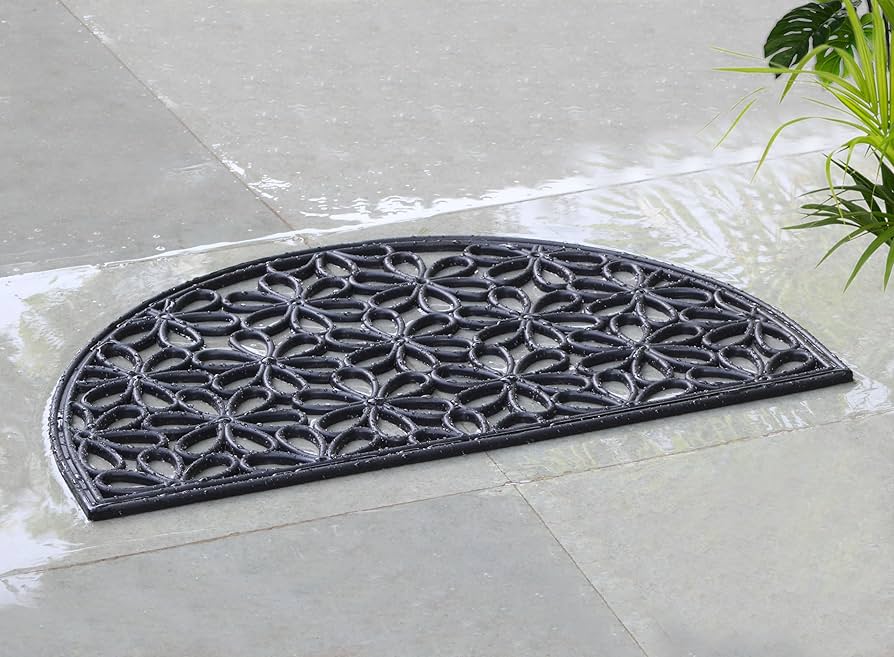
Customization Process for Half Round Outdoor Doormats
At Suzhou Baoshida Trading Co., Ltd., our industrial rubber solutions for half round outdoor doormats follow a rigorously defined customization pathway. This ensures optimal performance under demanding environmental conditions while meeting precise client specifications. The process begins with comprehensive Drawing Analysis. Engineering teams scrutinize submitted CAD files or technical sketches to validate critical dimensions, groove depth, radius curvature, and drainage channel geometry. We verify tolerance adherence to ISO 2768-mK standards and assess structural integrity for load distribution under pedestrian traffic. Material thickness uniformity and edge sealing requirements are evaluated to prevent water ingress and substrate delamination during outdoor exposure.
Subsequent Formulation leverages our proprietary rubber compounding expertise. Based on the drawing analysis, we engineer a polymer matrix optimized for UV stability, abrasion resistance, and low-temperature flexibility. Standard compounds utilize SBR/NR blends modified with ozone-resistant additives and mineral fillers for density control. Shore A hardness is calibrated between 55–70 to balance tread durability with comfort, while carbon black dispersion is optimized to achieve ≤0.08 mm³ abrasion loss per DIN 53516. All formulations comply with REACH and RoHS regulations, with accelerated aging tests confirming 5,000+ hours of QUV resistance.
Prototyping executes the validated design using precision CNC-machined molds. Each prototype undergoes multi-stage validation: dimensional verification via CMM scanning against the original drawing, mechanical testing per ASTM D2240 (hardness) and D412 (tensile strength), and functional assessment of debris-trapping efficiency in simulated rain conditions. Client feedback on texture, color fastness, and installation compatibility triggers iterative refinements. Average prototyping cycle time is 12–15 days, including 3 rounds of design-for-manufacturability adjustments.
Mass Production deployment utilizes our 8,000-ton hydraulic press lines with closed-loop temperature control (±1.5°C). Real-time monitoring of cure time, cavity pressure, and flash minimization ensures batch consistency. Every production run includes in-process checks of durometer variance (max ±3 Shore A) and final inspection for surface defects per AQL 1.0. Logistics coordination includes palletized shipping with UV-blocking stretch wrap to prevent pre-installation degradation.
Key Material Specifications for Outdoor Doormats
| Property | Test Standard | Target Value | Performance Significance |
|---|---|---|---|
| Shore A Hardness | ASTM D2240 | 60 ± 3 | Optimal tread retention & comfort |
| Tensile Strength | ASTM D412 | ≥12.0 MPa | Resists tearing under foot traffic |
| Elongation at Break | ASTM D412 | ≥350% | Flexibility in thermal cycling |
| Abrasion Loss | DIN 53516 | ≤0.08 mm³ | Long-term surface durability |
| UV Resistance (2,000h) | ISO 4892-2 | ΔE ≤ 3.0 | Color stability in sunlight |
| Low Temp Flexibility | ASTM D2137 | Pass at -30°C | Crack resistance in freezing temps |
This structured approach guarantees that every half round doormat delivers engineered resilience against moisture, grit, and solar exposure while maintaining dimensional accuracy for seamless architectural integration. Suzhou Baoshida’s process control protocols ensure repeatability across volumes from 500 to 50,000 units per order.
Contact Engineering Team
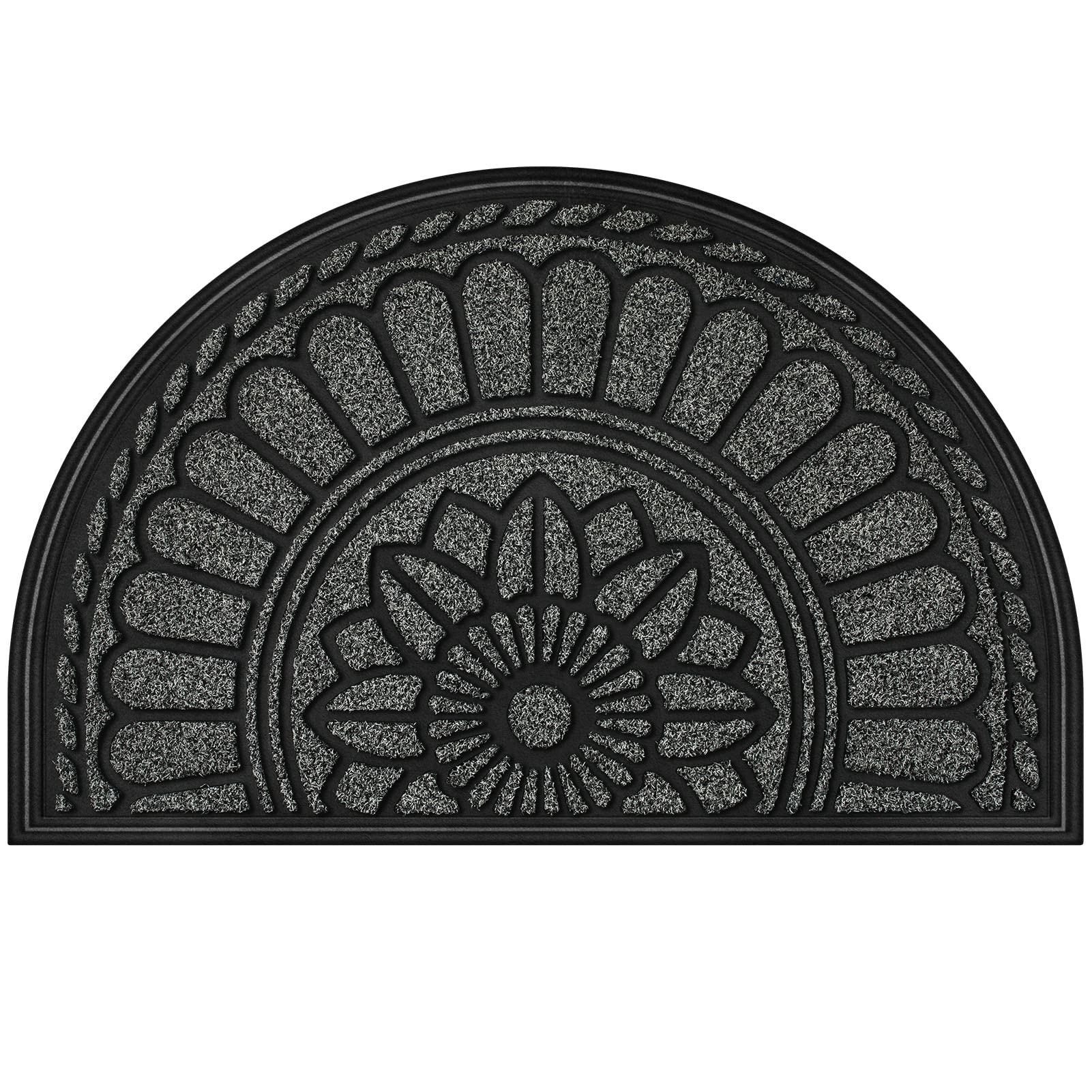
For industrial-grade half round doormat outdoor solutions engineered to meet the rigorous demands of commercial and municipal applications, Suzhou Baoshida Trading Co., Ltd. stands as a trusted leader in precision rubber manufacturing. Our expertise in extruded rubber profiles ensures that every doormat delivers superior durability, weather resistance, and functional performance. As your OEM partner, we specialize in custom formulations, precise dimensional control, and scalable production to support global supply chains.
Our half round doormat outdoor profiles are manufactured using high-quality synthetic rubber compounds such as EPDM and SBR, selected for their resistance to UV degradation, ozone exposure, and extreme temperature fluctuations. These profiles feature a semi-circular cross-section designed to maximize debris scraping and water channeling, making them ideal for entryways in airports, shopping centers, public transit stations, and industrial facilities. Each profile is vulcanized under controlled conditions to ensure consistent hardness, tensile strength, and compression set performance.
We understand that performance specifications vary by application and geographic region. That is why Suzhou Baoshida offers full customization in compound formulation, color, durometer, and length. Whether you require conductive, anti-static, or high-abrasion resistant variants, our rubber engineers collaborate directly with clients to develop solutions optimized for lifecycle cost and environmental exposure.
Below are standard technical specifications for our most commonly supplied half round doormat outdoor profiles. All values are typical and can be adjusted based on OEM requirements.
| Property | Test Method | Typical Value |
|---|---|---|
| Material | — | EPDM or SBR |
| Hardness (Shore A) | ASTM D2240 | 60 ± 5 |
| Tensile Strength | ASTM D412 | ≥ 9 MPa |
| Elongation at Break | ASTM D412 | ≥ 250% |
| Compression Set (22 hrs at 70°C) | ASTM D395B | ≤ 25% |
| Operating Temperature Range | — | -40°C to +120°C |
| UV and Ozone Resistance | ASTM D1149 | Excellent |
| Color Options | — | Black, Gray, Custom (Pantone matched) |
| Standard Diameters | — | 8 mm, 10 mm, 12 mm, 16 mm |
| Custom Lengths | — | 1 m to 20 m per piece |
All profiles undergo 100% visual inspection and batch-based physical testing to ensure compliance with international quality standards. Packaging is tailored to logistics needs, with options for spooled reels, cut-to-length bundling, or palletized shipment with moisture barrier wrapping.
To integrate Suzhou Baoshida’s engineered rubber solutions into your next outdoor doormat project, contact Mr. Boyce directly at [email protected]. As OEM Manager and lead technical liaison, Mr. Boyce provides end-to-end support from material selection and prototyping to volume production and documentation. We respond to all inquiries within 12 business hours and offer sample submissions within 7–10 days of technical confirmation.
Partner with Suzhou Baoshida Trading Co., Ltd. for half round doormat outdoor profiles that combine industrial robustness with precision manufacturing. Your application demands reliability — we deliver it through science, experience, and dedicated collaboration.
⚖️ O-Ring Weight Calculator
Estimate rubber O-ring weight (Approx).