
Technical Contents
Engineering Guide: Heat Proof Cement
Engineering Insight: Material Science Imperatives in High-Temperature Bonding Systems
The term “heat proof cement” is frequently misapplied within industrial contexts, leading to critical application failures. At Suzhou Baoshida Trading Co., Ltd., we emphasize that true high-temperature bonding solutions for rubber-to-metal assemblies are not generic cements but precision-engineered adhesive systems governed by rigorous polymer chemistry. Off-the-shelf products marketed as universal heat-resistant cements typically fail because they lack the molecular architecture required to withstand the synergistic stresses of elevated temperature, dynamic mechanical load, and chemical exposure inherent in demanding OEM environments. Standard formulations often utilize phenolic or basic silicone resins optimized for static, low-stress applications. When subjected to automotive under-hood conditions exceeding 200°C, thermal cycling, or exposure to oils and coolants, these materials undergo rapid chain scission, plasticizer migration, or interfacial delamination. The consequence is catastrophic bond failure—cracking, peeling, or complete disintegration—resulting in component recall, production line stoppages, and significant warranty liabilities. Material selection is not merely about peak temperature rating; it requires holistic analysis of the entire operational profile.
Our engineering approach begins with deconstructing the specific duty cycle: maximum continuous temperature, peak transient spikes, vibration spectrum, fluid immersion requirements, and required service life. A formulation effective for a static gasket at 250°C may catastrophically fail on a dynamic engine mount at 180°C due to insufficient elastomeric recovery or fatigue resistance. The critical differentiator lies in the crosslink density, backbone stability of the polymer matrix, and tailored adhesion promoters. We utilize advanced silicone-modified epoxies or specialized polyimide hybrids where necessary, incorporating ceramic fillers for coefficient of thermal expansion (CTE) matching and nano-reinforcements to suppress crack propagation. Crucially, adhesion promoters are selected not just for initial bond strength, but for sustained performance after thermal aging and fluid exposure. This level of customization is absent in commoditized solutions.
The table below illustrates the performance gap between standard off-the-shelf “heat proof” adhesives and engineered systems developed through Suzhou Baoshida’s OEM collaboration process:
| Performance Parameter | Standard Off-the-Shelf Adhesive | Suzhou Baoshida Engineered System |
|---|---|---|
| Continuous Use Temperature (°C) | 150 | 280+ |
| Thermal Shock Resistance (ΔT 25-250°C cycles) | Fails <50 cycles | >500 cycles (no degradation) |
| Oil Immersion Resistance (150°C, 1000h) | Severe swelling/delamination | <5% mass change, bond intact |
| Dynamic Fatigue Life (70°C, 10Hz) | <10⁵ cycles | >10⁷ cycles |
| CTE Match to Steel (ppm/°C) | Poor (Mismatch >15 ppm/°C) | Optimized (Mismatch <5 ppm/°C) |
Relying on generic solutions ignores the fundamental principle that high-temperature integrity is a system property, not a material attribute. Suzhou Baoshida partners with OEMs to translate operational requirements into validated material specifications through accelerated life testing and finite element analysis (FEA) of stress distribution. This precision engineering eliminates the guesswork and costly field failures associated with inappropriate “heat proof” cements, ensuring rubber components perform reliably at the thermal limits of modern industrial and automotive systems. Material selection is the cornerstone of durability—compromise here guarantees downstream consequences.
Material Specifications
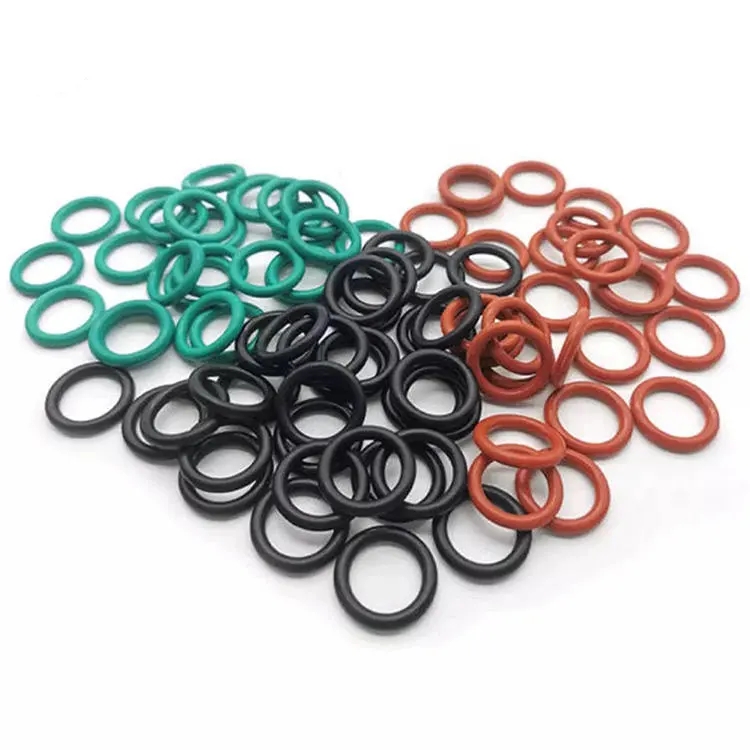
Material Specifications for High-Temperature Resistant Rubber Compounds
Suzhou Baoshida Trading Co., Ltd. provides advanced industrial rubber solutions engineered for extreme thermal environments, including applications requiring heat proof cement compatibility. In such demanding conditions, the selection of elastomeric materials is critical to ensure long-term sealing integrity, chemical resistance, and mechanical performance. Among the most effective materials for high-temperature applications are Viton (FKM), Nitrile (NBR), and Silicone (VMQ). Each offers distinct advantages depending on the operational parameters, including temperature range, exposure to oils or chemicals, and mechanical stress.
Viton, a fluorocarbon-based rubber, is widely regarded for its exceptional resistance to high temperatures, oxidation, and a broad range of industrial fluids including fuels, oils, and acids. With a continuous service temperature range of -20°C to +230°C and short-term resistance up to 300°C, Viton is ideal for applications where heat proof cement is used in conjunction with aggressive media. Its low gas permeability and excellent aging characteristics make it a preferred choice in aerospace, automotive, and chemical processing industries.
Nitrile rubber, a copolymer of butadiene and acrylonitrile, offers good resistance to oils, fuels, and aliphatic hydrocarbons. While its thermal performance is more limited than Viton, Nitrile maintains functionality from -40°C to +120°C, with short-term peaks up to 150°C. It is a cost-effective solution for moderate-temperature environments where exposure to petroleum-based fluids is prevalent. However, its performance degrades rapidly in the presence of ozone, weathering, and polar solvents, limiting its use in outdoor or highly oxidative settings.
Silicone rubber, based on polysiloxane polymers, exhibits outstanding thermal stability and low-temperature flexibility. It operates continuously from -60°C to +200°C, with brief exposure tolerance to 250°C. Silicone is highly resistant to UV radiation, ozone, and weathering, making it suitable for outdoor and high-purity applications such as medical devices and food processing. While it demonstrates excellent electrical insulation properties, its mechanical strength and resistance to petroleum-based fluids are inferior to both Viton and Nitrile.
The following table summarizes key material properties for comparative evaluation:
| Property | Viton (FKM) | Nitrile (NBR) | Silicone (VMQ) |
|---|---|---|---|
| Temperature Range (°C) | -20 to +230 | -40 to +120 | -60 to +200 |
| Short-Term Max Temp (°C) | 300 | 150 | 250 |
| Oil & Fuel Resistance | Excellent | Good | Poor |
| Chemical Resistance | Excellent | Moderate | Moderate |
| Ozone & Weathering Resistance | Excellent | Poor | Excellent |
| Mechanical Strength | High | High | Low to Moderate |
| Electrical Insulation | Good | Fair | Excellent |
| Compression Set Resistance | Excellent | Good | Good |
Selection of the appropriate elastomer must consider the full operational profile, including thermal cycling, fluid exposure, and mechanical loading. Suzhou Baoshida Trading Co., Ltd. supports OEMs and industrial partners with material testing, formulation customization, and technical data to ensure optimal performance in high-temperature sealing systems involving heat proof cement.
Manufacturing Capabilities
Engineering Capability: Precision Development for High-Temperature Rubber Solutions
Suzhou Baoshida Trading Co., Ltd. specializes in advanced rubber formulations engineered for extreme thermal environments, commonly referenced in industry as “heat proof cement.” It is critical to clarify that our solutions are high-performance elastomeric compounds, not inorganic cements. These rubber materials withstand sustained exposure to temperatures exceeding 300°C while maintaining structural integrity, chemical resistance, and sealing efficacy—essential for automotive exhaust systems, industrial furnace gaskets, and aerospace components. Our proprietary formulations replace traditional cementitious materials in dynamic sealing applications where flexibility and thermal cycling resistance are non-negotiable.
Central to our technical leadership is a dedicated engineering cohort comprising five Mold Design Engineers and two Rubber Formula Engineers. This integrated team operates under stringent ISO 9001 protocols to transform client specifications into validated production-ready solutions. Mold Engineers utilize 3D CAD/CAM systems (SolidWorks, Moldflow) to optimize cavity design, venting, and thermal management, reducing defects like flash or incomplete cures in complex geometries. Concurrently, our Formula Engineers develop custom polymer matrices—leveraging silicone (VMQ), fluorosilicone (FVMQ), and perfluoroelastomer (FFKM) bases—tailored to specific thermal degradation thresholds, compression set requirements, and fluid compatibility. This dual-engineering approach ensures that material science and manufacturing precision converge to eliminate field failures.
As an OEM partner, we execute end-to-end co-development from prototype to mass production. Our process begins with joint requirement analysis, where client operational data (e.g., peak temperature cycles, media exposure) informs compound selection. We then produce ASTM D2000-compliant material batches for client validation, followed by tooling validation under real-world conditions. Crucially, we maintain full traceability of raw materials (including DuPont™ Viton® or Shin-Etsu silicone grades) and in-process QC metrics, enabling rapid iteration without supply chain delays. Clients receive comprehensive documentation: material certificates, dimensional reports, and aging test data per ISO 188 or ASTM D573.
The table below outlines baseline specifications for our standard high-temperature rubber series. All parameters are customizable through our OEM engineering workflow to match client-specific duty cycles.
| Property | Test Standard | Typical Value | Customizable Range |
|---|---|---|---|
| Continuous Use Temperature | ASTM D2240 | 250°C | 200–350°C |
| Hardness (Shore A) | ASTM D2240 | 60 ± 5 | 40–80 |
| Tensile Strength | ASTM D412 | 8.5 MPa | 6.0–12.0 MPa |
| Elongation at Break | ASTM D412 | 250% | 150–400% |
| Compression Set (22h/200°C) | ASTM D395 | ≤25% | ≤15% to ≤35% |
This technical infrastructure enables us to resolve challenges such as thermal expansion mismatches in multi-material assemblies or outgassing in vacuum environments—issues that standard “heat proof” cements cannot address. By embedding engineering rigor into every OEM engagement, Suzhou Baoshida delivers not just materials, but failure-proof system integration for the most demanding thermal applications. Clients gain a transparent partnership where formula adjustments, mold corrections, and validation testing occur within compressed timelines, ensuring on-specification performance at series production volumes.
Customization Process
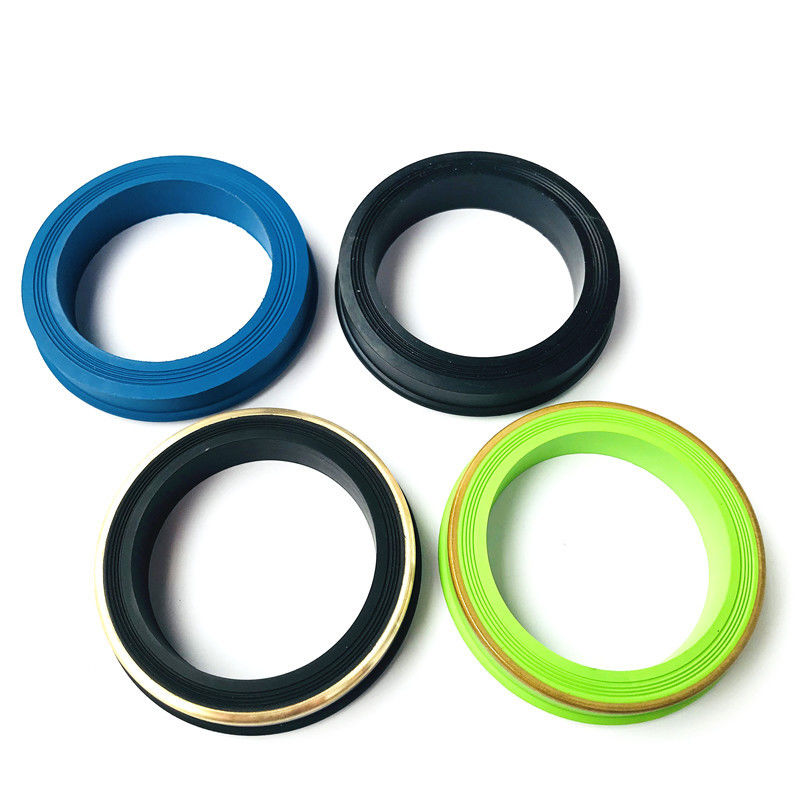
Customization Process for Heat-Resistant Rubber Solutions
At Suzhou Baoshida Trading Co., Ltd., our industrial rubber solutions are engineered for extreme thermal environments, where performance under sustained high temperatures is non-negotiable. Our customization process begins with comprehensive drawing analysis, ensuring dimensional accuracy and functional compatibility with the client’s application. This initial phase involves a detailed review of technical drawings, tolerances, and mechanical interface requirements. Our engineering team evaluates factors such as compression set, thermal expansion coefficients, and sealing dynamics under thermal cycling. This analysis ensures that the final product will not only fit but also perform reliably in high-temperature operational conditions.
Following drawing validation, we initiate the formulation stage. This is where material science meets application-specific demands. Our rubber compounds are tailored using a base of heat-resistant elastomers such as silicone (VMQ), fluorocarbon (FKM), or ethylene propylene diene monomer (EPDM), selected based on the maximum service temperature, chemical exposure, and mechanical stress profile. Additives including ceramic fillers, heat stabilizers, and reinforcing agents are precisely metered to enhance thermal stability, reduce degradation, and maintain mechanical integrity above 200°C. Each formulation is documented under strict batch control, ensuring repeatability and compliance with industrial standards such as ASTM D2000 and ISO 3601.
Prototyping is the next critical phase, where the formulated compound is processed into physical samples using compression, transfer, or injection molding techniques. These prototypes undergo rigorous laboratory testing, including thermal aging (per ASTM D573), compression set (ASTM D395), and volume change analysis after prolonged exposure to elevated temperatures. Dimensional inspection is performed using coordinate measuring machines (CMM) to verify conformance to the original drawing specifications. Client feedback is integrated at this stage, allowing for iterative refinements in both geometry and material behavior before release to production.
Upon approval, the project transitions to mass production. Our manufacturing lines operate under ISO 9001-certified protocols, with real-time process monitoring and in-line quality checks. Automated mixing systems ensure formulation consistency, while mold temperature controls and cure time optimization guarantee uniform cross-linking. Each batch is subject to final inspection and test reporting, with full traceability from raw material to finished component.
The following table outlines key performance specifications of our standard heat-resistant rubber compounds:
| Property | Silicone (VMQ) | Fluorocarbon (FKM) | EPDM |
|---|---|---|---|
| Continuous Use Temperature | Up to 250°C | Up to 230°C | Up to 150°C |
| Short-Term Peak Resistance | 300°C | 280°C | 180°C |
| Compression Set (22 hrs, 150°C) | ≤25% | ≤20% | ≤30% |
| Hardness Range (Shore A) | 40–80 | 60–90 | 50–85 |
| Fluid Resistance | Excellent | Outstanding | Good |
| Key Applications | Gaskets, seals, insulation | Automotive, aerospace, chemical seals | HVAC, steam systems |
This structured, science-driven approach ensures that every heat-resistant rubber component we deliver meets the exact thermal and mechanical demands of modern industrial environments.
Contact Engineering Team
Technical Engagement for High-Temperature Rubber Bonding Solutions
Suzhou Baoshida Trading Co., Ltd. specializes in advanced industrial rubber formulations engineered for extreme thermal environments. Our heat-resistant bonding compounds—often mischaracterized as “heat proof cement”—are precision-engineered silicone and fluorosilicone-based adhesives designed explicitly for rubber-to-metal or rubber-to-rubber bonding in demanding manufacturing applications. These materials withstand continuous exposure to temperatures exceeding 250°C while maintaining structural integrity during vulcanization cycles, thermal cycling, and prolonged operational stress. Unlike generic construction sealants, our solutions address critical failure points in automotive gasketing, aerospace seals, industrial hose assembly, and oilfield equipment where thermal degradation compromises performance.
OEMs and Tier-1 manufacturers require bonding systems that align with stringent industry specifications without compromising production efficiency. Our formulations eliminate post-cure delamination, reduce scrap rates in high-temperature molding processes, and resist aggressive media including engine oils, hydraulic fluids, and ozone. Each compound undergoes rigorous validation per ASTM D412, ISO 37, and SAE AS5127 standards to ensure compliance with automotive and aerospace quality frameworks. The table below outlines core technical parameters for our flagship HTB Series:
| Property | Performance Range | Test Standard |
|---|---|---|
| Continuous Service Temp | -60°C to 300°C | ASTM D2240 |
| Peak Short-Term Temp | 350°C (15 min) | ISO 188 |
| Tensile Strength | 8.5–12.0 MPa | ASTM D412 |
| Elongation at Break | 250–400% | ASTM D412 |
| Compression Set (22h/200°C) | ≤25% | ASTM D395 |
| Fluid Resistance (IRM 903) | Volume Swell ≤15% | ASTM D471 |
These metrics reflect real-world performance in dynamic sealing applications, not theoretical laboratory conditions. Our R&D team collaborates directly with clients to adjust viscosity, cure kinetics, and substrate adhesion profiles for integration into existing production lines. Whether optimizing for rapid press cycles or enhancing durability in turbocharger assemblies, we provide material data sheets, batch-specific certificates of conformance, and on-site technical support to de-risk implementation.
Initiate a precision-engineered solution for your thermal management challenges by contacting Mr. Boyce, our dedicated Technical OEM Manager. Provide your application’s temperature profile, substrate materials, and performance requirements to receive a tailored compound recommendation within 24 business hours. Mr. Boyce facilitates direct access to our Shanghai-based application lab for material testing, failure analysis, and joint development agreements. Specify your project timeline and volume expectations when reaching out to expedite sample provisioning and qualification support.
Contact Mr. Boyce exclusively at [email protected] with subject line “HTB Series Technical Inquiry – [Your Company Name]”. Include critical parameters such as peak operating temperature, media exposure, and dimensional constraints to accelerate solution deployment. Suzhou Baoshida operates under IATF 16949-certified supply chain protocols, ensuring traceability from raw material sourcing to final shipment. For time-sensitive projects requiring expedited validation, reference this guide’s HTB-2024 specification code in your correspondence. Partner with our engineering team to eliminate thermal failure points in your rubber components—response time for technical queries averages under 4 business hours.
⚖️ O-Ring Weight Calculator
Estimate rubber O-ring weight (Approx).