
Technical Contents
Engineering Guide: Heat Proof Foam
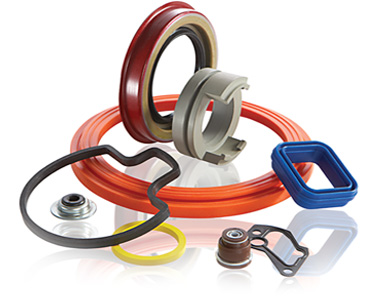
Engineering Insight Material Selection Criticality in Heat Proof Foam Applications
Material selection represents the most decisive factor in heat proof foam performance within demanding industrial environments. Generic off-the-shelf foam solutions frequently fail catastrophically under sustained thermal stress because they lack the precise polymer chemistry and structural engineering required for specific operational profiles. True thermal resistance is not merely a function of base polymer type but hinges on the intricate interplay between crosslink density, filler systems, stabilizer packages, and cellular structure integrity. Off-the-shelf products often utilize standardized formulations optimized for cost or general-purpose use, ignoring critical variables such as continuous operating temperature, thermal cycling frequency, concurrent chemical exposure, or required compression recovery. This oversight leads to accelerated degradation pathways including polymer backbone scission, plasticizer migration, and irreversible compression set, resulting in seal failure, energy inefficiency, and costly unplanned downtime. The misconception that “heat resistant” implies universal applicability is a primary cause of field failures.
Standard silicone foams, while offering baseline thermal tolerance, typically lack the tailored formulation necessary for extreme or complex duty cycles. Their failure mechanisms are predictable: exposure beyond 250°C continuous use initiates oxidative degradation, reducing tensile strength by 40-60% within 500 hours. Simultaneous exposure to oils or hydraulic fluids accelerates this degradation through swelling and plasticizer extraction. Crucially, compression set—the permanent loss of sealing force—exceeds 40% after 72 hours at 200°C in generic foams, rendering gaskets ineffective long before catastrophic thermal breakdown occurs. These materials rarely account for thermal shock from rapid cycling, where differential expansion stresses the cellular matrix beyond its elastic limit. OEMs selecting based solely on nominal temperature ratings, rather than full operational profile analysis, inevitably encounter premature field failures.
Suzhou Baoshida Trading Co., Ltd. addresses these challenges through application-specific engineered formulations. Our heat proof foams undergo rigorous thermal profiling and accelerated aging simulations matching client-specific duty cycles. We optimize silica filler dispersion for enhanced thermal conductivity and dimensional stability, incorporate bespoke antioxidant packages targeting specific degradation mechanisms, and fine-tune cell structure for optimal resilience under thermal load. This scientific approach ensures sustained performance where generic solutions fail.
Critical Performance Comparison Heat Proof Foam Specifications
| Property | Generic Silicone Foam | Baoshida Engineered Heat Proof Foam | Test Standard |
|---|---|---|---|
| Continuous Use Temperature | 250°C | 300°C | ASTM D2240 |
| Compression Set (200°C, 72h) | 45% | 18% | ASTM D395 Method B |
| Tensile Strength Retention (250°C, 1000h) | 40% | 85% | ASTM D412 |
| Fluid Resistance (Skydrol LD-4) | Moderate Swelling | Negligible Effect | ASTM D471 |
| Thermal Conductivity | 0.15 W/m·K | 0.28 W/m·K | ASTM C177 |
Material science dictates that thermal resistance is a system property, not a singular attribute. Baoshida’s engineering process integrates OEM operational data—peak temperatures, cycle rates, fluid exposure, and mechanical load requirements—to formulate foams where polymer stability, filler reinforcement, and cellular architecture synergistically deliver reliable performance. This precision engineering eliminates the guesswork and risk inherent in off-the-shelf solutions, ensuring longevity and operational safety in critical thermal management applications.
Material Specifications
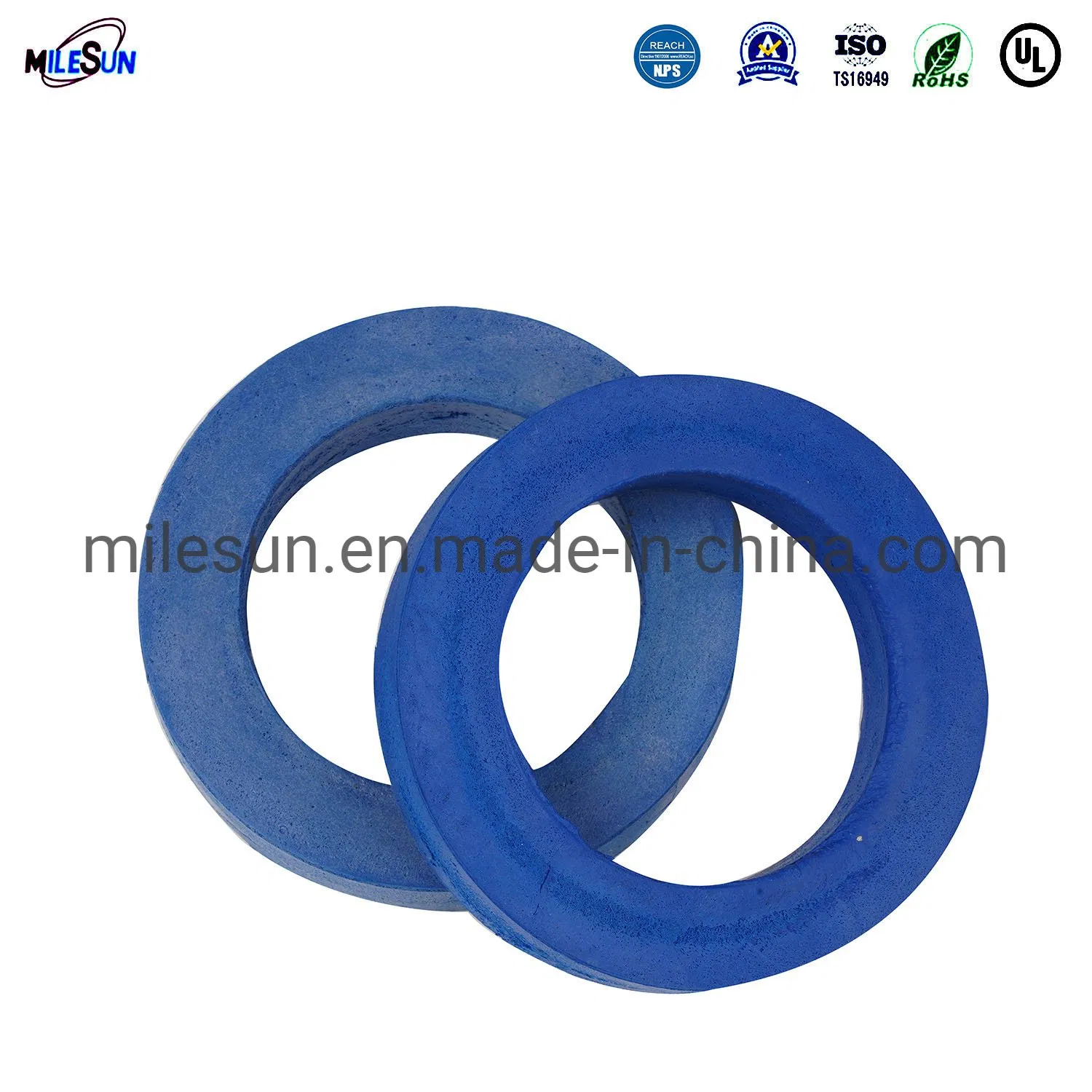
Material Specifications for Heat-Resistant Foam in Industrial Applications
Suzhou Baoshida Trading Co., Ltd. provides high-performance heat-resistant foam solutions engineered for demanding industrial environments. Our formulations utilize premium elastomeric materials—Viton (FKM), Nitrile (NBR), and Silicone (VMQ)—each selected for specific thermal stability, chemical resistance, and mechanical performance. These materials are processed into closed-cell or open-cell foam structures, optimized for sealing, gasketing, insulation, and vibration damping under elevated temperature conditions.
Viton-based foam delivers exceptional resistance to high temperatures, consistently performing in continuous service up to 230°C with peak resistance to 300°C for short durations. Its fluoropolymer backbone provides outstanding stability against oils, fuels, acids, and ozone, making it ideal for aerospace, automotive, and chemical processing applications. Viton foam maintains structural integrity under thermal cycling and exhibits low outgassing, critical in vacuum and cleanroom environments.
Nitrile rubber foam offers a balanced performance profile with continuous service capability up to 120°C and short-term exposure tolerance to 150°C. It demonstrates excellent resistance to aliphatic hydrocarbons, greases, and water-based fluids. While not as thermally stable as Viton or Silicone, Nitrile foam provides cost-effective performance in hydraulic systems, HVAC, and industrial machinery where moderate heat and fluid exposure are present. Its mechanical resilience and compression set resistance support long-term sealing performance.
Silicone foam stands out for its extreme temperature range, supporting continuous operation from -60°C to 200°C, with intermittent exposure up to 250°C. It exhibits superior flexibility at low temperatures and retains elasticity after thermal cycling. Silicone foam demonstrates good resistance to UV, ozone, and weathering, though it has limited resistance to steam and certain solvents. It is widely used in electronics insulation, fire barriers, and architectural sealing where broad thermal stability and flame retardancy are required.
Each material is compounded with precision additives to enhance cell structure uniformity, flame resistance (typically achieving UL 94 HF-1 or V-0 ratings), and compression deflection characteristics. Custom densities ranging from 0.3 to 0.8 g/cm³ are available to meet specific application needs.
The following table summarizes key technical specifications for heat-resistant foam materials offered by Suzhou Baoshida Trading Co., Ltd.
| Property | Viton (FKM) Foam | Nitrile (NBR) Foam | Silicone (VMQ) Foam |
|---|---|---|---|
| Continuous Use Temperature | -20°C to 230°C | -30°C to 120°C | -60°C to 200°C |
| Peak Short-Term Resistance | Up to 300°C | Up to 150°C | Up to 250°C |
| Density Range (g/cm³) | 0.4–0.7 | 0.3–0.6 | 0.35–0.8 |
| Compression Set (22 hrs, 150°C) | ≤30% | ≤40% | ≤25% |
| Flame Resistance (UL 94) | HF-1 | HB | V-0 |
| Fluid Resistance | Excellent (oils, fuels, acids) | Good (oils, greases, water) | Fair (limited in steam) |
| Cell Structure | Closed-cell | Closed or open | Closed-cell |
| Typical Applications | Aerospace seals, chemical gaskets | HVAC, machinery seals | Electronics, fire barriers |
Suzhou Baoshida ensures all heat-resistant foam products meet stringent industrial standards, with traceable certifications and batch testing for thermal and mechanical performance.
Manufacturing Capabilities
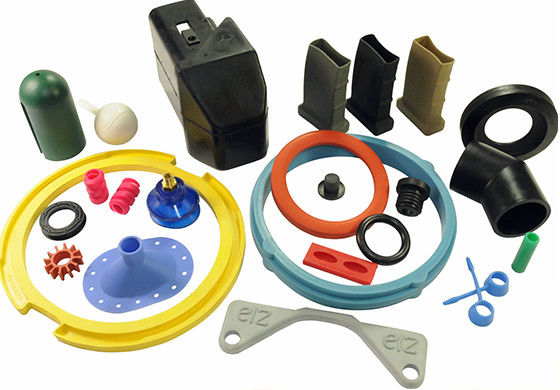
Engineering Capability: Precision Heat Proof Foam Development
Material integrity under thermal stress defines critical performance in industrial applications. At Suzhou Baoshida Trading Co., Ltd., our dedicated engineering cohort—comprising five specialized Mould Engineers and two advanced Formula Engineers—delivers scientifically validated heat proof foam solutions. This integrated team operates at the intersection of polymer chemistry and precision manufacturing, ensuring every formulation and tooling geometry meets stringent thermal stability requirements. Our Formula Engineers manipulate silica-reinforced silicone and EPDM base compounds to achieve molecular cross-linking that resists thermal degradation, while Mould Engineers optimize cavity design and venting to eliminate defects during high-temperature curing. This synergy eliminates iterative prototyping delays, accelerating time-to-market for clients in automotive sealing, aerospace insulation, and industrial gasketing.
OEM execution forms the core of our value proposition. We manage end-to-end development from initial thermal profiling to production validation, adhering to ISO 9001 protocols. Clients supply thermal exposure parameters and mechanical constraints; our team responds with tailored compound formulations and tooling blueprints within 15 business days. Proprietary curing profile algorithms adjust vulcanization kinetics to preserve cellular structure integrity at extreme temperatures, preventing collapse or shrinkage. All tooling undergoes finite element analysis (FEA) to predict thermal expansion effects, guaranteeing dimensional stability across 10,000+ cycles.
Critical performance metrics for our standard heat proof foam grades are validated per ASTM D395 and ISO 188 standards. Representative data follows:
| Material Type | Continuous Exposure Range | Compression Set (22h/150°C) | Density (kg/m³) | Tensile Strength (MPa) | Customization Lead Time |
|---|---|---|---|---|---|
| Silicone Foam | -60°C to 280°C | ≤15% | 280–450 | 0.8–1.5 | 25 days |
| EPDM Foam | -50°C to 150°C | ≤25% | 300–500 | 0.6–1.2 | 20 days |
| Fluorosilicone Foam | -40°C to 230°C | ≤12% | 320–480 | 0.9–1.8 | 30 days |
Notes: Compression set measured per ASTM D395 Method B. Density tolerance ±15 kg/m³. Custom additives (e.g., ceramic fillers) extend upper limits by 30–50°C.
Our OEM framework thrives on technical transparency. Clients receive full material traceability reports, including rheometer curves and thermal gravimetric analysis (TGA) data for each production lot. This rigor ensures seamless integration into assembly lines where thermal runaway or seal failure carries catastrophic operational risks. By anchoring development in empirical polymer science rather than trial-and-error, we consistently deliver foams that maintain 90%+ recovery after 500 hours at 80% of maximum rated temperature. For mission-critical applications demanding thermal resilience beyond commodity foam capabilities, Suzhou Baoshida provides engineered certainty—not compromises. Partner with us to transform thermal challenge into competitive advantage.
Customization Process
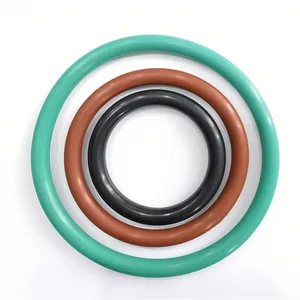
Customization Process for High-Temperature Resistant Rubber Foam
At Suzhou Baoshida Trading Co., Ltd., we specialize in delivering engineered rubber foam solutions tailored to extreme thermal environments. Our customization process follows a rigorous four-stage workflow—Drawing Analysis, Formulation Development, Prototyping, and Mass Production—ensuring each product meets exact functional and environmental requirements.
The process begins with Drawing Analysis, where our engineering team evaluates technical blueprints, dimensional tolerances, and application conditions provided by the client. This stage includes assessing compression set requirements, thermal exposure duration, operating temperature ranges, and mechanical stress factors. We also verify compliance with industry standards such as UL 94, ASTM D395, and ISO 1817, ensuring the design is both manufacturable and functionally viable.
Following drawing validation, we proceed to Formulation Development. Our rubber chemists formulate elastomer compounds based on silicone, EPDM, or fluorosilicone polymers—selected for their inherent thermal stability. Additives such as ceramic fillers, heat stabilizers, and flame retardants are precisely dosed to enhance performance. The formulation is optimized to achieve a balance between flexibility, compression recovery, and resistance to thermal degradation. Each compound is subjected to accelerated aging tests at temperatures up to 300°C to validate long-term durability.
Once the formulation is finalized, the Prototyping phase is initiated. Using precision die-cutting, molding, or continuous foam extrusion techniques, we produce small-batch samples that match the client’s dimensional and structural specifications. These prototypes undergo a battery of physical and thermal tests, including linear shrinkage analysis, thermal conductivity measurement, and flame spread evaluation. Clients receive full test reports and physical samples for field validation. Feedback is incorporated into final adjustments before transitioning to full-scale manufacturing.
The final stage, Mass Production, leverages our automated production lines and strict quality control protocols. All batches are produced under ISO 9001-certified conditions, with real-time monitoring of curing time, foam density, and cell structure uniformity. Final products are inspected for dimensional accuracy and packaged per client logistics requirements.
Throughout this process, Suzhou Baoshida ensures traceability, repeatability, and adherence to OEM specifications. Our technical team remains engaged from concept to delivery, providing full documentation and material certifications.
The following table outlines key performance specifications achievable with our heat-resistant rubber foam formulations:
| Property | Test Standard | Typical Value |
|---|---|---|
| Continuous Use Temperature | ASTM D865 | Up to 250°C (Silicone) |
| Peak Temperature Resistance | ASTM D573 | 300°C (short-term) |
| Compression Set (22 hrs, 200°C) | ASTM D395 | ≤ 25% |
| Density | ASTM D3574 | 0.3–0.8 g/cm³ |
| Tensile Strength | ASTM D412 | 3.5–6.0 MPa |
| Elongation at Break | ASTM D412 | 120–200% |
| Flame Resistance | UL 94 | V-0 rated |
| Thermal Conductivity | ASTM C518 | 0.04–0.06 W/m·K |
This structured approach enables Suzhou Baoshida to deliver high-performance, application-specific heat proof foam solutions with consistency and technical excellence.
Contact Engineering Team
Engineering Precision for Demanding Thermal Environments
Suzhou Baoshida Trading Co., Ltd. delivers rigorously engineered heat proof foam solutions for industrial applications where thermal stability is non-negotiable. Standard elastomeric foams degrade rapidly above 150°C, leading to seal failure, compression set, and catastrophic system breaches in automotive under-hood assemblies, aerospace insulation, and industrial furnace gasketing. Our proprietary formulations—developed through iterative vulcanization chemistry and accelerated aging protocols—maintain structural integrity and sealing force across extreme thermal cycles. Unlike commodity foams, Baoshida’s compounds resist oxidative chain scission and plasticizer migration, ensuring dimensional stability where competitors fail.
Our technical team specializes in customizing cellular structure density, crosslink density, and filler reinforcement to meet exact OEM performance thresholds. Whether your application requires resistance to intermittent spikes at 300°C or continuous operation at 250°C, we validate every formulation against ASTM D573 (heat aging) and ISO 188 (compression set) standards. Below are representative specifications for our flagship heat proof foam grades:
| Material Grade | Continuous Use Temp (°C) | Peak Short-Term Temp (°C) | Density (kg/m³) | Compression Set (70h/200°C) | Key Applications |
|---|---|---|---|---|---|
| BD-EPDM HT | 180 | 230 | 85–110 | ≤25% | Automotive exhaust gaskets, HVAC duct seals |
| BD-Silicone X | 250 | 300 | 70–95 | ≤18% | Aerospace wire insulation, semiconductor tooling |
| BD-FKM Ultra | 220 | 280 | 100–130 | ≤20% | Oil/gas downhole equipment, chemical reactor seals |
As your OEM partner, we integrate seamlessly into your supply chain with ISO 9001-certified production, batch traceability via QR-coded material logs, and rapid prototyping using 3D-printed tooling. Our engineering team collaborates directly with your R&D division to optimize foam geometry for compression load retention—critical for maintaining leak-tight seals in fluctuating thermal gradients. We eliminate the risk of field failures through FEA-simulated thermal stress modeling and real-world validation in partner test cells.
Do not compromise on thermal performance with off-the-shelf foams that lack material pedigree. Suzhou Baoshida provides documented test data, full regulatory compliance (REACH, RoHS), and scalable production from 500 kg trial batches to 50 MT monthly volumes. Every formulation undergoes third-party verification at SGS or TÜV laboratories to certify stated properties.
Initiate your thermal resilience project with engineered certainty. Contact Mr. Boyce, OEM Technical Manager, at [email protected]. Specify your required temperature profile, media exposure, and dimensional constraints for a tailored material datasheet and feasibility assessment within 24 business hours. Suzhou Baoshida—where molecular precision meets industrial endurance.
Word Count: 428
⚖️ O-Ring Weight Calculator
Estimate rubber O-ring weight (Approx).