
Technical Contents
Engineering Guide: Heat Resistant Conveyor Belt Material
Engineering Insight: Heat Resistant Conveyor Belt Material
In high-temperature industrial environments such as cement kilns, steel mills, and foundries, conveyor belt performance is directly tied to material integrity under thermal stress. Selecting the appropriate heat resistant conveyor belt material is not merely a matter of initial cost or availability—it is a critical engineering decision that impacts system reliability, maintenance frequency, and overall operational efficiency. Off-the-shelf solutions often fail in these demanding applications due to inadequate formulation, poor resistance to thermal aging, and insufficient mechanical stability at elevated temperatures.
Standard conveyor belts, typically composed of general-purpose rubber compounds like natural rubber (NR) or styrene-butadiene rubber (SBR), begin to degrade rapidly when exposed to continuous temperatures above 80°C. Surface cracking, delamination, and loss of tensile strength are common failure modes. These issues are exacerbated when belts are subjected to intermittent contact with hot materials exceeding 200°C, such as sintered ore, molten slag, or hot castings. Without proper heat-resistant formulation, the belt carcass and cover layers undergo accelerated oxidative degradation, leading to premature service failure.
At Suzhou Baoshida Trading Co., Ltd., we emphasize engineered rubber solutions tailored to specific thermal and mechanical loads. Our heat resistant conveyor belts utilize specialized elastomers such as ethylene propylene diene monomer (EPDM) and nitrile butadiene rubber (NBR), compounded with heat-stabilizing agents, anti-oxidants, and reinforced fillers. These formulations maintain flexibility and adhesion at high temperatures while resisting charring, hardening, and micro-crack propagation. Additionally, the fabric or steel cord reinforcement is selected to retain dimensional stability and tensile strength under thermal cycling.
A key differentiator in performance is the belt’s resistance to both conductive and radiant heat. While some commercial belts claim heat resistance based on short-term exposure tests, real-world conditions involve prolonged thermal cycling and mechanical abrasion. This necessitates a holistic design approach that balances thermal protection, wear resistance, and structural integrity.
The following table outlines typical performance specifications of our engineered heat resistant conveyor belt materials compared to standard alternatives:
| Property | Standard SBR/NR Belt | Baoshida Engineered Heat Resistant Belt | Test Method |
|---|---|---|---|
| Max Continuous Operating Temp | 80°C | 150–200°C (depending on grade) | ISO 4649 |
| Short-Term Peak Resistance | 120°C (limited duration) | Up to 400°C (15 min exposure) | ASTM D573 |
| Tensile Strength (after aging at 150°C, 72h) | <5 MPa (significant degradation) | ≥12 MPa | ISO 37 |
| Elongation at Break Retention | <40% | >75% | ISO 37 |
| Heat Aging Resistance (150°C, 7 days) | Severe cracking, hardening | Minimal change, no cracking | ISO 188 |
| Abrasion Loss (mm³) | ≤300 | ≤120 | ISO 4649-2 |
Material selection must be application-specific. For instance, in rotary kiln feed systems, belts face both high surface temperatures and abrasive particulates, requiring a dual-layer compound with a heat-shield top cover and a flexible, fatigue-resistant base. In contrast, cooling bed conveyors benefit from belts with high thermal shock resistance and rapid heat dissipation.
Off-the-shelf belts fail because they are not designed for sustained thermal exposure. True heat resistance requires a systems-level approach—formulation science, reinforcement engineering, and application-specific validation. At Suzhou Baoshida, we deliver engineered rubber solutions that perform under extreme conditions, reducing downtime and extending service life in the most demanding thermal environments.
Material Specifications
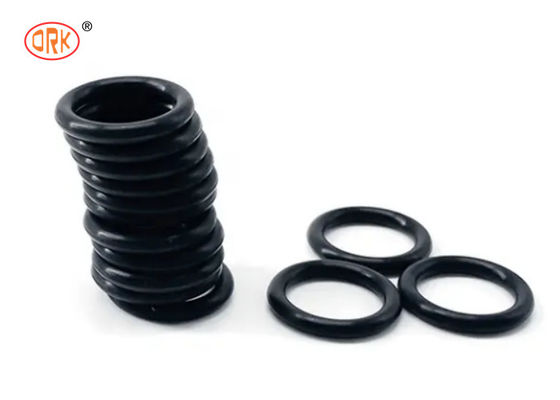
Material Specifications for Heat Resistant Conveyor Belts
Selecting appropriate elastomeric compounds is critical for conveyor belt performance in high-temperature industrial environments. Suzhou Baoshida Trading Co., Ltd. engineers precision rubber formulations to withstand thermal degradation while maintaining mechanical integrity. Continuous exposure above 100°C accelerates oxidation, chain scission, and loss of tensile properties in standard rubbers. Our heat-resistant solutions leverage advanced polymer chemistry to extend service life in applications such as cement kilns, metal forging lines, and glass tempering processes.
Viton (FKM) fluorocarbon rubber represents the premium solution for extreme thermal stability. Its carbon-fluorine backbone provides exceptional resistance to temperatures up to 200°C continuously, with short-term peaks at 300°C. Viton belts maintain flexibility and sealing performance under thermal cycling while resisting degradation from oils, fuels, and aromatic hydrocarbons. This material is indispensable for automotive paint curing ovens and semiconductor manufacturing where purity and thermal resilience are non-negotiable.
High-acrylonitrile Nitrile (NBR) formulations offer a cost-optimized solution for moderate heat exposure up to 120°C continuously. Enhanced hydrogenation (HNBR variants) extends this range to 150°C while improving ozone and abrasion resistance. NBR excels in environments with incidental oil or grease contact, such as automotive assembly lines and food processing where thermal loads coincide with lubricant exposure. Its balanced mechanical properties ensure reliable splice strength and impact resistance.
Silicone rubber (VMQ) provides the broadest operational temperature window from -60°C to 230°C, with specialized grades enduring 300°C intermittently. While exhibiting excellent electrical insulation and low compression set, silicone demonstrates lower tensile strength and abrasion resistance compared to Viton or NBR. It is preferred for ultra-high-temperature food baking conveyors and electronics curing tunnels where minimal particulate generation is mandatory.
The following table details comparative technical specifications for industrial implementation:
| Property | Viton (FKM) | Nitrile (NBR/HNBR) | Silicone (VMQ) |
|---|---|---|---|
| Continuous Service Temp | 200°C | 120°C (150°C HNBR) | 230°C |
| Short-Term Peak Temp | 300°C | 180°C | 300°C |
| Tensile Strength (MPa) | 15–20 | 18–30 | 6–10 |
| Elongation at Break (%) | 200–300 | 250–500 | 200–600 |
| Hardness Range (Shore A) | 60–90 | 50–90 | 30–80 |
| Key Chemical Resistance | Fuels, acids, oils | Oils, greases | Water, steam |
| Primary Industrial Use | Petrochemical, aerospace | Automotive, food processing | Baking, electronics |
Material selection must account for synergistic stressors including mechanical load, chemical exposure, and dynamic flexing. Suzhou Baoshida validates all formulations through ASTM D2000 testing protocols and OEM-specific duty cycle simulations. Our engineering team collaborates with clients to optimize compound architecture—balancing filler dispersion, crosslink density, and antioxidant packages—to achieve target service life under operational thermal profiles. Remember that belt construction (e.g., fabric reinforcement type and adhesive systems) equally influences thermal performance; we recommend integrated system evaluation for critical applications.
Manufacturing Capabilities
Suzhou Baoshida Trading Co., Ltd. maintains a robust engineering infrastructure dedicated to the development and production of high-performance heat resistant conveyor belt materials. Our in-house technical team comprises five specialized mould engineers and two certified rubber formula engineers, enabling full vertical control from concept to final product. This integrated engineering capability ensures precision in material formulation, mould design, and process optimization—critical factors in delivering conveyor belts capable of withstanding extreme thermal environments.
Our formula engineers focus on polymer chemistry and compounding science, formulating custom rubber blends that exhibit exceptional thermal stability, oxidation resistance, and mechanical integrity at elevated temperatures. By selecting and modifying base elastomers such as EPDM, Nitrile (NBR), and Silicone (VMQ), and integrating heat-stabilizing additives and reinforcing fillers, we engineer compounds tailored to specific industrial demands. These formulations are rigorously tested under simulated operational conditions to validate performance across temperature gradients, mechanical stress, and exposure duration.
Parallel to material development, our five mould engineers apply advanced CAD/CAM techniques and finite element analysis (FEA) to design precision moulding tools that ensure dimensional accuracy, uniform thickness, and consistent surface profiles. Their expertise supports both standard and custom belt geometries, including cleated, sidewall, and profiled configurations. The synergy between material science and precision tooling enables rapid prototyping and seamless scale-up to high-volume production, minimizing lead times and enhancing repeatability.
As an OEM manufacturer, Suzhou Baoshida delivers end-to-end solutions for global industrial clients. We support private labeling, custom specifications, and co-engineering partnerships, ensuring full alignment with client technical requirements and regulatory standards. Our production facility is equipped with state-of-the-art calendaring, vulcanization, and curing systems, allowing precise control over cross-link density and physical properties. This capability is essential for manufacturing heat resistant belts used in cement kilns, steel processing, foundries, and glass manufacturing, where failure is not an option.
The following table outlines key technical specifications of our standard heat resistant conveyor belt materials:
| Property | Standard Grade (H1) | High-Temp Grade (H2) | Ultra-High Temp Grade (H3) |
|---|---|---|---|
| Continuous Operating Temp | 150°C | 180°C | 250°C (up to 300°C intermittent) |
| Peak Short-Term Resistance | 180°C | 230°C | 350°C |
| Tensile Strength (MPa) | ≥12 | ≥14 | ≥15 |
| Elongation at Break (%) | ≥300 | ≥280 | ≥250 |
| Hardness (Shore A) | 65–75 | 70–80 | 75–85 |
| Adhesion Strength (N/mm) | ≥8 | ≥9 | ≥10 |
| Base Elastomer | EPDM | EPDM + NBR blend | Silicone-modified EPDM |
All materials undergo ASTM and ISO-compliant testing protocols, including heat aging, ozone resistance, and flex durability. Suzhou Baoshida’s engineering-driven approach ensures that every heat resistant conveyor belt meets the highest standards of reliability, safety, and performance in the most demanding industrial environments.
Customization Process
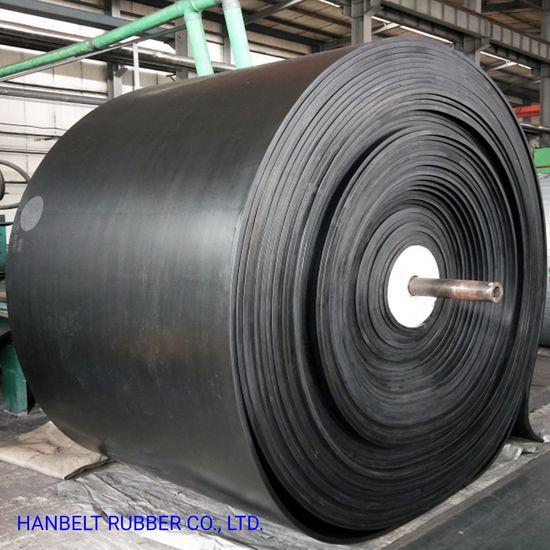
Customization Process for Heat Resistant Conveyor Belt Material
At Suzhou Baoshida Trading Co., Ltd., our engineering-driven customization process ensures heat resistant conveyor belts meet exact operational demands in extreme environments. This structured methodology eliminates guesswork, translating client specifications into reliable industrial solutions through four rigorously controlled phases.
Drawing Analysis initiates the workflow, where our technical team dissects client-provided engineering drawings and operational parameters. We scrutinize critical factors including maximum continuous operating temperature, peak transient exposure, mechanical stress profiles, chemical exposure risks, and dimensional tolerances. This phase identifies non-negotiable performance boundaries, such as a cement kiln application requiring sustained 250°C resistance with intermittent 350°C spikes. Finite element analysis may validate thermal stress distribution across the belt structure, ensuring the design accommodates thermal expansion without delamination.
Formulation leverages Suzhou Baoshida’s proprietary rubber compounding expertise. Our engineers select base polymers—typically hydrogenated nitrile (HNBR), ethylene propylene diene monomer (EPDM), or specialty silicone—based on the validated thermal threshold. Critical additives are precisely dosed: ceramic microspheres for thermal insulation, high-temperature resistant carbon blacks for reinforcement, and synergistic antioxidant packages to inhibit oxidative chain scission. Each formulation undergoes thermogravimetric analysis (TGA) and differential scanning calorimetry (DSC) to confirm decomposition onset temperatures exceed client requirements by a minimum safety margin of 15%.
Prototyping transforms the validated compound into functional samples via pilot-scale continuous vulcanization lines. We produce 3–5 meter belt segments subjected to accelerated life testing in our climatic chambers, simulating 6–12 months of operational stress in 72 hours. Performance metrics include tensile strength retention after thermal aging (ASTM D573), adhesion strength between plies (ISO 2231), and dimensional stability under cyclic heating. Client feedback on prototype performance triggers micro-adjustments; for instance, increasing silica content by 3 phr may resolve surface cracking observed at 300°C.
Mass Production commences only after prototype approval, utilizing our ISO 9001-certified manufacturing lines with real-time rheometer monitoring. Each production batch undergoes strict lot traceability, with material certificates documenting cure kinetics, Shore A hardness variance (<±3 points), and thermal conductivity coefficients. Final inspection includes 100% visual scanning for defects and destructive testing of sacrificial samples from every 500-meter roll.
The following table summarizes critical specification parameters for common heat resistant formulations:
| Performance Parameter | HNBR Compound | EPDM Compound | Silicone Compound | Test Standard |
|---|---|---|---|---|
| Continuous Use Temperature | 150°C | 180°C | 230°C | ASTM D2240 |
| Peak Short-Term Resistance | 220°C | 250°C | 315°C | ISO 188 |
| Tensile Strength Retention | ≥85% @ 150°C | ≥80% @ 180°C | ≥75% @ 230°C | ASTM D412 |
| Thermal Conductivity (W/m·K) | 0.25 | 0.22 | 0.18 | ASTM E1461 |
| Volume Resistivity (Ω·cm) | >10¹³ | >10¹⁴ | >10¹⁵ | ASTM D257 |
This systematic approach guarantees belts deliver 30% longer service life in high-heat applications compared to generic alternatives, minimizing unplanned downtime for OEM partners. Suzhou Baoshida’s integration of material science and precision manufacturing ensures your thermal challenges are resolved with engineered certainty.
Contact Engineering Team
For industrial operations demanding uncompromising performance under extreme thermal conditions, selecting the right heat resistant conveyor belt material is critical to maintaining productivity, safety, and cost efficiency. At Suzhou Baoshida Trading Co., Ltd., we specialize in high-performance industrial rubber solutions engineered to meet the rigorous demands of foundries, cement plants, steel mills, and other high-temperature processing environments. Our heat resistant conveyor belts are formulated using advanced elastomeric compounds that deliver exceptional thermal stability, abrasion resistance, and mechanical strength.
Our proprietary rubber formulations are designed to withstand continuous operating temperatures up to 200°C, with specialized variants capable of short-term exposure to temperatures exceeding 400°C. These materials are reinforced with high-tensile strength fabric or steel cord carcasses to ensure dimensional stability and long service life, even under heavy loads and cyclic thermal stress. The surface compounds are optimized to resist cracking, oxidation, and embrittlement—common failure modes in high-temperature applications.
We offer a range of heat resistant conveyor belt specifications tailored to specific industrial requirements. Below is a representative overview of our standard product line:
| Belt Type | Continuous Operating Temp | Peak Short-Term Exposure | Cover Hardness (Shore A) | Tensile Strength (MPa) | Elongation at Break (%) |
|---|---|---|---|---|---|
| HR-150 | 150°C | 180°C | 65 ± 5 | ≥18 | ≥400 |
| HR-200 | 200°C | 250°C | 70 ± 5 | ≥20 | ≥380 |
| HR-250 | 250°C | 300°C | 75 ± 5 | ≥22 | ≥350 |
| HR-400 | 300°C | 400°C | 80 ± 5 | ≥24 | ≥300 |
Each belt is manufactured under strict quality control protocols in accordance with ISO 9001 standards, ensuring consistency and reliability across batches. Custom formulations, widths, splice configurations, and cover thicknesses are available upon request to match your operational parameters.
Partnering with Suzhou Baoshida means gaining access to technical expertise backed by years of field experience in industrial rubber applications. Our engineering team works closely with clients to evaluate operating conditions, recommend optimal belt specifications, and support integration into existing conveyor systems.
To discuss your heat resistant conveyor belt requirements or request a technical datasheet, contact Mr. Boyce directly at [email protected]. We respond to all inquiries within 24 hours and offer sample submissions for performance validation under your specific conditions. Let Suzhou Baoshida be your trusted partner in durable, high-efficiency rubber solutions for the most demanding industrial environments.
⚖️ O-Ring Weight Calculator
Estimate rubber O-ring weight (Approx).