
Technical Contents
Engineering Guide: Heat Resistant Wire Sheathing
Engineering Insight Critical Material Selection for Heat Resistant Wire Sheathing
Material selection constitutes the foundational determinant of performance and longevity in heat resistant wire sheathing applications. Off-the-shelf elastomeric compounds frequently fail under sustained thermal stress due to inadequate molecular architecture for specific operational profiles. Generic formulations prioritize cost over precision engineering, leading to premature degradation through mechanisms like chain scission, oxidative crosslinking, or filler breakdown. These failures manifest as surface cracking, loss of dielectric integrity, or catastrophic insulation collapse—particularly in dynamic environments like automotive engine bays, industrial robotics, or aerospace systems where thermal cycling exceeds 150°C. Standard EPDM or PVC blends, while economical, lack the stabilized polymer backbones required to resist thermal-oxidative aging. Their unmodified diene structures accelerate degradation, compromising mechanical properties long before end-of-life expectations.
The core issue lies in mismatched material thresholds versus application demands. Continuous service temperatures for commodity rubbers often exceed their actual thermal endurance limits by 20–40°C when exposed to real-world variables like oil mist, vibration, or electrical load surges. For instance, a standard EPDM rated for 135°C continuous service may exhibit 70% tensile strength loss within 500 hours at 150°C due to insufficient antioxidant packages and unoptimized filler dispersion. This results in field failures where insulation hardens, cracks, and exposes conductors—triggering short circuits or fire hazards. True heat resistance demands co-polymer engineering with saturated backbones (e.g., peroxide-cured EPDM), high-purity silica fillers for thermal stability, and synergistic antioxidant systems tailored to peak operational temperatures.
Below is a comparative analysis of material performance under accelerated aging conditions relevant to industrial wire sheathing:
| Material Type | Continuous Service Temperature (°C) | Tensile Retention After 72h @150°C | Compression Set After Aging (ASTM D395) |
|---|---|---|---|
| Standard EPDM (Off-the-Shelf) | 135 | 30–40% | 45–60% |
| High-Temperature EPDM | 150 | 65–75% | 25–35% |
| Precision Silicone Rubber | 200 | 85–95% | 10–20% |
Precision-engineered compounds address these vulnerabilities through OEM-specific formulation protocols. At Suzhou Baoshida, we deploy Fourier-transform infrared spectroscopy (FTIR) to verify crosslink density stability and thermogravimetric analysis (TGA) to quantify decomposition onset temperatures. Our silicone and specialty EPDM grades integrate ceramic-reinforced fillers that maintain flexural modulus above 8 MPa even after 1,000 hours at 180°C—critical for preventing conductor abrasion in vibrating assemblies. Crucially, off-the-shelf solutions omit rigorous application validation; they assume uniform thermal exposure without accounting for localized hot spots or chemical synergies.
OEM partnerships must prioritize material validation against actual use-case profiles, not nominal datasheet values. A 10°C exceedance of a compound’s true thermal limit can reduce service life by 50% due to Arrhenius kinetics. Collaborative engineering—where rubber chemists co-develop sheathing with electrical designers—ensures molecular resilience matches operational physics. This prevents thermal runaway scenarios where initial micro-cracks propagate into system-wide failures. For mission-critical wiring, the marginal cost of precision elastomers is negligible against the risk of downtime, recalls, or safety incidents. At Baoshida, we mandate dynamic aging tests replicating real-world thermal cycling, not static oven exposures, to certify sheathing integrity. Material selection is never a commodity decision; it is the engineered barrier between functional reliability and catastrophic failure.
Material Specifications
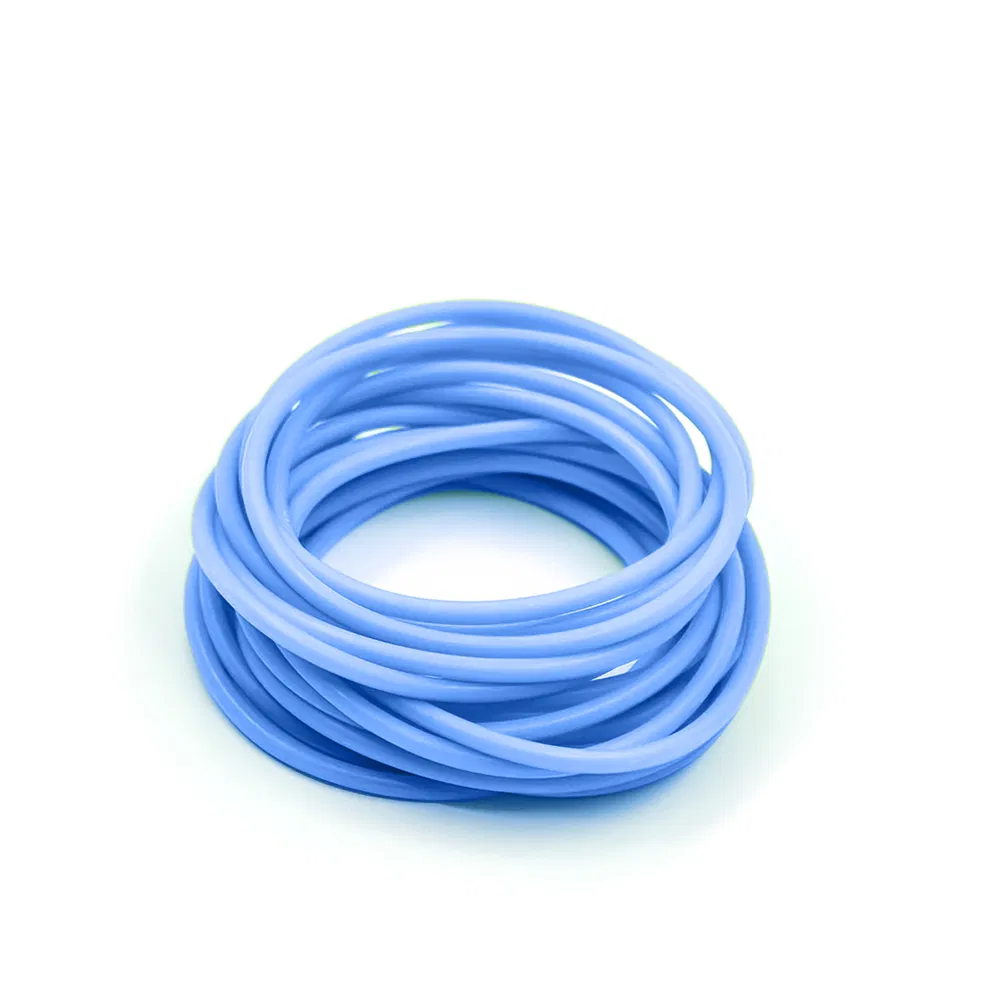
Material selection for heat resistant wire sheathing is critical in industrial applications where thermal stability, chemical resistance, and mechanical durability are paramount. At Suzhou Baoshida Trading Co., Ltd., we specialize in high-performance rubber solutions tailored to meet the rigorous demands of electrical insulation, automotive systems, aerospace components, and industrial machinery. Our core materials—Viton, Nitrile (NBR), and Silicone—each offer distinct advantages depending on operational temperature, exposure to fluids, and environmental stressors.
Viton, a fluorocarbon-based elastomer, delivers exceptional thermal and chemical resistance. It maintains structural integrity in continuous service temperatures up to 200°C, with short-term spikes reaching 250°C. This makes Viton ideal for wire sheathing in high-temperature engine compartments, fuel system wiring, and industrial ovens where exposure to oils, acids, and solvents is common. Its low permeability to gases and fluids further enhances insulation reliability in aggressive chemical environments.
Nitrile rubber, or Buna-N, is widely used for its excellent resistance to petroleum-based oils and fuels. With a continuous operating temperature range of -30°C to 105°C, Nitrile is best suited for moderate-heat environments where cost-effective performance is required. It exhibits strong abrasion resistance and mechanical strength, making it a reliable choice for wire protection in hydraulic systems, automotive under-hood wiring, and industrial hydraulic equipment. However, its performance degrades under prolonged exposure to ozone, UV radiation, and extreme heat, limiting suitability in outdoor or high-temperature applications.
Silicone rubber stands out for its outstanding thermal flexibility and electrical insulation properties. It operates effectively from -60°C to 180°C, with certain formulations tolerating brief excursions up to 230°C. Silicone offers excellent resistance to ozone and UV radiation, making it ideal for outdoor and aerospace applications. While it has lower mechanical strength compared to Viton and Nitrile, its high dielectric strength and flexibility at low temperatures make it a preferred material for precision electronics, medical devices, and high-reliability signal cables.
The following table summarizes key performance characteristics of these materials for heat resistant wire sheathing applications.
| Property | Viton (FKM) | Nitrile (NBR) | Silicone (VMQ) |
|---|---|---|---|
| Continuous Use Temperature | -20°C to 200°C | -30°C to 105°C | -60°C to 180°C |
| Short-Term Peak Temperature | Up to 250°C | Up to 125°C | Up to 230°C |
| Dielectric Strength (kV/mm) | 20 | 18 | 22 |
| Resistance to Oils/Fuels | Excellent | Excellent | Good to Fair |
| Resistance to Ozone/UV | Excellent | Poor | Excellent |
| Flexibility at Low Temp | Moderate | Good | Excellent |
| Abrasion Resistance | Good | Excellent | Moderate |
| Chemical Resistance | Outstanding | Good | Moderate |
Selecting the appropriate sheathing material requires a balanced assessment of thermal exposure, chemical environment, and mechanical demands. Suzhou Baoshida Trading Co., Ltd. provides customized rubber compounding and technical support to ensure optimal material performance in your specific application.
Manufacturing Capabilities
Engineering Excellence in Heat Resistant Wire Sheathing Solutions
Suzhou Baoshida Trading Co., Ltd. leverages deep technical expertise to deliver mission-critical heat resistant wire sheathing for demanding industrial applications. Our core strength resides in a dedicated engineering team comprising five specialized mould engineers and two advanced rubber formula engineers. This strategic allocation ensures rigorous scientific oversight from molecular design through precision tooling, eliminating bottlenecks in complex thermoset development cycles. Unlike commodity suppliers, our formula engineers focus exclusively on optimizing elastomer systems for extreme thermal stability, oxidative resistance, and mechanical integrity under sustained high-temperature stress.
Our formula development process begins with computational material modeling to predict polymer behavior at elevated temperatures. We systematically evaluate base polymers—including silicone rubber (VMQ), ethylene propylene diene monomer (EPDM), and fluorocarbon (FKM)—against client-specific thermal profiles. Critical parameters such as crosslink density, filler dispersion, and antioxidant synergism are quantified through accelerated aging tests per ASTM D573 and ISO 188 standards. This data-driven approach allows us to tailor compound formulations that maintain dielectric strength and flexibility after 1,000+ hours at 200°C, far exceeding generic industry benchmarks. Concurrently, our mould engineering team designs multi-cavity tooling with precision thermal management channels, ensuring uniform curing and zero flash defects even for ultra-thin sheath geometries down to 0.3mm wall thickness.
OEM collaboration is central to our methodology. We partner with clients during the prototyping phase to co-engineer solutions matching exact extrusion line parameters and end-use environmental conditions. This includes adapting formulations for compatibility with specific conductor materials (e.g., nickel-plated copper) and regulatory frameworks like UL 94 V-0 flammability ratings. Our facility supports full-scale production of custom compounds with batch traceability to ISO 9001:2015 standards, enabling seamless integration into global supply chains.
The table below summarizes performance characteristics of our flagship heat resistant compounds:
| Material Type | Continuous Operating Temp (°C) | Peak Short-Term Temp (°C) | Tensile Strength (MPa) | Elongation at Break (%) | Volume Resistivity (Ω·cm) |
|---|---|---|---|---|---|
| High-Consistency Silicone (HCR) | 200 | 260 | 8.5 | 350 | >1×10¹⁵ |
| Peroxide-Cured EPDM | 150 | 180 | 12.0 | 300 | >1×10¹⁴ |
| Specialty FKM Blend | 230 | 280 | 10.2 | 220 | >1×10¹⁶ |
All compounds undergo stringent validation via thermogravimetric analysis (TGA) and dynamic mechanical analysis (DMA) to verify thermal decomposition thresholds and modulus retention. Our engineering team provides comprehensive technical documentation, including processing guides and failure mode analysis, ensuring trouble-free implementation. By integrating formula science with precision tooling expertise, Suzhou Baoshida transforms thermal challenges into reliable, high-yield manufacturing outcomes for aerospace, automotive electrification, and industrial automation sectors. Partner with us to convert demanding thermal specifications into field-proven performance.
Customization Process
Drawing Analysis: Precision in Interpretation
The customization process for heat resistant wire sheathing begins with meticulous drawing analysis. At Suzhou Baoshida Trading Co., Ltd., engineering teams conduct a comprehensive review of client-provided technical drawings, focusing on dimensional tolerances, cross-sectional geometry, and performance requirements. This phase ensures full alignment with OEM specifications, including bend radius, wall thickness, and conductor compatibility. Critical parameters such as operating temperature range, flame resistance class, and mechanical stress exposure are extracted and cross-referenced with known material behaviors. Our engineers utilize CAD-based dimension validation tools to detect potential design conflicts early, minimizing downstream rework. This stage establishes the technical foundation for material selection and compound development.
Formulation: Tailored Rubber Chemistry
Based on the drawing analysis, a customized rubber formulation is engineered to meet the thermal and mechanical demands of the application. Our specialty lies in high-performance elastomers such as silicone rubber (VMQ), ethylene propylene diene monomer (EPDM), and fluorocarbon rubber (FKM), selected for their intrinsic thermal stability. Additive packages are precisely balanced to enhance heat aging resistance, reduce compression set, and improve electrical insulation properties. For instance, ceramic-based fillers may be incorporated to extend continuous service temperature beyond 300°C. All formulations are developed in accordance with international standards such as UL, CSA, and IEC 60754 for halogen-free compliance where required. The compound is then subjected to laboratory-scale mixing and rheological testing to confirm processability and cure kinetics.
Prototyping: Validation Under Real Conditions
Once formulated, the rubber compound undergoes prototyping using pilot-scale extrusion and continuous vulcanization (CV) lines that mirror full production conditions. Short production runs generate sample lengths of sheathed wire for rigorous evaluation. Testing includes thermal aging per ASTM D573, tensile strength retention, dielectric strength measurement, and flexibility after exposure to elevated temperatures. Clients receive detailed test reports and physical samples for field validation. Any deviations from performance targets trigger iterative reformulation or process adjustment. This phase typically involves 1–3 prototype cycles, ensuring reliability under real-world operating environments.
Mass Production: Scalable Precision Manufacturing
Upon client approval of prototype performance, the project transitions to mass production. Our automated extrusion lines, equipped with laser-based diameter control and在线 monitoring systems, ensure consistent sheath thickness and concentricity. Each production batch undergoes in-process quality checks and final certification, including traceability documentation and material compliance statements. With a flexible manufacturing setup, we support batch sizes from 5 km to over 100 km per order, maintaining tight control over cure profile, surface finish, and color consistency.
Typical Performance Specifications of Custom Heat Resistant Sheathing
| Property | Silicone (VMQ) | EPDM | FKM |
|---|---|---|---|
| Continuous Operating Temperature | -60°C to +200°C | -50°C to +150°C | -20°C to +250°C |
| Peak Short-Term Resistance | Up to 300°C | Up to 200°C | Up to 300°C |
| Dielectric Strength (kV/mm) | ≥18 | ≥20 | ≥15 |
| Flame Resistance | UL94 V-0 | UL94 V-1 | UL94 V-0 |
| Flexibility at Low Temp | Excellent | Good | Moderate |
Contact Engineering Team
Contact Suzhou Baoshida for Precision Heat Resistant Wire Sheathing Solutions
Suzhou Baoshida Trading Co., Ltd. stands at the forefront of industrial rubber innovation, delivering rigorously engineered heat resistant wire sheathing formulations for the most demanding electrical and automotive applications. Our proprietary silicone and fluorosilicone compounds undergo stringent OEM validation processes, ensuring consistent performance under extreme thermal cycling, chemical exposure, and mechanical stress. When standard elastomers fail at elevated temperatures, our solutions maintain dielectric integrity and structural resilience, directly translating to extended product lifespans and reduced field failures for your end-users. We operate at the intersection of polymer science and industrial pragmatism, providing not just materials but validated processing parameters for seamless integration into your extrusion lines.
The critical performance metrics defining our advanced sheathing compounds are quantified below. These values represent baseline specifications for our flagship formulations; all materials are subject to customization based on your specific voltage requirements, regulatory standards (UL, CSA, ISO), and environmental exposure profiles.
| Property | Test Method | Typical Value (Silicone) | Typical Value (Fluorosilicone) |
|---|---|---|---|
| Continuous Operating Temperature | ASTM D573 | -60°C to +200°C | -55°C to +230°C |
| Peak Short-Term Exposure | ASTM D865 | +250°C | +260°C |
| Tensile Strength (MPa) | ASTM D412 | ≥ 6.5 | ≥ 7.0 |
| Elongation at Break (%) | ASTM D412 | ≥ 250 | ≥ 200 |
| Volume Resistivity (Ω·cm) | ASTM D257 | ≥ 1.0 x 10¹⁴ | ≥ 1.0 x 10¹⁴ |
| Flame Resistance | UL 94 | V-0 | V-0 |
These specifications are not theoretical ideals but production-relevant benchmarks achieved through our controlled polymer cross-linking protocols and filler dispersion technologies. Each compound batch undergoes traceable lot testing, with full material certifications provided to ensure compliance with your quality management system. Our engineering team collaborates directly with OEMs during the prototyping phase to optimize cure kinetics, extrusion speed, and surface finish—minimizing scrap rates and accelerating time-to-market.
For applications requiring resistance beyond standard silicone capabilities, such as exposure to concentrated acids, jet fuels, or continuous 230°C+ operation, our fluorosilicone formulations offer unparalleled chemical inertness without sacrificing flexibility. We understand that wire sheathing failures cascade into costly recalls; therefore, our technical support extends beyond material supply to include failure mode analysis and formulation recalibration based on your field data.
Initiate a technical consultation with Mr. Boyce, our dedicated OEM Relationship Manager, to discuss your specific thermal and electrical performance targets. Mr. Boyce possesses 12 years of hands-on experience in rubber compounding for wire and cable manufacturers across the Asia-Pacific region. He will coordinate our laboratory resources to develop a tailored compound datasheet and arrange sample shipments for your validation testing within 72 hours of engagement. Provide your extrusion line parameters, regulatory requirements, and target cost structure to receive a precision-engineered solution proposal.
Contact Mr. Boyce directly at [email protected] to schedule a confidential technical review. Include your project timeline, target application (e.g., EV battery harnesses, aerospace wiring, industrial robotics), and key performance thresholds. Suzhou Baoshida operates under strict NDA protocols and prioritizes responsive engineering dialogue—expect a detailed technical response within one business day. Partner with us to transform thermal degradation challenges into competitive advantages through scientifically grounded elastomer innovation.
⚖️ O-Ring Weight Calculator
Estimate rubber O-ring weight (Approx).