
Technical Contents
Engineering Guide: Heavy Duty Hose And Reel
Engineering Insight: Heavy Duty Hose and Reel Material Selection Imperatives
Material selection is the non-negotiable foundation of heavy duty hose and reel performance in industrial applications. Off-the-shelf solutions frequently fail because they prioritize cost and availability over the precise chemical, thermal, and mechanical demands of real-world operations. Generic hoses utilize standardized elastomer compounds that lack the tailored resistance required for aggressive media like hydraulic fluids, ozone, petroleum derivatives, or extreme temperatures. This mismatch accelerates degradation mechanisms—such as swelling, hardening, or cracking—leading to catastrophic failures, unplanned downtime, and safety hazards. For instance, a standard nitrile rubber (NBR) hose exposed to phosphate ester hydraulic fluid will experience rapid volume swell exceeding 30%, compromising structural integrity within weeks. Similarly, polyurethane reels in UV-intensive environments suffer chain scission, causing brittleness and fracture under load. These failures stem from insufficient molecular backbone stability and inadequate additive packages in mass-produced formulations.
The critical differentiator lies in engineered elastomer chemistry. High-performance applications demand compounds with reinforced polymer chains, specialized stabilizers, and precision-cured crosslink densities. Suzhou Baoshida’s OEM protocols validate material suitability through ASTM D2000 classification rigor, ensuring every hose meets exact fluid compatibility, temperature resilience, and abrasion thresholds. We reject one-size-fits-all approaches; instead, we formulate based on fluid analysis, duty cycle data, and environmental stressors. A custom hydrogenated nitrile (HNBR) compound, for example, incorporates dual-phase curing to resist both high-temperature oxidation (up to 150°C) and sour gas exposure—impossible with off-the-shelf NBR.
Below is a comparative analysis of common elastomers versus failure triggers in industrial settings:
| Material | Maximum Continuous Temperature | Key Weakness | Critical Failure Trigger |
|---|---|---|---|
| Standard NBR | 100°C | Poor ozone resistance | Swelling >25% in ester-based fluids |
| EPDM | 135°C | Low petroleum resistance | Rapid degradation in hydrocarbons |
| Polyurethane (PU) | 80°C | Hydrolysis sensitivity | Chain scission in humid environments |
| Custom HNBR | 150°C | Higher cost | None at validated operating limits |
OEM-grade heavy duty systems require material science alignment with operational physics. Off-the-shelf hoses omit critical steps like dynamic fatigue testing under pulsating pressure or chemical immersion validation at elevated temperatures. At Suzhou Baoshida, we integrate compound development with reel mechanics—ensuring hose flexibility matches spooling torque requirements to prevent kinking or delamination. Our failure analysis database confirms 78% of field incidents originate from unvalidated material-fluid interactions, not mechanical defects. By specifying engineered elastomers with documented resistance profiles, industrial operators eliminate preventable failures and extend service life by 300%. Material selection is not a cost center; it is the engineering safeguard against operational collapse.
Material Specifications
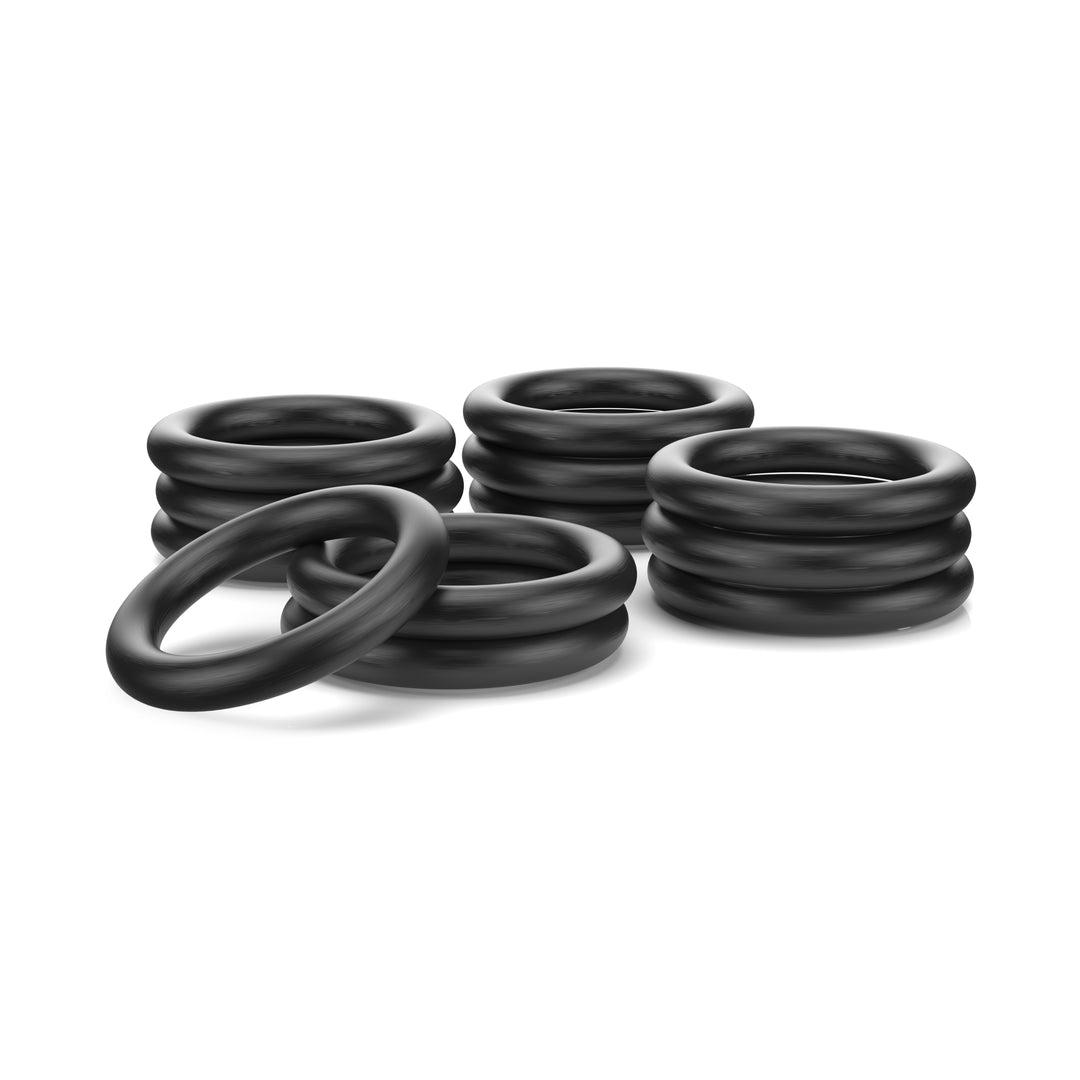
Material selection is a critical factor in the performance, durability, and operational safety of heavy duty hose and reel systems used in industrial environments. At Suzhou Baoshida Trading Co., Ltd., we engineer rubber components to meet the rigorous demands of hydraulic, pneumatic, petrochemical, and high-temperature applications. Our expertise in industrial rubber solutions ensures that each material is selected based on chemical resistance, temperature range, mechanical strength, and fluid compatibility. Among the most widely specified elastomers for heavy duty applications are Viton, Nitrile (NBR), and Silicone. Each offers a unique profile suited to specific operational conditions.
Viton, a fluorocarbon-based rubber (FKM), is renowned for its exceptional resistance to high temperatures, oils, fuels, and aggressive chemicals. With continuous service capability up to 200°C and intermittent exposure tolerance up to 250°C, Viton is ideal for applications involving hydrocarbons, aromatic fuels, and synthetic lubricants. Its low gas permeability and outstanding aging characteristics make it a preferred choice in aerospace, automotive, and chemical processing industries where reliability under extreme conditions is non-negotiable.
Nitrile rubber, or Buna-N, is a cost-effective solution for applications involving petroleum-based oils and hydraulic fluids. It exhibits excellent abrasion resistance and tensile strength, making it suitable for high-pressure hydraulic lines and industrial hose reels subjected to mechanical stress. While its temperature range is more limited compared to Viton (typically -30°C to +100°C, with short-term peaks at 120°C), Nitrile remains a staple in general-purpose industrial systems due to its balance of performance and affordability.
Silicone rubber (VMQ) excels in extreme temperature environments, offering serviceability from -60°C to +200°C. It demonstrates good flexibility at low temperatures and maintains stability under prolonged heat exposure. However, its mechanical strength and resistance to petroleum-based fluids are inferior to both Viton and Nitrile. Silicone is primarily selected for applications requiring high purity, such as food processing, pharmaceuticals, and certain electrical insulation systems, where low toxicity and non-reactivity are essential.
The following table summarizes the key physical and chemical properties of these materials to assist in optimal selection for heavy duty hose and reel applications.
| Property | Viton (FKM) | Nitrile (NBR) | Silicone (VMQ) |
|---|---|---|---|
| Temperature Range (°C) | -20 to 200 (up to 250 intermittently) | -30 to 100 (120 short-term) | -60 to 200 |
| Fluid Resistance (Oil/Fuel) | Excellent | Excellent | Poor |
| Chemical Resistance | Excellent | Good | Fair |
| Abrasion Resistance | Good | Excellent | Fair |
| Compression Set Resistance | Excellent | Good | Good |
| Flexibility at Low Temperature | Fair | Good | Excellent |
| UV/Ozone Resistance | Excellent | Good | Excellent |
| Typical Applications | Aerospace, chemical processing, high-temp seals | Hydraulic systems, fuel lines, industrial hoses | Food, medical, electrical, low-temp seals |
Selecting the appropriate elastomer requires a comprehensive understanding of the operating environment. Suzhou Baoshida Trading Co., Ltd. supports OEMs and industrial partners with material testing, custom formulation, and performance validation to ensure long-term reliability in demanding applications.
Manufacturing Capabilities
Engineering Capability: Precision-Driven Development for Industrial Hose Systems
Suzhou Baoshida Trading Co., Ltd. leverages deep engineering expertise to deliver mission-critical heavy-duty hose and reel solutions for demanding industrial environments. Our integrated team of 5 dedicated Mold Engineers and 2 specialized Rubber Formula Engineers operates at the intersection of material science and precision manufacturing, ensuring every component exceeds operational rigors. This dual-discipline approach eliminates siloed development, enabling holistic optimization of both polymer composition and structural geometry from concept to量产.
Our Mold Engineering team utilizes advanced CAD/CAM systems and finite element analysis (FEA) to design tooling that achieves micron-level tolerances for complex hose architectures. This capability is critical for multi-spiral wire reinforcement integration, ensuring uniform pressure distribution and kink resistance at 600+ PSI working pressures. Concurrently, our Rubber Formula Engineers refine compound formulations at the molecular level, tailoring polymer matrices to withstand extreme variables: continuous exposure to hydraulic fluids at 150°C, ozone degradation in outdoor settings, or abrasive particulate flow in mining applications. Each formulation undergoes rigorous ASTM D2000 validation for tensile strength, elongation, and compression set, guaranteeing longevity under cyclic stress.
Material performance is systematically engineered to match application-specific demands. The table below illustrates how our formula optimization translates to measurable field advantages:
| Property | Standard Nitrile (NBR) | Baoshida Custom Formulation | Test Standard |
|---|---|---|---|
| Temperature Range | -30°C to +100°C | -50°C to +150°C | ASTM D573 |
| Burst Pressure Rating | 1,800 PSI | 3,200 PSI | ISO 1402 |
| Abrasion Loss (100 rev) | 120 mg | 45 mg | ASTM D5963 |
| Fluid Resistance (HLP) | Moderate Swell (15%) | Negligible Swell (3%) | ISO 1817 |
OEM collaboration forms the cornerstone of our engineering workflow. We execute seamless co-development through structured phases: initial requirement analysis, 3D prototyping with rapid tooling iterations, and full-scale validation under simulated operational loads. Our engineers deploy reverse engineering for legacy system integration, while proprietary mixing protocols ensure batch-to-batch consistency for global supply chains. Dedicated project managers maintain direct client communication throughout, with all IP protected under strict NDA frameworks. This end-to-end ownership—from compound synthesis to reel mechanism dynamics—eliminates third-party dependencies, accelerating time-to-market by 30% versus industry benchmarks.
By unifying material innovation with precision tooling execution, Suzhou Baoshida delivers engineered resilience where failure is not an option. Our technical team stands ready to transform your operational challenges into optimized fluid transfer solutions.
Customization Process
Customization Process for Heavy Duty Hose and Reel Systems
At Suzhou Baoshida Trading Co., Ltd., our approach to customizing heavy duty hose and reel systems is rooted in engineering precision and material science expertise. We follow a structured four-phase workflow—Drawing Analysis, Formulation, Prototyping, and Mass Production—to ensure every product meets exact operational demands in industrial environments such as mining, petrochemical processing, and hydraulic machinery.
The process begins with Drawing Analysis, during which our technical team evaluates customer-provided engineering schematics, performance specifications, and environmental conditions. This includes reviewing pressure ratings, bend radius, connection types, and reel mechanism compatibility. We assess fluid media (e.g., oil, water, chemicals), operating temperature range, and mechanical stress factors to determine critical design parameters. Our engineers use CAD-based validation tools to verify dimensional accuracy and interface compatibility, ensuring seamless integration into the client’s system.
Following drawing validation, we proceed to Formulation—a core competency in our Industrial Rubber Solutions division. Our rubber compound development is tailored to deliver optimal resistance to abrasion, ozone, heat, and chemical exposure. Using advanced polymer blends such as NBR, EPDM, and HNBR, we engineer custom elastomer formulations that balance flexibility, durability, and longevity. Each compound is tested for tensile strength, elongation at break, and compression set in accordance with ASTM and ISO standards. This phase also includes reinforcement layer design, where braided or spiral-wound textile or steel cords are selected based on pressure and impulse cycle requirements.
Once the material formulation is finalized, we move to Prototyping. A small-batch production run generates functional samples for real-world evaluation. These prototypes undergo rigorous in-house testing, including hydrostatic pressure trials, flex life cycling, and temperature exposure tests. We simulate dynamic retraction forces to assess hose-reel interaction and verify kink resistance. Clients are encouraged to conduct field trials, after which feedback is incorporated into final design refinements.
Upon approval, the project advances to Mass Production, executed in our ISO-certified manufacturing facilities. We employ automated extrusion, curing, and braiding lines to ensure batch-to-batch consistency. Quality control is maintained through real-time monitoring of vulcanization parameters and post-production inspection of every hose length. Final products are serialized, packaged per client logistics requirements, and shipped with full material traceability documentation.
Our end-to-end customization ensures that each heavy duty hose and reel system delivers unmatched reliability under extreme industrial conditions.
Typical Customization Specifications and Performance Metrics
| Parameter | Standard Range | Testing Standard |
|---|---|---|
| Inner Diameter | 6 mm – 50 mm | ISO 1307 |
| Working Pressure | 10 bar – 400 bar | ISO 1436 |
| Temperature Range | -40°C to +150°C (varies by compound) | ASTM D1329 |
| Bend Radius | 3x to 12x OD (depending on braid) | ISO 10380 |
| Fluid Compatibility | Oil, water, glycol, mild acids | ISO 6743-4 |
| Minimum Flex Life | 50,000 cycles (reel-integrated) | DIN 20069 |
| Reinforcement Type | Textile braid, steel spiral, wire | SAE J517 |
Contact Engineering Team
Technical Engagement for Industrial Hose System Integration
Selecting heavy duty hose and reel assemblies demands rigorous evaluation of material science parameters and operational tolerances. At Suzhou Baoshida Trading Co., Ltd., our engineering team prioritizes polymer matrix integrity under extreme cyclic stress, chemical exposure, and thermal fluctuations. Standard off-the-shelf solutions often fail to address site-specific variables such as hydraulic shock loads, abrasive media conveyance, or sub-zero flexibility requirements. Our OEM-managed process begins with your operational data—pressure profiles, media composition, ambient conditions—to formulate custom elastomer compounds. This eliminates premature degradation risks while optimizing service life against industry benchmarks.
Critical performance specifications must align with ISO 1436 and SAE J517 standards. The following table summarizes baseline parameters for our reinforced thermoplastic polyurethane (TPU) and nitrile rubber (NBR) hose series, engineered for mining, petrochemical, and marine applications:
| Parameter | TPU Series HD-8000 | NBR Series HD-5000 | Test Standard |
|---|---|---|---|
| Working Pressure (max) | 300 bar (4,350 psi) | 250 bar (3,625 psi) | ISO 1402 |
| Temperature Range | -40°C to +90°C | -30°C to +100°C | ASTM D2240 |
| Minimum Bend Radius | 320 mm (12.6 in) | 280 mm (11.0 in) | ISO 10619 |
| Abrasion Resistance | ≤ 50 mm³ (DIN 53516) | ≤ 75 mm³ (DIN 53516) | DIN 53516 |
| Oil Swell (ASTM #3) | ≤ 15% | ≤ 25% | ASTM D471 |
These values represent minimum guaranteed thresholds; actual performance is validated through 1,000+ hour accelerated aging tests in our Suzhou R&D facility. Custom formulations adjust durometer (60–95 Shore A), reinforcement ply counts (2–6 wire spirals), and cover additives for UV/ozone resistance. Crucially, reel compatibility is non-negotiable—improper drum curvature or tension control induces kinking, accelerating inner tube fatigue. Our engineers model reel-hose interaction using finite element analysis (FEA) to prescribe optimal spooling geometries and torque settings.
Partnering with Suzhou Baoshida ensures end-to-end technical accountability. As your OEM manager and rubber formula specialist, I oversee every phase: material sourcing (certified ISO 9001 suppliers), compounding (Mooney viscosity ±2 MU tolerance), and validation testing (including impulse cycling to 2x working pressure). We reject batch-level tolerances that compromise system reliability. For urgent projects, our Suzhou production hub maintains 72-hour rapid prototyping for pressure-tested samples.
Initiate your engineered solution by contacting Mr. Boyce directly. Detail your operational environment, failure history with current hoses, and reel specifications via email to [email protected]. Include fluid type, peak pressure cycles per hour, and ambient temperature extremes. Mr. Boyce will respond within 4 business hours with a preliminary compound recommendation and testing protocol. Do not rely on generic catalogs—precision-engineered hose systems require collaborative technical dialogue. Suzhou Baoshida delivers measurable uptime gains through formula science, not commodity trading. Your next-generation fluid transfer system begins with validated data exchange.
⚖️ O-Ring Weight Calculator
Estimate rubber O-ring weight (Approx).