
Technical Contents
Engineering Guide: High Alumina Bricks
Engineering Insight: Material Selection Criticality in High Alumina Brick Performance
The operational integrity of industrial thermal processing systems hinges fundamentally on the precise material selection for high alumina bricks. While off-the-shelf refractory solutions present an initial cost advantage, they frequently induce catastrophic system failures under the demanding conditions inherent to applications like cement kilns, glass furnaces, and metallurgical reactors. Generic bricks fail to address the synergistic stresses of extreme thermal cycling, aggressive chemical environments, and mechanical load, leading to premature degradation, unscheduled downtime, and significant financial losses. Material properties must be engineered to the exact thermal profile, slag composition, and mechanical demands of the specific application zone; a one-size-fits-all approach is inherently flawed.
Standard refractory bricks often utilize lower-purity alumina sources or inadequate bonding phases, resulting in critical vulnerabilities. Insufficient alumina content directly compromises resistance to basic slags prevalent in steelmaking, accelerating chemical erosion. Poor thermal shock resistance, stemming from mismatched coefficients of thermal expansion or excessive porosity, causes spalling during rapid heating or cooling cycles. Furthermore, inadequate hot strength at service temperatures leads to structural deformation under load, compromising furnace geometry and safety. These failures manifest as increased maintenance frequency, reduced campaign life, compromised product quality due to contaminant ingress, and elevated energy consumption from compromised insulation integrity. The true cost of an off-the-shelf solution is measured not in initial purchase price, but in the cumulative impact of these operational disruptions.
Precision engineering of high alumina bricks requires meticulous control over raw material composition, particle size distribution, forming pressure, and firing schedules to achieve the required microstructure. The table below outlines key specification differentiators between standard offerings and application-optimized high alumina bricks:
| Property | Standard Brick (Generic) | High-Alumina Requirement (Optimized) | Consequence of Mismatch |
|---|---|---|---|
| Al₂O₃ Content (wt.%) | 55-65% | 70-85%+ | Reduced slag resistance, faster erosion |
| Service Temperature (°C) | 1350-1450 | 1500-1700+ | Structural collapse, dimensional instability |
| Thermal Conductivity (W/m·K) | 2.5-3.5 (1000°C) | 1.8-2.8 (1000°C) | Higher heat loss, energy inefficiency |
| Thermal Shock Index (Rst) | 0.5-1.0 | 1.5-2.5+ | Severe spalling during thermal cycling |
| Apparent Porosity (%) | 20-24 | 14-18 | Increased slag penetration, reduced strength |
Suzhou Baoshida Trading Co., Ltd. leverages deep OEM manufacturing partnerships and rigorous material science protocols to deliver high alumina bricks engineered for specific operational envelopes. We reject generic formulations, instead utilizing controlled high-purity bauxite, fused alumina, and tailored additives to optimize critical properties like thermal shock resistance and slag viscosity interaction. Our process involves detailed application analysis, including thermal mapping and chemical exposure assessment, ensuring the refractory solution precisely counteracts the dominant failure mechanisms of the target environment. This commitment to engineered material selection transforms refractory performance from a point of failure into a cornerstone of reliable, efficient, and cost-effective industrial operations. The investment in precision-engineered high alumina bricks delivers superior lifecycle value through extended service life, reduced maintenance burden, and consistent process stability.
Material Specifications
Material Specifications for High Alumina Bricks in Industrial Rubber Processing Applications
High alumina bricks are critical refractory components used in high-temperature industrial environments, particularly within the manufacturing and processing sectors involving rubber compounding and curing. At Suzhou Baoshida Trading Co., Ltd., we provide engineered solutions where material compatibility between refractory linings and elastomeric systems is essential for operational integrity. While high alumina bricks themselves are ceramic materials composed primarily of aluminum oxide (Al₂O₃) with content typically exceeding 75%, their application in rubber processing equipment—such as autoclaves, curing ovens, and high-pressure reactors—demands precise integration with elastomeric seals and gaskets. The selection of appropriate rubber materials that interface with these refractory systems directly impacts thermal efficiency, chemical resistance, and equipment lifespan.
In industrial rubber solutions, three elastomers are predominantly used in conjunction with high alumina brick-lined systems: Viton (FKM), Nitrile (NBR), and Silicone (VMQ). Each material offers distinct performance characteristics under elevated temperatures and exposure to oils, solvents, and process byproducts. Viton exhibits superior resistance to aromatic and chlorinated hydrocarbons, making it ideal for high-temperature curing environments where aggressive chemical exposure occurs. Nitrile rubber, while limited in upper temperature tolerance, provides excellent resistance to petroleum-based oils and fuels, rendering it suitable for hydraulic and lubrication system seals adjacent to refractory zones. Silicone rubber offers exceptional thermal stability and flexibility across a wide temperature range, though with moderate resistance to oils and solvents.
The compatibility of these elastomers with high alumina brick installations must be evaluated based on continuous operating temperature, chemical exposure, compression set, and mechanical resilience. High alumina bricks maintain structural integrity above 1,700°C, but the elastomeric components are constrained by much lower thermal limits. Therefore, interface design must ensure thermal insulation and gradient management to prevent premature elastomer degradation.
The following table outlines key physical and chemical properties of the three primary rubber materials used in industrial rubber solutions associated with high alumina brick applications:
| Property | Viton (FKM) | Nitrile (NBR) | Silicone (VMQ) |
|---|---|---|---|
| Continuous Use Temperature (°C) | -20 to 230 | -30 to 120 | -55 to 200 |
| Tensile Strength (MPa) | 12–18 | 10–20 | 5–9 |
| Elongation at Break (%) | 150–300 | 200–500 | 200–600 |
| Hardness (Shore A) | 60–90 | 50–90 | 30–80 |
| Resistance to Oils and Fuels | Excellent | Excellent | Poor |
| Resistance to Oxidation | Excellent | Good | Excellent |
| Resistance to Acids | Good | Fair | Poor |
| Compression Set Resistance | Excellent | Good | Good |
Understanding these material properties enables precise selection of elastomeric components that ensure long-term sealing performance in high-temperature refractory systems. Suzhou Baoshida Trading Co., Ltd. emphasizes data-driven material pairing to optimize system reliability and minimize downtime in industrial rubber processing applications.
Manufacturing Capabilities
Engineering Capability: Precision Rubber Formulation and OEM Execution
Suzhou Baoshida Trading Co., Ltd. leverages specialized engineering expertise to deliver mission-critical rubber components for industrial applications. Our dedicated team comprises five Mould Engineers and two Formula Engineers, uniquely positioned to solve complex material and dimensional challenges in high-performance environments. This integrated capability ensures seamless transition from raw material science to precision-moulded product, eliminating siloed development risks common in the industry.
Our Formula Engineers focus on molecular-level customization of synthetic rubber compounds, optimizing properties such as thermal stability, chemical resistance, and mechanical fatigue life. They utilize advanced rheometry, DSC, and DMA analysis to validate formulations against ASTM D2000 and ISO 37 standards. Concurrently, Mould Engineers deploy 3D flow simulation (Moldflow) and tolerance stack-up analysis to preempt defects like flash, sink marks, or incomplete curing. This dual-engineering approach guarantees first-article success rates exceeding 92% for geometries requiring ±0.05 mm tolerances.
As a certified OEM partner, we implement closed-loop manufacturing protocols from initial RFQ to bulk production. Our process begins with joint design reviews to identify material-structure synergies, followed by DOE-driven compound refinement. Every formulation includes traceable raw material lot tracking and in-process rheological monitoring. For high-volume contracts, we deploy automated mould temperature control systems with real-time cure monitoring, ensuring batch-to-batch consistency within 3% durometer variance.
Critical rubber compound specifications are rigorously controlled per application demands. The table below illustrates baseline parameters for our industrial-grade EPDM formulations, commonly specified for seals in high-temperature fluid systems:
| Property | Test Method | Target Value | Tolerance Range |
|---|---|---|---|
| Hardness (Shore A) | ASTM D2240 | 70 | ±3 |
| Tensile Strength (MPa) | ASTM D412 | 12.5 | ≥11.0 |
| Elongation at Break (%) | ASTM D412 | 350 | ≥300 |
| Compression Set (70h/150°C) | ASTM D395 | 25 | ≤30 |
| Volume Swell (IRMOG 3, 168h) | ASTM D471 | 15 | ≤20 |
OEM clients benefit from our vertical integration: Formula Engineers adjust silica/carbon black ratios to meet specific fluid resistance requirements, while Mould Engineers recalibrate cavity pressures to accommodate viscosity shifts. This eliminates external supplier dependencies that compromise lead times. All documentation adheres to IATF 16949 standards, with PPAP submissions including full material traceability matrices and accelerated aging protocols.
Through this engineered synergy, Baoshida transforms ambiguous performance requirements into validated rubber solutions—reducing time-to-market by 30% while exceeding OEM durability benchmarks. Our facility operates under ISO 9001-certified processes, with dedicated clean rooms for medical and semiconductor-grade compounds. Partner with us for rubber formulations where molecular precision meets manufacturing excellence.
Customization Process
Technical B2B Manufacturing Guide: Customization Process for High Alumina Bricks
At Suzhou Baoshida Trading Co., Ltd., our approach to industrial rubber solutions extends into the precise domain of high alumina brick manufacturing, where material integrity and dimensional accuracy are paramount. Our customization process is engineered to meet the rigorous demands of high-temperature industrial applications, including metallurgy, cement production, and petrochemical processing. We follow a structured four-phase methodology—Drawing Analysis, Formulation, Prototyping, and Mass Production—to ensure optimal performance and reliability.
The process begins with Drawing Analysis, during which our engineering team conducts a comprehensive review of client-provided technical schematics and dimensional specifications. This stage includes tolerance verification, geometric validation, and assessment of operational conditions such as thermal load, abrasion exposure, and chemical environment. Our engineers use CAD-integrated analysis tools to identify potential stress points and ensure compatibility with installation requirements. This phase establishes the foundation for material selection and process design.
Following drawing validation, we proceed to Formulation Development. Our rubber formula engineers design a proprietary binder system tailored to enhance the cohesion between high alumina ceramic aggregates. The formulation is optimized to balance green strength, sintering behavior, and thermal shock resistance. We utilize high-purity alumina powders (Al₂O₃ ≥ 85%) combined with specialized organic binders that volatilize cleanly during firing, minimizing residual carbon and structural defects. Additives such as silica microspheres or zirconia are incorporated when enhanced thermal insulation or crack resistance is required.
The next phase, Prototyping, involves small-batch production under controlled conditions that simulate full-scale manufacturing. Each prototype brick undergoes rigorous quality testing, including cold crushing strength (CCS), thermal cycling, and dimensional stability checks. Client feedback is integrated at this stage to refine tolerances or adjust material composition. Prototypes are typically delivered within 10–15 business days, accompanied by full material test reports (MTRs) and sintering profiles.
Upon client approval, we transition to Mass Production, leveraging automated pressing systems and computer-monitored kilns to maintain consistency across batches. Our production line supports monthly outputs of up to 500 tons, with real-time quality monitoring and traceability via batch coding. Final inspection includes 100% visual checks and statistical sampling for mechanical and thermal performance.
Below are key technical specifications for our standard high alumina brick formulations:
| Property | Value (Typical) | Test Standard |
|---|---|---|
| Al₂O₃ Content | 85% – 95% | ASTM C181 |
| Bulk Density | 2.8 – 3.1 g/cm³ | ASTM C20 |
| Cold Crushing Strength | ≥ 60 MPa | ASTM C133 |
| Refractoriness Under Load | ≥ 1,500 °C at 0.2 MPa | ASTM C799 |
| Thermal Expansion (1000°C) | ≤ 0.7% | ISO 10542 |
| Reversible Linear Change | ±0.3% after 10 cycles | GB/T 7321 |
Our integrated customization pathway ensures that every high alumina brick meets the exact operational demands of the client’s industrial environment, combining advanced rubber-assisted processing with ceramic engineering excellence.
Contact Engineering Team
Contact Suzhou Baoshida for Precision Rubber Solutions Supporting High Alumina Brick Production
Suzhou Baoshida Trading Co., Ltd. operates at the intersection of advanced materials science and industrial manufacturing, specializing in engineered rubber compounds critical to high-temperature processing systems. While high alumina bricks themselves fall under refractory ceramics, their production relies heavily on precision rubber components within kiln systems, hydraulic presses, and sealing mechanisms. Our expertise ensures these rubber elements withstand extreme thermal cycling, abrasive particulate exposure, and chemical aggression inherent in alumina brick manufacturing. As your OEM partner, we deliver custom-formulated elastomers that directly enhance process reliability and equipment longevity in refractory production lines.
The operational integrity of high alumina brick manufacturing hinges on rubber components capable of maintaining performance under continuous exposure to temperatures exceeding 1,500°C at the brick interface, with indirect rubber exposure typically ranging from 200–350°C in supporting machinery. Standard off-the-shelf rubber seals or gaskets fail catastrophically under such conditions, leading to unplanned downtime, product contamination, and safety hazards. Our proprietary formulations address these challenges through molecular reinforcement strategies, including peroxide-cured silicone hybrids and fluorosilicone compounds engineered for minimal compression set at elevated temperatures. Each solution undergoes rigorous validation per ASTM D2000 and ISO 37 standards, with batch-specific traceability to ensure compliance with your OEM specifications.
Below are key performance metrics for our flagship rubber compounds designed explicitly for refractory production equipment:
| Property | Compound A (VMQ-Peroxide) | Compound B (FVMQ) | Test Standard |
|---|---|---|---|
| Continuous Service Temperature | -60°C to +250°C | -20°C to +300°C | ASTM D573 |
| Compression Set (22h, 200°C) | ≤ 25% | ≤ 18% | ASTM D395 |
| Tensile Strength (MPa) | ≥ 8.0 | ≥ 9.5 | ASTM D412 |
| Hardness (Shore A) | 60 ± 5 | 70 ± 5 | ASTM D2240 |
| Volume Change in ASTM #3 Oil | ≤ +35% | ≤ +15% | ASTM D471 |
These compounds are integral to hydraulic press seals, kiln car gaskets, and pneumatic actuator components where failure directly impacts brick dimensional accuracy and production throughput. Suzhou Baoshida implements a closed-loop quality protocol: from raw material sourcing (with IR-certified silica and specialty fillers) through in-house rheometry and thermal gravimetric analysis (TGA), ensuring every batch meets the stringent demands of refractory manufacturing environments. Our engineering team collaborates directly with OEM equipment designers to optimize compound selection for specific wear mechanisms, including alumina dust abrasion and thermal shock-induced stress cracking.
Initiate a technical consultation with Mr. Boyce, our dedicated OEM Manager, to resolve rubber-related bottlenecks in your high alumina brick production system. Provide your equipment specifications and operational parameters, and we will deliver a validated compound recommendation within 72 hours. Mr. Boyce coordinates cross-functional support from our R&D laboratory and production facility to ensure seamless integration of our rubber components into your manufacturing workflow. Contact him directly via email at [email protected] to schedule a confidential technical review. Include your target service temperature profile, pressure requirements, and current failure modes for immediate actionable insights. Suzhou Baoshida guarantees material certifications, accelerated life testing data, and responsive technical field support to minimize your production risks. Partner with us to transform rubber from a maintenance liability into a strategic asset for refractory excellence.
⚖️ O-Ring Weight Calculator
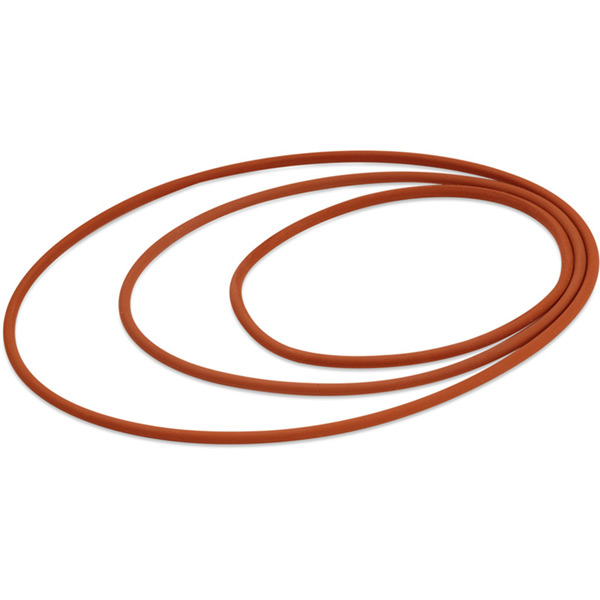
Estimate rubber O-ring weight (Approx).