
Technical Contents
Engineering Guide: High Pressure Hydraulic O Rings
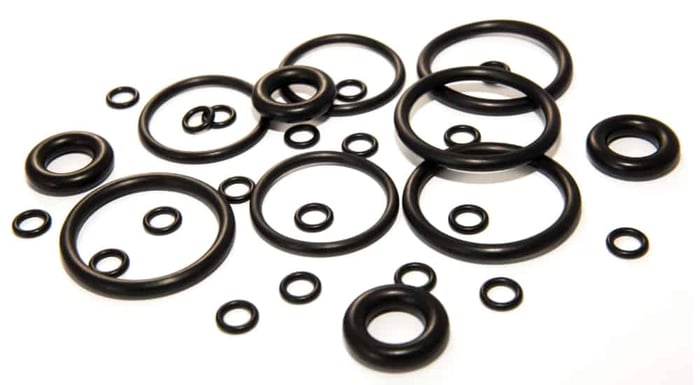
Engineering Insight High Pressure Hydraulic O Rings Material Selection Imperatives
Standard hydraulic O rings frequently fail in high pressure applications exceeding 3,000 psi due to fundamental material limitations inherent in generic compounds. Off-the-shelf solutions, often formulated for cost-sensitive general industrial use, lack the tailored polymer architecture required to withstand the combined stresses of extreme pressure, dynamic motion, elevated temperatures, and aggressive hydraulic fluids. This mismatch leads to catastrophic seal failure modes including extrusion through gland gaps, rapid compression set, thermal degradation, and chemical attack. Extrusion occurs when Hertzian contact stress at the O ring edge exceeds the material’s yield strength, forcing elastomer into microscopic clearance gaps. Standard NBR or low-cost FKM compounds typically possess insufficient hardness and resilience, accelerating this process under cyclic high-pressure loading. Simultaneously, elevated operating temperatures common in high-power density hydraulic systems accelerate polymer chain scission and crosslink breakdown in non-optimized materials, drastically reducing service life. Chemical resistance to modern high-performance, phosphate-ester or synthetic ester-based hydraulic fluids is another critical vulnerability; many standard elastomers swell excessively or harden, compromising sealing force and dimensional stability.
Material selection must address the synergistic interplay of pressure, temperature, fluid chemistry, and mechanical dynamics. Precision-engineered compounds utilize advanced polymer backbones, specialized cure systems, and engineered filler packages to achieve the necessary balance of properties. High transverse rupture modulus prevents extrusion, while ultra-low compression set retention maintains sealing force over extended service cycles. Superior thermal stability preserves mechanical integrity at temperatures exceeding 200°C, and tailored molecular structures resist swelling and degradation from aggressive hydraulic media. The table below illustrates critical property differentials between standard and engineered materials for 5,000+ psi applications.
| Material Type | Max Continuous Pressure Rating (psi) | Hardness Range (Shore A) | Compression Set @ 150°C, 70h (%) | Key Hydraulic Fluid Resistance |
|---|---|---|---|---|
| Standard NBR | 1,500 | 70-75 | 35-45 | Poor (Mineral Oils only) |
| Standard FKM | 3,000 | 75-80 | 25-35 | Good (Mineral/Synthetic Oils) |
| High-Performance HNBR | 5,000 | 85-90 | 15-20 | Excellent (All common fluids) |
| Specialty FFKM | 10,000+ | 80-85 | <10 | Exceptional (All fluids, incl. Skydrol) |
Relying on commoditized O rings for critical high-pressure systems represents a significant risk with disproportionate operational consequences. Field failures manifest as sudden fluid leaks, system contamination, unplanned downtime, and potential safety hazards – costs far exceeding the marginal price difference of precision-engineered seals. Suzhou Baoshida Trading Co., Ltd. leverages deep formulation expertise to develop application-specific compounds meeting stringent OEM pressure and longevity requirements. Our engineered solutions undergo rigorous validation per ISO 3601 and SAE AS568 standards under simulated service conditions, ensuring reliable dynamic sealing performance where generic alternatives inevitably degrade. Material selection is not a commodity decision but a fundamental engineering requirement for hydraulic system integrity at extreme pressures.
Material Specifications
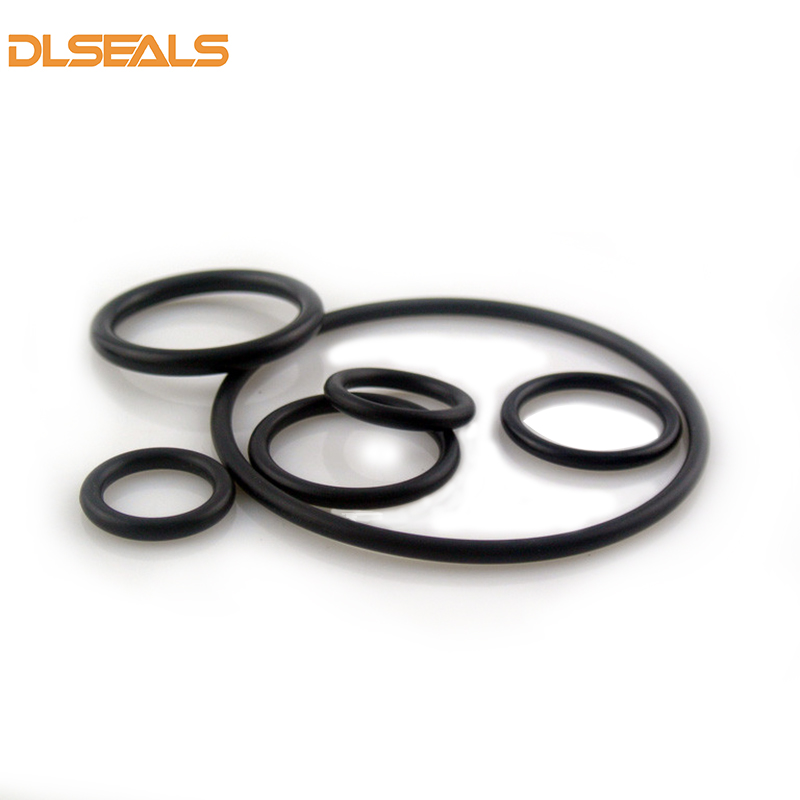
Material selection is a critical factor in the performance and longevity of high pressure hydraulic O rings. At Suzhou Baoshida Trading Co., Ltd., we engineer precision rubber seals to meet the demanding requirements of industrial hydraulic systems operating under extreme pressure and temperature conditions. The three primary elastomers used in high pressure applications—Viton (FKM), Nitrile (NBR), and Silicone (VMQ)—each offer distinct chemical, thermal, and mechanical properties suited to specific operational environments.
Viton (FKM) is a fluorocarbon-based elastomer renowned for its exceptional resistance to high temperatures, oils, fuels, and a broad range of aggressive chemicals. This material maintains seal integrity in continuous service temperatures up to 200°C and can withstand short-term excursions up to 250°C. Its low compression set and excellent resistance to oxidation make it ideal for aerospace, automotive, and petrochemical applications where reliability under extreme conditions is non-negotiable. However, Viton has limited flexibility at low temperatures and is generally more expensive than other elastomers.
Nitrile (NBR), also known as Buna-N, is one of the most widely used O ring materials due to its excellent resistance to petroleum-based oils and hydraulic fluids. It performs reliably in temperature ranges from -30°C to 120°C, making it suitable for general-purpose hydraulic systems. NBR offers good abrasion resistance and mechanical strength, with a cost-effective profile. While it is less resistant to ozone, weathering, and polar solvents compared to Viton, its balance of performance and affordability makes it a preferred choice in industrial and mobile hydraulic equipment.
Silicone (VMQ) provides outstanding thermal stability and operates effectively from -60°C to 200°C, with some formulations tolerating brief exposure beyond this range. It exhibits excellent resistance to ozone and UV radiation, making it suitable for outdoor applications. However, silicone has relatively poor resistance to petroleum-based fluids and limited mechanical strength under high pressure. Its primary use in hydraulic systems is in low-stress sealing applications involving water, air, or silicone oils, or where extreme temperature cycling is a primary concern.
The selection of the appropriate elastomer must consider fluid compatibility, temperature profile, pressure load, and service life requirements. Below is a comparative overview of key material properties.
| Property | Viton (FKM) | Nitrile (NBR) | Silicone (VMQ) |
|---|---|---|---|
| Temperature Range (°C) | -20 to 200 | -30 to 120 | -60 to 200 |
| Pressure Resistance | High | High | Moderate |
| Fluid Resistance (Oil/Fuel) | Excellent | Excellent | Poor |
| Compression Set Resistance | Excellent | Good | Good |
| Ozone/Weathering Resistance | Excellent | Fair | Excellent |
| Abrasion Resistance | Good | Excellent | Fair |
| Cost Level | High | Low to Moderate | Moderate |
Understanding these material characteristics enables optimal O ring selection, ensuring system reliability and minimizing downtime in high pressure hydraulic environments.
Manufacturing Capabilities
Engineering Capability: Precision Formulation and Mold Design for High-Pressure Hydraulic O-Rings
Suzhou Baoshida Trading Co., Ltd. leverages a dedicated team of seven specialized engineers—five Mold Engineers and two Rubber Formula Engineers—to deliver mission-critical high-pressure hydraulic O-rings. This integrated expertise ensures every seal exceeds industry demands for pressure integrity, chemical resistance, and service life in extreme hydraulic systems. Our Formula Engineers focus on elastomer molecular architecture, optimizing polymer cross-linking density and additive packages to resist extrusion, compression set, and fluid degradation at pressures exceeding 70 MPa. Concurrently, Mold Engineers employ advanced CAD/CAM simulation to perfect cavity geometry, venting, and gating, eliminating flash and ensuring micron-level dimensional consistency critical for dynamic sealing under rapid pressure cycling.
This dual-engineering synergy enables precise material-property alignment with hydraulic fluid compatibility (e.g., HFDU, phosphate esters) and operational extremes. We formulate proprietary compounds that maintain elasticity at -54°C while resisting thermal degradation up to 230°C, directly addressing the brittle failure and hardening risks common in standard elastomers. Each formulation undergoes rigorous in-house validation per ASTM D2000 and ISO 3601 standards, including 1,000-hour compression set testing at 150°C and burst pressure verification. For OEM partners, this translates to accelerated time-to-market with zero compromise on reliability.
Our OEM capability extends beyond standard production to full co-engineering support. Clients receive rapid prototyping with 3D-printed molds for geometry validation, material certification dossiers compliant with ISO 9001 and IATF 16949, and failure mode analysis for field returns. We specialize in customizing Shore A hardness, low-temperature flexibility, and plasma-resistant surfaces for aerospace and offshore applications where standard O-rings fail. This end-to-end ownership—from compound development to mold tooling—ensures seamless scalability from prototype to high-volume manufacturing without requalification delays.
Material performance is foundational to high-pressure success. Below are key specifications for our engineered elastomers:
| Material | Hardness Range (Shore A) | Temperature Range (°C) | Max Continuous Pressure (MPa) | Key Hydraulic Applications |
|---|---|---|---|---|
| Custom FKM | 70–90 | -25 to 230 | 70 | Aviation actuators, deep-sea valves |
| High-Purity NBR | 60–80 | -40 to 120 | 55 | Mobile construction equipment |
| Perfluoroelastomer (FFKM) | 75–85 | -15 to 325 | 100 | Semiconductor manufacturing |
| Hydrogenated NBR (HNBR) | 65–75 | -50 to 150 | 60 | Wind turbine pitch systems |
Suzhou Baoshida’s engineering framework eliminates the traditional trade-offs between pressure rating and seal longevity. By controlling both material science and precision tooling, we deliver O-rings that achieve 200% longer service life in 5,000-psi hydraulic systems compared to generic alternatives. OEM partners gain a single-source solution for technically demanding sealing challenges, backed by metallurgical reports, traceable lot coding, and on-site technical collaboration. This capability is not merely manufacturing—it is engineered insurance against system failure.
Customization Process
Customization Process for High Pressure Hydraulic O-Rings
At Suzhou Baoshida Trading Co., Ltd., our engineering-driven approach ensures that each high pressure hydraulic O-ring meets the exact performance demands of industrial applications. Our customization process is structured into four critical phases: Drawing Analysis, Formulation Development, Prototyping, and Mass Production. This systematic workflow guarantees dimensional accuracy, material compatibility, and long-term sealing reliability under extreme operating conditions.
The process begins with Drawing Analysis, where our rubber formula engineers evaluate client-provided technical drawings or 3D models. We assess critical parameters such as inner diameter, cross-sectional diameter, tolerance class (per ISO 3601 or AS568 standards), groove design, and surface finish requirements. This phase also includes verification of application-specific factors like operating pressure (up to 5,000 psi or higher), temperature range, cycle frequency, and media exposure (e.g., mineral oils, synthetic hydraulic fluids, water-glycol mixtures). Accurate interpretation at this stage prevents fitment issues and ensures optimal sealing performance.
Following drawing validation, we proceed to Formulation Development. Our material scientists select the base polymer—typically HNBR, FKM, or EPDM—based on chemical resistance, thermal stability, and mechanical strength requirements. For high pressure environments, we prioritize compounds with high tensile strength, low compression set, and excellent resilience. Custom additives such as reinforcing fillers, anti-extrusion agents, and processing aids are incorporated to enhance performance. Each formulation is documented and tested for hardness (Shore A 70–90 range), elongation at break, and volume swell in target fluids.
The next phase is Prototyping, where we produce a small batch of O-rings using precision molding techniques. These prototypes undergo rigorous in-house testing, including burst pressure evaluation, compression set (ASTM D395), and dynamic simulation under load. Clients receive physical samples along with material test reports for approval. Iterative adjustments are made if necessary, ensuring full compliance before scaling up.
Upon prototype approval, we transition to Mass Production. Utilizing automated rubber molding lines and 100% visual inspection systems, we maintain consistent quality across large volumes. Each production lot is traceable, with certificates of conformance and material data sheets provided. Our ISO 9001-certified manufacturing ensures repeatability, on-time delivery, and adherence to OEM specifications.
Typical Material Specifications for High Pressure Hydraulic O-Rings
| Property | HNBR (Hydrogenated Nitrile) | FKM (Viton®) | EPDM |
|---|---|---|---|
| Temperature Range | -40°C to +150°C | -20°C to +200°C | -50°C to +150°C |
| Pressure Resistance | Up to 4,500 psi | Up to 5,000 psi | Up to 3,000 psi |
| Hardness (Shore A) | 70–90 | 75–90 | 70–85 |
| Fluid Resistance | Excellent in oils, HFDU fluids | Outstanding in synthetic esters, skydrol | Good in water, glycols; poor in oils |
| Compression Set (24h, 100°C) | ≤20% | ≤25% | ≤22% |
This structured customization process enables Suzhou Baoshida to deliver high-performance hydraulic O-rings tailored to the most demanding industrial sealing applications.
Contact Engineering Team
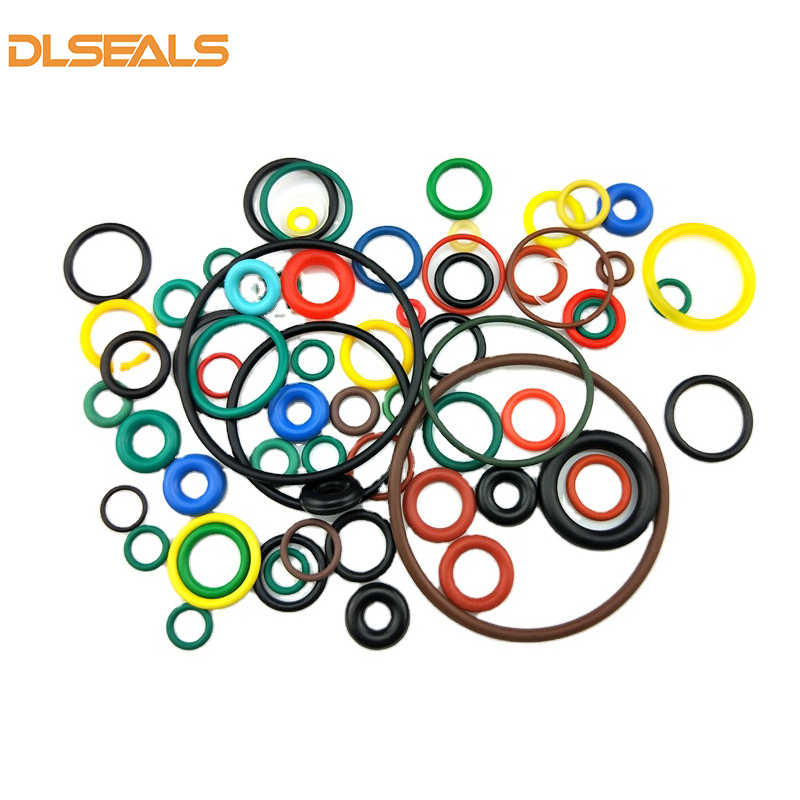
Engineering Precision for Demanding Hydraulic Systems
Suzhou Baoshida Trading Co., Ltd. operates at the forefront of precision rubber seal manufacturing, specializing in high pressure hydraulic O rings engineered for extreme operational integrity. Our technical team, led by Rubber Formula Engineers with over 15 years of OEM collaboration, addresses the critical failure points inherent in systems exceeding 5,000 psi: material extrusion, compression set, and thermal degradation. We deploy proprietary FKM, HNBR, and specialty perfluoroelastomer compounds validated through ASTM D2000 and ISO 3601 testing protocols. Each formulation undergoes rigorous dynamic simulation in our Suzhou facility, replicating pressure spikes, fluid compatibility challenges, and temperature cycling specific to aerospace, offshore, and industrial machinery applications. This scientific approach ensures dimensional stability under load and extended service life where generic seals fail.
Our OEM partnership model integrates your engineering requirements at the molecular level. We do not offer catalog solutions; instead, we co-develop compounds meeting exact fluid resistance profiles (including Skydrol, phosphate esters, and bio-based hydraulic fluids), hardness tolerances (±2 Shore A), and low-temperature flexibility down to -54°C. This precision is non-negotiable in systems where a 0.1mm compression set variance compromises safety margins. The table below outlines baseline performance metrics for our standard high pressure hydraulic O ring series, though all parameters are adjustable per client specifications.
| Parameter | Standard Value Range | Testing Standard |
|---|---|---|
| Pressure Range | 0–7,000 psi (static) | ISO 3308 |
| Material Options | FKM 70–90 Shore A, HNBR 75 Shore A | ASTM D2000 D7-A714 |
| Temperature Range | -40°C to +230°C (intermittent to 260°C) | ISO 3601-3 |
| Fluid Compatibility | MIL-H-5606, ISO 6743 HFC, HFDu | ISO 6803 |
| Hardness Tolerance | ±2 Shore A | ASTM D2240 |
Sourcing high pressure hydraulic O rings demands more than dimensional compliance—it requires material science expertise to mitigate system downtime costs that escalate exponentially with pressure class. Our Suzhou-based R&D center utilizes FTIR spectroscopy and DSC analysis to optimize cross-link density and filler dispersion, directly enhancing resistance to explosive decompression in deep-sea applications. Every batch undergoes 100% visual inspection per AS568C and pressure decay testing at 1.5x operational limits. We maintain traceability from raw polymer lot to finished component, providing full material certifications for ISO 9001 and AS9100 compliance.
Initiate a technical consultation with Mr. Boyce, our dedicated OEM Manager, to resolve your specific high pressure sealing challenge. With direct access to our compounding engineers and rapid prototyping capabilities (72-hour turnaround for critical applications), Mr. Boyce will coordinate a data-driven solution aligning with your assembly tolerances, fluid dynamics, and lifecycle cost targets. Forward your system schematics, fluid specifications, and pressure/temperature profiles to [email protected]. Include reference code BD-HPOR-2024 for expedited material selection analysis. Suzhou Baoshida does not sell rubber; we deliver engineered reliability for hydraulic systems where failure is not an option. Contact Mr. Boyce to transform your sealing performance metrics through precision elastomer science.
⚖️ O-Ring Weight Calculator
Estimate rubber O-ring weight (Approx).