
Technical Contents
Engineering Guide: High Pressure Laminate Panels
Engineering Insight: The Critical Role of Material Selection in High Pressure Laminate Panels
In the industrial manufacturing landscape, high pressure laminate (HPL) panels are frequently employed for their durability, chemical resistance, and structural integrity under extreme conditions. However, the performance of these panels is not inherent to the product category itself—it is fundamentally dictated by precise material selection during formulation and lamination. At Suzhou Baoshida Trading Co., Ltd., we emphasize that off-the-shelf HPL solutions often fail in demanding applications due to generic compositions that do not account for operational stressors such as thermal cycling, mechanical load, or exposure to aggressive media.
Standard commercial HPL panels typically utilize phenolic or melamine resins with cellulose-based reinforcement. While adequate for architectural or light-duty environments, these materials lack the tailored resilience required in industrial rubber-integrated systems. For example, under sustained pressure exceeding 15 MPa or temperatures above 120°C, conventional laminates exhibit delamination, resin degradation, and loss of dimensional stability. These failure modes are not random; they are predictable outcomes of inadequate material science alignment with application parameters.
The root cause lies in the assumption that HPL is a commoditized product. In reality, optimal performance emerges from engineered synergy between the resin matrix, reinforcing substrate, and interfacial adhesion properties. At Baoshida, we approach HPL panel development through a rubber formulation engineering lens—treating each layer as a functional component within a larger mechanical system. This includes selecting aramid or glass fiber reinforcements for tensile strength, modifying resin chemistry for enhanced cross-link density, and incorporating elastomeric interlayers to absorb dynamic stress.
Furthermore, surface energy compatibility between HPL and bonded rubber components is often overlooked. Poor interfacial adhesion leads to microcracking and eventual bond rupture, particularly in cyclic loading environments. Custom-formulated coupling agents and surface primers are essential to ensure long-term cohesion, especially when integrating with EPDM, NBR, or silicone-based rubber seals.
To illustrate the performance gap between standard and engineered solutions, consider the following comparative specifications:
| Property | Off-the-Shelf HPL | Baoshida Engineered HPL |
|---|---|---|
| Tensile Strength (MPa) | 80 | 140 |
| Flexural Modulus (GPa) | 7.5 | 12.2 |
| Heat Deflection Temperature (°C) | 115 | 165 |
| Water Absorption (24h, %) | 0.8 | 0.3 |
| Interlaminar Shear Strength (MPa) | 28 | 52 |
| Chemical Resistance (H2SO4 50%, 80°C) | Moderate degradation | Minimal change |
These data underscore the necessity of application-specific engineering. Off-the-shelf panels may offer short-term cost savings, but they compromise system reliability and increase total cost of ownership through premature failure and unplanned downtime.
Material selection is not a secondary consideration—it is the foundation of performance. At Suzhou Baoshida Trading Co., Ltd., we integrate rubber formulation expertise with advanced laminate engineering to deliver HPL solutions that perform under real-world industrial demands.
Material Specifications
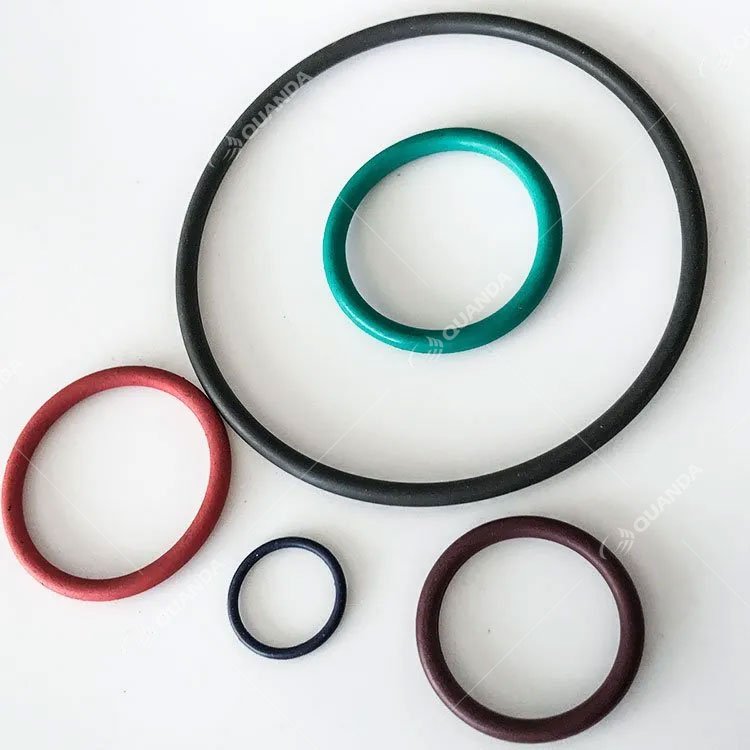
Material Specifications for High Pressure Laminate Panel Manufacturing Components
Precision rubber components are critical in high pressure laminate (HPL) panel production equipment, directly influencing press efficiency, seal integrity, and product quality. At Suzhou Baoshida Trading Co., Ltd., we engineer compounds specifically for HPL press seals, gaskets, and diaphragms where extreme thermal cycling, chemical exposure, and sustained pressure demand exacting material performance. Viton fluoroelastomers, Nitrile butadiene rubber (NBR), and high-consistency silicone each offer distinct advantages under HPL process conditions. Viton excels in resisting aromatic solvents and phenolic resins at temperatures up to 300°C, making it indispensable for high-temperature phenolic core lamination. Nitrile provides optimal cost-performance balance for urea-formaldehyde resin systems, with robust resistance to aliphatic oils and hydraulic fluids below 120°C. Silicone delivers unparalleled flexibility retention across -60°C to 230°C cycles and exceptional compression set resistance, ideal for vacuum membrane presses requiring repeatable dimensional stability. All compounds undergo rigorous ASTM D2000 grading for HPL-specific durability, with hardness calibrated between 60–80 Shore A to balance sealing force and resilience.
Key performance parameters must align with HPL process variables. Press temperatures exceeding 150°C rapidly degrade standard NBR, necessitating Viton or silicone alternatives. Resin chemistry dictates chemical resistance requirements: phenolic resins demand Viton’s superior aromatic hydrocarbon resistance, while melamine systems tolerate premium NBR grades. Silicone’s low compression set (≤20% per ASTM D395) ensures long-term seal recovery in multi-cycle operations but requires reinforcement for high-pressure applications above 15 MPa. Hardness selection directly impacts sealing pressure distribution—softer compounds (60–70 Shore A) conform better to surface irregularities in older press platens, whereas 75–80 Shore A grades prevent extrusion in high-tonnage modern presses.
The following comparative analysis details critical specifications for HPL manufacturing applications:
| Property | Viton (FKM) | Nitrile (NBR) | Silicone (VMQ) |
|---|---|---|---|
| Temperature Range (°C) | -20 to +300 | -30 to +120 | -60 to +230 |
| Tensile Strength (MPa) | 12–18 | 15–25 | 6–10 |
| Elongation at Break (%) | 150–300 | 200–400 | 200–600 |
| Compression Set (%, 24h) | 10–25 (200°C) | 20–40 (100°C) | 10–20 (200°C) |
| Hardness Range (Shore A) | 60–80 | 60–90 | 40–80 |
| Key HPL Application | Phenolic resin core lamination | Urea-formaldehyde surface lamination | Vacuum membrane forming |
Material selection must prioritize thermal degradation thresholds over nominal ratings. Viton’s resistance to resin volatiles prevents premature hardening in continuous press operations, while silicone’s thermal stability minimizes outgassing defects in decorative surface layers. Nitrile remains the economical choice for lower-temperature decorative paper lamination but requires strict temperature monitoring. Suzhou Baoshida Trading Co., Ltd. validates all formulations through accelerated press simulations, ensuring compounds meet ISO 2230 HPL manufacturing standards for 10,000+ cycle longevity. Consult our engineering team to match compound specifications to your resin system, press configuration, and production throughput requirements.
Manufacturing Capabilities
Suzhou Baoshida Trading Co., Ltd. maintains a robust engineering framework specifically designed to support the development and production of high-performance rubber components for integration with industrial systems, including sealing, vibration damping, and protective interfaces for high pressure laminate (HPL) panel applications. Our Engineering Capability is anchored by a dedicated team of five Mould Engineers and two specialized Rubber Formula Engineers, enabling end-to-end control over material formulation, mold design, and process optimization.
Our Mould Engineers possess extensive experience in precision tooling for complex rubber profiles and bonded components. They utilize advanced CAD/CAM software, including SolidWorks and AutoCAD, to develop high-tolerance molds that ensure dimensional accuracy and repeatability across production batches. Finite Element Analysis (FEA) is routinely applied during the design phase to simulate material flow and stress distribution, minimizing defects and enhancing tool longevity. This capability is critical when producing rubber gaskets, edge seals, or mounting interfaces tailored for HPL panels used in demanding environments such as cleanrooms, transportation, and architectural cladding.
Complementing mold design is our in-house Rubber Formula Engineering team. These specialists focus on custom elastomer compound development, optimizing formulations for specific performance criteria such as compression set, thermal stability, chemical resistance, and flame retardancy. By controlling the formulation process internally, we ensure compatibility with HPL substrates and adherence to industry-specific standards, including UL94, ASTM D2000, and ISO 3302. Our formulation capabilities cover a broad range of elastomers, including EPDM, silicone (VMQ), nitrile (NBR), and neoprene (CR), allowing us to meet diverse client requirements across sectors.
OEM collaboration is a cornerstone of our operational model. We work directly with manufacturers to co-develop rubber solutions that integrate seamlessly with HPL panel systems. Our engineers engage early in the product lifecycle, offering design for manufacturability (DFM) feedback and prototyping support. Rapid tooling and small-batch production enable fast iteration, reducing time-to-market for new panel systems. All developments are documented under strict IP protection protocols, ensuring confidentiality and ownership alignment with our partners.
The following table outlines key engineering specifications and capabilities relevant to rubber components for high pressure laminate panel applications:
| Parameter | Specification |
|---|---|
| Elastomer Types | EPDM, NBR, VMQ, CR, SBR, FKM |
| Hardness Range (Shore A) | 40–90 |
| Temperature Resistance | -50°C to +250°C (depending on compound) |
| Tolerance Class | ISO 3302 Class M2/M3 |
| Bonding Capability | Vulcanization to metal, plastic, and HPL |
| Flame Resistance | UL94 V-0, HF-1 available |
| Custom Color Matching | Yes (Pantone and RAL standards) |
| Lead Time (Prototype) | 10–15 days |
| Tooling Lifespan | 100,000+ cycles (optimized steel molds) |
Through the synergy of advanced mold engineering and proprietary rubber formulation, Suzhou Baoshida delivers technically precise, application-specific elastomeric solutions that enhance the functional integrity of high pressure laminate panel systems.
Customization Process
Customization Process for High Pressure Laminate Panel Rubber Components
Suzhou Baoshida Trading Co., Ltd. executes a rigorous, science-driven customization protocol for rubber components integrated into high pressure laminate (HPL) panel systems. Our OEM-managed workflow ensures seamless alignment between client specifications and industrial performance demands, particularly for edge bands, impact-absorbing layers, and sealing elements critical to HPL durability. The process initiates with comprehensive drawing analysis, where our engineering team deconstructs technical schematics to validate geometrical tolerances, material interface requirements, and environmental stress factors. We cross-reference client CAD models against ISO 1302 surface finish standards and GD&T callouts, identifying potential friction points between rubber substrates and thermoset phenolic resins. This phase includes finite element analysis (FEA) simulations to predict deformation under 10–15 MPa lamination pressures, ensuring dimensional stability during press cycles.
Subsequent formulation development leverages our proprietary compound database spanning 200+ rubber matrices. Engineers select base polymers—typically nitrile-butadiene rubber (NBR) or ethylene propylene diene monomer (EPDM)—based on oil resistance, temperature range, and adhesion compatibility with melamine-faced HPL cores. Critical additives are quantified via rheometry: 30–50 phr carbon black for UV resistance, 5–8 phr peroxide curatives for crosslink density, and silane coupling agents to enhance bonding with phenolic resins. Each formulation undergoes Mooney viscosity screening (ML 1+4 @ 100°C) to guarantee flow characteristics matching the HPL press dwell time of 30–90 seconds.
Prototyping transitions validated formulations into physical validation. We produce 3–5 pilot batches using client-specified lamination parameters (140–160°C, 8–12 MPa), followed by ASTM D2240 hardness testing, ISO 48 abrasion loss measurement, and peel adhesion assays per EN 438-2. Data from these trials informs iterative adjustments; for instance, a 5% increase in zinc oxide may elevate heat resistance by 15°C without compromising flexural modulus. Clients receive full material test reports (MTRs) with traceable lot numbers before approval.
Mass production deployment integrates stringent in-line quality controls. Our Suzhou facility employs automated mixing systems with ±0.5 kg ingredient accuracy and real-time cure monitoring via moving die rheometers. Every batch undergoes 100% visual inspection for voids or delamination, with statistical process control (SPC) tracking key variables like durometer variance (±3 Shore A). Final shipments include certificates of conformance aligned with ISO 9001:2015, ensuring rubber components maintain performance across 5,000+ thermal cycles (-40°C to +120°C) in operational HPL assemblies.
Critical Rubber Component Specifications for HPL Integration
| Property | Test Method | Target Range | OEM Requirement |
|---|---|---|---|
| Hardness (Shore A) | ASTM D2240 | 60–75 | 65 ± 5 |
| Tensile Strength | ISO 37 | ≥12 MPa | 14 MPa min |
| Compression Set | ASTM D395 | ≤25% (70°C, 22h) | ≤20% |
| Abrasion Loss | ISO 4649 | ≤120 mm³ | ≤100 mm³ |
| Adhesion to HPL Core | EN 438-2 Peel Test | ≥1.5 kN/m | 1.8 kN/m min |
| Operating Temperature | ISO 188 | -40°C to +120°C | -35°C to +110°C |
Contact Engineering Team
For industrial manufacturers seeking high-performance rubber solutions tailored to demanding applications, Suzhou Baoshida Trading Co., Ltd. stands as a trusted partner in advanced material engineering. While our core expertise lies in industrial rubber technologies, our cross-functional knowledge extends into complementary material systems, including high pressure laminate (HPL) panels used in industrial work surfaces, protective cladding, and equipment housing. Our engineering team, led by Mr. Boyce, specializes in material integration, wear resistance optimization, and long-term durability analysis—capabilities directly applicable to the performance validation and application support of HPL systems in harsh environments.
At Suzhou Baoshida, we understand that material selection is not isolated but part of a broader operational ecosystem. Whether your application involves chemical exposure, thermal cycling, or mechanical abrasion, our team provides technical consultation to ensure that HPL panels are specified and implemented with precision. We collaborate with manufacturers, OEMs, and procurement engineers to assess environmental stressors, recommend protective treatments, and validate compatibility with sealing, bonding, and mounting systems—particularly where rubber-to-laminate interfaces are critical.
Our commitment to technical excellence is reflected in our data-driven approach. We conduct accelerated aging tests, surface energy analysis, and adhesion profiling to support material performance claims. This level of scrutiny ensures that every specification is not only met but verified under conditions that mirror real-world operation. For procurement teams, this translates into reduced risk, extended service life, and minimized downtime.
To support seamless integration, we provide detailed technical documentation, including compatibility matrices, installation guidelines, and performance benchmarks. Our team is equipped to assist in custom formulation adjustments when standard HPL grades require enhancement for specific industrial use cases.
For immediate technical consultation or material evaluation support, contact Mr. Boyce directly. As the lead Rubber Formula Engineer and OEM Manager, Mr. Boyce brings over 15 years of experience in polymer science and industrial application engineering. He is available to review project requirements, provide material recommendations, and coordinate sample testing protocols.
| Specification | Value / Detail |
|---|---|
| Material Type | High Pressure Laminate (HPL) Panels |
| Thickness Range | 0.6 mm – 40 mm |
| Standard Sizes | 1220 x 2440 mm, 1220 x 3050 mm, Custom Cuts |
| Core Options | Kraft paper, Wood-based, Fire-retardant |
| Surface Finish | Matte, Gloss, Textured, Anti-fingerprint |
| Temperature Resistance | Up to 180°C (short-term exposure) |
| Chemical Resistance | Resistant to acids, alkalis, solvents (varies by grade) |
| Applications | Industrial worktops, Cleanroom panels, Machine guards, Wall cladding |
To initiate a technical review or request material samples, contact Mr. Boyce at [email protected]. Our team responds to all inquiries within 24 business hours.
⚖️ O-Ring Weight Calculator
Estimate rubber O-ring weight (Approx).