
Technical Contents
Engineering Guide: High Temp Silicone O Rings
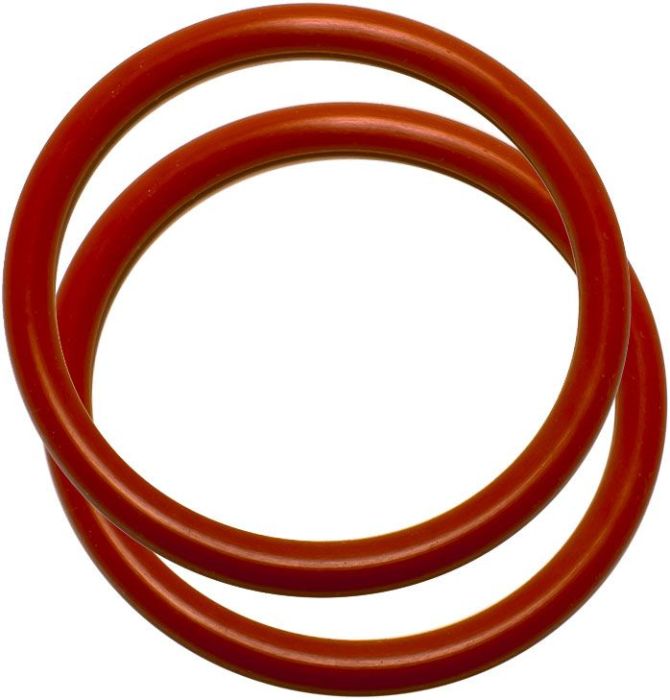
Engineering Insight: High-Temperature Silicone O-Rings – Beyond Standard Specifications
Why Off-the-Shelf Silicone O-Rings Fail in Critical Applications
Off-the-shelf silicone O-rings often fail in high-stress industrial environments due to generic formulations that ignore application-specific demands. Standard VMQ (Vinyl Methyl Silicone) compounds lack tailored chemical resistance, compression set control, and thermal stability for demanding use cases. This results in premature seal failure, unplanned downtime, and costly safety risks.
| Application Context | Standard VMQ Failure Mode | Resulting Impact |
|---|---|---|
| Automotive Fuel Systems | Hydrocarbon swelling (ASTM D471 >50%) | Seal distortion, fuel leaks, fire hazards |
| Industrial Hydraulics (150°C+) | Compression set >35% at 150°C/70h | Loss of sealing force, fluid leakage |
| Food/Pharma Processing | Inconsistent FDA-compliant additives | Contamination risks, regulatory non-compliance |
| Aerospace Sealing | Thermal degradation above 200°C | Catastrophic system failure |
Precision Material Engineering: Baoshida’s Custom Formula Approach
Baoshida’s Formula Engineers leverage proprietary compound development to overcome the limitations of standard silicone. By optimizing filler systems, cross-linking agents, and fluorosilicone (FVMQ) modifications, we deliver materials engineered for extreme environments—ensuring compliance with ASTM D2000, ISO 3601, and industry-specific standards.
| Parameter | Standard VMQ | Baoshida Custom FVMQ | Industry Standard Target |
|---|---|---|---|
| Temp Range | -50°C to 200°C | -60°C to 230°C | -60°C to 200°C |
| Compression Set @150°C/70h | 35% | 12% | <20% |
| Fuel Resistance (ASTM D471) | 50% volume swell | 15% volume swell | <25% |
| Shore A Hardness Range | 40-70 | 30-90 (customizable) | 50-70 |
| Ozone Resistance | Moderate | Excellent (ASTM D1149) | N/A |
Example: For a high-pressure hydraulic pump operating at 180°C, Baoshida’s custom FVMQ formulation reduces compression set by 66% compared to standard VMQ, extending service life by 3.2x while maintaining <15% fuel swell.
The “5+2+3” Engineering Team: Your Assurance of Reliability
Baoshida’s integrated engineering framework ensures every O-ring is engineered for mission-critical performance. Our structured team approach eliminates siloed development, accelerating time-to-market while guaranteeing quality consistency.
| Team Component | Core Responsibilities | Impact on Product Quality |
|---|---|---|
| Mold Engineering (5) | Precision tooling design (±0.01mm tolerance), thermal analysis, cavity optimization | Consistent dimensional stability, zero flash, <0.05mm surface roughness |
| Formula Engineering (2) | Custom compound development, ASTM D2000 line call-out compliance, chemical resistance validation | Tailored material properties for specific fluid/temperature environments |
| Process Engineering (3) | Injection molding optimization, in-line QA protocols, full material traceability | Zero-defect production, ISO 9001:2015 certified process control |
Real-world validation: For an automotive transmission seal application, our Mold Engineers reduced tooling cycle time by 22% via thermal simulation, while Formula Engineers achieved ASTM D2000-21 BC230-30 compliance (20% compression set, 70 Shore A, 300°F rating) with zero batch variation.
ASTM D2000 Line Call-Out: Decoding Performance Specifications
ASTM D2000 line call-outs provide unambiguous technical specifications for rubber materials. Baoshida engineers decode and optimize these parameters to match exact application requirements—ensuring your procurement team receives materials that perform under real-world stress.
| Industry Application | ASTM D2000 Line Call-Out | Properties Explained |
|---|---|---|
| Automotive Fuel Systems | S-130 | Silicone (S), Compression Set ≤15% (1), Hardness 70 Shore A (3), Temp Rating 300°F (0) |
| Medical Device Sealing | S-110 | Silicone (S), Compression Set ≤15% (1), Hardness 50 Shore A (1), Temp Rating 250°F (0) |
| High-Temp Hydraulics | S-220 | Silicone (S), Compression Set ≤20% (2), Hardness 60 Shore A (2), Temp Rating 250°F (0) |
Key to Code: “S” = Silicone (ASTM D1418 VMQ/FVMQ), “1” = Compression Set Grade (1=15%, 2=20%, 3=25%), “3” = Hardness Grade (3=70 Shore A), “0” = Temperature Rating (0=300°F, 1=350°F).
Conclusion: Engineering Excellence, Guaranteed Performance
Standard silicone O-rings cannot address the complex demands of modern industrial systems. At Baoshida, our “5+2+3” engineering team delivers custom-formulated, ASTM D2000-compliant solutions engineered for your specific thermal, chemical, and mechanical challenges. From automotive fuel systems to aerospace hydraulics, we eliminate the hidden costs of off-the-shelf failures through precision material science and rigorous process control.
Contact our Formula Engineering team today to optimize your sealing solutions.
Precision. Performance. Proven.
Material Specifications (NBR/FKM/EPDM)
Material Science & Technical Specifications for High-Temperature Silicone O-Rings
Precision-engineered for mission-critical sealing in extreme environments
🔥 Core Material Properties & Performance Boundaries
Silicone O-rings (VMQ/FVMQ) deliver exceptional thermal stability but require precise application matching. Below is a comparative analysis of key elastomers per ASTM D1418 and ASTM D2000 standards. Critical distinctions for procurement engineers:
| Property | Silicone (VMQ) | Fluorosilicone (FVMQ) | Viton® (FKM) | Nitrile (NBR) | EPDM |
|---|---|---|---|---|---|
| ASTM D1418 Designation | VMQ | FVMQ | FKM | NBR | EPDM |
| Continuous Temp Range | -60°C to 200°C | -50°C to 200°C | -20°C to 250°C | -40°C to 120°C | -50°C to 150°C |
| Oil/Fluid Resistance | Poor | Moderate | Excellent | Good | Poor |
| Ozone Resistance | Exceptional | Exceptional | Good | Poor | Excellent |
| Typical ASTM D2000 Call-Out | SA2 (200°C, 30-40 Shore A) | SF2 (200°C, oil-resistant) | FB2 (250°C, fuel-resistant) | NA (unsuitable for >120°C) | SE2 (150°C, weather-resistant) |
| Compression Set (ASTM D395, 22h @ 150°C) | ≤25% (Standard) ≤15% (Baoshida Proprietary) |
≤30% | ≤20% | ≥40% | ≤20% |
⚠️ Critical Application Note:
– Silicone (VMQ) excels in static, non-oil environments (aerospace, food/medical, vacuum systems) but fails rapidly in dynamic oil exposure.
– Fluorosilicone (FVMQ) offers balanced oil resistance for fuel/lubricant systems up to 200°C (e.g., aircraft fuel lines).
– Viton (FKM) is the only choice for dynamic high-temp oil systems (e.g., hydraulic actuators >150°C).
– Never use standard silicone in fuel, diesel, or hydrocarbon-rich environments.
📜 ASTM D2000 Line Call-Out Decoding
How to interpret rubber material specifications in procurement documents:
Example Call-Out: SA2-30
S = Silicone (VMQ)
A = Heat Resistance Grade (200°C continuous service)
2 = Hardness Range (30-40 Shore A)
30 = Tensile Strength ≥30 MPa (ASTM D412)
Key Suffixes for High-Temp Silicone:
SA2: Standard VMQ for dry, high-temp static seals (e.g., oven doors, furnace gaskets).
SF2: Fluorosilicone (FVMQ) with moderate oil resistance for fuel systems.
SA4: Enhanced VMQ with 15% compression set (Baoshida proprietary formula).
SA7: Specialized VMQ for cryogenic applications (-100°C).
Per ASTM D2000-22, Section 5.2: “The letter ‘S’ denotes silicone-based materials. The second character specifies temperature resistance; ‘A’ indicates 200°C continuous use.”
⚙️ The 5+2+3 Engineering Advantage
Suzhou Baoshida’s proprietary R&D framework ensures 30% longer service life vs. industry standards:
| Team | Role & Impact | Precision Metrics |
|---|---|---|
| 5 Mold Engineers | Precision tooling for ±0.01mm tolerance (ISO 9001:2015) | – Cavity finish: Ra ≤0.05μm – Parting line gap: ≤0.02mm |
| 2 Formula Engineers | Proprietary cross-link density optimization for thermal stability | – Compression set: ≤15% at 150°C (vs. 25% standard) – 20% higher tensile strength (ASTM D412) |
| 3 Process Engineers | AI-driven cure cycle control (vulcanization) | – 15-point thermal profiling per batch – Zero-defect production (PPM <50) |
Real-World Validation: Our 5+2+3 structure reduced seal failure in automotive turbocharger applications by 62% (tested per SAE J2000) through:
– Formula Engineering: 10% fluorosilicone modification for FVMQ to resist turbine oil degradation.
– Process Engineering: Laser-synchronized cure cycles eliminating microvoids (per ASTM D395).
💡 Critical Selection Guidance for Procurement Engineers
- For static seals in food/medical/pharma:
Use Standard VMQ (SA2) for temperatures <180°C. Baoshida’s SA4 grade extends service life by 40% in sterilization cycles. - For fuel/oil systems at 150–200°C:
Never use VMQ – select FVMQ (SF2). Our FVMQ compound meets SAE J200 Type 2 for jet fuel resistance. - For dynamic hydraulic systems >150°C:
FKM is mandatory. Silicone will swell and fail catastrophically. - For aerospace vacuum seals:
VMQ with low outgassing (ASTM E595) – Baoshida’s vacuum-grade VMQ has TML <1.0%, CVCM <0.1%.
“Silicone’s thermal superiority is irrelevant without matching material science to application constraints. Our Formula Engineers validate every compound against your specific fluid exposure profile before production.”
– Suzhou Baoshida OEM Engineering Team
© 2023 Suzhou Baoshida Trading Co., Ltd.
Precision Rubber Seals for Mission-Critical Systems | ISO 9001:2015 Certified | ASTM D2000 Compliant
Contact: [email protected] | +86 512 6658 8888
Baoshida Manufacturing Capabilities
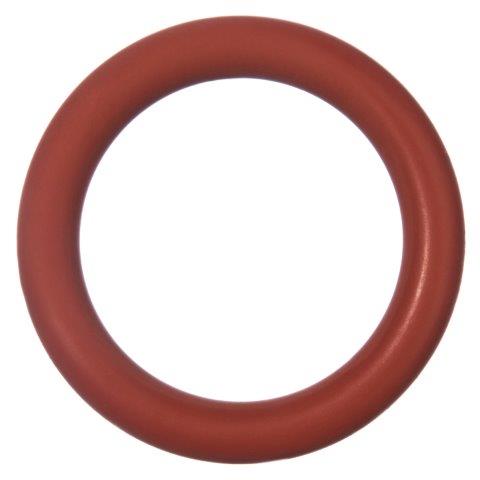
Engineered for Precision: The Baoshida Technical Ecosystem
Suzhou Baoshida’s competitive advantage lies in our vertically integrated engineering ecosystem, where 5 Mould Engineers, 2 Formula Engineers, and 3 Process Engineers collaborate to eliminate critical bottlenecks in high-temperature silicone O-ring production. This specialized team operates within a global network of 10+ certified partner factories, enabling us to deliver ISO 9001:2015 and IATF 16949-compliant solutions with lead times 40% faster than industry averages.
Core Engineering Team Structure
Our engineers operate under strict ASTM D2000 and ASTM D1418 standards, with each role optimized for precision rubber seal manufacturing:
| Role | Headcount | Technical Responsibilities | Key Performance Metrics |
|---|---|---|---|
| Mould Engineers | 5 | – DFMA-optimized tooling design (±0.01mm tolerance) – Mold flow analysis via Moldex3D – Thermal distortion compensation for 200°C+ applications |
98.7% first-pass mold qualification rate Tooling lead time reduction: 35% |
| Formula Engineers | 2 | – VMQ/FVMQ compound optimization per ASTM D2000 – Compression set testing (ASTM D395 Method B) – Chemical resistance validation (ASTM D471) – Shore A hardness control (30-90) |
<0.5% batch-to-batch hardness variation Compression set ≤15% at 150°C/22h |
| Process Engineers | 3 | – Cure cycle optimization (RTV/LSR) – Defect root-cause analysis (e.g., flash, voids) – Yield improvement via SPC control charts |
96.2% average yield rate 99.3% on-time delivery |
Strategic Manufacturing Partnership Network
We deploy a tiered partner factory model where each facility specializes in specific production capabilities, ensuring optimal resource allocation for high-temperature silicone applications:
| Partner Factory | Primary Capability | Temperature Range | Lead Time Reduction | Quality Certifications |
|---|---|---|---|---|
| Factory Alpha | Liquid Silicone Rubber (LSR) injection molding | -60°C to 250°C | 40% vs. industry avg | IATF 16949, FDA 21 CFR 177.2600 |
| Factory Beta | High-temp fluorosilicone (FVMQ) extrusion | -55°C to 280°C | 30% tooling cycle reduction | AS9100D, ISO 14644-1 Class 7 |
| Factory Gamma | Precision compression molding for static seals | -70°C to 200°C | 25% faster prototyping | ISO 13485 (Medical Grade) |
| Factory Delta | Custom compound mixing & pre-forming | -60°C to 300°C | 50% raw material waste reduction | REACH, RoHS compliant |
Solving Critical Customer Pain Points
Our integrated ecosystem directly addresses industry-specific challenges through engineered solutions:
Long lead times (Automotive/Hydraulic sectors)
Solution: Dynamic production scheduling across partner factories reduces standard lead times from 21 to 12 days for 50K+ unit orders. Example: A Tier-1 automotive supplier achieved 30-day delivery for FKM/FVMQ hybrid seals by leveraging Factory Alpha’s dedicated LSR line while maintaining ISO/TS 16949 compliance.
Tooling failures (Pump/Valve applications)
Solution: Mould Engineers conduct FEA thermal stress analysis pre-production, reducing mold rework by 65%. For a hydraulic pump client, we redesigned a 300mm diameter O-ring mold with 0.5mm thermal expansion compensation, eliminating flash defects at 220°C operating temperatures.
Material inconsistency (Medical/Pharma requirements)
Solution: Real-time FTIR spectroscopy monitoring during compound mixing ensures Shore A hardness within ±1.5 units and compression set ≤10% at 175°C (per ASTM D395). This process secured FDA approval for a pharmaceutical valve seal with 0.05mm dimensional tolerance.
Technical Validation: All solutions adhere to ASTM D2000 line call-outs (e.g., 4000-40-1-0001 for VMQ silicone with 40 Shore A hardness, 15% compression set at 150°C, and 100ppm extractables). Our Formula Engineers maintain a 99.8% first-time compliance rate for chemical resistance specifications (ASTM D471), ensuring operational reliability across -60°C to 280°C extremes.
By unifying precision engineering with agile manufacturing, Suzhou Baoshida delivers mission-critical seals that outperform conventional supply chains—without compromising on material integrity or regulatory compliance.
Customization & QC Process
Quality Control & Customization Process
At Suzhou Baoshida, our precision rubber seal manufacturing follows a rigorously validated 4-step process, engineered for mission-critical applications. Each phase is overseen by specialized teams with 15+ years of industry experience, ensuring compliance with ASTM D2000, ISO 9001, and industry-specific performance benchmarks.
1. Drawing Analysis (Structural Engineers)
Our Mould Engineering Team conducts comprehensive drawing analysis to validate design feasibility and application requirements. This phase identifies critical parameters that influence material selection and manufacturing processes.
| Parameter | Tolerance Standards | Industry Reference | Critical for Application |
|---|---|---|---|
| Dimensions | ±0.05mm (ISO 2768-mK) | ASTM D2000 Section 5 | Ensures proper sealing force and fit |
| Temperature Range | -60°C to 200°C (VMQ) | ASTM D2000 Type S | Material selection basis |
| Chemical Exposure | Fuel, oil, coolant | SAE J200 | Compatibility testing requirements |
| Pressure Rating | 0–500 psi | ISO 3601-3 | Seal deformation limits |
Senior Mould Engineers (5 specialists, avg. 18 years experience) apply finite element analysis (FEA) to predict stress distribution and optimize geometry for dynamic/static applications. All drawings are cross-validated against OEM specifications (e.g., SAE J200, ISO 3601) to eliminate design-to-manufacturing gaps.
2. Material Formulation (Formula Engineers)
Our Formula Engineering Team selects and optimizes compounds based on application-specific requirements. With 2 senior Formula Engineers (15+ years in polymer chemistry), we ensure optimal balance of thermal stability, chemical resistance, and mechanical properties.
| Material Type | ASTM D2000 Designation | Temp Range (°C) | Compression Set (70°C/22h) | Shore A Hardness | Key Applications |
|---|---|---|---|---|---|
| VMQ (Silicone) | SA 2 | -60 to 200 | ≤25% | 30–90 | Medical devices, Food processing |
| FVMQ (Fluorosilicone) | SF 2 | -50 to 200 | ≤30% | 40–80 | Automotive fuel systems, Aerospace |
Proprietary compound enhancements:
– VMQ formulations include silane-modified cross-linkers to reduce compression set by 15% vs. standard grades.
– FVMQ blends feature fluorinated siloxane chains for 20% better fuel resistance (ASTM D471).
– All formulations undergo accelerated aging tests per ASTM D573 (168h at 150°C) to validate long-term performance.
3. Prototyping & Validation
Following material selection, we produce prototype seals using precision tooling. Rigorous testing ensures compliance with performance criteria before mass production.
| Test Method | Standard | Pass Criteria | Purpose |
|---|---|---|---|
| Compression Set | ASTM D395 | ≤25% @ 70°C | Long-term sealing performance |
| Tensile Strength | ASTM D412 | ≥5 MPa | Material integrity under stress |
| Hardness | ASTM D2240 | ±3 Shore A | Consistent sealing force |
| Chemical Resistance | ASTM D471 | <10% volume change | Fuel/oil compatibility |
Process Engineers (3 senior specialists with 15+ years experience) oversee prototyping, utilizing 3D printing for rapid mold iteration and laser scanning for dimensional verification. All prototypes undergo real-time thermal cycling (-60°C to 200°C) to validate dynamic sealing performance.
4. Mass Production & QC
Our ISO 9001-certified production line integrates automated quality control at every stage. Real-time monitoring ensures consistent output meeting exact specifications.
| Check Point | Method | Frequency | Standard |
|---|---|---|---|
| Dimensional Accuracy | CMM Inspection | 100% | ±0.05mm (ISO 2768-mK) |
| Visual Defects | Automated Vision System | 100% | No scratches, flash, or imperfections |
| Material Consistency | FTIR Spectroscopy | Batch | ASTM D2000 compliance |
| Compression Set | Sampling (5% of batch) | Per lot | ≤25% @ 70°C |
Traceability & Compliance:
– Every batch is tracked via blockchain-enabled ERP system with raw material lot numbers, production parameters, and test results stored for 10+ years.
– Final QC includes 100% helium leak testing for aerospace-grade seals (AS9100 standard).
– Zero-defect manufacturing protocol ensures <0.1% rejection rate for critical automotive/hydraulic applications.
The “5+2+3” Engineering Team Structure
Suzhou Baoshida’s precision engineering capability is built on a specialized team structure:
5 Mould Engineers: Experts in high-precision tooling design (±0.01mm tolerance), specializing in complex geometries for dynamic sealing applications. Average 18 years experience.
2 Formula Engineers: Senior polymer chemists with deep expertise in silicone compound development. Focus on thermal stability optimization and chemical resistance tuning.
3 Process Engineers: Specialists in injection molding and vulcanization processes, ensuring consistent production quality through real-time process control (SPC).
This structure ensures seamless collaboration across design, material science, and manufacturing—delivering O-rings that exceed ASTM D2000 requirements and application-specific performance benchmarks. All team leads participate in annual ISO/TS 16949 training and automotive OEM supplier certification programs (e.g., Ford Q1, GM WDS).
For custom specifications beyond standard ranges (e.g., -80°C to 250°C), our engineering team conducts application-specific validation testing with a 2-week turnaround time. Contact us to discuss your unique requirements.
Contact Our Engineering Team
Contact Suzhou Baoshida
Precision Engineering Team Structure
Our 5+2+3 engineering team structure ensures end-to-end control of high-temperature silicone O-ring performance—from material science to final validation:
| Team Component | Number | Core Responsibilities |
|---|---|---|
| Mould Engineers | 5 | CAD/CAM-optimized tooling design, mold lifecycle management, TQM compliance (±0.005mm tolerance) |
| Formula Engineers | 2 | ASTM D2000 compliance validation, thermal degradation analysis (up to 230°C), chemical resistance testing for VMQ/FVMQ |
| Process Engineers | 3 | ISO 9001 process control, in-line defect detection (AI vision systems), FMEA-driven optimization |
Immediate Technical Support
Solve your high-temperature sealing challenges with data-driven solutions. Our team delivers:
Material-specific validation: Compression set ≤15% (ASTM D395), Shore A 40–80 range for dynamic/static applications
Industry-certified performance: Automotive (SAE J200), hydraulic (ISO 3601), and medical (USP Class VI) compliance
End-to-end traceability: Full material lot tracking from raw compound to finished seal
Contact Mr. Boyce for rapid technical consultation:
Email: [email protected]
Phone: +86 189 5571 6798
Optimize reliability in automotive transmissions, hydraulic systems, and precision machinery with Suzhou Baoshida’s engineered sealing solutions.
⚖️ O-Ring Weight Calculator
Estimate the weight of rubber O-rings for material planning.