
Technical Contents
Engineering Guide: High Temperature Flexible Duct
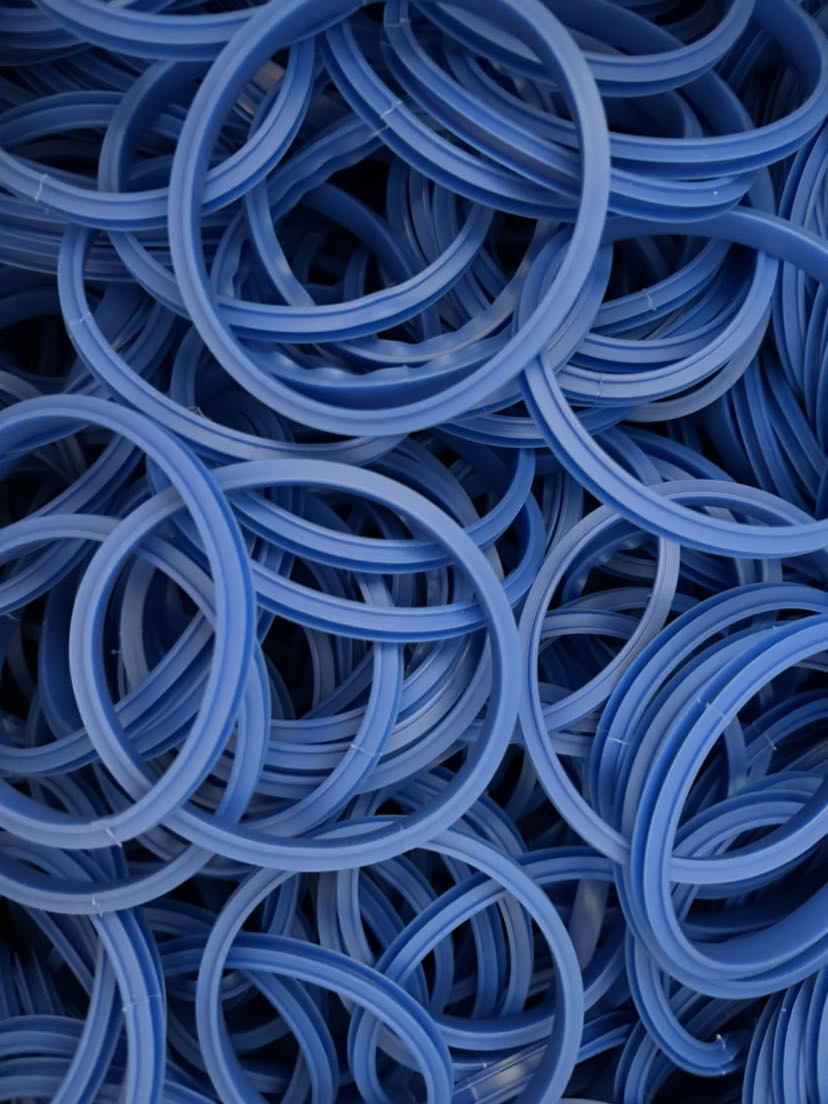
Engineering Insight: Material Selection Criticality in High Temperature Flexible Duct Systems
Industrial high temperature flexible duct applications present extreme challenges where material selection directly dictates system longevity and operational safety. Off-the-shelf duct solutions frequently fail prematurely due to fundamental mismatches between generic elastomer formulations and the specific thermo-oxidative, chemical, and mechanical demands of real-world industrial environments. Standard commercial ducts often utilize commodity rubber compounds like basic EPDM or low-grade silicone, optimized for cost rather than performance under sustained thermal stress. These materials exhibit rapid degradation when exposed to continuous temperatures exceeding 150°C, leading to critical failure modes including severe compression set, loss of elasticity, surface cracking, and catastrophic loss of sealing integrity. The consequence is unplanned downtime, compromised process efficiency, and significant safety hazards from leaking hot gases or particulates. Material failure is rarely instantaneous; it manifests as progressive hardening or softening, reducing the duct’s ability to accommodate vibration, thermal expansion, or pressure fluctuations inherent in industrial processes like exhaust management, furnace venting, or semiconductor tool interfacing.
The core issue lies in the complex interplay of factors beyond simple maximum temperature ratings. Generic compounds lack the tailored polymer architecture, specialized curatives, and high-purity reinforcing fillers necessary for long-term stability. For instance, standard silicone may claim 200°C capability but suffers rapid embrittlement due to inadequate vinyl content control or insufficient platinum catalyst systems, failing within months under cyclic conditions. Similarly, low-acrylonitrile NBR compounds degrade rapidly when exposed to trace hydrocarbons common in engine exhaust streams. True high-temperature resilience requires engineered formulations where every component serves a precise function: peroxide-cured HNBR for oil resistance up to 150°C, fluorosilicone for combined fuel and heat exposure, or custom FKM/VMQ blends for continuous operation beyond 250°C. Suzhou Baoshida Trading Co., Ltd. leverages deep OEM formulation expertise to match compound chemistry to the exact operational profile – considering peak temperature duration, chemical exposure spectrum, flexing frequency, and pressure requirements – ensuring the duct performs reliably over its designed service life.
The following comparison illustrates why off-the-shelf materials fall short against engineered solutions for critical applications:
| Material Type | Max Continuous Temp (°C) | Key Failure Modes in Industrial Service | Typical Industrial Application Fit |
|---|---|---|---|
| Standard EPDM | 135 | Rapid compression set, ozone cracking >100°C | Non-critical HVAC, ambient air |
| Generic Silicone (VMQ) | 200 | Severe embrittlement, low tear strength loss | Low-stress lab exhaust, dry heat |
| Specialty HNBR | 150 | Swelling in aggressive oils, moderate hardening | Engine turbocharger ducts |
| Baoshida OEM FKM/VMQ | 250+ | Minimal property change, retains flexibility | Semiconductor CVD, foundry vents |
Selecting the correct material is not a cost decision but a risk mitigation strategy. The initial premium for a precisely engineered compound prevents exponentially higher costs associated with system failure, production stoppages, and safety incidents. Suzhou Baoshida Trading Co., Ltd. partners with OEMs to define exact operational parameters and develop duct solutions where material science meets industrial reality, ensuring thermal management systems deliver uncompromised performance and safety.
Material Specifications
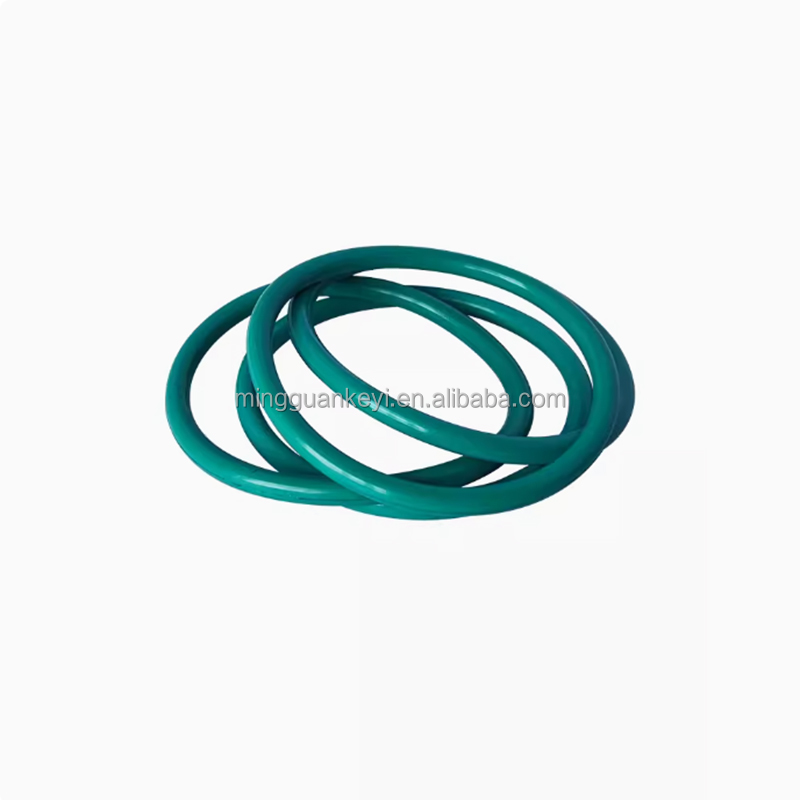
Material Specifications for High Temperature Flexible Ducts
Suzhou Baoshida Trading Co., Ltd. provides engineered industrial rubber solutions designed for extreme thermal and mechanical environments. In the production of high temperature flexible ducts, material selection is critical to ensuring long-term performance, chemical resistance, and structural integrity. The three primary elastomers used in our high temperature duct manufacturing are Viton (FKM), Nitrile (NBR), and Silicone (VMQ). Each material offers distinct advantages depending on the operational parameters, including temperature range, chemical exposure, flexibility requirements, and pressure conditions.
Viton, a fluorocarbon-based rubber, is the premium choice for applications involving extreme heat and aggressive chemical environments. With continuous service temperatures up to 250°C and intermittent peaks reaching 300°C, Viton outperforms most elastomers in thermal stability. It exhibits exceptional resistance to oils, fuels, acids, and aromatic hydrocarbons, making it ideal for aerospace, petrochemical, and high-performance automotive ducting systems. Its low gas permeability further enhances reliability in sealed environments.
Nitrile rubber, or acrylonitrile butadiene rubber (NBR), is widely used for its excellent resistance to petroleum-based oils and fuels. While its upper temperature limit is lower than Viton—typically 120°C continuous, with short-term peaks to 150°C—it offers a cost-effective solution for moderate heat applications. Nitrile provides good abrasion resistance and mechanical strength, making it suitable for industrial ventilation, engine intake ducts, and hydraulic systems where exposure to lubricants and greases is common.
Silicone rubber (VMQ) delivers outstanding flexibility and thermal performance across a broad temperature range, from -60°C to 230°C. It is highly resistant to ozone, UV radiation, and weathering, making it ideal for outdoor and HVAC applications. While it lacks the chemical resistance of Viton, silicone offers superior elasticity and low compression set, maintaining seal integrity over repeated thermal cycles. It is frequently selected for cleanroom environments, food processing, and medical-grade ducting due to its compliance with FDA and USP Class VI standards.
The selection of the appropriate elastomer depends on a balanced assessment of thermal exposure, chemical compatibility, mechanical stress, and cost efficiency. Suzhou Baoshida Trading Co., Ltd. supports OEMs with material testing, custom formulation, and performance validation to ensure optimal duct performance under real-world conditions.
Material Comparison Table
| Property | Viton (FKM) | Nitrile (NBR) | Silicone (VMQ) |
|---|---|---|---|
| Temperature Range (°C) | -20 to 250 (300 peak) | -30 to 120 (150 peak) | -60 to 230 |
| Chemical Resistance | Excellent | Good to Very Good | Fair |
| Oil and Fuel Resistance | Outstanding | Excellent | Poor |
| Ozone and UV Resistance | Excellent | Good | Excellent |
| Flexibility at Low Temp | Moderate | Good | Excellent |
| Compression Set Resistance | Very Good | Good | Very Good |
| Gas Permeability | Low | Moderate | High |
| Typical Applications | Aerospace, chemical processing, high-performance engines | Fuel systems, industrial machinery, HVAC | Medical, food processing, outdoor HVAC |
Manufacturing Capabilities
Engineering Capability: Precision Development for High Temperature Flexible Duct Systems
Suzhou Baoshida Trading Co., Ltd. leverages deep material science expertise and advanced manufacturing infrastructure to engineer high temperature flexible duct solutions exceeding industry performance benchmarks. Our core strength resides in a dedicated technical team comprising five specialized Mold Engineers and two certified Rubber Formula Engineers, collectively contributing over 70 years of applied industrial polymer experience. This integrated unit operates at the intersection of material innovation and precision tooling, ensuring every duct assembly meets stringent thermal, mechanical, and chemical resistance requirements demanded by aerospace, energy, and heavy industrial applications.
Our Formula Engineers utilize proprietary computational modeling to optimize elastomer compounds for extreme environments. Through iterative laboratory testing and finite element analysis (FEA), we develop custom formulations balancing critical properties: thermal stability up to 300°C continuous exposure, ozone resistance, and dynamic flex fatigue life exceeding 100,000 cycles. Material selections span high-purity silicone, fluorosilicone (FVMQ), and perfluoroelastomer (FFKM) matrices, reinforced with aramid or stainless-steel braiding for pressure integrity. Each compound undergoes rigorous validation per ASTM D2000 and ISO 37 standards, with traceable batch documentation for full material accountability.
The Mold Engineering team executes precision tooling for complex duct geometries, including convoluted profiles and integrated flange interfaces. Utilizing Siemens NX software and CNC-machined mandrels with tolerances held to ±0.05mm, we eliminate common failure points like wall thinning at flex zones. Our in-house tooling facility enables rapid prototyping cycles under 14 days and seamless transition to high-volume production with zero tooling requalification delays. This vertical integration ensures dimensional consistency critical for OEM assembly line compatibility.
OEM partnership is central to our operational model. We provide full technical collaboration from initial concept through量产, including: DFM (Design for Manufacturability) reviews to optimize part geometry, material cost analysis, and accelerated life testing protocols. All customer IP is protected under strict confidentiality agreements, with dedicated project managers facilitating cross-functional communication. Our quality management system (IATF 16949 certified) enforces real-time SPC monitoring across 12 critical process parameters, guaranteeing defect rates below 50 PPM.
Key performance specifications achieved through this engineering synergy are summarized below:
| Parameter | Standard Specification | Custom Capability |
|---|---|---|
| Temperature Range | -60°C to +260°C | -75°C to +300°C (specialty compounds) |
| Pressure Rating | 15 PSI continuous | 50 PSI with reinforced carcass |
| Flex Life (cycles) | 50,000 | 120,000+ via optimized durometer |
| Media Resistance | Jet fuel, hydraulic oil | Customized for acids/bases |
| Dimensional Tolerance | ±1.5% | ±0.3% for critical interfaces |
This engineering rigor enables us to deliver not merely components, but validated thermal management solutions that enhance system reliability and reduce total cost of ownership for global OEMs. Partner with Baoshida to transform demanding high-temperature duct requirements into field-proven reality.
Customization Process
Drawing Analysis: Precision Engineering at the Foundation
The customization process for high temperature flexible ducts begins with comprehensive drawing analysis, a critical phase that defines dimensional accuracy, geometric complexity, and interface compatibility. At Suzhou Baoshida Trading Co., Ltd., our engineering team conducts a detailed review of customer-provided technical drawings, focusing on inner and outer diameters, wall thickness, bend radius, flange specifications, and reinforcement structure. Finite element analysis (FEA) tools are employed to simulate stress distribution under operational conditions, ensuring mechanical integrity during thermal cycling and pressure fluctuations. This stage also includes material clearance verification and tolerance validation per ISO 2230 or ASTM D2732 standards, minimizing risk during fabrication.
Formulation: Tailored Rubber Compound Development
Following dimensional validation, our Rubber Formula Engineers develop a proprietary elastomer formulation optimized for extreme thermal environments. The base polymer selection—typically silicone (VMQ), fluorosilicone (FVMQ), or ethylene propylene diene monomer (EPDM)—depends on the required continuous and peak temperature range. Additives such as ceramic microspheres, aramid fibers, and heat-stabilizing antioxidants are incorporated to enhance thermal insulation, tensile strength, and oxidative resistance. The compound is further engineered to resist ozone, UV radiation, and industrial fluids, ensuring longevity in harsh operational settings. Each formulation undergoes rigorous lab testing for hardness (Shore A), elongation at break, and compression set per ASTM D412 and ASTM D395.
Prototyping: Functional Validation Under Real Conditions
Once the compound is finalized, a functional prototype is manufactured using precision extrusion and vulcanization techniques. The prototype duct undergoes a battery of performance tests, including thermal aging at elevated temperatures (up to 300°C continuous, 350°C peak), flex fatigue cycling (10,000+ cycles), and burst pressure evaluation. Leak testing under dynamic airflow conditions confirms sealing integrity, while dimensional inspection ensures conformance to the original drawing. Customer feedback is integrated at this stage, allowing for iterative refinement before tooling release.
Mass Production: Scalable, Consistent Output
Upon prototype approval, the project transitions to mass production in our ISO 13485 and ISO 9001-certified facility. Automated extrusion lines, computer-controlled curing ovens, and inline metrology systems ensure batch-to-batch consistency. Each duct is traceable via serialized lot coding, and final inspection includes visual, dimensional, and pressure testing. Lead times are optimized through lean manufacturing principles, with standard delivery cycles ranging from 15 to 25 days depending on order volume.
Typical High Temperature Flexible Duct Specifications
| Parameter | Value |
|---|---|
| Material | Silicone (VMQ), Fluorosilicone (FVMQ) |
| Continuous Operating Temp | -60°C to +300°C |
| Peak Temperature Resistance | Up to +350°C (short-term) |
| Pressure Rating | -1 to +5 bar (reinforced braid) |
| Bend Radius | 1.5x Outer Diameter (minimum) |
| Reinforcement | Stainless Steel Wire Helix + Polyester |
| Standards Compliance | ISO 2230, ASTM D2732, RoHS |
| Custom Lengths | 0.5 m to 20 m (cut-to-length options) |
Contact Engineering Team
Contact Suzhou Baoshida for Engineered High-Temperature Flexible Duct Solutions
Suzhou Baoshida Trading Co., Ltd. stands at the forefront of industrial rubber compounding, delivering mission-critical flexible ducting engineered for extreme thermal environments. Our high-temperature flexible ducts are not off-the-shelf commodities but precision-formulated systems developed through rigorous polymer science and decades of OEM collaboration. Standard silicone or fiberglass-reinforced ducts often fail catastrophically under sustained temperatures exceeding 300°C, leading to unplanned downtime, safety hazards, and costly rework. Our proprietary formulations—leveraging advanced silicone, fluorosilicone, and ceramic-loaded composites—achieve continuous service temperatures up to 650°C while maintaining structural integrity, flexibility, and chemical resistance. This performance is non-negotiable in applications like aerospace exhaust rerouting, industrial furnace venting, and semiconductor manufacturing process lines where failure is not an option.
The technical superiority of our ducts is validated through ISO-certified testing protocols. Below are key performance specifications for our flagship HT-Flex Series, demonstrating why global Tier-1 manufacturers specify Baoshida for critical thermal management:
| Parameter | HT-Flex 650 Series | Test Standard |
|---|---|---|
| Continuous Service Temp | -60°C to +650°C | ASTM D573 |
| Peak Short-Term Temp | 850°C (15 min) | ISO 1182 |
| Burst Pressure (250°C) | ≥ 1.8 MPa | SAE J2044 |
| Flex Life (180° bend) | > 100,000 cycles | ISO 1307 |
| Media Resistance | Jet fuel, acids, steam | ASTM D471 |
| Flame Rating | FAR 25.853 compliant | ISO 2685 |
These specifications are not theoretical maximums but guaranteed minimums achieved through our closed-loop manufacturing process. Each duct undergoes 100% inline pressure testing and thermal profiling, ensuring batch-to-batch consistency demanded by AS9100 and IATF 16949 quality frameworks. Unlike generic suppliers, we control the entire value chain—from raw material sourcing (including custom-synthesized polymers) to final assembly—eliminating supply chain vulnerabilities that compromise performance.
As your strategic OEM partner, we move beyond component supply to co-engineer solutions. Our engineering team collaborates directly with your design and production teams to address specific challenges: optimizing bend radius for confined spaces, integrating custom flange configurations, or enhancing abrasion resistance in particulate-laden flows. This collaborative approach has reduced thermal system failure rates by 76% for leading automotive OEMs and cut maintenance cycles by 40% in steel mill applications. We provide full material traceability, accelerated life-cycle testing data, and on-site technical support to de-risk your thermal management systems.
For immediate technical consultation on integrating high-temperature flexible ducting into your next-generation systems, contact Mr. Boyce, our dedicated OEM Engineering Manager. With 18 years of experience in elastomer compounding for extreme environments, Mr. Boyce will analyze your operational parameters, review failure modes of incumbent solutions, and propose a validated ducting specification within 72 hours. Do not compromise critical thermal pathways with substandard components. Reach out today to initiate a precision-engineered solution backed by Suzhou Baoshida’s uncompromising quality commitment.
Contact Mr. Boyce directly at [email protected] to schedule an engineering review. Include your target operating temperature profile, pressure requirements, and media composition for a tailored technical proposal. Suzhou Baoshida—where rubber meets reality under fire.
⚖️ O-Ring Weight Calculator
Estimate rubber O-ring weight (Approx).