
Technical Contents
Engineering Guide: High Temperature Rubber O Rings
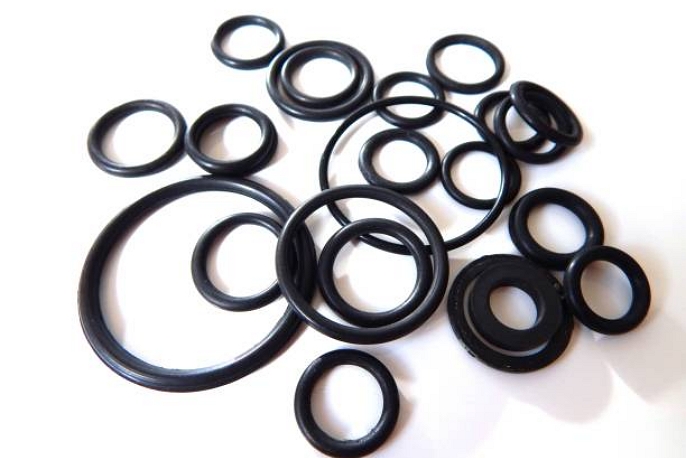
Engineering Insight: Material Selection in High Temperature Rubber O Rings
In high-performance industrial environments, the reliability of sealing solutions is paramount. Among the most critical components in such systems are high temperature rubber O rings, which are tasked with maintaining integrity under extreme thermal conditions. While off-the-shelf O rings may appear cost-effective and readily available, they frequently fail in demanding applications due to inadequate material selection. This underscores the necessity of precision engineering and application-specific formulation in high temperature sealing solutions.
Standard elastomers such as Nitrile (NBR) or standard EPDM are commonly used in general-purpose sealing applications. However, these materials begin to degrade at temperatures exceeding 120°C, leading to hardening, cracking, or compression set. In contrast, high temperature environments—such as those found in automotive turbochargers, aerospace actuators, or oil and gas downhole tools—routinely operate above 200°C. In these conditions, material compatibility becomes the primary determinant of seal longevity and system safety.
The failure of generic O rings in high heat scenarios is not merely a function of temperature exposure but also of chemical resistance, compression set resistance, and long-term aging behavior. For instance, prolonged exposure to hot air, steam, or aggressive fluids can accelerate oxidative degradation in unsaturated polymer chains. This leads to loss of elasticity and eventual seal failure. Moreover, thermal cycling induces repeated expansion and contraction, which low-grade materials cannot withstand without permanent deformation.
At Suzhou Baoshida Trading Co., Ltd., we emphasize engineered material solutions tailored to operational parameters. Our high temperature O rings utilize advanced elastomers such as FKM (Fluoroelastomer), FFKM (Perfluoroelastomer), ACM (Polyacrylate), and specially formulated silicone (VMQ) or fluorosilicone (FVMQ). These materials offer superior resistance to thermal degradation, with continuous service temperatures ranging from 200°C to over 300°C, depending on compound design.
The following table outlines key performance characteristics of high temperature elastomers commonly used in precision O ring manufacturing:
| Material | Continuous Use Temp (°C) | Key Advantages | Common Limitations |
|---|---|---|---|
| FKM (e.g., Viton®) | 200–230 | Excellent heat, oil, and chemical resistance | Limited low-temperature flexibility |
| FFKM | 250–327 | Exceptional chemical and thermal stability | High cost, specialized processing |
| Silicone (VMQ) | 180–200 | Good flexibility at low and high temps, FDA compliant | Low tensile strength, poor abrasion resistance |
| Fluorosilicone (FVMQ) | 180–200 | Fuel and solvent resistance with silicone flexibility | Lower thermal stability than FKM |
| ACM | 150–180 | Good heat and oil resistance | Poor water and weather resistance |
Selecting the appropriate elastomer requires a comprehensive understanding of the operating environment—including peak temperatures, media exposure, pressure cycles, and regulatory requirements. Off-the-shelf O rings often neglect these variables, resulting in premature failure and costly downtime. Precision-engineered seals from Suzhou Baoshida are formulated with these complexities in mind, ensuring reliability, compliance, and extended service life in the most demanding applications.
Material Specifications
Material Specifications for High-Temperature Rubber O-Rings
Selecting the appropriate elastomer for high-temperature O-rings is critical to ensuring seal integrity, longevity, and system safety in demanding industrial applications. Thermal exposure accelerates polymer degradation, leading to hardening, cracking, or excessive compression set. Suzhou Baoshida Trading Co., Ltd. prioritizes material science rigor to match OEM requirements with optimal performance parameters. Below we detail three primary elastomers engineered for elevated-temperature resilience: Viton (FKM), Nitrile (NBR), and Silicone (VMQ). Each material exhibits distinct chemical resistance, thermal stability, and mechanical behavior under sustained heat.
Viton (Fluoroelastomer, FKM) represents the industry benchmark for extreme-temperature sealing. Its fluorocarbon backbone provides exceptional resistance to oxidation, fuels, and hydraulic fluids up to 230°C continuous service. Standard grades comply with ASTM D2000 classification FC 7474 per SAE AS568 standards. Viton maintains low compression set (≤25% at 200°C/70h) and tensile strength retention (≥10 MPa) even after prolonged thermal aging. Critical for aerospace and chemical processing, Viton’s limitation lies in cost sensitivity and reduced flexibility below -20°C.
Nitrile (Acrylonitrile Butadiene Rubber, NBR) offers a cost-effective solution for moderate high-temperature environments up to 120°C. Its acrylonitrile content (typically 34-45%) dictates oil resistance; higher ACN grades withstand petroleum-based fluids but sacrifice low-temperature flexibility. NBR achieves tensile strengths of 15-20 MPa and compression sets of 25-35% at 100°C/70h. While suitable for automotive fuel systems and hydraulics, NBR degrades rapidly above 125°C due to unsaturated polymer chains vulnerable to thermal oxidation.
Silicone (Polysiloxane, VMQ) excels in extreme temperature ranges from -60°C to 200°C, with specialty grades tolerating 230°C intermittently. Its inorganic Si-O backbone ensures outstanding thermal stability and low compression set (≤20% at 200°C/70h). Silicone maintains flexibility across wide temperature swings, making it ideal for medical and food-grade applications. However, its low tensile strength (5-8 MPa) and poor resistance to concentrated acids, fuels, and steam limit use in aggressive chemical environments. Permeability to gases also necessitates careful design consideration.
The following table summarizes key specifications for OEM material selection:
| Property | Viton (FKM) | Nitrile (NBR) | Silicone (VMQ) |
|---|---|---|---|
| Continuous Temp Range | -20°C to +230°C | -30°C to +120°C | -60°C to +200°C |
| Max Intermittent Temp | 250°C | 150°C | 230°C |
| Tensile Strength (MPa) | 10-18 | 15-20 | 5-8 |
| Compression Set (70h) | ≤25% @ 200°C | 25-35% @ 100°C | ≤20% @ 200°C |
| Key Chemical Resistance | Fuels, Acids, Oils | Petroleum Oils | Water, Steam |
| Primary Limitation | Cost, Low Temp | Thermal Oxidation | Low Strength |
Material selection must balance thermal profile, chemical exposure, mechanical stress, and lifecycle cost. Suzhou Baoshida Trading Co., Ltd. leverages decades of compounding expertise to formulate custom O-rings meeting ISO 3601 and AS568 tolerances. For sustained operation above 150°C, Viton remains the optimal choice where chemical resistance is paramount. NBR serves cost-sensitive applications below 120°C, while Silicone addresses wide-temperature flexibility needs in non-aggressive media. Consult our engineering team to validate material suitability against your specific operational envelope.
Manufacturing Capabilities
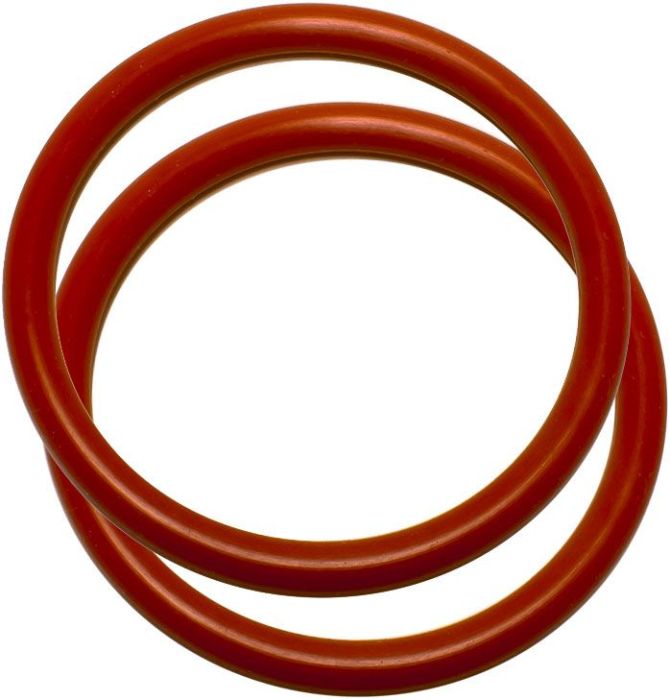
Engineering Capability
At Suzhou Baoshida Trading Co., Ltd., our engineering framework is built to deliver precision, reliability, and innovation in the development of high temperature rubber O-rings. Our team comprises five dedicated mould engineers and two specialized rubber formula engineers, enabling us to control every phase of product realization—from material formulation to precision tooling and final validation. This integrated technical capability ensures that our O-rings meet the most demanding performance criteria in extreme thermal environments.
Our formula engineers possess advanced expertise in polymer chemistry and elastomer compounding, focusing specifically on high temperature resistance. They develop custom rubber formulations using materials such as FKM (Viton®), FFKM, silicone (VMQ), and EPDM, optimized for continuous service at temperatures exceeding 250°C. Each formulation is engineered to balance thermal stability, compression set resistance, chemical compatibility, and mechanical integrity under dynamic or static sealing conditions. Rigorous lab testing, including TGA (Thermogravimetric Analysis) and OIT (Oxidative Induction Time), validates long-term performance and material consistency.
Complementing our formulation expertise, our five mould engineers specialize in precision tool design and manufacturing for O-rings used in aerospace, automotive turbo systems, industrial pumps, and semiconductor processing equipment. Utilizing CAD/CAM software and CNC machining, they produce high-tolerance moulds with tight dimensional control (±0.05 mm), ensuring uniform cross-sections and consistent part geometry. Our in-house tooling capability allows rapid prototyping, design iteration, and full traceability—critical for OEM clients requiring certified, repeatable production.
We operate as a full-service OEM partner, providing end-to-end solutions from technical consultation to mass production. Our engineering team collaborates directly with client R&D departments to interpret application requirements, conduct sealing failure analysis, and recommend optimal material and design configurations. This collaborative approach reduces development cycles and mitigates field failure risks. All formulations and tooling designs are documented under strict IP confidentiality, supporting proprietary product development.
Our production processes are aligned with ISO 9001 standards, and we maintain full control over raw material sourcing, mixing, moulding, and post-curing. This vertical integration ensures batch-to-batch consistency and full compliance with industry specifications such as AMS, ASTM, and SAE.
Typical High Temperature O-Ring Specifications
| Material | Temperature Range (°C) | Hardness (Shore A) | Tensile Strength (MPa) | Key Applications |
|---|---|---|---|---|
| FKM (65-70) | -20 to +250 (up to +300 short-term) | 65–70 | ≥12 | Automotive, Oil & Gas |
| FFKM (75) | -15 to +327 | 75 | ≥8 | Semiconductor, Aerospace |
| Silicone (VMQ) | -60 to +230 | 50–80 | ≥6 | Medical, Food Processing |
| EPDM (70) | -50 to +150 (up to +180 intermittent) | 70 | ≥10 | HVAC, Industrial Water |
Through the synergy of advanced material science and precision engineering, Suzhou Baoshida delivers high temperature rubber O-rings that perform reliably under extreme conditions, backed by robust OEM development support and scalable manufacturing capacity.
Customization Process
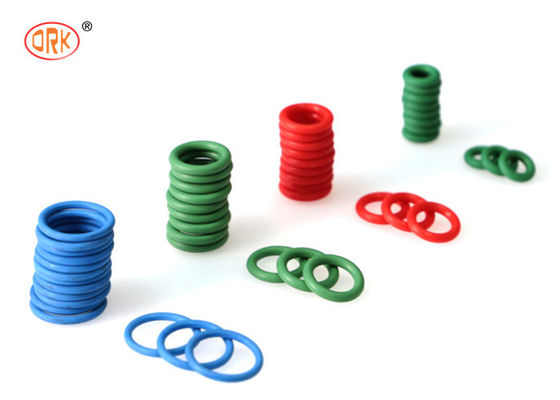
Customization Process for High Temperature Rubber O-Rings
At Suzhou Baoshida Trading Co., Ltd., our precision rubber seal customization follows a rigorously controlled sequence to ensure optimal performance in extreme thermal environments. This process begins with comprehensive drawing analysis, where our engineering team scrutinizes client-provided specifications for dimensional tolerances, groove geometry, and application parameters. Critical factors such as operating temperature range, media exposure, and dynamic load requirements are cross-referenced against international standards (ISO 3601, AS568) to identify potential design conflicts. Finite element analysis (FEA) may be employed to simulate seal behavior under thermal stress, preempting extrusion or compression set failures.
The formulation phase leverages our proprietary material science database to develop elastomer compounds capable of sustained operation above 200°C. Base polymers—including FKM, FVMQ, and PTFE—are selected based on thermal degradation thresholds and chemical compatibility. Specialty curatives and reinforcing fillers (e.g., silica, carbon black) are precisely dosed to enhance thermal stability while maintaining elasticity. Each formulation undergoes accelerated aging tests per ASTM D573, with compression set measured at 200°C for 70 hours to validate resilience.
Prototyping utilizes CNC-machined molds and injection molding under strictly controlled vulcanization parameters. First-article inspection verifies critical dimensions via coordinate measuring machines (CMM) with ±0.05 mm accuracy. Physical testing includes thermal cycling from -55°C to 250°C, burst pressure validation, and permeation analysis against specified fluids. Client feedback on prototype performance triggers iterative refinements until all functional criteria are met.
Mass production commences only after formal client approval, with statistical process control (SPC) monitoring every batch. Raw material traceability is maintained via blockchain-enabled lot tracking, while real-time cure monitoring ensures consistent crosslink density. Final inspection includes 100% visual screening and random sampling for hardness, tensile strength, and thermal aging per ASTM D2000.
Critical High-Temperature O-Ring Material Specifications
| Material Type | Continuous Temp Range (°C) | Hardness Range (Shore A) | Tensile Strength (MPa) | Compression Set (200°C/70h) | Key Chemical Resistance |
|---|---|---|---|---|---|
| FKM (Standard) | -20 to 230 | 60–90 | 10–20 | ≤35% | Fuels, oils, acids |
| FKM (Perfluoro) | -10 to 327 | 65–85 | 8–15 | ≤25% | Aggressive chemicals, steam |
| FVMQ | -60 to 200 | 50–80 | 5–10 | ≤40% | Ozone, weathering |
| PTFE Encapsulated | -200 to 260 | N/A | N/A | Negligible | All solvents, ultra-high purity |
| HNBR (High-Temp) | -40 to 170 | 60–90 | 15–25 | ≤50% | Water, refrigerants |
This end-to-end workflow ensures Suzhou Baoshida delivers mission-critical O-rings that withstand thermal extremes while meeting OEM volumetric scalability demands. Our ISO 9001-certified facility maintains full documentation from raw material certification to shipment, providing clients with auditable quality assurance for every production run.
Contact Engineering Team
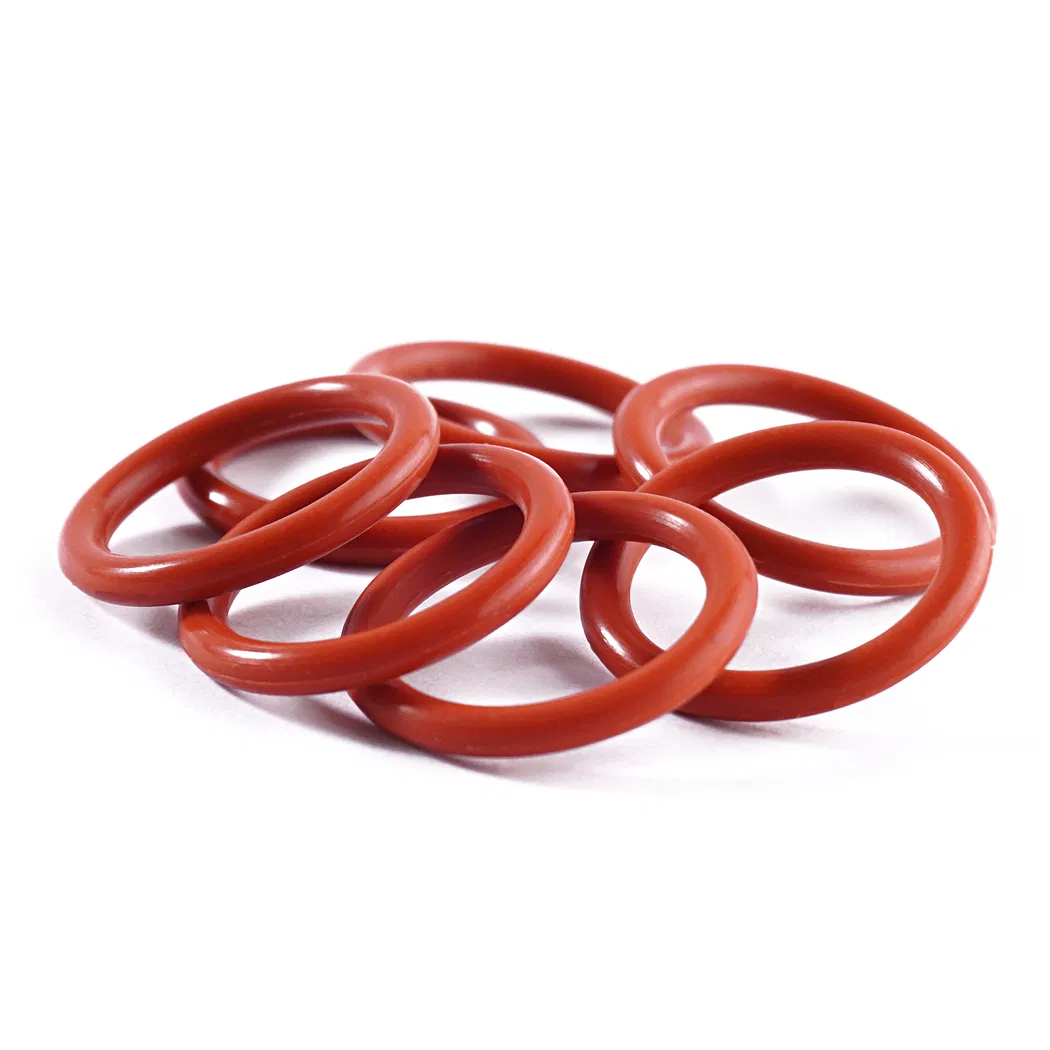
For mission-critical sealing applications operating under extreme thermal conditions, selecting the correct high temperature rubber O ring is not merely a matter of material compatibility—it is a decisive factor in system reliability, safety, and operational longevity. At Suzhou Baoshida Trading Co., Ltd., we specialize in precision-engineered rubber seals designed to perform under sustained elevated temperatures, aggressive chemical exposure, and dynamic mechanical stress. Our expertise spans material science, OEM collaboration, and application-specific formulation development, ensuring that every O ring we provide meets the exact demands of industrial, automotive, aerospace, and energy sectors.
Our high temperature rubber O rings are formulated using advanced elastomers such as FKM (Viton®), FFKM (Perfluoroelastomer), ACM (Polyacrylate), and specially compounded silicone (VMQ) and fluorosilicone (FVMQ) polymers. Each material is selected and optimized based on thermal stability, compression set resistance, and chemical inertness. We rigorously test all compounds to ensure performance consistency across temperature ranges from -40°C to over +300°C, depending on the formulation and service duration.
We understand that every industrial environment presents unique challenges. Whether you are sealing turbine housings in jet engines, managing exhaust gas recirculation systems, or maintaining integrity in downhole oil and gas tools, our engineering team works directly with your R&D and procurement departments to deliver tailored sealing solutions. Our manufacturing processes adhere to ISO 9001 standards, and all critical dimensions are controlled to ISO 3601 and AS568 tolerances, ensuring interchangeability and reliable fitment.
Below is a comparative overview of our most widely used high temperature rubber materials and their key performance characteristics:
| Material | Common Name | Temperature Range (°C) | Key Advantages | Typical Applications |
|---|---|---|---|---|
| FKM | Viton® | -20 to +250 (short peaks to +300) | Excellent heat, oil, and chemical resistance | Automotive engines, aerospace hydraulics |
| FFKM | Kalrez®, Chemraz® | -15 to +327 | Superior chemical and thermal stability | Semiconductor, aggressive chemical processing |
| Silicone (VMQ) | Silicone | -55 to +200 (short peaks to +250) | High flexibility, low compression set | Medical devices, food processing |
| Fluorosilicone (FVMQ) | FVMQ | -55 to +200 | Fuel and solvent resistance with silicone flexibility | Fuel systems, aerospace fuel tanks |
| ACM | Polyacrylate | -10 to +175 (short peaks to +200) | High heat and oil resistance | Transmission seals, industrial gearboxes |
Partnering with Suzhou Baoshida means gaining access to not just high-performance rubber components, but to technical collaboration grounded in material science and industrial application insight. We support global OEMs with rapid prototyping, batch traceability, and long-term supply agreements backed by consistent quality.
To discuss your high temperature sealing requirements, contact Mr. Boyce, OEM Account Manager, directly at [email protected]. Our technical team is prepared to review your specifications, recommend optimal materials, and provide samples for validation testing. Let us help you achieve leak-free performance under the most demanding thermal conditions.
⚖️ O-Ring Weight Calculator
Estimate rubber O-ring weight (Approx).