
Technical Contents
Engineering Guide: Hnbr O-Ring
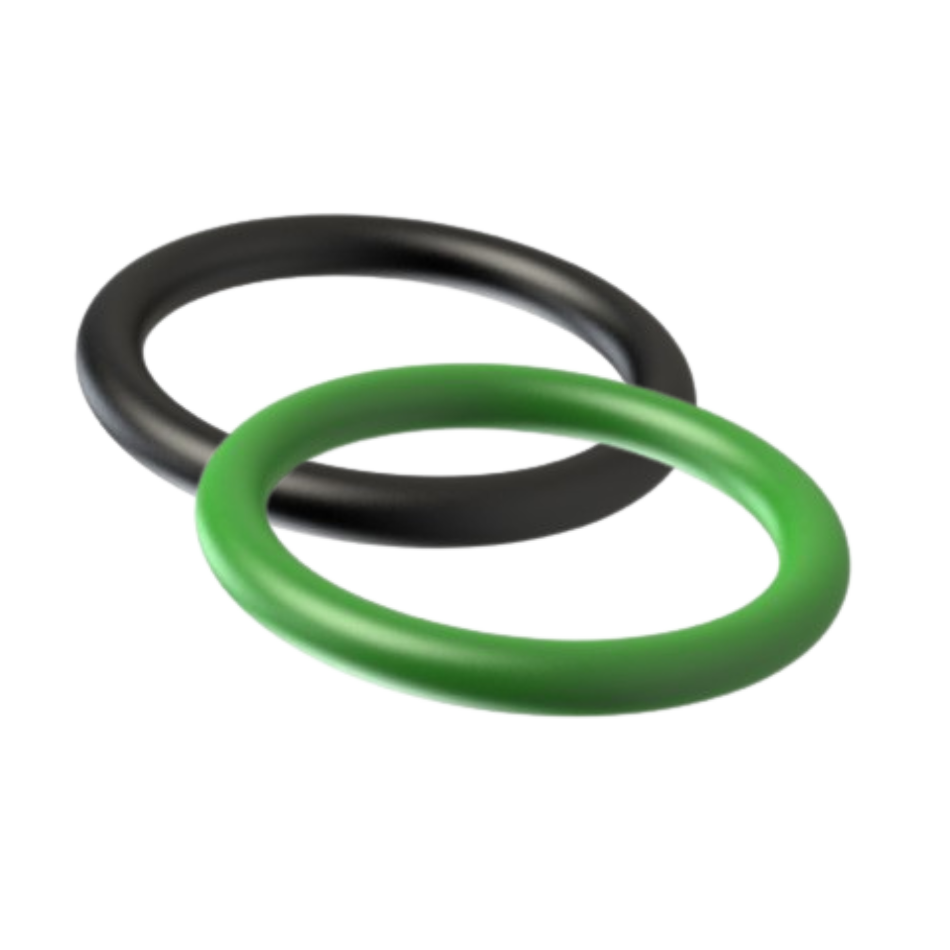
Engineering Insight: HNBR O-Ring Material Selection Criticality
Material selection for HNBR (Hydrogenated Nitrile Butadiene Rubber) O-rings transcends basic chemical compatibility charts. Off-the-shelf solutions frequently fail in demanding industrial applications due to unoptimized molecular architecture and inadequate formulation for specific operational stresses. Generic HNBR compounds prioritize cost over performance, neglecting critical variables like hydrogenation level, cure system chemistry, and filler dispersion. This results in premature compression set, fluid degradation, or thermal runaway—especially in dynamic sealing environments where seal integrity directly impacts system safety and uptime.
The root cause lies in insufficient customization. Standard HNBR grades often use peroxide cure systems optimized for ease of processing, not long-term resilience. In high-temperature automotive transmission systems, for example, these formulations exhibit rapid hardening above 150°C, leading to seal extrusion and leakage. Similarly, in chemical processing pumps, generic HNBR may resist base oils but fail catastrophically when exposed to amine-based additives due to unbalanced polymer saturation. OEMs frequently overlook that HNBR’s hydrogenation percentage (ranging 35–99%) dictates its thermal stability and chemical resistance profile. A 70% saturation grade suitable for engine coolant becomes inadequate for biodiesel exposure, where >95% saturation is essential to prevent swelling-induced seal distortion.
Compounding precision is equally vital. Fillers like silica versus carbon black alter wear resistance and low-temperature flexibility. Antioxidant packages must be tailored to the specific thermal duty cycle—continuous 140°C operation demands different stabilizers than intermittent 180°C spikes. Off-the-shelf compounds use fixed additive ratios, ignoring synergistic effects. For instance, inadequate zinc oxide in peroxide-cured HNBR accelerates reversion in steam applications, while excess magnesia compromises acid resistance.
Suzhou Baoshida Trading Co., Ltd. addresses these gaps through application-specific engineering. We analyze fluid chemistry, temperature transients, and mechanical loads to formulate HNBR with calibrated hydrogenation, bespoke cure systems, and nano-dispersed fillers. Below are key differentiators between standard and engineered HNBR O-rings:
| Parameter | Standard HNBR O-Ring | Baoshida Engineered HNBR O-Ring |
|---|---|---|
| Temperature Range | -30°C to +150°C | -45°C to +180°C (continuous) |
| Compression Set (150°C/70h) | >35% | <18% |
| Biodiesel Resistance (B100) | Severe swelling (>15%) | Minimal swelling (<5%) |
| Tensile Retention (168h/150°C) | <50% | >85% |
| Customization Basis | Fixed formulation | Fluid/temperature/load profile |
Generic solutions treat HNBR as a commodity. Precision-engineered compounds treat it as a system-critical component. At Suzhou Baoshida, we reject one-size-fits-all approaches. Our OEM partnerships begin with fluid analysis and stress modeling to define exact molecular requirements—ensuring seals perform reliably where standard grades fail. The cost of an engineered O-ring is negligible against downtime from seal-induced system failure. Demand compounds built for your application, not just your budget.
Material Specifications
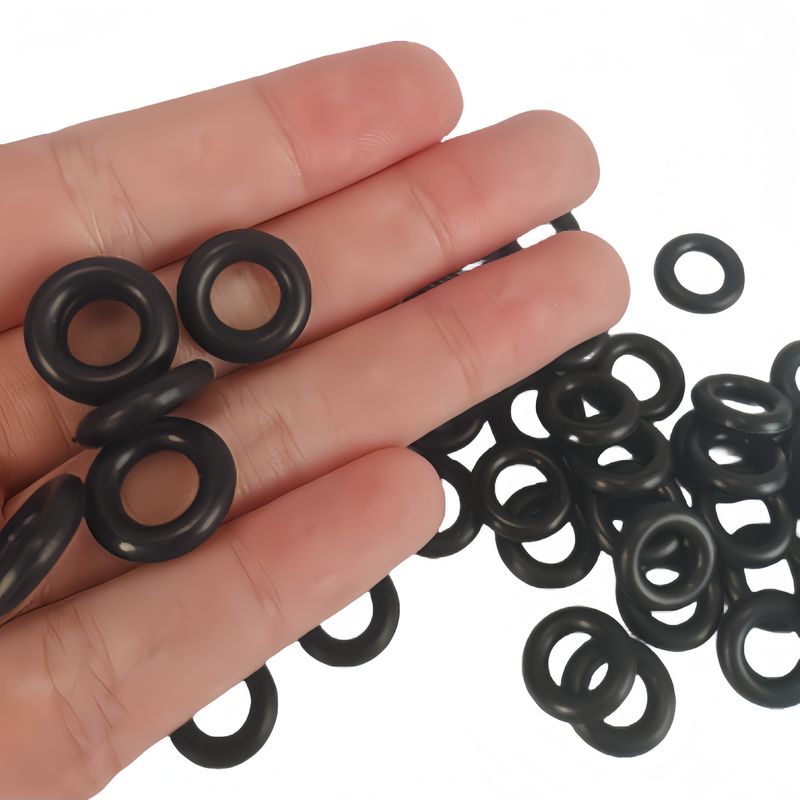
HNBR (Hydrogenated Nitrile Butadiene Rubber) O-rings are engineered for high-performance sealing applications where resistance to heat, oil, and mechanical stress is critical. At Suzhou Baoshida Trading Co., Ltd., we specialize in precision rubber seals designed to meet stringent industrial demands. HNBR offers superior mechanical properties compared to standard NBR (Nitrile) due to hydrogenation of the butadiene component, which enhances thermal stability and reduces susceptibility to oxidative degradation. This modification allows HNBR O-rings to perform reliably in environments with continuous exposure to temperatures up to 150°C, with short-term peaks reaching 170°C. The material also exhibits excellent resistance to mineral oils, greases, water, aliphatic and some acidic fluids, making it ideal for automotive, oil & gas, and industrial hydraulic systems.
When selecting the optimal elastomer for sealing applications, a comparative analysis of HNBR with other common materials—such as Viton (FKM), Nitrile (NBR), and Silicone (VMQ)—is essential. Each material presents distinct advantages depending on the operational environment. Viton excels in high-temperature resistance and chemical inertness, capable of withstanding aggressive media such as aromatic hydrocarbons, fuels, and many acids. However, it exhibits lower resilience and higher compression set than HNBR under dynamic conditions. Nitrile remains a cost-effective solution for general-purpose sealing in oil and fuel environments but lacks the thermal endurance and ozone resistance of HNBR. Silicone offers exceptional flexibility across extreme temperatures, particularly in low-temperature applications down to -60°C, but demonstrates poor resistance to petroleum-based fluids and limited mechanical strength under high pressure.
To support informed material selection, the following table outlines key physical and chemical properties of HNBR, Viton, Nitrile, and Silicone O-ring materials under standardized test conditions.
| Property | HNBR | Viton (FKM) | Nitrile (NBR) | Silicone (VMQ) |
|---|---|---|---|---|
| Temperature Range (°C) | -40 to +150 (up to +170 short-term) | -20 to +200 (up to +250 short-term) | -30 to +100 (up to +125 short-term) | -60 to +200 (up to +250 short-term) |
| Tensile Strength (MPa) | 20–30 | 12–20 | 15–25 | 6–10 |
| Elongation at Break (%) | 200–400 | 150–300 | 200–400 | 200–600 |
| Hardness (Shore A) | 60–90 | 60–90 | 50–90 | 30–80 |
| Resistance to Oils/Fuels | Excellent | Excellent | Good | Poor |
| Resistance to Heat | Excellent | Outstanding | Fair | Good |
| Resistance to Ozone/UV | Excellent | Excellent | Fair | Excellent |
| Compression Set (High Temp) | Low to Moderate | Low | Moderate to High | Moderate |
| Typical Applications | Automotive timing belts, oilfield seals, industrial rollers | Aerospace, chemical processing, fuel systems | Hydraulic systems, general seals, fuel hoses | Medical devices, food processing, extreme temp seals |
At Suzhou Baoshida Trading Co., Ltd., we ensure all HNBR and alternative elastomer O-rings are manufactured to ISO 3601 and AS568 standards, with full traceability and batch testing. Our precision molding process guarantees dimensional accuracy and consistent performance across large production runs. Understanding the operational parameters of your application is crucial—consult our engineering team for custom formulation recommendations.
Manufacturing Capabilities
Engineering Capability: Precision HNBR O-Ring Development at Suzhou Baoshida
Suzhou Baoshida Trading Co., Ltd. delivers mission-critical HNBR (Hydrogenated Nitrile Butadiene Rubber) O-rings through an integrated engineering framework combining advanced material science with precision manufacturing. Our capability centers on solving complex sealing challenges in demanding automotive, aerospace, and industrial fluid systems where standard elastomers fail. The hydrogenation process inherent to HNBR significantly enhances thermal stability and resistance to oils, fuels, and ozone compared to conventional NBR, making it indispensable for modern high-performance applications. Achieving consistent, reliable performance in these environments demands rigorous engineering control over both material formulation and mold design – a dual expertise embedded within our core team.
Core Engineering Team: Material and Mold Synergy
Our dedicated engineering cohort comprises five specialized Mould Engineers and two certified Rubber Formula Engineers. This structure ensures seamless collaboration from compound development to final cavity production. Formula Engineers meticulously design HNBR compounds, optimizing hydrogenation levels, filler systems, and cure packages to achieve target properties like low compression set at elevated temperatures or specific resistance to aggressive biofuels. Concurrently, Mould Engineers translate these material requirements into precision tooling, utilizing advanced CAD/CAM and mold flow simulation to eliminate knit lines, ensure uniform crosslink density, and maintain critical dimensional tolerances (±0.05mm achievable). This integrated approach prevents the common disconnect between material potential and manufactured reality, directly impacting seal longevity and leakage prevention in client applications.
OEM Development Process: From Specification to Validation
We execute OEM projects through a defined engineering workflow. Client specifications detailing media exposure, temperature cycles, and dynamic/static requirements initiate compound formulation. Prototype molds are developed with venting and gating optimized for HNBR’s specific flow characteristics. Rigorous in-house testing follows, including ASTM D2000 verification, compression set per ISO 3384, and custom fluid immersion protocols. Critical feedback loops between test results and formula/mold adjustments occur before final production tooling release. This methodology ensures the first production run meets stringent OEM validation criteria, minimizing time-to-market and costly requalification cycles for our partners.
HNBR performance is highly formulation-dependent. The table below outlines typical achievable ranges for our engineered compounds, reflecting our capability to tailor properties:
| Property | Typical Range (Our Engineered HNBR) | Test Standard |
|---|---|---|
| Continuous Service Temp | -30°C to +150°C (Short-term to 175°C) | ASTM D2000 |
| Tensile Strength | 15 – 25 MPa | ASTM D412 |
| Elongation at Break | 150% – 300% | ASTM D412 |
| Compression Set (70h/150°C) | ≤ 25% | ISO 3384 Method A |
| Key Chemical Resistances | Mineral Oils, Gear Oils, ATF, HFC R134a, Hot Water/Glycol | ASTM D471 |
Suzhou Baoshida’s strength lies in this engineered synergy – transforming HNBR’s theoretical advantages into field-proven sealing solutions. Our dual-engineer model guarantees that every O-ring shipped embodies precise material integrity and dimensional accuracy, directly supporting OEM reliability goals in the most challenging operational environments. This is not merely manufacturing; it is applied polymer engineering for zero-leakage performance.
Customization Process
Drawing Analysis
The customization process for HNBR O-rings begins with a comprehensive drawing analysis to ensure dimensional accuracy and functional compatibility. At Suzhou Baoshida Trading Co., Ltd., our engineering team evaluates customer-supplied technical drawings or CAD models to verify critical parameters such as inner diameter, cross-sectional diameter, tolerance class per ISO 3601 or AS568 standards, and groove design. We assess surface finish requirements, application environment annotations, and any special markings or certifications required. This phase also includes a feasibility review to determine whether the design can be reliably produced using available tooling and material constraints. Any discrepancies or potential failure risks—such as excessive compression, twist susceptibility, or extrusion gaps—are flagged and discussed with the client for optimization before proceeding.
Formulation Development
Following drawing validation, our rubber formula engineers develop a tailored HNBR (Hydrogenated Nitrile Butadiene Rubber) compound to match the operational demands of the application. HNBR is selected for its superior resistance to heat, oil, and aging compared to standard NBR, making it ideal for automotive, oil & gas, and industrial hydraulic systems. The formulation process involves adjusting acrylonitrile content, degree of hydrogenation, and additive packages—including antioxidants, processing aids, and vulcanizing agents—to achieve target properties such as hardness (Shore A 60–90), compression set, tensile strength, and low-temperature flexibility. Each batch is compounded under controlled conditions using internal mixers and two-roll mills to ensure homogeneity and repeatability. The final compound is validated through preliminary physical testing to confirm compliance with ASTM D2000 or customer-specific material specifications.
Prototyping and Validation
Once the formulation is approved, precision molds are prepared and small-batch prototypes are produced. These prototype HNBR O-rings undergo rigorous testing, including dimensional inspection, hardness measurement, and performance evaluation under simulated service conditions such as exposure to high-temperature oils, dynamic motion, or aggressive chemicals. Feedback from this stage is used to refine both the mold geometry and material formulation if necessary. Clients receive full test reports and sample sets for their own validation, ensuring mutual agreement on performance before scale-up.
Mass Production and Quality Assurance
After prototype approval, the project transitions into mass production. We utilize automated molding lines with strict in-process quality controls, including 100% visual inspection and statistical sampling per AQL Level II. All production batches are traceable, with material certificates and test data archived for compliance. Final packaging is customized per client requirements, including vacuum sealing or anti-corrosion wrapping for sensitive environments.
| Property | Test Method | Typical Value |
|---|---|---|
| Hardness (Shore A) | ASTM D2240 | 70 ±5 |
| Tensile Strength | ASTM D412 | ≥20 MPa |
| Elongation at Break | ASTM D412 | ≥200% |
| Compression Set (24h, 150°C) | ASTM D395 | ≤25% |
| Heat Resistance (70h, 150°C) | ASTM D573 | ≤20% hardness change |
Contact Engineering Team
Technical Engagement for Critical HNBR O-Ring Applications
Selecting the optimal hydrogenated nitrile butadiene rubber (HNBR) compound for demanding sealing environments requires more than standard catalog specifications. Industrial systems operating under extreme thermal cycling, aggressive chemical exposure, or high-pressure differentials demand material science precision. At Suzhou Baoshida Trading Co., Ltd., our engineering team specializes in HNBR formulation refinement, ensuring each O-ring meets the exacting performance thresholds of aerospace hydraulics, downhole oilfield tools, and advanced automotive powertrains. Generic HNBR compounds often fail under nuanced operational stresses; our value lies in molecular-level customization—adjusting acrylonitrile content, crosslink density, and additive packages to resist amine-induced swelling in sour gas or maintain elasticity at -40°C. This granular control prevents costly system breaches and unplanned downtime.
Our manufacturing process integrates ASTM D2000 and ISO 3601 compliance with proprietary quality gates. Every O-ring batch undergoes rigorous validation:
Dynamic mechanical analysis (DMA) for low-temperature flexibility
FTIR spectroscopy confirming hydrogenation levels (96-99%)
72-hour immersion testing against customer-specified media
The following table summarizes critical HNBR performance benchmarks achievable through our tailored compounding:
| Property | HNBR Typical Range | Standard Test Method |
|---|---|---|
| Hardness (Shore A) | 50–90 | ASTM D2240 |
| Tensile Strength (MPa) | 15–30 | ASTM D412 |
| Elongation at Break (%) | 150–400 | ASTM D412 |
| Temperature Range (°C) | -40 to +170 (continuous) | ISO 1817 |
| Compression Set (70h/150°C) | ≤25% | ASTM D395 |
| Resistance to H₂S | Excellent | NACE TM0177 |
These metrics represent baseline capabilities; actual performance is elevated through application-specific tuning. For instance, offshore blowout preventer seals require zinc oxide-free formulations to avoid sulfide stress cracking, while fuel injector O-rings demand ultra-low permeability grades.
Initiate your project with Suzhou Baoshida’s engineering-led workflow. Contact Mr. Boyce, our dedicated OEM Manager, directly at [email protected] to commence technical dialogue. Provide your operational parameters—media composition, pressure cycles, temperature profiles, and failure history—and our team will deliver:
1. Compound validation data against your exact service conditions
2. Mold flow analysis for complex geometries
3. PPAP documentation aligned with IATF 16949 protocols
4. Accelerated life testing protocols replicating 10,000+ operational hours
Do not compromise sealing integrity with off-the-shelf solutions. Mr. Boyce will coordinate a 48-hour technical response, including material certification and dimensional conformance reports. For time-sensitive prototyping, our Suzhou facility maintains expedited tooling capabilities for ISO 3601-1 and AS568A standards. Specify your HNBR requirements precisely—we translate chemistry into reliability. Engage our engineering team today to eliminate seal-related system vulnerabilities. Your critical application demands nothing less than molecularly optimized performance.
⚖️ O-Ring Weight Calculator
Estimate rubber O-ring weight (Approx).