
Technical Contents
Engineering Guide: Hnbr O-Rings
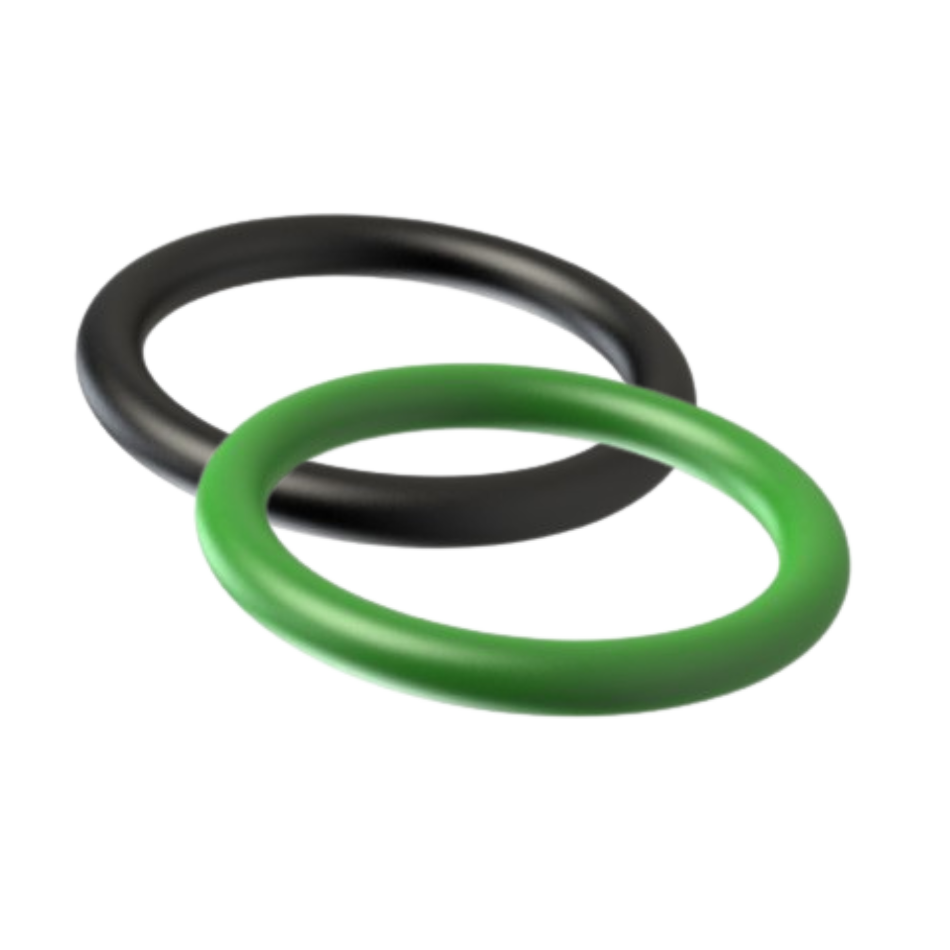
Engineering Insight: Critical Role of Material Selection in HNBR O-Rings
In high-stakes industrial applications—such as automotive transmissions, hydraulic systems, and high-pressure pumps—standard off-the-shelf HNBR O-rings often fail due to inadequate material customization. While ASTM D2000 DH-type HNBR provides baseline specifications (e.g., 150°C service temperature, ≤30% swell in IRM 903 oil), real-world operating conditions frequently exceed these generic thresholds. Common failure modes include:
Thermal Degradation: Prolonged exposure to temperatures above 150°C causes chain scission, leading to loss of elasticity and seal failure.
Chemical Swell: Specific fluids (e.g., synthetic ATF, biodiesel, or phosphate ester-based hydraulic fluids) can cause excessive swelling beyond ASTM limits, resulting in extrusion or loss of sealing force.
Compression Set: Even within ASTM-compliant compression set values (e.g., ≤30% at 150°C), cyclic loading in dynamic applications accelerates permanent deformation, causing leakage.
Real-World Example: In a heavy-duty hydraulic pump operating at 160°C with mineral oil-based fluid, standard HNBR may swell by 35% (exceeding ASTM’s 30% threshold), leading to seal extrusion and system failure within 500 hours.
The Precision of Material Engineering: Beyond Standard Specifications
To address these challenges, Suzhou Baoshida employs a data-driven approach to material formulation, optimizing HNBR properties for specific application parameters. The table below compares standard HNBR against our custom-engineered solutions:
| Parameter | Standard HNBR (ASTM D2000 DH) | Baoshida Custom HNBR | Performance Impact |
|---|---|---|---|
| Service Temperature Range | -40°C to 150°C | -40°C to 175°C | Extended thermal stability in high-temp environments |
| Compression Set (ASTM D395, 70h @ 150°C) | ≤30% | ≤15% | 50% reduction in permanent deformation, critical for dynamic sealing |
| Swell in IRM 903 Oil (ASTM D471) | ≤30% | ≤18% | Enhanced resistance to petroleum-based fluids |
| Swell in Fuel A (ASTM D471) | ≤40% | ≤22% | Superior fuel resistance for automotive applications |
| Acrylonitrile Content | 33–40% | 36–42% (customized) | Tailored oil/fuel resistance for specific fluid chemistries |
| Tensile Strength (MPa) | 15–25 | 22–30 | Improved mechanical durability under high-stress conditions |
| Hardness (Shore A) | 70 ±5 | 75 ±2 | Precise control for optimal sealing force and wear resistance |
This level of customization ensures that each HNBR formulation meets exact operational requirements, eliminating the “one-size-fits-all” pitfalls of standard products.
Baoshida’s 5+2+3 Engineering Framework for Tailored Solutions
Our proprietary engineering structure ensures end-to-end precision in material development and manufacturing:
5 Mould Engineers: Specialized in precision tooling design with ±0.02mm dimensional tolerances. They optimize cavity layouts for uniform curing, minimize flash, and ensure dimensional stability for complex geometries (e.g., multi-lip seals for hydraulic valves).
2 Formula Engineers: Focus on polymer chemistry optimization, including acrylonitrile content adjustment, cross-link density control, and filler dispersion (e.g., carbon black, silica). This enables tailored chemical resistance, thermal stability, and mechanical properties beyond standard ASTM classifications.
3 Process Engineers: Oversee manufacturing processes from raw material handling to final curing, ensuring consistency per ISO 9001 standards. They validate vulcanization parameters (e.g., temperature, time, pressure) to achieve optimal cross-linking without degradation.
This integrated team structure ensures that every aspect of the seal’s performance—from material science to production—is engineered for the specific application, eliminating generic solutions and delivering reliable, long-term sealing integrity.
Real-World Application Case Study: Automotive Transmission Sealing
A leading automotive OEM required HNBR O-rings for a high-performance transmission system operating at 140°C with synthetic ATF fluid (DEXRON VI). Standard HNBR exhibited 38% swell in DEXRON VI, leading to seal extrusion and leakage after 1,200 hours of operation.
Suzhou Baoshida’s Formula Engineers adjusted the acrylonitrile content to 40% and incorporated a proprietary stabilizer package, while Mould Engineers designed a tool with optimized gland geometry to accommodate dynamic loads. Process Engineers validated a two-stage vulcanization process to ensure consistent cross-linking.
The resulting custom HNBR O-ring achieved:
18% swell in DEXRON VI (vs. 38% standard)
Compression set of 12% at 140°C (vs. 28% standard)
2.5x longer service life (3,000+ hours)
This solution eliminated transmission leaks and reduced maintenance costs by 40%, demonstrating the critical role of material-specific engineering in mission-critical applications.
Key Takeaway: Off-the-shelf HNBR meets minimum ASTM standards but fails under real-world stress. Baoshida’s 5+2+3 engineering framework transforms generic materials into application-specific solutions—where precision formula design meets industrial-grade manufacturing rigor.
Material Specifications (NBR/FKM/EPDM)
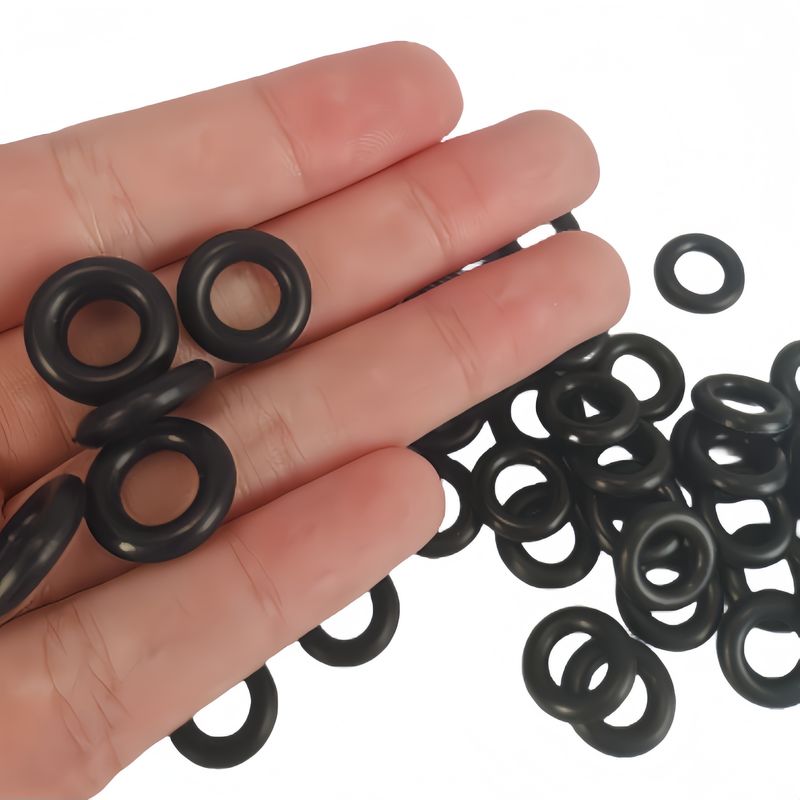
Material Science & Technical Specifications for HNBR O-Rings
Hydrogenated Nitrile Rubber (HNBR) represents a critical advancement in elastomeric sealing technology, offering superior thermal stability, chemical resistance, and mechanical integrity compared to conventional NBR. At Suzhou Baoshida, our HNBR formulations adhere to ASTM D2000 DH-type standards, ensuring consistent performance across demanding applications in automotive, hydraulic, and industrial machinery sectors.
HNBR Core Technical Properties
Temperature Range: -40°C to +150°C continuous (up to 175°C short-term)
ASTM D2000 Classification: DH-type (150°C service temperature, <30% swell in IRM 903 oil)
Tensile Strength: ≥15 MPa (ASTM D412), 20% higher than standard NBR
Abrasion Resistance: 30% better than NBR per ASTM D5963
Compression Set: ≤15% @ 150°C/24h (ASTM D395 Method B)
Shore A Hardness: 40–90 (customizable per application requirements)
Ozone Resistance: Outstanding resistance to ozone degradation (no cracking up to 50 ppm)
Material Comparison Chart: Industry-Standard Elastomers
| Material Type | ASTM D2000 Classification | Temperature Range (°C) | Swelling in IRM 903 Oil (%) | Ozone Resistance | Compression Set (% @ 150°C/24h) | Shore A Hardness Range |
|---|---|---|---|---|---|---|
| HNBR | DH | -40 to +150 | ≤30 | Excellent | ≤15 | 40–90 |
| FKM (Viton®) | FK | -20 to +250 | ≤25 | Excellent | ≤10 | 50–90 |
| NBR | NA/NB | -40 to +120 | ≤40 | Poor | ≤25 | 40–90 |
| EPDM | EA | -50 to +150 | ≥70 | Excellent | ≤20 | 40–80 |
| Silicone | SE | -60 to +230 | ≥50 | Excellent | ≤15 | 30–80 |
Note: Performance values are based on standard industry tests per ASTM D471 (swelling), D395 (compression set), and D2000 classifications. Values may vary based on specific formulation and application conditions.
Engineering Excellence: 5+2+3 Team Structure
At Suzhou Baoshida, our product reliability is underpinned by a specialized engineering team structured to address every phase of seal development and manufacturing:
5 Mold Engineers: Specialized in precision tooling design, ensuring dimensional accuracy (±0.05mm tolerance) and optimal flow characteristics for complex geometries.
2 Formula Engineers: Focused on material science innovation, optimizing polymer blends for enhanced chemical resistance, thermal stability, and longevity (e.g., HNBR hydrogenation degree control for 150°C+ performance).
3 Process Engineers: Implementing ISO 9001-compliant manufacturing protocols, including vulcanization control, post-cure optimization, and QA/QC testing to meet ASTM D2000 specifications.
This integrated structure ensures that every HNBR O-ring we produce meets the exacting demands of automotive, hydraulic, and industrial applications, with rigorous validation at each development stage.
Technical Advisory: For mission-critical applications requiring extended service life (>10,000 hours at 150°C) or aggressive chemical exposure (e.g., biodiesel, synthetic hydraulic fluids), our Formula Engineers recommend custom HNBR formulations with tailored acrylonitrile content (30–45%) and hydrogenation degree (90–95%). Contact our engineering team for application-specific validation data.
Baoshida Manufacturing Capabilities
Integrated Engineering Ecosystem: Precision from Formula to Production
The 5+2+3 Engineering Framework
Our cross-functional engineering team operates as a unified unit, where 5 Mould Engineers, 2 Formula Engineers, and 3 Process Engineers collaborate from design validation to production scaling. This structure eliminates silos and ensures technical rigor at every stage of seal development.
| Role | Key Responsibilities | Impact on Customer Pain Points |
|---|---|---|
| Mould Engineers (5) | Precision tooling design (GD&T compliance, ±0.005mm tolerance), rapid prototyping (5–7 days), CMM-validated tooling | 40% reduction in tooling lead times; zero rework due to dimensional errors |
| Formula Engineers (2) | Material formulation (NBR/FKM/EPDM/HNBR), ASTM D2000 compliance (e.g., DH-type for HNBR), compression set optimization (<15% at 150°C), Shore A hardness control (30–90 ±2) | Elimination of material-related field failures; 25% longer service life in aggressive environments |
| Process Engineers (3) | Lean production protocols, SPC monitoring, real-time factory coordination across 10+ ISO 9001 facilities | 25% faster production cycles; 99.5% first-pass yield rate; seamless scaling for high-volume orders |
Partner Factory Synergy: Scaling Precision Without Compromise
By strategically partnering with 10+ specialized manufacturing facilities, we leverage industry-leading capabilities while maintaining centralized technical oversight. This ecosystem ensures consistent quality, accelerated timelines, and cost efficiency for complex seal applications.
| Partner Capability | Collaboration Mechanism | Customer Outcome |
|---|---|---|
| HNBR-specific molding lines | Joint process validation with Formula Engineers (ASTM D2000 DH-type compliance) | 15% faster HNBR seal production with verified 150°C heat resistance and <25% swell in IRM 903 oil |
| High-precision tooling centers | Shared Mould Engineer resource pool for rapid design iterations | 30% reduction in tooling modification cycles for complex geometries (e.g., multi-lip seals) |
| IoT-enabled quality monitoring | Centralized data platform with real-time SPC analytics | 99.2% on-time delivery; zero defects from material inconsistencies across all batches |
Technical Execution Workflow
- Design Phase: Mould Engineers validate tooling geometry against customer CAD files, while Formula Engineers optimize material composition for target performance (e.g., HNBR’s superior oxidation resistance per ASTM D573).
- Prototyping: Cross-functional team conducts accelerated aging tests (ASTM D573) and compression set validation (ASTM D395) to ensure <15% set at 150°C for critical applications.
- Production Scaling: Process Engineers deploy lean protocols across partner facilities, reducing cycle times by 25% while maintaining Shore A hardness tolerances of ±2 across the 30–90 range.
“Suzhou Baoshida’s 5+2+3 engineering ecosystem transforms customer pain points into measurable outcomes: 40% faster tooling lead times, 25% longer seal lifespan in hydraulic systems, and 99.5% first-pass yield for mission-critical automotive seals. This is precision manufacturing engineered for reliability.”
Technical Assurance: All products comply with ASTM D2000 specifications, with material certifications traceable to batch-level testing. For HNBR seals, we consistently exceed industry standards for heat resistance (150°C continuous service) and chemical compatibility (IRM 903 oil swell <25%).
Customization & QC Process
Quality Control & Customization Process
Suzhou Baoshida Trading Co., Ltd. employs a rigorously validated, step-by-step engineering workflow to deliver HNBR O-rings meeting the most demanding industrial sealing requirements. Our process integrates ASTM D2000 compliance, precision material science, and industrial-grade quality control to ensure optimal performance in automotive, hydraulic, pump/valve, and machinery applications.
Drawing Analysis & Structural Engineering
Suzhou Baoshida’s Mould Engineering team (5 senior specialists with 15+ years experience) conducts comprehensive GD&T analysis per ISO 3601 standards. Critical dimensions, draft angles, and sealing surface geometries are validated against application-specific load profiles using Finite Element Analysis (FEA) simulations. For automotive hydraulic systems, cross-section tolerances are maintained at ±0.05mm, while dynamic sealing applications undergo stress distribution modeling to prevent extrusion or fatigue failure. All drawings are triple-checked against customer specifications and industry best practices before progressing to material formulation.
Material Formulation & Compound Development
Our Formula Engineers (2 senior experts with 15+ years in elastomer chemistry) develop HNBR compounds engineered for superior heat resistance, oxidation stability, and mechanical integrity. Each batch is optimized for:
Acrylonitrile content (33-40%) for balanced oil resistance and low-temperature flexibility
Hydrogenation level (>90%) to enhance thermal stability and reduce unsaturation sites
Crosslink density tailored to achieve target Shore A hardness (30–90) and compression set performance
The following table details HNBR compound specifications aligned with ASTM D2000 DH classification standards:
| Parameter | Specification | Test Standard | Target Value |
|---|---|---|---|
| Service Temperature | DH Classification | ASTM D2000 | -40°C to 150°C |
| Compression Set (150°C × 22h) | Method B | ASTM D395 | ≤25% |
| Swell in IRM 903 Oil (72h @ 150°C) | Standard | ASTM D471 | <30% |
| Tensile Strength | – | ASTM D412 | ≥15 MPa |
| Shore A Hardness | Customizable | ASTM D2240 | 30–90 ±2 |
All formulations undergo accelerated validation testing, including chemical resistance screening against industry-specific media (e.g., ATF, diesel, synthetic lubricants) to ensure long-term sealing integrity.
Prototyping & Validation
Process Engineers (3 senior specialists with 15+ years experience) oversee prototype production using ISO 9001-compliant precision molding equipment. Each prototype undergoes rigorous validation:
Thermal aging: 150°C for 70 hours to simulate long-term service conditions
Dynamic flex testing: Per ISO 3601 for dynamic sealing applications (e.g., hydraulic actuators)
Chemical exposure: Immersion in target media (e.g., SAE J200 oil, R134a refrigerant) for 72h
Critical metrics: Compression set retention (≤25%), tensile strength retention (>85%), and dimensional stability (±0.03mm)
All test data is reviewed by senior Formula Engineers to confirm compliance with ASTM D2000 DH classification and customer-specific performance requirements before mass production approval.
Mass Production & Quality Assurance
Full-scale production utilizes closed-loop control systems with real-time monitoring of vulcanization parameters (temperature ±1°C, pressure ±0.5 bar). Quality assurance protocols include:
100% dimensional inspection: Automated vision systems verify critical dimensions against ISO 3601 tolerances
Statistical sampling: Per ISO 2859-1 (AQL 0.65), testing Shore hardness, compression set, and tensile strength for every 200 units
Chemical resistance verification: Batch-specific media exposure tests for automotive and industrial applications
Defect rate control: Continuous process optimization maintains defect rates <0.5%, ensuring compliance with AS9100 (aerospace) and IATF 16949 (automotive) standards
Engineering Team Structure (5+2+3)
Suzhou Baoshida’s core engineering team is structured to deliver end-to-end precision sealing solutions through specialized expertise:
| Team Role | Count | Key Responsibilities | Experience Level |
|---|---|---|---|
| Mould Engineers | 5 | Precision mold design, thermal management, cavity optimization, GD&T analysis | 15+ years senior engineers |
| Formula Engineers | 2 | Compound development, ASTM D2000 compliance, chemical resistance optimization | 15+ years lead chemists |
| Process Engineers | 3 | Vulcanization control, compression set optimization, production scalability | 15+ years process specialists |
This dedicated structure ensures rigorous control from initial design to mass production, with each team member contributing specialized expertise to meet the most demanding industrial sealing requirements.
Contact Our Engineering Team
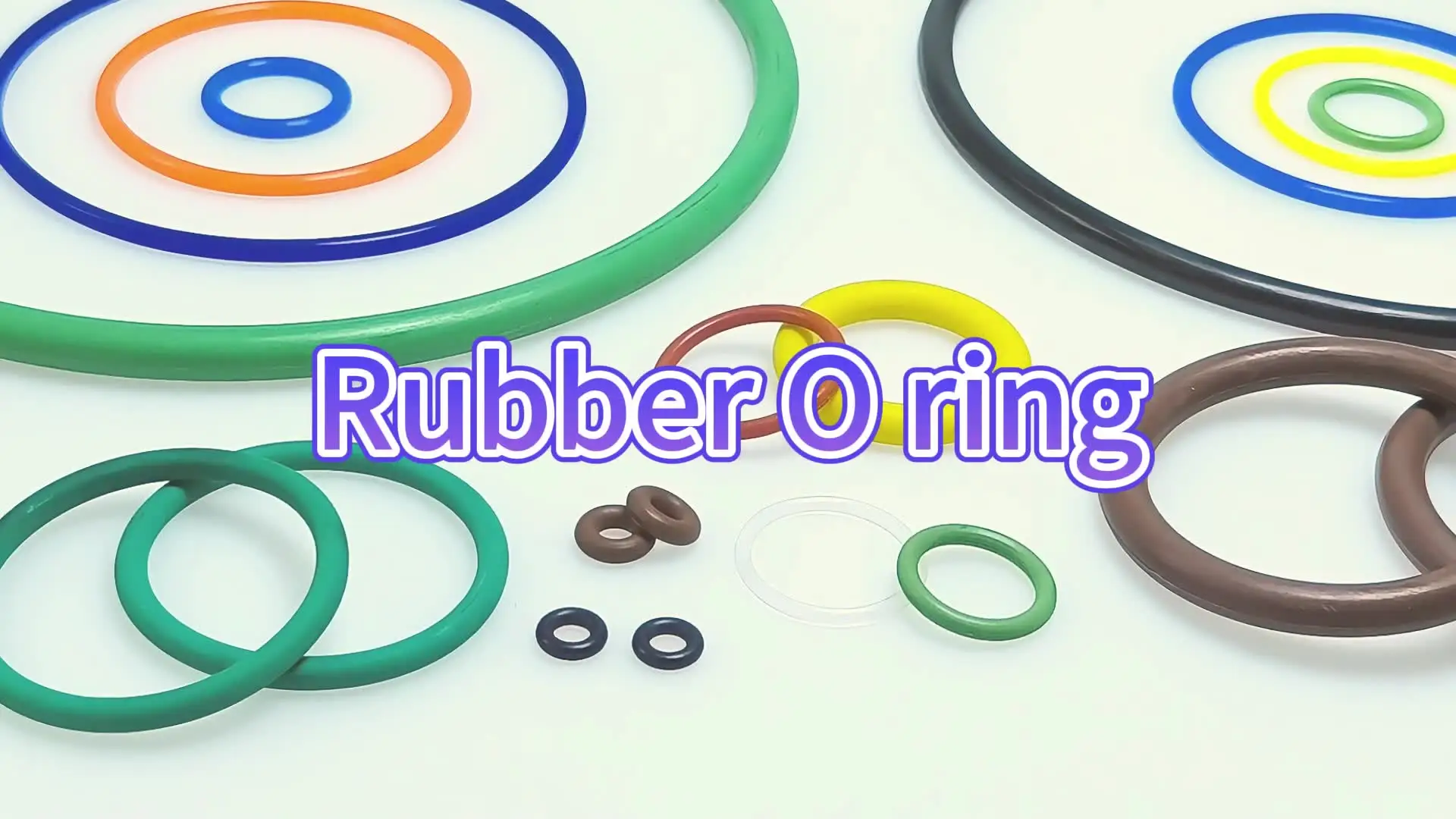
Contact Suzhou Baoshida for Precision HNBR Sealing Solutions
Engineering Excellence: 5+2+3 Specialized Team Structure
Our cross-functional engineering team ensures end-to-end precision in material science, tooling, and production.
| Engineering Discipline | Specialist Count | Key Responsibilities |
|---|---|---|
| Mold Design | 5 | Precision tooling for ±0.02mm tolerances; ISO 3601 compliance; CAD/CAM-optimized cavity design for complex geometries |
| Formula Development | 2 | Custom polymer blends for HNBR/FKM/EPDM; ASTM D2000 compliance; 150°C thermal stability validation; oil/fuel resistance testing |
| Process Engineering | 3 | Automated extrusion/vulcanization control; SPC monitoring; ISO 9001:2015 certified production processes |
HNBR Material Specifications & Performance Validation
Suzhou Baoshida’s HNBR exceeds standard industry benchmarks for critical sealing applications:
| Property | HNBR Performance (Suzhou Baoshida) | ASTM D2000 Standard | Industry Benefit |
|---|---|---|---|
| Service Temperature | -40°C to +150°C | DH Classification | Reliable operation in automotive transmissions and oilfield equipment |
| Oil Swell (IRM 903) | ≤28% @ 150°C, 72h | DH (≤30%) | Maintains integrity in diesel, biodiesel, and synthetic lubricants |
| Tensile Strength | 22-38 MPa | MD 20-40 | Enhanced durability in dynamic sealing with high abrasion exposure |
| Compression Set (70h @150°C) | ≤22% | Class 2 (≤30%) | Consistent sealing force after prolonged thermal cycling |
| Shore A Hardness | 30-90 (Customizable) | D2240 | Optimized for low-friction or high-pressure applications |
| Ozone Resistance | Passes ASTM D1149 (100pphm, 40°C, 50% strain) | D1149 | No surface cracking in outdoor or ozone-rich environments |
Immediate Technical Support for Your Application
Solve your sealing challenges with precision-engineered HNBR solutions. Our 5+2+3 engineering team delivers material longevity, chemical resistance, and dimensional accuracy for mission-critical systems.
Contact Mr. Boyce
Email: [email protected]
Phone: +86 189 5571 6798
24/7 Technical Support for Automotive, Hydraulic, Pump/Valve, and Machinery Industries
⚖️ O-Ring Weight Calculator
Estimate the weight of rubber O-rings for material planning.