
Technical Contents
Engineering Guide: Hypalon Boat
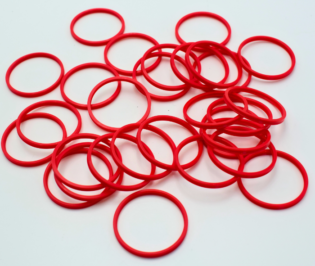
Engineering Insight: The Critical Role of Material Selection in Hypalon Boat Construction
The durability and performance of a Hypalon boat are fundamentally determined by the precision of its material composition and fabrication methodology. While the term “Hypalon” is often used generically in the marine industry, true chlorosulfonated polyethylene (CSM) rubber—originally developed by DuPont—has distinct chemical and mechanical properties that set it apart from imitative or substandard elastomers. Off-the-shelf solutions frequently fail because they substitute genuine CSM with lower-cost, less resilient alternatives or compromise on reinforcement architecture, leading to premature degradation under UV exposure, ozone attack, and mechanical stress.
Industrial-grade Hypalon used in high-performance inflatable and rigid-hull boats must meet stringent criteria for tensile strength, elongation at break, and resistance to environmental aging. Substandard formulations often exhibit poor adhesion between rubber layers and fabric substrates, resulting in delamination after prolonged exposure to saltwater and thermal cycling. Moreover, inconsistent calendering processes and inadequate vulcanization compromise the integrity of the final product, reducing service life and increasing maintenance costs.
At Suzhou Baoshida Trading Co., Ltd., we emphasize engineered material systems tailored to operational demands. This includes selecting the appropriate CSM compound formulation—balancing hardness, flexibility, and chemical resistance—paired with high-tenacity polyester or nylon scrim fabrics. The interface between rubber and fabric must be optimized through proprietary adhesive systems and controlled curing profiles to ensure cohesive bond strength exceeding 80 N/cm.
Another frequently overlooked factor is the compatibility of secondary components such as adhesives, sealants, and repair patches. Non-matched systems can initiate galvanic or chemical incompatibility, accelerating failure at stress points like seams, valves, and attachment fittings. True system integration requires holistic material validation, not component-level substitution.
Below are key specifications that define industrial-grade Hypalon boat material systems:
| Property | Standard Requirement | Test Method |
|---|---|---|
| Tensile Strength | ≥ 14 MPa | ASTM D412 |
| Elongation at Break | ≥ 400% | ASTM D412 |
| Tear Resistance | ≥ 60 kN/m | ASTM D624 |
| Ozone Resistance | No cracking after 100 hrs, 50 pphm | ASTM D1149 |
| Adhesion Strength (fabric-rubber) | ≥ 80 N/cm | ASTM D413 |
| Hardness (Shore A) | 60–70 | ASTM D2240 |
| Low-Temperature Flexibility | No cracking at -30°C | ASTM D746 |
Material selection is not a commodity decision—it is a structural and chemical engineering imperative. Generic or cost-driven alternatives may appear functionally equivalent in short-term trials but fail under sustained operational loads. Suzhou Baoshida Trading Co., Ltd. delivers certified, traceable rubber systems engineered for mission-critical marine applications, ensuring longevity, safety, and total cost of ownership advantages.
Material Specifications
Material Specifications for Hypalon Boat Component Engineering
Suzhou Baoshida Trading Co., Ltd. provides precision-engineered rubber solutions for critical components in hypalon (CSM) inflatable boat manufacturing. While the primary hull material remains chlorosulfonated polyethylene (CSM), complementary seals, gaskets, and fluid-handling parts require specialized elastomers. Viton, Nitrile (NBR), and Silicone formulations are rigorously selected based on operational demands. Each material exhibits distinct chemical, thermal, and mechanical properties essential for marine durability. Hypalon boats operate in aggressive environments—saltwater immersion, UV exposure, fuel contact, and temperature extremes—necessitating OEM-grade material validation per ASTM D2000 and ISO 37 standards.
Viton (FKM) fluorocarbon rubber delivers superior resistance to hydrocarbons, oils, and high-temperature degradation. Its molecular structure ensures stability in fuel systems and engine compartments where nitrile or silicone would fail. Continuous service up to 230°C and intermittent exposure to 260°C make it ideal for exhaust gaskets and fuel-line seals. However, its high cost and poor flexibility below -20°C limit use to high-stress zones. Nitrile (NBR) remains the industry standard for cost-effective oil and fuel resistance. With acrylonitrile content dictating performance, medium-high ACN grades (45-50%) withstand hydraulic fluids and aliphatic hydrocarbons at -30°C to 120°C. Its vulnerability to ozone and weathering necessitates protective coatings in exposed marine applications. Silicone (VMQ) excels in extreme temperature cycling (-60°C to 200°C) and UV resistance but lacks tensile strength for high-pressure seals. Preferred for non-critical deck fittings and electrical insulation, its poor abrasion resistance and permeability to gases restrict structural roles.
All materials undergo accelerated aging per ASTM D573 and salt-spray testing (ASTM B117) to simulate 10-year marine service. Compression set values below 25% after 70 hours at 150°C are mandatory for dynamic seals. Formulations exclude plasticizers prone to migration in seawater immersion.
Comparative Material Specifications for Hypalon Boat Components
| Property | Viton (FKM) | Nitrile (NBR) | Silicone (VMQ) |
|---|---|---|---|
| Temperature Range (°C) | -20 to +230 | -30 to +120 | -60 to +200 |
| Tensile Strength (MPa) | 12–18 (ASTM D412) | 15–25 (ASTM D412) | 5–8 (ASTM D412) |
| Fuel Resistance (B3) | Excellent | Good | Poor |
| Ozone Resistance | Excellent | Poor | Excellent |
| Compression Set (70h/150°C) | ≤15% | ≤25% | ≤20% |
| Shore A Hardness Range | 60–90 | 50–90 | 30–80 |
| Key Marine Applications | Fuel injectors, turbo seals | Hydraulic hoses, pump seals | Light covers, non-critical gaskets |
Suzhou Baoshida mandates lot-specific certification for all rubber compounds, including FTIR validation of polymer composition and Shore A hardness traceability. OEM partners must specify exact service parameters—pressure cycles, fluid types, and dynamic movement—to avoid premature failure. Nitrile remains optimal for cost-driven fuel-contact parts below 100°C, while Viton is non-negotiable for high-temperature combustion zones. Silicone serves niche roles where thermal flexibility outweighs mechanical demands. Material substitution without Baoshida engineering approval risks catastrophic seal failure in marine environments. Consult our technical team for ASTM-compliant formulation adjustments tailored to your vessel’s operational profile.
Manufacturing Capabilities
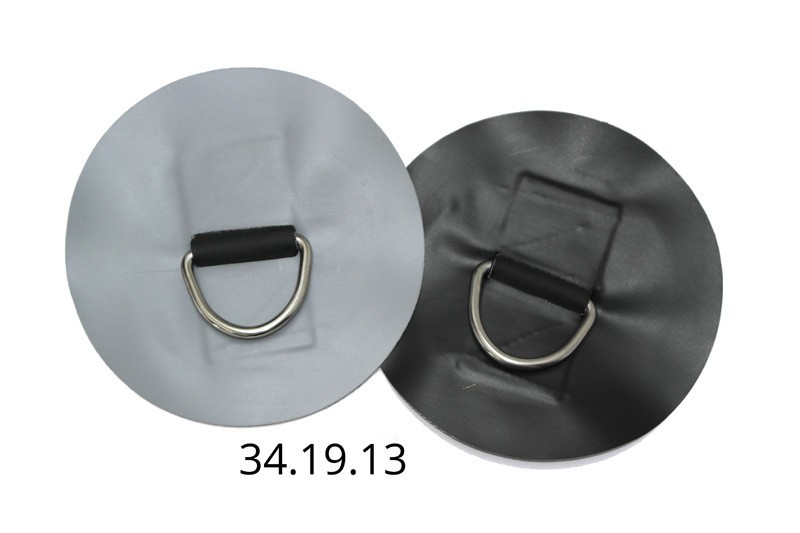
Engineering Capability: Precision-Driven Rubber Solutions for Hypalon Boat Manufacturing
At Suzhou Baoshida Trading Co., Ltd., our engineering capability is anchored in a dedicated team of 5 specialized mould engineers and 2 advanced rubber formula engineers, all focused on delivering high-performance industrial rubber solutions tailored for demanding marine applications such as Hypalon boat manufacturing. Our integrated engineering approach ensures that every component—from extruded profiles to complex bonded seals—meets exacting standards for durability, weather resistance, and long-term structural integrity.
Our mould engineers possess extensive experience in designing and refining precision tooling for rubber extrusion and compression moulding processes. Utilizing CAD/CAM software and advanced simulation tools, they optimize flow dynamics, cure profiles, and dimensional tolerances to ensure repeatability and minimal material waste. This precision is critical in marine environments where even minor deviations can compromise watertight performance or accelerate wear. Each mould is rigorously tested under real-world conditions to validate performance before full-scale production.
Complementing our tooling expertise, our two in-house rubber formulation engineers specialize in chlorosulfonated polyethylene (CSM), the technical polymer commonly known as Hypalon. They develop custom compound formulations that enhance UV resistance, ozone stability, low-temperature flexibility, and adhesion to reinforcing fabrics—key requirements for inflatable and rigid-hull boats exposed to prolonged sunlight, saltwater immersion, and mechanical stress. Our lab conducts accelerated aging tests, tensile analysis, and peel strength validation to ensure every batch meets OEM specifications.
We operate as a full-service OEM partner, providing end-to-end development from prototype to mass production. Our clients benefit from rapid iteration cycles, strict IP confidentiality, and full traceability across batches. Whether engineering co-extruded sealing systems, inflatable collar components, or custom deck fittings, we align material science with functional design to deliver solutions that outperform industry benchmarks.
The following table outlines key technical parameters our engineering team routinely achieves in Hypalon-based marine components:
| Parameter | Typical Value | Test Standard |
|---|---|---|
| Tensile Strength | ≥14 MPa | ASTM D412 |
| Elongation at Break | ≥350% | ASTM D412 |
| Hardness (Shore A) | 50–70 | ASTM D2240 |
| Heat Aging Resistance | ≤20% change in tensile | ASTM D573 |
| Ozone Resistance | No cracking (200 pphm, 40°C, 96h) | ASTM D1149 |
| Adhesion to Fabric | ≥80 N/cm | Internal Peel Test |
| Low-Temperature Flexibility | Pass at -30°C | ASTM D1329 |
By combining deep materials expertise with precision engineering, Suzhou Baoshida delivers reliable, scalable rubber solutions that meet the rigorous demands of modern marine craft. Our OEM framework supports co-development, private labeling, and global logistics, making us a trusted partner for leading boat manufacturers worldwide.
Customization Process
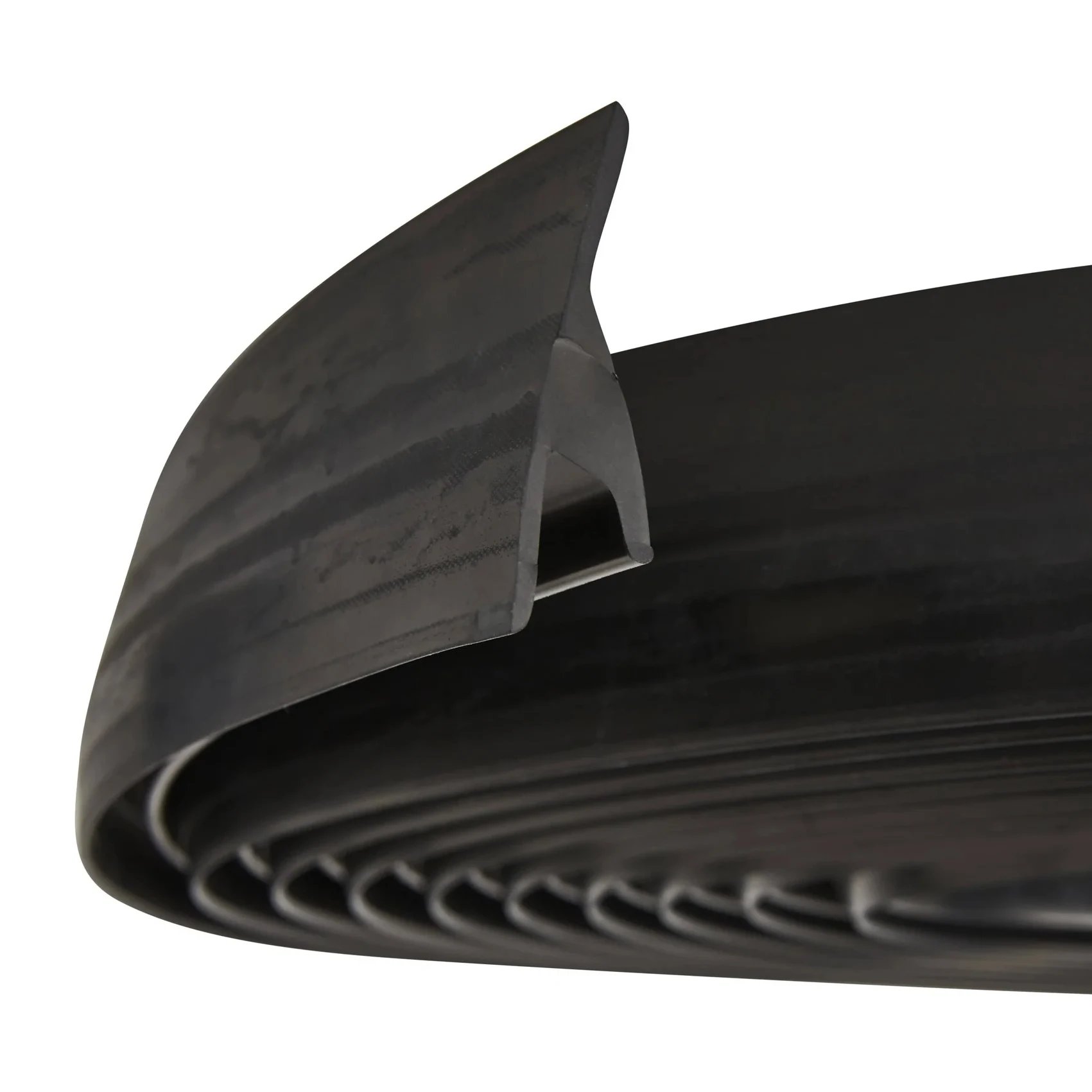
Customization Process for Hypalon Marine Applications
Suzhou Baoshida Trading Co., Ltd. implements a rigorously structured customization protocol for Hypalon (CSM) boat manufacturing, ensuring material performance aligns with extreme marine operational demands. Our four-phase methodology integrates naval engineering requirements with advanced polymer science, eliminating design-to-production discrepancies through iterative technical validation.
Drawing Analysis initiates the process with comprehensive dissection of naval architecture schematics. Our engineering team evaluates hull curvature stress points, seam integrity requirements, and environmental exposure zones per ISO 12215 standards. Critical parameters include UV degradation thresholds, saltwater immersion resistance, and dynamic flex fatigue limits. This phase establishes material thickness tolerances (±0.3mm) and adhesion specifications for fabric substrates, translating geometric data into actionable polymer performance targets.
Formulation leverages Suzhou Baoshida’s proprietary CSM compound database, adjusting chlorosulfonation levels (28–48%) to balance ozone resistance with low-temperature flexibility. Accelerator systems are optimized for marine-grade adhesion, incorporating silica-reinforced fillers to achieve Shore A 65–75 hardness while maintaining tear strength >35 kN/m. Crosslink density is calibrated via peroxide curing to withstand continuous 80°C seawater exposure without plasticizer migration.
Prototyping executes small-batch validation using precision calendering and RF welding. Each prototype undergoes accelerated aging per ASTM D1148 (500h QUV), hydrostatic pressure testing (0.3 MPa for 72h), and dynamic flex cycling (10,000 cycles at -30°C). Dimensional stability is verified against CAD models using laser profilometry, with deviations triggering compound re-engineering. Client feedback integrates within 15 working days to refine material behavior under real-world conditions.
The transition to Mass Production employs statistical process control (SPC) with real-time rheometer monitoring. All batches comply with the specifications detailed below, validated through Suzhou Baoshida’s ISO/IEC 17025-certified laboratory.
| Parameter | Drawing Analysis Target | Prototype Validation | Mass Production Tolerance |
|---|---|---|---|
| Tensile Strength (MPa) | ≥18.0 | 18.5 ± 0.8 | 18.0–20.0 |
| Elongation at Break (%) | ≥450 | 470 ± 25 | 450–500 |
| Tear Resistance (kN/m) | ≥35 | 36.5 ± 1.2 | ≥35 |
| Hardness (Shore A) | 65–75 | 70 ± 3 | 68–73 |
| Heat Aging (100°C/72h) | ΔTensile ≤15% | ΔTensile 12% | ΔTensile ≤15% |
Mass Production deployment utilizes automated calendaring lines with inline spectrophotometric color matching (ΔE ≤0.5) and ultrasonic seam inspection. Suzhou Baoshida maintains lot traceability via blockchain-secured material passports, ensuring every meter of Hypalon meets SOLAS-certified fire resistance (ASTM E662). Our closed-loop quality system reduces scrap rates to <0.8% while accommodating OEM-specific branding through co-extruded identification strips. This end-to-end precision engineering guarantees Hypalon boat components deliver 20+ years of service life in corrosive marine environments.
Contact Engineering Team
For manufacturers and OEMs seeking high-performance rubber solutions tailored to marine applications, Suzhou Baoshida Trading Co., Ltd. stands as a trusted partner in the industrial rubber sector. Specializing in advanced elastomeric materials, we deliver precision-engineered products designed for durability, chemical resistance, and long-term operational stability. Our expertise extends to Hypalon boat manufacturing components, where material integrity directly impacts safety, longevity, and performance in demanding aquatic environments.
Hypalon, known scientifically as chlorosulfonated polyethylene (CSM), offers exceptional resistance to UV radiation, ozone, oxidation, and a broad range of chemicals—making it ideal for inflatable boats, rigid-hull tenders, and marine fender systems. At Suzhou Baoshida, we supply fully formulated CSM compounds optimized for extrusion, calendering, and molding processes common in marine fabrication. Our rubber formulations are engineered to meet exact tensile strength, elongation, and adhesion requirements critical for boat hulls, seams, and protective coatings.
We understand that consistency in material properties is non-negotiable in marine-grade production. That is why every batch undergoes rigorous quality control testing, including hardness verification, aging resistance, and peel strength analysis. Our technical team collaborates directly with clients to fine-tune compound specifications based on processing conditions, environmental exposure, and end-use performance criteria.
The following table outlines key physical properties of our standard marine-grade Hypalon formulation:
| Property | Test Method | Value |
|---|---|---|
| Hardness (Shore A) | ASTM D2240 | 65 ± 5 |
| Tensile Strength | ASTM D412 | ≥14 MPa |
| Elongation at Break | ASTM D412 | ≥350% |
| Heat Aging Resistance (70°C x 168h) | ASTM D573 | Max 20% change in tensile |
| Ozone Resistance | ASTM D1149 | No cracking after 48h |
| Adhesion Strength to Fabric | ASTM D413 | ≥8 kN/m |
| Low Temperature Flexibility | ASTM D1329 | Pass at -30°C |
These values are representative of our baseline marine compound; customization is available upon request to meet specific OEM design or regulatory standards.
For technical inquiries, material sampling, or direct collaboration on Hypalon boat component development, contact Mr. Boyce at Suzhou Baoshida Trading Co., Ltd. With deep expertise in rubber compounding and marine application engineering, Mr. Boyce serves as the primary liaison for international clients seeking reliable, scalable rubber solutions. Reach out via email at [email protected] to discuss formulation adjustments, volume pricing, or technical documentation requirements. Our team responds promptly to all inquiries and supports clients through every phase—from prototyping to full-scale production.
Partner with Suzhou Baoshida to ensure your marine rubber components meet the highest standards of industrial performance and reliability.
⚖️ O-Ring Weight Calculator
Estimate rubber O-ring weight (Approx).