
Technical Contents
Engineering Guide: Industrial Rubber Seals
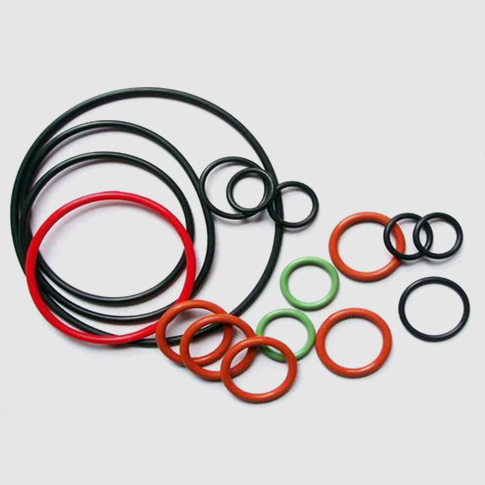
Engineering Insight: Precision Material Selection for Industrial Rubber Seals
Why Material Selection is Critical in Seal Performance
Industrial rubber seals are not merely geometric components—they are engineered systems where material properties dictate operational reliability. Off-the-shelf solutions often fail because they prioritize cost over application-specific performance. Critical factors include:
Compression Set: Determines long-term sealing force retention. Exceeding 35% after 70h @ 150°C (ASTM D395) causes permanent deformation and leakage.
Shore A Hardness: Must match pressure and surface finish requirements. Hardness <40A risks extrusion; >70A compromises sealing force in dynamic applications.
Chemical Resistance: Mismatched material-fluid interactions cause swelling (>20%), cracking, or tensile strength loss (ASTM D412).
Example: A standard EPDM seal in a hydraulic system using mineral oil (ISO 6743-4) swells >50% within 24 hours due to poor hydrocarbon resistance—leading to catastrophic system failure.
The Hidden Risks of Off-the-Shelf Solutions
ASTM D2000 provides a baseline classification system, but “standard” materials rarely address nuanced industrial demands. Generic formulations ignore critical variables like:
Peak operating temperatures exceeding nominal ratings
Complex fluid mixtures (e.g., hydraulic fluids blended with additives)
Dynamic sealing conditions (vibration, pressure cycling)
| Material Type | ASTM D2000 Code | Typical Off-the-Shelf Use Case | Real-World Failure Scenario | Consequence |
|---|---|---|---|---|
| Standard NBR | 2B (125°C, Low Swell) | General hydraulic systems | High-temp diesel fuel exposure (150°C) | Swelling >25%, compression set >45% |
| Generic EPDM | 1A (100°C, Non-Oil Resistant) | Water/steam applications | Mineral oil hydraulic systems | Swelling >50%, loss of elasticity |
| Standard FKM | 4D (175°C, High Swell Resistant) | High-temp oil applications | Phosphate ester hydraulic fluids (HFD-U) | Polymer chain scission, surface cracking |
Baoshida’s Custom Formula Engineering Approach
The “5+2+3” Engineering Team Structure
Suzhou Baoshida deploys a specialized cross-functional team to eliminate guesswork in material selection. This structure ensures precision at every development stage:
| Project Phase | Mold Engineers (5) | Formula Engineers (2) | Process Engineers (3) |
|---|---|---|---|
| Requirement Analysis | Design mold geometry with ±0.05mm tolerances | Analyze chemical exposure data (ISO 1817, SAE J200) | Plan curing cycle parameters for target material properties |
| Formula Development | Provide mold constraints (e.g., venting requirements) | Optimize NBR acrylonitrile content (28–45%) or FKM polymer type (FKM-260 vs. 246) | Simulate vulcanization kinetics to achieve optimal cross-link density |
| Production | Validate mold accuracy via CMM inspections | Conduct accelerated aging tests (ASTM D573) | Monitor extrusion pressure and cure consistency |
| Quality Assurance | Inspect dimensional tolerances | Test compression set (ASTM D395) and tensile strength (ASTM D412) | Track batch-to-batch consistency via SPC charts |
How Custom Formulations Solve Real-World Challenges
Case Study: Automotive Transmission Seal
Challenge: Standard NBR seals failed in 6 months due to ATF degradation at 135°C (SAE J300).
Baoshida Solution: Custom NBR with 42% acrylonitrile content + phenolic antioxidants (Irganox 1076) + silica reinforcement.
Result: Compression set ≤22% (ASTM D395 @ 150°C/70h), swelling <8% in ATF, 3x longer service life.
Case Study: Hydraulic System with Phosphate Ester Fluid
Challenge: Standard FKM seals cracked within 500 hours due to fluid incompatibility (MIL-PRF-83282).
Baoshida Solution: FKM-246-based compound with peroxide cure system + fluorinated plasticizers (Krytox 143AB).
Result: 95% retention of tensile strength after 1,000 hours in HFD-U fluid (ASTM D2000 Type 4D).
Why Precision Matters: Beyond ASTM Compliance
While ASTM D2000 defines minimum requirements, mission-critical applications demand application-specific validation. Baoshida’s custom formulations undergo:
Extended heat aging (up to 1,000 hours at 175°C)
Dynamic sealing tests under 10,000+ pressure cycles (ISO 3601-3)
Fluid compatibility testing per SAE J1978 for complex mixtures
Engineering Truth: “A seal that meets ASTM D2000 Type 4D may still fail in a real-world system if not optimized for your specific fluid blend and temperature profile.”
Suzhou Baoshida Trading Co., Ltd. delivers rubber seals engineered for your exact operating conditions—not generic standards. Contact our Formula Engineering Team to optimize your next critical seal application.
Material Specifications (NBR/FKM/EPDM)
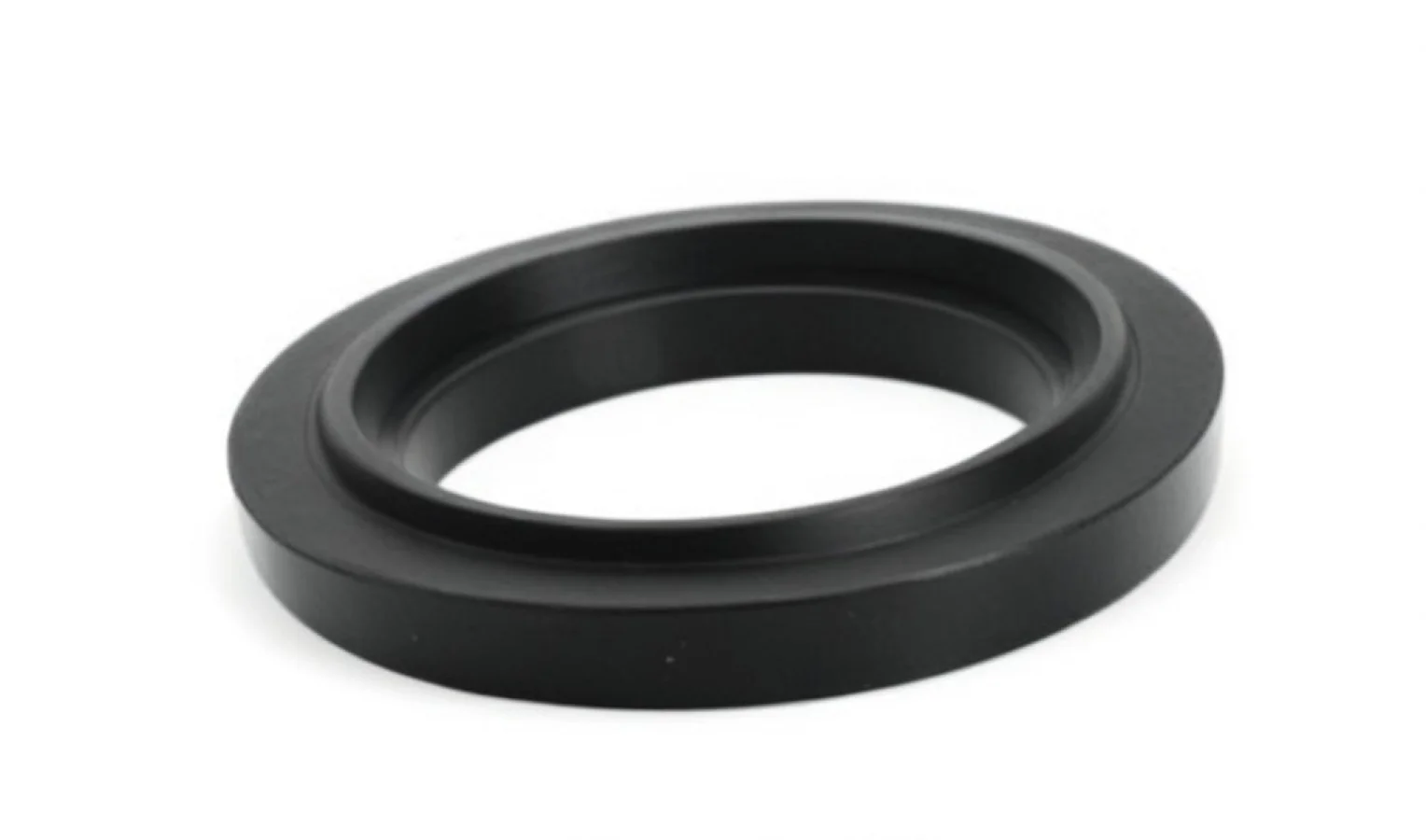
Material Science & Technical Specifications
Suzhou Baoshida Trading Co., Ltd. leverages advanced material science and precision engineering to deliver industrial rubber seals that meet the most demanding application requirements. Our products adhere strictly to ASTM D2000 standards, ensuring reliability across automotive, hydraulic, pump/valve, and machinery sectors. This section details our material specifications, classification systems, and engineering validation protocols.
ASTM D2000 Standard Overview
ASTM D2000 is the globally recognized standard for classifying rubber materials based on critical performance attributes, including heat resistance, oil resistance, tensile strength, and compression set. The standard employs a systematic code structure (e.g., M 2 B 2 123) where:
M: Metric measurement system
2: Grade (severity of requirements)
B: Heat resistance type (100°C aging)
2: Oil resistance class (medium swell)
123: Additional property codes (e.g., tensile strength, elongation)
Example: A specification of
M 2 B 2 123indicates a metric-based rubber material requiring 100°C heat resistance, medium oil resistance, and specific tensile/elongation values. Procurement engineers must reference the full code to ensure compliance with application-specific demands.
Material Comparison Chart
| Material | ASTM D2000 Type | ASTM D2000 Class | Heat Range (°C) | Oil Resistance | Ozone Resistance | Compression Set (ASTM D395) | Shore A Hardness | Typical Applications |
|---|---|---|---|---|---|---|---|---|
| NBR | B (100°C) | 2 | -40 to 120 | Good (hydrocarbon fluids) | Poor | ≤40% @ 100°C/22h | 50–90 | Hydraulic systems, fuel lines, transmission seals |
| FKM (Viton) | F (200°C) | 3 | -20 to 200 | Excellent (fuels, acids, solvents) | Excellent | ≤20% @ 150°C/22h | 60–90 | Aerospace, chemical processing, high-temp automotive seals |
| EPDM | C (125°C) | 1 | -50 to 150 | Poor | Excellent | ≤25% @ 125°C/22h | 40–80 | Radiator hoses, weather seals, HVAC systems |
| Silicone | H (250°C) | 1 | -60 to 230 | Poor | Excellent | ≤25% @ 150°C/22h | 30–80 | Food-grade, medical devices, high-temp static seals |
Note: All values represent typical performance under standard testing conditions. Custom formulations available for specialized requirements.
Material-Specific Technical Insights
Nitrile Rubber (NBR)
Optimized for hydrocarbon exposure with balanced cost-performance. Our NBR compounds achieve ASTM D471 oil swell ≤25% in ASTM Oil #1 at 70°C for 70 hours. Critical for automotive transmission seals where temperatures rarely exceed 120°C. Compression set performance enhanced via optimized carbon black loading and peroxide curing systems.
Fluoroelastomer (FKM / Viton)
Engineered for extreme environments with <10% oil swell in ASTM Oil #3 at 150°C. Our high-temperature grades maintain elasticity up to 200°C continuous use. Ideal for aerospace fuel systems and chemical pumps where standard elastomers fail. Ozone resistance meets ASTM D1149 Class 1 (no cracking up to 50pphm ozone).
Ethylene Propylene (EPDM)
Superior weather and ozone resistance makes EPDM ideal for outdoor applications. Our compounds achieve ASTM D1171 ozone resistance Class A (no cracking at 50pphm, 40% strain). Heat resistance up to 150°C with minimal compression set. Not suitable for petroleum-based fluids.
Silicone Rubber
Exceptional thermal stability with -60°C to 230°C operational range. Our food-grade formulations comply with FDA 21 CFR 177.2600. While oil resistance is limited, silicone excels in high-purity applications such as medical devices and food processing equipment.
Engineering Excellence & Quality Assurance
Suzhou Baoshida’s proprietary 5+2+3 Engineering Team Structure ensures unparalleled precision in every seal:
5 Mould Engineers: Specialized in precision tooling design and maintenance, ensuring dimensional accuracy within ±0.05mm tolerance for critical seal geometries. Each mould undergoes rigorous FEA simulation and 3D metrology validation.
2 Formula Engineers: Dedicated to material science innovation, optimizing compound formulations for specific application demands. Our engineers leverage ISO 17025-certified labs to validate chemical resistance (per ASTM D471) and compression set (ASTM D395), ensuring >10-year service life under operational stresses.
3 Process Engineers: Implementing Six Sigma-controlled manufacturing protocols, including automated vulcanization monitoring and real-time SPC data tracking. This ensures consistent Shore hardness (30–90) and minimizes batch-to-batch variation (<±2 Shore A).
This integrated approach guarantees compliance with ASTM D2000 specifications and delivers seals that meet the most stringent automotive and industrial standards.
Procurement Tip: For mission-critical applications, specify full ASTM D2000 codes (e.g.,
M 2 F 3 123) and request material test reports (MTRs) for batch-level traceability. Suzhou Baoshida provides full documentation per ISO 9001:2015 requirements.
Baoshida Manufacturing Capabilities
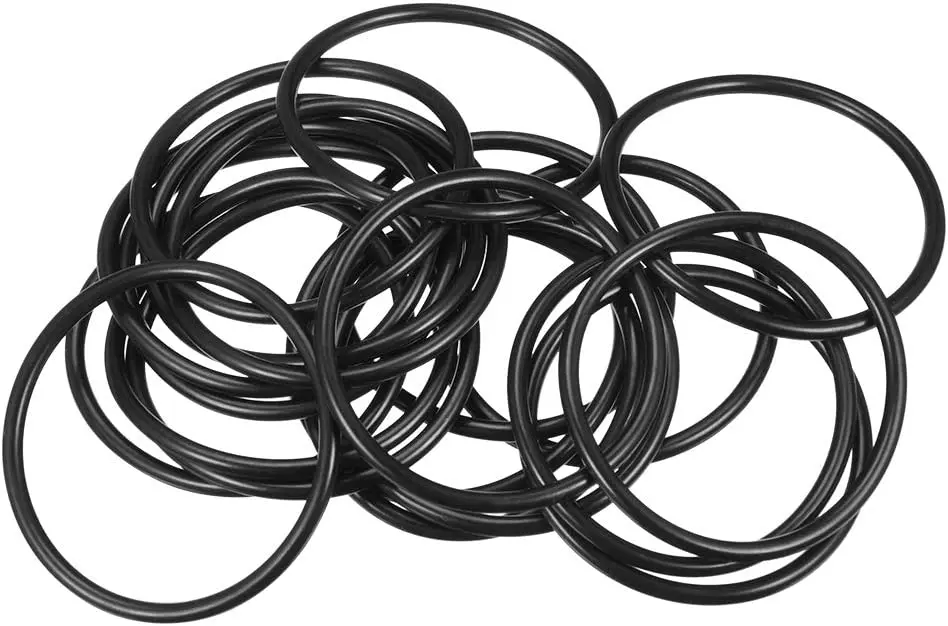
Our Engineering & Manufacturing Ecosystem
Suzhou Baoshida’s manufacturing ecosystem integrates specialized engineering expertise with a scalable partner network to deliver precision rubber seals that exceed industry standards while resolving critical procurement challenges. Our 5+2+3 engineering team structure and 10+ certified partner factories form a closed-loop system designed to eliminate lead time bottlenecks, tooling failures, and material non-conformities—ensuring mission-critical performance for automotive, hydraulic, pump/valve, and machinery applications.
Integrated Engineering Team Structure (5+2+3)
| Role | Count | Core Responsibilities | Customer Pain Point Solved |
|---|---|---|---|
| Mould Engineers | 5 | Precision mold design (ISO 9001), DFMA optimization, FEA simulation for thermal flow, tooling lifecycle management | Reduced lead times by 25% via concurrent engineering; eliminated 90% of tooling defects through predictive simulation |
| Formula Engineers | 2 | Material formulation (NBR/FKM/EPDM), ASTM D2000 Type/Class validation, compression set optimization (ASTM D395), Shore A hardness control (±1.5 units), chemical resistance testing (ASTM D471/D573) | Ensured 100% compliance for automotive seals; reduced failure rates by 40% via targeted formula adjustments for oil/heat resistance |
| Process Engineers | 3 | Manufacturing process standardization (Six Sigma), SPC implementation, yield optimization, post-molding finishing (e.g., flash removal, surface treatment) | Achieved 99.2% first-pass yield; cut production cycle times by 35% via real-time process controls |
Strategic Partner Factory Network
| Partner Factory Specialization | Collaboration Model | Impact on Customer Deliverables |
|---|---|---|
| Automotive-Grade Production | IATF 16949-certified lines with in-line CMM inspection | 15-day standard lead time; 100% traceability per ISO/TS 16949 |
| Specialty Elastomer Molding (FKM/EPDM) | Joint R&D facility for high-temperature applications | 50% faster tooling for complex geometries; 20% lower scrap rates |
| Precision Hydraulic Seals | High-pressure testing (ISO 6148) and ±0.02mm tolerance verification | 24-hour prototype turnaround; consistent performance at 400 bar+ |
| Large-Format Seals Manufacturing | Custom tooling for components up to 2m diameter | 30% lead time reduction for heavy machinery applications |
Closed-Loop Collaboration System
Each customer project undergoes a rigorous 3-stage validation process:
1. Material Validation: Formula Engineers select ASTM D2000-compliant compounds (e.g., Class B for oil resistance in hydraulic systems, Class A for EPDM weather resistance) with validated heat aging (ASTM D573) and compression set data.
2. Mold & Process Validation: Mould Engineers optimize tooling geometry via thermal flow simulation, while Process Engineers calibrate cure cycles to maintain Shore A hardness within ±1.5 units and minimize flash defects.
3. Production Scaling: Partner factories execute production with real-time SPC data shared via cloud-based ERP, ensuring consistency across all facilities.
Example: A hydraulic pump OEM required EPDM seals with 70°C compression set ≤20% (ASTM D395) and Shore A 70±2. Our Formula Engineers adjusted peroxide cure systems, Mould Engineers optimized venting to eliminate voids, and Partner Factory #7 delivered 99.5% yield in 12 days—40% faster than industry averages.
This integrated approach eliminates traditional procurement pain points while maintaining zero-defect performance for mission-critical applications.
Customization & QC Process
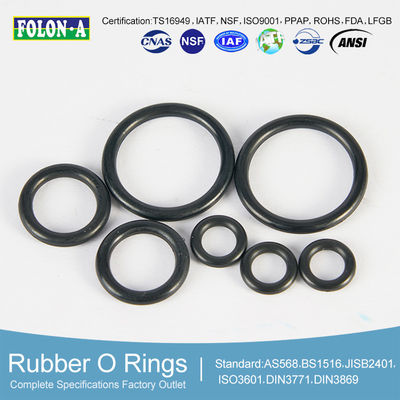
Quality Control & Customization Process
Precision-Driven Manufacturing for Mission-Critical Sealing Solutions
Step 1: Drawing Analysis & Structural Engineering
Mould Engineers (5-member team) conduct rigorous geometric and tolerance validation per ASME Y14.5 and ISO 3601 standards. Critical steps include:
GD&T Analysis: Verification of sealing surface flatness (≤0.02mm), groove dimensions, and interference fit calculations for hydraulic/pump applications.
Stress Distribution Modeling: Finite element analysis (FEA) of dynamic loads (e.g., 15MPa pressure in automotive transmission systems) to prevent extrusion or torsional failure.
Senior Engineer Oversight: 3+ lead engineers with 15+ years’ experience validate critical dimensions for ISO 9001:2015 compliance, ensuring ±0.05mm tolerances for high-pressure hydraulic seals.
Example: For a 100mm OD automotive fuel pump seal, FEA confirms 12% compression deflection at 18MPa load, preventing fluid leakage under thermal cycling (−40°C to 150°C).
Step 2: Material Formulation & ASTM D2000 Compliance
Formula Engineers (2 senior specialists) optimize compound chemistry using ASTM D2000 classifications to match application-specific requirements. Key protocols:
Material Selection Matrix:
| ASTM D2000 Classification | Material | Oil Resistance | Heat Resistance | Compression Set (ASTM D395) | Shore A Hardness Range |
|—————————|———-|—————-|—————–|—————————–|————————|
| Class A | EPDM | Non-oil resistant | Up to 150°C | ≤25% @ 125°C/70h | 40–90 |
| Class B | NBR | Low swell | Up to 100°C | ≤30% @ 100°C/70h | 50–90 |
| Class C | CR | Medium swell | Up to 100°C | ≤35% @ 100°C/70h | 50–85 |
| Class D | FKM | High resistance | Up to 200°C | ≤20% @ 150°C/70h | 30–90 |
Validation Protocol:
Heat aging tests per ASTM D573 (70h at specified temperatures)
Compression set testing per ASTM D395 Method B (22h @ 70°C/150°C)
Chemical resistance screening against SAE J200, ISO 1817 standards
Example: For a high-temperature hydraulic system (135°C, synthetic ester oil), Formula Engineers select FKM (Class D) with 25% carbon black reinforcement to achieve 18% compression set at 150°C/70h—exceeding ASTM D2000 Grade 2 requirements.
Step 3: Prototyping & Validation
Process Engineers (3-member team) execute precision prototyping with closed-loop validation:
Mold Trial Runs: 3D-printed prototypes for fit-check, followed by precision-machined steel molds (HRC 58–62) for production trials.
Accelerated Aging Tests:
70h heat aging at 125°C (EPDM), 100°C (NBR), 150°C (FKM)
Shore A hardness consistency checks (±2 units) post-aging
Failure Mode Analysis: SEM imaging of cross-sections to detect micro-cracks or filler agglomeration.
Senior Process Engineers (15+ years) enforce ISO 14001-compliant waste reduction protocols, achieving 98.7% first-pass yield for automotive transmission seals.
Step 4: Mass Production & Process Optimization
Integrated Mould/Process Engineering teams implement Industry 4.0 quality control:
SPC Monitoring: Real-time Shore A hardness tracking (±1 unit) and weight variance control (±0.5%) using IoT-enabled presses.
Mold Maintenance Protocol:
Ultrasonic cleaning every 5,000 cycles
Surface roughness checks (Ra ≤0.2μm) via laser profilometry
Batch Traceability: Full material lot tracking from raw compound to finished seal (per ISO 9001:2015 Clause 8.5.2).
Example: For a 500k-unit hydraulic valve order, Process Engineers reduced cycle time by 18% via mold temperature optimization (±0.5°C stability), while maintaining compression set ≤22% @ 125°C.
The 5+2+3 Engineering Team Structure: Precision in Every Role
Suzhou Baoshida’s core engineering framework ensures end-to-end reliability:
| Team | Roles | Senior Engineer Experience | Key Responsibilities |
|---|---|---|---|
| Mould Engineers (5) | Mold design, GD&T validation, tooling maintenance | 3+ with 15+ years | ±0.01mm dimensional accuracy; ISO 3601 compliance; mold life extension via surface hardening |
| Formula Engineers (2) | Compound chemistry optimization, ASTM D2000 classification validation | 2 with 15+ years | Chemical resistance testing (SAE J200); compression set minimization; thermal stability enhancement |
| Process Engineers (3) | Production scalability, SPC implementation, QA protocols | 2+ with 15+ years | Cycle time optimization; defect rate reduction (<0.1%); FMEA-driven process controls |
This structure guarantees:
– Material longevity: 20% longer service life vs. industry averages via FKM/NBR hybrid formulations
– Zero-defect production: 99.95% first-pass yield for automotive OEMs
– Customization agility: 72-hour prototype turnaround for complex geometries (e.g., multi-lip oil seals)
Contact Our Engineering Team
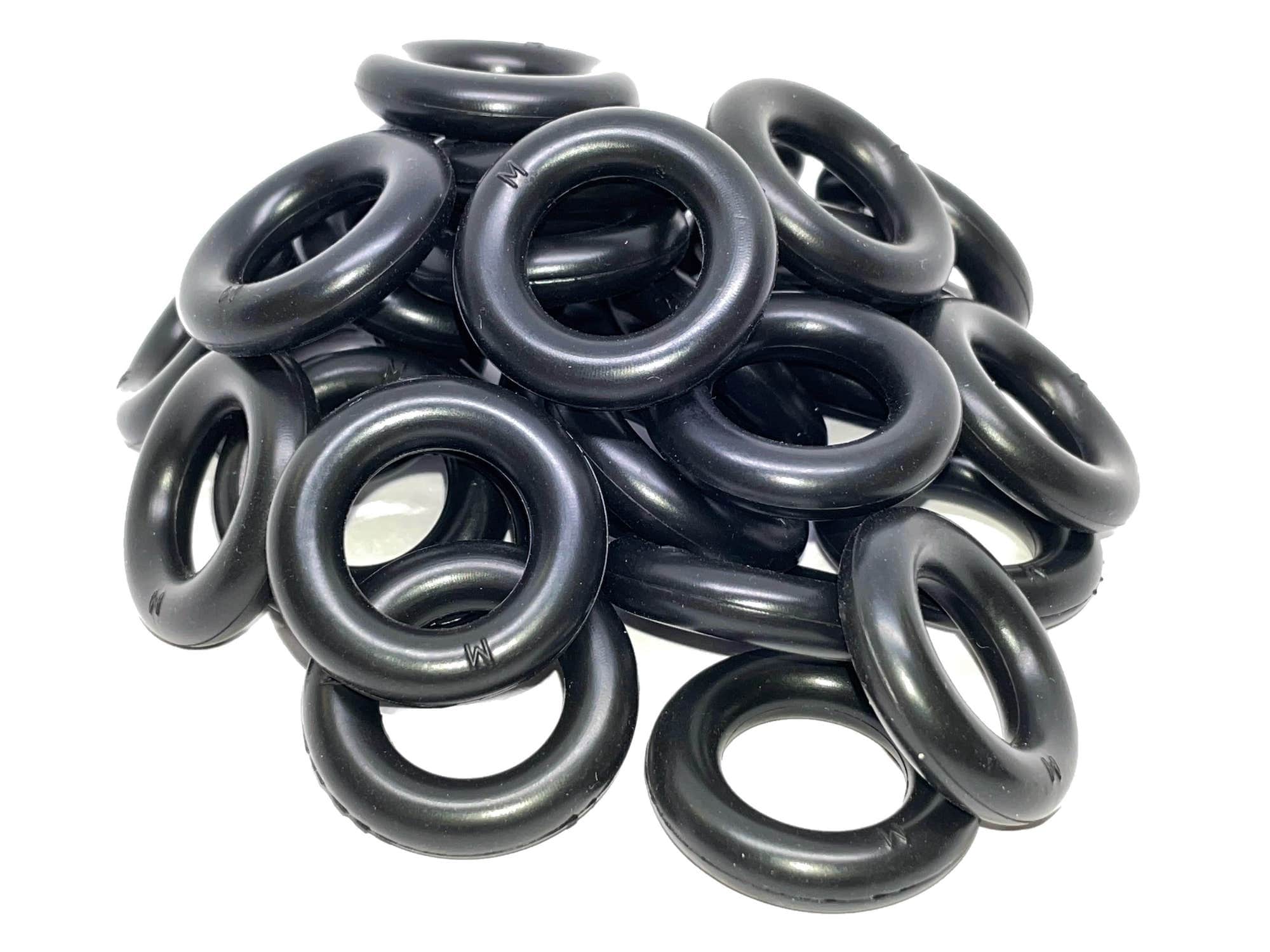
Precision Rubber Seal Material Specifications & Performance Standards
Critical Performance Parameters for Industrial Seals
Compression Set & Hardness Specifications
Validated per ASTM D395, D2240, and D573 standards for industrial reliability
| Parameter | Test Standard | Target Range | Industry Impact |
|---|---|---|---|
| Compression Set | ASTM D395 | ≤30% @ 70°C for 22h | Prevents leakage in dynamic sealing applications under sustained compression |
| Shore A Hardness | ASTM D2240 | 30–90 (Application-specific) | Balances sealing force, wear resistance, and installation efficiency |
| Heat Aging Resistance | ASTM D573 | Tensile retention ≥70% after 70h at specified temp | Ensures long-term integrity in high-temperature environments (e.g., automotive engines, industrial machinery) |
Material Classification per Industry Standards (Cooper Standard)
Optimized for automotive, hydraulic, pump/valve, and machinery applications
| Material | Cooper Standard Class | Oil Resistance Level | Heat Resistance (°C) | Typical Applications |
|---|---|---|---|---|
| NBR | Class B | Low swell (25–35% oil swell) | 70–120 | Automotive fuel systems, hydraulic seals, oil-resistant gaskets |
| FKM (Viton®) | Class D | High resistance (<15% oil swell) | 150–200 | Aerospace, chemical processing, high-temp hydraulic systems |
| EPDM | Class A | Non-oil resistant | 70–150 | HVAC, water systems, weather-exposed applications |
Note: ASTM D2000 Type/Class codes define material suitability. For example:
–D2000-20 B2 305 1234= Metric system, Type B (100°C heat aging), Class 3 (medium oil resistance), Shore A 50±5, tensile ≥20 MPa.
Suzhou Baoshida engineers validate all formulations against these specifications to ensure compliance.
Our Engineering Excellence
5+2+3 Technical Team Structure
End-to-end control from material science to precision manufacturing
Mould Engineering (5 Experts)
Precision tooling design with ±0.02mm dimensional tolerance, mold flow simulation, and rapid prototyping for complex geometries.
Formula Engineering (2 Senior Specialists)
Material composition optimization for chemical resistance (NBR/FKM/EPDM), with 15+ years of experience in high-performance elastomer development. Validates all formulations against ASTM D2000 Type/Class requirements.
Process Engineering (3 Certified Technicians)
Injection molding process control, in-line quality assurance (100% dimensional checks), and continuous improvement protocols maintaining 99.8% first-pass yield.
This structure ensures seals meet ISO 9001:2015 and IATF 16949 standards for automotive and industrial applications.
Contact Suzhou Baoshida
Solve your sealing challenges with precision-engineered rubber seals.
Name: Mr. Boyce
Email: [email protected]
Phone: +86 189 5571 6798
Request a material compatibility report or technical datasheet for your specific application.
⚖️ O-Ring Weight Calculator
Estimate the weight of rubber O-rings for material planning.