
Technical Contents
Engineering Guide: Insulator Rings

Engineering Insight: The Critical Role of Material Selection in Insulator Rings
In the domain of precision rubber seals, insulator rings serve a dual function: electrical isolation and environmental sealing. These components are frequently deployed in high-stakes applications such as automotive ignition systems, industrial sensors, and aerospace electronics, where failure is not an option. Despite their modest size, insulator rings are subjected to extreme thermal cycling, electrical stress, chemical exposure, and mechanical compression. Off-the-shelf solutions often fail in these environments due to a fundamental oversight—improper material selection.
Generic rubber compounds used in standard insulator rings are typically formulated for cost efficiency rather than performance under stress. Materials such as standard nitrile (NBR) or low-grade silicone may appear suitable on paper but lack the consistency and stability required in mission-critical sealing. For instance, NBR degrades rapidly under prolonged exposure to ozone and high temperatures, while unmodified silicone can exhibit poor tensile strength and compression set resistance. These deficiencies lead to premature cracking, loss of dielectric integrity, and ultimately, system failure.
At Suzhou Baoshida Trading Co., Ltd., we emphasize engineered material solutions tailored to the operational profile of the application. High-performance elastomers such as fluorosilicone (FVMQ), ethylene propylene diene monomer (EPDM), and perfluoroelastomers (FFKM) are selected based on rigorous analysis of temperature range, chemical compatibility, electrical resistance, and mechanical load.
Fluorosilicone, for example, combines the wide temperature range of silicone with enhanced fuel and oil resistance, making it ideal for aerospace and turbocharger applications. EPDM offers superior resistance to steam, water, and polar solvents, fitting for industrial sensor housings. FFKM, though costly, delivers unmatched chemical inertness and thermal stability, suitable for extreme downhole or semiconductor environments.
The failure of off-the-shelf insulator rings often stems from a one-size-fits-all approach that ignores the interplay between material properties and application dynamics. A ring functioning reliably at 150°C in dry air may catastrophically degrade at 180°C in the presence of nitric acid vapor—conditions indistinguishable in a generic catalog spec.
Material selection is not a secondary consideration—it is the foundation of reliability. Our engineering process begins with a comprehensive review of the operating environment, followed by compound customization, accelerated life testing, and iterative validation. This ensures that every insulator ring we supply performs as intended, over its entire service life.
Below is a comparison of key elastomers used in precision insulator rings:
| Material | Temperature Range (°C) | Dielectric Strength (kV/mm) | Key Chemical Resistance | Typical Applications |
|---|---|---|---|---|
| NBR | -30 to +100 | 15–20 | Aliphatic hydrocarbons | Low-cost automotive seals |
| Silicone (VMQ) | -60 to +200 | 20–25 | Oxidation, UV | General electrical insulation |
| Fluorosilicone (FVMQ) | -60 to +200 | 18–22 | Fuels, oils, solvents | Aerospace, turbo systems |
| EPDM | -50 to +150 | 20–28 | Water, steam, alkalis | Industrial sensors, cooling systems |
| FFKM | -15 to +300 | 15–20 | Acids, bases, solvents | Semiconductor, oil & gas |
Material Specifications
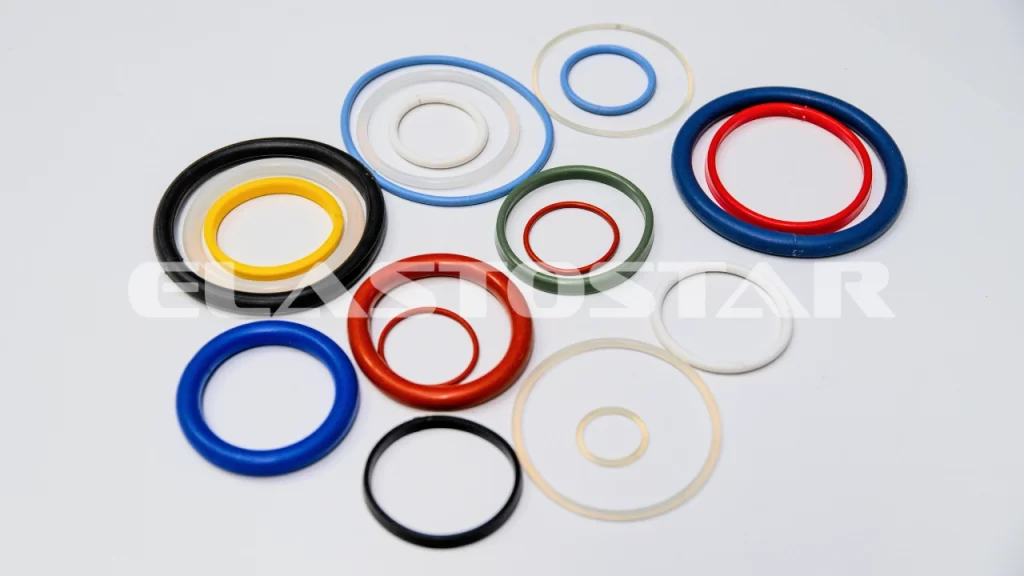
Material Specifications for Precision Insulator Rings
Suzhou Baoshida Trading Co., Ltd. delivers engineered rubber insulator rings meeting stringent OEM requirements for electrical isolation, environmental sealing, and mechanical stability. Material selection directly impacts performance in demanding applications including automotive ignition systems, aerospace connectors, and industrial power distribution. Below we detail critical specifications for Viton (FKM), Nitrile (NBR), and Silicone (VMQ) compounds, emphasizing quantifiable properties validated per ASTM D2000 and ISO 37 standards. Each material addresses distinct operational challenges through tailored polymer chemistry, filler systems, and vulcanization protocols.
Viton fluorocarbon elastomers provide superior resistance to high-temperature degradation, aggressive fuels, and synthetic lubricants. Their perfluorinated molecular structure ensures stability in continuous service up to 230°C, with short-term excursions to 300°C. Viton insulator rings maintain dielectric integrity in corrosive chemical environments where hydrocarbon-based elastomers fail, making them essential for turbocharger housings and downhole drilling equipment. Nitrile butadiene rubber offers optimal balance of cost efficiency and resistance to petroleum derivatives, hydraulic fluids, and aliphatic hydrocarbons. With a functional range of -40°C to +120°C, NBR excels in automotive fuel injection systems and hydraulic power units where ozone and weathering exposure is controlled. Silicone’s siloxane backbone delivers exceptional flexibility from -60°C to +200°C, coupled with high-volume resistivity (>1×10¹⁴ Ω·cm) for critical electrical insulation. Its inherent flame resistance (UL94 V-0) suits aerospace wiring harnesses and medical device components, though tensile strength limitations necessitate precise dimensional control during molding.
All compounds undergo rigorous compression set testing per ASTM D395 to ensure long-term sealing force retention. Hardness is maintained within ±5 Shore A units across production batches using calibrated rheometers. Critical fluid resistance data is derived from 70-hour immersions in ASTM No. 3 oil at 100°C, with volume swell strictly controlled to ≤20% for Viton and NBR grades.
Material Performance Comparison
| Material | ASTM Designation | Temperature Range (°C) | Tensile Strength (MPa) | Fluid Resistance (ASTM No. 3 Oil) | Compression Set (70h/100°C) |
|---|---|---|---|---|---|
| Viton (FKM) | M3BM810 | -20 to +230 | 15–20 | Excellent (Swelling ≤5%) | ≤20% |
| Nitrile (NBR) | N4BC610 | -40 to +120 | 18–25 | Good (Swelling ≤15%) | ≤30% |
| Silicone (VMQ) | P2LL640 | -60 to +200 | 6–9 | Poor (Swelling ≥40%) | ≤25% |
Strategic material selection requires correlating operational parameters with compound limitations. Viton is indispensable for extreme chemical/thermal exposure but incurs higher material costs. NBR remains the economical solution for standard oil/fuel applications below 120°C. Silicone dominates cryogenic and high-purity electrical scenarios despite lower mechanical strength. Suzhou Baoshida’s technical team collaborates with OEMs to validate material suitability through application-specific testing protocols, ensuring insulator rings meet ISO 1307 dimensional standards while exceeding IEC 60587 electrical tracking requirements. Final compound formulations are optimized for injection molding precision to achieve ±0.1mm tolerances critical for insulator ring functionality.
Manufacturing Capabilities

Engineering Capability: Precision Development for Insulator Rings
At Suzhou Baoshida Trading Co., Ltd., our engineering capability in the development of precision rubber insulator rings is anchored in deep material science expertise and advanced mold design proficiency. With a dedicated team of five certified mold engineers and two specialized rubber formula engineers, we deliver technically robust sealing solutions tailored to the exacting demands of industrial, automotive, and electrical applications. Our integrated approach ensures that every insulator ring is engineered for optimal performance under extreme thermal, electrical, and mechanical conditions.
Our mold engineering team leverages state-of-the-art CAD/CAM software, including SolidWorks and AutoCAD, to design high-precision molds with tight tolerances down to ±0.05 mm. Each mold undergoes rigorous simulation analysis to predict material flow, shrinkage, and parting line behavior, minimizing trial iterations and ensuring first-time-right production. This precision is critical for insulator rings, where dimensional accuracy directly impacts electrical insulation performance and sealing integrity.
Complementing our mold design strength is our in-house rubber compounding capability. Our two formula engineers specialize in developing custom elastomer formulations that meet specific dielectric strength, temperature resistance, and chemical compatibility requirements. We routinely formulate compounds using silicone (VMQ), ethylene propylene diene monomer (EPDM), and fluorocarbon (FKM) rubbers, optimized for volume resistivity exceeding 1×10¹⁵ Ω·cm and dielectric strength above 20 kV/mm. These formulations are validated through accelerated aging tests, thermal cycling, and high-potential (hi-pot) testing to ensure long-term reliability in high-voltage environments.
Our OEM service model is built on collaborative engineering. Clients provide performance specifications or application constraints, and our team responds with material selection guidance, 3D mold designs, and prototype samples within 15–20 days. We support low-volume pilot runs and scale seamlessly to high-volume production, maintaining consistency through statistical process control (SPC) and first-article inspection (FAI) protocols.
All insulator rings are manufactured under ISO 9001-certified processes, with full traceability from raw material batch to finished part. We also offer secondary operations such as cryogenic deflashing, laser marking, and automated visual inspection to meet the cleanliness and identification requirements of sensitive electrical systems.
The following table outlines key technical specifications achievable for custom insulator rings:
| Parameter | Typical Value / Range | Test Standard |
|---|---|---|
| Material Options | VMQ, EPDM, FKM, NBR | ASTM D1418 |
| Hardness (Shore A) | 40–80 | ASTM D2240 |
| Operating Temperature Range | -60°C to +250°C (material-dependent) | ASTM D1329 / D1229 |
| Volume Resistivity | ≥1×10¹⁵ Ω·cm | ASTM D257 |
| Dielectric Strength | ≥20 kV/mm | ASTM D149 |
| Tolerance (ID/OD) | ±0.05 mm to ±0.15 mm | ISO 3302-1 (Class M2) |
| Compression Set (70 hrs, 70°C) | ≤20% | ASTM D395 |
Through the synergy of advanced mold engineering and proprietary rubber formulation, Suzhou Baoshida delivers insulator rings that meet the highest standards of electrical safety and mechanical precision. Our OEM framework ensures full customization without compromising scalability or quality.
Customization Process

Customization Process for Precision Rubber Insulator Rings
At Suzhou Baoshida Trading Co., Ltd., our customization process for insulator rings integrates material science with precision manufacturing to ensure optimal electrical insulation and mechanical performance. This four-phase workflow eliminates design-to-production gaps, reducing time-to-market while meeting stringent OEM specifications.
Drawing Analysis
We initiate with rigorous GD&T (Geometric Dimensioning and Tolerancing) validation of client-provided drawings. Critical dimensions—inner/outer diameter concentricity, cross-section tolerance (±0.05mm), and surface finish (Ra ≤ 3.2μm)—are cross-referenced against application parameters including voltage load, thermal cycling, and compression requirements. Finite element analysis (FEA) simulates stress distribution under operational loads, identifying potential failure points before material selection. Non-conformities trigger collaborative engineering reviews to refine feasibility without compromising performance.
Formulation Development
Material selection is dictated by the insulator ring’s operational environment. Our rubber formula engineers deploy proprietary compound libraries to match elastomer properties to client demands. Key considerations include dielectric strength (>20 kV/mm), volume resistivity (>1×10¹⁵ Ω·cm), and thermal stability. Below outlines standard elastomer options and their validated performance ranges:
| Parameter | EPDM Standard Range | FKM Standard Range | Test Method | Criticality |
|---|---|---|---|---|
| Hardness (Shore A) | 50–80 | 60–85 | ASTM D2240 | High |
| Temp. Range (°C) | -50 to +150 | -20 to +230 | ISO 376 | High |
| Tensile Strength | 10–20 MPa | 12–18 MPa | ASTM D412 | Medium |
| Compression Set | ≤25% (100h/100°C) | ≤20% (70h/200°C) | ASTM D395 | High |
| Volume Resistivity | >1×10¹⁴ Ω·cm | >1×10¹⁵ Ω·cm | IEC 60093 | Critical |
Compounds undergo iterative lab-scale mixing to optimize filler dispersion, cure kinetics, and electrical homogeneity. All formulations comply with RoHS/REACH and client-specific regulatory frameworks.
Prototyping and Validation
Precision-molded prototypes (±0.1mm tolerance) are produced using production-intent tooling. Each batch undergoes accelerated life testing: 1,000-hour thermal aging per ASTM D573, dielectric breakdown verification at 150% operational voltage, and compression set measurement after 500 compression cycles. Dimensional reports with CMM (Coordinate Measuring Machine) data and material certificates are provided within 15 days. Client approval requires zero critical deviations in electrical or sealing performance.
Mass Production
Approved designs transition to automated production lines with real-time SPC (Statistical Process Control). Every lot is 100% visually inspected for flash/parting lines and sampled for hardness, tensile strength, and electrical integrity per AQL 1.0. Traceability is maintained via laser-etched batch codes linked to raw material certificates and process parameters. Production throughput scales from 5,000 to 500,000 units monthly with consistent ±0.15mm dimensional repeatability.
This structured approach ensures insulator rings deliver uninterrupted service in high-voltage transformers, switchgear, and EV power systems. Suzhou Baoshida’s engineering-led customization mitigates field failure risks while aligning with global OEM quality benchmarks. Partner with us to transform specifications into failure-resistant components.
Contact Engineering Team

Contact Suzhou Baoshida for Precision Insulator Ring Solutions
When sourcing high-performance insulator rings for demanding industrial applications, precision, material integrity, and manufacturing consistency are non-negotiable. At Suzhou Baoshida Trading Co., Ltd., we specialize in engineered rubber seals designed to meet the exacting standards of the automotive, aerospace, energy, and electronics sectors. Our insulator rings are manufactured under strict quality controls to ensure dielectric strength, thermal stability, and long-term sealing reliability in high-voltage and high-stress environments.
We understand that every OEM and Tier-1 supplier has unique performance criteria. Whether you require custom formulations for extreme temperature resistance, low outgassing in vacuum environments, or compliance with UL, RoHS, or REACH standards, our technical team is equipped to support your project from concept to production. Our facility integrates advanced compounding, precision molding, and rigorous in-house testing to deliver insulator rings that perform consistently across millions of operational cycles.
To accelerate your next design cycle or resolve a critical sealing challenge, we invite you to contact Mr. Boyce, our dedicated OEM Manager and Rubber Formula Engineer. With over 12 years of experience in elastomer science and industrial sealing systems, Mr. Boyce leads technical collaboration with global clients, ensuring material selection, tooling design, and process validation align perfectly with your engineering requirements.
Reaching out is the first step toward a partnership built on technical precision and responsive service. Mr. Boyce is available to discuss material options, prototype timelines, volume production capacity, and compliance documentation. We support both standard and custom geometries, including tight-tolerance insulator rings with complex cross-sections and multi-material configurations.
For fastest response, please email Mr. Boyce directly at [email protected]. Include your project specifications, target volumes, and any relevant drawings or performance conditions. We respond to all technical inquiries within 4 business hours and can provide initial material recommendations and feasibility assessments within 24–48 hours.
Below are typical technical specifications for our standard silicone-based insulator rings. Custom formulations in EPDM, FKM (Viton®), and specialty fluoroelastomers are available upon request.
| Property | Test Method | Typical Value |
|---|---|---|
| Hardness (Shore A) | ASTM D2240 | 50–80 ±5 |
| Tensile Strength | ASTM D412 | ≥8.0 MPa |
| Elongation at Break | ASTM D412 | ≥200% |
| Dielectric Strength | ASTM D149 | ≥18 kV/mm |
| Volume Resistivity | ASTM D257 | ≥1.0 × 10¹⁵ Ω·cm |
| Operating Temperature Range | — | -60°C to +250°C |
| Compression Set (22h, 150°C) | ASTM D395 | ≤25% |
All values are indicative and subject to variation based on compound formulation and application requirements. Final specifications are validated through client-specific testing protocols.
Partner with Suzhou Baoshida to ensure your insulator rings meet the highest benchmarks in electrical insulation and mechanical durability. Contact Mr. Boyce today at [email protected] to initiate a technical consultation.
⚖️ O-Ring Weight Calculator
Estimate rubber O-ring weight (Approx).