
Technical Contents
Engineering Guide: Kevlar Nomex Fabric
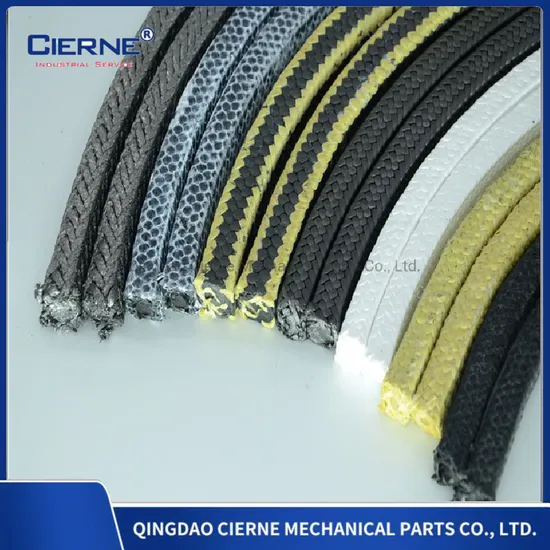
Engineering Insight: Kevlar® and Nomex® Fabric in Industrial Rubber Solutions
Material selection in high-performance industrial applications is not a matter of convenience—it is a decisive engineering variable that directly impacts system reliability, safety, and lifecycle cost. In environments involving extreme thermal exposure, mechanical stress, or chemical aggression, off-the-shelf textile reinforcements frequently fail to meet operational demands. This is particularly evident in the integration of aramid-based fabrics such as Kevlar® (para-aramid) and Nomex® (meta-aramid) within rubber composite systems. These materials are not interchangeable commodities; their distinct molecular architectures confer specialized performance characteristics that must be precisely matched to application requirements.
Kevlar® is renowned for its exceptional tensile strength, thermal stability, and resistance to abrasion. Its high modulus enables it to bear significant mechanical loads, making it ideal for dynamic applications such as high-pressure hydraulic hoses, conveyor belting, and vibration-damping mounts. However, Kevlar® exhibits limited resistance to prolonged UV exposure and hydrolysis under high humidity and temperature, necessitating protective encapsulation within the rubber matrix. In contrast, Nomex® excels in thermal and flame resistance, maintaining structural integrity at continuous operating temperatures up to 220°C and withstanding short-term excursions beyond 400°C. This makes it the preferred reinforcement in fire-resistant ducting, electrical insulation, and protective apparel integrated into industrial rubber assemblies.
The failure of generic fabric-reinforced rubber components often stems from mismatched material properties. Standard polyester or nylon fabrics degrade rapidly under thermal cycling or flame exposure, leading to delamination, loss of burst strength, and catastrophic system failure. Moreover, poor interfacial adhesion between the fabric and rubber compound—often due to inadequate surface treatment or incorrect polymer pairing—further compromises performance. Kevlar® and Nomex® require specialized adhesion promoters, such as resorcinol-formaldehyde-latex (RFL) dips, to ensure durable bonding with EPDM, NBR, or CR rubber matrices.
At Suzhou Baoshida Trading Co., Ltd., we emphasize engineered material pairing over generic substitution. Our technical team evaluates service conditions—temperature profile, flex frequency, chemical exposure, and pressure cycles—to specify the optimal aramid fabric grade and coating configuration. This precision approach mitigates premature in-service degradation and extends product lifecycle in mission-critical applications.
The following table summarizes key technical specifications of Kevlar® and Nomex® fabrics relevant to rubber reinforcement:
| Property | Kevlar® (para-aramid) | Nomex® (meta-aramid) |
|---|---|---|
| Tensile Strength (MPa) | 3,620 | 300–500 |
| Modulus (GPa) | 70–112 | 4–7 |
| Elongation at Break (%) | 3.5–4.0 | 25–35 |
| Continuous Use Temperature | -196°C to +204°C | -269°C to +220°C |
| Flame Resistance (ASTM D6413) | Self-extinguishing | Inherently flame-resistant |
| Chemical Resistance | Excellent (except strong acids/bases) | Good (resists most solvents, acids, alkalis) |
| UV Stability | Moderate (requires protective coating) | Good |
Material integrity begins with informed selection. In industrial rubber solutions, Kevlar® and Nomex® are not upgrades—they are engineered necessities.
Material Specifications
Material Specifications: Critical Rubber Compound Selection for Industrial Sealing Systems
Suzhou Baoshida Trading Co., Ltd. emphasizes precise material selection for industrial rubber components. While Kevlar and Nomex fabrics serve critical roles in high-temperature textiles and composites, this section addresses core elastomer specifications within our Industrial Rubber Solutions portfolio. Viton (FKM), Nitrile (NBR), and Silicone (VMQ) represent foundational compounds for sealing, gasketing, and vibration damping in demanding OEM applications. Misapplication of textile-reinforced fabrics versus elastomeric compounds risks premature failure; thus, rigorous technical alignment with operational parameters is non-negotiable.
Viton fluorocarbon rubber delivers exceptional chemical resistance against fuels, oils, and aggressive solvents, operating continuously from -20°C to +230°C. Its molecular stability under extreme heat makes it indispensable for aerospace and automotive fuel systems. Nitrile butadiene rubber offers optimal cost-performance balance for petroleum-based fluid exposure, with standard grades functional between -40°C and +120°C. NBR dominates hydraulic seals and O-rings where moderate heat and fuel resistance suffice. Silicone rubber provides unmatched flexibility across -60°C to +200°C ranges with excellent ozone and weathering resistance, though its lower tensile strength necessitates design adjustments for high-pressure dynamic seals.
Compression set resistance defines long-term sealing integrity. Viton achieves <20% set after 70 hours at 150°C per ASTM D395, critical for static seals in engine compartments. Nitrile typically exhibits 15-30% set at 100°C, requiring careful groove design in transmission applications. Silicone maintains elasticity with 20-40% set at 200°C but suffers in high-compression-load scenarios. Fluid compatibility must be validated per ISO 1817; for example, NBR swells >20% in phosphate ester hydraulic fluids, mandating Viton substitution.
The comparative analysis below details essential properties per ASTM/ISO standards. All data reflects standard compound formulations; custom modifications for specific OEM requirements are achievable through our formula engineering team.
| Property | Viton (FKM) | Nitrile (NBR) | Silicone (VMQ) |
|---|---|---|---|
| Temperature Range (°C) | -20 to +230 | -40 to +120 | -60 to +200 |
| Tensile Strength (MPa) | 10-15 | 15-25 | 5-10 |
| Elongation at Break (%) | 150-300 | 200-500 | 200-700 |
| Compression Set (ASTM D395) | <20% @ 150°C/70h | 15-30% @ 100°C/70h | 20-40% @ 200°C/70h |
| Fluid Resistance | Excellent (fuels, acids) | Good (petroleum oils) | Poor (oils, fuels) |
| Key Industrial Applications | Fuel injectors, chemical seals | Hydraulic systems, gaskets | Medical devices, extreme cold seals |
Suzhou Baoshida mandates application-specific validation through our OEM collaboration protocol. Standard compound datasheets provide baseline data, but real-world variables like dynamic stress, fluid mixtures, and cyclic temperature swings necessitate joint engineering review. Our formula engineering team adjusts polymer architecture, filler systems, and cure kinetics to meet exacting OEM performance thresholds. Contact our technical department with operational parameters for compound optimization. Precision in material selection prevents field failures and extends product lifecycle in critical industrial systems.
Manufacturing Capabilities
Engineering Capability
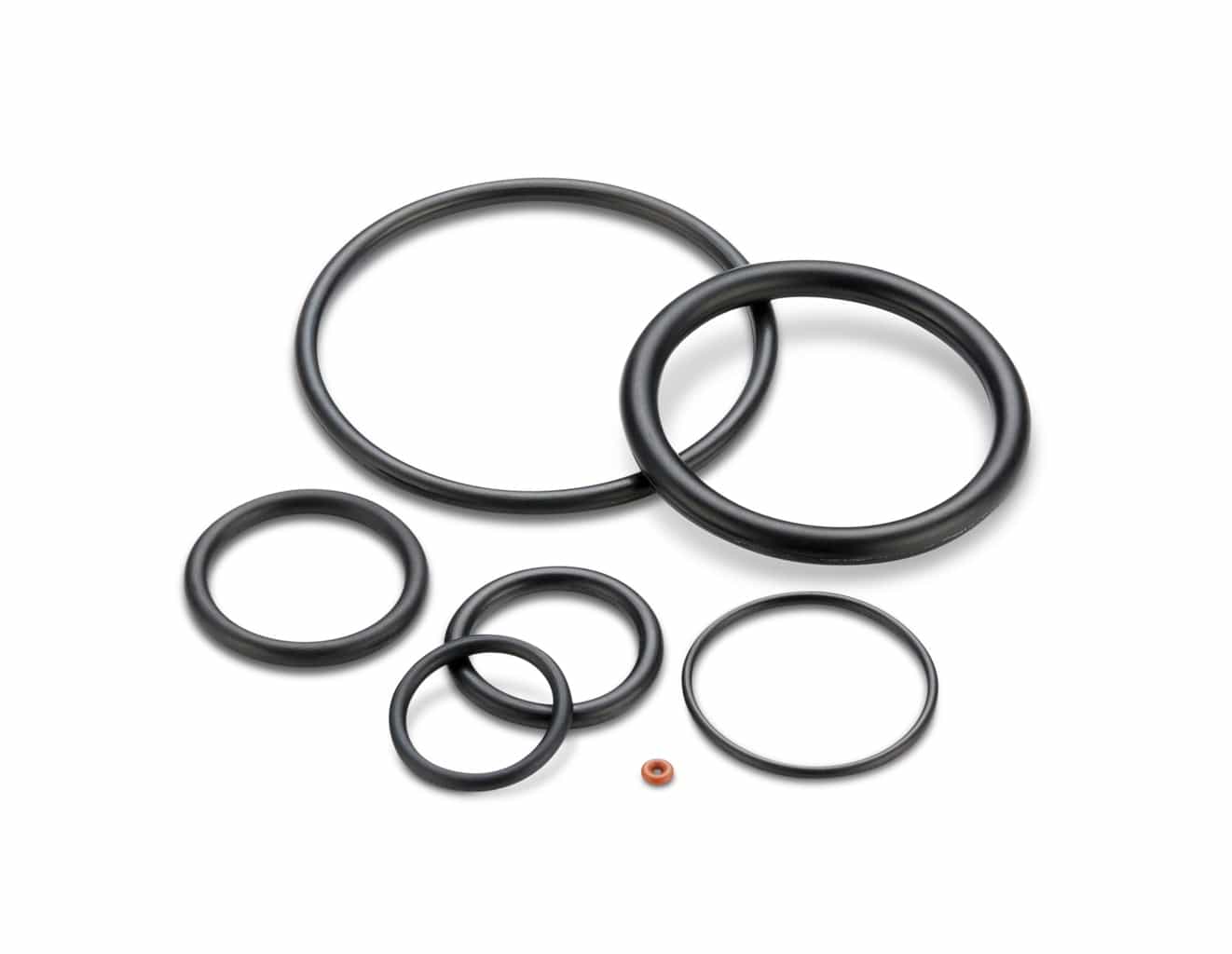
At Suzhou Baoshida Trading Co., Ltd., our engineering framework is built to deliver precision, reliability, and innovation in industrial rubber solutions, particularly in the development and manufacturing of high-performance composite materials such as Kevlar-Nomex fabric-reinforced rubber systems. Our technical team comprises five dedicated mould engineers and two specialized rubber formula engineers, enabling a fully integrated approach from concept to production. This synergy between material science and precision tooling ensures that every component meets the rigorous demands of industrial applications, including extreme temperature resistance, mechanical strength, and long-term durability.
Our formula engineers possess deep expertise in elastomer chemistry, focusing on custom compound development tailored to specific performance criteria. Whether the requirement is enhanced thermal stability, flame resistance, or mechanical reinforcement, our team formulates rubber compounds that optimally interface with aramid fibers such as Kevlar and Nomex. These fabrics are known for their high tensile strength and thermal resilience, and our formulations are engineered to maximize adhesion, minimize interfacial stress, and preserve the intrinsic properties of the reinforcement under operational loads.
Complementing our material development is a robust mould engineering division. Our five mould engineers specialize in precision tool design for complex rubber-to-fabric bonding processes. They utilize advanced CAD/CAM software and finite element analysis (FEA) to simulate curing dynamics, ensuring uniform pressure distribution and optimal flow characteristics during compression or transfer moulding. This capability is critical when encapsulating or laminating Kevlar-Nomex fabrics within rubber matrices, where dimensional accuracy and bond integrity directly influence product performance.
We offer comprehensive OEM services, supporting clients from initial design consultation through prototyping, tooling fabrication, and full-scale production. Our facility is equipped with state-of-the-art curing presses, environmental testing chambers, and quality control instrumentation, enabling strict adherence to international standards such as ISO 9001 and ASTM D412. With full in-house control over both formulation and moulding, we ensure consistency, traceability, and rapid iteration for custom applications across aerospace, firefighting gear, industrial belting, and high-temperature sealing systems.
The following table outlines key technical capabilities and performance metrics relevant to our Kevlar-Nomex fabric-reinforced rubber products:
| Parameter | Specification |
|---|---|
| Operating Temperature Range | -70°C to +250°C (short-term up to 300°C) |
| Tensile Strength (fabric core) | ≥ 300 MPa (Kevlar/Nomex hybrid weave) |
| Elongation at Break | 2.5% – 3.5% |
| Rubber Adhesion Strength | ≥ 8 kN/m (peel resistance, 90° test) |
| Flame Resistance | Self-extinguishing, ASTM D635 compliant |
| Compression Set (22 hrs, 150°C) | ≤ 20% |
| Mould Tolerances | ±0.05 mm (precision steel moulds) |
| Custom Formulation Lead Time | 10–15 working days (including testing) |
Our engineering capability is not only a function of equipment and personnel but also of process discipline and application insight. At Suzhou Baoshida, we engineer solutions that perform under the most demanding industrial conditions.
Customization Process
Customization Process for Kevlar/Nomex Rubber-Composite Solutions
Suzhou Baoshida Trading Co., Ltd. executes a rigorous four-phase customization protocol for Kevlar/Nomex fabric-reinforced rubber components, ensuring optimal performance in extreme industrial environments. Our process begins with Drawing Analysis, where engineering teams dissect client technical schematics using GD&T standards. Critical parameters—including dimensional tolerances, fabric weave density, rubber thickness gradients, and interface geometry—are validated against ISO 1302 surface finish requirements. This phase identifies potential stress concentration zones and confirms compatibility with rubber flow dynamics during molding.
Formulation follows, leveraging our 15-year compound database to engineer thermoset rubber matrices specifically tailored for aramid fiber adhesion. Standard EPDM or silicone bases are modified with proprietary silane coupling agents to overcome Kevlar/Nomex’s inherently low surface energy. Key adjustments include optimizing cure kinetics via peroxide concentration (0.8–2.5 phr) and incorporating nano-silica fillers (15–30 phr) to enhance tear resistance without compromising fabric flexibility. Each formulation undergoes predictive modeling for thermal expansion mismatch between rubber and aramid layers at operational temperatures.
Prototyping employs precision compression molding with controlled vulcanization cycles (150–180°C, 10–25 MPa pressure). Three iterative prototype batches are subjected to interfacial adhesion testing per ASTM D429 Method B, alongside thermal aging (24h @ 200°C) and dynamic flex fatigue evaluation. Client feedback on physical samples triggers micro-adjustments to rubber hardness (50–80 Shore A) or fabric ply orientation before final sign-off.
Mass Production initiates only after full validation, utilizing automated fabric-cutting systems with laser alignment and in-line rheometers for real-time cure monitoring. Every production lot undergoes 100% visual inspection and statistical sampling for critical attributes. Our ISO 9001-certified facility maintains ±0.3mm dimensional control and traceability via batch-specific CoA documentation.
Critical Performance Specifications for Kevlar/Nomex-Rubber Composites
| Parameter | Test Method | Typical Value | Industrial Relevance |
|————————–|—————-|———————|————————————|
| Tensile Strength | ASTM D412 | ≥28 MPa | Withstands high-pressure sealing |
| Adhesion Peel Strength | ASTM D429 B | ≥6.5 kN/m | Prevents delamination in flex cycles |
| Continuous Use Temp | UL 746B | -60°C to +200°C | Stable in cryogenic/high-heat apps |
| Flame Resistance | ASTM D5954 | V-0 (UL94) | Critical for aerospace/fire safety |
| Abrasion Loss | ASTM D5963 | ≤80 mm³ | Ensures longevity in conveyor belts |
This structured workflow minimizes time-to-market while guaranteeing that each rubber-aramid composite meets the exact mechanical, thermal, and chemical demands of specialized industrial applications. Suzhou Baoshida’s integration of material science rigor with OEM manufacturing discipline delivers failure-resistant components for sectors ranging from automotive turbo systems to petrochemical hose assemblies.
Contact Engineering Team
Contact Suzhou Baoshida for Premium Kevlar Nomex Fabric Solutions
At Suzhou Baoshida Trading Co., Ltd., we specialize in high-performance industrial materials engineered for extreme environments. As a trusted OEM manager and rubber formula engineer, we deliver precision-engineered Kevlar Nomex fabric solutions tailored to the rigorous demands of aerospace, firefighting, electrical insulation, and high-temperature industrial applications. Our deep expertise in aramid fiber integration ensures optimal thermal stability, tensile strength, and chemical resistance across every batch.
Kevlar Nomex fabric combines the cut resistance and high-tensile properties of Kevlar with the inherent flame resistance and thermal durability of Nomex. This synergistic blend delivers unmatched protection and longevity in applications where failure is not an option. Whether you require custom weaves, specialized coatings, or volume manufacturing under strict quality controls, Suzhou Baoshida provides end-to-end technical support from material selection to final production.
We understand that consistency, traceability, and compliance are critical in industrial supply chains. Our production processes adhere to ISO standards, with full batch documentation and performance validation. Every roll of fabric undergoes rigorous testing for tensile strength, thermal shrinkage, arc resistance, and dimensional stability to ensure it meets or exceeds OEM specifications.
Below are key technical specifications for our standard Kevlar Nomex fabric offering. Custom configurations are available upon request to meet specific performance criteria.
| Property | Specification | Test Method |
|---|---|---|
| Fiber Composition | 50% Kevlar / 50% Nomex | ASTM D276 |
| Basis Weight | 180 g/m² ± 5% | ASTM D3776 |
| Thickness | 0.42 mm ± 0.03 mm | ASTM D1777 |
| Tensile Strength (Warp) | ≥ 800 N/5cm | ASTM D5034 |
| Tensile Strength (Weft) | ≥ 750 N/5cm | ASTM D5034 |
| Thermal Shrinkage (260°C, 30 min) | ≤ 5% | ISO 22867 |
| Limiting Oxygen Index (LOI) | ≥ 28% | ASTM D2863 |
| Electrical Breakdown Strength | ≥ 18 kV/mm | IEC 60243-1 |
| Continuous Use Temperature | Up to 200°C | UL 746B |
For engineering inquiries, material samples, or custom formulation development, contact Mr. Boyce, our dedicated technical OEM manager. With over 12 years of experience in rubber and composite material integration, Mr. Boyce provides direct technical consultation to ensure your application requirements are met with scientific precision and industrial reliability.
We support global supply with consistent lead times, quality assurance protocols, and responsive technical documentation. Whether you are prototyping a new heat shield, upgrading protective apparel, or developing dielectric components, Suzhou Baoshida delivers engineered aramid solutions that perform under stress.
To request a technical datasheet, initiate a sample order, or discuss a custom specification, reach out directly to Mr. Boyce at [email protected]. Include your application details, performance targets, and volume requirements to receive a targeted response within 24 hours. Partner with Suzhou Baoshida for Kevlar Nomex fabric that meets the highest standards of industrial performance.
⚖️ O-Ring Weight Calculator
Estimate rubber O-ring weight (Approx).