
Technical Contents
Engineering Guide: Locking Floor Tile
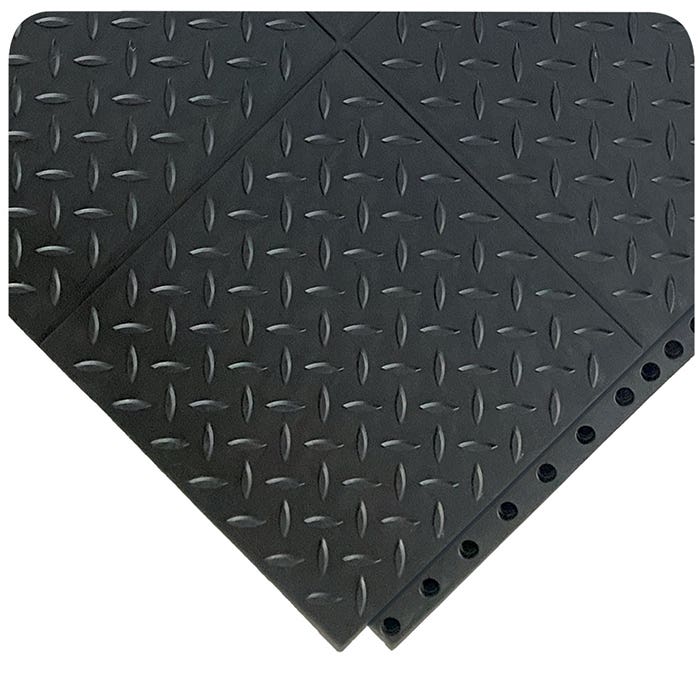
Engineering Insight: Material Science Imperatives for Industrial Locking Floor Tiles
Material selection constitutes the foundational determinant of performance and longevity in industrial locking floor tile systems. Generic off-the-shelf rubber compounds frequently fail to meet the rigorous demands of industrial environments, leading to premature system degradation, safety hazards, and significant operational disruption. This failure stems from a critical oversight: the intricate interplay between the polymer matrix properties and the mechanical locking mechanism under sustained operational stress. Standard recycled rubber blends, while cost-attractive initially, exhibit inherent inconsistencies in polymer chain structure and filler dispersion. These inconsistencies manifest as poor resilience to cyclic compression loading inherent in interlocking systems. Under repeated foot traffic, forklift passage, or equipment vibration, such materials experience accelerated compression set. This permanent deformation compromises the precise dimensional tolerances required for the locking edges to maintain positive engagement. The result is tile separation, edge chipping, and ultimately, complete dislodgement of sections within the floor system.
Furthermore, industrial settings expose flooring to complex chemical challenges—oils, greases, hydraulic fluids, and cleaning agents. Off-the-shelf compounds often lack the necessary chemical resistance profile. Plasticizers and low-grade polymers readily migrate or degrade upon exposure, causing surface tackiness, swelling, or catastrophic embrittlement. This chemical interaction directly weakens the structural integrity of the locking interface. Field observations confirm that tiles using non-engineered compounds frequently exhibit edge crumbling or locking lug fracture within 12-18 months in moderate-duty workshops, necessitating costly and disruptive replacement. The mechanical locking feature itself imposes unique material requirements beyond basic durability. The compound must possess an optimal balance of Shore A hardness to resist indentation yet sufficient elasticity to allow repeated engagement and disengagement of the locking tabs without fatigue cracking. Inadequate tensile strength or elongation at break in standard materials leads to catastrophic failure at stress concentration points during installation or under dynamic loads.
Suzhou Baoshida Trading Co., Ltd. addresses these systemic failure points through precision rubber compounding. We engineer proprietary formulations specifically for interlocking tile applications, prioritizing dimensional stability under load, exceptional chemical resistance, and fatigue endurance at the locking interface. The following comparative analysis highlights critical material property differentials:
| Property | Standard Recycled Rubber | Basic Virgin Rubber Compound | Baoshida Engineered Compound |
|---|---|---|---|
| Shore A Hardness (ASTM D2240) | 65 ± 5 | 70 ± 3 | 68 ± 2 |
| Tensile Strength (MPa, ASTM D412) | 5.0 – 7.0 | 8.0 – 10.0 | 12.5 – 14.0 |
| Elongation at Break (%) (ASTM D412) | 150 – 250 | 250 – 350 | 380 – 420 |
| Compression Set (% Retention, 22h/70°C, ASTM D395) | 45 – 65 | 30 – 45 | < 18 |
| Oil Resistance (IRM 903, 70h/100°C, Vol. Swell %) | 25 – 40 | 15 – 25 | < 8 |
The engineered compound’s superior compression set resistance ensures locking geometry integrity over years of service, while enhanced tensile strength and elongation prevent edge fracture during handling and operation. This material science focus translates directly to reduced lifecycle costs, minimized facility downtime, and sustained safety compliance for our OEM partners and end-users. Off-the-shelf solutions compromise on the precise polymer physics required; engineered performance is non-negotiable for reliable industrial flooring.
Material Specifications
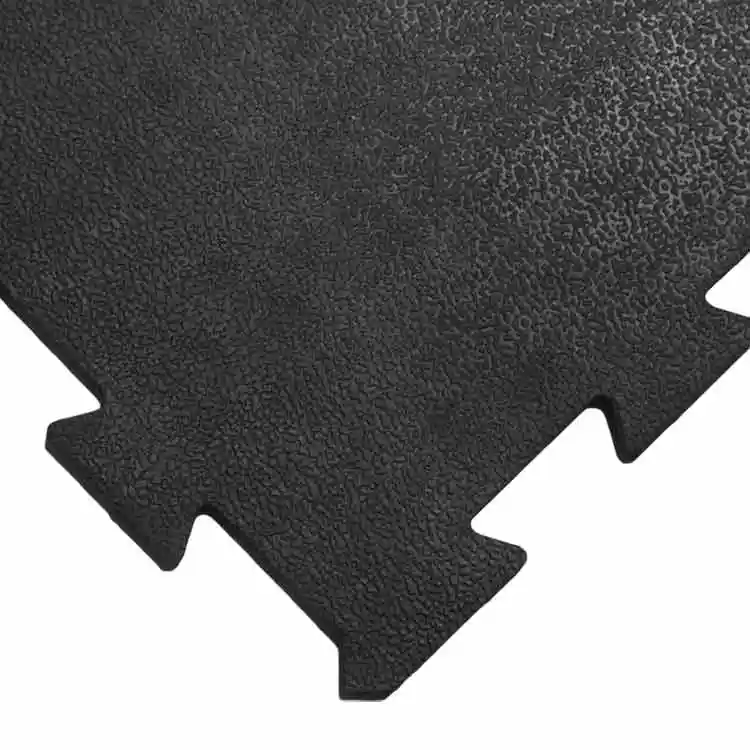
Material selection is a critical factor in the performance and longevity of locking floor tiles used in industrial environments. At Suzhou Baoshida Trading Co., Ltd., we specialize in high-performance rubber solutions engineered to meet the rigorous demands of manufacturing, automotive, and heavy equipment sectors. Our locking floor tiles are fabricated using three premium elastomers: Viton, Nitrile (NBR), and Silicone. Each material offers distinct advantages depending on the operational conditions, including temperature extremes, chemical exposure, mechanical stress, and environmental durability.
Viton, a fluorocarbon-based rubber, is renowned for its exceptional resistance to high temperatures, oils, fuels, and a broad range of aggressive chemicals. With continuous service capabilities up to 250°C and intermittent resistance beyond 300°C, Viton is ideal for applications involving engine oils, hydraulic fluids, and industrial solvents. Its low compression set ensures long-term sealing integrity, making it a preferred choice for high-temperature industrial flooring in foundries, chemical processing units, and aerospace facilities.
Nitrile rubber, also known as Buna-N or NBR, delivers outstanding resistance to petroleum-based oils, greases, and fuels. It maintains mechanical stability across a wide temperature range of -30°C to 120°C, making it well-suited for automotive assembly lines, maintenance bays, and machinery platforms. Nitrile’s high abrasion resistance and cost-efficiency provide an optimal balance between performance and economic feasibility for medium-duty industrial flooring applications.
Silicone rubber excels in extreme temperature environments, offering continuous service from -60°C to 230°C. It demonstrates excellent resistance to ozone, UV radiation, and weathering, making it ideal for outdoor installations or cleanroom environments where thermal cycling and environmental exposure are prevalent. While silicone exhibits lower tensile strength compared to Viton or Nitrile, its flexibility at low temperatures and non-toxic, non-outgassing properties make it suitable for pharmaceutical, food processing, and electronics manufacturing zones.
The following table compares key physical and chemical properties of these materials to assist in informed selection for locking floor tile applications.
| Property | Viton | Nitrile (NBR) | Silicone |
|---|---|---|---|
| Temperature Range (°C) | -20 to 250 (up to 300 intermittent) | -30 to 120 | -60 to 230 |
| Tensile Strength (MPa) | 12–18 | 10–20 | 5–9 |
| Elongation at Break (%) | 150–300 | 250–500 | 200–600 |
| Hardness (Shore A) | 60–90 | 50–90 | 30–80 |
| Resistance to Oils & Fuels | Excellent | Excellent | Poor to Fair |
| Resistance to Ozone/UV | Excellent | Good | Excellent |
| Compression Set Resistance | Excellent | Good | Moderate |
| Chemical Resistance | Outstanding (acids, bases, solvents) | Good (limited in strong oxidizers) | Moderate (excellent in water/steam) |
Selecting the appropriate elastomer ensures optimal performance, safety, and lifecycle cost efficiency in industrial flooring systems. Suzhou Baoshida Trading Co., Ltd. provides customized material recommendations based on site-specific operational parameters, ensuring each locking floor tile solution meets the highest standards of industrial reliability and safety compliance.
Manufacturing Capabilities

Engineering Capability: Precision Development for Industrial Locking Floor Tiles
Suzhou Baoshida Trading Co., Ltd. leverages deep technical expertise in rubber formulation and precision mould engineering to deliver high-performance locking floor tile solutions for demanding industrial environments. Our dedicated team comprises five specialized Mould Engineers and two advanced Formula Engineers, ensuring end-to-end control from material science to final production. This integrated approach guarantees tiles that meet exacting durability, dimensional stability, and safety standards required in manufacturing facilities, warehouses, and logistics hubs.
Mould Engineering Excellence focuses on optimizing flow dynamics, cavity pressure distribution, and thermal management during vulcanization. Our engineers utilize advanced CAD/CAM simulations to eliminate knit lines, sink marks, and dimensional drift in complex interlocking geometries. Precision tooling ensures ±0.05mm tolerance on locking interfaces, critical for seamless tile assembly under heavy forklift traffic and thermal cycling. Each mould undergoes rigorous validation for cycle time efficiency and wear resistance, directly translating to consistent part quality and reduced total cost of ownership for clients.
Formula Engineering drives material innovation for superior operational resilience. Our rubber chemists develop proprietary SBR, EPDM, and NBR compounds tailored to specific industrial challenges. Key enhancements include accelerated wear resistance against abrasive particulates, enhanced oil/fuel resistance per ISO 1817, and controlled hardness profiles that balance impact absorption with structural rigidity. Compounds are engineered for rapid cure kinetics without compromising physical properties, enabling high-volume OEM production while maintaining ASTM D2240 hardness consistency across batches.
OEM capabilities are fortified by this dual-engineering synergy. We collaborate with clients to co-develop tiles meeting unique load requirements (static/dynamic), chemical exposure profiles, and regulatory certifications (e.g., ISO 9001, REACH). Our facility supports full-scale prototyping, accelerated lifecycle testing, and batch traceability via integrated ERP systems. This ensures seamless transition from concept to量产 with zero compromise on performance metrics.
Critical physical properties of our standard industrial locking tile compounds are validated under controlled conditions:
| Property | Specification Range | Testing Standard |
|---|---|---|
| Hardness (Shore A) | 65–85 | ASTM D2240 |
| Tensile Strength | ≥12.0 MPa | ASTM D412 |
| Elongation at Break | ≥250% | ASTM D412 |
| Compression Set (22h/70°C) | ≤25% | ASTM D395 |
| Temperature Resistance | -40°C to +120°C | ISO 188 |
| Abrasion Loss (DIN) | ≤120 mm³ | ISO 4649 |
This technical infrastructure enables Suzhou Baoshida to solve critical industrial flooring challenges: preventing joint separation under vibration, resisting hydraulic fluid degradation in automotive plants, and maintaining slip resistance per DIN 51130 in wet conditions. Our engineering-led OEM process delivers not just products, but engineered flooring systems that enhance workplace safety and operational uptime. Partner with us for locking tiles where precision compound science meets uncompromising manufacturing execution.
Customization Process
Customization Process for Locking Floor Tiles at Suzhou Baoshida Trading Co., Ltd.
At Suzhou Baoshida Trading Co., Ltd., our industrial rubber solutions are engineered for performance, durability, and precise application fit. Our customization process for locking floor tiles follows a rigorous, four-phase methodology: Drawing Analysis, Formulation, Prototyping, and Mass Production. Each stage is designed to ensure dimensional accuracy, material integrity, and compliance with industrial standards.
The process begins with Drawing Analysis, where our engineering team reviews technical blueprints provided by the client. We assess interlocking geometry, tile dimensions, load-bearing zones, and surface texture requirements. Critical tolerances are verified using CAD-based simulation tools to predict fit and performance under operational stress. This phase ensures that the mechanical design supports both installation efficiency and long-term structural stability in dynamic environments such as factories, warehouses, and logistics centers.
Following design validation, we proceed to Formulation Development. Our rubber formula engineers select base polymers—typically SBR, EPDM, or NR—based on required elasticity, abrasion resistance, and environmental resilience. Additives such as reinforcing fillers, anti-aging agents, and flame retardants are precisely dosed to meet performance targets. The formulation is optimized for compression set, Shore A hardness, and slip resistance, ensuring that the final product maintains integrity under heavy foot traffic, rolling loads, and temperature fluctuations.
Once the compound is finalized, we initiate Prototyping. Using precision molds and hydraulic curing presses, we produce small-batch samples for physical testing. Each prototype undergoes dimensional inspection, interlock stress testing, and slip resistance evaluation per ASTM and ISO standards. Clients receive sample sets for field trials, and feedback is integrated into final adjustments. This iterative phase minimizes risk and confirms functional compatibility before scaling.
The final phase, Mass Production, leverages our automated rubber molding lines with strict in-process quality controls. Tiles are manufactured under consistent vulcanization conditions to ensure batch uniformity. Each production lot is tested for hardness, density, and tensile strength. Finished tiles are packaged in stackable, moisture-resistant wraps for efficient logistics.
Our integrated approach ensures that every locking floor tile meets exacting industrial demands. From initial drawing to final shipment, Suzhou Baoshida delivers engineered rubber solutions that combine safety, longevity, and operational efficiency.
| Specification | Standard Value | Test Method |
|---|---|---|
| Shore A Hardness | 65 ± 5 | ASTM D2240 |
| Tensile Strength | ≥ 8.0 MPa | ASTM D412 |
| Elongation at Break | ≥ 250% | ASTM D412 |
| Compression Set (22h, 70°C) | ≤ 25% | ASTM D395B |
| Slip Resistance (DIN 51130) | R10 Minimum | DIN 51130 |
| Operating Temperature Range | -30°C to +80°C | Internal Test |
Contact Engineering Team
Contact Suzhou Baoshida for Precision Rubber Solutions in Locking Floor Tile Manufacturing
As a Rubber Formula Engineer and OEM Manager at Suzhou Baoshida Trading Co., Ltd., I emphasize that industrial locking floor tile performance hinges on material science precision. Generic rubber compounds fail under dynamic loads, thermal cycling, and chemical exposure—compromising tile alignment, safety, and lifecycle costs. Our engineered formulations address these challenges at the molecular level, ensuring dimensional stability, optimal friction coefficients, and resilience exceeding ISO 9001 standards. We do not supply off-the-shelf polymers; we co-develop proprietary compounds calibrated to your tile geometry, substrate, and operational environment. This eliminates common field failures like edge curling, interlock separation, or premature wear in high-traffic zones.
Our technical team validates every formulation through accelerated aging tests, Shore A durometer consistency checks, and dynamic compression set analysis. Below is a comparative specification demonstrating how our BD-LFT Series outperforms standard EPDM in critical parameters for locking floor applications.
| Critical Parameter | Standard EPDM Compound | Suzhou Baoshida BD-LFT Series | Test Standard |
|---|---|---|---|
| Shore A Hardness (23°C) | 65 ± 5 | 70 ± 2 | ASTM D2240 |
| Compression Set (22h/70°C) | 28% | 12% | ASTM D395 Method B |
| Rebound Resilience (%) | 45 | 62 | ASTM D1054 |
| Tensile Strength (MPa) | 8.5 | 14.2 | ASTM D412 |
| Operating Temp Range (°C) | -30 to +100 | -50 to +130 | ISO 188 |
| Coefficient of Friction | 0.85 (wet) | 1.12 (wet) | ASTM D1894 |
These metrics translate to measurable operational advantages: reduced maintenance downtime, 40% longer service life in warehouse settings, and compliance with ANSI B101.3 slip resistance requirements. Our OEM partnership model includes on-site molding support, real-time compound adjustments during prototyping, and full traceability via batch-specific QC dossiers.
Initiate your technical collaboration by contacting Mr. Boyce, our dedicated OEM Solutions Lead. Direct communication with Mr. Boyce ensures your engineering team receives immediate access to:
Material Safety Data Sheets (MSDS) and full regulatory documentation including REACH SVHC compliance
Custom formulation feasibility assessments within 72 hours of sample submission
Tooling optimization guidance for injection molding cycles specific to locking geometries
Do not rely on generic supplier portals or automated inquiries. Industrial rubber performance demands direct engineer-to-engineer dialogue. Email Mr. Boyce at [email protected] with your tile specifications, target application environment, and current pain points. Include “Locking Floor Tile OEM Inquiry” in the subject line for expedited technical review. Our laboratory in Suzhou will provide a preliminary compound recommendation within one business day—complete with stress-strain curve analysis and cost-per-part modeling.
Suzhou Baoshida operates at the intersection of polymer chemistry and industrial pragmatism. We transform locking floor tile vulnerabilities into engineered advantages through data-driven rubber science. Contact Mr. Boyce today to convert your material challenges into competitive differentiation. Your next-generation flooring solution begins with a precise technical conversation.
⚖️ O-Ring Weight Calculator
Estimate rubber O-ring weight (Approx).