
Technical Contents
Engineering Guide: Marco Rubber O Rings

Engineering Insight: The Critical Role of Material Selection in Marco Rubber O Rings
In the domain of precision rubber seals, the performance of marco rubber O rings is fundamentally governed by material selection. While off-the-shelf O rings may appear to offer cost-effective and readily available solutions, they frequently fail to meet the rigorous demands of industrial applications. This failure stems not from inherent flaws in the O ring design, but from the mismatch between standardized elastomer compounds and the specific chemical, thermal, and mechanical conditions of the operating environment.
Marco rubber O rings are engineered to deliver reliable sealing under dynamic stress, extreme temperatures, and exposure to aggressive media. Generic solutions, however, are formulated for broad compatibility rather than targeted performance. When subjected to oils, acids, steam, or ozone without proper material resistance, standard O rings degrade rapidly through swelling, cracking, or compression set. Such degradation compromises seal integrity, leading to leakage, system downtime, and potential safety hazards.
The selection of the correct elastomer requires a thorough understanding of application parameters. For instance, nitrile rubber (NBR) offers excellent resistance to petroleum-based fluids and is suitable for moderate temperature ranges, making it ideal for hydraulic systems. However, in environments involving high ozone concentration or elevated temperatures above 100°C, NBR degrades quickly. In such cases, fluorocarbon rubber (FKM) presents a superior alternative, with thermal stability up to 200°C and exceptional resistance to fuels, oils, and many chemicals.
Silicone rubber (VMQ) excels in extreme temperature applications, both low and high, but exhibits poor mechanical strength and abrasion resistance, limiting its use in high-pressure dynamic seals. Ethylene propylene diene monomer (EPDM) is highly resistant to steam, water, and polar solvents, yet incompatible with hydrocarbons. These nuanced trade-offs underscore why a one-size-fits-all approach is not viable in critical sealing applications.
At Suzhou Baoshida Trading Co., Ltd., we emphasize application-specific formulation and rigorous testing to ensure marco rubber O rings perform under real-world conditions. Our engineering team collaborates with OEMs to analyze media exposure, temperature cycles, pressure loads, and dynamic movement to recommend or develop custom compounds that extend service life and reduce total cost of ownership.
The following table summarizes key elastomer properties for common marco rubber O ring materials:
| Material | Temperature Range (°C) | Key Resistance | Typical Applications |
|---|---|---|---|
| NBR | -30 to +100 | Petroleum oils, hydraulic fluids | Hydraulic systems, pneumatic seals |
| FKM | -20 to +200 | Fuels, acids, high-temperature oils | Automotive, aerospace, chemical processing |
| EPDM | -50 to +150 | Steam, water, alkalis, ozone | HVAC systems, water treatment |
| VMQ | -60 to +200 | Extreme temperatures, UV, ozone | Medical devices, food processing, aerospace |
Material selection is not a secondary consideration—it is the cornerstone of seal reliability. Off-the-shelf O rings may reduce initial procurement costs, but their premature failure often results in higher operational expenses. Precision engineering demands precision materials.
Material Specifications
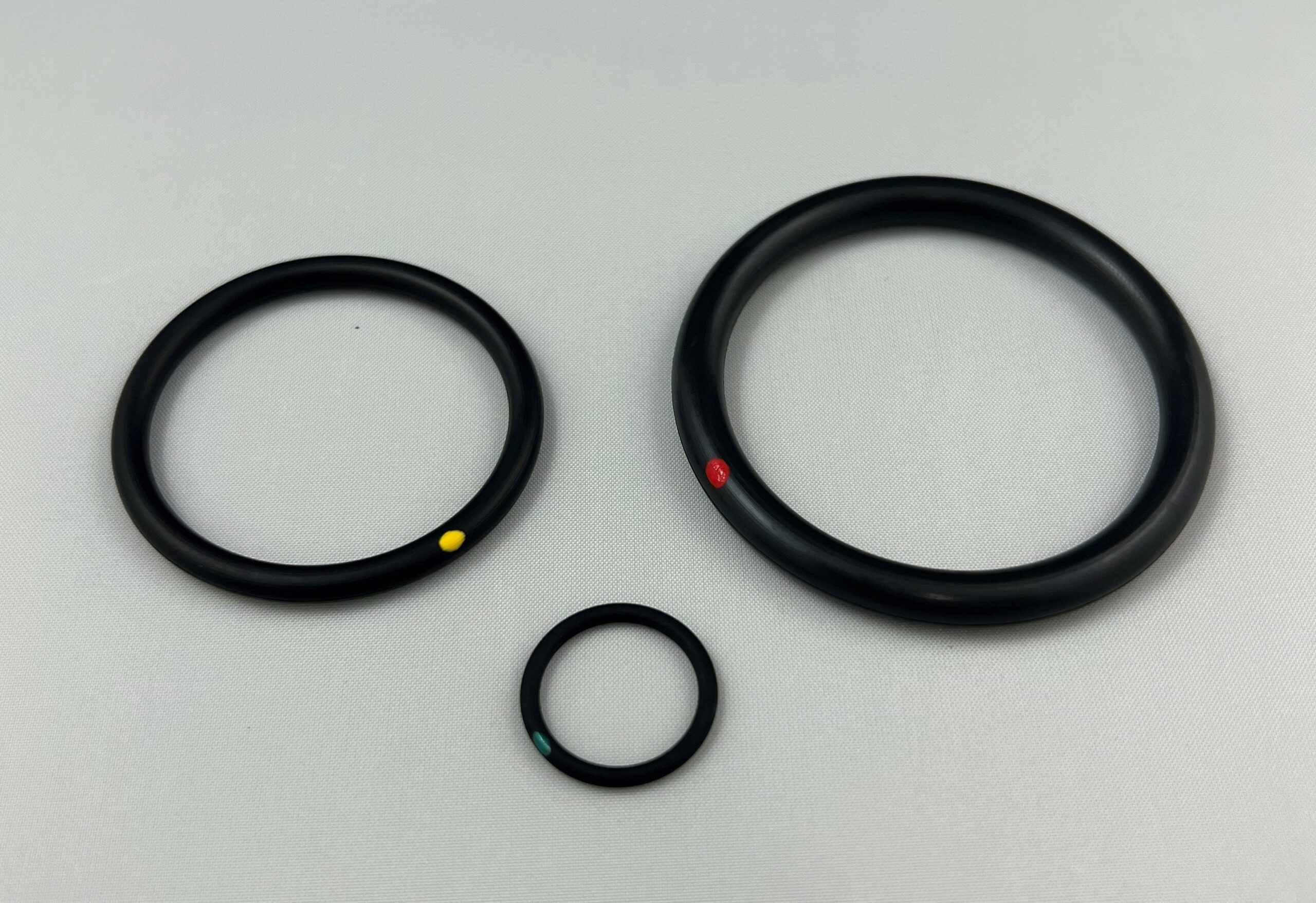
Material Selection Fundamentals for Precision O-Ring Performance
Selecting the optimal elastomer for O-ring applications requires rigorous analysis of operational parameters. At Suzhou Baoshida Trading Co., Ltd., our Marco rubber O-rings undergo stringent material qualification to ensure reliability in demanding industrial environments. The polymer backbone directly dictates chemical compatibility, thermal stability, and mechanical resilience. Misalignment between material properties and service conditions leads to premature seal failure through extrusion, compression set, or chemical degradation. We prioritize ASTM D2000 standards for compound classification, ensuring traceable performance metrics for critical sealing interfaces.
Viton fluorocarbon rubber (FKM) delivers exceptional resistance to high-temperature hydrocarbons, acids, and ozone. Its fluorine content provides stability in jet fuels, lubricants, and aggressive solvents where conventional elastomers fail. Viton maintains sealing integrity between -20°C and +230°C continuous service, with brief excursions to 300°C. This material is indispensable for aerospace hydraulic systems, chemical processing equipment, and semiconductor manufacturing where purity and chemical inertness are non-negotiable. Nitrile butadiene rubber (NBR) remains the industrial workhorse for petroleum-based fluid sealing. Cost-effective NBR compounds withstand temperatures from -40°C to +120°C, offering robust resistance to mineral oils, hydraulic fluids, and aliphatic hydrocarbons. Its high abrasion resistance suits dynamic applications like automotive fuel systems and hydraulic cylinders, though ester-based lubricants and strong oxidizing acids necessitate alternative materials. Silicone rubber (VMQ) excels in extreme temperature flexibility, operating from -60°C to +200°C. Its biocompatibility and low toxicity make it ideal for medical devices and food processing, while excellent electrical insulation supports aerospace and electronics sealing. Silicone demonstrates limited resistance to petroleum derivatives but superb performance against water, steam, and ozone.
The comparative analysis below details critical performance parameters for standardized compounds. All values represent typical industry benchmarks; actual performance varies with specific formulations and curing processes.
| Property | Viton (FKM) | Nitrile (NBR) | Silicone (VMQ) | Test Standard |
|---|---|---|---|---|
| Temperature Range (°C) | -20 to +230 | -40 to +120 | -60 to +200 | ASTM D2000 |
| Tensile Strength (MPa) | 12-18 | 15-25 | 5-10 | ASTM D412 |
| Compression Set (%) | ≤20 (24h @ 200°C) | ≤30 (70h @ 100°C) | ≤25 (22h @ 200°C) | ASTM D395 |
| Fluid Resistance (ASTM 1) | Excellent | Good | Poor | ASTM D471 |
| Ozone Resistance | Excellent | Poor | Excellent | ASTM D1149 |
Suzhou Baoshida Trading Co., Ltd. engineers collaborate with OEMs to refine material specifications beyond baseline properties. Custom formulations address niche requirements such as low-temperature flexibility in Arctic drilling equipment or peroxide-cured silicone for ultra-high-purity semiconductor tools. Our Marco O-rings undergo batch-specific validation per ISO 3601 tolerances, with material certificates documenting cure kinetics and post-vulcanization stability. For applications involving mixed chemical exposure or cyclic thermal loads, we recommend accelerated aging protocols per ASTM D573 to validate compound selection. Partner with our technical team to translate your operational demands into precision elastomer solutions that eliminate seal-related downtime.
Manufacturing Capabilities
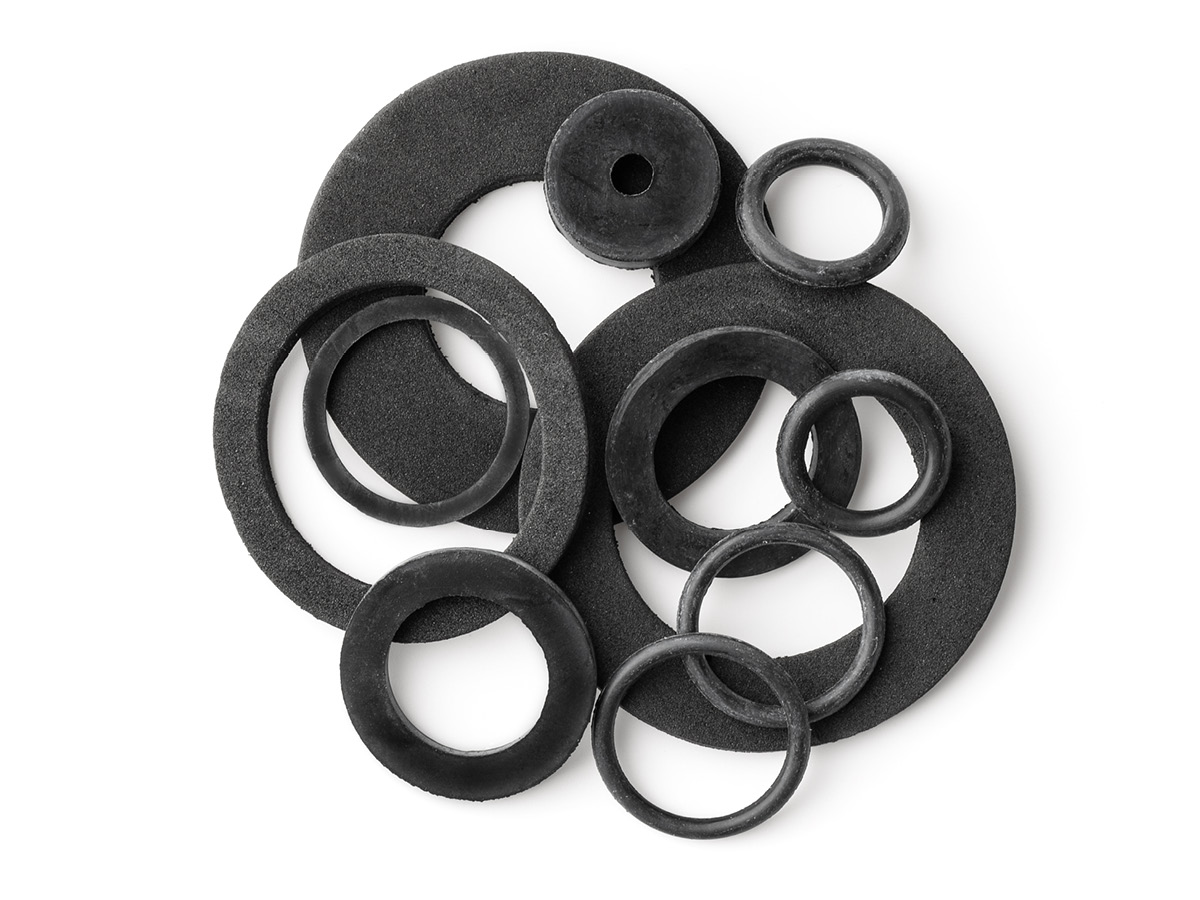
Engineering Excellence in Precision Rubber Seal Manufacturing
At Suzhou Baoshida Trading Co., Ltd., our engineering capability forms the backbone of our reputation in the precision rubber seals industry. Specializing in high-performance marco rubber O rings, we integrate deep material science expertise with advanced mold design to deliver consistent, reliable sealing solutions tailored to demanding industrial environments. Our technical team comprises five dedicated mold engineers and two specialized rubber formula engineers, enabling a vertically integrated development process that ensures optimal performance from concept to mass production.
Our mold engineering team brings over a decade of cumulative experience in precision tooling for rubber compression and transfer molding. Every mold is designed using industry-leading CAD/CAM software, with rigorous attention to cavity symmetry, venting geometry, and material flow dynamics. This ensures dimensional accuracy, minimal flash, and high repeatability across production batches. We maintain strict tolerances in accordance with ISO 3601 and AS568 standards, supporting clients across automotive, aerospace, and industrial hydraulic sectors where seal failure is not an option.
Complementing our mold expertise is our in-house rubber compounding capability. The two formula engineers on staff specialize in custom elastomer development, focusing on formulations that meet specific resistance requirements—whether to high temperature, aggressive chemicals, or dynamic mechanical stress. Utilizing FTIR spectroscopy, rheometry, and accelerated aging tests, we formulate compounds based on NBR, EPDM, FKM, silicone, and other specialty rubbers tailored to the operational environment of marco rubber O rings. This scientific approach to material selection allows us to exceed OEM performance benchmarks while maintaining cost efficiency.
Our OEM manufacturing capabilities are built on a foundation of technical agility and quality control. We support full turnkey solutions—from prototype development and material validation to serial production and lot traceability. Clients benefit from collaborative engineering reviews, DFM analysis, and rapid iteration cycles that shorten time-to-market. All processes are conducted under an ISO 9001-certified quality management system, with full documentation including material certifications, inspection reports, and process validation records.
The synergy between our mold and formula engineering teams enables a holistic optimization of both form and function. Rather than treating material and mold design as separate disciplines, we apply a co-engineering model that anticipates production challenges and performance requirements at the earliest stages. This integrated approach is particularly critical for marco rubber O rings used in extreme conditions, where even minor deviations in hardness, compression set, or swell behavior can compromise system integrity.
Below is a summary of our core technical specifications and capabilities:
| Parameter | Specification |
|---|---|
| Material Types | NBR, EPDM, FKM, Silicone, ACM, AEM, CR, IIR |
| Hardness Range (Shore A) | 40–90 ±5 |
| Dimensional Tolerances | ISO 3601, AS568, or custom per drawing |
| Temperature Range | -40°C to +250°C (depending on compound) |
| Standard Compliance | ISO 9001, RoHS, REACH, FDA (upon request) |
| Production Capacity | Up to 5 million units/month |
| Tooling Lead Time | 15–25 days (prototype to production) |
Through advanced engineering, rigorous testing, and a client-centric OEM model, Suzhou Baoshida delivers marco rubber O rings that meet the highest standards of precision, durability, and performance.
Customization Process

Customization Process for Marco Rubber O-Rings
Suzhou Baoshida Trading Co., Ltd. executes a rigorous, science-driven customization protocol for Marco rubber O-rings to ensure dimensional accuracy, material integrity, and application-specific performance. Our process begins with Drawing Analysis, where engineering teams dissect client-provided technical schematics against AS568A, ISO 3601, or custom specifications. Critical parameters scrutinized include cross-section tolerance (±0.05mm standard), inner diameter variance, groove geometry compatibility, and surface finish requirements. We verify GD&T callouts and assess potential molding challenges such as flash points or knit lines, ensuring manufacturability aligns with OEM functional demands. Material compatibility with target media (e.g., hydraulic fluids, acids, fuels) is cross-referenced against chemical resistance databases to preempt seal degradation.
Formulation Development follows, leveraging our in-house polymer science expertise. Based on operating conditions—temperature range, pressure exposure, and chemical environment—we select base elastomers (NBR, EPDM, FKM, or specialty compounds like FFKM) and optimize compound architecture. Key variables include polymer molecular weight distribution, filler reinforcement (e.g., N330 carbon black vs. silica), plasticizer stability, and cure system kinetics (peroxide vs. sulfur). Each formulation undergoes computational modeling to predict compression set, tensile strength, and thermal aging behavior, ensuring compliance with ASTM D2000 or client-specific material specs. Shore A hardness is precisely tuned within ±2 points of target values.
Prototyping validates theoretical models through empirical testing. Using precision steel molds, we produce initial lots subjected to:
Dimensional stability verification via CMM (Coordinate Measuring Machine)
Compression set testing per ASTM D395 (70 hrs @ 100°C)
Burst pressure validation (up to 5,000 psi)
Media immersion resistance assessments
Client feedback triggers iterative refinements until all performance thresholds are met.
Mass Production commences only after prototype sign-off, utilizing automated molding lines with real-time process monitoring. Every batch undergoes 100% visual inspection and statistical sampling for critical dimensions. Final quality assurance includes:
Hardness verification (Shore A)
Tensile/elongation testing per ISO 37
Traceable lot documentation per ISO 9001
Packaging per IATF 16949 cleanliness standards
Material performance benchmarks for common Marco O-ring compounds are summarized below:
| Elastomer Type | Temperature Range (°C) | Hardness Range (Shore A) | Key Chemical Resistance | Application Context |
|---|---|---|---|---|
| NBR | -30 to +120 | 60–90 | Oils, fuels, aliphatic hydrocarbons | Hydraulic systems, automotive fuel lines |
| EPDM | -50 to +150 | 50–80 | Steam, brake fluids, polar solvents | Coolant systems, water treatment |
| FFKM | -25 to +327 | 65–85 | Aggressive acids, amines, plasma | Semiconductor, aerospace, chemical processing |
This structured methodology eliminates guesswork, delivering Marco O-rings that achieve zero-leak performance in mission-critical sealing applications while adhering to global regulatory frameworks. Our closed-loop process ensures repeatability from prototype to high-volume output, reducing time-to-market for OEM partners.
Contact Engineering Team

For precision-engineered rubber O-rings tailored to the exacting demands of industrial sealing applications, Suzhou Baoshida Trading Co., Ltd. stands as a trusted OEM partner in the global supply chain. Our expertise in formulating and manufacturing high-performance elastomeric components ensures that every O-ring meets rigorous standards for durability, chemical resistance, temperature stability, and dimensional accuracy. Whether your application involves dynamic sealing in hydraulic systems, static gasketing in automotive assemblies, or exposure to aggressive media in chemical processing environments, our engineering team delivers custom solutions engineered for reliability and long service life.
At the heart of our manufacturing capability is a deep understanding of rubber compounding. We specialize in formulations based on Nitrile (NBR), Ethylene Propylene Diene Monomer (EPDM), Fluorocarbon (FKM/Viton®), Silicone (VMQ), and other specialty elastomers. Each compound is optimized for specific performance criteria, including compression set resistance, tensile strength, and resilience under cyclic stress. Our production processes—ranging from precision molding to rigorous post-cure and inspection protocols—are aligned with ISO 9001 standards, ensuring consistency across batches and compliance with international quality benchmarks.
We recognize that successful sealing solutions begin with collaboration. That is why we invite engineering teams, procurement managers, and product designers to engage directly with our technical experts. For immediate technical consultation, quotation requests, or custom formulation support, we recommend contacting Mr. Boyce, OEM Account Manager at Suzhou Baoshida Trading Co., Ltd.
Contact Information
Mr. Boyce
OEM & Technical Sales Manager
Email: [email protected]
Company: Suzhou Baoshida Trading Co., Ltd.
Specialization: Precision Rubber Seals and Custom Elastomeric Components
To facilitate your inquiry, please provide details such as required material specifications, operating environment conditions, dimensional requirements (including AS568 or custom sizes), and annual volume projections. Our team responds to all technical inquiries within 24 business hours and can support rapid prototyping, material testing reports, and full production ramp-up upon approval.
Below is a reference table outlining common O-ring materials we manufacture, along with key performance characteristics to guide initial selection:
| Material | Temperature Range (°C) | Typical Hardness (Shore A) | Key Resistance Properties |
|---|---|---|---|
| NBR (Nitrile) | -30 to +100 | 70, 75, 90 | Oil, fuel, hydraulic fluids |
| EPDM | -50 to +150 | 60, 70, 80 | Steam, water, ozone, weathering |
| FKM (Viton®) | -20 to +200 | 70, 80, 90 | High-temperature oils, acids, aromatic hydrocarbons |
| VMQ (Silicone) | -60 to +200 | 50, 60, 70 | Extreme cold, UV, oxidation |
| CR (Neoprene) | -40 to +120 | 60, 70, 80 | Flame, weathering, moderate oils |
Partner with Suzhou Baoshida for technically advanced rubber O-rings backed by responsive engineering support and scalable manufacturing capacity. Initiate your project today—contact Mr. Boyce directly at [email protected] for expert guidance and OEM-level service.
⚖️ O-Ring Weight Calculator
Estimate rubber O-ring weight (Approx).