
Technical Contents
Engineering Guide: Melamine Acoustic Foam
Engineering Insight: Material Selection in melamine acoustic foam Applications
In industrial acoustic management, material selection is not a secondary consideration—it is the foundation of performance, safety, and longevity. At Suzhou Baoshida Trading Co., Ltd., we emphasize that melamine acoustic foam, while widely available in generic forms, must be engineered to meet precise operational demands. Off-the-shelf solutions often fail because they are designed for broad applicability rather than targeted functionality. This one-size-fits-all approach neglects critical variables such as thermal stability, frequency-specific absorption, mechanical resilience, and fire performance—parameters that define success in demanding environments.
melamine acoustic foam is inherently distinct from conventional polyurethane or polyester foams due to its open-cell structure, thermoset chemistry, and intrinsic flame resistance. However, not all melamine foams are created equal. Variability in resin formulation, curing processes, and density control leads to significant differences in acoustic attenuation, compressive strength, and long-term dimensional stability. Standard commercial foams frequently degrade under sustained thermal cycling or exposure to industrial contaminants, leading to delamination, dusting, or loss of sound absorption efficiency.
The failure of generic melamine foam often becomes evident only after months of service, when acoustic performance declines or fire safety compliance is compromised. For example, in automotive engine bays or HVAC enclosures, temperature fluctuations and vibration stress demand a foam with tightly controlled pore morphology and enhanced cross-linking density. In such cases, a standard foam may initially meet specifications but rapidly lose integrity due to microfractures in the cell walls.
Custom-engineered melamine foam addresses these limitations through formulation precision and process control. By tailoring density, pore size distribution, and surface treatments, we ensure compatibility with specific noise spectra and environmental conditions. This level of customization is essential for OEMs in transportation, industrial machinery, and high-performance building systems, where acoustic reliability directly impacts product quality and regulatory compliance.
To illustrate the performance gap, consider the following comparative specifications:
| Parameter | Standard melamine Foam | Engineered melamine Foam (Baoshida OEM Grade) |
|---|---|---|
| Density (kg/m³) | 8–10 | 9.5–11.5 |
| NRC (Noise Reduction Coefficient) | 0.70–0.75 | 0.85–0.95 |
| Tensile Strength (kPa) | 80–100 | 130–160 |
| Limiting Oxygen Index (%) | 28–30 | 32–34 |
| Continuous Use Temperature | 150°C | 180°C |
| Compression Set (22h @ 50%) | 18% | <8% |
These metrics reflect the tangible benefits of material science-driven development. At Suzhou Baoshida, we integrate application data with polymer chemistry to deliver melamine acoustic foam that performs reliably under real-world stress. The result is not just noise reduction—but engineered silence.
Material Specifications
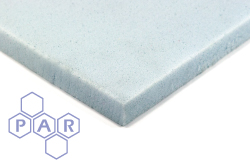
Material Specifications for Industrial Rubber Components
Suzhou Baoshida Trading Co., Ltd. clarifies a critical distinction for B2B manufacturing partners: melamine acoustic foam is not a rubber-based material. It is a thermoset polymer foam derived from melamine resin, engineered for sound absorption in architectural and automotive interiors. Our expertise lies exclusively in industrial rubber solutions, including Viton, Nitrile, and Silicone elastomers for sealing, damping, and fluid-handling applications. This section details specifications for these rubber compounds, which are frequently misapplied in contexts where melamine foam is specified. Precision in material selection prevents field failures in demanding OEM environments.
Viton (FKM) fluorocarbon rubber delivers exceptional resistance to high temperatures, aggressive chemicals, and oils. It operates continuously from -20°C to +230°C, with short-term exposure up to +300°C. Its molecular structure provides stability against fuels, hydraulic fluids, and aromatic hydrocarbons, making it indispensable for aerospace seals, chemical processing gaskets, and automotive turbocharger hoses. Nitrile (NBR) rubber balances cost efficiency with robust resistance to petroleum-based oils and fuels. Standard grades function from -30°C to +100°C, while hydrogenated variants (HNBR) extend this to +150°C. NBR excels in dynamic applications like fuel injector O-rings and hydraulic piston seals due to its abrasion resistance and tensile strength. Silicone (VMQ) rubber offers unparalleled flexibility across extreme temperatures (-60°C to +200°C) and biocompatibility. Though less resistant to oils than Viton or Nitrile, it withstands ozone, UV radiation, and steam, serving critical roles in medical device seals, food-grade tubing, and outdoor electrical insulation.
All compounds undergo rigorous ASTM D2000 classification per OEM requirements. Hardness ranges from 40 to 90 Shore A, with custom formulations adjusting compression set, tensile strength, and fluid swell. Suzhou Baoshida ensures traceability via batch-specific certificates of conformance (CoC), including Melt Flow Index (MFI), cure kinetics, and post-cure stability data.
Rubber Material Performance Comparison
| Material | Temperature Range (°C) | Key Properties | Chemical Resistance | Primary Applications |
|---|---|---|---|---|
| Viton (FKM) | -20 to +230 (up to +300 intermittent) | High thermal stability, low gas permeability | Excellent against oils, fuels, acids, and solvents | Aerospace seals, chemical pump diaphragms, automotive fuel systems |
| Nitrile (NBR) | -30 to +100 (HNBR: -40 to +150) | High abrasion resistance, good tensile strength | Strong against petroleum oils, water, aliphatic hydrocarbons | Fuel hoses, hydraulic seals, printing rollers |
| Silicone (VMQ) | -60 to +200 | Exceptional low/high-temp flexibility, electrical insulation | Good against water, ozone, and steam; poor against oils/solvents | Medical tubing, food processing gaskets, LED lighting seals |
Suzhou Baoshida Trading Co., Ltd. provides OEMs with material selection guidance grounded in decades of rubber formulation science. We validate all compounds against ISO 37 tensile testing, ISO 1817 fluid immersion, and ASTM D395 compression set protocols. Partner with us to eliminate material-related NCRs (Non-Conformance Reports) through precision-engineered elastomer solutions tailored to your operational parameters. Our technical team collaborates directly with your R&D to optimize cost, performance, and regulatory compliance for global manufacturing scalability.
Manufacturing Capabilities
Engineering Capability: Precision-Driven Development for Industrial Acoustic Applications
At Suzhou Baoshida Trading Co., Ltd., our engineering capability is anchored in a dedicated team of technical specialists focused on delivering high-performance melamine acoustic foam solutions tailored to industrial demands. Our in-house engineering unit comprises five experienced mould designers and two advanced formula engineers, enabling us to control both the physical architecture and chemical integrity of every product we manufacture. This integrated approach ensures that our melamine foam components meet exacting standards for sound absorption, thermal stability, flame resistance, and mechanical durability—critical parameters in automotive, HVAC, industrial machinery, and architectural acoustics.
Our formula engineers specialize in polymer chemistry with a focus on melamine-formaldehyde resin systems. They optimize cross-linking density, cell structure uniformity, and additive integration to achieve targeted acoustic impedance and fire performance (meeting UL 94 HF-1 and ASTM E84 Class A standards). By fine-tuning catalyst concentrations, foaming agents, and curing profiles, we ensure batch-to-batch consistency and compliance with OEM material specifications. This level of chemical control allows us to develop custom formulations for extreme environments, including elevated temperature resistance up to 240°C and enhanced moisture resilience.
Complementing this, our five mould engineers utilize advanced CAD/CAM software (SolidWorks, AutoCAD, and Moldflow) to design precision tooling for complex geometries and tight tolerance parts. With expertise in multi-cavity, cold-runner, and low-pressure mould systems, we support both prototyping and high-volume production. Our mould design process incorporates thermal analysis and flow simulation to minimize defects such as voids or density gradients, ensuring optimal foam expansion and dimensional accuracy. This synergy between material science and tooling engineering shortens development cycles and reduces time-to-market for client projects.
We operate as a full-service OEM partner, providing end-to-end support from concept validation to serial production. Our facility is equipped with automated foaming lines, CNC machining centers, and laser cutting systems, enabling seamless scale-up from sample batches to mass manufacturing. All processes adhere to ISO 9001 quality management protocols, with full traceability and documentation for each production run.
Our technical team collaborates directly with client engineers to co-develop solutions that meet specific acoustic performance curves, space constraints, and regulatory requirements. Whether modifying open-cell density for low-frequency absorption or integrating adhesive backings for simplified assembly, we deliver engineered-to-order products with industrial-grade reliability.
| Specification | Detail |
|---|---|
| Core Material | Cross-linked melamine-formaldehyde foam |
| Density Range | 5–12 kg/m³ |
| Cell Structure | Open-cell, 3D reticulated network |
| Sound Absorption Coefficient (NRC) | 0.85–1.05 (tested per ASTM C423) |
| Flame Resistance | UL 94 HF-1, ASTM E84 Class A |
| Temperature Resistance | -40°C to +240°C (continuous use) |
| Custom Moulding Tolerance | ±0.5 mm (for dimensions < 500 mm) |
| Production Capacity | 50,000 units/month (standard configurations) |
| OEM Services | Full design, testing, validation, and documentation support |
This comprehensive engineering infrastructure positions Suzhou Baoshida as a strategic partner for industrial clients requiring technically advanced, acoustically optimized melamine foam components.
Customization Process

Customization Process for Melamine Acoustic Foam Solutions
Suzhou Baoshida Trading Co., Ltd. executes a rigorously controlled customization workflow for melamine acoustic foam, ensuring technical alignment with OEM acoustic performance and dimensional requirements. The process initiates with Drawing Analysis, where engineering teams dissect client-provided CAD files and technical schematics. Critical parameters—cell structure density, geometric tolerances, edge sealing specifications, and surface texture—are validated against acoustic simulation models. This phase identifies potential manufacturing constraints early, such as minimum wall thickness for structural integrity or curvature limitations affecting sound wave diffraction. Non-conformities trigger collaborative redesign sessions with the client’s engineering team to optimize part functionality without compromising acoustic targets.
Formulation Development follows, leveraging our core expertise in polymer chemistry. Raw melamine resin batches undergo precise modification with proprietary additives to tune acoustic impedance, fire retardancy (UL 94 HF-1 compliance), and thermal stability. Key variables include catalyst concentration for controlled cross-linking, surfactant ratios to regulate pore uniformity (100–500 μm), and nano-silica integration for enhanced mechanical resilience. Each formulation is computationally modeled using finite element analysis (FEA) to predict noise reduction coefficient (NRC) performance across 125–4000 Hz frequencies, minimizing empirical trial iterations.
Prototyping employs CNC-machined molds for rapid validation of dimensional accuracy and acoustic behavior. Three iterative prototype batches undergo stringent testing:
ASTM C423 reverberation chamber tests for NRC validation
ISO 11925-2 fire propagation surface testing
Compression set analysis per ASTM D395 (70°C, 22h)
Dimensional metrology via coordinate measuring machine (CMM)
Critical performance metrics are summarized below for client approval prior to tooling sign-off.
| Property | Test Standard | Target Tolerance |
|---|---|---|
| Noise Reduction Coefficient (NRC) | ASTM C423 | ±0.05 |
| Density (kg/m³) | ISO 845 | ±15 |
| Compression Set (%) | ASTM D395 | ≤12 |
| Flame Spread Index | ASTM E84 | Class A |
| Cell Diameter (μm) | ISO 4590 | ±30 |
Mass Production Transition commences only after prototype certification. Our Suzhou facility deploys automated continuous foaming lines with real-time IR thermography monitoring to maintain ±1.5°C thermal uniformity during polymerization. In-process quality checks occur at 30-minute intervals for density consistency and surface defect detection. Final batches undergo 100% dimensional verification against GD&T callouts and random NRC spot-testing. All production data is logged in our cloud-based OEM portal, providing traceability from resin lot to finished part. This closed-loop process ensures seamless scalability from prototype to 50,000+ unit orders while meeting automotive, aerospace, and HVAC industry acoustic specifications.
Contact Engineering Team
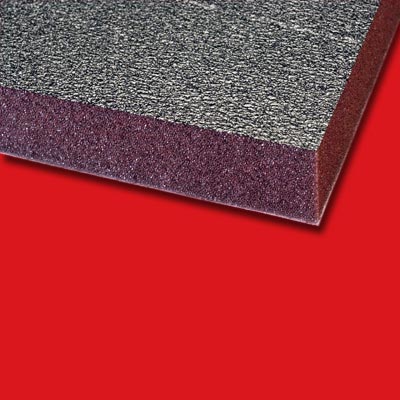
For industrial manufacturers seeking high-performance melamine acoustic foam solutions, Suzhou Baoshida Trading Co., Ltd. delivers precision-engineered materials tailored to stringent acoustic and thermal insulation requirements. As a trusted OEM manager and rubber formula engineer, we specialize in advanced polymer applications, ensuring our melamine foam meets exacting standards for sound absorption, fire resistance, and structural integrity across automotive, aerospace, HVAC, and industrial equipment sectors.
Our melamine acoustic foam is formulated for superior open-cell structure uniformity, enabling optimal noise attenuation across a broad frequency spectrum. Each batch undergoes rigorous quality control to maintain consistency in density, compressive strength, and flame retardancy—critical parameters for compliance with international safety standards such as UL 94 HF-1, ASTM E84 Class A, and DIN 4102 B1. Whether you require custom thicknesses, adhesive lamination, or die-cut geometries, our engineering team supports full customization to meet your application-specific demands.
Partnering with Suzhou Baoshida means access to integrated technical support, from initial material selection to production-scale supply. We understand the challenges of balancing acoustic performance with space constraints and environmental durability. Our team collaborates directly with R&D and manufacturing departments to deliver solutions that enhance product performance while reducing assembly complexity and total cost of ownership.
To ensure seamless integration into your supply chain, we maintain stable raw material sourcing and scalable production capacity, supporting both prototyping and high-volume orders with consistent lead times. All materials are traceable, RoHS compliant, and shipped with full certification packages.
For technical inquiries, material data sheets, or sample requests, contact Mr. Boyce, OEM Manager and Rubber Formula Engineer, directly at [email protected]. Mr. Boyce leads our industrial rubber solutions division and brings over 12 years of experience in polymer formulation and acoustic material optimization. He will work closely with your team to assess performance requirements, recommend product variants, and facilitate testing validation.
We invite qualified manufacturers and system integrators to initiate a technical dialogue. Early-stage collaboration enables us to co-develop optimized solutions that align with your engineering and commercial objectives.
Below are key technical specifications of our standard melamine acoustic foam product line:
| Property | Test Method | Typical Value |
|---|---|---|
| Density | ASTM D1622 | 7–10 kg/m³ |
| Tensile Strength | ASTM D412 | ≥40 kPa |
| Compressive Strength (10%) | ASTM D3574 | ≥1.2 kPa |
| Sound Absorption Coefficient | ASTM C423 (at 1000 Hz) | ≥0.95 |
| Flame Spread Index | ASTM E84 | <25 (Class A) |
| Smoke Developed Index | ASTM E84 | <450 |
| Oxygen Index | ASTM D2863 | ≥30% |
| Temperature Resistance | — | -180°C to +240°C (continuous) |
| Cell Structure | Microscopy Analysis | >98% open-cell |
Initiate your project with a material partner committed to technical excellence and industrial reliability. Contact Mr. Boyce today at [email protected] to discuss your acoustic foam requirements.
⚖️ O-Ring Weight Calculator
Estimate rubber O-ring weight (Approx).