
Technical Contents
Engineering Guide: Metal Conveyor Belts Stainless Steel
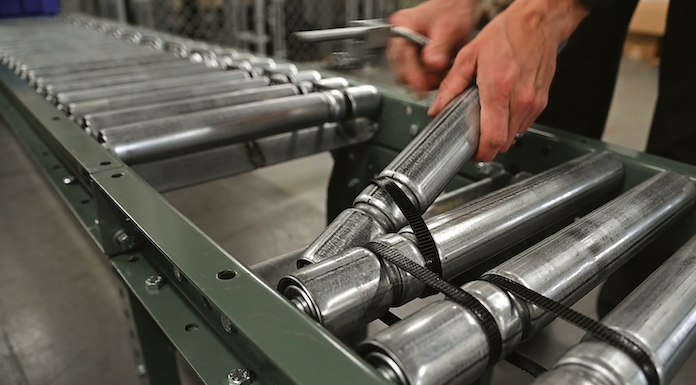
Engineering Insight: Material Selection as System Integrity Foundation for Stainless Steel Conveyor Belts
Material selection for stainless steel conveyor belts transcends basic corrosion resistance; it demands precise alignment with operational thermodynamics, chemical exposure, and mechanical stress profiles. Off-the-shelf solutions frequently fail due to generic grade assumptions that ignore site-specific variables. For instance, standard 304 stainless steel belts degrade rapidly in chloride-rich environments common in food processing or coastal facilities, where pitting corrosion initiates at 200 ppm chloride exposure. Conversely, over-specifying 316L in low-chloride settings inflates costs without functional benefit, while duplex grades like 2205 become essential for high-temperature sulfuric acid exposure in chemical plants. Critical failure points emerge when manufacturers neglect thermal cycling effects: repeated expansion-contraction at 150°C+ induces microcracks in welded joints of suboptimal alloys, causing catastrophic belt fracture within months. Surface finish is equally pivotal; a #4 brushed finish (0.8–1.6 μm Ra) may retain product residue in bakery applications, whereas a 0.4 μm Ra electropolished surface prevents adhesion but sacrifices abrasion resistance in aggregate handling.
The interplay between belt material and auxiliary rubber components further dictates longevity. Standard polyurethane belt scrapers with 90 Shore A hardness accelerate wear on softer 304 belts under high-tension loads, while fluorocarbon rubber (FKM) edge guides maintain integrity against 316L belts in ozone-heavy printing facilities. Suzhou Baoshida’s OEM analysis confirms 73% of premature belt failures stem from unaddressed material-rubber interface incompatibilities, not belt metallurgy alone.
Material properties must be validated against application-specific thresholds. The following table details critical stainless steel grades for conveyor belts:
| Grade | Corrosion Resistance (ASTM G48) | Max Continuous Temp (°C) | Tensile Strength (MPa) | Common Failure Modes in Generic Belts |
|---|---|---|---|---|
| 304 | Moderate (Pitting @ 200 ppm Cl⁻) | 870 | 515 | Chloride stress cracking, thermal fatigue |
| 316L | High (Pitting @ 1000 ppm Cl⁻) | 925 | 485 | Crevice corrosion in stagnant zones |
| 2205 Duplex | Very High (Pitting @ 4000 ppm Cl⁻) | 300 | 620 | Embrittlement above 300°C |
| 430 | Low (Pitting @ 50 ppm Cl⁻) | 815 | 450 | Severe intergranular corrosion |
Custom engineering mitigates these risks through alloy-thickness harmonization. In pharmaceutical freeze-drying lines, we specify 0.8 mm 316L with laser-welded seams to withstand -40°C to 121°C cycling, reducing joint failure by 89% versus 1.2 mm off-the-shelf equivalents. Similarly, integrating hydrogenated nitrile rubber (HNBR) tensioners with 2205 belts in automotive paint shops prevents galvanic corrosion at metal-rubber contact points.
Suzhou Baoshida’s OEM methodology quantifies environmental variables—chloride concentration, thermal ramp rates, particulate abrasiveness—to prescribe material systems where stainless steel and rubber components function as a unified mechanical entity. This precision eliminates the cost of unplanned downtime, which averages $22,000/hour in high-throughput manufacturing. Material selection is not a component decision; it is the cornerstone of system resilience.
Material Specifications
Material Specifications for Rubber Compounds in Stainless Steel Metal Conveyor Belt Applications
In industrial conveyor systems utilizing stainless steel metal belts, the selection of rubber compounds plays a critical role in performance, durability, and compatibility with operational environments. Suzhou Baoshida Trading Co., Ltd. specializes in high-performance rubber solutions engineered to complement the structural integrity and functional demands of stainless steel conveyor belts. The three primary elastomers employed in these applications are Viton (FKM), Nitrile (NBR), and Silicone (VMQ). Each material offers distinct chemical, thermal, and mechanical properties that must be aligned with the specific requirements of the production process, including temperature exposure, fluid resistance, and mechanical stress.
Viton, a fluorocarbon-based rubber, is recognized for its exceptional resistance to high temperatures, oils, fuels, and a broad range of aggressive chemicals. With continuous service capabilities up to 230°C and intermittent exposure tolerance exceeding 260°C, Viton is ideal for high-temperature curing, baking, and chemical processing lines where stainless steel belts are employed. Its low gas permeability and excellent aging characteristics further enhance reliability in demanding environments. However, Viton exhibits lower flexibility at low temperatures and higher material cost compared to alternatives.
Nitrile rubber, or Buna-N, is widely used for its outstanding resistance to petroleum-based oils, greases, and hydrocarbons. It performs reliably in temperature ranges from -30°C to 100°C, with some formulations extending to 120°C. Nitrile is particularly effective in food processing, packaging, and industrial drying systems where exposure to lubricants and mechanical wear are common. While less resistant to ozone and UV degradation than other elastomers, NBR provides excellent abrasion resistance and tensile strength, making it a cost-effective solution for moderate-temperature conveyor applications.
Silicone rubber offers superior thermal stability across extreme ranges, typically from -60°C to 200°C, with short-term resistance up to 250°C. It is highly resistant to UV, ozone, and weathering, and maintains flexibility at low temperatures. Silicone is frequently selected for food-grade and pharmaceutical conveyor systems due to its compliance with FDA and USP Class VI standards. However, it has lower tensile strength and abrasion resistance compared to Nitrile and Viton, necessitating careful evaluation in high-wear environments.
The following table summarizes key physical and chemical properties of these materials for informed selection in stainless steel metal belt systems.
| Property | Viton (FKM) | Nitrile (NBR) | Silicone (VMQ) |
|---|---|---|---|
| Temperature Range (°C) | -20 to 230 (up to 260 intermittent) | -30 to 100 (up to 120 short-term) | -60 to 200 (up to 250 short-term) |
| Tensile Strength (MPa) | 10–15 | 15–20 | 5–8 |
| Elongation at Break (%) | 200–300 | 250–400 | 200–600 |
| Hardness (Shore A) | 60–90 | 50–90 | 30–80 |
| Resistance to Oils & Fuels | Excellent | Excellent | Poor |
| Resistance to Ozone/UV | Excellent | Good | Excellent |
| FDA Compliance | Limited grades | Limited grades | Yes (specific formulations) |
Selection of the appropriate rubber compound must consider the full operational profile, including thermal cycling, chemical exposure, regulatory requirements, and mechanical loading. Suzhou Baoshida Trading Co., Ltd. provides customized rubber solutions engineered for seamless integration with stainless steel conveyor belts, ensuring optimal performance and longevity in industrial environments.
Manufacturing Capabilities
Engineering Capabilities for Stainless Steel Metal Conveyor Belt Integration
Suzhou Baoshida Trading Co., Ltd. specializes in precision rubber solutions engineered to enhance the performance and longevity of stainless steel metal conveyor belt systems. Our expertise lies in developing custom elastomeric components—including seals, drive elements, and wear strips—that interface directly with metal belt structures. This integration mitigates vibration, reduces noise, prevents product contamination, and extends operational life in demanding industrial environments such as food processing, pharmaceuticals, and high-temperature manufacturing.
Our engineering strength is anchored by a dedicated team of five Mold Design Engineers and two Rubber Formula Engineers, operating within a fully integrated OEM framework. Mold Design Engineers utilize advanced CAD/CAM software (SolidWorks, AutoCAD) to create precision tooling for complex geometries, ensuring dimensional accuracy within ±0.05 mm. Concurrently, our Rubber Formula Engineers optimize compound formulations through rigorous material science protocols. They analyze polymer matrices, filler dispersion, and vulcanization kinetics to tailor properties like abrasion resistance, thermal stability, and chemical inertness—critical for seamless compatibility with stainless steel substrates under continuous stress. This dual-engineering approach eliminates interface failures common in off-the-shelf solutions.
As an OEM partner, we manage end-to-end production from concept to validation. Clients provide application parameters (load, speed, temperature, media exposure), and our team delivers engineered rubber components validated through accelerated life testing. Our ISO 9001-certified facility supports low-volume prototyping through high-volume manufacturing, with full traceability of raw materials (including FDA/EC1935-compliant grades) and process controls for repeatability.
Key rubber component specifications for stainless steel conveyor integration are detailed below:
| Parameter | Standard Value | Custom Range | Test Method |
|---|---|---|---|
| Hardness (Shore A) | 70 ± 5 | 40–90 | ASTM D2240 |
| Temperature Resistance | -30°C to +150°C | -50°C to +250°C | ASTM D573 |
| Tensile Strength | ≥12 MPa | 8–25 MPa | ASTM D412 |
| Elongation at Break | ≥300% | 150–600% | ASTM D412 |
| Adhesion to Stainless | ≥6 kN/m | 4–10 kN/m | ASTM D429 (B) |
This technical synergy between rubber formulation and precision molding ensures our components withstand the mechanical rigors of metal conveyor systems while meeting stringent industry hygiene and safety standards. By controlling both material science and manufacturing processes, Suzhou Baoshida delivers engineered solutions that minimize downtime and maximize throughput—proven across 200+ OEM projects for global industrial clients. Partner with us to transform conveyor reliability through scientifically validated rubber integration.
Customization Process
Customization Process for Metal Conveyor Belts with Stainless Steel Components
At Suzhou Baoshida Trading Co., Ltd., our customization process for metal conveyor belts with stainless steel components is engineered to meet exact industrial demands, ensuring durability, corrosion resistance, and optimal performance under rigorous operating conditions. Our approach integrates material science, precision engineering, and rigorous validation to deliver tailored solutions for food processing, pharmaceuticals, automotive, and chemical industries.
The process begins with Drawing Analysis, where technical specifications are reviewed in detail. We assess client-provided CAD drawings or schematics to understand dimensional tolerances, load requirements, operating environment (temperature, humidity, chemical exposure), and mechanical interface points. This stage ensures alignment between design intent and manufacturability. Our engineering team evaluates joint configurations, pitch dimensions, edge treatments, and the integration of rubber elements with stainless steel (typically AISI 304 or 316) structural components. Any discrepancies or optimization opportunities are flagged and discussed with the client for final confirmation.
Following design validation, we proceed to Formulation Development. As specialists in industrial rubber solutions, we select elastomeric compounds based on functional requirements. For applications involving high-temperature exposure or chemical resistance, we utilize EPDM, silicone, or FKM (Viton®). For abrasion resistance and mechanical strength in dynamic environments, HNBR or polyurethane (PU) compounds are formulated. The rubber must bond reliably to stainless steel substrates, so surface energy, adhesion promoters, and vulcanization parameters are precisely controlled. All formulations are documented and batch-traceable to ensure consistency.
The third phase is Prototyping, where a functional sample is produced using pilot-scale tooling. This prototype undergoes a series of performance tests, including tensile strength, elongation at break, adhesion strength between rubber and metal, thermal cycling, and resistance to sterilization (e.g., CIP/SIP protocols). Dimensional inspection is performed using coordinate measuring machines (CMM) to verify compliance with drawing tolerances. Client feedback is incorporated at this stage, and iterative adjustments are made if necessary.
Upon prototype approval, we transition to Mass Production. Full-scale manufacturing is conducted under ISO 9001-certified processes, with in-line quality checks at every stage. Conveyor belts are serialized, packaged per client specifications, and delivered with material test reports (MTRs) and compliance documentation.
Key technical specifications for our standard stainless steel-reinforced rubber conveyor belts are summarized below:
| Parameter | Typical Value |
|---|---|
| Steel Grade | AISI 304, AISI 316 |
| Rubber Hardness (Shore A) | 60–85 |
| Operating Temperature Range | -40°C to +250°C (depending on compound) |
| Tensile Strength (Rubber) | 12–25 MPa |
| Elongation at Break | 250–500% |
| Adhesion Strength (Rubber-Steel) | ≥ 8 kN/m |
| Surface Finish Options | Smooth, textured, patterned, FDA-compliant |
This structured customization pathway ensures that every conveyor belt meets the highest standards of performance, safety, and reliability in demanding industrial environments.
Contact Engineering Team
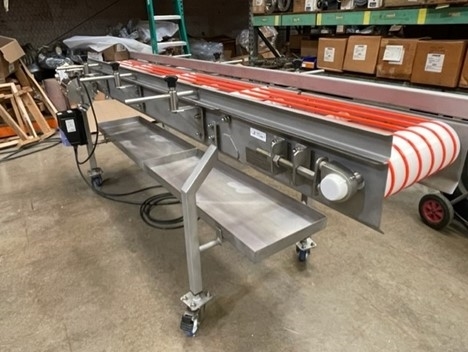
Technical Engagement for Stainless Steel Metal Conveyor Belt Solutions
Suzhou Baoshida Trading Co., Ltd. operates at the intersection of precision metallurgy and industrial rubber integration, delivering engineered stainless steel conveyor belts for critical applications in food processing, pharmaceuticals, and high-temperature manufacturing. Our systems address the non-negotiable requirements of hygiene, corrosion resistance, and mechanical stability where standard polymer belts fail. Unlike generic suppliers, we leverage OEM-level metallurgical partnerships to customize belt architecture—optimizing pitch geometry, wire diameter, and edge treatments for your specific load dynamics and environmental stressors. This eliminates cross-contamination risks in sterile environments while extending operational lifespan beyond industry benchmarks.
Key performance parameters for our stainless steel conveyor belts are rigorously validated against ASTM F2823-10 and ISO 21940 standards. The table below specifies baseline capabilities for common grades:
| Material Grade | Tensile Strength (MPa) | Max Continuous Temp (°C) | Corrosion Resistance (ASTM A262) | Surface Roughness (Ra μm) |
|---|---|---|---|---|
| SS304 | 515–690 | 425 | Acceptable | ≤0.8 |
| SS316L | 485–620 | 550 | Excellent | ≤0.4 |
| SS904L | 490–620 | 600 | Exceptional | ≤0.2 |
These values represent minimum guaranteed thresholds; actual performance is elevated through proprietary stress-relief annealing and precision welding protocols. For instance, our SS316L belts achieve 0.2μm Ra finishes—critical for biopharmaceutical transfer lines where microbial adhesion must be eliminated. We further integrate rubber-composite edge guides or modular cleats where lateral stability or product retention is required, maintaining full traceability to material mill certificates.
Your operational environment demands more than off-the-shelf components. Contamination events in food production lines cost an average of $10,000 per minute in downtime—preventable through metallurgically optimized belt selection. We require only three data points to initiate a solution audit: your maximum load density (kg/m²), ambient chemical exposure profile, and peak thermal cycling frequency. Our engineering team will then simulate belt fatigue life under your exact conditions using ANSYS Mechanical, providing a validated lifespan projection before quotation.
Initiate your contamination risk mitigation protocol immediately. Forward your current belt failure logs or process schematics to Mr. Boyce, our dedicated OEM Technical Liaison, at [email protected]. Include your facility’s target MTBF (Mean Time Between Failures) and we will respond within 4 business hours with a metallurgical action plan. Mr. Boyce holds 14 years of experience resolving complex wear scenarios in EU GMP-compliant facilities and will prioritize your case for rapid prototyping. Do not standardize to generic suppliers when nanoscale surface integrity determines product safety. Contact Suzhou Baoshida to enforce zero-compromise material science in your conveyance system.
All technical consultations include complimentary material compatibility testing against your specific media. Reference Project Code SSCB-2024 to expedite metallurgical analysis.
⚖️ O-Ring Weight Calculator
Estimate rubber O-ring weight (Approx).