
Technical Contents
Engineering Guide: Neoprene Spacers
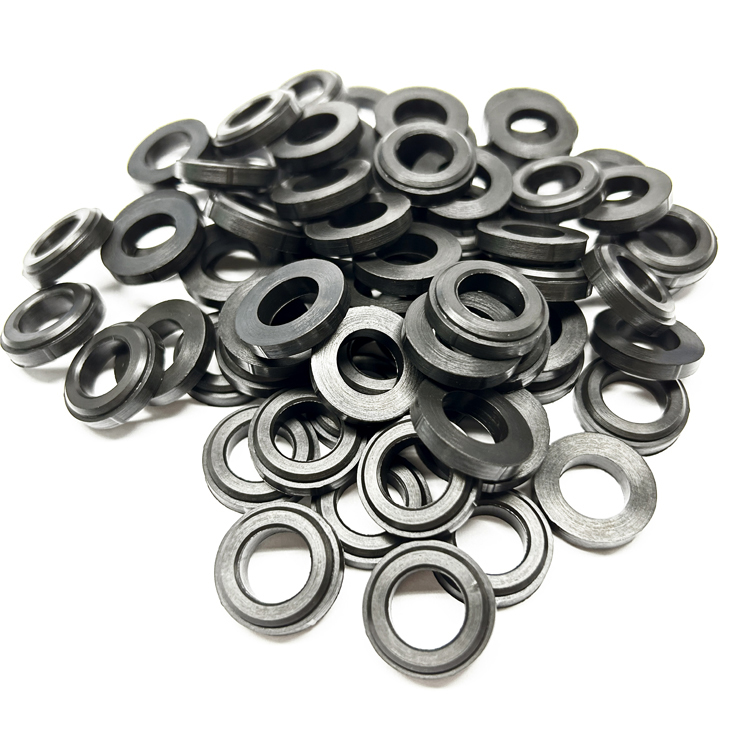
Engineering Insight: The Critical Role of Material Selection in Neoprene Spacers
In industrial assembly and mechanical design, spacers are often perceived as passive components—simple placeholders ensuring alignment or maintaining clearance. However, in dynamic environments, the performance of a spacer is far from passive. Neoprene spacers, in particular, must endure compression, shear, temperature fluctuations, and exposure to oils, ozone, and UV radiation. The failure to recognize these demands leads to a common pitfall: reliance on off-the-shelf neoprene spacers that are dimensionally adequate but materially insufficient.
Material selection is the cornerstone of spacer reliability. Neoprene (polychloroprene) is valued for its balanced resistance to heat, weathering, and many chemicals, along with good resilience and damping characteristics. However, not all neoprene formulations are equivalent. Commercial-grade neoprene used in generic spacers often lacks the tailored compounding required for sustained industrial performance. These off-the-shelf products are typically manufactured using high-volume, low-cost recipes that prioritize cost over longevity, leading to premature degradation under stress.
One of the most frequent failure modes observed is compression set—the inability of the spacer to recover its original thickness after prolonged load. In applications such as machinery mounts or electrical enclosures, this results in loosening, misalignment, or loss of sealing integrity. Off-the-shelf spacers often use lower-grade neoprene with higher plasticizer content, which migrates over time, accelerating hardening and embrittlement.
Another critical factor is environmental compatibility. Standard neoprene may resist mild oils and ozone, but in industrial settings involving hydraulic fluids, solvents, or extended outdoor exposure, performance degrades rapidly. Custom-formulated neoprene, on the other hand, incorporates additives to enhance resistance to specific agents, ensuring long-term functionality.
At Suzhou Baoshida Trading Co., Ltd., we emphasize engineered material solutions over dimensional replication. Our neoprene spacers are formulated based on application-specific requirements, including load profile, temperature range, and exposure conditions. This approach ensures not only dimensional accuracy but also material integrity throughout the product lifecycle.
The following table outlines key performance specifications comparing standard off-the-shelf neoprene spacers with our engineered solutions:
| Property | Off-the-Shelf Neoprene Spacer | Engineered Neoprene Spacer (Baoshida) |
|---|---|---|
| Hardness (Shore A, 70°C) | 50–60 | 60–70 (customizable) |
| Tensile Strength (MPa) | ≥10 | ≥15 |
| Elongation at Break (%) | ≥200 | ≥250 |
| Compression Set (22h, 70°C) | ≤30% | ≤15% |
| Heat Resistance (°C) | 100 | 120 (continuous) |
| Ozone Resistance | Moderate | Excellent (ASTM D1149 compliant) |
| Fluid Resistance (oil, UV) | Limited | Enhanced (formulation-specific) |
In high-stakes industrial applications, spacer failure is not an isolated event—it cascades into system inefficiencies, downtime, and safety risks. The selection of properly engineered neoprene spacers is not a cost but a strategic investment in operational continuity.
Material Specifications
Material Specifications for Industrial Neoprene Spacer Applications
Suzhou Baoshida Trading Co., Ltd. provides precision-engineered rubber spacers for critical industrial assembly applications. While commonly referenced as “neoprene,” our spacers utilize advanced elastomer formulations tailored to operational demands. Material selection directly impacts spacer longevity, dimensional stability, and resistance to environmental stressors. This section details three primary compounds: Viton (FKM), Nitrile (NBR), and Silicone (VMQ), emphasizing their structural and chemical performance parameters for spacer functionality.
Viton spacers excel in extreme thermal and chemical exposure scenarios. With a continuous service temperature range of -20°C to +230°C and intermittent peaks up to +260°C, they maintain integrity in aerospace, semiconductor, and high-temperature hydraulic systems. Their fluorocarbon backbone delivers exceptional resistance to oils, fuels, acids, and ozone. Tensile strength typically ranges from 12 to 18 MPa, with a hardness of 60–90 Shore A. Critical for spacer applications, Viton exhibits low compression set (≤25% per ASTM D395 after 70 hrs at 200°C), ensuring consistent load distribution under prolonged stress.
Nitrile spacers offer optimal cost-performance balance for hydrocarbon-rich environments. Operating effectively between -30°C and +120°C (extended variants to +150°C), they provide superior resistance to petroleum-based fluids, greases, and aliphatic hydrocarbons. Standard NBR compounds achieve 10–20 MPa tensile strength and 50–90 Shore A hardness. Compression set values (≤30% per ASTM D395 at 100°C) make them suitable for automotive fuel systems and industrial machinery where oil exposure is prevalent. Limitations include poor ozone resistance and reduced flexibility below -40°C.
Silicone spacers prioritize extreme temperature flexibility and biocompatibility. They function reliably from -60°C to +200°C, with specialty grades enduring +230°C. Silicone maintains elasticity across this range, crucial for vibration-damping spacers in medical devices or electronics. Tensile strength is moderate (5–10 MPa), but elongation at break exceeds 300%. Hardness spans 30–80 Shore A. While resistant to water, oxygen, and UV, silicone exhibits poor tear strength and limited hydrocarbon resistance. Compression set is excellent (≤20% per ASTM D395 at 200°C), though swelling occurs in non-polar solvents.
The comparative analysis below details critical specifications per ASTM D2000 standards for spacer-relevant properties. All values represent typical commercial-grade formulations; custom compounds are available for specialized OEM requirements.
| Property | Viton (FKM) | Nitrile (NBR) | Silicone (VMQ) |
|---|---|---|---|
| Temperature Range (°C) | -20 to +230 | -30 to +120 | -60 to +200 |
| Tensile Strength (MPa) | 12–18 | 10–20 | 5–10 |
| Hardness (Shore A) | 60–90 | 50–90 | 30–80 |
| Compression Set (%)* | ≤25 | ≤30 | ≤20 |
| Key Chemical Resistance | Oils, acids, fuels | Petroleum fluids | Water, ozone |
| Key Limitation | Cost, low-temp flexibility | Ozone, polar solvents | Hydrocarbons, tear strength |
*ASTM D395 Method B, 22 hrs at 150°C for Viton/Silicone; 70 hrs at 100°C for NBR
Material selection must align with spacer geometry, load profile, and exposure conditions. Suzhou Baoshida’s engineering team validates compound suitability through dynamic compression testing and fluid immersion analysis per OEM specifications. For applications exceeding standard parameters, our R&D department develops proprietary blends with enhanced resilience to specific stressors, ensuring spacer performance meets the exacting demands of modern industrial assembly.
Manufacturing Capabilities

Engineering Excellence in Neoprene Spacer Manufacturing
At Suzhou Baoshida Trading Co., Ltd., our engineering capability forms the backbone of our industrial rubber solutions, particularly in the precision manufacturing of neoprene spacers. With a dedicated team of five experienced mould engineers and two specialized rubber formula engineers, we integrate material science with advanced tooling design to deliver high-performance components tailored to exacting OEM specifications. Our collaborative engineering workflow ensures that every neoprene spacer is optimized for mechanical performance, environmental resistance, and long-term reliability in demanding applications.
Our formula engineers possess deep expertise in chloroprene rubber (CR) chemistry, enabling precise customization of neoprene compounds to meet specific requirements such as oil resistance, ozone stability, compression set, and temperature range. By adjusting polymer structure, filler systems, vulcanizing agents, and additives, we develop proprietary formulations that enhance durability under dynamic stress and exposure to industrial environments. This in-house formulation capability allows us to go beyond standard-grade neoprene, offering clients solutions engineered for performance in automotive, electrical, marine, and industrial machinery applications.
Complementing our material science proficiency, our five mould engineers bring extensive experience in precision rubber mould design and tooling optimization. Utilizing CAD/CAM systems and finite element analysis (FEA), they ensure that each mould achieves optimal flow dynamics, dimensional accuracy, and cycle efficiency. This technical rigor minimizes flash, reduces part variation, and supports tight tolerance control—critical for spacers requiring consistent thickness, parallelism, and fitment. Our team also specializes in multi-cavity and family moulds, enabling cost-effective production scaling without compromising quality.
As an OEM-focused manufacturer, Suzhou Baoshida provides full technical collaboration from concept to mass production. We support custom geometry development, rapid prototyping, DFM (Design for Manufacturability) feedback, and first-article inspection reporting. Our engineering team works directly with client specifications to validate material selection, part design, and performance criteria, ensuring seamless integration into final assemblies.
The following table outlines typical technical specifications achievable for our neoprene spacers:
| Property | Standard Range | Test Method |
|---|---|---|
| Hardness (Shore A) | 40–80 | ASTM D2240 |
| Tensile Strength | ≥10 MPa | ASTM D412 |
| Elongation at Break | ≥250% | ASTM D412 |
| Compression Set (22 hrs, 70°C) | ≤30% | ASTM D395 |
| Operating Temperature | -40°C to +100°C | Internal |
| Specific Gravity | 1.45–1.55 | ASTM D297 |
Through the synergy of advanced rubber formulation and precision mould engineering, Suzhou Baoshida delivers neoprene spacers that meet the highest standards of industrial performance. Our OEM capabilities are built on technical transparency, iterative development, and scalable manufacturing—ensuring that every component supports the integrity and efficiency of the systems they serve.
Customization Process

Neoprene Spacer Customization Process: Precision Engineering Workflow
At Suzhou Baoshida Trading Co., Ltd., our neoprene spacer customization follows a rigorously defined four-stage protocol to ensure dimensional accuracy, material resilience, and seamless integration into client assemblies. This systematic approach mitigates production risks while optimizing performance under industrial stress conditions.
Drawing Analysis
Initial engagement begins with comprehensive technical drawing evaluation. Our engineering team scrutinizes geometric dimensioning and tolerancing (GD&T), critical feature callouts, and interface requirements. We cross-reference client specifications against ISO 3302-1:2014 for rubber tolerance classes, identifying potential conflict points such as excessive aspect ratios or unsupported thin walls. This phase includes feasibility assessment for molding techniques—compression, transfer, or injection—based on part geometry and volume requirements. Any ambiguities in load distribution or environmental exposure parameters are resolved collaboratively with the client prior to formulation.
Formulation Development
Leveraging our proprietary CR compound database, we engineer neoprene formulations targeting spacer-specific performance demands. Key adjustments include optimizing sulfur donor systems to minimize compression set (critical for sustained load retention) and incorporating specialty additives for ozone resistance in outdoor applications. Each batch is tailored to balance Shore A hardness, tensile strength, and low-temperature flexibility per the operational profile. For instance, spacers exposed to hydraulic fluids receive enhanced NBR-blend variants, while high-vibration environments necessitate higher resilience modifiers. All formulations undergo accelerated aging simulations per ASTM D573 before prototyping.
Prototyping & Validation
Precision-molded prototypes are produced using production-intent tooling. Dimensional verification employs CMM inspection against original CAD data, with critical features measured to ±0.05mm accuracy. Functional testing includes:
Compression deflection analysis per ASTM D395 (Method B)
Dynamic fatigue cycling at 5Hz for 10,000 cycles
Fluid resistance testing against specified media (e.g., ISO 1817)
Client approval requires documented evidence of performance metrics meeting or exceeding target thresholds. Iterations are executed within 72 hours using our rapid compound adjustment protocols.
Mass Production Implementation
Upon prototype sign-off, we transition to controlled series production. Each batch undergoes real-time statistical process control (SPC) monitoring of key parameters:
Mooney viscosity (ML 1+4 @ 100°C) held within ±3 MU
Cure characteristics (t90) tracked via automated rheometers
Hardness deviation capped at ±2 Shore A points
Full traceability is maintained through lot-specific material certificates and mold cavity serialization. Final inspection includes 100% visual screening and AQL 1.0 sampling for dimensional compliance.
Critical Neoprene Spacer Specifications
The table below defines standard performance boundaries for our engineered CR compounds. Custom ranges are achievable within material science constraints.
| Property | Test Standard | Typical Range | Units |
|---|---|---|---|
| Hardness | ASTM D2240 | 40–90 | Shore A |
| Tensile Strength | ASTM D412 | 10.0–22.0 | MPa |
| Elongation at Break | ASTM D412 | 200–500 | % |
| Compression Set (22h/70°C) | ASTM D395 B | ≤25 | % |
| Temperature Range | ISO 188 | -40 to +100 | °C |
| Specific Gravity | ASTM D297 | 1.25–1.45 | — |
This end-to-end process ensures Suzhou Baoshida delivers neoprene spacers that consistently meet exacting OEM requirements, reducing field failures and extending product lifecycle in demanding industrial ecosystems. All stages are governed by IATF 16949 quality management protocols.
Contact Engineering Team
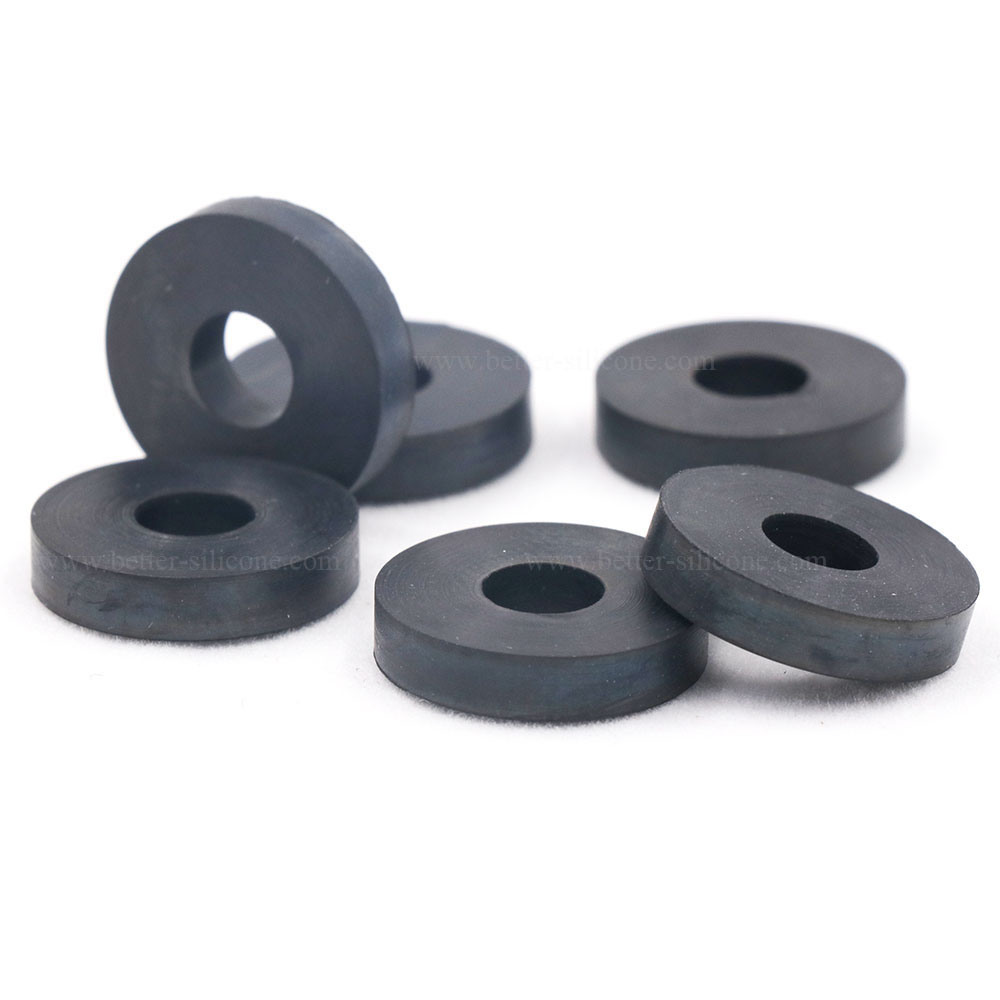
For industrial manufacturers seeking precision-engineered neoprene spacers tailored to demanding operational environments, Suzhou Baoshida Trading Co., Ltd. stands as a trusted partner in high-performance rubber solutions. With years of specialized expertise in custom elastomer formulation and industrial component manufacturing, we deliver spacers that meet exact mechanical, thermal, and chemical resistance requirements across automotive, aerospace, electronics, and heavy machinery sectors. Our neoprene (polychloroprene) compounds are engineered for consistent durometer control, compression set resistance, and long-term durability under dynamic loading conditions.
Neoprene spacers produced by Baoshida are not generic off-the-shelf components. Each spacer is developed through a rigorous process that begins with material characterization and ends with precision die-cutting or molding to meet client-specified dimensions and tolerances. We understand that spacer performance directly influences system alignment, vibration damping, and structural integrity. That is why our engineering team works closely with OEMs and Tier-1 suppliers to validate material selection, geometry, and environmental compatibility before full-scale production.
Our manufacturing capabilities include water jet cutting, compression molding, and CNC trimming, ensuring dimensional accuracy down to ±0.1 mm. All products undergo batch testing for tensile strength, elongation at break, and hardness deviation to guarantee compliance with international quality standards, including ISO 9001:2015. Whether you require low-volume prototypes or high-volume production runs, our agile supply chain and in-house tooling department enable rapid turnaround without compromising quality.
Below are typical technical specifications for our standard neoprene spacer formulations. Custom modifications are available upon request.
| Property | Test Method | Value |
|---|---|---|
| Durometer Hardness (Shore A) | ASTM D2240 | 40–90 ±5 |
| Tensile Strength | ASTM D412 | 10–18 MPa |
| Elongation at Break | ASTM D412 | 250–400% |
| Compression Set (22 hrs at 70°C) | ASTM D395B | ≤25% |
| Operating Temperature Range | — | -40°C to +120°C |
| Color Options | — | Black, Grey, Red, Custom |
| Density | ASTM D297 | 1.45–1.55 g/cm³ |
| Dielectric Strength | ASTM D149 | 15–20 kV/mm |
All spacers can be manufactured with tight tolerance controls, chamfered edges, and surface textures optimized for specific mating components. We also offer flame-retardant, ozone-resistant, and low-outgassing variants for specialized industrial and electronic applications.
To discuss your neoprene spacer requirements with our lead engineer and OEM Manager, Mr. Boyce, please contact us directly at [email protected]. Mr. Boyce brings over a decade of experience in rubber formulation and industrial component integration, providing technical guidance from concept to mass production. We respond to all inquiries within 12 business hours and offer free material samples, CAD support, and application analysis for qualified projects.
Partner with Suzhou Baoshida Trading Co., Ltd. for neoprene spacers that combine scientific precision with industrial reliability. Your next-generation assembly demands components you can trust—components we are engineered to deliver.
⚖️ O-Ring Weight Calculator
Estimate rubber O-ring weight (Approx).