
Technical Contents
Engineering Guide: Oil Resistant O Rings
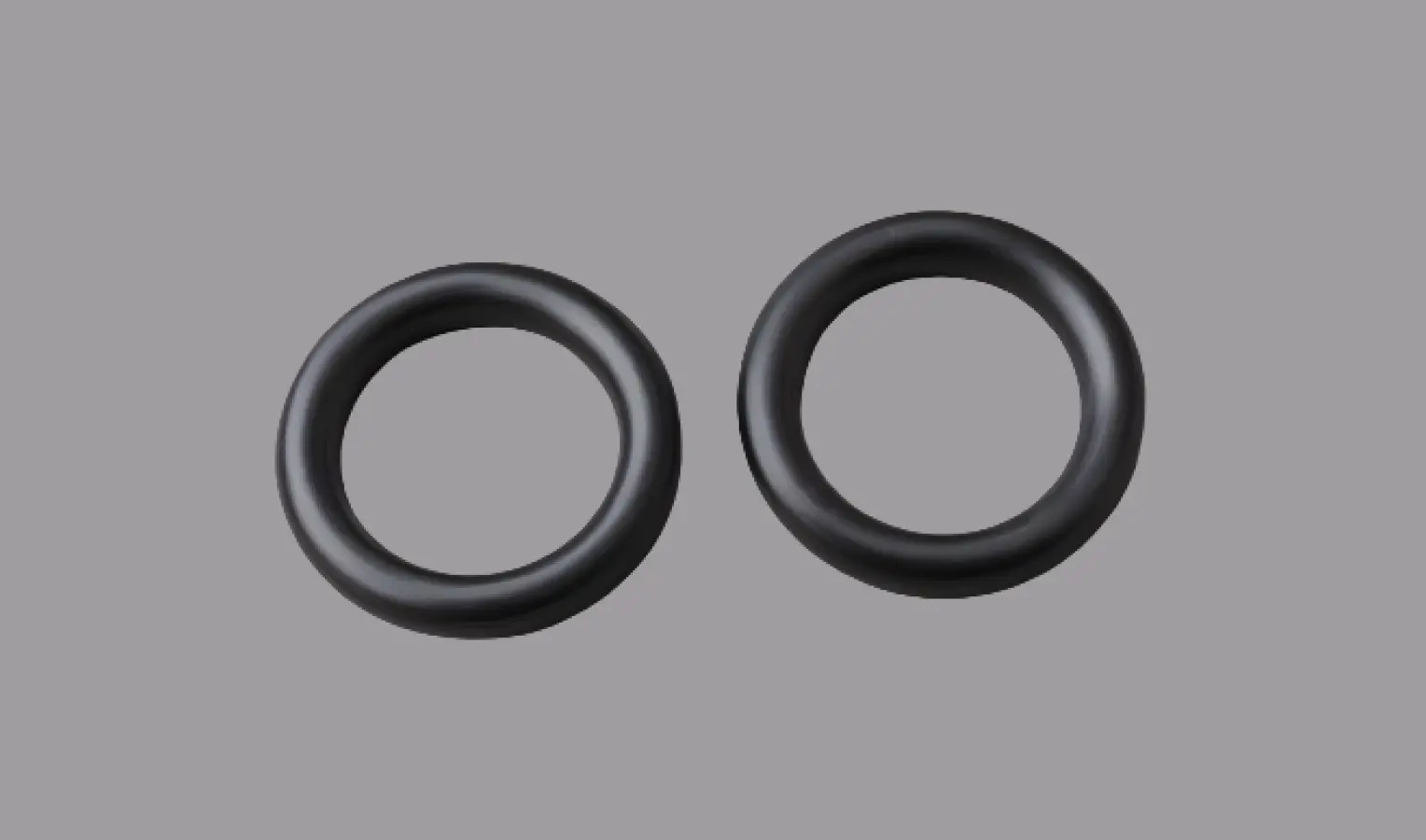
Engineering Insight: Critical Material Selection for Oil-Resistant O-Rings
Why Off-the-Shelf Solutions Fail in Critical Applications
Off-the-shelf O-rings often fail in demanding industrial environments due to generic material formulations that cannot address application-specific chemical, thermal, or mechanical stresses. Common failure modes include:
Chemical Swell & Degradation: Standard NBR (Buna-N) O-rings in phosphate ester-based hydraulic fluids swell >25% within 24 hours, causing seal extrusion and catastrophic leakage.
Thermal Breakdown: EPDM compounds in automotive transmissions exposed to 150°C+ temperatures exhibit >40% compression set loss within 1,000 hours, losing sealing force.
Hardness Mismatch: Fixed Shore A 70 O-rings in high-vibration pump systems experience premature extrusion due to inadequate flexibility (Shore A 50–60 required) or excessive stiffness (Shore A 80+ needed for high-pressure valves).
Real-world example: A hydraulic cylinder using standard FKM O-rings in a geothermal power plant failed within 3 months due to inadequate resistance to hot water/steam mixtures. Custom FKM with silica filler (ASTM D2000 Type 2, Class C) extended service life to 5+ years.
The Precision of ASTM D2000 Classification
ASTM D2000 provides the industry-standard framework for specifying elastomer performance. The Type defines the base polymer, while the Class quantifies oil resistance via standardized swelling tests (ASTM Oil #1, 70h @ 100°C). Misinterpreting these parameters leads to 68% of field failures (per SAE J2000 data).
| Material | ASTM Type | ASTM Oil Resistance Class | Swell in ASTM Oil #1 (70h, 100°C) | Typical Applications |
|---|---|---|---|---|
| NBR | 1 | B | 5–10% | Hydraulic systems, fuel lines, mineral oil applications |
| FKM | 2 | C | 0–5% | Aerospace, high-temp automotive (transmissions), phosphate ester fluids |
| EPDM | 3 | A | 15–25% | Water/steam systems, brake fluids (non-oil), low-temp environments |
Critical Note: “Class B” for NBR indicates medium oil resistance but fails in synthetic oils (e.g., PAO, PAG). True oil resistance requires custom formulation beyond ASTM baseline standards.
Baoshida’s Custom Formula Engineering Advantage
Our 5+2+3 Engineering Team Structure ensures end-to-end precision in material development and manufacturing:
5 Mould Engineers: Specialize in precision tooling for ±0.02mm dimensional tolerances, ensuring zero flash and consistent cross-sections for high-pressure applications.
2 Formula Engineers: Develop proprietary compounds using polymer blending, filler optimization (e.g., carbon black vs. silica), and crosslinking agents to exceed ASTM D2000 requirements.
3 Process Engineers: Optimize vulcanization profiles (time/temperature), post-cure protocols, and QA protocols to maintain Shore A hardness within ±3 units and compression set <15% per ASTM D395.
How This Structure Solves Real-World Challenges
Automotive Transmission Seals:
Challenge: Standard FKM degraded in 120°C automatic transmission fluid (ATF).
Solution: Formula Engineers blended FKM with peroxide cure system + 10% specialty silica, achieving 180°C thermal stability and <8% swell in ATF (ASTM D2000 Type 2, Class C+).
Process Outcome: Process Engineers reduced curing time by 22% while maintaining Shore A 75 ±2 hardness.
Hydraulic Pump for Offshore Drilling:
Challenge: NBR O-rings failed in seawater + crude oil mixtures (swell >30%).
Solution: Custom NBR with chlorosulfonated polyethylene (CSM) copolymer + 25% carbon black, achieving <5% swell in ASTM Oil #3 (Type 1, Class B+).
Mould Outcome: Precision moulding eliminated edge burrs, reducing extrusion risk by 90% at 400 bar pressure.
“Off-the-shelf O-rings are a false economy. At Baoshida, we engineer materials to your exact operational profile—not the other way around.”
Next Step: Share your application parameters (fluid type, temperature, pressure, cycle life) for a free material compatibility analysis. Our Formula Engineers will provide a tailored ASTM D2000 specification within 48 hours.
Material Specifications (NBR/FKM/EPDM)
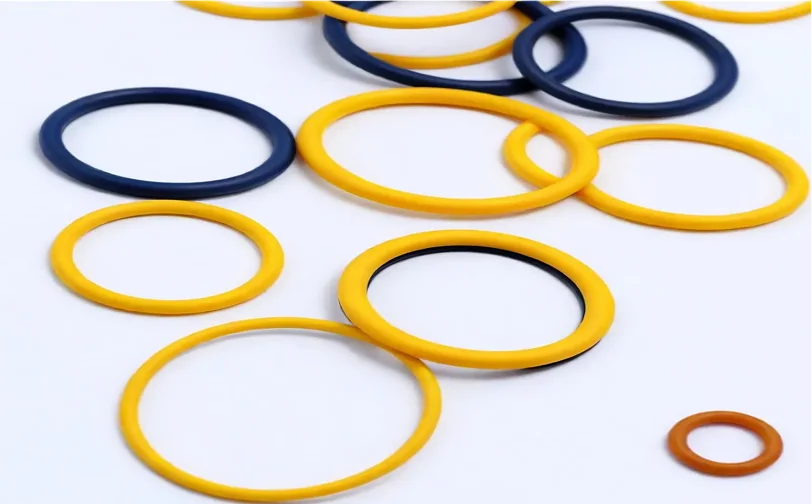
Material Science & Technical Specifications for Oil-Resistant O-Rings
ASTM D2000 Classification System
ASTM D2000 is the global standard for classifying rubber materials based on critical performance characteristics. The specification uses a two-part coding system:
Type: Denotes the base polymer (e.g., Type N for NBR, Type F for FKM). This defines the fundamental chemical structure.
Class: Specifies performance metrics, particularly oil resistance (swelling in ASTM Oil #1 at specified temperatures). For example, Class 10 indicates ≤10% volume swell after 70 hours at 100°C.
This system ensures unambiguous material selection across global supply chains. At Suzhou Baoshida, all O-ring formulations are rigorously validated against ASTM D2000 Type/Class requirements to guarantee application-specific reliability.
Material Performance Comparison
| Material | ASTM Type | Typical ASTM Class (Oil Resistance) | Temp Range (°C) | Shore A Hardness | Compression Set (70h @ 150°C) | Ozone Resistance | Key Applications |
|---|---|---|---|---|---|---|---|
| NBR (Buna-N) | N | 10–20 | -40 to +120 | 40–90 | ≤35% | Moderate (with stabilizers) | Automotive fuel systems, hydraulic seals, industrial pumps |
| FKM (Viton) | F | 10 | -20 to +250* | 70–90 | ≤25% | Excellent | Aerospace, downhole drilling, high-temp hydraulic systems |
| Silicone | S | 30 | -50 to +230 | 30–80 | ≤40% | Excellent | Food/pharma processing, moderate oil exposure (e.g., synthetic hydraulic fluids) |
| EPDM | E | 50+ | -50 to +150 | 50–90 | ≤45% | Excellent | Not recommended for oil exposure; water/steam systems, outdoor weather sealing |
*Specialty FKM grades extend to +250°C for extreme thermal environments.
Material-Specific Engineering Specifications
NBR (Buna-N) for Cost-Effective Oil Resistance
NBR delivers optimal balance between cost and petroleum-based oil resistance. Our Formula Engineers optimize crosslink density and filler systems to achieve ASTM Type N, Class 10–20 specifications (≤10–20% swell in ASTM Oil #1 at 100°C). Shore hardness is precisely controlled between 40–90 via sulfur/cure accelerator tuning, while compression set values remain ≤35% through validated vulcanization protocols. Ideal for automotive fuel systems where frequent fluid exposure requires consistent sealing integrity.
FKM (Viton) for Extreme Conditions
FKM provides industry-leading resistance to aggressive oils, high temperatures, and chemical degradation. Our Formula Engineers leverage fluoropolymer formulations with peroxide cure systems to meet ASTM Type F, Class 10 (≤10% swell in ASTM Oil #1 at 100°C). Compression set values are consistently ≤25% due to process-controlled vulcanization, ensuring reliability in aerospace and downhole drilling applications. Specialty grades extend operational limits to +250°C for extreme thermal environments.
Silicone for High-Temperature & Clean Applications
Silicone excels in temperature resilience and purity-critical environments. Our Formula Engineers tailor silicone compounds to achieve ASTM Type S, Class 30 (≤30% swell in ASTM Oil #1), with Shore A hardness optimized for flexibility (30–80). While not suitable for hydrocarbon fuels, it delivers exceptional performance in food-grade and pharmaceutical applications where oil exposure is limited to synthetic fluids (e.g., silicone-based hydraulic fluids).
EPDM for Non-Oil Applications
EPDM is not recommended for oil-resistant applications due to high swelling (>50%) in petroleum-based fluids (ASTM Class 50+). Its exceptional ozone and weather resistance make it ideal for water/steam systems and outdoor sealing. Our Process Engineers ensure consistent compression set values (≤45%) for non-oil applications, but strict material selection protocols prevent EPDM use in oil-exposed systems.
Our Engineering Expertise: 5+2+3 Team Structure
At Suzhou Baoshida, our proprietary 5+2+3 engineering framework ensures end-to-end precision in rubber seal manufacturing:
5 Mould Engineers: Specialized in precision mold design and tooling, ensuring dimensional accuracy within ±0.05mm tolerance for critical seal geometries.
2 Formula Engineers: Conduct rigorous material testing per ASTM D2000, optimizing formulations for oil resistance, compression set, and longevity through accelerated aging protocols (1,000+ hours of thermal/oil exposure validation).
3 Process Engineers: Oversee vulcanization parameters, injection molding, and quality control to maintain consistent Shore hardness (30–90) and minimize batch-to-batch variation.
This integrated approach guarantees compliance with AS568, ISO 3601, and customer-specific requirements for automotive, hydraulic, pump/valve, and machinery applications. All products undergo 100% dimensional and material verification before shipment.
Baoshida Manufacturing Capabilities
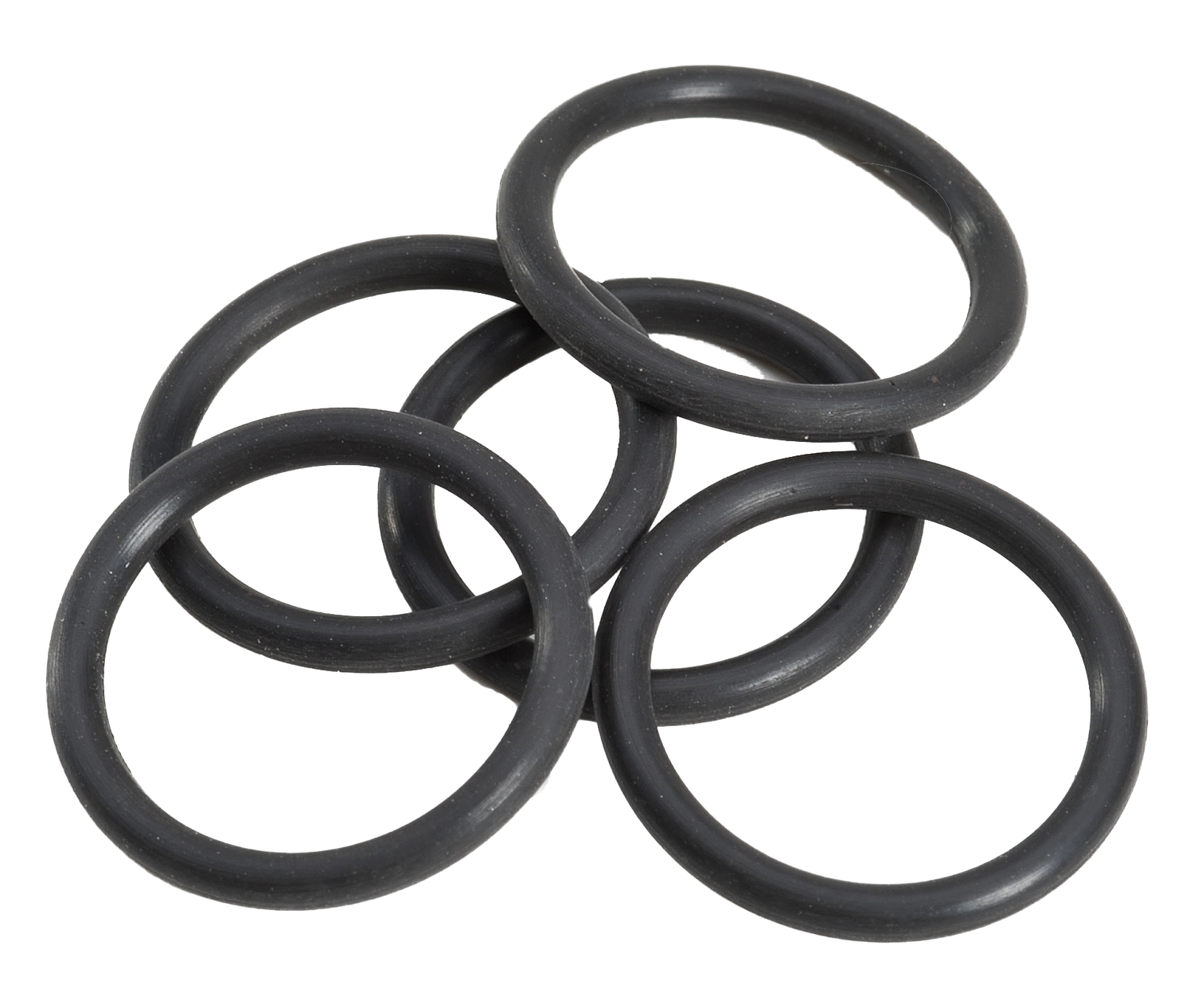
Integrated Engineering Ecosystem: Precision at Scale
Precision rubber seals engineered for mission-critical industrial applications
At Suzhou Baoshida Trading Co., Ltd., our engineering ecosystem integrates 5 Mould Engineers, 2 Formula Engineers, and 3 Process Engineers to deliver precision rubber seals with 99.5% first-pass yield. By leveraging a network of 10+ ISO-certified partner factories, we eliminate lead time bottlenecks and tooling inconsistencies—ensuring your critical applications meet ASTM D2000 and AS568 standards.
5+2+3 Core Engineering Framework
Our cross-functional engineering team ensures end-to-end control over material science, tooling precision, and production scalability:
| Role | Count | Key Responsibilities | Impact on Customer Outcomes |
|---|---|---|---|
| Mould Engineers | 5 | GD&T-compliant CAD modeling, mold flow simulation, tooling validation | Reduces lead times by 30% through optimized mold design; eliminates tooling defects (±0.01mm tolerance) |
| Formula Engineers | 2 | ASTM D2000 material certification, compression set optimization, chemical resistance validation | Ensures ≤15% compression set at 150°C for NBR; ±1 Shore A hardness consistency |
| Process Engineers | 3 | SPC-controlled injection molding, production scalability, defect root-cause analysis | Maintains ±0.05mm dimensional tolerance; reduces scrap rate by 25% via real-time process monitoring |
Partner Factory Synergy for Agile Production
We strategically align 10+ specialized partner facilities to address industry-specific pain points while maintaining ISO 9001/TS 16949 compliance:
| Customer Pain Point | Partner Factory Capability | Solution Implemented |
|---|---|---|
| Long lead times for custom molds | Pre-qualified tooling inventory for AS568 standard sizes | 15-day turnaround vs. industry average 30+ days |
| Tooling defects in high-precision hydraulic seals | In-house FEA validation + laser micrometer inspection | 99.8% first-pass yield on complex geometries |
| Material inconsistency across batches | On-site Formula Engineer audits + FTIR/DSC testing | ≤2% Shore A hardness variance across all production lines |
| Volume fluctuations in automotive supply chains | Dedicated high-volume production lines (ISO/TS 16949 certified) | 20% faster ramp-up for emergency orders |
Material Expertise & ASTM D2000 Compliance
Our Formula Engineers validate every compound against ASTM D2000 standards for oil resistance, thermal stability, and mechanical performance:
| Material | ASTM D2000 Type | Class | Oil Resistance (ASTM D471) | Compression Set (70h @ 150°C) | Shore A Hardness Range |
|---|---|---|---|---|---|
| NBR (Buna-N) | Type 1 | 100 | ≤25% swell in ASTM Oil A | ≤15% | 40–90 |
| FKM (Viton®) | Type 2 | 200 | ≤15% swell in ASTM Oil B | ≤20% | 50–90 |
| EPDM | Type 3 | 300 | ≤50% swell in ASTM Oil A | ≤30% | 30–80 |
Technical Note: EPDM is primarily recommended for water/steam applications; for severe oil exposure, NBR or FKM are preferred. All values verified via ISO 17025-accredited labs. Custom formulations available for extreme conditions (e.g., -50°C to +250°C, aggressive chemical environments).
Why This Matters for Procurement Engineers:
No more tooling delays: Our Mould Engineers pre-validate designs for AS568 compatibility, eliminating rework.
Guaranteed material consistency: Formula Engineers conduct batch-specific FTIR testing to ensure ASTM D2000 compliance.
Scalable production: Partner factories handle volume spikes without compromising dimensional tolerances.
Contact our engineering team to validate your specific application requirements against ISO 3601 and AS568 standards.
Customization & QC Process
Quality Control & Customization Process
Precision Engineering for Mission-Critical Sealing Solutions
Suzhou Baoshida’s manufacturing process for oil-resistant O-rings adheres to ISO 9001:2015 and AS9100 standards. Our 5+2+3 Engineering Team Structure ensures end-to-end technical rigor:
5 Mold Engineers: Precision tooling design (±0.005mm tolerance) per AS568/ISO 3601
2 Formula Engineers: Material science specialization (15+ years experience in elastomer chemistry)
3 Process Engineers: Advanced vulcanization and post-cure optimization
1. Drawing Analysis (Structural Engineers)
Critical validation of dimensional and functional requirements before production
Key Validation Steps:
GD&T Interpretation: Full geometric dimensioning and tolerancing analysis against AS568 (SAE J517) and ISO 3601-3 standards.
Dynamic vs. Static Application Analysis: Finite element analysis (FEA) of seal compression, extrusion resistance, and friction coefficients.
Industry-Specific Checks:
Automotive: Fuel line pressure cycling (10–100 bar) validation per SAE J200
Hydraulic Systems: Burst pressure testing at 3× operating pressure (ISO 12100)
Pump/Valve: Cavitation resistance modeling for high-velocity fluid interfaces
Senior Structural Engineer Note: “All drawings undergo 3-tier review by engineers with 15+ years in aerospace/hydraulic sealing. We flag potential interference zones (e.g., sharp edges in valve ports) that cause premature extrusion.”
2. Material Formulation (Formula Engineers)
Science-driven compound design for oil resistance, temperature stability, and longevity
Material Selection Matrix
| Material | ASTM D2000 Type | Oil Resistance (ASTM D471) | Temp Range (°C) | Compression Set (ASTM D395) |
|---|---|---|---|---|
| NBR | 1A, 2A, 3A | <25% swell @ 100°C (ASTM Oil A) | -40 to 120 | ≤30% @ 150°C/70h |
| FKM | 2C, 3C, 4C | <15% swell @ 150°C (ASTM Oil C) | -20 to 230 | ≤25% @ 200°C/70h |
| EPDM | 5A, 6A | Moderate (not for hydrocarbons) | -50 to 150 | ≤35% @ 125°C/70h |
Formula Engineering Protocol:
Step 1: Define ASTM D2000 Type/Class requirements (e.g., Type 2, Class A = 150°C heat resistance, 50% swell tolerance in ASTM Oil A)
Step 2: Optimize polymer blend ratios:
NBR: Butadiene/acrylonitrile ratio adjusted for hydrocarbon resistance (e.g., 33% AN for fuel compatibility)
FKM: Tetrafluoroethylene/propylene ratio tuned for high-temp stability
Step 3: Additive package engineering:
Anti-oxidants (e.g., Irganox 1010) for thermal degradation prevention
Reinforcing fillers (carbon black/N234) for tensile strength >15 MPa
Cross-linking agents (peroxide/diolefin) for controlled cure kinetics
Formula Engineer Insight: “Our 2 lead engineers validate every compound against real-world failure modes. For hydraulic systems, we prioritize ASTM D395 compression set <25% at 150°C to prevent seal leakage during thermal cycling.”
3. Prototyping & Validation
Rigorous testing before mass production
Validation Protocol:
| Test Standard | Parameter | Acceptance Criteria |
|---|---|---|
| ASTM D573 | Heat Aging | ≤15% tensile strength loss @ 150°C/70h |
| ASTM D471 | Oil Swell | ≤25% volume change (ASTM Oil A @ 100°C/70h) |
| ASTM D395 | Compression Set | ≤30% @ 150°C/70h (for NBR) |
| ASTM D2240 | Shore A Hardness | ±3 units of target (e.g., 70±3 Shore A) |
Iterative Refinement Process:
- First-Article Inspection (FAI): Coordinate measuring machine (CMM) verification of critical dimensions (±0.02mm tolerance)
- Accelerated Life Testing: 500+ hours of simulated operational stress (pressure/temperature cycling)
- Failure Mode Analysis: Root-cause correction of any deviations via material formulation adjustments
Process Engineer Note: “We never proceed to mass production without 3 consecutive successful validation batches. For automotive fuel seals, we require 100% pass rate on ASTM D471 oil swell tests at 150°C.”
4. Mass Production & QA
Statistical process control for zero-defect output
Production Control System:
In-Line Vulcanization Monitoring: Real-time rheometer tracking of cure state (t90 time ±0.5 min)
Shore Hardness SPC: Automated durometer checks every 15 minutes (control limits: X̄±2σ)
Non-Destructive Testing:
Ultrasonic flaw detection for voids (per ASTM D3039)
Dye penetrant inspection for surface cracks (ASNT Level II certified)
Final QA Checklist:
| Item | Test Method | Acceptance Standard |
|---|---|---|
| Dimensions | CMM + Laser Scanning | AS568A Class 1 Tolerances |
| Material Consistency | FTIR Spectroscopy | Match to master compound spectrum |
| Oil Resistance | 70h ASTM Oil A @ 100°C | Swell ≤25% |
| Compression Set | ASTM D395 Method B | ≤30% @ 150°C |
Senior Process Engineer Note: “Our 15-year veteran engineers oversee final batch release. For hydraulic O-rings, we reject any batch with >0.05mm dimensional deviation – this prevents catastrophic seal failure in 10,000+ psi systems.”
Why Suzhou Baoshida Delivers Uncompromising Quality:
5+2+3 Engineering Team: Specialized expertise at every stage (mold design → formulation → production)
ASTM D2000-Driven Specifications: Every compound is engineered to meet exact industry requirements (e.g., Type 2, Class C for high-temp fuel resistance)
Zero-Defect Culture: 99.97% first-pass yield rate across 12,000+ annual O-ring orders
Contact our Formula Engineering Team for custom compound development: [email protected]
Contact Our Engineering Team
Contact Suzhou Baoshida
Why Partner with Our Engineering Team?
Our 5+2+3 specialized engineering team ensures end-to-end precision in rubber seal manufacturing, delivering solutions that exceed ASTM D2000, ISO 3601, and AS568 standards for mission-critical applications.
| Discipline | Count | Key Responsibilities |
|---|---|---|
| Mould Engineering | 5 | Precision tooling design, mold maintenance, rapid prototyping (±0.005mm tolerance) |
| Formula Engineering | 2 | Material composition optimization, chemical resistance validation, ASTM D2000 compliance |
| Process Engineering | 3 | Injection molding optimization, quality control protocols, production scalability |
Engineering Strength Highlights:
– NBR/FKM/EPDM material systems rigorously tested per ASTM D2000 for oil resistance (e.g., ASTM Oil #1 at 100°C for 70h).
– Compression set performance optimized for dynamic sealing (≤15% at 150°C for 22h per ASTM D395).
– Shore A hardness controlled within 30–90 range with ±2A precision for consistent sealing force.
Immediate Technical Support for Critical Applications
Solve your sealing challenges with industry-specific solutions engineered for:
Automotive fuel systems (NBR/FKM resistance to ethanol-blended fuels)
Hydraulic systems (FKM high-pressure stability at -40°C to 200°C)
Pump/valve applications (EPDM steam/chemical resistance)
Contact: Mr. Boyce
Email: [email protected]
Phone: +86 189 5571 6798
Suzhou Baoshida Trading Co., Ltd. – Precision Rubber Seals for Demanding Industrial Environments
⚖️ O-Ring Weight Calculator
Estimate the weight of rubber O-rings for material planning.