
Technical Contents
Engineering Guide: Orange Foam Sheet
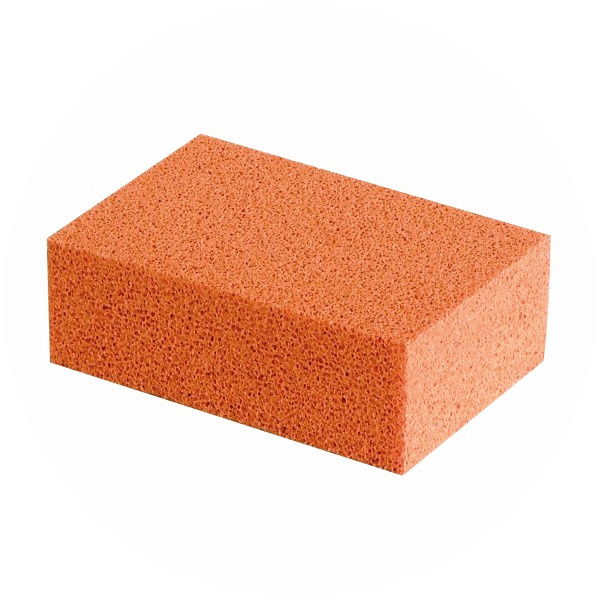
Engineering Insight: The Critical Role of Material Selection in Orange Foam Sheet Applications
In industrial sealing, gasketing, and vibration damping applications, orange foam sheet has emerged as a high-performance solution due to its unique balance of compressibility, resilience, and environmental resistance. However, despite its widespread availability, not all orange foam sheets perform equally across demanding operational conditions. A common misconception in procurement is that off-the-shelf variants are universally interchangeable, leading to premature failure, increased maintenance costs, and system downtime. The reality is that material selection must be driven by application-specific engineering parameters, not cost or convenience.
Orange foam sheet, typically formulated from closed-cell ethylene propylene diene monomer (EPDM) or neoprene blends, derives its performance characteristics from precise compounding and manufacturing processes. Off-the-shelf products often sacrifice formulation integrity for mass production efficiency, resulting in inconsistent cell structure, reduced compression set resistance, and poor UV or ozone resistance. These deficiencies become critical in environments exposed to temperature extremes, moisture, or continuous mechanical stress—common in automotive, HVAC, and industrial enclosure applications.
For example, a standard-grade orange foam may exhibit adequate initial sealing but fail within months due to compression set, allowing ingress of dust, moisture, or air. In contrast, an engineered-grade formulation maintains elasticity and recovery over extended cycles, ensuring long-term reliability. Similarly, non-customized foams often lack flame retardancy or specific chemical resistance required by industry standards such as UL 94 or ASTM D1056.
At Suzhou Baoshida Trading Co., Ltd., we emphasize a performance-driven approach to material selection. Our orange foam sheets are engineered with controlled cross-linking density, optimized cell morphology, and additive packages tailored to operational demands. This ensures consistent performance in critical metrics such as compression deflection, tensile strength, and aging resistance.
The table below outlines key specifications that differentiate engineered orange foam sheets from generic alternatives:
| Property | Engineered Orange Foam Sheet | Standard Off-the-Shelf Foam |
|---|---|---|
| Compression Deflection (25%) | 4.8 kPa | 7.2 kPa |
| Compression Set (22h, 70°C) | ≤15% | ≤35% |
| Tensile Strength | ≥1.8 MPa | ≥1.0 MPa |
| Elongation at Break | ≥150% | ≥100% |
| Temperature Range | -40°C to +120°C | -20°C to +90°C |
| Flame Resistance (UL 94 HF-1) | Yes | No |
| UV and Ozone Resistance | Excellent | Fair |
Selecting the correct orange foam sheet is not a commodity decision—it is an engineering imperative. Relying on generic solutions risks system integrity and lifecycle performance. By prioritizing material science and application alignment, manufacturers can achieve superior durability, compliance, and operational efficiency.
Material Specifications
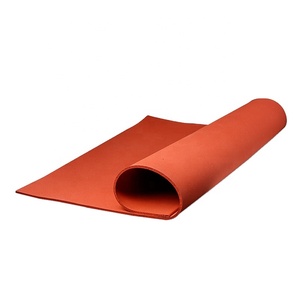
Material Specifications for Orange Foam Sheet in Industrial Applications
Suzhou Baoshida Trading Co., Ltd. provides precision-engineered orange foam sheet solutions designed for critical sealing, gasketing, and insulation roles across demanding industrial sectors. The distinctive orange color serves as a standardized visual identifier per ASTM D2000 and ISO 3767 specifications, denoting materials meeting stringent requirements for thermal stability, chemical resistance, and compression set performance. This color coding ensures rapid verification during assembly and maintenance, reducing operational errors in complex manufacturing environments. Material selection is paramount, as the operational envelope—encompassing temperature extremes, fluid exposure, and mechanical stress—directly impacts product lifecycle and system reliability. Our formulations undergo rigorous QC protocols per ISO 9001, including Shore A durometer validation, tensile strength testing, and accelerated aging studies to guarantee consistency.
Viton, Nitrile, and Silicone represent the core elastomer systems for orange foam sheet production, each offering distinct performance profiles. Viton fluorocarbon excels in aerospace and chemical processing due to its exceptional resistance to jet fuels, hydraulic fluids, and concentrated acids at elevated temperatures. Nitrile butadiene rubber (NBR) delivers optimal cost-performance balance for automotive and hydraulic applications involving petroleum-based oils and greases. Silicone provides unmatched flexibility across extreme temperature ranges, making it indispensable for medical device sealing and high-temperature electronics insulation. All materials are compounded with specialized blowing agents to achieve uniform closed-cell structures, preventing fluid wicking and maintaining dimensional stability under compression. Critical parameters include controlled density gradients, precise compression deflection values, and low outgassing characteristics essential for vacuum environments.
The comparative analysis below details key specifications for standard orange foam sheet formulations. These values represent baseline industry grades; Suzhou Baoshida offers OEM-specific customization to meet exacting application demands through proprietary additive packages and curing optimization.
| Material | Temperature Range (°C) | Key Chemical Resistances | Typical Density Range (kg/m³) | Common Applications |
|---|---|---|---|---|
| Viton (FKM) | -20 to +230 continuous | Jet fuels, brake fluids, acids, solvents | 80-150 | Aerospace seals, chemical pump gaskets, semiconductor tooling |
| Nitrile (NBR) | -30 to +120 continuous | Petroleum oils, greases, aliphatic hydrocarbons | 60-120 | Automotive fluid handling, hydraulic systems, industrial machinery |
| Silicone (VMQ) | -60 to +200 continuous | Ozone, UV, water, mild acids/bases | 70-130 | Medical device seals, food processing, LED lighting thermal management |
Suzhou Baoshida’s engineering team collaborates with OEM partners to select the optimal elastomer matrix based on fluid compatibility charts, thermal mapping data, and dynamic stress analysis. Our orange foam sheets consistently achieve ≤15% compression set at 70°C after 22 hours (ASTM D395 Method B), ensuring long-term sealing integrity. All materials comply with RoHS and REACH directives, with optional certifications for FDA 21 CFR 177.2600 (food contact) and UL 94 HB flammability ratings. Precision die-cutting capabilities support complex geometries down to ±0.1 mm tolerances, enabling seamless integration into automated assembly lines. For mission-critical applications, we recommend Viton for sustained high-temperature chemical exposure, Nitrile for cost-sensitive oil-resistant roles, and Silicone where extreme thermal cycling or biocompatibility is required. Contact our technical department for application-specific formulation data and accelerated life testing protocols.
Manufacturing Capabilities
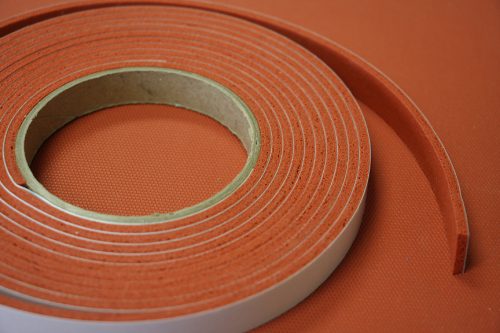
Engineering Excellence in Industrial Rubber Solutions
At Suzhou Baoshida Trading Co., Ltd., our core strength lies in the integration of advanced material science and precision engineering, particularly in the development and production of specialized rubber products such as orange foam sheet. Our in-house engineering team comprises five dedicated mould engineers and two certified rubber formulation experts, enabling us to deliver fully customized, high-performance solutions tailored to the exacting demands of industrial applications.
Our mould engineering division specializes in the design and optimization of compression, transfer, and injection moulds, ensuring dimensional accuracy, consistency, and repeatability across production batches. These engineers utilize advanced CAD/CAM software and finite element analysis (FEA) to simulate material flow, thermal distribution, and compression behavior, minimizing defects and optimizing cycle times. This precision-driven approach is critical when manufacturing orange foam sheet, a material often used in sealing, gasketing, and vibration damping applications where consistency in cell structure and compressibility is paramount.
Complementing our mould expertise, our two rubber formulation engineers bring deep knowledge in polymer chemistry and compounding. They formulate custom EPDM, neoprene, and silicone-based rubber compounds tailored to specific performance criteria such as temperature resistance, UV stability, compression set, and flame retardancy. For orange foam sheet, this means we can precisely control foam density, cell size, and cross-linking density to meet OEM specifications. Our lab conducts rigorous testing on tensile strength, elongation, hardness (Shore A), and aging characteristics to ensure long-term reliability under operational stress.
As an OEM partner, Suzhou Baoshida offers end-to-end manufacturing support—from concept and material selection to prototyping, tooling, and mass production. We support low-volume custom runs as well as high-volume continuous supply, with strict adherence to ISO standards and customer-specific quality protocols. Our vertical integration allows rapid iteration and fast time-to-market, essential for clients in automotive, electronics, construction, and industrial equipment sectors.
We maintain full traceability and process control through documented batch records, raw material certifications, and in-process quality checks. Our facility is equipped with state-of-the-art foam calendaring and curing lines, ensuring uniform thickness and consistent physical properties across large sheet formats.
The following table outlines key technical specifications for our standard orange foam sheet product, customizable upon request:
| Property | Test Method | Value |
|---|---|---|
| Material Base | — | EPDM or Neoprene |
| Color | — | Orange (customizable) |
| Density | ASTM D3574 | 0.35–0.45 g/cm³ |
| Hardness (Shore A) | ASTM D2240 | 40–60 |
| Tensile Strength | ASTM D412 | ≥1.2 MPa |
| Elongation at Break | ASTM D412 | ≥150% |
| Compression Set (25%, 24h) | ASTM D395 | ≤20% |
| Temperature Range | — | -40°C to +100°C |
| Cell Structure | Visual/Microscopy | Fine, closed-cell |
| Standard Sheet Size | — | 1.2 m × 10 m (customizable) |
With a robust engineering foundation and a commitment to OEM collaboration, Suzhou Baoshida delivers reliable, high-performance rubber solutions that meet the complex demands of modern industrial applications.
Customization Process
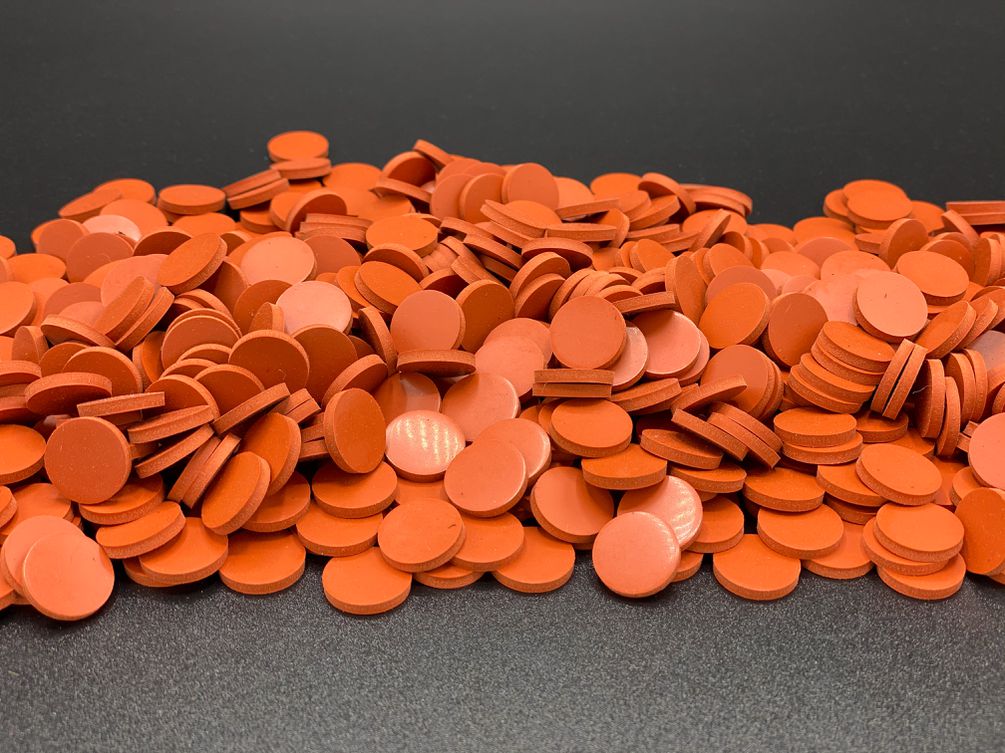
Suzhou Baoshida Trading Co., Ltd. | Industrial Rubber Solutions Technical Guide: Orange Foam Sheet Customization Process
Precise customization of orange foam sheet for demanding industrial applications requires a rigorously controlled engineering sequence. At Suzhou Baoshida, our OEM process ensures material properties align exactly with client specifications and functional requirements, moving systematically from concept to volume production. This methodology guarantees performance consistency and manufacturability.
The process initiates with comprehensive Drawing Analysis. Our engineering team meticulously reviews client-provided technical drawings and performance criteria. We verify dimensional tolerances, assess feature feasibility for molding or calendering, identify potential stress points, and evaluate the impact of the orange pigment on the final polymer matrix. Critical parameters such as required density range, compression set limits, temperature resistance, and flame retardancy classifications are cross-referenced against material science constraints. This phase identifies potential manufacturability conflicts early, preventing costly revisions later. Client feedback is integrated to confirm mutual understanding before proceeding.
Subsequent Formulation Development leverages our proprietary rubber compound database and extensive NBR/SBR foam expertise. Based on the validated requirements, our chemists design a tailored recipe balancing nitrile butadiene rubber (NBR) or styrene-butadiene rubber (SBR) base polymers, blowing agents, vulcanizing systems, stabilizers, and the specific orange pigment package. Key objectives include optimizing crosslink density for resilience, controlling cell structure for uniform density, ensuring pigment stability during high-temperature curing, and meeting all specified physical and chemical resistance properties. The table below outlines typical critical specifications achievable for our orange foam sheet:
| Specification | Typical Value Range | Test Standard |
|---|---|---|
| Density | 0.15 – 0.45 g/cm³ | ASTM D3574 |
| Compression Set (B, 22h) | ≤ 25% | ASTM D3574 |
| Tensile Strength | 0.8 – 2.5 MPa | ASTM D3574 |
| Elongation at Break | 150% – 350% | ASTM D3574 |
| Hardness (IRHD) | 25 – 60 | ISO 1819 |
| Continuous Use Temp. | -40°C to +100°C | Internal |
| Flame Resistance (UL94) | HB or V-0 (Customizable) | UL 94 |
Following formulation finalization, Prototyping & Validation commences. Small-batch production runs generate physical samples using production-intent tooling and processes. These prototypes undergo stringent in-house testing per the agreed specifications, including density profiling, compression set measurement, tensile testing, and visual inspection for cell structure uniformity and color consistency. Dimensional verification against the original drawing is performed using calibrated CMM equipment. Client validation of physical samples and test reports is mandatory before release to mass production, ensuring absolute alignment with expectations.
The final stage, Mass Production, implements the validated process under strict ISO 9001 quality management protocols. Production runs utilize dedicated mixing lines, calibrated curing ovens or presses, and automated cutting systems. Real-time process monitoring tracks critical parameters like temperature profiles, cure times, and line speed. In-process quality checks occur at defined intervals, including density spot checks and visual inspection. Full batch traceability is maintained from raw material lot to finished sheet. Final inspection includes comprehensive physical property testing on representative samples from the production run, with certified test reports provided to the client, guaranteeing every meter of orange foam sheet meets the engineered specification.
Contact Engineering Team
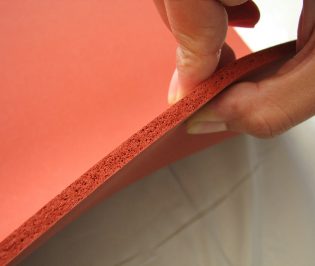
For industrial manufacturers seeking high-performance rubber materials, Suzhou Baoshida Trading Co., Ltd. stands as a trusted partner in the supply of precision-engineered elastomeric solutions. Our orange foam sheet is specifically formulated to meet the rigorous demands of sealing, gasketing, insulation, and vibration damping applications across automotive, electronics, construction, and HVAC industries. Engineered with closed-cell NBR/PVC or EPDM rubber compounds, this material delivers consistent density, superior compression resistance, and long-term durability under dynamic environmental conditions.
We invite procurement managers, R&D engineers, and production supervisors to engage directly with our technical team to ensure optimal material selection for your application. Mr. Boyce, our dedicated OEM Manager and Rubber Formula Engineer, leads client collaboration with over 15 years of experience in custom elastomer development and industrial supply chain integration. His expertise ensures that every inquiry is met with scientifically grounded recommendations, precise formulation adjustments, and scalable production planning.
Contacting Mr. Boyce initiates a technical dialogue focused on your performance requirements, regulatory standards (such as UL94-HF1, RoHS, or ASTM D1056), and volume needs. Whether you require flame-retardant variants, enhanced UV resistance, or custom thickness tolerances, our team at Suzhou Baoshida provides end-to-end support—from sample validation to just-in-time delivery logistics. We specialize in converting standard orange foam sheet into die-cut parts, strips, rolls, or laminated composites tailored to your assembly line specifications.
Our manufacturing partners operate under ISO 9001-certified processes, ensuring batch-to-batch consistency, traceable raw material sourcing, and full compliance documentation. With strategic warehousing in Jiangsu Province and export-ready packaging, we serve clients across Southeast Asia, Europe, and North America with reliable lead times and competitive pricing.
To request technical data sheets, initiate sample testing, or discuss volume procurement agreements, direct communication with Mr. Boyce is the most efficient pathway. We prioritize technical accuracy and responsive service to minimize your development cycle and enhance supply chain resilience.
Below are the standard technical specifications for our most widely used orange foam sheet formulation:
| Property | Test Method | Typical Value |
|---|---|---|
| Material Type | Visual/IR | NBR/PVC Closed-Cell Foam |
| Color | Visual | Orange (Pantone 151C) |
| Density | ASTM D3574 | 0.08 – 0.12 g/cm³ |
| Hardness (Shore A) | ASTM D2240 | 45 ± 5 |
| Tensile Strength | ASTM D412 | ≥ 1.8 MPa |
| Elongation at Break | ASTM D412 | ≥ 150% |
| Compression Set (25%, 23°C, 24h) | ASTM D395 | ≤ 20% |
| Operating Temperature Range | — | -30°C to +80°C |
| Thickness Range | — | 1 mm to 20 mm |
| Standard Sheet Size | — | 1.5 m × 2.0 m |
Initiate your technical consultation today by emailing Mr. Boyce at [email protected]. Include details on your application environment, performance targets, and required certifications to receive a tailored material recommendation and sample kit. At Suzhou Baoshida, we engineer reliability—cell by cell, sheet by sheet.
⚖️ O-Ring Weight Calculator
Estimate rubber O-ring weight (Approx).