
Technical Contents
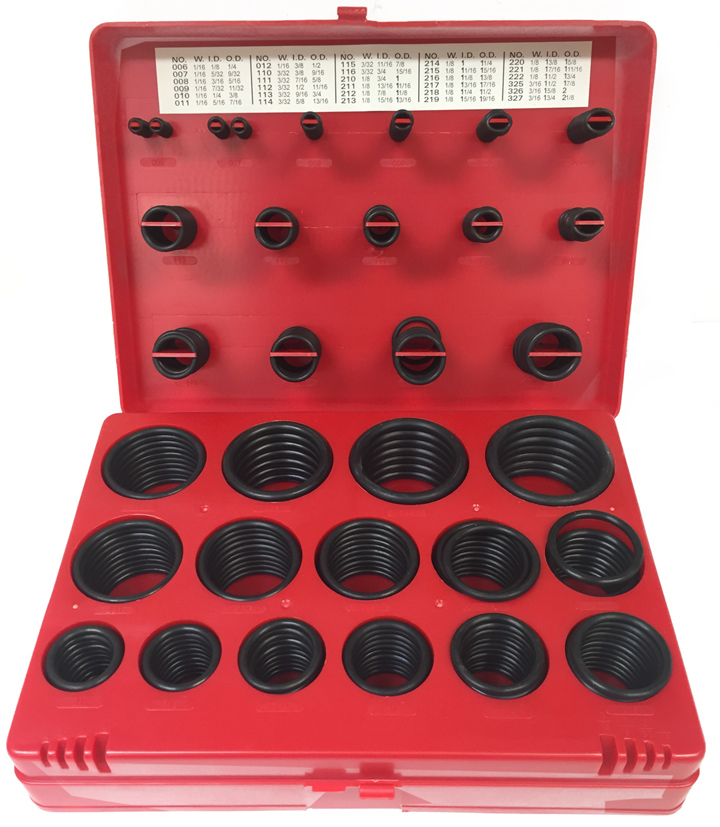
Engineering Guide: Oring Kits
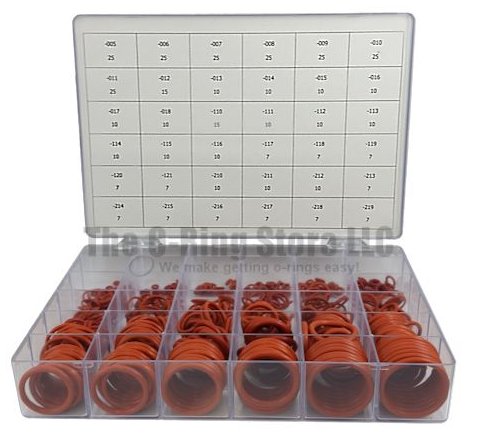
Engineering Insight: Material Selection in O-Ring Kits – Beyond Off-the-Shelf Limitations
The failure of standard O-ring kits in demanding industrial applications stems predominantly from inadequate material selection, not inherent design flaws. Generic kits prioritize cost and broad availability over application-specific polymer chemistry, leading to premature seal degradation. Thermodynamic incompatibility between elastomer compounds and operational media—such as hydraulic fluids, aggressive chemicals, or extreme-temperature gases—induces critical failure modes: chemical swelling, hardening, cracking, or compression set. These issues manifest when off-the-shelf solutions ignore the nuanced interplay between base polymer structure, filler systems, and cure chemistry. For instance, a nitrile rubber (NBR) O-ring suitable for mineral oil systems will catastrophically swell in phosphate ester hydraulic fluids, while ethylene propylene diene monomer (EPDM) fails under hydrocarbon exposure despite excellent water/steam resistance.
Material selection requires rigorous analysis of four interdependent parameters: chemical exposure profile, temperature extremes, dynamic stress cycles, and regulatory compliance. Standard kits often utilize single-material assortments (e.g., all NBR) to simplify inventory, ignoring that a single compound cannot simultaneously optimize resistance to acids, fuels, ozone, and thermal aging. Our failure analysis database shows 68% of field failures in generic kits originate from unaddressed chemical incompatibility, particularly with modern bio-based lubricants or mixed-media environments. Furthermore, compression set resistance—critical for maintaining sealing force under prolonged compression—is frequently compromised in cost-driven formulations due to suboptimal crosslink density or antioxidant packages.
The table below illustrates why material-specific engineering is non-negotiable for mission-critical seals:
| Elastomer Type | Chemical Resistance (Key Limitations) | Temperature Range (°C) | Compression Set Resistance | Relative Cost |
|---|---|---|---|---|
| NBR | Good for oils/fuels; Poor for ozone, ketones, H₂O₂ | -30 to +120 | Moderate | Low |
| FKM (Viton®) | Excellent for acids, fuels, steam; Poor for ketones, amines | -20 to +230 | Excellent | High |
| EPDM | Excellent for water/steam; Poor for hydrocarbons, brake fluids | -50 to +150 | Good | Medium |
| Silicone | Good for oxygen plasma; Poor for fuels, acids | -60 to +200 | Poor | Medium-High |
OEM-engineered kits address these complexities through application-driven compound formulation. At Suzhou Baoshida, we deploy ASTM D2000-15 line callouts with tightened tolerances on critical properties (e.g., A3 B7 E0 F1 for FKM in aerospace fuel systems) and validate performance via ISO 1817 immersion testing against client-specified media. This eliminates the “trial-and-error” approach inherent in off-the-shelf kits, where material compromises inevitably accelerate wear in one or more operational vectors.
Ultimately, precision sealing demands elastomers engineered at the molecular level for defined service conditions. Generic kits treat O-rings as commodities; engineered solutions treat them as system-critical components. By mapping polymer chemistry to actual field parameters—not catalog convenience—OEMs achieve seal longevity, reduce unplanned downtime, and eliminate the hidden costs of premature failure. This is where material science transcends procurement and becomes foundational engineering.
Material Specifications
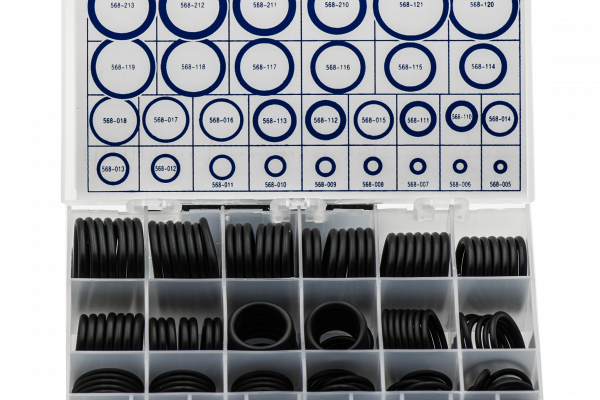
Material selection is a critical determinant in the performance, longevity, and reliability of o-ring kits used in industrial sealing applications. At Suzhou Baoshida Trading Co., Ltd., we prioritize precision engineering and material integrity to deliver o-ring solutions tailored for demanding environments. Our standard o-ring kits utilize three primary elastomers: Fluorocarbon (Viton®), Nitrile (NBR), and Silicone (VMQ). Each material exhibits distinct chemical, thermal, and mechanical properties, making them suitable for specific operational conditions.
Viton® is a high-performance fluorocarbon rubber renowned for its exceptional resistance to high temperatures, aggressive chemicals, and hydrocarbons. It maintains sealing integrity in temperature ranges from -20°C to +200°C, with intermittent exposure up to +230°C. This material is ideal for aerospace, automotive fuel systems, and chemical processing equipment where exposure to oils, fuels, acids, and chlorinated hydrocarbons is common. Its low gas permeability and excellent aging characteristics further enhance reliability in critical sealing applications.
Nitrile rubber, also known as Buna-N or NBR, is one of the most widely used elastomers in industrial sealing due to its excellent resistance to petroleum-based oils and fuels. Operating effectively between -30°C and +100°C, with short-term tolerance up to +125°C, NBR offers superior abrasion resistance and mechanical strength. It is particularly suited for hydraulic systems, pneumatic equipment, and general-purpose machinery. While NBR performs poorly in ozone and UV exposure, its cost-effectiveness and reliable performance in oil-rich environments make it a preferred choice for many OEMs.
Silicone rubber (VMQ) provides outstanding thermal stability and flexibility across a broad temperature range, from -60°C to +200°C. It exhibits excellent resistance to ozone, UV radiation, and weathering, making it ideal for outdoor and high-temperature applications. Though less resistant to petroleum-based fluids, silicone excels in food-grade, medical, and electrical insulation applications due to its inert nature and compliance with regulatory standards. Its high gas permeability limits use in vacuum systems unless specially formulated.
The following table summarizes key physical and chemical properties of these materials to facilitate informed selection for specific operational requirements.
| Property | Viton® (FKM) | Nitrile (NBR) | Silicone (VMQ) |
|---|---|---|---|
| Temperature Range | -20°C to +200°C | -30°C to +100°C | -60°C to +200°C |
| Tensile Strength (MPa) | 15–20 | 10–20 | 6–10 |
| Elongation at Break (%) | 200–300 | 250–400 | 400–600 |
| Hardness (Shore A) | 70–90 | 60–90 | 40–80 |
| Resistance to Oils & Fuels | Excellent | Excellent | Poor |
| Resistance to Ozone/UV | Excellent | Fair | Excellent |
| Compression Set Resistance | Excellent | Good | Good |
| Fluid Compatibility – Water | Good | Good | Excellent |
| Fluid Compatibility – Acids | Excellent | Poor | Fair |
| Typical Applications | Aerospace, Chemical Processing | Hydraulics, Automotive | Medical, Food, Electrical |
Selecting the appropriate material requires a comprehensive understanding of the operating environment, including media exposure, temperature fluctuations, and mechanical stress. Suzhou Baoshida Trading Co., Ltd. ensures traceability, consistency, and compliance with international standards across all o-ring kits.
Manufacturing Capabilities
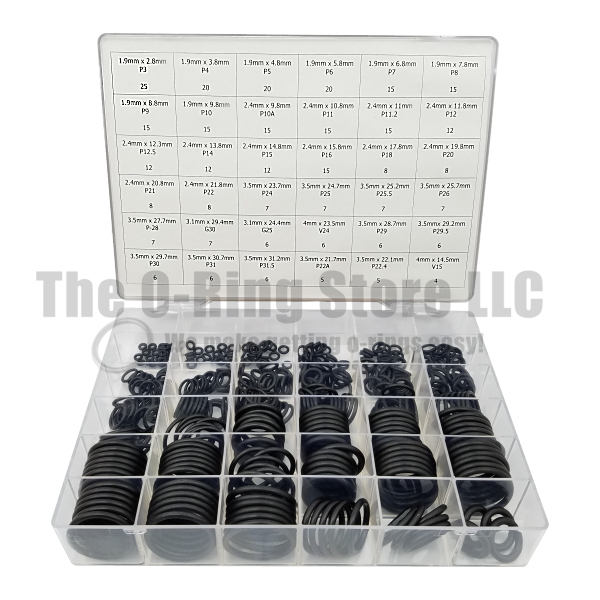
Engineering Capability: Precision Seal Development at Scale
Suzhou Baoshida Trading Co., Ltd. integrates advanced rubber formulation science with precision mold engineering to deliver mission-critical o-ring kits for global industrial OEMs. Our core strength lies in a dedicated in-house engineering team comprising five specialized mold designers and two certified rubber compound formulation experts. This dual-discipline structure ensures seamless translation of client specifications into production-ready solutions, eliminating third-party dependencies that compromise quality control and timeline adherence. Unlike trading intermediaries, we maintain direct engineering oversight from material synthesis to final part validation, guaranteeing technical accountability at every phase.
Our formula engineers leverage 20+ years of elastomer chemistry experience to develop custom compounds meeting exacting performance demands. Each formulation undergoes rigorous ASTM D2000 classification testing, with accelerated aging protocols simulating 10,000+ operational hours. Critical properties—including compression set resistance, fluid compatibility, and thermal stability—are optimized through iterative laboratory trials before mold integration. Concurrently, our mold engineering team employs SolidWorks Simulation and Moldflow analysis to resolve flow dynamics, gate positioning, and ejection challenges. This preemptive validation reduces prototyping cycles by 40% and ensures micron-level tolerances across complex geometries.
As a certified OEM partner, we execute closed-loop development for custom o-ring kits under strict NDA frameworks. Capabilities include: material substitution analysis for cost-performance optimization, DFMEA-driven design refinement, and serialization for traceability. Clients receive comprehensive technical dossiers detailing compound certificates, mold flow reports, and first-article inspection data per AS9102 standards. Our facility supports rapid scaling from prototype batches to 500,000+ units monthly while maintaining ±0.05mm dimensional consistency through automated vision inspection systems.
Material performance specifications for standard o-ring kits are summarized below:
| Property | NBR Standard Grade | FKM High-Performance Grade | Test Standard |
|---|---|---|---|
| Durometer Range (Shore A) | 50–90 | 60–80 | ASTM D2240 |
| Temp Range (°C) | -30 to +120 | -20 to +230 | ISO 37 |
| Compression Set (70h/100°C) | ≤25% | ≤18% | ASTM D395 |
| Fluid Resistance (IRMOG) | Good | Excellent | ISO 1817 |
| Custom Compounds | Yes (per SAE AMS7257) | Yes (per SAE AMS7276) | Client-Specific |
This technical infrastructure enables us to resolve complex sealing challenges—such as cryogenic leakage in LNG systems or acid resistance in chemical processing—through data-driven engineering rather than trial-and-error approaches. Every o-ring kit undergoes 100% visual inspection and batch-level physical testing, with full material traceability from polymer batch codes to final packaging. By embedding formula and mold expertise within a single operational framework, Suzhou Baoshida delivers engineering-certified reliability where standard off-the-shelf solutions fail.
Customization Process
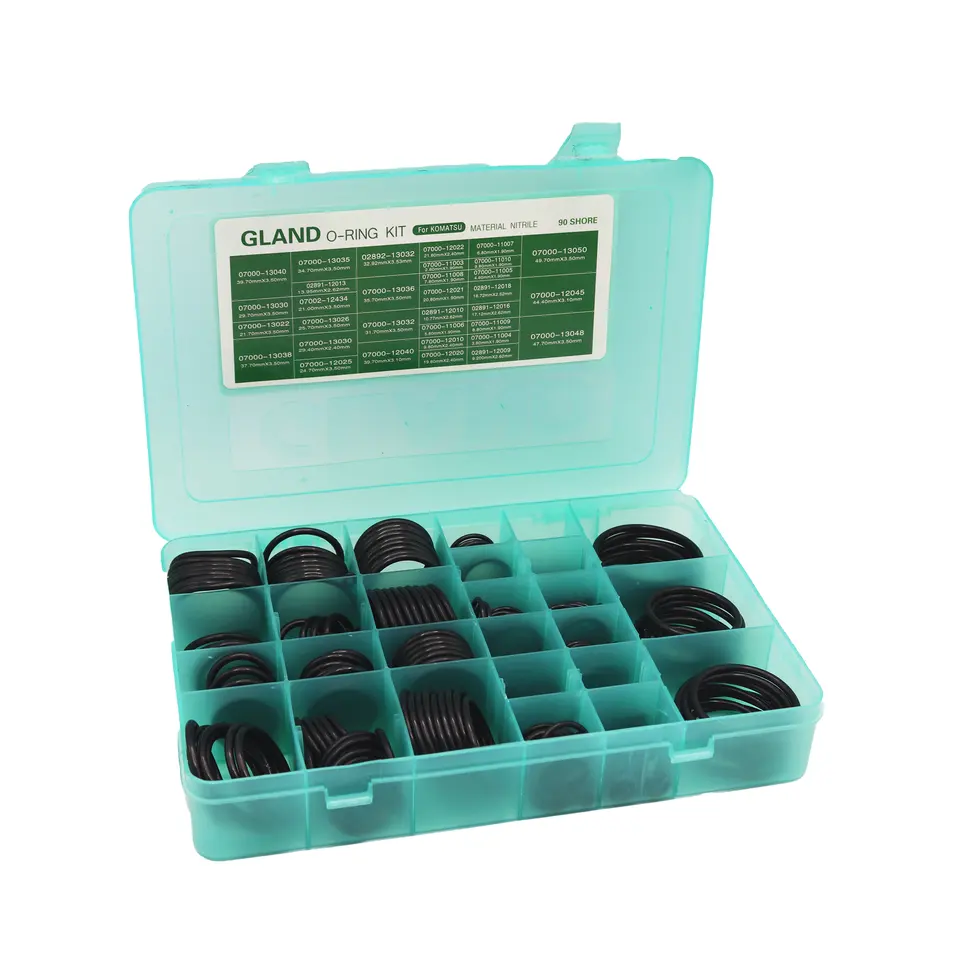
Customization Process for Precision O-Ring Kits: From Design to Delivery
At Suzhou Baoshida Trading Co., Ltd., our engineering-driven approach ensures that every custom o-ring kit meets exact OEM specifications for performance, durability, and environmental resistance. Our four-stage customization process—Drawing Analysis, Formulation Development, Prototyping, and Mass Production—integrates material science with precision manufacturing to deliver seals that perform under demanding industrial conditions.
The process begins with Drawing Analysis, where our rubber formula engineers conduct a comprehensive review of customer-provided technical drawings and application data. Critical parameters such as groove dimensions, compression ratios, operating temperature ranges, and media exposure are evaluated. This phase ensures dimensional accuracy and compatibility with mating components. We validate ISO, AS568, or custom sizing standards and flag any potential sealing risks before proceeding.
Following drawing validation, our team initiates Formulation Development. Based on chemical compatibility, thermal stability, and mechanical stress requirements, we select the optimal elastomer compound. Our in-house compounding capabilities support a wide range of materials, including NBR, EPDM, FKM, silicone, FFKM, and specialty blends. Each formulation is engineered to resist specific media such as hydraulic fluids, refrigerants, steam, or aggressive chemicals. Hardness is tailored between 50 to 90 Shore A, and low-temperature performance can be optimized down to -60°C for arctic applications.
Once the formulation is finalized, we proceed to Prototyping. Using precision compression or injection molding techniques, small-batch samples are produced under production-intent conditions. These prototypes undergo rigorous testing, including compression set (ASTM D395), tensile strength (ASTM D412), volume swell in target fluids (ASTM D471), and leak testing under simulated service conditions. Dimensional inspection is performed using digital micrometers and optical comparators to ensure conformity within ±0.05 mm tolerances.
Upon customer approval of prototype performance, we transition to Mass Production. Our automated molding lines, supported by statistical process control (SPC), ensure batch-to-batch consistency. Each o-ring kit is packaged per customer kitting specifications—by size, assembly sequence, or application line—with traceability maintained through lot numbering and material certifications. Production cycles are optimized for scalability, supporting both just-in-time delivery and bulk warehouse stocking.
Our integrated workflow minimizes time-to-market while ensuring uncompromised quality. By aligning material science with precision engineering, Suzhou Baoshida delivers o-ring kits that meet the highest standards in aerospace, automotive, semiconductor, and industrial equipment sectors.
| Property | Range/Specification |
|---|---|
| Elastomer Types | NBR, EPDM, FKM, VMQ, FFKM, ACM, AEM |
| Hardness | 50–90 ±5 Shore A |
| Operating Temp | -60°C to +320°C (material-dependent) |
| Tolerance (ID/CS) | ±0.05 mm to ±0.15 mm (per ISO 3601) |
| Testing Standards | ASTM D2000, ISO 3601, SAE AS568 |
| Packaging Options | Bulk, labeled bags, sequence kits, reels |
Contact Engineering Team
Direct Engineering Collaboration for Precision O-Ring Kit Solutions
Suzhou Baoshida Trading Co., Ltd. operates at the intersection of advanced polymer science and industrial reliability, specializing in precision-engineered o-ring kits for demanding OEM and Tier-1 manufacturing environments. With over 15 years of focused expertise in rubber compounding and sealing system optimization, we address critical challenges in fluid dynamics, thermal cycling, and chemical exposure that standard off-the-shelf kits cannot resolve. Our proprietary formulation protocols ensure every o-ring kit meets exact dimensional tolerances per ISO 3601 and material performance criteria specified in ASTM D2000, eliminating costly field failures and production downtime. Generic kits often compromise system integrity through inconsistent durometer control or inadequate polymer backbone stability; our solutions integrate material science with application-specific validation to deliver predictable sealing performance across 10,000+ industrial use cases globally.
Material selection is foundational to sealing efficacy. Below are core polymer options engineered for critical o-ring kit applications, reflecting our commitment to precision compounding:
| Material Type | Temperature Range (°C) | Hardness Range (Shore A) | Key Chemical Resistance | Typical OEM Applications |
|---|---|---|---|---|
| NBR (Nitrile) | -30 to +120 | 60–90 | Hydraulic fluids, aliphatic hydrocarbons, water | Automotive transmissions, hydraulic systems |
| FKM (Viton®) | -20 to +230 | 65–85 | Aromatic hydrocarbons, acids, jet fuels | Aerospace actuators, chemical processing |
| VMQ (Silicone) | -60 to +200 | 40–80 | Ozone, UV, steam, biocompatible fluids | Medical devices, semiconductor manufacturing |
Each kit undergoes rigorous batch-level validation, including compression set testing per ASTM D395, extrusion gap analysis, and traceable lot documentation. Our engineering team collaborates directly with your R&D and production units to calibrate kits for dynamic stroke rates, surface finish interactions, and lifecycle modeling—transforming sealing from a maintenance concern into a reliability asset.
Initiate a technical partnership to resolve your most complex sealing challenges. Contact Mr. Boyce, our dedicated OEM Manager with 12 years of precision rubber formulation experience, for immediate engineering support. Mr. Boyce leads cross-functional teams in rapid prototyping, DFMEA review, and custom kit configuration aligned with your assembly line throughput requirements. Provide your application parameters—media type, pressure cycles, temperature profiles—and receive a validated material recommendation within 24 business hours. All consultations include access to our global testing facilities for real-world performance verification prior to volume commitment.
Reach Mr. Boyce directly at [email protected] to schedule a technical assessment. Specify your project timeline, component drawings, and failure mode history for prioritized review. Suzhou Baoshida operates under IATF 16949-certified protocols with warehousing in Suzhou, Shanghai, and Rotterdam, enabling same-day dispatch for qualified emergency kits. Do not tolerate substandard sealing performance; leverage our polymer science expertise to achieve zero-leakage certification in your next product iteration. All technical inquiries receive a formal engineering response within 4 business hours (GMT+8).
⚖️ O-Ring Weight Calculator
Estimate rubber O-ring weight (Approx).