
Technical Contents
Engineering Guide: Outdoor Grill Pad
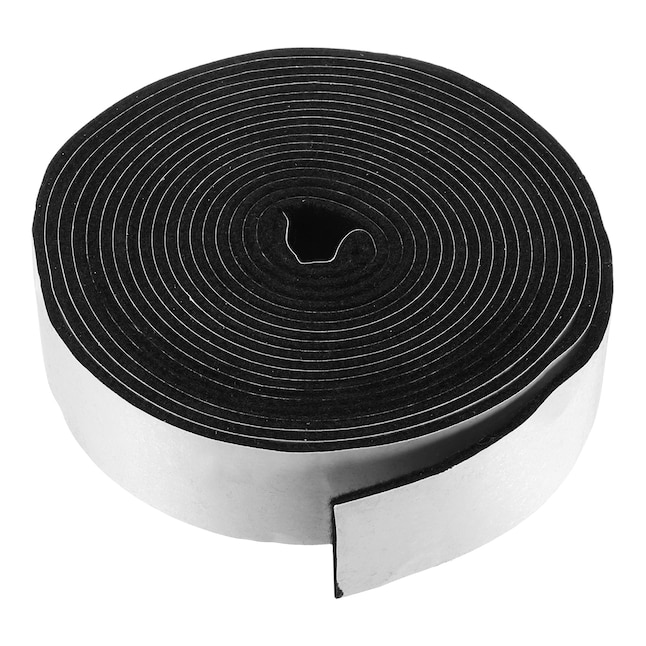
Engineering Insight: Material Selection for Outdoor Grill Pads
In the design and manufacturing of outdoor grill pads, material selection is not merely a cost consideration—it is a fundamental engineering decision that directly impacts performance, safety, and longevity. Many off-the-shelf solutions fail under real-world conditions due to the use of generic elastomers that lack the necessary thermal stability, chemical resistance, and mechanical integrity required in high-heat, high-stress environments. At Suzhou Baoshida Trading Co., Ltd., we apply precision rubber formulation to develop industrial-grade grill pads engineered for durability, not just compliance.
Standard consumer-grade pads often utilize unvulcanized recycled rubber or low-density EVA foams. These materials exhibit poor thermal conductivity dispersion, leading to localized heat buildup that accelerates degradation. More critically, they lack resistance to common grill contaminants such as animal fats, citric marinades, and cleaning agents, resulting in swelling, cracking, and eventual structural failure. In industrial applications, such failure modes are unacceptable due to safety and maintenance implications.
Our engineered rubber compounds are based on high-purity EPDM and silicone-modified nitrile formulations. These materials are selected for their exceptional resistance to temperatures exceeding 300°C, non-flammability ratings (UL94 HB), and stability in UV and ozone-rich environments. The cross-link density is optimized through peroxide vulcanization to ensure dimensional stability and compression set resistance—critical for pads that must maintain a tight seal under load and thermal cycling.
Additionally, surface texture and density are precisely controlled during the calendaring and curing stages. A micro-ribbed profile enhances airflow while minimizing direct flame contact, and a closed-cell structure prevents fluid ingress. This level of material and process control is absent in mass-market alternatives, which rely on compression molding with inconsistent curing profiles and untested batch compounds.
Below are key performance specifications of our industrial-grade outdoor grill pad material compared to typical off-the-shelf alternatives:
| Property | Baoshida Industrial-Grade Pad | Off-the-Shelf Generic Pad |
|---|---|---|
| Base Polymer | Silicone-Modified Nitrile | Recycled SBR / EVA Foam |
| Max Continuous Use Temp | 250°C | 90°C |
| Flame Resistance (UL94) | HB Rating | Not Rated |
| Compression Set (22 hrs, 150°C) | ≤20% | ≥45% |
| Fluid Resistance (Oil, Acid, Water) | Excellent | Poor to Moderate |
| UV and Ozone Resistance | High | Low |
| Density (g/cm³) | 1.35 ± 0.05 | 0.60 – 0.85 |
| Service Life (Field Test, 3x weekly use) | 5+ years | 6–18 months |
The data underscores a critical point: thermal and chemical environments around outdoor grills demand engineered solutions. Generic pads may appear cost-effective initially, but their short lifespan, safety risks, and frequent replacement cycles result in higher total cost of ownership. By contrast, our material science approach ensures long-term reliability, making our grill pads suitable for commercial kitchens, industrial catering units, and high-end residential applications where performance cannot be compromised.
Material Specifications
Material Specifications for Outdoor Grill Pads: Industrial Rubber Selection Criteria
Outdoor grill pads demand rubber compounds capable of withstanding extreme thermal cycling, grease exposure, and mechanical compression without degradation. Suzhou Baoshida Trading Co., Ltd. engineers material formulations to meet the rigorous operational demands of commercial and residential grilling applications. Critical performance parameters include continuous service temperature, resistance to animal/vegetable oils, compression set retention, and dimensional stability under load. Below we detail three primary elastomer solutions validated for this application, emphasizing ASTM-specified physical properties and functional limitations.
Viton fluoroelastomers (FKM) represent the premium solution for high-end commercial grills operating above 200°C. These compounds exhibit exceptional resistance to hydrocarbon-based fats and combustion byproducts, with continuous service temperatures up to 230°C and intermittent peaks to 260°C. Viton maintains structural integrity when exposed to grill flare-ups and charred residue, demonstrating less than 35% compression set after 72 hours at 200°C (ASTM D395). However, material cost is 3–4× higher than alternatives, making it optimal for professional kitchen equipment where failure is unacceptable.
Nitrile rubber (NBR) remains the industry standard for mid-tier residential grills due to its balanced performance-to-cost ratio. High-acrylonitrile grades (45–50% ACN content) provide robust resistance to cooking oils and moderate heat, with continuous service up to 120°C and short-term tolerance to 150°C. NBR compounds achieve Shore A hardness of 60–80, ensuring adequate load-bearing capacity while resisting grease penetration. Key limitations include rapid degradation above 150°C and susceptibility to ozone cracking in prolonged outdoor storage.
Silicone rubber (VMQ) offers superior high-temperature stability (continuous use to 200°C) and UV resistance but presents significant functional drawbacks for grill pads. While non-toxic and odorless, silicone exhibits poor resistance to animal fats, leading to swelling and surface tackiness after repeated exposure. Its low tensile strength (5–7 MPa) compromises structural resilience under grill weight, and high compression set (>40% at 150°C) causes permanent deformation. Silicone is generally unsuitable unless paired with specialized oil-resistant additives, which elevate costs without matching NBR’s base performance.
The comparative analysis below summarizes critical specifications per ASTM testing protocols:
| Material | Continuous Temp (°C) | Oil Resistance (ASTM D471) | Tensile Strength (MPa) | Hardness Range (Shore A) | Primary Application Fit |
|---|---|---|---|---|---|
| Viton (FKM) | 230 | Excellent (≤15% swell in IRM 903) | 10–15 | 65–85 | Commercial grills, high-heat zones |
| Nitrile (NBR) | 120 | Good (≤25% swell in IRM 903) | 15–20 | 60–80 | Residential grills, cost-sensitive OEMs |
| Silicone (VMQ) | 200 | Poor (≥40% swell in IRM 903) | 5–7 | 40–70 | Limited use; requires oil-resistant modification |
Suzhou Baoshida Trading Co., Ltd. tailors compound formulations to specific OEM requirements, optimizing filler systems and cure packages for target performance thresholds. All materials undergo rigorous validation per ASTM D2000 classification standards, with full traceability to raw material lots. For grill pad applications, NBR delivers the optimal balance of grease resistance and thermal stability for most consumer segments, while Viton remains indispensable for commercial duty cycles exceeding 200°C. Material selection must align with actual operational profiles to prevent premature failure from thermal degradation or chemical attack. Our engineering team provides application-specific compound data sheets and prototype validation support to ensure seamless integration into your manufacturing process.
Manufacturing Capabilities
Engineering Capability
At Suzhou Baoshida Trading Co., Ltd., our engineering division is structured to deliver precision-driven rubber solutions tailored for demanding industrial applications, including high-performance outdoor grill pads. Our team comprises five dedicated mould engineers and two specialized rubber formula engineers, enabling us to control every phase of product development—from material formulation to precision tooling. This integrated approach ensures that each outdoor grill pad not only meets but exceeds OEM performance standards under real-world thermal, mechanical, and environmental conditions.
Our rubber formula engineers possess deep expertise in elastomer chemistry, focusing on optimizing compound formulations for heat resistance, compression set, durability, and flame retardancy—critical properties for outdoor cooking environments. By formulating proprietary rubber blends using EPDM, silicone, and specialized NBR compounds, we ensure that each grill pad maintains structural integrity when exposed to sustained temperatures up to 300°C. These formulations are developed in-house, allowing full customization based on client specifications, including color stability, UV resistance, and non-slip surface characteristics.
Complementing material science is our advanced mould engineering team. With five experienced engineers managing CAD/CAM design, finite element analysis (FEA), and precision steel selection, we ensure rapid prototyping and long-life tooling capable of high-volume production. Our mould designs incorporate optimized gating, venting, and cooling systems to minimize cycle times and reduce material waste, directly supporting cost-efficient OEM manufacturing. All tooling is fabricated using hardened P20 or H13 steel, with surface treatments such as nitriding to enhance wear resistance and release performance.
We operate under strict ISO-compliant quality protocols, with in-house testing capabilities including Shore A hardness measurement, tensile strength analysis, thermal aging chambers, and compression deflection testing. This enables real-time validation of both material and dimensional performance. Our engineers collaborate directly with OEM partners to refine product geometry, sealing surfaces, and tolerance stacks, ensuring seamless integration into final grill assemblies.
Suzhou Baoshida Trading Co., Ltd. offers full turnkey OEM services, including design for manufacturability (DFM) reviews, material certification (RoHS, REACH, FDA-grade options), and scalable production from pilot runs to mass output. Our vertical integration of formula development and precision moulding eliminates third-party dependencies, accelerating time-to-market and ensuring consistent product quality across batches.
Below are key technical specifications achievable for outdoor grill pad applications:
| Property | Typical Value | Test Standard |
|---|---|---|
| Temperature Resistance | -40°C to +300°C | ASTM D573 |
| Hardness Range (Shore A) | 40–80 | ASTM D2240 |
| Tensile Strength | ≥9.0 MPa | ASTM D412 |
| Elongation at Break | ≥250% | ASTM D412 |
| Compression Set (22 hrs, 150°C) | ≤25% | ASTM D395 |
| Flame Resistance | UL94 HB (optional V-0) | UL 94 |
| Specific Gravity | 1.15–1.35 | ASTM D297 |
Through the synergy of advanced rubber formulation and precision mould engineering, Suzhou Baoshida delivers technically superior, application-specific outdoor grill pads that support long-term reliability and brand integrity for global OEM partners.
Customization Process
Outdoor Grill Pad Customization Process: From Specification to Scale
At Suzhou Baoshida Trading Co., Ltd., our industrial rubber solutions for outdoor grill pads begin with rigorous drawing analysis. Engineering teams dissect client-provided CAD files and technical schematics to validate critical parameters: dimensional tolerances (±0.5 mm for edge stability), thermal exposure zones (peak surface temperatures up to 300°C), and mechanical load requirements (static weights exceeding 50 kg). We identify potential failure points such as thermal contraction gaps or oil-permeable seams, ensuring material selection aligns with ASTM D2000-21 classification codes for heat-resistant elastomers. This phase concludes with a formal Design for Manufacturability (DFM) report, highlighting modifications to optimize production yield without compromising safety.
Formulation engineering follows, where our rubber chemists develop compound recipes targeting three non-negotiable properties: extreme heat deflection, hydrocarbon resistance, and non-slip stability. Standard compounds utilize peroxide-cured EPDM for cost efficiency, but grill pads demand specialty formulations. For applications exceeding 250°C continuous exposure, we deploy high-purity silicone rubber with platinum catalysts, achieving Shore A 60±5 hardness and 15% compression set at 200°C. Fillers like silica and ceramic microspheres enhance thermal insulation while maintaining tensile strength. Each formula undergoes accelerated aging tests per ISO 188, simulating 5 years of UV/oil exposure in 72 hours. Client-specific additives—such as food-grade odor inhibitors—are integrated at this stage with full traceability documentation.
Prototyping validates theoretical performance through empirical stress testing. We produce 3D-printed molds for 10-sample batches, subjecting pads to:
Thermal cycling between -40°C and 315°C (100 cycles)
SAE J300 motor oil immersion for 72 hours
Dynamic load testing under simulated grill assembly weight
Data from Shore durometer decay and dimensional drift measurements inform final tweaks. Only when all metrics meet or exceed client KPIs do we approve the prototype sign-off sheet.
Mass production leverages Suzhou Baoshida’s ISO 9001-certified facility with real-time process control. Injection molding parameters are locked via statistical process control (SPC), monitoring cavity pressure and cure kinetics to maintain ±2% consistency in critical dimensions. Every 500th unit undergoes destructive testing for batch certification. Our lean manufacturing system ensures 15-day lead times for 10,000-unit orders, with full lot traceability from raw material certificates to finished goods.
Key Performance Specifications Comparison
| Property | Standard EPDM Grill Pad | Custom High-Temp Silicone Pad | Test Method |
|---|---|---|---|
| Continuous Use Temperature | 150°C | 280°C | ASTM D573 |
| Compression Set (22 hrs, 200°C) | 35% | 12% | ASTM D395 |
| Tensile Strength (MPa) | 10.5 | 8.0 | ASTM D412 |
| Oil Resistance (SAE J300, 72h) | 25% volume swell | 8% volume swell | ASTM D471 |
| Coefficient of Friction (wet) | 0.45 | 0.65 | ASTM F1677 |
This structured customization pathway ensures outdoor grill pads deliver uncompromised safety and longevity under extreme culinary conditions, reflecting Suzhou Baoshida’s commitment to precision industrial rubber engineering.
Contact Engineering Team
For industrial manufacturers and OEM partners seeking high-performance rubber solutions tailored to outdoor applications, Suzhou Baoshida Trading Co., Ltd. stands as a trusted leader in engineered elastomeric materials. Our expertise in industrial rubber formulation ensures that every product we develop meets the rigorous demands of real-world environments, including extreme temperatures, UV exposure, and mechanical stress. As your dedicated Rubber Formula Engineer and OEM Manager, I, Mr. Boyce, invite you to engage directly with our technical team to co-develop optimized solutions for your outdoor grill pad requirements.
Outdoor grill pads are more than simple protective mats—they are engineered barriers that safeguard surfaces from heat, grease, corrosion, and abrasion. At Suzhou Baoshida, we specialize in custom-formulated rubber compounds that deliver superior thermal resistance, non-slip stability, and long-term durability under repeated thermal cycling. Our materials are designed to maintain structural integrity from sub-zero conditions to sustained exposure above 300°C, making them ideal for both residential and commercial grilling environments.
We understand that performance specifications vary across markets and applications. That is why we prioritize direct collaboration with our clients to tailor material properties such as hardness, density, compression set, and flame retardancy. Whether you require a silicone-based compound for maximum heat resistance or a cost-optimized EPDM formulation with enhanced UV stability, our R&D team has the capability to deliver precise formulations that align with your functional and regulatory needs.
Below are representative technical specifications for a standard high-temperature outdoor grill pad manufactured using our proprietary rubber compound:
| Property | Test Method | Value |
|---|---|---|
| Hardness (Shore A) | ASTM D2240 | 75 ± 5 |
| Tensile Strength | ASTM D412 | ≥ 10 MPa |
| Elongation at Break | ASTM D412 | ≥ 250% |
| Compression Set (22 hrs at 150°C) | ASTM D395 | ≤ 25% |
| Heat Aging (70 hrs at 150°C) | ASTM D573 | Retention of tensile ≥ 80% |
| Operating Temperature Range | — | -40°C to +300°C |
| Flame Resistance | UL94 | V-0 (optional) |
| Specific Gravity | ASTM D297 | 1.25 ± 0.05 |
All materials are produced under strict ISO-compliant manufacturing protocols, ensuring batch-to-batch consistency and traceability. We support low-volume prototyping and high-volume production runs with global shipping logistics and full documentation, including material certifications and RoHS/REACH compliance reports.
To initiate a technical consultation or request a customized sample for evaluation, contact me directly at [email protected]. I am available to discuss your current design challenges, review performance expectations, and propose material solutions backed by over a decade of industrial rubber engineering experience. At Suzhou Baoshida, we don’t just supply rubber—we engineer performance partnerships.
⚖️ O-Ring Weight Calculator
Estimate rubber O-ring weight (Approx).