
Technical Contents
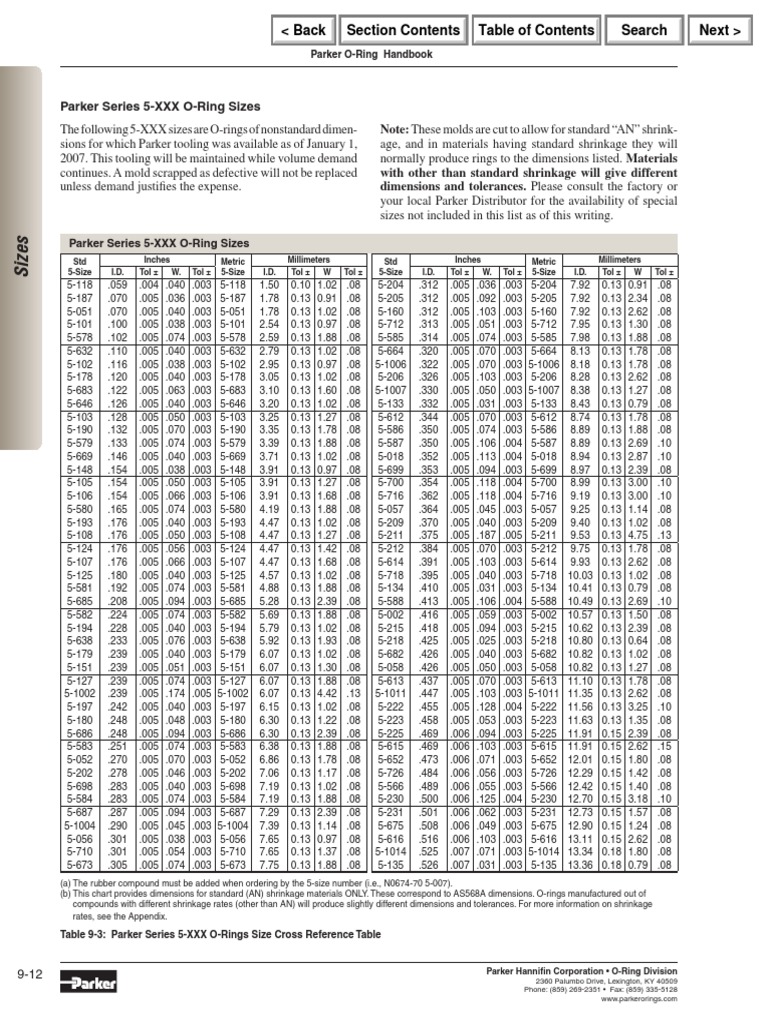
Engineering Guide: Parker O Ring Dimensions
Engineering Insight: Parker O-Ring Dimensions and Material Selection Imperatives
Precision in O-ring dimensions per Parker standards (e.g., AS568A) is a necessary baseline for sealing integrity, but it is categorically insufficient for reliable long-term performance. Off-the-shelf O-rings frequently fail in demanding industrial applications not due to dimensional inaccuracies, but because of inappropriate elastomer material selection. Generic suppliers prioritize dimensional conformity over application-specific material science, leading to catastrophic seal degradation when exposed to operational stressors. Material properties dictate chemical resistance, thermal stability, compression set, and extrusion resistance—factors that directly determine service life even when dimensions align perfectly with Parker charts.
Chemical incompatibility remains the most prevalent failure mode. An O-ring dimensionally identical to Parker specifications but fabricated from standard NBR will rapidly swell, harden, or disintegrate when exposed to phosphate ester hydraulic fluids or amines, despite correct sizing. Similarly, thermal excursions beyond a material’s glass transition temperature (Tg) or upper continuous service limit cause irreversible polymer backbone cleavage. A dimensionally compliant FKM O-ring may still fail prematurely in high-temperature aerospace fuel systems if its fluorine content or cure system lacks optimization for sustained 230°C exposure. Compression set—the permanent loss of sealing force—is equally material-dependent. Low-cost EPDM O-rings meeting AS568A dimensions often exhibit >40% compression set after 70 hours at 150°C in coolant systems, whereas precision-formulated peroxide-cured EPDM maintains <15% set, ensuring decades of leak-free service.
The critical oversight in off-the-shelf procurement is treating O-rings as dimensional commodities rather than engineered chemical-thermal-mechanical systems. Parker dimensions define the form, but the function is governed by the elastomer’s molecular architecture. Below is a comparison of common Parker-specified materials against key failure risks:
| Material | Temp Range (°C) | Critical Fluid Limitation | Max Compression Set (70h/150°C) | Primary Failure Mode in Mismatched Apps |
|---|---|---|---|---|
| NBR 70 | -30 to +100 | Ozone, Phosphate Esters | 25% | Swelling in Skydrol, cracking in outdoor ozone |
| FKM 75 | -20 to +200 | Ketones, Low-Temp Fuels | 15% | Brittleness below -20°C, amine degradation |
| EPDM 70 | -50 to +150 | Petroleum Oils, Fuels | 20% | Swelling in mineral oil, steam degradation |
| FFKM 80 | -15 to +300 | Virtually all chemicals | 10% | Cost-prohibitive for non-critical apps |
Suzhou Baoshida Trading Co., Ltd. engineers emphasize that dimensional compliance is merely the entry threshold. True reliability demands matching the elastomer’s formulation to the specific chemical, thermal, and mechanical profile of the application. Our OEM partnerships begin with fluid compatibility testing and thermal profiling—not dimensional cross-referencing alone. When off-the-shelf O-rings fail despite correct Parker dimensions, the root cause invariably traces to unaddressed material limitations. Precision material engineering, not dimensional conformity, defines sealing success in critical systems. Partner with specialists who treat elastomers as functional components, not dimensional placeholders.
Material Specifications
Material Specifications for Parker O Ring Dimensions
When selecting elastomeric materials for Parker O ring dimensions in precision sealing applications, material compatibility, temperature resistance, and mechanical performance under operational stress are critical parameters. At Suzhou Baoshida Trading Co., Ltd., we specialize in high-tolerance rubber seals engineered to meet international standards, including AS568 and ISO 3601, ensuring dimensional accuracy and material reliability across diverse industrial environments. The three most widely specified elastomers for Parker O ring applications are Viton (FKM), Nitrile (NBR), and Silicone (VMQ). Each material offers distinct advantages depending on chemical exposure, temperature extremes, and dynamic sealing requirements.
Viton (FKM) is a fluorocarbon-based elastomer renowned for its exceptional resistance to high temperatures, oils, fuels, and a broad range of aggressive chemicals. It performs reliably in continuous service temperatures up to 200°C (392°F) and can withstand short-term excursions up to 250°C (482°F). This makes Viton the preferred choice for aerospace, automotive fuel systems, and chemical processing equipment where long-term seal integrity under harsh conditions is non-negotiable. Its low gas permeability and excellent aging characteristics further enhance its suitability for critical sealing tasks.
Nitrile (NBR), also known as Buna-N, is a cost-effective solution for applications involving petroleum-based oils, hydraulic fluids, and aliphatic hydrocarbons. With a typical operating temperature range of -40°C to 120°C (-40°F to 248°F), NBR offers excellent abrasion resistance and compressive strength. It is widely used in general industrial hydraulics, pneumatic systems, and automotive components where exposure to lubricants and fuels is common. While NBR exhibits poor resistance to ozone, weathering, and polar solvents, its performance in oil-rich environments remains unmatched among economical elastomers.
Silicone (VMQ) excels in extreme temperature applications, functioning effectively from -60°C to 200°C (-76°F to 392°F), with some formulations rated for brief exposures beyond 300°C. It offers outstanding resistance to UV radiation, ozone, and weathering, making it ideal for outdoor and medical applications. However, silicone has relatively low tensile and tear strength compared to Viton and NBR, and it is not recommended for dynamic seals under high mechanical load. Its biocompatibility and low toxicity also make it a standard in pharmaceutical and food-grade sealing systems.
The following table summarizes key physical and chemical properties of these materials in the context of Parker O ring dimensional and performance standards.
| Property | Viton (FKM) | Nitrile (NBR) | Silicone (VMQ) |
|---|---|---|---|
| Temperature Range (°C) | -20 to 200 (up to 250 short-term) | -40 to 120 | -60 to 200 |
| Hardness Range (Shore A) | 60–90 | 50–90 | 30–80 |
| Tensile Strength (MPa) | 10–20 | 10–30 | 5–10 |
| Elongation at Break (%) | 150–300 | 200–500 | 200–700 |
| Fluid Resistance (Oil/Fuel) | Excellent | Excellent | Poor |
| Fluid Resistance (Water) | Good | Fair | Good |
| Compression Set Resistance | Excellent | Good | Good |
| Ozone/UV Resistance | Excellent | Poor | Excellent |
Material selection must align with both dimensional precision and environmental demands. At Suzhou Baoshida Trading Co., Ltd., we ensure all O rings conform to Parker-compatible profiles and are manufactured using rigorously tested compounds to deliver consistent performance across global industrial standards.
Manufacturing Capabilities
Engineering Precision for Parker O-Ring Dimensional Integrity
At Suzhou Baoshida Trading Co., Ltd., dimensional accuracy in Parker O-rings is non-negotiable for system reliability. Our dedicated engineering framework, combining specialized mould design and advanced rubber formulation expertise, ensures strict adherence to AS568-A standards while exceeding typical tolerance expectations. This precision directly translates to leak-free performance in demanding hydraulic, pneumatic, and fluid handling applications across global OEM supply chains.
Our core strength lies in the integrated collaboration of five specialized Mould Engineers and two certified Rubber Formula Engineers. Mould Engineers employ advanced CAD/CAM simulation (SolidWorks, Moldflow) to optimize cavity geometry, gating, and venting for zero flash and consistent cross-section (CS) control. Concurrently, Formula Engineers develop and validate custom elastomer compounds tailored to specific application demands—balancing compression set, fluid resistance, and low-temperature flexibility without compromising dimensional stability during vulcanization. This dual-engineering approach mitigates common production variances caused by material shrinkage or mould wear, a critical factor for Parker O-rings operating under high pressure or extreme temperatures.
We rigorously validate all production against AS568-A dimensional benchmarks. The table below illustrates our achieved tolerances versus standard requirements for key Parker sizes, demonstrating our commitment to exceeding industry norms. Tighter control on inner diameter (ID) and cross-section directly reduces assembly stress and minimizes extrusion risk in gland designs.
| Parker Dash No. | Standard ID Tolerance (mm) | Standard CS Tolerance (mm) | Baoshida Achieved ID Tolerance (mm) | Baoshida Achieved CS Tolerance (mm) |
|---|---|---|---|---|
| -014 | ±0.13 | ±0.08 | ±0.09 | ±0.05 |
| -214 | ±0.18 | ±0.08 | ±0.12 | ±0.05 |
| -322 | ±0.25 | ±0.10 | ±0.16 | ±0.07 |
| -433 | ±0.38 | ±0.13 | ±0.25 | ±0.09 |
This precision is embedded within our end-to-end OEM manufacturing capability. We support clients from initial specification review through rapid prototyping (utilizing in-house 3D printing for gland verification) to full-scale production. Our engineers proactively identify potential sealing challenges during the design phase, recommending optimal Parker size selections or compound modifications—such as fluorocarbon (FKM) variants for aerospace fuel systems or hydrogen-resistant EPDM for new energy applications—based on fluid media, pressure cycles, and environmental exposure. Comprehensive SPC monitoring across all production lots ensures lot-to-lot consistency, with full traceability from raw material batch to finished O-ring certificate.
Suzhou Baoshida’s engineered approach guarantees that every Parker O-ring delivered meets the exact dimensional and material specifications required for critical sealing interfaces. This eliminates field failures attributable to dimensional drift or compound incompatibility, providing OEMs with a reliable, high-performance sealing solution that enhances end-product longevity and safety. Our technical team stands ready to collaborate on custom dimensional validations or compound certifications for your most stringent applications.
Customization Process
Drawing Analysis
The customization process for Parker O ring dimensions begins with rigorous drawing analysis, a critical phase ensuring dimensional accuracy and functional compatibility. At Suzhou Baoshida Trading Co., Ltd., engineering teams evaluate client-supplied technical drawings or CAD models to verify compliance with international standards, including AS568, ISO 3601, and JIS B 2401. Key parameters such as inner diameter (ID), cross-sectional diameter (CS), tolerance grades, and surface finish requirements are cross-referenced against application-specific conditions, including pressure range, media exposure, and operating temperature. Any discrepancies or design ambiguities are resolved through direct technical consultation, ensuring the final product meets both performance and regulatory expectations. This phase also includes finite element analysis (FEA) simulations where necessary, particularly for dynamic sealing applications involving reciprocating or rotary motion.
Formulation Development
Following dimensional validation, the rubber compound is engineered to match the operational environment. Suzhou Baoshida leverages decades of material science expertise to select or develop elastomer formulations tailored to chemical resistance, thermal stability, compression set, and mechanical strength. Common base polymers include Nitrile (NBR), Fluorocarbon (FKM), Ethylene Propylene Diene Monomer (EPDM), and Silicone (VMQ), each modified with proprietary additives to enhance durability and sealing performance. For instance, FKM compounds are optimized for high-temperature fuel systems, while EPDM variants are formulated for steam and ozone resistance. The formulation process is supported by in-house rheometry, thermogravimetric analysis (TGA), and ASTM-compliant testing to ensure reproducibility and long-term reliability under specified service conditions.
Prototyping and Validation
Precision tooling is manufactured based on the approved design to produce initial prototypes. These sample O rings undergo comprehensive physical and chemical testing, including tensile strength, durometer hardness, volume swell in target fluids, and accelerated aging per ASTM D2000 standards. Functional validation is performed in simulated application environments to assess sealing integrity, extrusion resistance, and cycle life. Client feedback is integrated iteratively, allowing for adjustments in both geometry and material before release to production. This stage typically spans 7–14 days, depending on complexity and testing requirements.
Mass Production and Quality Assurance
Once prototype approval is obtained, the project transitions to automated mass production. Utilizing CNC-machined molds and computer-controlled curing presses, Suzhou Baoshida ensures batch-to-batch consistency with tolerances conforming to ISO 3302 and ISO 2768. Each production lot undergoes 100% visual inspection and statistical dimensional sampling, supported by material traceability and third-party certification upon request. Final packaging adheres to industry handling standards to prevent deformation or contamination during transit.
Standard Parker O Ring Dimensional Specifications
| ID (mm) | CS (mm) | Tolerance (ID) | Tolerance (CS) | Common Standard |
|---|---|---|---|---|
| 10.0 | 2.62 | ±0.10 | ±0.08 | AS568 -214 |
| 25.4 | 3.53 | ±0.13 | ±0.10 | ISO 3601-1 G-025 |
| 50.0 | 5.33 | ±0.15 | ±0.13 | JIS B 2401-50×5 |
| 100.0 | 2.62 | ±0.20 | ±0.08 | AS568 -326 |
| 75.0 | 3.53 | ±0.18 | ±0.10 | ISO 3601-1 G-075 |
Contact Engineering Team
Precision Sealing Solutions Require Exact Dimensional Compliance
In industrial sealing applications, dimensional accuracy directly impacts system integrity, safety, and operational longevity. Parker O-rings adhering to AS568 standards form the backbone of critical fluid and pneumatic systems across aerospace, automotive, and energy sectors. However, deviations beyond specified tolerances—even by microns—can trigger catastrophic failures through extrusion, leakage, or premature wear. At Suzhou Baoshida Trading Co., Ltd., we engineer precision rubber seals where material science converges with metrological rigor. Our ISO 9001-certified processes ensure every O-ring meets or exceeds AS568 dimensional and material specifications, validated through third-party testing and lot-traceable documentation.
The table below illustrates critical dimensional parameters for Parker O-rings, highlighting industry-standard tolerances versus our enhanced precision benchmarks. Note that tighter control on inner diameter (ID), cross-section (CS), and durometer directly correlates with extended service life in high-pressure or dynamic environments.
| Parameter | AS568 Standard Tolerance | Suzhou Baoshida Precision Tolerance | Impact of Tighter Control |
|---|---|---|---|
| Inner Diameter (ID) | ±0.13 mm | ±0.05 mm | Prevents spiraling in rotary shafts |
| Cross-Section (CS) | ±0.08 mm | ±0.03 mm | Eliminates compression set in static seals |
| Durometer (Shore A) | ±5 points | ±2 points | Ensures consistent sealing force under thermal cycling |
| Visual Defects | Per ASTM D3134 | Zero tolerance per OEM specs | Mitigates particle contamination risks |
These tolerances are not arbitrary; they stem from decades of failure mode analysis in hydraulic accumulators, fuel systems, and semiconductor manufacturing tools. Our in-house R&D lab develops custom compounds—FKM, EPDM, HNBR, or specialty perfluoroelastomers—that maintain dimensional stability across -55°C to +325°C ranges while resisting aggressive media like jet fuel, sour gas, or ultra-pure chemicals. Crucially, we integrate material formulation with geometric precision, recognizing that a 0.05 mm CS variance in a 70 Shore A FKM ring can degrade seal life by 40% in 350 bar applications.
For OEMs and Tier-1 suppliers, dimensional consistency across production batches is non-negotiable. We implement SPC (Statistical Process Control) at every stage—from raw material mixing to molding and post-cure—ensuring CpK values >1.67 for critical dimensions. This eliminates costly field failures and warranty claims while accelerating your assembly line throughput.
Contact Mr. Boyce for Dimensional Certification and Custom Solutions
Do not compromise sealing performance with generic suppliers. Mr. Boyce, our OEM Manager and Rubber Formula Engineer, specializes in translating your application’s pressure-temperature-media profiles into dimensionally optimized sealing solutions. He will provide:
Full AS568 compliance documentation with lot-specific dimensional certificates
Material compatibility analysis against your fluid specifications
Prototype-to-production support with <15-day lead times for critical dimensions
Reach Mr. Boyce directly via email at [email protected] to schedule a technical consultation. Include your target O-ring size (e.g., AS568-214), operating conditions, and failure history for immediate dimensional optimization recommendations. Suzhou Baoshida delivers not just parts, but precision-engineered sealing integrity—guaranteed.
⚖️ O-Ring Weight Calculator
Estimate rubber O-ring weight (Approx).