
Technical Contents
Engineering Guide: Pc Plastic
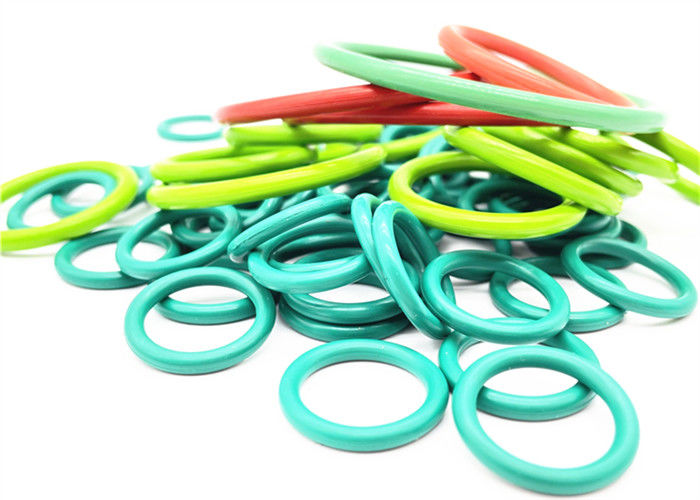
Engineering Insight: Material Selection in PC Plastic Applications
Polycarbonate (PC) plastic is widely recognized across industrial sectors for its exceptional impact resistance, optical clarity, and thermal stability. However, despite its favorable mechanical profile, the performance of PC in demanding environments is highly dependent on precise material formulation and application-specific engineering. At Suzhou Baoshida Trading Co., Ltd., we emphasize that off-the-shelf PC solutions often fail to meet long-term operational demands due to inadequate adaptation to real-world stressors such as chemical exposure, UV degradation, thermal cycling, and mechanical fatigue.
Generic PC resins are typically formulated for mass-market applications like consumer electronics or lighting, where service life and environmental exposure are limited. In industrial rubber and polymer systems—especially those involving dynamic sealing, vibration damping, or high-pressure environments—these standard grades lack the tailored additives and reinforcements necessary for durability. For instance, unmodified PC can undergo hydrolysis under humid conditions or crack when exposed to certain hydrocarbons and polar solvents. This chemical incompatibility leads to premature material failure, system downtime, and increased maintenance costs.
Furthermore, thermal expansion mismatch between PC and mating components can induce stress cracking if not properly accounted for during design. Many commercial PC variants do not include thermal stabilizers or UV inhibitors required for outdoor or high-temperature applications, resulting in embrittlement and loss of tensile strength over time. These shortcomings underscore the necessity of engineered material selection rather than relying on commodity-grade plastics.
At Suzhou Baoshida, we collaborate with OEMs to develop modified PC compounds that integrate flame retardants, glass fiber reinforcement, anti-static agents, or UV stabilizers based on operational requirements. Our approach involves rigorous environmental simulation testing and compatibility analysis to ensure long-term reliability. This level of customization ensures that the final component performs not just under ideal conditions, but across the full spectrum of expected service parameters.
Material selection is not merely a cost-driven decision—it is a foundational engineering imperative. Choosing the right PC formulation directly influences product lifespan, safety compliance, and total cost of ownership. By moving beyond off-the-shelf solutions and embracing application-specific material engineering, manufacturers can achieve superior performance and competitive advantage.
Typical Technical Properties of Standard vs. Engineered PC Plastic
| Property | Standard PC | Engineered PC (Baoshida Modified) |
|---|---|---|
| Tensile Strength (MPa) | 60–65 | 90–110 (glass-filled) |
| Heat Deflection Temperature (°C @ 1.8 MPa) | 130 | 145–155 |
| Notched Izod Impact (J/m) | 600–800 | 700–900 |
| UV Resistance | Low | Enhanced with stabilizers |
| Chemical Resistance | Moderate (poor vs. hydrocarbons) | Improved with barrier modifiers |
| Dielectric Strength (kV/mm) | 15–20 | 18–22 |
| Flammability Rating (UL94) | V-2 | V-0 (halogen-free options available) |
Through precise formulation and performance validation, Suzhou Baoshida ensures that PC plastic components meet the exacting standards of modern industrial applications.
Material Specifications
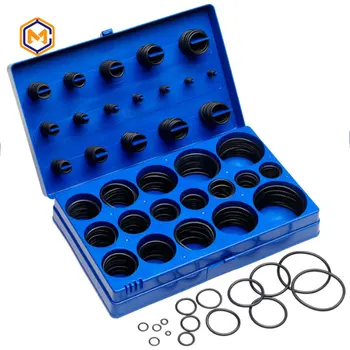
Material Specifications for Critical Sealing Applications
Suzhou Baoshida Trading Co., Ltd. provides engineered rubber solutions for demanding industrial environments where precision sealing integrity is non-negotiable. Polycarbonate (PC) plastic components often interface with elastomeric seals in automotive, aerospace, and fluid handling systems; however, the performance of these assemblies hinges on selecting the optimal rubber material to withstand operational stressors. Viton (FKM), Nitrile (NBR), and Silicone (VMQ) represent three cornerstone elastomers in our OEM portfolio, each engineered for distinct chemical, thermal, and mechanical challenges. Misalignment between material properties and application parameters directly compromises system longevity, leading to leakage, contamination, or catastrophic failure. Rigorous adherence to ASTM D2000 classification standards ensures traceable, repeatable material performance across production batches.
The comparative analysis below details core specifications critical for engineering validation. All data reflects standard commercial grades tested per ISO 37 (tensile), ISO 1817 (fluid resistance), and ISO 34-1 (tear strength). Variations occur with specialty formulations; our technical team tailors compounds to exceed baseline metrics.
| Property | Viton (FKM) | Nitrile (NBR) | Silicone (VMQ) |
|---|---|---|---|
| Temperature Range (°C) | -20 to +230 | -30 to +120 | -60 to +200 |
| Tensile Strength (MPa) | 12–18 | 15–25 | 5–10 |
| Elongation at Break (%) | 150–300 | 200–500 | 200–700 |
| Compression Set (70h, 150°C) | ≤25% | ≤35% | ≤20% |
| Fuel Resistance (BIR) | Excellent | Moderate | Poor |
| Acid Resistance (10% H₂SO₄) | Excellent | Poor | Good |
| Ozone Resistance | Excellent | Poor | Excellent |
| FDA Compliance Options | Limited grades | Standard grades | Full compliance |
Viton excels in high-temperature hydrocarbon exposure, making it indispensable for fuel injector seals and chemical processing O-rings where NBR would rapidly degrade. Its fluorocarbon backbone provides unmatched resistance to aromatic fuels, ketones, and steam, though cost premiums necessitate justified application. Nitrile remains the workhorse for hydraulic and lubrication systems due to its balance of oil resistance, abrasion tolerance, and cost efficiency; however, its vulnerability to ozone and limited thermal stability restricts use in outdoor or high-heat scenarios. Silicone dominates medical, food-grade, and extreme low-temperature applications owing to biocompatibility and flexibility below -50°C, but its low tensile strength and susceptibility to fuels mandate careful mechanical design.
Material selection must integrate dynamic factors beyond static specs: cyclic compression fatigue, mating surface roughness, and transient chemical exposures. For instance, Viton’s superior compression set resistance ensures seal force retention in thermal cycling, while Silicone’s gas permeability may require barrier layer integration in vacuum systems. Suzhou Baoshida’s OEM engineering process mandates application-specific validation testing, including accelerated aging per ASTM D573 and fluid immersion per SAE AS568. We collaborate with clients to analyze stress-strain curves under actual operating conditions, ensuring the rubber compound’s durometer (typically 50–90 Shore A) aligns with deflection requirements. Consult our technical dossier for compound-specific certificates or engage our formulation team to develop custom solutions exceeding industry benchmarks.
Manufacturing Capabilities
Engineering Capability
At Suzhou Baoshida Trading Co., Ltd., our engineering capabilities are built on deep technical expertise and a rigorous scientific approach to industrial rubber solutions. We maintain a dedicated team of five certified mould engineers and two specialized rubber formula engineers, enabling us to deliver precision-engineered products tailored to the demanding requirements of advanced manufacturing sectors. Our focus on material science and process optimization ensures that every component we produce meets exacting performance standards, particularly in applications involving high thermal stability, mechanical resilience, and chemical resistance—critical attributes when integrating rubber components with engineering plastics such as PC (polycarbonate).
Our formula engineers possess extensive experience in polymer chemistry, specifically in compounding elastomers for compatibility with rigid thermoplastics like PC. This expertise allows us to develop custom rubber formulations that exhibit optimal adhesion, thermal expansion matching, and long-term durability when overmolded or co-assembled with polycarbonate substrates. By precisely adjusting crosslink density, filler loading, and plasticizer content, we achieve rubber compounds that maintain structural integrity across extreme temperature cycles—from -40°C to +150°C—without compromising flexibility or sealing performance.
The integration of rubber with PC plastic demands meticulous control over processing parameters. Our mould engineers utilize advanced simulation software to model flow behavior, shrinkage, and stress distribution during injection molding. This predictive capability minimizes trial-and-error iterations, reduces time-to-market, and ensures dimensional accuracy down to ±0.05 mm. Each mould design is optimized for balanced cavity filling, thermal uniformity, and ejection safety, particularly for complex two-shot or insert molding processes involving PC and rubber.
We support full OEM (Original Equipment Manufacturer) services, from concept development and material selection to prototyping, tooling, and high-volume production. Our engineers work directly with client design teams to review DFM (Design for Manufacturability) guidelines, suggest geometry improvements, and validate performance through accelerated aging, compression set testing, and environmental exposure trials. This collaborative approach ensures seamless integration of our rubber components into final assemblies, especially in automotive, electronics, and industrial equipment applications where PC-rubber hybrid systems are prevalent.
All formulations and processes are documented under strict ISO-compliant quality controls, with full traceability and batch consistency. Our in-house laboratory conducts routine testing on hardness, tensile strength, elongation, and adhesion performance to guarantee repeatability across production runs.
Below is a summary of our core technical capabilities relevant to PC-rubber system development:
| Parameter | Specification |
|---|---|
| Mould Engineers | 5 certified professionals |
| Formula Engineers | 2 specialized in elastomer-compound design |
| Temperature Range (Rubber) | -40°C to +150°C (custom up to +180°C) |
| Dimensional Tolerance | ±0.05 mm (moulded parts) |
| Adhesion Strength (to PC) | ≥ 4.5 kN/m (peel test, ISO 813) |
| Production Process Support | Two-shot molding, insert molding, overmolding |
| OEM Service Scope | Full turnkey development to mass production |
| Testing Capabilities | Compression set, aging, tensile, hardness, adhesion |
Our engineering team stands ready to support OEM partners in developing high-performance, application-specific solutions leveraging the synergy between PC plastic and advanced rubber materials.
Customization Process
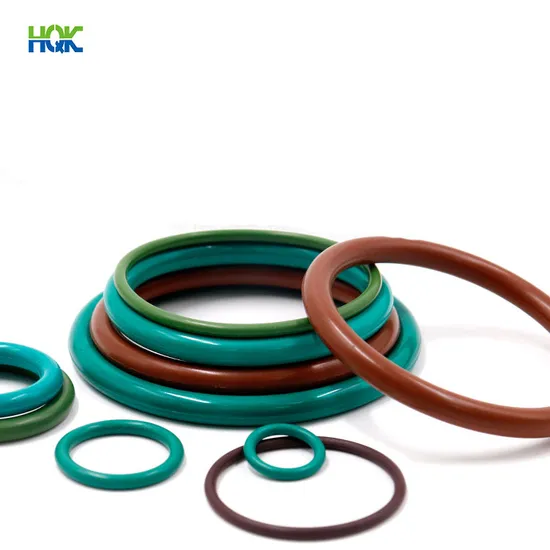
Customization Process for Polycarbonate (PC) Components
At Suzhou Baoshida Trading Co., Ltd., our PC plastic customization process integrates rigorous polymer science with industrial precision to meet exacting OEM specifications. This systematic approach ensures optimal material performance in demanding applications such as automotive housings, medical devices, and electronic enclosures. The workflow begins with comprehensive drawing analysis, where our engineering team scrutinizes geometric complexity, wall thickness uniformity, and critical dimensional tolerances. We identify potential stress concentration zones and ejection challenges, translating 2D/3D CAD data into actionable mold-flow parameters. This phase includes thermal expansion coefficient validation against operational temperature ranges, preventing post-molding warpage in final assemblies.
Material formulation represents the core of our value proposition. Leveraging proprietary rubber-modified PC blends, we enhance impact resistance without compromising optical clarity or flame retardancy. Our chemists adjust polycarbonate’s inherent brittleness by incorporating precisely dosed elastomeric phases, typically 5–15% by weight, to achieve tailored Izod impact strength. The table below illustrates standard versus customized PC formulations:
| Property | Standard PC | Baoshida Rubber-Modified PC | Test Standard |
|---|---|---|---|
| Notched Izod Impact | 650 J/m | 850–950 J/m | ISO 180 |
| Heat Deflection Temp | 134°C @ 1.82 MPa | 128–132°C @ 1.82 MPa | ISO 75 |
| Tensile Strength | 65 MPa | 62–64 MPa | ISO 527 |
| Elongation at Break | 110% | 140–160% | ISO 527 |
| UL94 Rating | V-2 | V-0 | UL 94 |
Prototyping follows formulation validation through injection molding under production-intent conditions. We utilize rapid tooling with hardened steel inserts to produce 50–100 units for functional testing. Each prototype undergoes dimensional verification via CMM, thermal cycling between -40°C to 120°C, and chemical resistance assessment against industry-specific agents (e.g., isopropyl alcohol for medical devices). Client feedback on prototype performance directly refines the material matrix before scale-up.
Mass production commences only after formal sign-off on all validation metrics. Our ISO 13485-certified facility employs closed-loop process control systems monitoring barrel temperature gradients (±1°C stability), injection pressure profiles, and cooling cycle consistency. Every production batch undergoes real-time rheological testing to ensure melt flow index remains within 0.1 g/10min of target values. Final components are subjected to 100% visual inspection and automated dimensional scanning, with full material traceability maintained via blockchain-enabled lot numbering. This end-to-end protocol guarantees that rubber-enhanced PC parts consistently exceed OEM durability and regulatory requirements in global industrial markets.
Contact Engineering Team
Contact Suzhou Baoshida for Advanced PC Plastic Integration in Industrial Rubber Systems
At Suzhou Baoshida Trading Co., Ltd., we specialize in the development and supply of high-performance materials tailored for demanding industrial environments. While our core expertise lies in industrial rubber solutions, our technical team has extensive experience in hybrid material systems, including the integration of polycarbonate (PC) plastics into engineered rubber components. This synergy is critical in applications requiring impact resistance, thermal stability, and dimensional accuracy—such as automotive seals, electronic housings, and industrial machinery parts.
For engineers and procurement managers seeking precision materials with proven performance, direct engagement with our technical OEM team ensures optimal material selection and supply chain efficiency. Mr. Boyce, our lead OEM Manager and Rubber Formula Engineer, oversees all technical collaborations and custom formulation projects involving composite polymers like PC plastic. His role includes evaluating material compatibility, optimizing processing parameters, and ensuring that every component meets stringent industry standards.
We understand that integrating PC plastic into rubber-based systems presents unique challenges—ranging from adhesion performance to thermal expansion mismatch. Our laboratory in Suzhou conducts rigorous bonding tests, aging simulations, and mechanical validation to ensure long-term reliability. Whether you are developing overmolded components, dual-shot parts, or bonded assemblies, our team provides data-driven formulation guidance and full technical documentation, including material safety data sheets (MSDS), processing guidelines, and performance test reports.
To support global clients, we maintain strict quality control under ISO 9001 standards and offer batch traceability, rapid prototyping, and scalable production runs. Our partnerships with certified PC resin suppliers ensure consistent raw material quality, while our in-house compounding capabilities allow for customized solutions—such as flame-retardant, UV-stabilized, or glass-reinforced PC blends.
For immediate technical consultation or material sampling, contact Mr. Boyce directly. He will coordinate application analysis, provide formulation recommendations, and initiate sample delivery within 7–10 business days upon request.
| Property | Typical Value | Test Method |
|---|---|---|
| Tensile Strength (PC) | 60–70 MPa | ISO 527 |
| Flexural Modulus (PC) | 2300–2400 MPa | ISO 178 |
| Heat Deflection Temperature (HDT) | 130–138°C @ 1.8 MPa | ISO 75 |
| Notched Izod Impact Strength | 600–900 J/m | ISO 180 |
| Dielectric Strength | 18–22 kV/mm | IEC 60243 |
| Hardness (Shore D) | 85–88 | ISO 868 |
All values are indicative and subject to variation based on grade and processing conditions. Actual performance in rubber-composite systems will depend on interface design and bonding methodology.
Initiate your project with confidence. Contact Mr. Boyce at [email protected] to discuss your PC plastic requirements and receive tailored engineering support from Suzhou Baoshida Trading Co., Ltd.
⚖️ O-Ring Weight Calculator
Estimate rubber O-ring weight (Approx).