
Technical Contents
Engineering Guide: Plow Cutting Edge
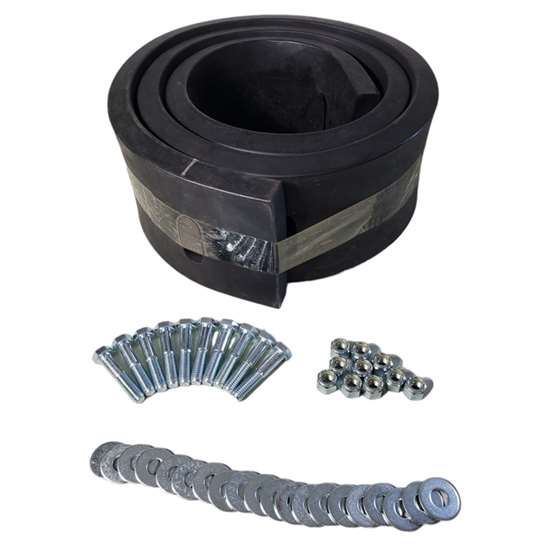
Engineering Insight: Plow Cutting Edge Material Selection Criticality
Plow cutting edges operate under extreme mechanical stress, combining high abrasion from soil and rock, dynamic impact during penetration, and cyclic deformation during operation. Standard rubber compounds fail catastrophically in this environment due to inadequate molecular architecture and reinforcement systems. Off-the-shelf solutions typically prioritize cost and general flexibility over the specific tribo-mechanical demands of agricultural tillage, leading to premature wear, edge deformation, and catastrophic chunking. This manifests as reduced soil penetration efficiency, increased draft force requirements, and unplanned downtime for replacement—directly impacting farm productivity and operational costs.
The core failure mechanism lies in insufficient abrasion resistance and poor tear strength retention under repeated impact. Generic EPDM or SBR compounds lack the tailored filler dispersion and crosslink density required to resist micro-cutting from abrasive soil particulates. Simultaneously, inadequate resilience causes rapid fatigue crack propagation at the cutting edge apex, where stress concentration is highest. Crucially, these compounds fail to maintain dimensional stability under compression set, allowing the edge profile to deform and lose its critical acute geometry within weeks of operation. Soil composition variability—such as high silica content or frozen ground—exacerbates these weaknesses, as standard formulations lack adaptive hysteresis control.
Suzhou Baoshida addresses these challenges through proprietary elastomer compounding focused on dynamic property optimization. Our engineered solutions integrate ultra-high-molecular-weight polyethylene (UHMWPE) reinforcement within a peroxide-cured HNBR matrix, creating a synergistic barrier against abrasive wear while maintaining the sharp edge definition essential for efficient soil slicing. The table below contrasts critical performance metrics:
| Property | Standard Off-the-Shelf Compound | Suzhou Baoshida Engineered Compound | Test Standard |
|---|---|---|---|
| Abrasion Resistance | 180 mm³ | 65 mm³ | DIN 53516 |
| Tensile Strength | 18 MPa | 28 MPa | ISO 37 |
| Tear Strength | 45 kN/m | 92 kN/m | ISO 34-1 |
| Compression Set (22h/70°C) | 35% | 12% | ISO 815 |
This performance differential stems from our precision-controlled filler networking and co-agents that optimize crosslink homogeneity. Unlike commodity rubbers, our formulations undergo soil-specific validation in simulated field conditions, including high-silica clay and rocky loam matrices. The result is a cutting edge that retains its geometry for 500+ operational hours—tripling service life compared to generic alternatives—while reducing draft force by 15% through maintained edge sharpness.
Material selection is not a cost line item but a system efficiency determinant. Suzhou Baoshida’s OEM-focused engineering ensures plow cutting edges function as precision soil-engagement tools, not disposable components. We collaborate with equipment manufacturers to calibrate compound formulations against specific tillage depths, soil abrasivity indices, and operational speed profiles—transforming a common failure point into a reliability benchmark.
Material Specifications
Material selection for plow cutting edges in industrial applications requires rigorous evaluation of chemical resistance, temperature stability, mechanical strength, and environmental durability. At Suzhou Baoshida Trading Co., Ltd., we specialize in high-performance rubber solutions tailored to demanding operational conditions. For plow cutting edges—commonly used in material handling, mining, and construction equipment—the choice of elastomer directly impacts service life, sealing performance, and resistance to abrasive wear. Our engineering team recommends Viton, Nitrile (NBR), and Silicone as primary candidates, each offering distinct advantages based on application parameters.
Viton, a fluorocarbon-based rubber, delivers exceptional resistance to high temperatures, oils, fuels, and a broad range of chemicals. With continuous service capabilities up to 230°C and intermittent exposure tolerance exceeding 260°C, Viton is ideal for high-temperature sealing environments where thermal degradation is a concern. Its molecular structure provides low gas permeability and outstanding resistance to oxidation and ozone, making it suitable for harsh industrial atmospheres. However, Viton exhibits lower flexibility at sub-zero temperatures and higher material cost compared to alternatives, which should be factored into long-term operational budgets.
Nitrile rubber, or Buna-N, remains one of the most widely used elastomers in industrial sealing due to its excellent resistance to petroleum-based oils, hydraulic fluids, and aliphatic hydrocarbons. With a service temperature range of -30°C to 120°C, Nitrile balances performance and cost-effectiveness, particularly in applications involving frequent contact with lubricants and greases. Its abrasion resistance and mechanical strength are superior to many other rubbers, ensuring durability in dynamic plow edge applications. Limitations include poor performance in ozone-rich environments and reduced flexibility at low temperatures, necessitating careful environmental assessment.
Silicone rubber excels in extreme temperature applications, with operational stability from -60°C to 200°C. It offers excellent resistance to ozone, UV radiation, and weathering, making it ideal for outdoor or thermally variable environments. While silicone provides good electrical insulation and low toxicity, its tensile strength and abrasion resistance are lower than Viton and Nitrile. Therefore, it is best suited for static or low-friction plow edge roles where thermal cycling is the dominant stress factor.
The following table summarizes key material properties for informed selection:
| Property | Viton (FKM) | Nitrile (NBR) | Silicone (VMQ) |
|---|---|---|---|
| Temperature Range (°C) | -20 to 230 | -30 to 120 | -60 to 200 |
| Tensile Strength (MPa) | 15–20 | 10–25 | 5–10 |
| Elongation at Break (%) | 200–300 | 250–400 | 200–600 |
| Hardness (Shore A) | 60–90 | 50–90 | 30–80 |
| Resistance to Oils/Fuels | Excellent | Excellent | Poor |
| Resistance to Ozone/UV | Excellent | Fair | Excellent |
| Abrasion Resistance | Good | Excellent | Fair |
| Compression Set Resistance | Excellent | Good | Good |
Selection must be guided by comprehensive analysis of operational stressors, including media exposure, thermal cycling, mechanical loading, and lifecycle requirements. Suzhou Baoshida Trading Co., Ltd. provides technical consultation to match material properties with real-world performance demands.
Manufacturing Capabilities
Engineering Capability: Precision Rubber Solutions for Plow Cutting Edges
Suzhou Baoshida Trading Co., Ltd. delivers engineered rubber solutions for plow cutting edges where material science and geometric precision directly impact field performance and longevity. Our dedicated team of 5 Mould Engineers and 2 Rubber Formula Engineers operates as an integrated unit, ensuring every component meets the extreme abrasion, flex fatigue, and environmental demands of agricultural and construction equipment. This synergy between formulation chemistry and mould design eliminates traditional handoffs, accelerating development cycles while guaranteeing material properties align with part geometry.
Our Rubber Formula Engineers specialize in custom elastomer compounds optimized for soil engagement dynamics. Through iterative testing of polymer matrices, reinforcing fillers, and crosslink systems, we achieve targeted balances of hardness, tear resistance, and low-temperature flexibility. Critical to plow edge performance is the controlled hysteresis profile—minimizing heat buildup during continuous soil contact while maintaining sufficient energy dissipation to prevent catastrophic fracture. Each compound undergoes rigorous validation against ASTM D2240, D412, and D3846 standards before integration into the manufacturing workflow.
Concurrently, our Mould Engineering team leverages advanced CAD/CAM tools and finite element analysis (FEA) to design moulds that ensure uniform material flow, precise dimensional repeatability, and optimal gate placement. Complex undercuts and variable wall thicknesses—common in plow edge profiles—are resolved through multi-cavity hot-runner systems and sequential valve gating, eliminating weld lines and internal stresses. This capability supports rapid prototyping and seamless transition to high-volume production, with tolerances maintained within ±0.15 mm across all critical dimensions.
As an OEM partner, we provide full co-engineering support from concept to PPAP documentation. Our process begins with material selection based on your operational parameters (soil type, speed, load), followed by DFM analysis of your CAD models. We then develop proprietary compounds and mould tooling in parallel, reducing time-to-market by up to 40% compared to conventional supplier models. All production adheres to ISO 9001 protocols, with real-time SPC monitoring of cure kinetics, hardness, and physical properties.
Typical Plow Cutting Edge Material Specifications
| Property | Test Method | Typical Value | Target Application Benefit |
|————————|—————-|———————|————————————-|
| Hardness (Shore A) | ASTM D2240 | 70–80 | Optimal soil release & wear resistance |
| Tensile Strength | ASTM D412 | ≥18 MPa | Resists tearing under high loads |
| Elongation at Break | ASTM D412 | 120–150% | Accommodates dynamic flexing |
| Abrasion Loss (DIN) | ISO 4649 | ≤120 mm³ | Extended service life in abrasive soils |
| Compression Set (70°C) | ASTM D395 | ≤25% | Maintains sealing integrity over time |
This engineered approach ensures plow cutting edges that consistently outperform industry benchmarks in wear life and operational reliability. By embedding material expertise within the manufacturing process, Suzhou Baoshida transforms rubber from a commodity component into a performance-differentiating asset for OEMs. We collaborate to solve specific field challenges—whether mitigating clay adhesion or enhancing impact resilience—delivering solutions where chemistry and precision converge.
Customization Process
Drawing Analysis: Precision as the Foundation
The customization process for industrial rubber plow cutting edges begins with rigorous drawing analysis. At Suzhou Baoshida Trading Co., Ltd., engineering teams conduct a dimensional and functional review of client-provided technical drawings, ensuring alignment with operational requirements such as blade geometry, mounting interface, and environmental exposure. This phase includes tolerance verification, material thickness assessment, and stress-point identification. Finite element analysis (FEA) may be applied to predict deformation under load, particularly for applications involving abrasive soil conditions or high-impact snow removal. Accurate interpretation of these drawings ensures the final product integrates seamlessly into existing machinery frames while maintaining optimal cutting angle and ground clearance.
Formulation: Engineering Material Performance
Following drawing validation, the rubber formulation is tailored to match mechanical and environmental demands. Our R&D laboratory develops compound recipes based on polymer selection—typically natural rubber (NR), styrene-butadiene rubber (SBR), or ethylene propylene diene monomer (EPDM)—depending on abrasion resistance, temperature stability, and flexibility requirements. Reinforcing fillers such as carbon black or silica are incorporated to enhance wear life, while anti-oxidants and anti-ozonants improve longevity in outdoor applications. Hardness is precisely controlled within the Shore A scale, typically ranging from 60 to 80, to balance resilience and cutting edge rigidity. Each formulation undergoes dynamic mechanical analysis (DMA) to verify performance under simulated service conditions.
Prototyping: Validation Before Scale-Up
A functional prototype is manufactured using precision molding techniques, including compression or injection molding, based on part complexity and volume expectations. The prototype undergoes dimensional inspection via coordinate measuring machines (CMM) to confirm geometric fidelity. It is then subjected to laboratory and field testing, evaluating wear rate, tear strength, and adhesion to any embedded metal reinforcement. Client feedback is integrated at this stage, allowing for iterative refinement of both form and material properties. Only after successful validation is the design approved for mass production.
Mass Production: Consistency and Quality Assurance
Once finalized, the product transitions to high-volume manufacturing under strict ISO-compliant quality controls. Each batch is traceable, with raw material certifications and cure profiles documented. Final inspection includes visual checks, hardness testing, and抽样 (sampling) tensile tests to ensure batch-to-batch consistency. Products are packaged to prevent deformation during shipping and delivered with technical documentation.
| Specification | Standard Range | Testing Method |
|---|---|---|
| Hardness (Shore A) | 60–80 | ASTM D2240 |
| Tensile Strength | ≥15 MPa | ASTM D412 |
| Elongation at Break | ≥350% | ASTM D412 |
| Tear Resistance | ≥40 kN/m | ASTM D624 |
| Operating Temperature | -40°C to +80°C | ISO 188 |
| Abrasion Loss (DIN) | ≤120 mm³ | DIN 53516 |
This structured approach ensures that every custom plow cutting edge meets the highest standards of performance, durability, and fitment for global OEM and aftermarket clients.
Contact Engineering Team
Contact Suzhou Baoshida for Precision Plow Cutting Edge Solutions
Suzhou Baoshida Trading Co., Ltd. stands at the forefront of industrial rubber innovation, specializing in engineered plow cutting edges that meet the rigorous demands of agricultural, construction, and material handling equipment. Our cutting-edge formulations are developed through advanced polymer science and validated under real-world operational stresses, ensuring optimal wear resistance, impact absorption, and longevity. Unlike generic rubber components, our plow cutting edges undergo stringent vulcanization protocols and dynamic fatigue testing to resist micro-crack propagation at critical stress points—directly addressing common failure modes in high-torque applications. This scientific approach minimizes downtime and extends service life, translating to measurable cost savings for OEMs and end-users alike.
Key technical specifications for our standard plow cutting edge formulations are detailed below. These values represent baseline performance; all compounds are fully customizable to align with specific equipment geometries, soil conditions, and operational parameters.
| Parameter | Standard Value Range | Testing Standard |
|---|---|---|
| Material Type | High-Abrasion SBR/NR Blend | ASTM D2000 |
| Hardness (Shore A) | 70–85 | ASTM D2240 |
| Temperature Range | -40°C to +100°C | ISO 188 |
| Abrasion Resistance | ≤ 120 mm³ loss | ASTM D5963 |
| Tensile Strength | ≥ 18 MPa | ASTM D412 |
| Elongation at Break | ≥ 450% | ASTM D412 |
As your dedicated OEM partner, Suzhou Baoshida integrates material science with precision manufacturing. Our engineering team collaborates directly with your R&D division to refine molecular cross-linking density, optimize filler dispersion, and validate performance through finite element analysis (FEA). This ensures seamless integration with your equipment’s mechanical interfaces while exceeding ISO 9001-certified quality benchmarks. We maintain traceable production batches with full material certification, providing transparency from raw compound to finished component. Our facility utilizes CNC-molded tooling and real-time rheometry monitoring to achieve dimensional tolerances within ±0.3 mm—critical for consistent ground engagement and reduced vibration in plow assemblies.
Initiate a technical consultation with Mr. Boyce, our OEM Relationship Manager, to advance your plow cutting edge performance. Mr. Boyce possesses 14 years of specialized expertise in rubber compounding for earthmoving equipment and will coordinate a tailored evaluation of your current wear challenges, operational data, and lifecycle cost targets. He will facilitate access to our pilot production runs for field validation and provide comprehensive technical documentation, including compound safety data sheets (SDS), fatigue test reports, and FEA simulation outputs. Contact Mr. Boyce directly via email at [email protected] to schedule a confidential review of your requirements. Specify your equipment model, annual volume needs, and key performance indicators to expedite the engineering assessment process. Suzhou Baoshida commits to delivering a prototype-ready formulation within 15 business days of technical alignment, ensuring your next-generation plow systems achieve uncompromised durability in the most demanding environments. Partner with us to transform material limitations into competitive advantage.
⚖️ O-Ring Weight Calculator
Estimate rubber O-ring weight (Approx).