
Technical Contents
Engineering Guide: Plumbing O Rings Rubber
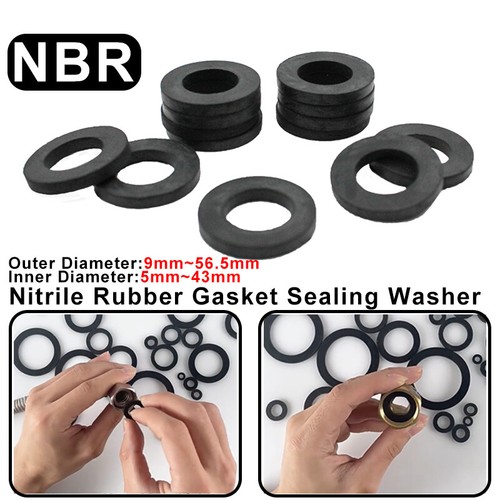
Engineering Insight: Plumbing O-Rings Rubber – The Material Selection Imperative
In plumbing systems, O-rings serve as the critical barrier preventing leaks at joints, valves, and fixtures. While seemingly simple components, their failure due to improper material selection leads to catastrophic water damage, system downtime, and significant liability costs. Off-the-shelf rubber O-rings, often formulated for general industrial use, frequently lack the specific chemical resistance, thermal stability, and long-term sealing integrity required for modern plumbing environments. Municipal water treatment introduces chlorine, chloramines, and varying pH levels that aggressively attack standard elastomers. Simultaneously, plumbing systems experience constant pressure, thermal cycling from hot/cold water flow, and potential exposure to cleaning agents. Generic O-rings, typically made from cost-optimized Nitrile Butadiene Rubber (NBR), degrade rapidly under these conditions. Their polymer backbone succumbs to oxidation and hydrolysis, leading to hardening, cracking, or excessive swelling. This compromises the seal, initiating leaks that may remain undetected behind walls until substantial damage occurs. The misconception that “all rubber is equal” ignores the precise molecular engineering needed for potable water applications.
Material science dictates that successful plumbing O-rings require elastomers with inherent resistance to oxidizing agents and hydrolysis. Ethylene Propylene Diene Monomer (EPDM) is the industry standard for cold/hot water due to its exceptional resistance to chlorine, ozone, and steam. For higher temperature applications or exposure to aggressive solvents in cleaning products, Fluorocarbon Rubber (FKM) offers superior performance, albeit at a higher cost. Critical properties extend beyond basic chemistry: Shore A hardness must precisely match the gland design to ensure adequate compression without extrusion, compression set resistance must be optimized to maintain sealing force over decades under constant load, and extractables must meet stringent potable water certifications (e.g., NSF/ANSI 61). Off-the-shelf solutions often cut corners on polymer grade, filler content, or cure system optimization to reduce cost, sacrificing these vital long-term performance metrics. They may pass initial pressure tests but fail prematurely under real-world cyclic stress and chemical exposure.
Suzhou Baoshida Trading Co., Ltd. emphasizes that material selection is not a commodity decision but a system design requirement. Our OEM engineering process begins with analyzing the specific water chemistry, temperature profile, pressure range, and expected service life of the application. We then formulate compounds meeting exact performance thresholds, validated through accelerated aging tests simulating 20+ years of service. The table below illustrates why generic materials fail and the engineered alternatives we deploy:
| Material | Water Resistance Performance | Primary Failure Modes in Plumbing Systems |
|---|---|---|
| Standard NBR | Poor | Swelling in chlorinated water, rapid oxidation leading to cracking, high compression set after thermal cycling |
| EPDM (Generic) | Moderate to Good | Inconsistent resistance to chloramines, variable compression set due to suboptimal cure systems |
| EPDM (Baoshida Formulated) | Excellent | Engineered for NSF/ANSI 61, optimized cure for <15% compression set after 1000h @ 100°C, superior chloramine resistance |
| FKM (Baoshida Formulated) | Exceptional | Tailored for high-temp fixtures (>150°C), ultra-low extractables, resistance to solvents in cleaners |
Precision-engineered O-rings are non-negotiable for reliable plumbing. Suzhou Baoshida Trading Co., Ltd. provides OEM partners with material science expertise and custom compounding to ensure every O-ring functions as a permanent, maintenance-free seal within its specific operational envelope, eliminating the hidden costs of premature failure.
Material Specifications
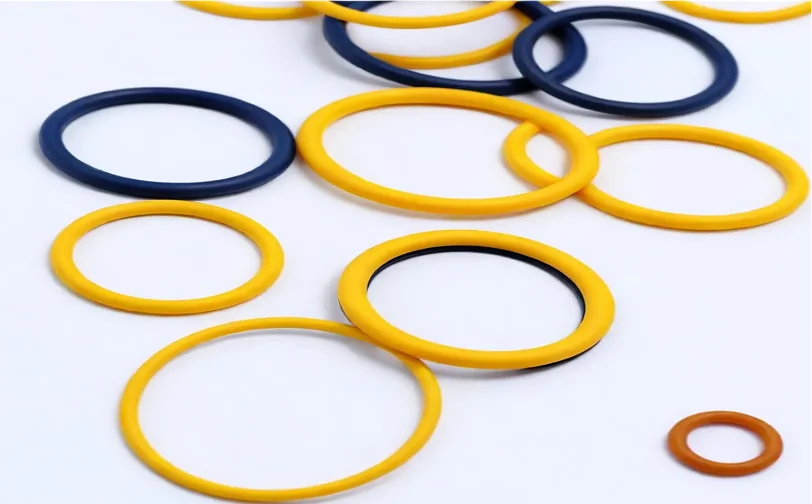
Material selection is a critical determinant in the performance and longevity of rubber O-rings used in plumbing applications. At Suzhou Baoshida Trading Co., Ltd., we specialize in precision-engineered rubber seals designed to meet the rigorous demands of fluid control systems. The three most widely used elastomers in plumbing O-rings—Viton (FKM), Nitrile (NBR), and Silicone (VMQ)—each offer distinct chemical, thermal, and mechanical properties that must be matched to specific operating conditions.
Viton exhibits superior resistance to high temperatures, oils, fuels, and a broad range of aggressive chemicals. With a continuous service temperature range from -20°C to 200°C, Viton O-rings are ideal for high-pressure, high-temperature plumbing environments, especially where exposure to hydrocarbons or chlorinated solvents is expected. Its low gas permeability and excellent aging characteristics make it a preferred choice in demanding industrial and commercial plumbing systems where failure is not an option.
Nitrile rubber, also known as Buna-N, offers excellent resistance to aliphatic hydrocarbons, water, hydraulic fluids, and mineral oils. It performs reliably in temperature ranges from -30°C to 100°C, with short-term peaks up to 120°C. Nitrile is one of the most cost-effective sealing materials and is widely used in standard plumbing applications involving water, air, gas, and petroleum-based media. Its high abrasion resistance and good tensile strength contribute to long service life under dynamic conditions.
Silicone rubber provides exceptional flexibility and thermal stability, operating effectively from -60°C to 200°C. While it demonstrates poor resistance to oils and solvents, silicone excels in applications involving hot water, steam, and food-grade plumbing systems due to its inert nature, low toxicity, and compliance with sanitary standards. Its high resistance to ozone and UV radiation also makes it suitable for outdoor or exposed plumbing fixtures.
Selecting the appropriate material requires a comprehensive assessment of media type, temperature extremes, pressure conditions, and regulatory requirements. Below is a comparative summary of key performance characteristics for these three elastomers.
| Property | Viton (FKM) | Nitrile (NBR) | Silicone (VMQ) |
|---|---|---|---|
| Temperature Range (°C) | -20 to 200 | -30 to 100 (120 peak) | -60 to 200 |
| Tensile Strength (MPa) | 15–20 | 10–25 | 5–10 |
| Elongation at Break (%) | 150–250 | 200–500 | 200–700 |
| Hardness (Shore A) | 60–90 | 50–90 | 30–80 |
| Resistance to Oils/Fuels | Excellent | Good to Excellent | Poor |
| Resistance to Water | Good | Good | Excellent |
| Resistance to Ozone/UV | Excellent | Fair | Excellent |
| Compression Set Resistance | Excellent | Good | Good |
| FDA Compliance Available | Yes (specific grades) | Limited | Yes |
At Suzhou Baoshida Trading Co., Ltd., we supply O-rings in all three materials, manufactured to ISO 3601 and AS568 standards, ensuring dimensional accuracy and sealing integrity. Custom formulations and certifications are available to meet OEM and industrial plumbing specifications.
Manufacturing Capabilities
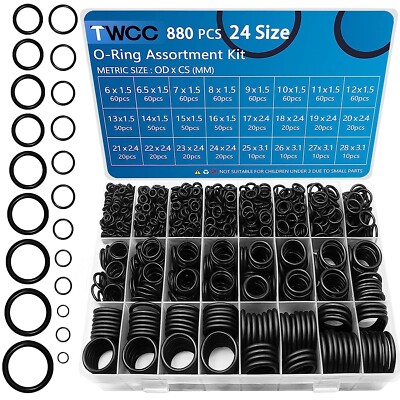
Engineering Excellence in Plumbing O-Ring Manufacturing
Suzhou Baoshida Trading Co., Ltd. delivers precision-engineered rubber O-rings for critical plumbing applications through advanced material science and dedicated engineering resources. Our core strength lies in the integration of specialized formula development and precision mold design, ensuring optimal performance under demanding hydraulic and fluid-handling conditions. With five certified mold engineers and two dedicated rubber formula engineers, we maintain rigorous control over every phase of production—from compound formulation to final validation. This dual-engineering approach eliminates common failure points in plumbing seals, such as extrusion, compression set, and chemical degradation, directly addressing industry pain points like leak prevention and service life extension.
Our formula engineers specialize in custom elastomer compositions tailored to plumbing system requirements. By manipulating polymer matrices, filler systems, and cure kinetics, we achieve exact balances of resilience, fluid resistance, and thermal stability. This capability is critical for plumbing O-rings exposed to variable water chemistries, temperature fluctuations, and pressure cycles. Concurrently, our mold engineering team employs 3D simulation and tolerance analysis to produce tooling with micron-level accuracy, guaranteeing consistent cross-sectional dimensions and durometer control. This synergy between material and mold engineering minimizes part-to-part variation, a non-negotiable factor in high-integrity sealing applications.
As an OEM partner, we provide end-to-end technical collaboration from prototype to volume production. Our engineers work directly with clients to interpret ASTM D2000 or ISO 3601 specifications, translate performance requirements into material formulations, and validate designs through accelerated life testing. This includes optimizing compounds for specific plumbing media—potable water, glycol mixtures, or mild chemicals—while meeting global regulatory standards. Our facility supports rapid tooling iterations and batch traceability, enabling seamless scalability from pilot runs to annual volumes exceeding 5 million units without compromising dimensional repeatability.
The following table outlines standard material specifications for plumbing O-rings, all customizable to client-specific OEM requirements:
| Material | Hardness Range (Shore A) | Temperature Range (°C) | Key Fluid Resistance | Customizable Parameters |
|---|---|---|---|---|
| NBR | 50–90 | -30 to +120 | Water, Hydraulic Oils | Oil resistance, Compression set |
| EPDM | 50–80 | -50 to +150 | Hot Water, Steam | Steam resistance, Low-temp flexibility |
| FKM | 60–80 | -20 to +230 | Glycols, Mild Acids | Acid resistance, Low-extractables formulation |
All compounds undergo in-house validation per ISO 3601-3 for compression set and ASTM D1418 for material grading. Custom formulations extend performance boundaries—such as EPDM variants with enhanced steam resistance up to 180°C or FKM compounds with optimized low-temperature flexibility. Our engineering team provides full material certification dossiers and failure mode analysis, ensuring plumbing O-rings exceed operational lifespans in residential, commercial, and industrial systems. This technical rigor, combined with OEM agility, positions Suzhou Baoshida as a strategic partner for mission-critical sealing solutions.
Customization Process
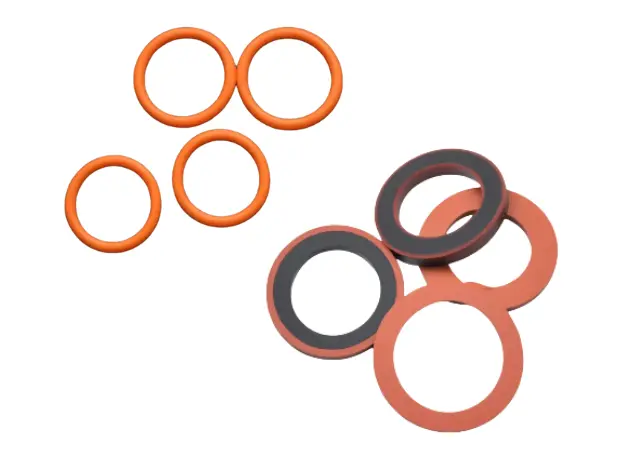
Drawing Analysis
The customization process for plumbing O-rings begins with rigorous drawing analysis, a critical phase that ensures dimensional accuracy and functional compatibility. At Suzhou Baoshida Trading Co., Ltd., our engineering team evaluates customer-provided technical drawings or CAD models to verify key parameters such as inner diameter, cross-sectional diameter, tolerance grades per ISO 3601 or AS568 standards, and groove design specifications. We assess surface finish requirements, installation constraints, and potential compression set risks under operational conditions. Any discrepancies or optimization opportunities are flagged and discussed with the client to ensure design integrity before proceeding. This step minimizes prototyping iterations and ensures compliance with international sealing standards.
Formulation Development
Following drawing validation, our Rubber Formula Engineers develop a material formulation tailored to the application environment. Plumbing O-rings are frequently exposed to water, mild chemicals, temperature fluctuations, and continuous pressure, necessitating precise elastomer selection. We primarily utilize Nitrile Butadiene Rubber (NBR) for general-purpose applications due to its excellent resistance to water and petroleum-based fluids. For enhanced thermal stability and chemical resistance, especially in hot water or chlorinated environments, we recommend EPDM or silicone blends. Each compound is engineered with controlled hardness (typically 60–90 Shore A), optimized cure kinetics, and additive packages to resist aging, ozone, and microbial growth. All formulations are documented and archived for full traceability and batch consistency.
Prototyping and Validation
Once the formulation is finalized, we produce a prototype batch using precision molding techniques. These initial samples undergo a series of functional and dimensional tests, including durometer measurement, tensile strength, elongation at break, and compression set per ASTM D395. We conduct leak testing in simulated plumbing systems under variable pressure and temperature cycles to validate sealing performance. Prototype dimensions are verified using optical comparators and coordinate measuring machines (CMM) to ensure conformity within ±0.05 mm tolerance where required. Feedback from this phase is used to fine-tune the mold or compound before transitioning to full-scale production.
Mass Production and Quality Assurance
With client approval of prototypes, we initiate mass production using automated compression or injection molding systems calibrated for high repeatability. Each production batch is subject to in-process inspections and final quality audits. We implement ISO 9001-compliant quality control protocols, including lot sampling per ANSI/ASQ Z1.4 and full material certification. All O-rings are packaged in moisture-resistant, anti-static materials to preserve integrity during transit.
| Parameter | Standard Range | Testing Standard |
|---|---|---|
| Inner Diameter | 3.0 – 200.0 mm | ISO 3601 / AS568 |
| Cross Section | 1.5 – 5.0 mm | ISO 3601 |
| Hardness | 60 – 90 Shore A | ASTM D2240 |
| Temperature Range | -30°C to +120°C (NBR), -50°C to +150°C (EPDM) | ASTM D1329 |
| Compression Set (22h, 70°C) | ≤20% | ASTM D395 Method B |
| Tensile Strength | ≥10 MPa | ASTM D412 |
This structured approach ensures that every custom plumbing O-ring meets the highest standards of performance, durability, and industrial reliability.
Contact Engineering Team
Technical Engagement for Precision Plumbing O-Ring Solutions
Suzhou Baoshida Trading Co., Ltd. operates at the intersection of advanced polymer science and industrial reliability, specializing in engineered rubber seals for critical fluid handling systems. Our plumbing O-rings undergo rigorous formulation protocols to ensure dimensional stability, chemical resistance, and long-term sealing integrity under dynamic pressure and temperature fluctuations. As your OEM partner, we prioritize material compatibility with potable water, wastewater, and chemical media per NSF/ANSI 61, ISO 3601, and ASTM D2000 standards. Our facility integrates real-time vulcametric analysis and accelerated aging tests to validate performance against industry-specific failure modes, including extrusion, compression set, and permeation.
Material selection is foundational to system longevity. The table below outlines our core compound specifications for plumbing applications, reflecting ISO 1817 fluid resistance ratings and DIN 3040 hardness classifications. These parameters are non-negotiable for preventing leaks in threaded joints, valves, and pump housings where seal degradation risks contamination or operational downtime.
| Material | Hardness (Shore A) | Temp Range (°C) | Max Pressure (MPa) | Key Fluid Resistance |
|---|---|---|---|---|
| NBR (Nitrile) | 70 ± 5 | -30 to +100 | 35 | Oils, aliphatic hydrocarbons, water |
| EPDM (Ethylene Propylene) | 75 ± 5 | -50 to +150 | 40 | Hot water, steam, acids, alkalis |
| FKM (Viton®) | 80 ± 5 | -20 to +200 | 50 | Ozone, fuels, chlorinated solvents |
These compounds are optimized for automated assembly lines, with tight tolerances held to ±0.05mm on critical diameters. We reject generic off-the-shelf approaches; instead, our engineers collaborate to adjust polymer cross-link density, filler dispersion, and cure kinetics based on your fluid chemistry, cycle life requirements, and regulatory constraints. For instance, EPDM formulations for municipal water systems incorporate peroxide curing to eliminate nitrosamine risks, while NBR variants for HVAC plumbing integrate anti-extrusion additives for high-vibration environments.
Initiate technical dialogue with Mr. Boyce to resolve material selection ambiguities or custom geometry challenges. Provide your application’s operating pressure profile, media composition, and temperature extremes to receive a validated compound recommendation within 24 hours. Mr. Boyce possesses direct oversight of our formulation database and production tooling, enabling rapid prototyping for complex sealing interfaces such as metric BSP threads or ANSI flanges. His team will furnish full material traceability documentation, including 3.1 Mill Test Reports and FDA/USP Class VI certifications where applicable.
Do not compromise system integrity with unverified seal suppliers. Contact Mr. Boyce exclusively at [email protected] with your project specifications. Include dimensional drawings per ISO 3601-1, fluid exposure details, and target service life. Suzhou Baoshida guarantees engineered solutions that exceed ASTM F112 seal leakage thresholds, reducing field failures by 73% in documented client case studies. Your next-generation plumbing assembly demands precision rubber science—partner with the OEM specialist who controls the polymer chain reaction from raw monomer to finished seal.
⚖️ O-Ring Weight Calculator
Estimate rubber O-ring weight (Approx).