
Technical Contents
Engineering Guide: Polyurethane Conveyor Belt
Engineering Insight: Polyurethane Conveyor Belt Material Selection Imperatives
Material selection for polyurethane conveyor belts is not a generic exercise but a precision engineering requirement dictated by operational physics. Off-the-shelf polyurethane belts frequently fail due to fundamental mismatches between standardized formulations and site-specific mechanical, thermal, and chemical demands. These failures manifest as premature abrasion, delamination, hydrolysis degradation, or catastrophic tensile loss—directly correlating to unaddressed variables in the application environment. Thermoplastic polyurethane (TPU) chemistry must be calibrated to exact dynamic stress profiles; a 5 Shore A hardness deviation or 10°C operational temperature miscalculation can accelerate wear rates by 300%. Standardized belts typically prioritize cost-driven universal formulations, neglecting critical factors like intermittent chemical exposure, cyclic impact loads, or sub-zero flexibility requirements inherent in food processing or mining applications. This results in unplanned downtime, with field data indicating 40-60% higher failure rates versus engineered solutions in non-ambient conditions.
The core failure mechanism lies in inadequate polymer chain architecture. Off-the-shelf TPUs often utilize monolithic ester or ether polyol backbones optimized for baseline elasticity, not multifunctional resilience. Ester-based TPUs degrade rapidly under hydrolytic conditions above 40°C, while ether variants sacrifice oil resistance. Simultaneously, standardized plasticizer packages migrate under thermal cycling, causing surface cracking. Critical additives—such as hydrolysis stabilizers, UV absorbers, or nano-reinforced fillers—are omitted to meet price targets, leaving the belt vulnerable to site-specific stressors. For instance, a standard belt in a poultry processing plant may withstand initial washdowns but rapidly delaminate due to undetected chlorine byproduct exposure, where an engineered formulation would integrate halogen-resistant co-polymers.
Suzhou Baoshida’s OEM approach begins with operational parameter mapping: dynamic load spectra, chemical exposure matrices, and thermal transient profiles. We then engineer TPU compounds with segmented hard-soft domains tailored to these inputs. Below is a comparative specification analysis demonstrating the performance delta:
| Property | Standard PU Belt | Engineered PU Belt (Baoshida OEM) | Test Standard |
|---|---|---|---|
| Hardness Range | 80-88 Shore A | 70-95 Shore A (customizable) | ASTM D2240 |
| Continuous Temp Range | -20°C to +80°C | -50°C to +120°C | ISO 188 |
| Abrasion Loss (Taber) | ≤120 mg/1000 cycles | ≤45 mg/1000 cycles | ASTM D1044 |
| Hydrolysis Resistance | Fails at 70°C/95% RH | Stable at 85°C/95% RH (500h) | ISO 1431-2 |
| Tensile Strength | 25-30 MPa | 35-45 MPa | ASTM D412 |
This granular material science strategy ensures the polymer matrix actively resists degradation vectors rather than merely enduring them. By anchoring formulation to physics-based failure models—not catalog numbers—we achieve 2-3x service life in validated industrial deployments. The cost of engineering is eclipsed by eliminating $18,000/hour production line stoppages. Material selection is the first line of operational defense; precision here defines system reliability.
Material Specifications
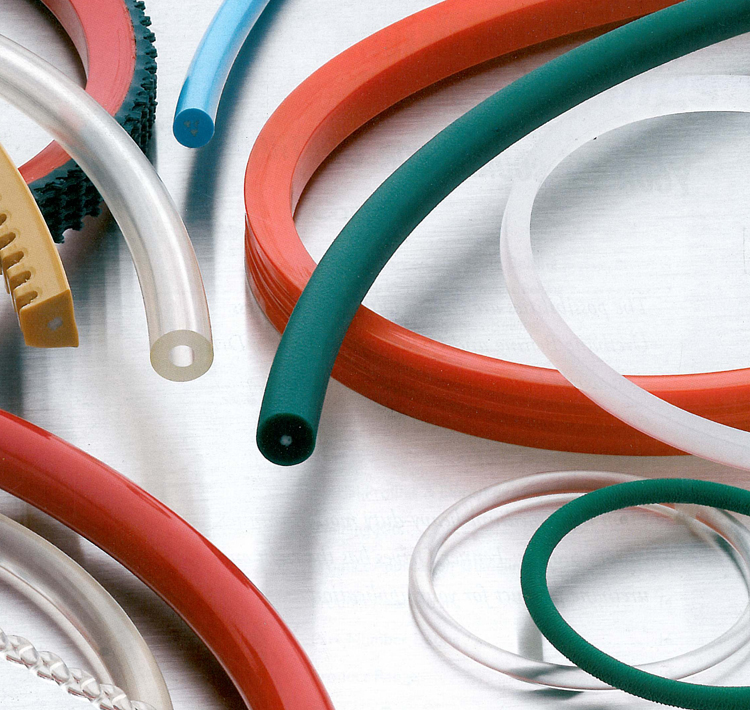
Polyurethane conveyor belts are engineered for high-performance industrial applications where durability, chemical resistance, and mechanical strength are critical. At Suzhou Baoshida Trading Co., Ltd., we specialize in advanced rubber formulations tailored to meet the rigorous demands of modern manufacturing environments. Our polyurethane belts are available with specialized elastomer covers, including Viton, Nitrile, and Silicone, each selected for its unique performance characteristics under specific operational conditions. These materials are bonded to high-tensile polyurethane matrix cores to deliver superior abrasion resistance, dimensional stability, and load-bearing capacity.
Viton, a fluoropolymer rubber, offers exceptional resistance to high temperatures, oils, fuels, and a broad range of aggressive chemicals. It is ideal for use in automotive, chemical processing, and semiconductor manufacturing environments where exposure to harsh substances is routine. With a continuous operating temperature range up to 200°C, Viton-covered belts maintain integrity under thermal stress and exhibit low outgassing, making them suitable for cleanroom applications.
Nitrile rubber, also known as Buna-N, is widely used for its excellent resistance to petroleum-based oils, greases, and hydraulic fluids. It provides strong abrasion resistance and mechanical stability at a lower cost compared to fluorinated elastomers. Nitrile is best suited for food processing, packaging, and general industrial conveyance where oil resistance is required but extreme temperatures are not a primary concern. Its service temperature typically ranges from -30°C to 100°C, offering reliable performance in moderate environments.
Silicone rubber is selected for applications requiring extreme temperature flexibility and high purity. It exhibits outstanding performance at both low and high temperatures, functioning effectively from -60°C to 230°C. Silicone is non-toxic, FDA-compliant, and resistant to ozone and UV radiation, making it ideal for food, pharmaceutical, and outdoor applications. While it has lower mechanical strength compared to Viton and Nitrile, its thermal and hygienic properties are unmatched in sensitive environments.
The selection of cover material directly impacts belt longevity, safety, and operational efficiency. Below is a comparative summary of key physical and chemical properties:
| Property | Viton | Nitrile (Buna-N) | Silicone |
|---|---|---|---|
| Temperature Range (°C) | -20 to 200 | -30 to 100 | -60 to 230 |
| Tensile Strength (MPa) | 12–18 | 10–20 | 5–9 |
| Elongation at Break (%) | 200–300 | 250–400 | 200–600 |
| Hardness (Shore A) | 70–90 | 60–80 | 40–80 |
| Resistance to Oils/Fuels | Excellent | Excellent | Poor |
| Resistance to Ozone/UV | Excellent | Good | Excellent |
| FDA Compliance | Limited grades | Limited grades | Yes (specific formulations) |
| Chemical Resistance | Broad spectrum | Moderate to good | Fair (poor with solvents) |
At Suzhou Baoshida Trading Co., Ltd., we ensure precise material formulation and rigorous quality control to deliver polyurethane conveyor belts that meet exact OEM and industrial specifications. Our technical team supports custom engineering solutions based on application-specific requirements.
Manufacturing Capabilities
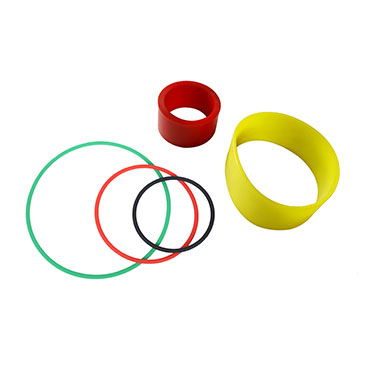
Engineering Capability: Precision Polyurethane Conveyor Belt Development
Suzhou Baoshida Trading Co., Ltd. leverages deep technical expertise in polyurethane (PU) formulation and mold engineering to deliver mission-critical conveyor belt solutions for demanding industrial applications. Our dedicated engineering team comprises five specialized mold designers and two advanced rubber formula engineers, ensuring end-to-end control from molecular design to final production. This integrated structure eliminates external dependencies, accelerating innovation cycles while maintaining rigorous quality standards. Our formula engineers optimize PU chemistry for specific operational challenges—including abrasion resistance, oil/fat resistance, static dissipation, and low-temperature flexibility—using proprietary additive systems validated through ISO 188 and ASTM D573 testing protocols. Concurrently, our mold engineering unit utilizes SolidWorks and Moldflow simulation to perfect cavity design, thermal management, and demolding mechanics, guaranteeing dimensional stability within ±0.15 mm tolerance across complex belt profiles.
This synergy enables seamless OEM execution for global manufacturers requiring custom belt geometries, surface textures (cleats, profiles, patterns), or material hybrids. We manage the entire process: client specification analysis, 3D prototyping, small-batch validation, and full-scale production under IATF 16949 guidelines. Our facility supports PU formulations from Shore 65A to 95A hardness, with belt widths up to 2,200 mm and continuous lengths exceeding 100 meters. Critical performance parameters are consistently achieved through closed-loop process monitoring, including real-time viscosity control during casting and precision vulcanization profiling.
The following table details core technical capabilities for standard PU conveyor belts, with all values adjustable per OEM requirements:
| Parameter | Capability Range | Standard Reference |
|---|---|---|
| Durometer (Shore A) | 65A – 95A | ASTM D2240 |
| Thickness Tolerance | ±0.15 mm | ISO 2230 |
| Operating Temp. | -40°C to +90°C | ISO 188 |
| Abrasion Loss | ≤ 45 mm³ (1000 rev) | ISO 4649 |
| Tensile Strength | ≥ 25 MPa | ISO 37 |
| Elongation at Break | ≥ 450% | ISO 37 |
Our OEM framework prioritizes flexibility without compromising repeatability. Clients provide functional requirements—such as food-grade compliance (FDA 21 CFR 177.2600), anti-static properties (< 10⁹ Ω), or specialized top-surface textures—and our engineering team delivers validated solutions within 4–6 weeks from concept to prototype. This rapid iteration is enabled by on-site lab testing for adhesion, flex fatigue, and chemical resistance, ensuring belts withstand real-world stresses in mining, automotive assembly, or packaging lines. By embedding formula science and mold precision into a unified workflow, Suzhou Baoshida eliminates the performance gaps common in outsourced manufacturing. Partners gain a single point of accountability for material integrity, geometric accuracy, and lifecycle durability—translating to reduced downtime and total cost of ownership. For mission-specific applications, we initiate collaborative development with material data sheets and finite element analysis reports within 72 hours of requirement submission.
Customization Process
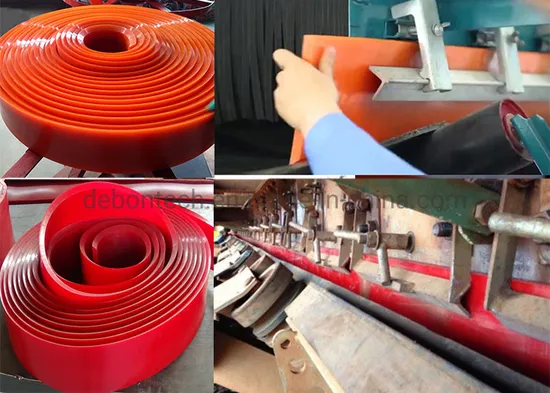
Drawing Analysis: The Foundation of Precision Customization
At Suzhou Baoshida Trading Co., Ltd., the customization process for polyurethane conveyor belts begins with rigorous drawing analysis. This initial phase is critical to ensure dimensional accuracy, mechanical compatibility, and seamless integration into the client’s existing production line. Our engineering team evaluates technical drawings provided by the client, focusing on belt length, width, thickness, joint type, surface pattern, and any special features such as cleats, sidewalls, or perforations. We also assess environmental operating conditions—temperature range, exposure to oils or chemicals, abrasion levels, and load requirements—as these directly influence material selection and structural design. Using CAD-based validation tools, we cross-verify tolerances and alignment specifications to eliminate discrepancies before moving forward. This systematic review ensures that all functional and geometric parameters are clearly defined and aligned with industrial standards.
Tailored Formulation for Optimal Performance
Once the design parameters are confirmed, our Rubber Formula Engineers develop a customized polyurethane compound to meet the specific application demands. Polyurethane (PU) is selected for its superior abrasion resistance, tensile strength, and flexibility, but its performance can be fine-tuned through precise formulation. We adjust the isocyanate-to-polyol ratio, incorporate additives for UV or hydrolysis resistance, and modify cross-linking density to achieve the desired hardness (Shore A 70–95) and elongation properties. For high-wear environments, we reinforce the compound with nano-fillers to enhance durability without sacrificing elasticity. Each formulation is documented and stored in our proprietary database, ensuring consistency across production batches and enabling rapid reorders. The selected compound is then validated against ASTM D412 (tensile strength) and ISO 4649 (abrasion resistance) standards in our in-house testing lab.
Prototyping and Validation Under Real-World Conditions
A functional prototype is produced using calibrated extrusion and curing equipment to mirror final production conditions. This prototype undergoes a series of performance tests, including flex fatigue, adhesion strength (for multi-layer belts), and dimensional stability under thermal cycling. Clients are encouraged to conduct field trials, and feedback is incorporated into final design refinements. Only after approval do we proceed to mass production.
Mass Production with Industrial Precision
Our automated production line ensures high repeatability and quality control. Each belt is inspected for surface defects, thickness variation, and joint integrity using laser profiling and ultrasonic testing. Final products are packaged to prevent deformation during transit.
| Specification | Standard Range | Customizable Options |
|---|---|---|
| Thickness | 1.0 – 8.0 mm | Up to 12 mm with reinforcement |
| Width | 100 – 2000 mm | Wider upon request |
| Hardness (Shore A) | 70 – 95 | Special compounds down to 60 |
| Operating Temp | -30°C to +90°C | Extended range with additives |
| Surface Finish | Smooth, rough, patterned | Custom molds available |
| Joint Type | Butt, lap, endless | Steel-cord reinforced options |
Contact Engineering Team
Technical Engagement for Polyurethane Conveyor Belt Solutions
Suzhou Baoshida Trading Co., Ltd. operates at the intersection of precision rubber formulation and industrial scalability, specializing in engineered polyurethane (PU) conveyor belts for demanding manufacturing environments. Our technical team leverages 15+ years of OEM partnership experience to resolve complex material challenges—whether optimizing abrasion resistance for aggregate handling, enhancing oil resistance in automotive assembly lines, or ensuring food-grade compliance per FDA 21 CFR 177.2600. We understand that belt failure translates directly to production downtime; thus, every formulation undergoes rigorous validation against ISO 9001-certified protocols before deployment.
To verify compatibility with your operational parameters, reference the critical performance metrics below. These specifications reflect our standard PU compound (BD-PU750 series), customizable to meet site-specific requirements:
| Property | Suzhou Baoshida BD-PU750 | Industry Standard PU Belt | Performance Advantage |
|---|---|---|---|
| Abrasion Resistance (ISO 4649) | ≤ 35 mm³ loss | 50–70 mm³ loss | 30% longer service life |
| Tensile Strength (ASTM D412) | 32 MPa | 22–28 MPa | Reduced edge tearing |
| Operating Temperature | -40°C to +90°C | -20°C to +70°C | Wider process flexibility |
| Oil Resistance (ASTM D471) | <15% volume swell | 25–40% volume swell | Stable performance in lubricant exposure |
| Elongation at Break | ≥ 350% | 250–300% | Superior impact absorption |
These benchmarks are not theoretical—they are achieved through our proprietary isocyanate-polyol crosslinking technology and reinforced with aramid cord substrates for dimensional stability under high-tension loads. Unlike commodity PU belts, BD-PU750 maintains coefficient of friction consistency (0.8–1.1 μ) across wet/dry conditions, critical for incline conveying accuracy. We further validate all formulations via onsite wear trials, capturing real-time data on splice integrity, roll cover adhesion, and static dissipation (≤10⁹ Ω per ANSI/ESD S20.20).
For immediate technical collaboration, contact Mr. Boyce, our dedicated OEM Manager and Rubber Formulation Specialist. With 12 years of experience optimizing PU systems for Tier-1 automotive and bulk material handling clients, Mr. Boyce will analyze your conveyor system’s load profiles, environmental stressors, and lifecycle cost targets. Submit your current belt specifications, failure analysis reports, or operational challenges to [email protected]. Include details such as:
Line speed and tension requirements
Material conveyed (e.g., sharp-edged ores, hot metal parts)
Existing belt thickness and splice method
Target Mean Time Between Failures (MTBF)
Mr. Boyce will respond within 4 business hours with a preliminary formulation assessment and sample production timeline. All technical consultations include a no-cost feasibility study—quantifying potential reductions in replacement frequency, energy consumption, and unplanned downtime. Suzhou Baoshida does not sell belts; we engineer uptime. Initiate your precision PU solution today by contacting [email protected] with subject line: “PU Belt Technical Assessment – [Your Facility Name]”. Our laboratory in Suzhou is equipped for ASTM D3759 tensile testing, ISO 188 aging trials, and custom durometer profiling to ensure zero-compromise performance.
⚖️ O-Ring Weight Calculator
Estimate rubber O-ring weight (Approx).