
Technical Contents
Engineering Guide: Polyurethane Durometer
Engineering Insight: Polyurethane Durometer in Industrial Applications
In the field of industrial rubber solutions, the durometer of polyurethane is not merely a number—it is a fundamental engineering parameter that defines performance, longevity, and functional compatibility. At Suzhou Baoshida Trading Co., Ltd., we emphasize that precise durometer selection is central to material performance in demanding environments. Polyurethane, known for its exceptional abrasion resistance, load-bearing capacity, and resilience, exhibits a wide hardness range, typically measured on the Shore A and Shore D scales. However, selecting the correct durometer is not a one-size-fits-all decision. Off-the-shelf polyurethane components often fail because they are designed for generalized applications, not the specific mechanical, thermal, or chemical conditions present in industrial systems.
The durometer directly influences a material’s compression set, tensile strength, and resistance to deformation. For example, a low-durometer polyurethane (e.g., 60 Shore A) offers excellent flexibility and shock absorption but may deform under sustained load. In contrast, a high-durometer formulation (e.g., 95 Shore A or 50 Shore D) provides rigidity and wear resistance but can be prone to cracking under repeated flexing. Misalignment between operational stress and material hardness leads to premature failure, including cracking, extrusion, or loss of sealing integrity.
Moreover, environmental factors such as temperature fluctuations, exposure to oils, solvents, or UV radiation further complicate material behavior. Standard polyurethane compounds may degrade rapidly when exposed to industrial-grade hydraulic fluids or elevated temperatures, even if the initial durometer appears suitable. This underscores the necessity of custom formulation development, where durometer is optimized alongside chemical resistance, thermal stability, and dynamic mechanical properties.
At Suzhou Baoshida Trading Co., Ltd., we engineer polyurethane solutions tailored to the exacting demands of OEMs and industrial manufacturers. Our approach integrates application-specific testing, finite element analysis, and accelerated life-cycle simulations to validate durometer performance under real-world conditions. This precision engineering prevents the costly downtime and maintenance associated with generic components.
The following table outlines key mechanical properties across common polyurethane durometers used in industrial applications:
| Shore Hardness | Tensile Strength (MPa) | Elongation at Break (%) | Abrasion Loss (mg) | Compression Set (%) | Typical Applications |
|---|---|---|---|---|---|
| 70 Shore A | 25–30 | 450–500 | 80–100 | 15–20 | Seals, dampers, rollers |
| 85 Shore A | 35–40 | 400–450 | 50–70 | 12–18 | Conveyor wheels, bushings |
| 95 Shore A | 45–50 | 350–400 | 30–50 | 10–15 | Load-bearing pads, gears |
| 50 Shore D | 50–55 | 250–300 | 20–40 | 8–12 | Industrial blades, high-wear guides |
In conclusion, successful polyurethane component design begins with durometer as a core engineering variable—not an afterthought. Off-the-shelf solutions often overlook the interplay between hardness, environment, and mechanical stress, leading to systemic failures. By prioritizing material science and application-specific engineering, Suzhou Baoshida delivers industrial rubber solutions that perform reliably under the most rigorous conditions.
Material Specifications
Polyurethane Durometer Specifications and Elastomer Material Context
Polyurethane durometer selection is critical for industrial sealing and wear applications where mechanical resilience must align with operational demands. While polyurethane typically operates within 60A to 95A on the Shore A scale per ASTM D2240, precise hardness directly influences compression set, abrasion resistance, and dynamic performance. However, end-users must recognize that durometer alone is insufficient for material qualification; chemical compatibility, temperature stability, and mechanical stress profiles require concurrent evaluation. For applications involving aggressive media or extreme temperatures, alternative elastomers like Viton, Nitrile, or Silicone often supersede polyurethane despite overlapping hardness ranges. Suzhou Baoshida Trading Co., Ltd. emphasizes cross-referencing durometer with fluid resistance data to prevent premature seal failure.
Viton, Nitrile, and Silicone exhibit distinct durometer behaviors dictated by their polymer chemistry. Viton maintains consistent performance across 50A–90A but achieves optimal chemical resistance near 75A. Nitrile offers broader hardness flexibility (40A–90A), though lower ranges sacrifice oil resistance. Silicone’s inherent flexibility limits its practical range to 30A–80A, where hardness below 40A compromises tensile strength. Crucially, durometer measurements for these materials must account for test temperature and post-cure stabilization, as values can deviate ±5 points outside 23°C. OEMs should validate hardness under simulated service conditions, particularly for dynamic seals subject to cyclic compression.
The following table details comparative specifications for Viton, Nitrile, and Silicone, focusing on durometer-relevant performance boundaries. Data reflects standard formulations per ASTM D2000 classification; custom compounds may extend these parameters.
| Material | Typical Durometer Range (Shore A) | Key Chemical Resistances | Critical Limitations |
|---|---|---|---|
| Viton (FKM) | 50–90 | Concentrated acids, jet fuels, hydraulic fluids, aromatic hydrocarbons | Swells in ketones, esters, and low-molecular-weight organic acids; limited steam resistance above 200°C |
| Nitrile (NBR) | 40–90 | Aliphatic hydrocarbons, petroleum oils, water, silicone greases | Poor resistance to ozone, polar solvents, and phosphate ester hydraulic fluids; degrades above 120°C |
| Silicone (VMQ) | 30–80 | Water, alcohols, dilute acids, oxidizing agents, high-purity steam | Weak mechanical strength below 40A; swells in concentrated acids and hydrocarbons; limited abrasion resistance |
Suzhou Baoshida Trading Co., Ltd. cautions that exceeding material-specific durometer thresholds induces functional trade-offs. For instance, Nitrile at 40A exhibits exceptional flexibility but reduced tensile strength, while Viton above 85A may develop microcracking under thermal cycling. Silicone below 50A requires specialized fillers to maintain extrusion resistance. Always correlate durometer with compression deflection force (ASTM D575) for gasket applications. Our engineering team mandates fluid immersion testing per ASTM D471 at the target hardness to validate real-world performance. Consult our technical datasheets for compound-specific durometer stability curves under continuous load. Remember: optimal sealing solutions balance hardness with the entire operational envelope—not isolated material properties.
Manufacturing Capabilities
Engineering Capability: Precision-Driven Polyurethane Durometer Solutions
At Suzhou Baoshida Trading Co., Ltd., our engineering capability in industrial rubber solutions is anchored in deep technical expertise and a systematic approach to material science and mold design. With five dedicated mold engineers and two specialized rubber formula engineers, our team ensures that every polyurethane component meets exacting performance standards across hardness, resilience, and application-specific durability. Our focus on polyurethane durometer control reflects our commitment to delivering OEM-grade products tailored to dynamic industrial environments.
Polyurethane durometer is not merely a number on the Shore scale—it is a critical parameter influencing wear resistance, compression set, tensile strength, and operational lifespan. Our formula engineers possess advanced proficiency in adjusting polymer chain extenders, isocyanate indices, and curing agents to achieve precise Shore A and Shore D hardness values. Whether a client requires a flexible seal at 60 Shore A or a rigid industrial roller at 95 Shore A, our formulations are engineered to maintain consistency across batches and under variable thermal and mechanical loads.
Our mold engineering team works in parallel with material development, ensuring that tooling geometry, venting, and flow dynamics support optimal curing and durometer uniformity. This integrated design-manufacturing workflow eliminates common discrepancies between theoretical specifications and real-world part performance. All molds are stress-analyzed and prototype-validated before full-scale production, minimizing cycle time and maximizing dimensional accuracy.
We offer full OEM support, from initial concept and CAD modeling to small-batch prototyping and mass production. Our clients benefit from a closed-loop development process where material formulation, mold design, and production parameters are continuously refined using in-house testing data. This enables rapid iteration and ensures compliance with ISO 9001 standards and industry-specific requirements.
The following table outlines our standard polyurethane durometer capabilities and associated mechanical properties:
| Shore Hardness | Tensile Strength (MPa) | Elongation at Break (%) | Tear Resistance (kN/m) | Common Applications |
|---|---|---|---|---|
| 60 Shore A | 18–22 | 450–500 | 60–70 | Seals, dampers, gaskets |
| 70 Shore A | 24–28 | 400–450 | 75–85 | Conveyor wheels, rollers |
| 80 Shore A | 30–34 | 350–400 | 90–100 | Industrial bushings, liners |
| 90 Shore A | 36–40 | 300–350 | 105–115 | Load-bearing pads, wear strips |
| 95 Shore A | 40–44 | 250–300 | 120–130 | High-abrasion guides, rollers |
| 50 Shore D | 45–50 | 200–250 | 135–145 | Rigid industrial components |
Our dual-engineering model—combining formulation science with precision mold engineering—positions Suzhou Baoshida as a trusted OEM partner for mission-critical polyurethane components. We deliver not just parts, but engineered solutions where durometer control is a guarantee, not an approximation.
Customization Process
Polyurethane Durometer Customization: Precision Engineering Workflow
At Suzhou Baoshida Trading Co., Ltd., polyurethane durometer customization follows a rigorously defined engineering pathway to ensure material performance aligns with OEM functional requirements. Our process integrates material science with industrial manufacturing constraints, starting with comprehensive drawing analysis. Engineering teams dissect client technical drawings to identify critical contact surfaces, load distribution zones, and environmental exposure factors. This phase quantifies durometer tolerance bands—typically ±3 Shore A/D—based on dynamic stress points, avoiding over-specification that compromises cost efficiency. We correlate geometric complexity with flow dynamics during molding, preempting sink marks or incomplete fills that alter localized hardness.
Formulation development leverages our proprietary database of 200+ polyurethane chemistries. Durometer targets directly dictate isocyanate-polyol selection and chain extender ratios. For instance, a Shore 70A specification requires aliphatic prepolymers with controlled hydroxyl functionality to balance elasticity and compression set, while Shore 95A formulations demand aromatic systems with reinforced crosslink density for abrasion resistance. Additive packages are calibrated to mitigate durometer drift under UV/oil exposure, validated through accelerated aging per ISO 188. Crucially, viscosity profiles are modeled to ensure mold cavity replication without compromising Shore hardness uniformity.
Prototyping employs iterative empirical validation. Initial samples undergo ASTM D2240 durometer mapping at 5mm intervals across critical zones, identifying micro-hardness gradients invisible to single-point testing. Concurrently, dynamic mechanical analysis (DMA) quantifies viscoelastic behavior at operational temperatures, ensuring the material maintains target durometer under cyclic loading. Client feedback triggers formula micro-adjustments—often ±2% plasticizer content—to resolve discrepancies between theoretical and applied performance. This stage typically requires 2–3 prototype iterations before freezing the masterbatch.
Mass production integrates real-time durometer control via automated inline spectrometry. Each batch undergoes pre-cure viscosity checks and post-cure Shore hardness validation at three stages: 24 hours, 72 hours, and after final annealing. Statistical process control (SPC) charts track standard deviation, with alarms triggered beyond ±1.5σ from target. Full traceability links every production lot to raw material certificates and environmental curing logs, ensuring repeatability across 10,000+ unit runs.
Typical Polyurethane Grade Specifications
| Durometer (Shore) | Tensile Strength (MPa) | Elongation at Break (%) | Abrasion Resistance (Taber, mg/1000 rev) | Key Application Context |
|---|---|---|---|---|
| 60A–70A | 35–45 | 450–550 | 80–100 | Seals, gaskets, dampers |
| 80A–90A | 48–58 | 350–450 | 50–70 | Conveyor belts, wheels |
| 95A–55D | 60–75 | 250–350 | 30–50 | High-wear linings, rollers |
This structured workflow eliminates guesswork in durometer specification, transforming OEM performance demands into engineered reality. Suzhou Baoshida’s closed-loop system guarantees that every polyurethane component meets dimensional, mechanical, and longevity requirements—proven across 120+ global automotive and industrial partnerships.
Contact Engineering Team
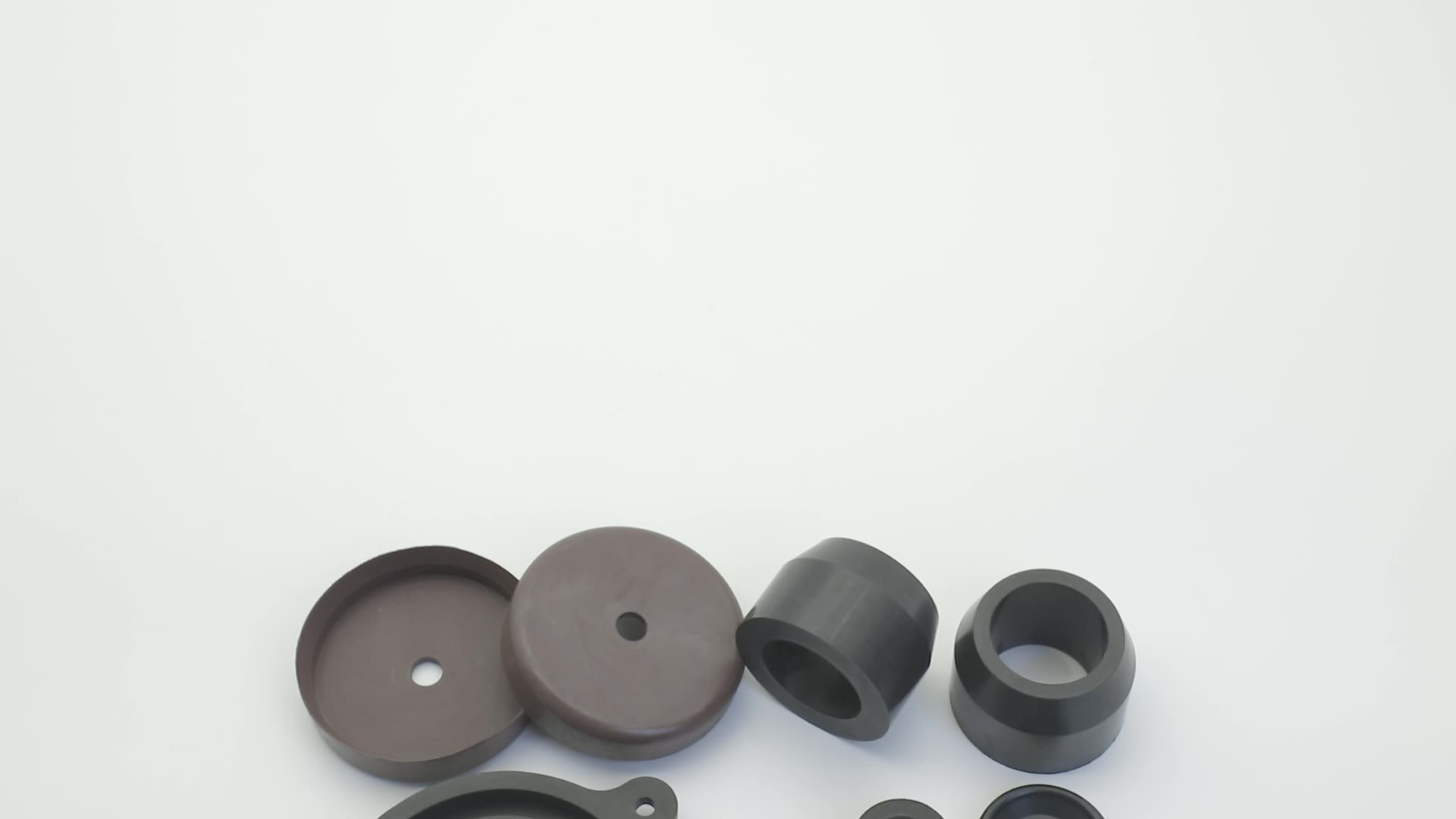
Partner with Suzhou Baoshida for Precision Polyurethane Durometer Solutions
At Suzhou Baoshida Trading Co., Ltd., we specialize in delivering high-performance industrial rubber solutions tailored to the exacting demands of modern manufacturing. Our expertise in polyurethane materials extends to precise durometer control, ensuring that every component meets your application’s mechanical, thermal, and wear-resistant requirements. Whether you are developing seals, rollers, dampers, or custom molded parts, the durometer—or hardness—of your polyurethane compound directly impacts performance, longevity, and system efficiency. With advanced formulation capabilities and rigorous quality control, we provide engineered polyurethane solutions calibrated across the Shore A and Shore D scales to match your operational specifications.
Polyurethane durometer is not a standalone metric—it is a critical parameter integrated within a broader material performance profile. Our technical team works closely with OEMs and industrial processors to select or develop polyurethane formulations that balance hardness with tensile strength, elongation, abrasion resistance, and resilience. We offer polyurethane compounds ranging from soft, flexible grades (Shore A 60) to rigid, high-load-bearing formulations (Shore D 75), all produced under ISO-compliant processes and subjected to repeatable testing protocols. This ensures consistency across batches and reliability in high-cycle or extreme-environment applications.
Below is a reference table outlining common polyurethane durometer grades and their typical industrial applications:
| Durometer (Shore Scale) | Typical Applications | Key Characteristics |
|---|---|---|
| 60–70A | Seals, gaskets, light rollers | Flexible, good compression set resistance |
| 80–90A | Conveyor belts, wheels, couplings | Balanced hardness and elasticity |
| 95–100A | Heavy-duty rollers, printer rolls | High load capacity, moderate flexibility |
| 40–50D | Structural components, bushings | Rigid, excellent wear and cut resistance |
| 60–75D | High-impact tooling, wear strips | Maximum hardness, abrasion resistance |
Our commitment to technical excellence is matched by our dedication to responsive client support. We understand that industrial projects demand timely, accurate material solutions. That is why we offer direct engineering consultation to help you define the optimal durometer and formulation for your application. From prototype support to full-scale production, Suzhou Baoshida ensures seamless integration of our rubber materials into your manufacturing workflow.
For technical inquiries, custom formulation requests, or material sampling, contact Mr. Boyce, Rubber Formula Engineer and OEM Manager, directly at [email protected]. We respond to all inquiries within 24 business hours and provide detailed technical documentation, including material data sheets, test reports, and compliance certifications. Let Suzhou Baoshida be your trusted partner in advanced polyurethane technology—where precision, performance, and partnership drive industrial innovation.
⚖️ O-Ring Weight Calculator
Estimate rubber O-ring weight (Approx).