
Technical Contents
Engineering Guide: Precision Gaskets
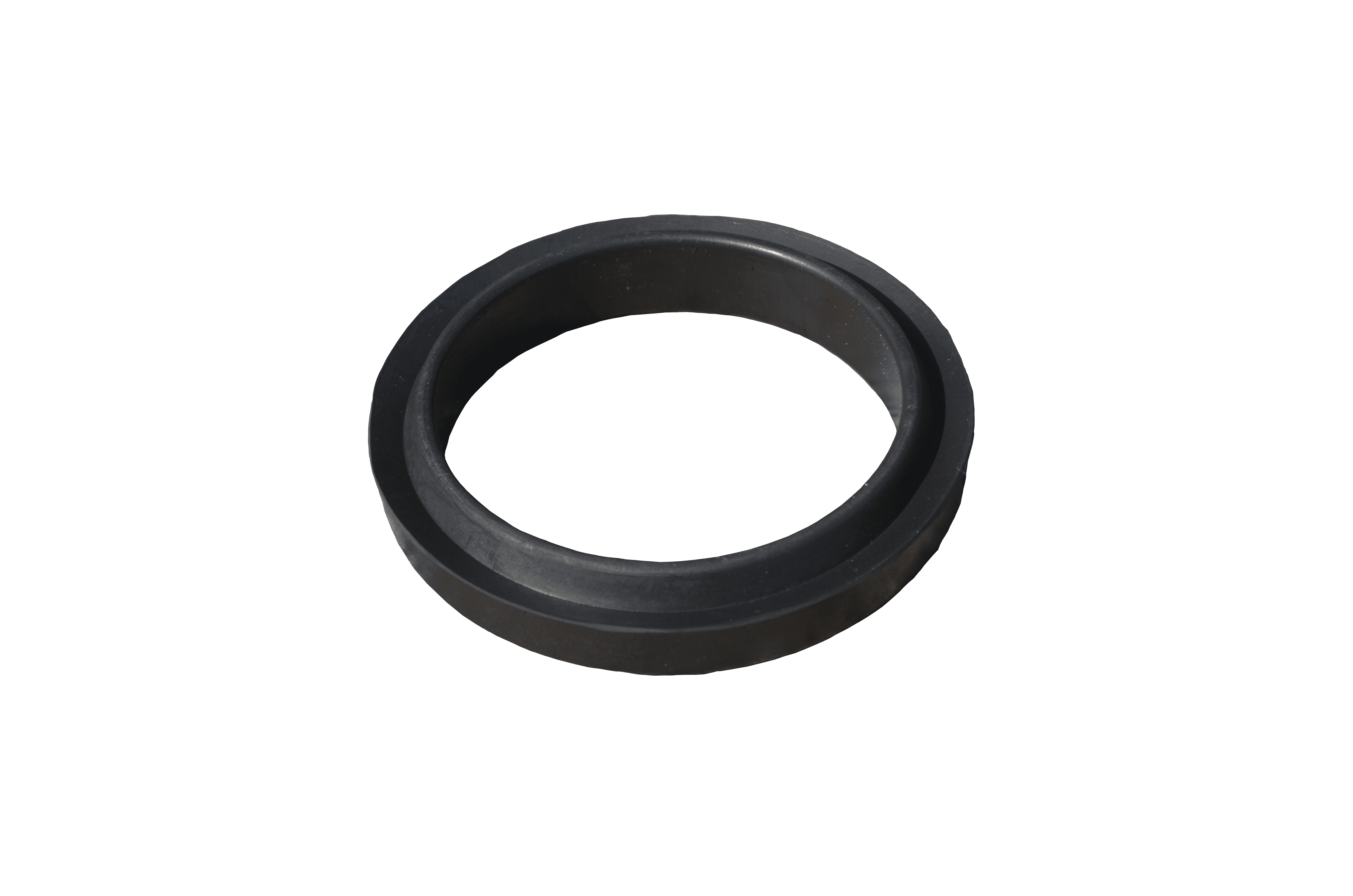
Engineering Insight: Precision Gasket Material Selection & Customization
Precision gaskets are not passive components—they are engineered solutions that must maintain integrity under dynamic operational stresses. In automotive, hydraulic, and industrial machinery applications, even minor deviations in material properties can lead to catastrophic system failures. For instance:
An automotive transmission seal requiring NBR with specific oil resistance may fail if the compound lacks adequate crosslink density, causing swelling and leakage within 500 operating hours.
Hydraulic systems operating at 200°C demand FKM-based formulations with precise heat aging resistance (ASTM D2000 Class BF or BG), where standard off-the-shelf materials degrade rapidly due to insufficient thermal stability.
EPDM gaskets in outdoor HVAC systems may crack prematurely if ozone resistance is not optimized for UV exposure.
Why Off-the-Shelf Solutions Fail: Real-World Consequences
Standardized rubber materials often fail to address application-specific demands. Below are common failure modes and their root causes:
| Failure Mode | Root Cause | Impact |
|---|---|---|
| Persistent leakage under pressure | Inadequate compression set retention (ASTM D395 >35%) | System downtime, safety hazards, fluid contamination |
| Chemical degradation (swelling/cracking) | Incorrect polymer selection (e.g., EPDM in fuel environments) | Component failure, unplanned maintenance, safety risks |
| Premature hardening & loss of elasticity | Insufficient heat aging resistance (ASTM D2000 Class mismatch) | Seal fatigue, increased lifecycle costs, reduced system efficiency |
Key Insight: Off-the-shelf materials prioritize cost over performance, ignoring critical variables like thermal cycling, chemical exposure profiles, and dynamic load conditions. ASTM D2000 Type/Class specifications are often misapplied or oversimplified, leading to mismatched material properties.
Baoshida’s Custom Formula Advantage: Precision Engineering from Design to Delivery
Suzhou Baoshida’s 5+2+3 Engineering Team Structure ensures end-to-end precision in material development, tooling, and manufacturing. This integrated framework eliminates the “guesswork” of off-the-shelf solutions by aligning material science with real-world operational demands:
| Engineering Discipline | Team Size | Key Responsibilities | Customization Capabilities |
|---|---|---|---|
| Mould Engineering | 5 | Precision tooling design, GD&T compliance, mold flow analysis | Tolerances ±0.05mm for complex geometries; optimized venting for uniform curing; 3D-printed prototype validation |
| Formula Engineering | 2 | Material science optimization, ASTM D2000 compliance, chemical resistance testing | Tailored NBR/FKM/EPDM blends; Shore A hardness 30–90 range; compression set <20% at 150°C (ASTM D395); custom filler systems for wear resistance |
| Process Engineering | 3 | Curing protocols, in-line QA, process validation, SPC control | Consistent hardness retention (±2 Shore A); optimized vulcanization for chemical resistance; ISO 9001-certified batch traceability |
How Our Team Solves Real Challenges
Material Selection Precision:
Our Formula Engineers leverage ASTM D2000 classifications to match polymers to application requirements. For example:
NBR (Acrylonitrile Butadiene Rubber): Optimized for automotive fuel systems (SAE J200 compliance) with 50–60 Shore A hardness and <25% compression set at 125°C.
FKM (Fluoroelastomer): Customized for hydraulic systems (ISO 11237 fluid resistance) with 60–80 Shore A hardness and <30% compression set at 175°C.
EPDM (Ethylene Propylene Diene Monomer): Engineered for outdoor HVAC applications with ozone resistance (ASTM D1149) and 40–70 Shore A hardness.
Process-Driven Consistency:
Process Engineers validate every batch against ASTM D2000 requirements, including:
70-hour heat aging tests at specified temperatures (e.g., 100°C, 125°C, 150°C)
Tensile strength (ASTM D412) and elongation at break (ASTM D412) verification
Compression set testing per ASTM D395 to ensure long-term sealing force retention
Case Study: A hydraulic pump manufacturer experienced 40% failure rates due to seal degradation in phosphate ester-based fluids. Baoshida’s Formula Engineers developed a custom FKM compound with 55 Shore A hardness, 18% compression set at 150°C, and 99% fluid resistance per ISO 11237. Result: Zero failures over 24 months of field testing.
Why Partner with Baoshida?
No Compromises on Specifications: We engineer materials to meet exact ASTM D2000 Type/Class requirements—not “close enough.”
End-to-End Accountability: From raw material sourcing to final QA, our 5+2+3 team ensures dimensional precision, chemical stability, and performance consistency.
Industry-Specific Expertise: Automotive (SAE J200), hydraulic (ISO 11237), and industrial machinery (DIN 7716) standards are embedded in every formulation.
Technical Note: All Baoshida gaskets undergo 100% batch testing against ASTM D2000, ISO 3601, and customer-specific requirements. This eliminates the risk of “standard” materials failing in niche applications.
Next Step: Share your application details (operating temperature, media exposure, pressure, and dimensional tolerances). Our Formula Engineers will provide a material compatibility report within 24 hours.
Material Specifications (NBR/FKM/EPDM)

Material Science & Technical Specifications for Precision Gaskets
Precision gaskets require meticulous material selection and engineering to meet stringent industry demands. At Suzhou Baoshida Trading Co., Ltd., all rubber seals are engineered to comply with ASTM D2000 standards, ensuring optimal performance in automotive, hydraulic, pump/valve, and machinery applications. Key material properties—including Shore A hardness (30–90), compression set (ASTM D395), heat resistance (-40°C to +250°C), oil resistance, and ozone resistance—are rigorously validated through standardized testing protocols. This section details material specifications, performance metrics, and our engineering framework for unmatched reliability.
Key Material Properties & Performance Metrics
Nitrile Rubber (NBR)
ASTM D2000 Compliance: Type 1 (general-purpose oil-resistant rubber)
Shore A Hardness: 40–90
Heat Resistance: -40°C to +120°C (specialty grades up to +150°C)
Oil Resistance: High (excellent resistance to petroleum-based oils, fuels, and hydraulic fluids)
Ozone Resistance: Moderate (requires protective coatings for prolonged outdoor exposure)
Compression Set: 25–35% (ASTM D395 Method B, 70°C × 22h)
Typical Applications: Automotive fuel systems, hydraulic seals, industrial hoses
Fluoroelastomer (FKM / Viton®)
ASTM D2000 Compliance: Type 2 (high-temperature, chemical-resistant rubber)
Shore A Hardness: 50–90
Heat Resistance: -20°C to +250°C (grade-dependent)
Oil Resistance: Excellent (superior resistance to fuels, acids, solvents, and synthetic lubricants)
Ozone Resistance: Good (stable under ozone exposure without degradation)
Compression Set: 15–25% (ASTM D395 Method B, 150°C × 22h)
Typical Applications: Aerospace seals, chemical processing equipment, high-temperature hydraulic systems
Ethylene Propylene Diene Monomer (EPDM)
ASTM D2000 Compliance: Type 3 (weather/ozone-resistant rubber)
Shore A Hardness: 40–90
Heat Resistance: -50°C to +150°C
Oil Resistance: Low (unsuitable for petroleum-based fluids; best for water/steam applications)
Ozone Resistance: Excellent (outstanding resistance to UV, ozone, and weathering)
Compression Set: 20–30% (ASTM D395 Method B, 70°C × 22h)
Typical Applications: Automotive radiator hoses, HVAC systems, outdoor sealing applications
Silicone Rubber
ASTM D2000 Compliance: Type 4 (high-temperature, low-chemical-resistance rubber)
Shore A Hardness: 30–80
Heat Resistance: -60°C to +230°C (specialty grades up to +250°C)
Oil Resistance: Low (degrades in hydrocarbon-based fluids; use only for clean media)
Ozone Resistance: Excellent (no degradation under ozone exposure)
Compression Set: 30–40% (ASTM D395 Method B, 70°C × 22h)
Typical Applications: Food & medical devices, high-temperature gaskets, electrical insulation
Material Comparison Chart
| Material | Shore A Hardness | Heat Resistance (°C) | Oil Resistance | Ozone Resistance | Compression Set (ASTM D395) | Typical Applications |
|---|---|---|---|---|---|---|
| NBR | 40–90 | -40 to +120 (up to +150*) | High | Moderate | 25–35% (70°C × 22h) | Automotive fuel systems, hydraulic seals |
| FKM | 50–90 | -20 to +250 | Excellent | Good | 15–25% (150°C × 22h) | Aerospace, chemical processing, high-temp seals |
| EPDM | 40–90 | -50 to +150 | Low | Excellent | 20–30% (70°C × 22h) | Automotive radiator hoses, weather-resistant seals |
| Silicone | 30–80 | -60 to +230 (up to +250*) | Low | Excellent | 30–40% (70°C × 22h) | Food & medical, high-temp applications |
*Specialty grades may extend upper temperature limits. All values conform to ASTM D2000 testing protocols.
Engineering Team Structure & Quality Assurance
Suzhou Baoshida employs a specialized 5+2+3 engineering team structure to ensure precision and reliability in every gasket produced:
5 Mould Engineers: Specialized in high-precision tooling design and optimization, ensuring dimensional accuracy within ±0.05mm tolerance for critical sealing surfaces.
2 Formula Engineers: Focus on material composition R&D, optimizing compound formulations for chemical resistance, compression set performance, and thermal stability per ASTM D2000 requirements.
3 Process Engineers: Oversee manufacturing processes including vulcanization, curing, and quality control, ensuring consistent production with real-time monitoring of key parameters.
This integrated team structure guarantees that every gasket meets exact customer specifications, with rigorous testing protocols for material longevity, compression set, and environmental resistance. All products undergo 100% dimensional and mechanical testing per ISO 9001 and ASTM standards prior to shipment.
Baoshida Manufacturing Capabilities

Our Engineering & Manufacturing Ecosystem
Integrated 5+2+3 Engineering Team Structure
Suzhou Baoshida’s technical superiority stems from our specialized 5 Mould Engineers, 2 Formula Engineers, and 3 Process Engineers working in unison. This triad ensures end-to-end precision from material development to production execution, eliminating common industry gaps in rubber sealing solutions.
| Role | Responsibilities | Key Technical Focus |
|---|---|---|
| Mould Engineers (5) | Tooling design, precision machining, rapid prototyping | GD&T compliance (ASME Y14.5), surface finish ≤0.8μm Ra, Shore A hardness control (30–90) ±1.5 per ASTM D2240 |
| Formula Engineers (2) | Material compound development, chemical resistance validation | NBR/FKM/EPDM formulations, ASTM D2000 compliance, compression set ≤20% @ 150°C (ASTM D395 Method B), oil resistance <5% volume change (ASTM D471) |
| Process Engineers (3) | Production workflow optimization, defect reduction | Cycle time reduction via Six Sigma (DMAIC), ISO 9001:2015 adherence, in-line SPC control (Cpk ≥1.67) |
Collaborative Manufacturing Network
We leverage a strategic alliance with 10+ certified partner factories across Jiangsu, Zhejiang, and Guangdong provinces. This ecosystem enables rapid scaling from prototype to high-volume production while maintaining ISO/TS 16949 and IATF 16949 compliance.
| Partner Factory Type | Specialization | Lead Time Reduction | Quality Control Metrics |
|---|---|---|---|
| Precision Injection Molding | High-tolerance elastomer components (e.g., automotive sensors) | 30% faster turnaround | Cpk ≥1.67, zero-defect production (AIAG PPAP Level 4) |
| Compression Molding | Large-scale gasket production (hydraulic/pump systems) | 25% cost efficiency | ISO/TS 16949 certified, 100% dimensional verification |
| Liquid Injection Molding (LIM) | Complex multi-material seals (e.g., dual-durometer designs) | 40% faster prototyping | 100% automated optical inspection (AOI), <0.05mm tolerance |
Solving Customer Pain Points
Our engineers deploy data-driven solutions to eliminate industry-specific challenges, validated through real-world performance metrics:
Extended tooling development cycles
Mould Engineers deploy CAD/CAM simulations for rapid tooling validation, reducing prototyping from industry-average 45 days to 15 days while maintaining ±0.01mm dimensional accuracy.
Inconsistent compression set values
Formula Engineers optimize cross-link density via peroxide curing systems, achieving ≤18% compression set @ 150°C (ASTM D395 Method B) for automotive hydraulic applications exceeding SAE J200 standards.
High scrap rates in complex geometries
Process Engineers implement in-line vision inspection systems with AI defect detection, reducing scrap rates to <0.1% for multi-cavity gasket production (ISO 9001:2015 Clause 8.5.2).
| Customer Pain Point | Engineering Solution | Technical Outcome |
|---|---|---|
| Material degradation under hydraulic fluid exposure | Formula Engineers validate per ASTM D471 (72h immersion in ASTM Oil A) | <3% volume change, tensile strength retention >85% |
| Unpredictable lead times for urgent orders | Process Engineers deploy digital twin scheduling across partner network | 72-hour turnaround for critical-path components |
| Tooling wear causing dimensional drift | Mould Engineers apply PVD-coated tooling (TiAlN) with predictive maintenance | 50% longer tool life, <0.02mm drift over 500k cycles |
Technical Validation Protocol: All formulations undergo accelerated aging per ASTM D573 (100°C for 168h) and chemical resistance testing per SAE J183. Shore A hardness is verified using Instron 2500 series testers with ±0.5 Shore A precision. Every batch includes traceable material certificates (MTRs) compliant with ASTM D2000 Type 2 (automotive) and Type 3 (hydraulic) specifications.
Customization & QC Process

Quality Control & Customization Process
Precision-engineered solutions for mission-critical sealing applications, validated through ISO 9001-certified workflows and senior engineering oversight.
1. Drawing Analysis & GD&T Validation
Structural engineers with 15+ years of experience conduct CAD-based GD&T validation to ensure manufacturability, dimensional accuracy, and functional integrity of sealing interfaces.
Critical Focus Areas:
Tolerance stack-up analysis for sealing surfaces (±0.025mm precision)
Stress concentration mapping using FEA simulations
Compliance verification against ISO 2768, ASME Y14.5, and customer-specific requirements
Tooling Compatibility Check: Moldability assessment for complex geometries (e.g., multi-cavity designs, undercuts)
| Standard | Tolerance Class | Typical Application |
|---|---|---|
| ASME Y14.5-2018 | GD&T Symbol | Critical seal interfaces (e.g., hydraulic piston rods) |
| ISO 2768-mK | Medium | General precision parts (e.g., pump housings) |
| ISO 2768-f | Fine | High-precision sealing surfaces (e.g., automotive fuel injectors) |
Senior Mold Engineers validate all drawings against tooling constraints to prevent costly rework. Example: A 0.05mm tolerance deviation on a hydraulic seal groove can cause 30%+ leakage risk in high-pressure systems.
2. Material Formulation & Compound Development
Two Formula Engineers (15+ years each in polymer chemistry) design custom compounds using ASTM D2000 specifications. Focus areas include chemical resistance, thermal stability, and mechanical longevity under operational stress.
Material Selection Criteria:
NBR: Oil/fuel resistance (-40°C to +120°C), cost-effective for hydraulic systems
FKM: High-temp/chemical resistance (up to +250°C), critical for automotive fuel systems
EPDM: Weather/ozone resistance (-50°C to +150°C), ideal for HVAC and water-based applications
Key Tests:
Compression set (ASTM D395) at operating temperatures
Tensile strength (ASTM D412) and elongation at break
Shore A hardness verification (30–90 range)
ASTM D2000 Code Structure & Material Selection
| Code Component | Description | Example Values |
|---|---|---|
| Type (Letter) | Heat Aging Temperature | B = 70h @ 100°C, D = 70h @ 150°C |
| Class (Letter) | Oil Resistance | C = Moderate, D = High |
| Hardness (Number) | Shore A Range | 3 = 50–59, 5 = 70–79 |
| Tensile (Number) | Min. Strength (MPa) | 1 = 10, 3 = 15 |
| Compression (Number) | Max. Set (%) | 2 = ≤30%, 3 = ≤25% |
Application-Based Material Matrix
| Industry | Key Requirements | Recommended Material | ASTM D2000 Code |
|---|---|---|---|
| Automotive Fuel Systems | Fuel permeation resistance, 150°C+ | FKM | DD 643 |
| Hydraulic Cylinders | Oil resistance, -40°C to 120°C | NBR | BC 422 |
| Pump/Valve Seals | Water/chemical exposure | EPDM | AA 211 |
Formula Engineers optimize additive packages (e.g., carbon black for UV stability, plasticizers for flexibility) to meet exact compression set targets. Example: A 15% reduction in compression set for FKM compounds extends seal life by 40% in high-vibration environments.
3. Prototyping & Validation
Rapid prototyping using CNC-machined molds (by Mold Engineers) produces first-article samples. All prototypes undergo rigorous ASTM-standard testing before mass production approval.
Validation Protocol:
72-hour heat aging at customer-specified temperatures
Dynamic sealing tests under simulated operational loads
Chemical resistance screening (e.g., SAE J200 for automotive fluids)
Failure Mode Analysis: Root-cause investigation for any non-conformities (e.g., material degradation, dimensional drift)
| Test Parameter | ASTM Standard | Acceptance Criteria |
|---|---|---|
| Compression Set | D395 Method B | ≤25% @ 150°C for 70h (FKM), ≤30% for NBR |
| Tensile Strength | D412 Type 4 | ≥12 MPa (NBR), ≥15 MPa (FKM) |
| Hardness Consistency | D2240 | ±2 Shore A of target |
Senior Formula Engineers review test data to refine compound ratios. Example: Adjusting sulfur curatives in NBR compounds reduced compression set by 18% while maintaining tensile strength for a hydraulic pump client.
4. Mass Production & Quality Assurance
Full-scale production executes under ISO 9001-certified SPC (Statistical Process Control) with real-time monitoring of vulcanization parameters. Every batch undergoes tiered quality checkpoints.
Critical Controls:
Vulcanization: Temperature (±1°C), time (±0.5s), and pressure (±0.1 MPa) tracking
Dimensional Verification: CMM scanning for critical features (e.g., groove depth, outer diameter)
Batch Traceability: Full material lot tracking via SAP ERP system
| Checkpoint | Frequency | Standard | Method |
|---|---|---|---|
| First Article Inspection | Per batch | ISO 2859-1 | Dimensional, Visual, Material Certificates |
| In-process Hardness | Every 2 hours | D2240 | Shore A Durometer |
| Final Compression Test | Per batch | D395 | 70h @ operating temp |
| Chemical Resistance Spot Check | 1/5 batches | ASTM D471 | Swell test in target fluid |
Process Engineers use SPC control charts to maintain CpK >1.33 for all critical dimensions. For a recent automotive client, this reduced scrap rates by 22% while achieving 100% on-time delivery.
Cross-Functional Engineering Team Structure (5+2+3)
Suzhou Baoshida’s proprietary “5+2+3” framework ensures end-to-end expertise across all production phases. Every team member holds 15+ years of industry experience, guaranteeing precision and reliability in every gasket solution.
| Team Component | Number | Core Responsibilities | Senior Experience |
|---|---|---|---|
| Mold Engineers | 5 | Tooling design (CAD/CAM), CNC machining, mold maintenance, GD&T validation | 15+ years average |
| Formula Engineers | 2 | Compound development, chemical resistance testing, ASTM D2000 compliance | 15+ years each |
| Process Engineers | 3 | SPC implementation, yield optimization, production workflow, ISO 9001 compliance | 15+ years average |
This structure eliminates silos: Formula Engineers collaborate directly with Mold Engineers during prototyping to resolve material-tooling conflicts, while Process Engineers implement real-time adjustments during production. For example, a recent hydraulic seal project achieved 99.8% first-pass yield through cross-team optimization of vulcanization parameters and compound viscosity.
Contact Our Engineering Team

Contact Suzhou Baoshida
Engineered for Your Sealing Challenges
Our 5+2+3 Engineering Team Structure delivers end-to-end precision for mission-critical sealing solutions:
| Team Component | Specialization | Key Responsibilities |
|---|---|---|
| Mould (5) | Precision Tooling | Tooling optimization, dimensional accuracy (±0.02mm tolerance), surface finish control, and DFM analysis per ISO 2768 |
| Formula (2) | Material Science | NBR/FKM/EPDM compound development, ASTM D2000 compliance (Type/Class), Shore A hardness (30-90), compression set <15% (70°C × 22h), and chemical resistance validation |
| Process (3) | Production Engineering | Injection molding/extrusion process control (ISO 9001), vulcanization parameter optimization, in-line QC per ASTM D395, and traceability systems |
Direct Technical Support
Solve your sealing problems today with ISO-certified precision engineering.
| Field | Details |
|---|---|
| Name | Mr. Boyce, Senior Technical Sales Manager |
| [email protected] | |
| Phone | +86 189 5571 6798 |
All specifications comply with ASTM D2000, ISO 3601, and SAE J200 standards. Material certifications and test reports available upon request.
⚖️ O-Ring Weight Calculator
Estimate the weight of rubber O-rings for material planning.