
Technical Contents
Engineering Guide: Print 3D Service
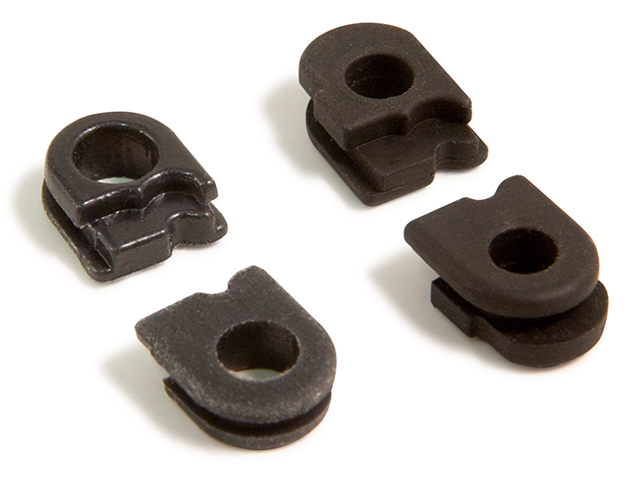
Engineering Insight: Material Selection in 3D Printing for Industrial Rubber Applications
In industrial rubber manufacturing, the integration of 3D printing services has introduced new levels of design flexibility and rapid prototyping capability. However, the success of these applications hinges critically on material selection—a factor often underestimated when transitioning from traditional molding to additive manufacturing. At Suzhou Baoshida Trading Co., Ltd., we emphasize that off-the-shelf 3D printing materials, while convenient, frequently fail to meet the mechanical, thermal, and chemical demands of real-world industrial environments.
Standard thermoplastic filaments such as PLA or ABS are commonly used in consumer-grade 3D printing but lack the resilience required for industrial rubber components. These materials exhibit poor elasticity, minimal resistance to oils and solvents, and degrade rapidly under thermal cycling. In contrast, industrial rubber applications demand materials that replicate the performance of EPDM, NBR, silicone, or FKM—elastomers known for their durability in sealing, damping, and dynamic mechanical roles.
The failure of generic 3D printed parts often manifests in premature cracking, compression set, or loss of dimensional stability when exposed to operational stressors. For example, a printed gasket made from a non-specialized photopolymer may seal effectively during initial installation but degrade within weeks under continuous exposure to hydraulic fluid and elevated temperatures. This underscores the necessity of formulating or selecting 3D printable elastomeric compounds with engineered properties aligned to the end-use environment.
At Baoshida, our approach integrates material science with application engineering. We evaluate printability alongside long-term performance metrics such as tensile strength, elongation at break, Shore hardness, and resistance to ozone, UV, and chemical exposure. This ensures that 3D printed prototypes or end-use parts function reliably under conditions mimicking actual service life.
To illustrate the performance gap, consider the following comparison of common 3D printable materials versus industrial-grade elastomers we utilize in customized formulations:
| Property | PLA (Standard 3D Print) | TPU (Flexible Print) | Custom Silicone Composite (Baoshida) | NBR (Industrial Standard) |
|---|---|---|---|---|
| Tensile Strength (MPa) | 50 | 35 | 8.5 | 15 |
| Elongation at Break (%) | 5 | 450 | 400 | 450 |
| Shore A Hardness | 80 | 90 | 50–70 | 60–80 |
| Max Continuous Use Temp (°C) | 60 | 80 | 200 | 120 |
| Oil Resistance | Poor | Moderate | Good | Excellent |
| Compression Set (22h, 70°C) | N/A | 25% | 12% | 10% |
As demonstrated, while standard 3D printable materials offer geometric versatility, they fall short in functional performance. Our engineered composites bridge this gap by combining printability with the robustness of industrial rubber. This precision in material selection ensures that 3D printed components are not merely prototypes, but viable, durable solutions for demanding applications in automotive, aerospace, and industrial machinery sectors.
Material Specifications
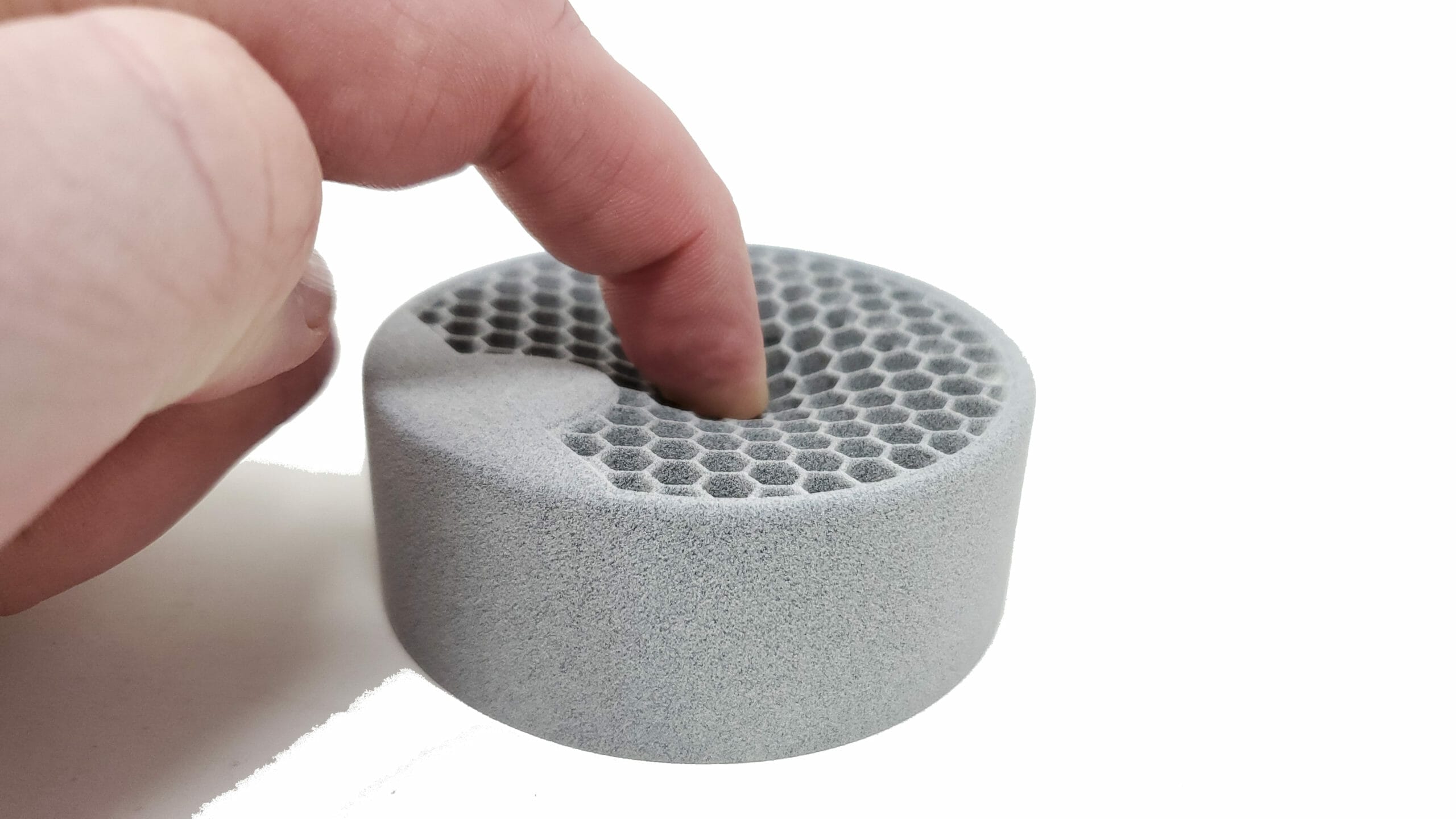
Material Specifications for Industrial 3D Printed Rubber Components
Suzhou Baoshida Trading Co., Ltd. provides engineered rubber solutions utilizing advanced additive manufacturing for demanding industrial applications. Precise material selection is paramount for component performance, longevity, and functional integrity within specific operational environments. Our 3D printing service leverages high-performance elastomers, each formulated to meet rigorous OEM specifications. Understanding the distinct chemical composition, physical properties, and application boundaries of Viton, Nitrile, and Silicone is critical for optimal part design and manufacturing success. This section details the essential specifications governing material behavior during printing and in-service performance.
Viton (Fluoroelastomer, FKM) represents the pinnacle of chemical and thermal resistance among commercially viable 3D printable rubbers. Its fluorine-carbon backbone provides exceptional stability against aggressive fuels, oils, acids, bases, and solvents commonly encountered in aerospace, chemical processing, and semiconductor manufacturing. Viton maintains reliable sealing force and elastic recovery across an extended temperature range from -20°C to +250°C, with intermittent peaks near 300°C. Parts printed in Viton exhibit low gas permeability and outstanding resistance to compression set, making them ideal for critical static seals in high-temperature, chemically harsh environments where failure is not an option. Shore A hardness typically ranges from 60 to 90.
Nitrile Rubber (Acrylonitrile Butadiene Rubber, NBR) offers an optimal balance of cost-effectiveness and robust resistance to petroleum-based fluids, aliphatic hydrocarbons, and water. Its performance is heavily influenced by the acrylonitrile content, which directly correlates with oil resistance and low-temperature flexibility. Standard NBR formulations used in our 3D printing process operate effectively between -40°C and +120°C, with specialized high-acrylonitrile grades extending low-temperature capability slightly. NBR provides excellent abrasion resistance and good tensile strength, making it the preferred choice for dynamic seals, O-rings, gaskets, and fuel system components in automotive, hydraulics, and general industrial machinery exposed to oils and greases. Shore A hardness spans 40 to 90.
Silicone Rubber (Polysiloxane, VMQ) delivers unparalleled flexibility, biocompatibility, and extreme temperature resilience from -60°C to +230°C. Its inert nature provides excellent resistance to ozone, UV radiation, and weathering, along with very low toxicity. Silicone maintains consistent elasticity over a vast temperature spectrum and exhibits high electrical insulation properties. While generally less resistant to petroleum oils and fuels than Viton or NBR, it excels in applications requiring high purity, medical compliance (subject to specific grade certification), and consistent performance under thermal cycling. Common uses include medical device components, food-grade seals, lighting gaskets, and high-temperature insulation. Shore A hardness ranges widely from 10 to 80.
The following table provides a concise technical comparison of key specifications for Viton, Nitrile, and Silicone in the context of industrial 3D printing and application requirements.
| Material | Key Properties | Temperature Range (°C) | Primary Chemical Resistance | Typical Applications |
|---|---|---|---|---|
| Viton (FKM) | High thermal stability, low gas permeability, excellent compression set resistance | -20 to +250 (300 intermittent) | Fuels, oils, acids, bases, solvents, oxidizing agents | Aerospace seals, chemical pump parts, semiconductor tooling |
| Nitrile (NBR) | Good oil/fuel resistance, high abrasion resistance, cost-effective | -40 to +120 | Petroleum oils, aliphatic hydrocarbons, water | Automotive O-rings, hydraulic seals, fuel system gaskets |
| Silicone (VMQ) | Extreme temp range, high flexibility, biocompatible, UV/ozone resistant | -60 to +230 | Ozone, UV, water, mild chemicals, steam | Medical devices, food processing seals, lighting gaskets, high-temp insulation |
Manufacturing Capabilities
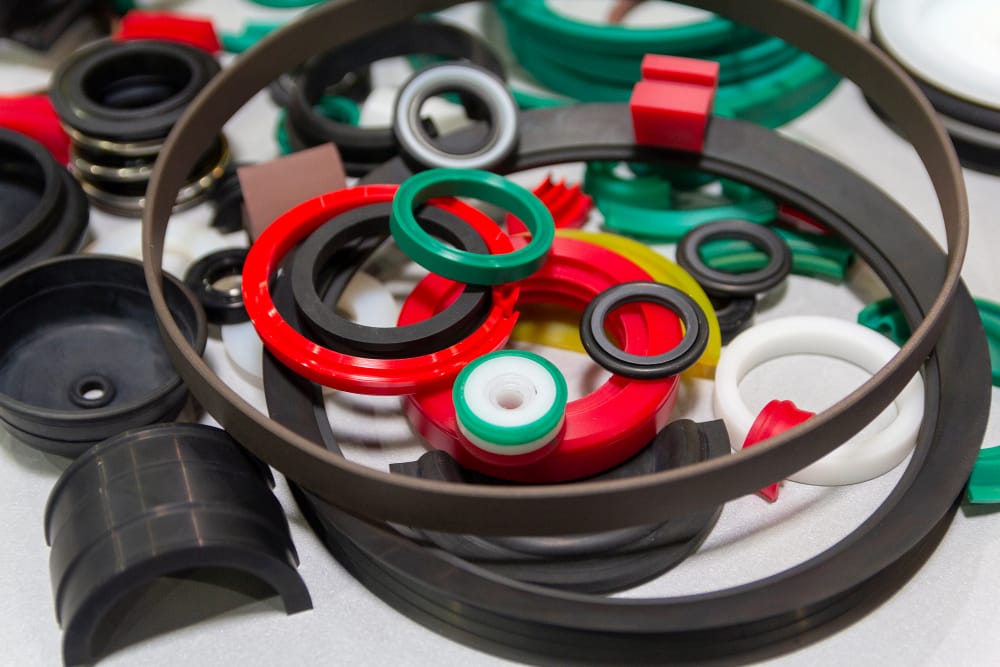
Engineering Capability
At Suzhou Baoshida Trading Co., Ltd., our engineering capability forms the backbone of our industrial rubber solutions, enabling us to deliver precision, reliability, and innovation in every product we develop. With a dedicated team of five experienced mould engineers and two specialized rubber formula engineers, we maintain full in-house control over the design, material development, and production processes. This integrated approach ensures seamless coordination between material science and mechanical design, critical for meeting the demanding requirements of industrial applications.
Our mould engineers bring over a decade of combined experience in precision rubber mould design, utilizing advanced CAD/CAM software including SolidWorks, AutoCAD, and UG NX to develop high-tolerance tooling solutions. They are proficient in designing multi-cavity, cold runner, and transfer moulding systems tailored to customer-specific geometries and volume requirements. Every mould undergoes rigorous simulation analysis for flow, shrinkage, and stress distribution, minimizing trial iterations and accelerating time-to-market.
Complementing this is our team of rubber formula engineers, who specialize in developing custom elastomeric compounds for targeted performance attributes. Whether the application demands extreme temperature resistance, oil and chemical stability, or dynamic mechanical resilience, our formulation expertise spans NBR, EPDM, silicone, FKM, and specialty blends. We conduct comprehensive material testing in-house, including hardness, tensile strength, compression set, and aging performance, ensuring every compound meets or exceeds international standards such as ASTM D2000 and ISO 3302.
Our OEM capabilities are built on a foundation of technical collaboration and confidentiality. We work directly with clients to interpret engineering drawings, reverse-engineer legacy components, and co-develop new solutions from concept to mass production. This includes full documentation packages, DFMEA support, and sample validation under real-world operating conditions. With ISO 9001-certified processes and traceability at every stage, we ensure consistency across batches and long-term supply reliability.
The synergy between our mould and formula engineering teams allows us to optimize both the physical geometry and material behavior of each component. This dual expertise is particularly critical in sealing, damping, and anti-vibration applications where performance depends on the interplay of design and compound properties.
Below is an overview of our core engineering specifications and capabilities.
| Parameter | Specification |
|---|---|
| Mould Design Software | SolidWorks, AutoCAD, UG NX, Moldflow |
| Mould Types Supported | Compression, Transfer, Cold Runner Injection |
| Maximum Mould Size | 800 mm × 800 mm × 600 mm |
| Tolerance Capability | ±0.05 mm (critical dimensions) |
| Rubber Compounding Range | Shore A 30 to 90 hardness |
| Standard Elastomers | NBR, EPDM, Silicone, FKM, CR, IIR, ACM |
| Custom Formulation Lead Time | 7–14 days (including testing) |
| Sample Production Lead Time | 15–25 days from approved design |
| Testing Standards | ASTM, ISO, GB/T |
This level of technical integration positions Suzhou Baoshida as a strategic partner for OEMs requiring high-performance rubber components with full engineering support.
Customization Process
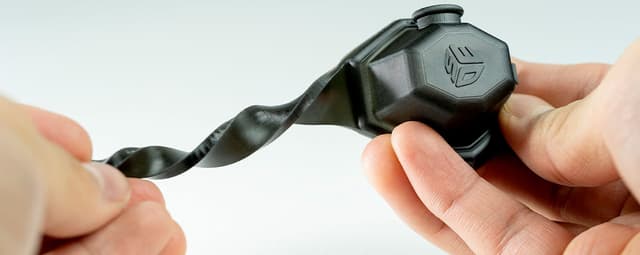
Customization Process for Industrial Rubber 3D Printing Solutions
At Suzhou Baoshida Trading Co., Ltd., our industrial rubber 3D printing service transforms conceptual designs into high-performance elastomeric components through a rigorously controlled four-stage customization pipeline. This process ensures material integrity, dimensional accuracy, and functional compliance for demanding OEM applications.
Drawing Analysis Phase
All projects commence with comprehensive evaluation of client-supplied CAD models and technical specifications. Our engineering team scrutinizes geometric complexity, wall thickness uniformity, draft angles, and critical tolerance zones (±0.05mm achievable). We identify potential stress concentrators or undercured regions inherent to additive manufacturing and collaborate with clients to optimize part topology for rubber flow dynamics during post-processing molding. This phase includes feasibility assessment against ISO 9001-certified production parameters and material limitations.
Formulation Development
Leveraging Suzhou Baoshida’s proprietary compound database, our rubber formulation scientists select base polymers and additives aligned with operational requirements. Molecular-level simulations predict crosslink density, compression set resistance, and chemical compatibility. Critical factors include temperature range (-50°C to 250°C), fluid exposure (e.g., ASTM D471 oil resistance), and dynamic load cycles. Each formulation undergoes accelerated aging tests and rheological validation to ensure printability via bound powder or stereolithography techniques, followed by vulcanization in precision molds.
Prototyping & Validation
Functional prototypes are produced using industrial-grade 3D printing systems capable of 25-micron layer resolution. These prototypes undergo multi-axis dimensional verification against original CAD files and physical testing per ASTM D2000 standards. Key metrics include tensile strength, elongation at break, and Shore A hardness consistency. Clients receive detailed test reports with failure mode analysis; iterative refinements occur within 72 hours until all performance thresholds are met. This phase mitigates tooling risks by 89% compared to traditional prototyping.
Mass Production Execution
Upon client sign-off, we transition to high-volume manufacturing using automated 3D printing cells integrated with real-time quality monitoring. Each production batch adheres to strict lot traceability protocols, with in-process checks every 50 units. Final inspection includes 100% visual examination, hardness sampling, and destructive testing of sacrificial units. All components ship with material certificates, PPAP documentation, and full geometric dimensioning reports.
Critical Rubber Material Properties for 3D Printing Applications
| Material Type | Tensile Strength (MPa) | Hardness Range (Shore A) | Temperature Range (°C) | Key Application Focus |
|---|---|---|---|---|
| EPDM | 15–22 | 50–90 | -50 to 150 | Seals, gaskets, weatherstripping |
| NBR | 18–25 | 60–95 | -30 to 120 | Fuel/oil-resistant components |
| Silicone | 6–12 | 30–80 | -60 to 250 | High-temp electrical insulation |
| FKM | 12–18 | 60–90 | -20 to 230 | Aggressive chemical environments |
| HNBR | 20–30 | 50–90 | -40 to 170 | Dynamic automotive seals |
This structured workflow guarantees that every rubber component delivered from Suzhou Baoshida meets the exacting demands of industrial automation, automotive, and aerospace sectors. Our integration of computational material science with additive manufacturing expertise eliminates traditional development bottlenecks while maintaining uncompromised elastomeric performance.
Contact Engineering Team
Contact Suzhou Baoshida for Advanced Rubber Solutions in 3D Printing Applications
At Suzhou Baoshida Trading Co., Ltd., we specialize in delivering high-performance industrial rubber materials engineered specifically for integration with modern 3D printing technologies. As a trusted OEM partner in the precision manufacturing sector, we provide tailored elastomeric compounds that meet the rigorous demands of dynamic sealing, vibration damping, and thermal insulation in additive manufacturing environments. Our expertise spans material formulation, performance validation, and scalable supply chain logistics, ensuring seamless compatibility with your print 3D service requirements.
We understand that successful 3D printing with rubber-like materials depends on precise control of durometer, elongation at break, thermal stability, and post-cure behavior. That is why our R&D team works closely with clients to develop custom formulations—whether you require flexible prototypes, functional end-use parts, or high-cycle production tooling components. Our silicone, TPU, and EPDM-based compounds are optimized for use in selective laser sintering (SLS), multi-jet fusion (MJF), and direct ink writing (DIW) processes, offering consistent flow characteristics and minimal warpage.
For engineering teams seeking reliable material data and processing parameters, we provide comprehensive technical documentation, including rheological profiles, Shore A hardness ranges, and environmental resistance ratings. All materials undergo strict quality control per ISO 9001 standards and are traceable through batch-specific certification.
To ensure rapid prototyping and time-to-market efficiency, Suzhou Baoshida offers sample kits, on-site technical support, and collaborative development agreements. Our global logistics network enables fast delivery to North America, Europe, and Southeast Asia, supporting both small-batch trials and large-scale industrial rollouts.
The following table outlines key specifications of our most widely adopted rubber formulations for 3D printing applications:
| Material Type | Shore A Hardness | Tensile Strength (MPa) | Elongation at Break (%) | Operating Temperature Range (°C) | 3D Printing Compatibility |
|---|---|---|---|---|---|
| Liquid Silicone Rubber (LSR) | 30–80 | 8–12 | 450–600 | -60 to +200 | DIW, UV-Assisted Printing |
| Thermoplastic Polyurethane (TPU) | 70–95 | 25–35 | 400–550 | -40 to +90 | SLS, FDM |
| Ethylene Propylene Diene Monomer (EPDM) | 50–85 | 10–15 | 300–450 | -50 to +150 | Binder Jetting (Modified Powder) |
| Nitrile Butadiene Rubber (NBR) Composite | 60–90 | 12–18 | 250–400 | -30 to +120 | FDM, DIW |
Partnering with Suzhou Baoshida means gaining access to formulation science backed by industrial application insight. We do not just supply materials—we engineer performance.
For technical inquiries, sample requests, or collaborative development opportunities related to your print 3D service, contact Mr. Boyce directly at [email protected]. Our team is prepared to assist with material selection, processing guidelines, and custom compound development to meet your exact project specifications.
⚖️ O-Ring Weight Calculator
Estimate rubber O-ring weight (Approx).