
Technical Contents
Engineering Guide: Ptfe Block
Engineering Insight: The Critical Role of Material Selection in PTFE Block Applications
In industrial environments where reliability, chemical resistance, and dimensional stability are non-negotiable, PTFE (polytetrafluoroethylene) blocks serve as foundational components across sealing, insulation, and wear applications. However, the assumption that all PTFE blocks are functionally equivalent—a notion perpetuated by off-the-shelf availability—leads to premature failure, unplanned downtime, and increased operational costs. At Suzhou Baoshida Trading Co., Ltd., we emphasize that material selection is not a commodity decision but an engineering imperative.
Standard-grade PTFE blocks, often sourced from generic suppliers, are typically manufactured with minimal process control and inconsistent raw material specifications. These inconsistencies manifest in variable molecular weight distribution, porosity, and mechanical anisotropy. When deployed in high-pressure seals or dynamic sliding interfaces, such blocks exhibit accelerated creep, reduced tensile strength, and susceptibility to cold flow. In chemical processing equipment, impurities or inconsistent crystallinity can compromise resistance to aggressive media, leading to swelling, cracking, or catastrophic failure.
True performance differentiation arises from controlled polymerization, precise sintering profiles, and rigorous quality validation. High-performance PTFE blocks engineered for critical applications undergo biaxial or isostatic pressing to ensure uniform density and isotropic mechanical behavior. These processing techniques minimize internal voids and enhance load-bearing capacity, directly influencing long-term service life.
Furthermore, application-specific modifications—such as filler reinforcement (e.g., glass fiber, carbon, or graphite)—must be evaluated at the design stage. While unfilled PTFE offers maximum chemical inertness, filled variants improve wear resistance and dimensional stability under thermal cycling and mechanical stress. Selecting the correct formulation requires a detailed understanding of operational parameters, including temperature range, contact pressure, media exposure, and movement dynamics.
Off-the-shelf PTFE blocks often fail because they are not engineered for the specific stressors of the target application. They lack traceability, certification, and performance validation under real-world conditions. In contrast, precision-engineered blocks from qualified industrial suppliers provide documented material properties, batch consistency, and compliance with international standards such as ASTM D1710 and ISO 13000.
Material selection is not a downstream procurement decision—it is a core element of system reliability. At Suzhou Baoshida Trading Co., Ltd., we partner with OEMs and industrial designers to specify PTFE block solutions that align with exact engineering requirements, ensuring performance under the most demanding conditions.
PTFE Block Technical Specifications Comparison
| Property | Standard-Grade PTFE Block | High-Performance PTFE Block (Baoshida OEM Grade) |
|---|---|---|
| Tensile Strength (MPa) | 20–25 | 28–35 |
| Elongation at Break (%) | 200–300 | 300–400 |
| Density (g/cm³) | 2.10–2.15 | 2.18–2.20 |
| Maximum Continuous Use Temp | 240°C | 260°C |
| Coefficient of Thermal Expansion | 1.1 × 10⁻⁴ /°C | 1.0 × 10⁻⁴ /°C (filled variants) |
| Dielectric Strength (kV/mm) | 60 | 65–75 |
| Sintering Process | Unidirectional Pressing | Isostatic Pressing + Controlled Cooling |
| Compliance Standards | ASTM D1710 (basic) | ASTM D1710, ISO 13000, RoHS, FDA (optional) |
Material Specifications
Material Specifications for PTFE Block and Complementary Elastomer Sealing Solutions
PTFE blocks represent a critical engineered fluoropolymer solution within industrial sealing and component fabrication, distinct from elastomeric materials due to their thermoplastic nature and exceptional chemical inertness. While PTFE (Polytetrafluoroethylene) itself offers near-universal chemical resistance and continuous service temperatures up to 260°C, understanding complementary elastomer options—Viton (FKM), Nitrile (NBR), and Silicone (VMQ)—is essential for holistic system design where dynamic sealing, flexibility, or cost optimization are required alongside PTFE components. Suzhou Baoshida Trading Co., Ltd. provides precise material specifications to enable informed OEM selection, ensuring compatibility with operational stressors including temperature extremes, fluid exposure, and mechanical loading. PTFE blocks inherently exhibit low friction, non-stick properties, and minimal moisture absorption, but lack the elasticity of rubbers; thus, elastomer selection becomes pivotal for gasketing, O-rings, or backup rings interfacing with PTFE elements.
The following comparative analysis details key physical and chemical properties of Viton, Nitrile, and Silicone elastomers relevant to industrial applications involving PTFE systems. All values reflect standard test methods per ASTM D2000 classification and represent typical compounded formulations for sealing duties.
| Material | Temperature Range (°C) | Key Chemical Resistance | Hardness (Shore A) | Tensile Strength (MPa) | Compression Set (% @ 70h, 150°C) |
|---|---|---|---|---|---|
| Viton (FKM) | -20 to +230 | Exceptional: Acids, fuels, oils, hydraulic fluids, aromatics. Limited: Ketones, esters | 60-90 | 15-20 | 15-25 |
| Nitrile (NBR) | -30 to +120 | Good: Aliphatic hydrocarbons, water, hydraulic fluids. Poor: Ozone, fuels, aromatics | 50-90 | 10-25 | 20-40 |
| Silicone (VMQ) | -60 to +200 | Good: Water, alcohols, some acids. Poor: Fuels, oils, solvents, steam under pressure | 30-80 | 5-10 | 25-50 |
| PTFE (Reference) | -200 to +260 | Outstanding: All chemicals except molten alkali metals, fluorine gas | 50-65 (Shore D) | 20-35 | <5 (Non-elastic creep behavior) |
Viton FKM demonstrates superior performance in high-temperature hydrocarbon and chemical environments common in aerospace and chemical processing, where PTFE blocks may serve as structural components. Its low compression set ensures long-term seal integrity under sustained load, critical when paired with rigid PTFE elements. Nitrile NBR remains the cost-effective standard for general-purpose hydraulic and pneumatic systems with moderate temperatures and mineral oil exposure; however, its vulnerability to swelling in aromatic fuels necessitates careful evaluation when used adjacent to PTFE in fuel-handling applications. Silicone VMQ excels in extreme low-temperature flexibility and biocompatibility for medical or food-grade PTFE assemblies but suffers significant degradation in oil and fuel contact, limiting its utility in many industrial PTFE-integrated systems.
OEMs must prioritize application-specific stressors: Viton is optimal for aggressive chemical/high-heat scenarios demanding minimal seal relaxation, Nitrile for cost-sensitive oil/water systems within its thermal limits, and Silicone solely for low-stress, non-hydrocarbon, extreme-cold applications. PTFE blocks provide the foundational chemical barrier, while elastomer selection directly impacts dynamic sealing efficacy, service life, and total system reliability. Suzhou Baoshida Trading Co., Ltd. rigorously validates all material certifications against ASTM, ISO, and OEM-specific standards to guarantee performance consistency in your critical manufacturing processes.
Manufacturing Capabilities
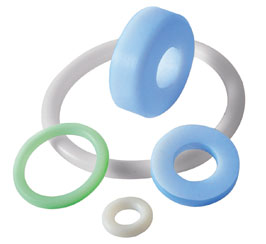
Engineering Excellence in PTFE Block Manufacturing
At Suzhou Baoshida Trading Co., Ltd., our Engineering Capability division is the cornerstone of our reputation in the industrial rubber solutions sector. With a dedicated team of five certified mould engineers and two advanced formula engineers, we bring precision, innovation, and scalability to every PTFE block project. Our engineering framework is built on material science rigor and manufacturing efficiency, enabling us to deliver OEM-grade PTFE components tailored to the exacting demands of global industrial clients.
Our formula engineers specialize in polymer chemistry with a focus on fluoropolymers, particularly polytetrafluoroethylene (PTFE). They optimize raw material formulations to enhance thermal stability, chemical resistance, and mechanical performance under extreme conditions. By fine-tuning filler content—such as glass fiber, graphite, bronze, or carbon—we engineer PTFE blocks that meet specific application requirements in aerospace, semiconductor processing, chemical processing, and high-performance sealing systems. This formulation control ensures consistency across production batches and compliance with international standards including ASTM D4894 and ISO 13000.
Complementing our material expertise, our five in-house mould engineers bring decades of cumulative experience in precision tooling and compression moulding processes. They design and validate custom moulds that ensure dimensional accuracy, low porosity, and uniform density in every PTFE block. Using advanced CAD/CAM software and CNC machining protocols, our team achieves tight tolerances down to ±0.05 mm, critical for applications requiring exact fit and long service life. Finite element analysis (FEA) is routinely employed to simulate stress distribution and thermal behavior during the moulding cycle, minimizing defects and optimizing cycle times.
Our OEM manufacturing capabilities are fully integrated, allowing seamless transition from prototype to mass production. We support clients from initial concept and material selection through to tooling development, validation testing, and serial production. With full traceability, batch documentation, and in-process quality checks, we ensure every PTFE block meets the client’s technical specifications and regulatory requirements. Our facility is equipped for both virgin and filled PTFE processing, with production capacities scalable from small-batch R&D runs to high-volume contracts.
The combination of advanced formulation science and precision mould engineering positions Suzhou Baoshida as a trusted partner for technically demanding PTFE applications. We do not merely produce components—we engineer performance.
Typical PTFE Block Technical Specifications
| Property | Virgin PTFE | Glass-Filled PTFE | Bronze-Filled PTFE | Carbon-Filled PTFE |
|---|---|---|---|---|
| Density (g/cm³) | 2.15–2.20 | 2.20–2.30 | 3.50–4.00 | 2.15–2.25 |
| Tensile Strength (MPa) | 20–35 | 15–25 | 10–20 | 25–35 |
| Compressive Strength (MPa) | 10–14 | 15–20 | 25–35 | 20–30 |
| Max Continuous Use Temp (°C) | 260 | 260 | 280 | 260 |
| Coefficient of Friction | 0.05–0.10 | 0.10–0.15 | 0.15–0.20 | 0.10–0.12 |
| Dielectric Strength (kV/mm) | 60–100 | 40–60 | 30–50 | 50–80 |
| Chemical Resistance | Excellent | Excellent | Good | Excellent |
Customization Process
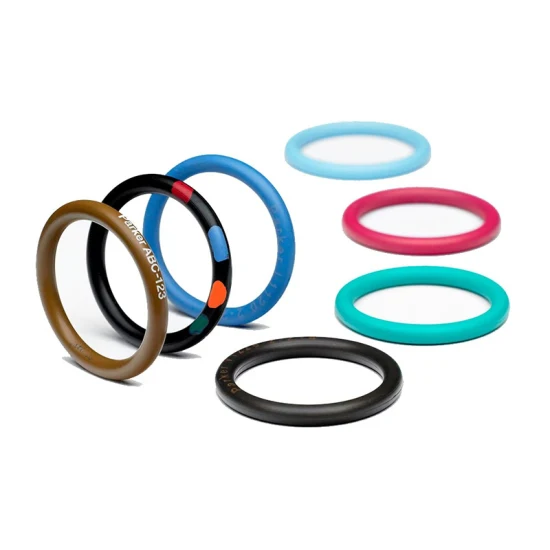
PTFE Block Customization Process: Precision Engineering from Concept to Volume
At Suzhou Baoshida Trading Co., Ltd., our PTFE block customization process integrates rigorous scientific methodology with industrial-scale execution to deliver mission-critical components for demanding applications. This structured workflow ensures dimensional accuracy, material integrity, and performance consistency across sectors including semiconductor manufacturing, chemical processing, and aerospace. We prioritize eliminating design-to-production gaps through four sequential phases, each validated by proprietary quality controls.
Initial drawing analysis scrutinizes client-provided technical schematics for geometric feasibility, tolerance stack-ups, and material stress points. Our engineering team cross-references ISO 3302-1 tolerances and ASTM D4894 standards to identify potential failure modes, such as unsupported thin walls or excessive draft angles. This phase includes thermal expansion modeling for environments exceeding 260°C, ensuring the final block maintains integrity under operational thermal cycling. Non-conformities are resolved via collaborative CAD revisions before proceeding.
Formulation development leverages our 15-year compound database to tailor virgin or filled PTFE resins. We adjust filler ratios (e.g., 15% glass fiber for wear resistance or 5% carbon for thermal conductivity) while maintaining the base polymer’s chemical inertness. Critical properties are optimized per application: low creep for static seals, reduced coefficient of friction for sliding components, or enhanced purity for semiconductor wet benches. Material batches undergo FTIR spectroscopy to verify molecular structure consistency prior to prototyping.
Prototyping employs isostatic molding and controlled sintering cycles to produce 3–5 validation units. Each block undergoes dimensional CMM inspection (±0.05 mm accuracy), ASTM D1457 tensile testing, and application-specific validation like vacuum outgassing analysis. Client feedback on prototype performance directly informs final process parameters, reducing mass production risks by 70% based on historical project data.
Mass production transitions validated parameters to our ISO 9001-certified facility. Continuous in-line monitoring tracks sintering temperature gradients (±2°C tolerance) and post-machining surface roughness (Ra ≤ 0.8 µm). Every batch includes traceable material certificates and third-party test reports for density, elongation, and dielectric strength. This closed-loop system guarantees ≤0.5% defect rates at volumes exceeding 5,000 units monthly.
Key PTFE Block Specifications Achievable Through Customization
| Property | Standard Range | Baoshida Control Range | Testing Standard |
|---|---|---|---|
| Density | 2.10–2.30 g/cm³ | 2.15–2.20 g/cm³ | ASTM D792 |
| Tensile Strength | 14–35 MPa | 22–28 MPa | ASTM D638 |
| Coefficient of Friction | 0.04–0.25 (static) | 0.04–0.10 (static) | ASTM D3702 |
| Max Continuous Temp | 260°C | 260°C (validated) | ASTM D149 |
| Dielectric Strength | 60 kV/mm | ≥55 kV/mm | ASTM D149 |
This end-to-end customization framework transforms theoretical requirements into field-proven PTFE components. By anchoring each phase in empirical data and industrial best practices, Suzhou Baoshida ensures your blocks perform reliably under extreme chemical, thermal, and mechanical loads—without costly rework or downtime. Our process documentation provides full traceability from raw material lot to finished part, meeting stringent OEM audit requirements.
Contact Engineering Team
For precision-critical applications in chemical processing, semiconductor manufacturing, food-grade systems, and high-performance sealing, PTFE blocks represent a foundational material solution. At Suzhou Baoshida Trading Co., Ltd., we specialize in the supply of industrial rubber and polymer materials, with a focused expertise in high-purity, dimensionally stable PTFE blocks tailored to OEM and contract manufacturing demands. Our engineered solutions support clients across Asia, Europe, and North America in maintaining compliance, durability, and operational efficiency.
We understand that sourcing PTFE blocks is not merely a procurement decision—it is a technical alignment between material properties, machining tolerances, and end-use environmental conditions. Whether your application requires virgin PTFE for FDA compliance, filled grades for enhanced wear resistance, or custom-machined billets for sealing elements, our team ensures material consistency, traceable certification, and on-time delivery. As a trusted OEM manager and rubber formula engineer, we bridge the gap between raw material specifications and real-world performance requirements.
Our PTFE blocks are manufactured under strict quality controls, meeting ASTM D1710 and ISO 13000 standards. Each batch undergoes rigorous testing for density, tensile strength, elongation, and dielectric properties to ensure conformity. We offer standard stock sizes as well as custom extrusion or molding services to meet unique dimensional or formulation needs. With in-house technical support, we assist in material selection, especially when balancing chemical inertness, thermal stability (-200°C to +260°C), and low coefficient of friction.
Below are the typical physical and mechanical properties of our standard virgin PTFE block material:
| Property | Test Method | Value |
|---|---|---|
| Density | ASTM D792 | 2.15–2.20 g/cm³ |
| Tensile Strength at Yield | ASTM D638 | 20–35 MPa |
| Elongation at Break | ASTM D638 | 250–350% |
| Hardness (Shore D) | ASTM D2240 | 55–65 |
| Continuous Use Temperature | — | -200°C to +260°C |
| Dielectric Strength | ASTM D149 | 60 kV/mm |
| Coefficient of Friction | ASTM D3702 | 0.05–0.10 |
| Water Absorption (24 hr) | ASTM D570 | 0.01% |
All materials are available with full material test reports (MTRs), RoHS and REACH compliance documentation, and FDA 21 CFR compliance upon request.
For technical consultation or custom quotation, contact Mr. Boyce, Rubber Formula Engineer and OEM Manager at Suzhou Baoshida Trading Co., Ltd. Direct your inquiries to [email protected]. Include your application parameters, required dimensions, quantity, and any regulatory or performance criteria. Our response time is within 12 business hours, with sample fulfillment available within 5–7 working days for qualified partners. Partner with a team that speaks the language of polymers, precision, and industrial reliability.
⚖️ O-Ring Weight Calculator
Estimate rubber O-ring weight (Approx).