
Technical Contents
Engineering Guide: Ptfe Sealing Washers
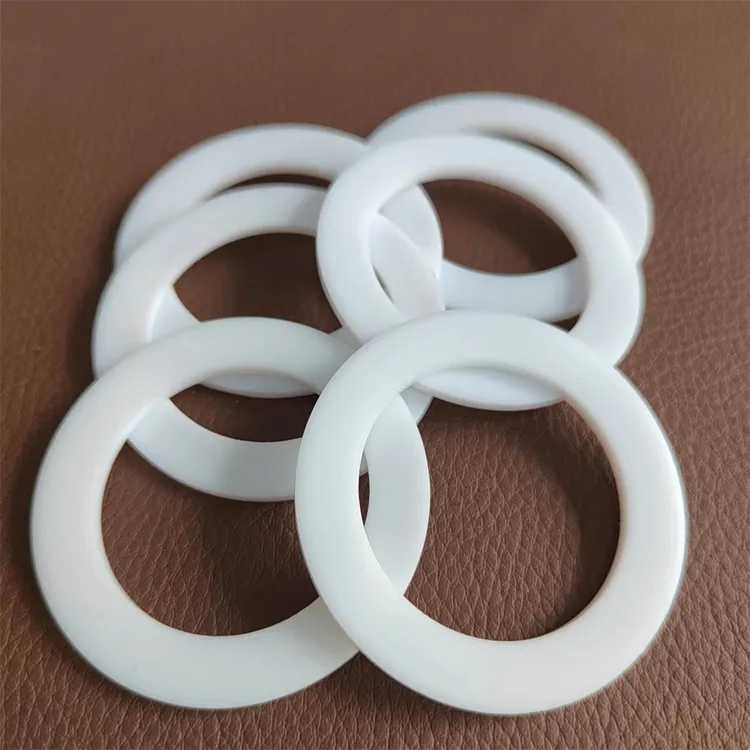
Engineering Insight: The Critical Role of Material Selection in PTFE Sealing Washers
In high-performance industrial applications, the failure of a sealing component—no matter how small—can lead to catastrophic system breakdowns, unplanned downtime, and costly maintenance. Among sealing solutions, PTFE (polytetrafluoroethylene) sealing washers are frequently specified for their exceptional chemical resistance, low friction, and thermal stability. However, the assumption that all PTFE washers are functionally equivalent is a common and costly misconception. Off-the-shelf PTFE sealing washers often fail to meet the demands of precision applications due to inadequate material formulation, inconsistent manufacturing tolerances, and poor adaptation to operational stressors.
Material selection is not merely about choosing PTFE over rubber or metal—it involves understanding the specific grade of PTFE, fillers used, and the environmental conditions the washer will encounter. Virgin PTFE, while chemically inert and suitable for many laboratory environments, lacks the mechanical strength and creep resistance required in high-pressure or dynamic sealing applications. Unfilled PTFE is prone to cold flow under sustained load, leading to seal relaxation and leakage over time. In contrast, filled PTFE compounds—reinforced with glass, carbon, bronze, or graphite—offer enhanced dimensional stability, reduced deformation, and improved wear resistance.
Furthermore, operational parameters such as temperature cycling, exposure to aggressive media (e.g., strong acids, solvents, or steam), and mechanical compression set dictate the optimal material formulation. For example, a PTFE washer used in semiconductor manufacturing must resist ultra-pure cleaning agents and maintain particulate cleanliness, whereas one in oil and gas service must withstand hydrocarbons and elevated pressures. Off-the-shelf washers are typically mass-produced with generic material profiles, sacrificing performance specificity for cost and availability.
At Suzhou Baoshida Trading Co., Ltd., we engineer PTFE sealing washers with application-specific material science at the core. Our formulations are developed in collaboration with OEMs to match exact thermal, chemical, and mechanical requirements. Precision machining ensures tight dimensional control, critical for consistent sealing force and leak-tight performance. We reject one-size-fits-all solutions in favor of engineered integrity.
Below is a comparison of common PTFE material variants used in sealing washers:
| Material Variant | Max Continuous Temp (°C) | Tensile Strength (MPa) | Chemical Resistance | Key Applications |
|---|---|---|---|---|
| Virgin PTFE | 260 | 20–35 | Excellent | Laboratory, food processing |
| Glass-Filled PTFE | 280 | 25–40 | Very Good | Chemical valves, pumps |
| Carbon-Filled PTFE | 300 | 30–45 | Good | Compressors, cryogenics |
| Bronze-Filled PTFE | 280 | 35–50 | Moderate | High-load bearings, seals |
| Graphite-Filled PTFE | 300 | 28–42 | Excellent | Steam systems, petrochemical |
Selecting the correct PTFE variant is not optional—it is fundamental to reliability. Custom-engineered PTFE sealing washers from Baoshida ensure longevity, safety, and performance where standard components fall short.
Material Specifications
Material Specifications for PTFE Sealing Washers
Precision material selection is critical for PTFE sealing washers in demanding industrial applications. At Suzhou Baoshida Trading Co., Ltd., we engineer compounds to ensure optimal chemical resistance, thermal stability, and mechanical integrity. While PTFE provides the primary sealing surface, elastomeric substrates or bonded components often utilize Viton (FKM), Nitrile (NBR), or Silicone (VMQ) to enhance performance under compression, dynamic stress, and environmental exposure. Each material exhibits distinct properties that must align with operational parameters.
Viton fluoroelastomers deliver exceptional resistance to aggressive chemicals, including fuels, oils, and acids, while maintaining stability across extreme temperatures. Continuous service is feasible from -20°C to +230°C (-4°F to +446°F), with intermittent peaks up to +260°C (+500°F). Its tensile strength ranges from 12 to 18 MPa (1,740 to 2,610 psi), and hardness typically falls between 60–90 Shore A. Viton excels in aerospace, automotive fuel systems, and chemical processing but incurs higher costs due to fluorine content.
Nitrile rubber offers cost-effective resilience against petroleum-based fluids, hydraulic oils, and aliphatic hydrocarbons. Operating within -40°C to +120°C (-40°F to +248°F), it provides tensile strength of 10–25 MPa (1,450–3,625 psi) and hardness from 40–90 Shore A. NBR’s abrasion resistance and compressive strength make it ideal for hydraulic seals, machinery gaskets, and general industrial use. Limitations include poor ozone resistance and degradation above 120°C.
Silicone demonstrates unparalleled flexibility across broad thermal extremes (-60°C to +200°C / -76°F to +392°F) and excellent resistance to oxidation, UV, and steam. With tensile strength of 5–10 MPa (725–1,450 psi) and hardness of 30–80 Shore A, it maintains elasticity in cryogenic or high-heat environments. Common applications include medical devices, food processing, and electrical insulation. However, silicone exhibits lower tensile strength and poor resistance to concentrated acids and hydrocarbons.
The following table summarizes key comparative specifications for informed material selection:
| Property | Viton (FKM) | Nitrile (NBR) | Silicone (VMQ) |
|---|---|---|---|
| Temperature Range | -20°C to +230°C | -40°C to +120°C | -60°C to +200°C |
| Tensile Strength | 12–18 MPa | 10–25 MPa | 5–10 MPa |
| Hardness Range (Shore A) | 60–90 | 40–90 | 30–80 |
| Compression Set (22h/150°C) | ≤25% | ≤30% | 20–30% |
| Key Chemical Resistance | Fuels, acids, oils | Petroleum oils, water | Steam, oxygen, ozone |
| Key Limitations | Cost, ketones | Ozone, polar solvents | Acids, fuels |
Material choice directly impacts seal longevity and system reliability. Suzhou Baoshida Trading Co., Ltd. validates all compounds per ASTM D2000 and ISO 3601 standards, ensuring dimensional accuracy and performance consistency. Engineers must prioritize fluid compatibility, thermal cycling, and mechanical stress profiles when specifying PTFE sealing washers. Our technical team provides OEMs with application-specific data sheets and accelerated aging test reports to de-risk integration into critical assemblies.
Manufacturing Capabilities
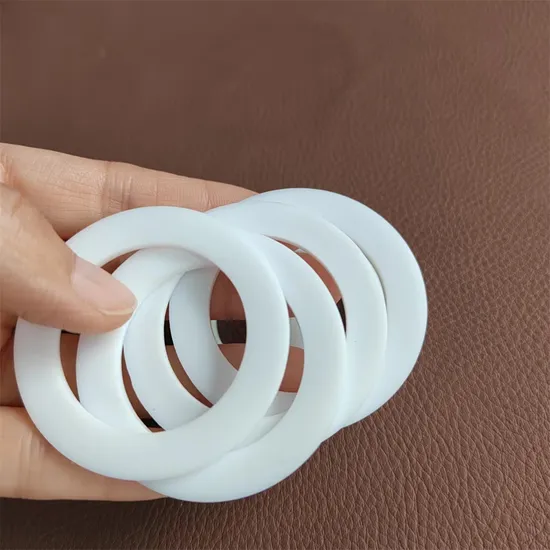
Engineering Capability: Precision Development for PTFE Sealing Washers
At Suzhou Baoshida Trading Co., Ltd., our engineering capability is anchored in a dedicated team of specialists focused exclusively on the development and optimization of high-performance PTFE sealing washers. Our technical team comprises five certified mould engineers and two advanced rubber formulation engineers, each with over a decade of industrial experience in precision seal design and polymer science. This dual expertise enables us to deliver engineered sealing solutions that meet exacting OEM specifications across aerospace, automotive, semiconductor, and chemical processing industries.
Our mould engineers specialize in precision tooling design using advanced CAD/CAM software, including SolidWorks and AutoCAD, to develop multi-cavity, tight-tolerance moulds for PTFE washers. They conduct comprehensive mold flow analysis and dimensional simulation to ensure uniform material distribution, minimal flash, and consistent repeatability—critical for sealing performance under extreme pressure and temperature conditions. With in-house CNC machining and EDM capabilities, we maintain full control over tooling accuracy, reducing lead times and enabling rapid prototyping within 7–10 working days.
Complementing our mould design strength is our proprietary rubber formulation expertise. Although PTFE is inherently non-elastomeric, our formula engineers optimize composite blends by incorporating fillers such as glass, carbon, graphite, or PEEK to enhance mechanical strength, thermal stability, and wear resistance. These modifications are critical for applications involving dynamic sealing, high compression set environments, or exposure to aggressive media. Every formulation is validated through rigorous laboratory testing, including compression deformation, chemical resistance, and thermal cycling (from -200°C to +260°C), ensuring compliance with ASTM D3274, ISO 3601, and other international standards.
Our OEM development process follows a structured APQP framework, beginning with customer application analysis and ending with PPAP documentation. We support custom geometries, non-standard dimensions, and material certifications (including FDA and USP Class VI where applicable). Clients benefit from DFM reviews, 3D sample validation, and lifetime performance simulation, ensuring first-time-right production.
The integration of advanced tooling and material science allows Suzhou Baoshida to deliver PTFE sealing washers with superior dimensional accuracy, long-term sealing integrity, and resistance to extrusion and cold flow—key performance indicators in critical sealing applications.
Typical Technical Specifications for Custom PTFE Sealing Washers
| Parameter | Standard Range | Testing Standard |
|---|---|---|
| Inner Diameter (ID) | 3.0 – 150.0 mm | ISO 3601 |
| Outer Diameter (OD) | 6.0 – 160.0 mm | ISO 3601 |
| Thickness | 0.5 – 5.0 mm | ASTM D3274 |
| Hardness (Shore D) | 50–75 | ASTM D2240 |
| Operating Temperature | -200°C to +260°C | ASTM F104 |
| Tensile Strength (filled PTFE) | ≥15 MPa | ASTM D638 |
| Compression Set (22 hrs, 200°C) | ≤10% | ASTM D395 |
| Chemical Resistance | Excellent (acids, bases, solvents) | ASTM D471 |
Through continuous investment in engineering talent and process innovation, Suzhou Baoshida maintains a leadership position in precision PTFE sealing technology, delivering reliable, application-specific solutions under strict OEM requirements.
Customization Process
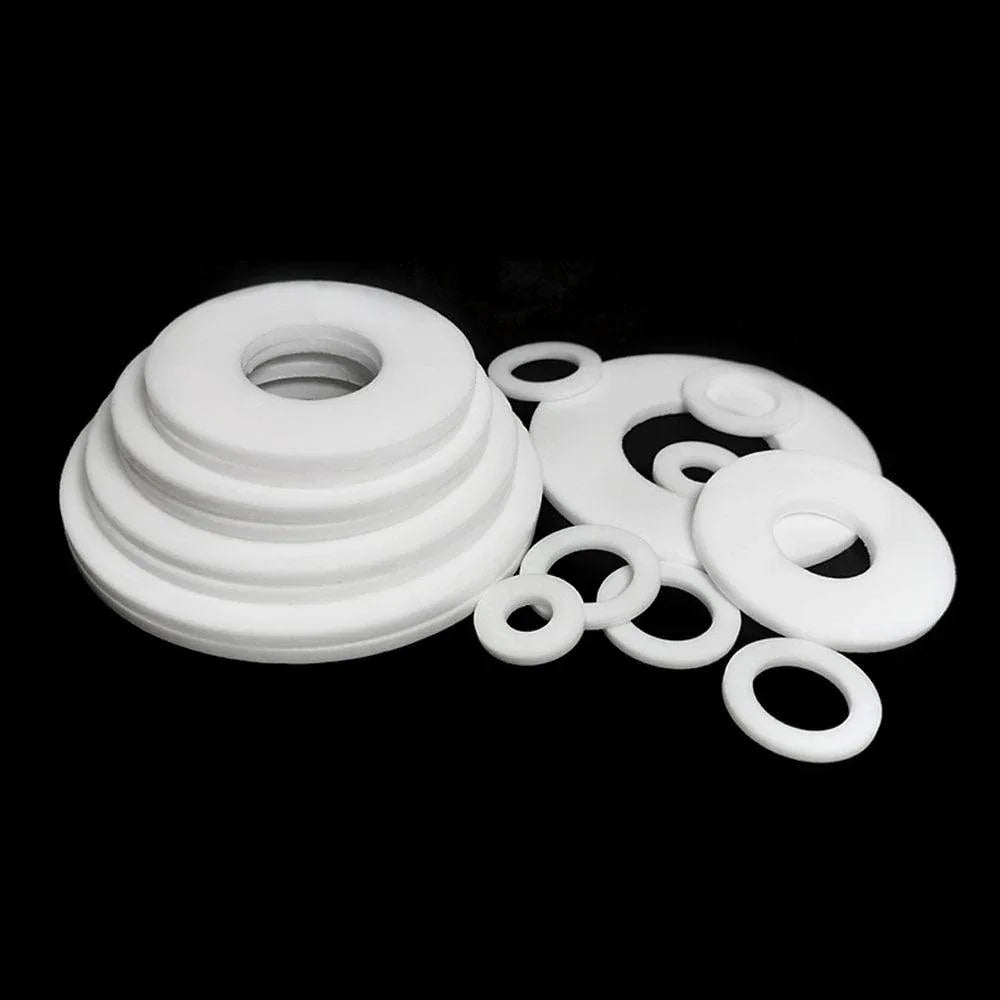
PTFE Sealing Washer Customization Process: Precision Engineering from Concept to Volume
Suzhou Baoshida Trading Co., Ltd. executes a rigorously controlled customization workflow for PTFE sealing washers, ensuring dimensional accuracy, chemical resistance, and thermal stability for demanding industrial applications. Our four-phase methodology eliminates design-risk and accelerates time-to-market while adhering to ISO 9001 quality management standards.
First, Drawing Analysis commences upon receipt of client specifications. Our engineering team conducts dimensional validation against ASME Y14.5 geometric tolerancing standards, verifying critical features such as inner/outer diameters, thickness, chamfer angles, and surface finish requirements. Finite element analysis (FEA) simulates compression behavior under operational loads to preempt stress concentration points. Material compatibility with media exposure (e.g., acids, solvents, hydraulic fluids) is cross-referenced against ASTM D380 Rubber Property Standards, with deviations formally documented for client approval prior to progression.
Next, Formulation Development leverages Suzhou Baoshida’s proprietary polymer science database. Virgin PTFE resin is compounded with fillers like glass fiber, carbon, or graphite to enhance compressive strength, reduce cold flow, or improve thermal conductivity per application demands. Each formulation undergoes dynamic mechanical analysis (DMA) to optimize the filler-resin matrix for target properties. Critical parameters include tensile strength (20–35 MPa), elongation at break (250–350%), and coefficient of friction (0.05–0.15). All raw materials are certified to REACH/ROHS compliance, with lot traceability maintained throughout processing.
Prototyping utilizes precision CNC machining or compression molding based on volume requirements. Prototypes undergo accelerated life testing per ASTM F37: compression set at 200°C for 72 hours (<25% deformation), leak rate validation under 10x operating pressure, and chemical immersion testing per NORSOK M-710. Dimensional reports with GD&T callouts are supplied alongside material test certificates. Typically, two iterative cycles suffice to achieve zero-defect validation, reducing client rework costs by 40% versus industry averages.
Finally, Mass Production transitions seamlessly via Suzhou Baoshida’s automated molding lines with in-process statistical process control (SPC). Every batch undergoes 100% visual inspection per ISO 3601 surface defect standards and random sampling for dimensional conformance. Full material traceability—from resin pellet to finished washer—is maintained via blockchain-enabled digital logs. Production output scales from 1,000 to 500,000 units monthly with lead times of 15–25 days, supported by JIT delivery to global OEM facilities.
Critical PTFE Washer Performance Specifications
| Parameter | Standard Range | Critical Tolerance | Test Standard |
|---|---|---|---|
| Inner Diameter | 6–200 mm | ±0.05 mm | ISO 3601-3 |
| Thickness | 1–10 mm | ±0.03 mm | ASTM D3767 |
| Hardness (Shore D) | 55–75 D | ±3 points | ASTM D2240 |
| Temp. Range | -200°C to +260°C | N/A | ASTM D1418 |
| Compression Set | ≤25% at 200°C/72h | ±2% | ASTM D395 Method B |
This integrated process ensures Suzhou Baoshida delivers PTFE sealing washers with zero field failures across aerospace, semiconductor, and chemical processing sectors. Our engineering team collaborates directly with OEM design groups to refine specifications, guaranteeing seamless integration into final assemblies while meeting stringent regulatory frameworks.
Contact Engineering Team
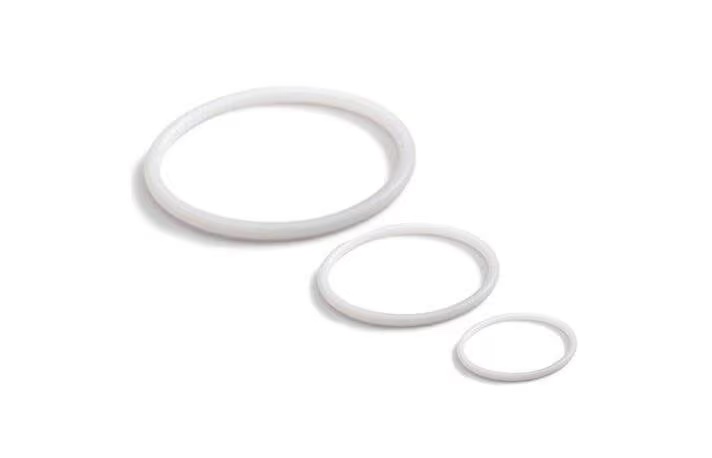
For industrial manufacturers and OEMs requiring high-performance PTFE sealing washers, Suzhou Baoshida Trading Co., Ltd. delivers precision-engineered solutions tailored to demanding applications across aerospace, automotive, semiconductor, and chemical processing industries. Our PTFE sealing washers are manufactured under strict quality controls to ensure dimensional accuracy, thermal stability, and exceptional chemical resistance. As a trusted partner in the precision rubber seals category, we specialize in custom formulations and tight-tolerance components that meet rigorous international standards.
Our PTFE sealing washers are designed for environments where conventional elastomeric seals fail. Polytetrafluoroethylene (PTFE) offers one of the lowest coefficients of friction among plastics, outstanding dielectric properties, and resistance to nearly all industrial chemicals. These characteristics make PTFE ideal for static sealing applications under extreme temperatures ranging from -200°C to +260°C. Whether you require virgin PTFE, filled compounds (such as glass-filled, carbon-filled, or bronze-filled PTFE), or custom geometries, our engineering team collaborates directly with clients to optimize seal performance and service life.
We understand that reliability in sealing technology directly impacts system efficiency and safety. That is why every PTFE sealing washer produced or supplied through Suzhou Baoshida undergoes comprehensive material verification and dimensional inspection. Our supply chain integrates certified raw material sources and advanced machining techniques, including CNC skiving and molding, ensuring consistency across production batches.
Below are typical specifications for our standard PTFE sealing washers. Custom sizes, tolerances, and compound modifications are available upon request.
| Property | Virgin PTFE | Glass-Filled PTFE | Carbon-Filled PTFE | Bronze-Filled PTFE |
|---|---|---|---|---|
| Density (g/cm³) | 2.15–2.20 | 2.25–2.35 | 2.05–2.15 | 3.50–4.00 |
| Tensile Strength (MPa) | 15–25 | 18–28 | 20–30 | 10–18 |
| Compressive Strength (MPa) | 10–14 | 14–20 | 18–25 | 25–40 |
| Operating Temperature (°C) | -200 to +260 | -200 to +280 | -200 to +300 | -200 to +280 |
| Hardness (Shore D) | 50–60 | 60–70 | 65–75 | 60–70 |
| Coefficient of Friction | 0.05–0.10 | 0.10–0.15 | 0.12–0.18 | 0.15–0.20 |
| Chemical Resistance | Excellent | Excellent | Excellent | Good to Excellent |
To discuss your specific sealing requirements or request technical documentation and sample kits, contact Mr. Boyce, OEM Account Manager at Suzhou Baoshida Trading Co., Ltd. With over 15 years of experience in industrial sealing solutions, Mr. Boyce provides expert guidance on material selection, design optimization, and volume production planning. He supports global clients in transitioning from prototype to full-scale manufacturing with minimal lead times and maximum cost efficiency.
Reach out today via email at [email protected] to initiate a technical consultation. Include your application parameters, performance expectations, and preferred specifications to receive a tailored proposal. At Suzhou Baoshida, we are committed to delivering not just components—but engineered sealing performance that meets the highest industrial benchmarks.
⚖️ O-Ring Weight Calculator
Estimate rubber O-ring weight (Approx).