
Technical Contents
Engineering Guide: Ptfe Vinyl Board
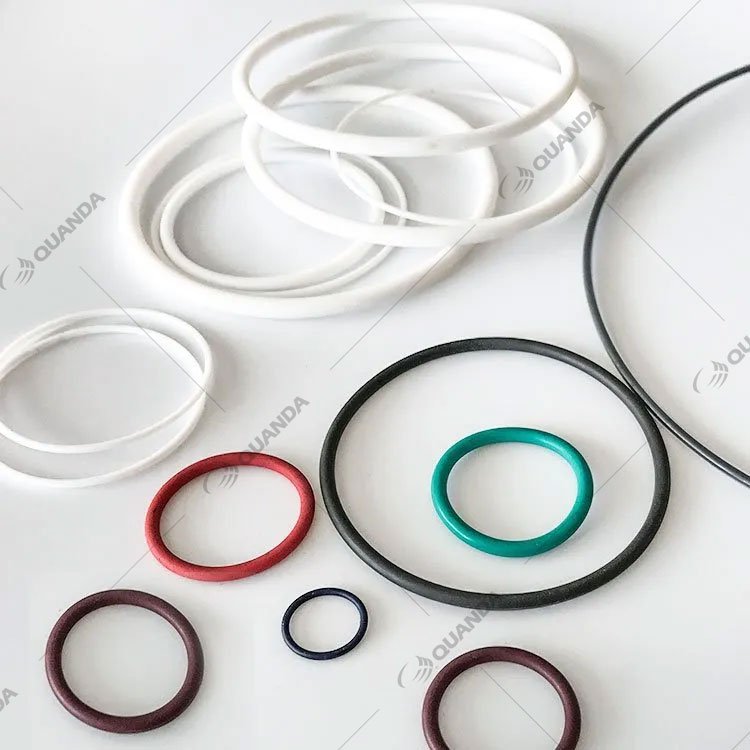
Engineering Insight: The Critical Role of Material Selection in PTFE Vinyl Board Applications
In industrial environments where performance under extreme conditions is non-negotiable, the selection of engineered materials such as PTFE vinyl board directly influences system reliability, maintenance frequency, and operational lifespan. While the term “vinyl board” may suggest a generic polymer product, PTFE-infused variants represent a specialized class of composite material designed to meet stringent thermal, chemical, and mechanical demands. Off-the-shelf solutions, often marketed as universal or cost-effective alternatives, frequently fail to deliver consistent performance due to fundamental mismatches in material composition, filler content, and manufacturing tolerances.
Standard vinyl boards—typically based on plasticized PVC or other amorphous polymers—lack the molecular stability required in high-temperature or chemically aggressive environments. When exposed to solvents, acids, or elevated temperatures above 60°C, conventional vinyl materials exhibit swelling, softening, or dimensional instability. In contrast, true PTFE vinyl board integrates polytetrafluoroethylene either as a surface coating or as a blended matrix within a reinforced substrate. This structural hybrid delivers the flexibility and impact resistance of vinyl with the non-stick, low-friction, and inert characteristics of PTFE.
The failure of generic solutions often stems from misrepresentation of material properties. Many suppliers label products as “PTFE-coated” or “PTFE-enhanced” without specifying coating thickness, adhesion strength, or filler dispersion uniformity. Such ambiguities lead to premature delamination, inconsistent release performance, and vulnerability to abrasion. At Suzhou Baoshida Trading Co., Ltd., we prioritize traceable material data sheets and application-specific formulation design to ensure compatibility with customer processes.
Another critical factor is substrate reinforcement. Industrial-grade PTFE vinyl board typically incorporates fiberglass or aramid scrim layers to enhance dimensional stability and tensile strength. These reinforcements prevent creep under continuous load and reduce thermal expansion, which is vital in sealing, conveyor, and lining applications. Off-the-shelf products frequently omit such structural supports to reduce cost, resulting in warping or mechanical failure during long-term operation.
Understanding the operating environment is paramount. Parameters such as continuous temperature exposure, chemical contact duration, mechanical loading, and surface friction requirements must inform material selection. A one-size-fits-all approach ignores these variables and increases total cost of ownership through frequent replacements and unplanned downtime.
Below is a comparative specification table highlighting the performance gap between industrial-grade PTFE vinyl board and standard off-the-shelf vinyl alternatives.
| Property | Industrial PTFE Vinyl Board | Standard Vinyl Board |
|---|---|---|
| Max Continuous Use Temperature | 260°C | 60°C |
| Chemical Resistance | Excellent (inert to most acids, bases, solvents) | Poor to Moderate (swells with many solvents) |
| Coefficient of Friction | 0.05–0.10 | 0.30–0.50 |
| Tensile Strength | ≥30 MPa (with reinforcement) | 40–50 MPa (but lower at elevated T) |
| Dielectric Strength | 60 kV/mm | 15 kV/mm |
| PTFE Content/Coating | ≥30% or 0.1–0.3 mm bonded layer | Surface-treated or none |
| Dimensional Stability (RT to 200°C) | <0.5% expansion | >2.0% expansion |
Material selection is not a commodity decision—it is an engineering imperative. At Suzhou Baoshida, we collaborate with OEMs to define precise performance criteria and deliver PTFE vinyl board solutions engineered for reliability, not just compliance.
Material Specifications

Material Specifications for Industrial Rubber Solutions
Suzhou Baoshida Trading Co., Ltd. provides precision-engineered elastomeric materials for critical industrial applications. Clarification is essential: PTFE (polytetrafluoroethylene) is chemically distinct from vinyl-based polymers and is not utilized in standard vinyl board manufacturing. PTFE is a fluoropolymer employed in high-purity seals, linings, and gaskets, whereas vinyl boards typically denote rigid PVC composites. This section details specifications for three core rubber materials—Viton® (FKM), Nitrile (NBR), and Silicone (VMQ)—which are integral to our OEM sealing and insulation solutions where chemical, thermal, and mechanical resilience are paramount.
Viton® (fluoroelastomer) exhibits exceptional resistance to aggressive chemicals, including hydrocarbons, acids, and jet fuels. Its operational temperature range spans -20°C to +230°C, with intermittent peaks up to 250°C. Hardness typically falls between 60–90 Shore A (ASTM D2240), and it maintains integrity under high-pressure conditions. Nitrile rubber (nitrile butadiene rubber) is optimized for petroleum-based fluid exposure, with a temperature tolerance of -30°C to +120°C. Its hardness ranges from 40–90 Shore A, offering robust abrasion resistance but limited ozone and flame resistance. Silicone rubber (polysiloxane) delivers superior flexibility across -60°C to +200°C, with excellent electrical insulation properties. Hardness varies from 30–80 Shore A, though it demonstrates weaker tensile strength in dynamic mechanical applications compared to FKM or NBR.
All materials undergo rigorous quality control per ASTM D2000 standards, with compound formulations adjusted to meet specific OEM performance thresholds. Critical selection factors include fluid compatibility, thermal cycling requirements, and compression set resistance at operational extremes. Misapplication—such as deploying NBR in ketone-rich environments or Silicone under high mechanical stress—will precipitate premature failure.
The comparative specifications below outline key parameters for informed material selection:
| Material | Hardness Range (Shore A) | Temperature Range (°C) | Key Fluid Resistances | Critical Limitations |
|---|---|---|---|---|
| Viton® (FKM) | 60–90 | -20 to +230 | Hydrocarbons, acids, fuels, steam | Poor ketone/amine resistance |
| Nitrile (NBR) | 40–90 | -30 to +120 | Oils, greases, water, aliphatic hydrocarbons | Limited ozone/weathering resistance |
| Silicone (VMQ) | 30–80 | -60 to +200 | Water, steam, oxygen, ozone | Low tear strength, poor fuel resistance |
Precision in material selection directly impacts product lifecycle and safety compliance. Suzhou Baoshida Trading Co., Ltd. mandates application-specific validation testing for all OEM partnerships, including fluid immersion per ASTM D471 and thermal aging per ASTM D573. Consult our engineering team to align compound specifications with your operational parameters, ensuring zero compromise on performance integrity. Final material certification requires documented validation against ISO 3601 or customer-defined protocols.
Manufacturing Capabilities

Engineering Capability
At Suzhou Baoshida Trading Co., Ltd., our engineering capability forms the backbone of our industrial rubber solutions, ensuring precision, reliability, and innovation in every product we deliver. With a dedicated team of five experienced mould engineers and two specialized rubber formula engineers, we maintain full technical control from concept to production. This integrated engineering approach enables us to develop high-performance PTFE vinyl board solutions tailored to the exacting demands of modern industrial applications.
Our mould engineers possess extensive expertise in precision tooling design, material flow analysis, and cavity optimization for compression, transfer, and injection moulding processes. They utilize advanced CAD/CAM software and finite element analysis (FEA) to simulate mould performance, minimizing defects and maximizing production efficiency. Each mould is engineered for dimensional stability, extended service life, and compatibility with stringent tolerances required in critical sealing, insulation, and chemical resistance applications.
Complementing this is our in-house rubber formulation capability. Our two formula engineers specialize in polymer chemistry with a focus on fluoropolymer systems, including PTFE-modified compounds and vinyl-based elastomer blends. They are responsible for developing proprietary compound formulations that enhance thermal stability, mechanical strength, and resistance to aggressive media—key performance factors in PTFE vinyl board applications. By controlling the formulation process internally, we ensure batch-to-batch consistency and the ability to customize material properties for specific OEM requirements.
Our OEM manufacturing services are built on this robust engineering foundation. We support clients from initial design consultation through prototyping, DFM (Design for Manufacturability) analysis, tooling development, and full-scale production. This vertical integration allows us to respond rapidly to technical challenges, reduce time-to-market, and maintain strict quality control throughout the manufacturing cycle. Whether producing standard PTFE vinyl board sheets or custom-profiled components, our engineering team ensures compliance with international standards such as ASTM D2000, ISO 3302, and ISO 2768.
We routinely collaborate with clients in industries including semiconductor manufacturing, chemical processing, automotive, and electrical insulation, where material integrity and performance under stress are non-negotiable. Our engineering team documents all development stages, providing full traceability, material certifications, and technical data packages essential for industrial compliance and validation.
The following table outlines the standard technical specifications we achieve for PTFE vinyl board formulations under controlled production conditions:
| Property | Test Method | Typical Value |
|---|---|---|
| Tensile Strength | ASTM D412 | 12–16 MPa |
| Elongation at Break | ASTM D412 | 250–350% |
| Hardness (Shore A) | ASTM D2240 | 60–80 |
| Operating Temperature Range | — | -40°C to +150°C |
| Dielectric Strength | ASTM D149 | 15–20 kV/mm |
| Specific Gravity | ASTM D297 | 1.45–1.60 |
| Compression Set (22 hrs, 70°C) | ASTM D395 | ≤25% |
This combination of skilled personnel, technical infrastructure, and OEM agility positions Suzhou Baoshida as a trusted engineering partner in advanced industrial rubber solutions.
Customization Process

PTFE Vinyl Board Customization Process
At Suzhou Baoshida Trading Co., Ltd., our PTFE vinyl board customization follows a rigorously validated sequence to ensure dimensional accuracy, material integrity, and performance consistency for industrial applications. This process begins with engineering-grade drawing analysis, where our technical team dissects CAD files or physical samples to verify tolerances, surface finish requirements, and structural feasibility. We cross-reference ISO 2768-mK standards for geometric deviations and assess load-bearing zones to preempt stress-induced deformation during service. Critical parameters such as edge sealing specifications and thermal expansion coefficients are quantified using finite element analysis software to eliminate field failure risks.
Material formulation is the subsequent phase, wherein our rubber chemists tailor compound composition to meet operational demands. Base polymers undergo precise PTFE dispersion within a thermoplastic elastomer matrix, with filler ratios adjusted for abrasion resistance, chemical inertness, or electrical properties. Below outlines key customizable parameters and their industry-standard ranges.
| Property | Standard Range | Customizable Range | Test Method |
|---|---|---|---|
| PTFE Content | 15-25% by weight | 10-35% by weight | ASTM D3801 |
| Shore A Hardness | 70-85 | 60-95 | ISO 7619-1 |
| Continuous Use Temp | -40°C to +150°C | -60°C to +180°C | ASTM D618 |
| Tensile Strength | 12-18 MPa | 8-22 MPa | ISO 37 |
Prototyping validates formulation efficacy through iterative physical trials. We produce 3-5 sample batches using calibrated twin-screw extruders, monitoring melt viscosity via capillary rheometry. Each prototype undergoes accelerated aging per ASTM G154, followed by functional testing for compression set (ISO 815), dielectric strength (IEC 60243), and chemical resistance against solvents like toluene or 60% sulfuric acid. Client feedback triggers micro-adjustments to plasticizer levels or crosslink density before sign-off.
Mass production commences only after prototype approval, leveraging our ISO 13485-certified facility. Extrusion lines operate under real-time thermal profiling, with laser micrometers ensuring ±0.05mm thickness control. Every 500kg batch undergoes spectroscopic verification of PTFE distribution uniformity and third-party validation per client-specified protocols. Final inspection includes 100% visual screening for voids or inclusions and batch traceability via serialized QR codes. This closed-loop methodology guarantees that PTFE vinyl boards consistently achieve OEM performance benchmarks while minimizing scrap rates below 0.8%.
Suzhou Baoshida’s integration of material science with precision manufacturing ensures your custom PTFE vinyl components deliver reliability in sealing, insulation, or wear applications across automotive, semiconductor, and chemical processing sectors.
Contact Engineering Team
For industrial manufacturers seeking high-performance materials in demanding environments, PTFE vinyl board represents a critical solution where chemical resistance, thermal stability, and low friction are non-negotiable. At Suzhou Baoshida Trading Co., Ltd., we specialize in advanced rubber and polymer composites tailored to the rigorous standards of the automotive, semiconductor, pharmaceutical, and chemical processing sectors. Our engineered PTFE vinyl boards are not generic off-the-shelf products—they are precision-formulated to meet exacting OEM specifications and long-term operational durability.
PTFE vinyl board combines the inertness of polytetrafluoroethylene (PTFE) with the structural adaptability of reinforced vinyl substrates. This hybrid construction delivers superior resistance to acids, bases, solvents, and extreme temperatures ranging from -200°C to +260°C continuously. Unlike conventional sealing or lining materials, our boards exhibit minimal outgassing, exceptional dielectric strength, and compliance with international safety and environmental standards, including FDA, RoHS, and REACH. These attributes make them ideal for use in cleanroom environments, chemical containment systems, and high-purity fluid handling applications.
We understand that material performance is only as reliable as the consistency of supply and technical support behind it. That is why Suzhou Baoshida maintains full control over the production lifecycle—from raw material sourcing to final quality verification. Our manufacturing partners utilize calibrated calendaring and sintering processes to ensure uniform thickness, optimal bonding between layers, and elimination of internal stresses that could compromise performance under thermal cycling.
To assist engineers and procurement managers in selecting the right configuration, we provide detailed technical data sheets and application engineering support. Below is a representative specification table for our standard PTFE vinyl board formulation:
| Property | Value | Test Method |
|---|---|---|
| Density | 2.15 g/cm³ | ASTM D792 |
| Tensile Strength | ≥25 MPa | ASTM D4894 |
| Elongation at Break | ≥300% | ASTM D4894 |
| Operating Temperature | -200°C to +260°C | ASTM D149 |
| Dielectric Strength | 60 kV/mm | ASTM D876 |
| Chemical Resistance | Excellent against strong acids, bases, and solvents | ASTM D543 |
| Thickness Tolerance | ±0.1 mm (for 1.0 mm sheet) | ISO 2566-1 |
Custom thicknesses from 0.5 mm to 10 mm are available in sheet sizes up to 1200 mm × 2400 mm, with options for anti-static, filled, or glass-reinforced variants upon request.
For technical consultation, sample requests, or volume pricing, contact Mr. Boyce, OEM Manager at Suzhou Baoshida Trading Co., Ltd. He is your direct liaison for project-specific material evaluations, qualification documentation, and supply chain integration. Reach him via email at [email protected] to initiate a discussion on how our PTFE vinyl board solutions can enhance your product reliability and manufacturing efficiency. At Suzhou Baoshida, precision is not an option—it is our standard.
⚖️ O-Ring Weight Calculator
Estimate rubber O-ring weight (Approx).