
Technical Contents
Engineering Guide: Pvc Belting

Engineering Insight: Material Selection in PVC Belting – Why Off-the-Shelf Solutions Fail
In industrial conveyor systems, PVC belting is often perceived as a standardized, interchangeable component. However, this assumption overlooks the nuanced engineering required for reliable performance under real-world operating conditions. At Suzhou Baoshida Trading Co., Ltd., we emphasize that material selection is not a secondary consideration—it is the foundation of belt longevity, efficiency, and system safety. Off-the-shelf PVC belting frequently fails because it is engineered for generic applications, not the specific thermal, chemical, mechanical, and environmental demands of your process.
The core issue lies in the variability of PVC compound formulation. While all PVC belts share polyvinyl chloride as a base polymer, the additives—plasticizers, stabilizers, fillers, and reinforcing agents—determine critical performance characteristics. For example, a conveyor in a food processing plant requires FDA-compliant, oil-resistant, and easily cleanable surfaces, whereas a belt in a packaging line may prioritize static dissipation and tensile strength. Standard belts often use cost-optimized formulations that sacrifice long-term durability for short-term savings, leading to premature cracking, delamination, or surface degradation.
Another critical factor is the reinforcement layer. Industrial-grade PVC belting relies on embedded fabrics—typically polyester, nylon, or aramid—to provide dimensional stability and load-bearing capacity. Off-the-shelf belts often use lower denier fabrics or insufficient ply counts, resulting in elongation, tracking issues, and reduced fatigue resistance. In high-load or high-speed applications, this can lead to catastrophic belt failure and unplanned downtime.
Temperature exposure is another common failure point. Standard PVC belts typically degrade above 60°C, yet many industrial environments—such as drying tunnels or hot material handling lines—exceed this threshold. Without heat-stabilized compounds, the belt surface becomes brittle or tacky, compromising both function and safety.
To illustrate the performance gap, consider the following comparative specifications:
| Property | Standard Off-the-Shelf PVC Belt | Engineered PVC Belt (Baoshida Custom Solution) |
|---|---|---|
| Operating Temperature Range | -10°C to +60°C | -20°C to +80°C (heat-stabilized compound) |
| Tensile Strength | 120 kN/m | 180 kN/m (high-tenacity polyester fabric) |
| Elongation at Break | ≤ 18% | ≤ 12% (low-stretch reinforcement) |
| Abrasion Resistance (DIN 53516) | 120 mm³ loss | 75 mm³ loss (reinforced surface compound) |
| Chemical Resistance | Moderate (dilute acids, water) | High (oils, greases, cleaning agents) |
| Compliance | General industrial | FDA, REACH, RoHS (application-specific) |
At Suzhou Baoshida, our engineered PVC belting solutions are developed through application-specific compound design and rigorous performance validation. We collaborate with OEMs and end-users to analyze load profiles, environmental exposure, and lifecycle costs—ensuring that material selection aligns with operational reality. The result is not just a belt, but a precision-engineered component that enhances system reliability and reduces total cost of ownership. Off-the-shelf alternatives may appear cost-effective initially, but they often lead to higher maintenance, frequent replacement, and production losses—making true engineering customization not a luxury, but a necessity.
Material Specifications
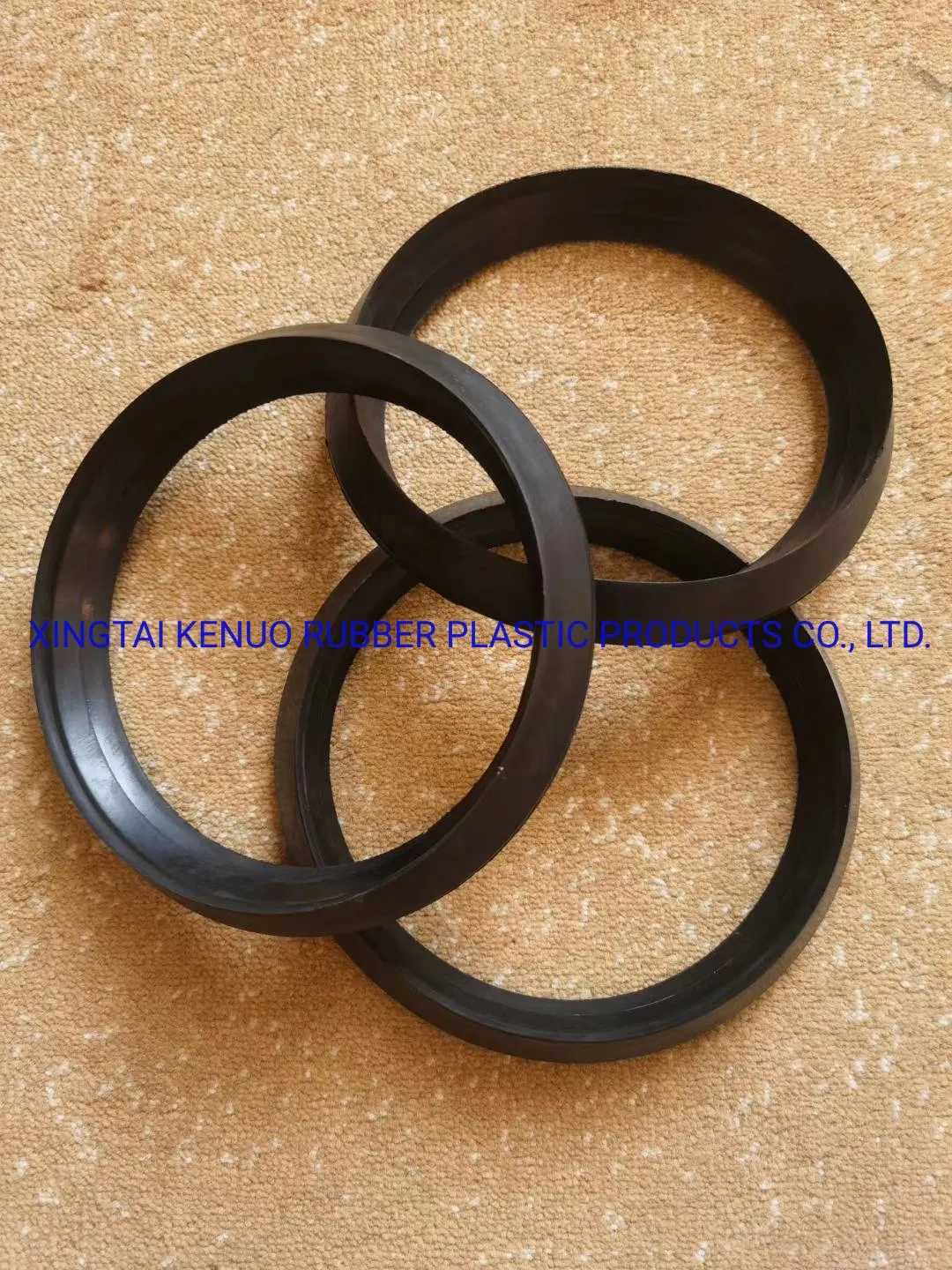
Material Specifications for Industrial PVC Belting Solutions
Suzhou Baoshida Trading Co., Ltd. delivers precision-engineered PVC belting solutions tailored to rigorous industrial demands. Our formulations integrate advanced elastomers to optimize performance across temperature extremes, chemical exposure, and mechanical stress. Below we detail three critical material options—Viton, Nitrile, and Silicone—each engineered for specific operational challenges in conveyor, sealing, and drive belt applications. Understanding these specifications ensures alignment with OEM requirements for longevity and efficiency.
Viton fluorocarbon rubber excels in environments exceeding 200°C and aggressive chemical exposure. Its molecular structure provides exceptional resistance to oils, fuels, acids, and ozone, making it ideal for automotive fuel systems, aerospace components, and semiconductor manufacturing. Standard formulations achieve tensile strengths of 12–18 MPa (ASTM D412) with elongation at break of 150–300%. Compression set values remain below 25% after 70 hours at 200°C (ASTM D395), critical for dynamic sealing integrity. While cost-intensive, Viton’s thermal stability up to 300°C justifies its use in mission-critical applications where failure is non-negotiable.
Nitrile rubber (NBR) remains the industry standard for oil and fuel resistance in cost-sensitive operations. With acrylonitrile content ranging from 33% to 50%, it balances resilience against aliphatic hydrocarbons, hydraulic fluids, and greases. Typical tensile strength spans 10–20 MPa, with elongation of 200–400%. Its operational range of -30°C to 120°C suits automotive transmission seals, printing press rollers, and hydraulic equipment. NBR formulations exhibit 15–25% compression set after 70 hours at 100°C, though vulnerability to ozone and polar solvents necessitates protective additives in outdoor applications.
Silicone rubber dominates high-purity and extreme-temperature scenarios requiring flexibility. With a thermal range of -60°C to 230°C, it maintains elasticity in cryogenic settings while resisting steam and sterilization processes. Tensile strength averages 6–10 MPa, with elongation exceeding 400%. Critical for food-grade (FDA 21 CFR 177.2600) and medical belting, silicone offers minimal extractables and superior resistance to oxidation. However, its lower abrasion resistance (Taber wear index >200 mg) requires reinforcement for high-friction conveyor systems.
The following comparative table summarizes key technical parameters under standardized test conditions:
| Property | Viton (FKM) | Nitrile (NBR) | Silicone (VMQ) |
|---|---|---|---|
| Temperature Range (°C) | -20 to 300 | -30 to 120 | -60 to 230 |
| Tensile Strength (MPa) | 12–18 | 10–20 | 6–10 |
| Elongation at Break (%) | 150–300 | 200–400 | 400–700 |
| Compression Set (70h) | <25% @ 200°C | 15–25% @ 100°C | 10–20% @ 150°C |
| Key Chemical Resistance | Fuels, acids, ozone | Oils, greases | Steam, oxygen |
| Typical Hardness (Shore A) | 70–90 | 50–90 | 40–80 |
| Primary Industrial Use | Aerospace, chemical | Automotive, hydraulics | Food, medical |
Suzhou Baoshida prioritizes material science rigor to ensure each PVC belting compound meets ISO 9001 and ASTM D2000 standards. Our OEM partnerships leverage this data-driven approach to eliminate field failures through precise material selection. Contact our engineering team for application-specific formulation validation.
Manufacturing Capabilities

Suzhou Baoshida Trading Co., Ltd. operates at the forefront of industrial rubber solutions, delivering precision-engineered PVC belting products tailored to the rigorous demands of modern manufacturing environments. Central to our technical excellence is a dedicated engineering team comprising five specialized mould engineers and two certified rubber formula engineers. This multidisciplinary team ensures that every product development cycle—from concept to production—is grounded in material science, mechanical design, and process optimization.
Our mould engineers possess extensive experience in designing and refining tooling systems for high-volume, high-precision PVC belting. Utilizing advanced CAD/CAM software and finite element analysis (FEA), they develop robust mould configurations that ensure dimensional accuracy, consistent surface finish, and extended service life. Each design is validated through iterative prototyping and real-world performance testing, ensuring compatibility with diverse industrial applications such as conveyor systems, packaging lines, and food processing equipment.
Complementing this design expertise are our two in-house rubber formula engineers, who specialize in polymer chemistry and compound formulation. These engineers are responsible for developing proprietary PVC blends that balance mechanical strength, thermal stability, chemical resistance, and flexibility under dynamic load conditions. By controlling the formulation process internally, we maintain strict quality control over raw material selection, plasticizer ratios, stabilizer systems, and filler integration. This capability enables us to customize belt performance characteristics—such as hardness (Shore A), tensile strength, and abrasion resistance—according to specific OEM requirements.
Our OEM manufacturing framework is built on a foundation of technical agility and collaborative engineering. We work directly with clients to interpret application-specific challenges, translating operational parameters into optimized belting solutions. Whether modifying pitch patterns, adjusting belt thickness, or integrating anti-static or oil-resistant compounds, our team supports full customization while maintaining compliance with international standards such as REACH, RoHS, and FDA (for food-grade variants).
The integration of mould and formula engineering under one technical roof allows for seamless iteration between material behavior and geometric design. This synergy reduces development lead times, enhances product reliability, and ensures consistent batch-to-batch repeatability.
Below is a representative specification table for a standard PVC conveyor belt formulation, illustrating the performance attributes achievable through our engineering capabilities.
| Property | Test Method | Typical Value |
|---|---|---|
| Hardness (Shore A) | ASTM D2240 | 70 ± 5 |
| Tensile Strength | ASTM D412 | ≥18 MPa |
| Elongation at Break | ASTM D412 | ≥300% |
| Tear Resistance | ASTM D624 | ≥80 kN/m |
| Operating Temperature Range | — | -10°C to +80°C |
| Flame Resistance | UL 94 | HB Rated |
| Specific Gravity | ASTM D792 | 1.35–1.45 |
Through the combined strength of our engineering team and advanced OEM infrastructure, Suzhou Baoshida delivers PVC belting solutions that meet the highest benchmarks in performance, durability, and technical customization.
Customization Process

PVC Belting Customization: Precision Engineering Workflow
At Suzhou Baoshida Trading Co., Ltd., our PVC belting customization process eliminates guesswork through a rigorously defined engineering sequence. We treat every client specification as a unique material science challenge, beginning with exhaustive drawing analysis. Our engineers dissect technical schematics to validate dimensional tolerances, joint configurations, and operational stress points against real-world application demands. Critical parameters such as pulley diameters, load distribution profiles, and environmental exposure conditions are cross-referenced with ISO 9001-certified material databases. This phase identifies potential failure modes early—such as edge delamination risks in high-torque transfers or thermal expansion mismatches in food processing lines—ensuring design feasibility before compound development commences.
Formulation engineering follows, where our rubber chemists translate mechanical requirements into proprietary PVC compound architectures. We prioritize plasticizer selection to balance flexibility and heat resistance, while reinforcing agents like barium-zinc stabilizers combat UV degradation in outdoor conveyors. Each formulation undergoes DuPont™ mechanical modeling to predict elongation-at-break and abrasion resistance under simulated service conditions. Crucially, we align compound chemistry with end-use compliance needs—whether FDA 21 CFR 177.2600 for food contact or UL 94 V-0 flammability ratings for electronics manufacturing.
Prototyping validates theoretical models through empirical testing. We produce 3–5 meter pilot belts using calibrated calendering equipment, then subject samples to our in-house ISO 18882 validation suite. Key metrics include:
| Critical Property | Test Standard | Typical Range (Custom PVC) | OEM Requirement |
|---|---|---|---|
| Tensile Strength (MPa) | ISO 37 | 18–25 | Client-Specified |
| Elongation at Break (%) | ISO 37 | 250–350 | Client-Specified |
| Shore A Hardness | ISO 4891 | 65–85 | Client-Specified |
| Heat Resistance (°C) | ISO 188 | 80–110 | Client-Specified |
| Oil Resistance (Vol. %) | ISO 1817 | <15 | Client-Specified |
Only when all parameters meet or exceed client thresholds do we authorize mass production. Our Suzhou facility employs real-time rheometer monitoring during extrusion to maintain ±0.5 Shore A hardness consistency. Every production batch undergoes traceability coding linked to raw material lot numbers and QC certificates, with final inspection verifying splice integrity via X-ray tomography. This closed-loop workflow—rooted in material science discipline—ensures your custom PVC belting performs identically in Year 5 as it did in prototype validation.
Suzhou Baoshida delivers not just belts, but engineered motion solutions where formulation precision directly translates to operational uptime. All processes adhere to IATF 16949 protocols, with technical documentation available for full supply chain auditability.
Contact Engineering Team
Contact Suzhou Baoshida for Advanced PVC Belting Solutions
At Suzhou Baoshida Trading Co., Ltd., we specialize in delivering high-performance industrial rubber solutions tailored to the rigorous demands of modern manufacturing. As a trusted partner in the global supply chain, our expertise in PVC belting spans material formulation, precision extrusion, and application-specific customization. Whether your operation requires conveyor belts for food processing, packaging lines, or material handling systems, our engineering team ensures optimal performance, durability, and compliance with international standards.
Our PVC belting products are engineered for resistance to abrasion, chemicals, oils, and temperature fluctuations, making them ideal for both hygienic and heavy-duty environments. We understand that each industrial application presents unique challenges—from belt tracking and tensile strength requirements to regulatory compliance in sensitive sectors such as pharmaceuticals and food & beverage. That is why we prioritize collaboration with our clients from concept to delivery, ensuring that every belt meets exact operational specifications.
To support this commitment, we maintain strict quality control protocols across our production network, utilizing state-of-the-art testing equipment to validate physical properties, dimensional accuracy, and long-term reliability. Our formulations are continuously refined to meet evolving industry needs, including low-odor, non-marking, and flame-retardant variants where required.
For technical inquiries, custom development projects, or volume procurement, we invite you to contact Mr. Boyce, our dedicated OEM Manager and Rubber Formula Engineer. With over 15 years of experience in polymer science and industrial belt applications, Mr. Boyce provides direct technical oversight on all client engagements, ensuring that every solution is grounded in scientific rigor and practical manufacturability.
Key PVC Belting Specifications
| Property | Standard Range | Test Method |
|---|---|---|
| Hardness (Shore A) | 65–85 | ASTM D2240 |
| Tensile Strength | ≥12 MPa | ASTM D412 |
| Elongation at Break | ≥250% | ASTM D412 |
| Operating Temperature | -10°C to +80°C | ISO 188 |
| Thickness Tolerance | ±0.3 mm | ISO 235 |
| Flame Resistance | UL94 HB (optional V-0) | UL 94 |
| FDA Compliance | Available upon request | FDA 21 CFR 177.2600 |
These values represent standard benchmarks; custom formulations can be developed to exceed these parameters based on application demands.
Partnering with Suzhou Baoshida means accessing a responsive, technically driven team focused on solving real-world manufacturing challenges. We support clients with sample provision, technical data sheets, and on-site consultation where applicable.
To discuss your PVC belting requirements or request a customized quote, please contact Mr. Boyce directly at [email protected]. We respond to all inquiries within 24 hours on business days and are prepared to initiate material testing, prototyping, or production scheduling upon confirmation. Let us help you enhance efficiency, reduce downtime, and optimize belt performance across your operations.
⚖️ O-Ring Weight Calculator
Estimate rubber O-ring weight (Approx).