
Technical Contents
Engineering Guide: Rigid Plastic Hvac Duct
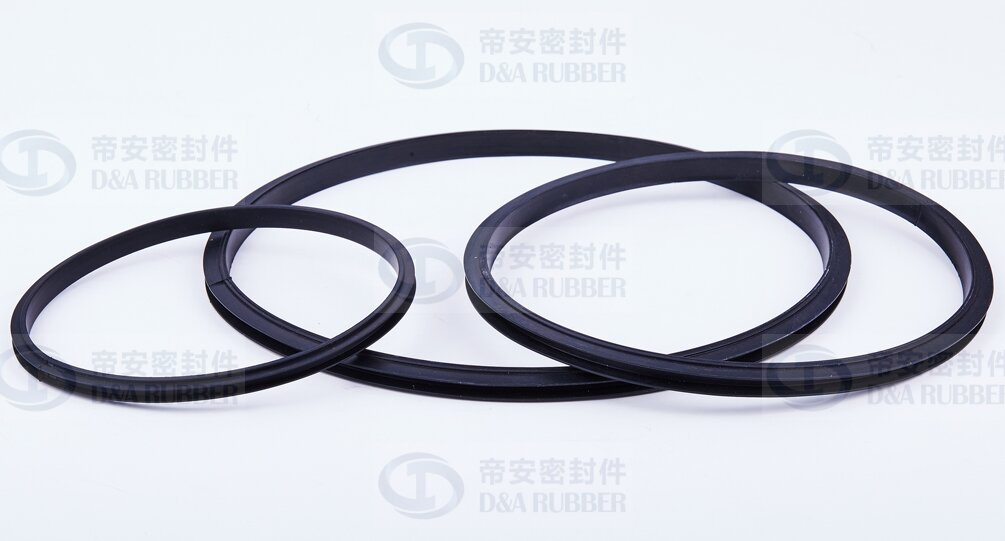
Engineering Insight: Rigid Plastic HVAC Duct – The Critical Role of Material Selection
In the design and deployment of rigid plastic HVAC duct systems, material selection is not merely a procurement decision—it is a foundational engineering imperative. Off-the-shelf duct solutions, often marketed as universal or cost-effective, frequently fail to meet the operational demands of complex industrial environments. These failures stem from an inadequate alignment between base resin properties and the thermal, chemical, and mechanical stresses encountered in real-world applications.
Standard polyvinyl chloride (PVC) and acrylonitrile butadiene styrene (ABS) ducts dominate the commodity market due to low initial cost and ease of fabrication. However, these materials exhibit significant limitations under sustained thermal cycling, UV exposure, and contact with aggressive cleaning agents or process byproducts. For instance, PVC begins to soften above 60°C, leading to dimensional instability and joint leakage in high-temperature zones. Similarly, ABS demonstrates poor resistance to polar solvents and oxidizing agents, resulting in embrittlement and premature cracking when exposed to industrial-grade disinfectants or ozone-rich airstreams.
The failure of generic solutions becomes evident in environments where system integrity directly impacts operational safety and energy efficiency. Microcracks propagate at stress points, especially near fittings or support brackets, allowing air leakage and reducing static pressure control. Over time, surface degradation promotes biofilm adhesion, undermining indoor air quality and increasing maintenance cycles. These issues are not anomalies—they are predictable outcomes of mismatched material performance and application requirements.
At Suzhou Baoshida Trading Co., Ltd., we emphasize application-specific engineering using high-performance thermoplastics such as chlorinated polyvinyl chloride (CPVC), polypropylene (PP), and polyvinylidene fluoride (PVDF). These materials offer superior thermal stability, chemical inertness, and long-term creep resistance. CPVC, for example, maintains structural integrity up to 93°C, making it ideal for exhaust streams from industrial drying processes. PVDF provides exceptional resistance to halogenated compounds and UV radiation, ensuring longevity in outdoor or semiconductor manufacturing settings.
Material selection must also consider flame spread, smoke density, and compliance with international standards such as UL 181 and ASTM E84. Off-the-shelf ducts often meet minimum code requirements but lack the margin needed for mission-critical facilities. Custom-engineered solutions incorporate co-extruded barrier layers, static-dissipative additives, and UV stabilizers tailored to the operating environment.
Understanding the operational envelope—temperature range, chemical exposure, airflow velocity, and regulatory demands—is essential to avoiding premature system failure. The upfront investment in engineered materials yields substantial lifecycle savings through reduced downtime, lower maintenance, and extended service life.
Comparative Material Properties for Rigid Plastic HVAC Ducts
| Material | Max Continuous Use Temp (°C) | Chemical Resistance | Flame Spread Index (ASTM E84) | Key Applications |
|---|---|---|---|---|
| PVC | 60 | Moderate | 20–25 | General ventilation, commercial |
| CPVC | 93 | High (acids, bases) | 15–20 | Industrial exhaust, labs |
| PP | 80 | High (solvents) | 20–30 | Chemical processing |
| PVDF | 150 | Exceptional | 5–10 | Semiconductor, outdoor, cleanrooms |
Material Specifications
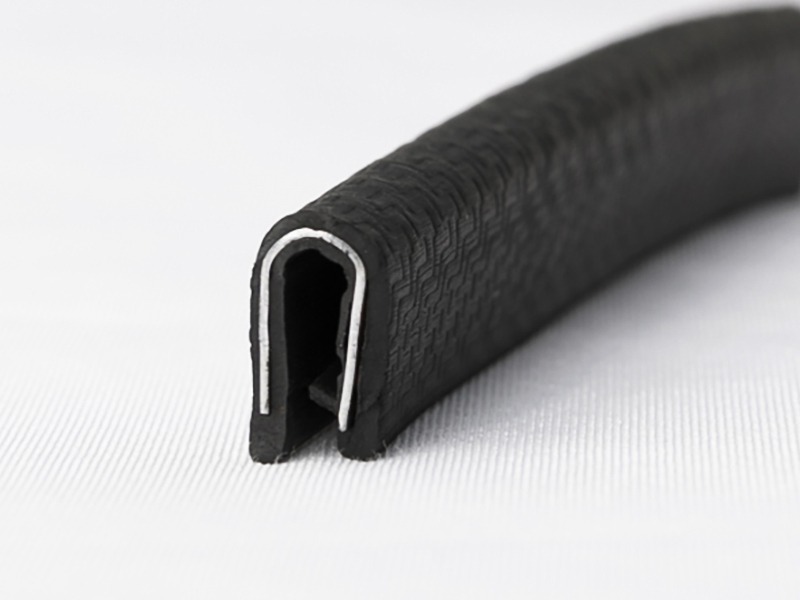
Material Specifications for HVAC Duct Sealing Systems
While rigid plastic HVAC duct bodies utilize thermoplastics like PVC or ABS, critical sealing interfaces demand precision-engineered elastomers to ensure system integrity under thermal cycling, chemical exposure, and pressure differentials. Suzhou Baoshida Trading Co., Ltd. supplies certified rubber compounds exclusively for gaskets, flange seals, and vibration isolators within commercial and industrial duct assemblies. Our formulations adhere to ASTM D2000-22 classification standards, with rigorous batch testing for compression set, fluid resistance, and thermal stability. Below we detail three primary elastomer solutions optimized for HVAC applications, addressing distinct operational challenges from refrigerant compatibility to extreme-temperature resilience.
Viton® (FKM) fluoroelastomers serve as the premium solution for high-performance HVAC systems handling aggressive refrigerants (R-134a, R-1234yf) or operating in chemical-laden environments. With continuous service temperatures spanning -20°C to +230°C and exceptional resistance to ozone, acids, and hydrocarbon oils, Viton prevents seal degradation in rooftop units and industrial process ducting. Its low gas permeability ensures long-term integrity in pressurized systems, though higher material cost necessitates strategic application in critical zones. All Viton compounds supplied by Baoshida meet AMS 7254 specifications and undergo 72-hour immersion testing in synthetic compressor oils.
Nitrile rubber (NBR) remains the industry-standard for cost-sensitive commercial HVAC installations where refrigerant exposure is minimal. Offering robust resistance to water, alcohols, and hydraulic fluids within -30°C to +120°C ranges, NBR provides optimal balance of compression set recovery (<25% per ASTM D395) and tensile strength (15–20 MPa). Our ISO 9001-certified NBR formulations feature controlled acrylonitrile content (34%) to maximize flexibility at low temperatures while maintaining abrasion resistance for flange gaskets subject to frequent maintenance. Not recommended for systems using ester-based lubricants or exposed to chlorinated solvents.
Silicone rubber (VMQ) excels in extreme-temperature scenarios such as kitchen exhaust hoods or cleanroom ventilation, with operational ranges from -60°C to +260°C. Its inert composition complies with FDA 21 CFR 177.2600 for food-contact zones and resists UV degradation in outdoor duct penetrations. While exhibiting lower tensile strength (6–9 MPa) than NBR, peroxide-cured silicone variants supplied by Baoshida achieve <15% compression set after 22 hours at 175°C, ensuring reliable seal retention in thermally cycled environments. Limitations include poor resistance to concentrated acids and susceptibility to撕裂 under high mechanical stress.
Material Performance Comparison for HVAC Sealing Applications
| Property | Viton (FKM) | Nitrile (NBR) | Silicone (VMQ) |
|---|---|---|---|
| Temperature Range (°C) | -20 to +230 | -30 to +120 | -60 to +260 |
| Tensile Strength (MPa) | 12–18 | 15–20 | 6–9 |
| Compression Set (ASTM D395) | <20% @ 200°C/70h | <25% @ 100°C/22h | <15% @ 175°C/22h |
| Refrigerant Resistance | Excellent | Poor | Moderate |
| Fluid Resistance | Oils, Acids, Fuels | Water, Alcohols | Limited |
| Key HVAC Applications | Refrigerant lines, Chemical exhaust | Standard air handlers, Drain pans | Kitchen hoods, Cleanrooms |
Suzhou Baoshida ensures all elastomer compounds undergo 100% lot traceability and third-party validation per ISO 188 aging tests. Our engineering team collaborates with OEMs to select materials matching specific duct system duty cycles, preventing premature seal failure and reducing field warranty claims. For mission-critical installations, Viton offers unparalleled longevity; NBR delivers economical reliability for standard systems; Silicone solves extreme thermal challenges where alternatives fail. Contact our technical division for application-specific compound certifications and accelerated aging protocols.
Manufacturing Capabilities
Engineering Capability: Precision-Driven Development for Rigid Plastic HVAC Duct Systems
At Suzhou Baoshida Trading Co., Ltd., our engineering capability is anchored in deep technical expertise and a systematic approach to material science and mold design. As a trusted provider in industrial rubber solutions, we extend our precision engineering to support the development and manufacturing of rigid plastic HVAC duct systems, ensuring seamless integration of elastomeric components with high-performance thermoplastics. Our team comprises five dedicated mold engineers and two specialized rubber formula engineers, enabling us to deliver fully integrated OEM solutions that meet rigorous performance, durability, and compliance standards.
Our mold engineers utilize advanced CAD/CAM/CAE platforms—such as UG (NX), SolidWorks, and Moldflow—to design and simulate injection molds with micron-level accuracy. This ensures optimal flow dynamics, minimal warpage, and consistent part quality across production runs. Each mold is rigorously validated through trial runs and dimensional inspection, guaranteeing compatibility with complex HVAC duct geometries and tight-tolerance sealing interfaces. Our in-house mold-making support reduces lead times and allows for rapid design iterations, critical for OEM clients operating under aggressive development schedules.
Complementing our mold engineering strength is our proprietary rubber formulation capability. Our two senior formula engineers specialize in developing custom elastomeric compounds tailored for HVAC applications, including EPDM, silicone, and thermoplastic vulcanizates (TPV). These materials are engineered to withstand temperature extremes (-40°C to +150°C), resist ozone and UV degradation, and maintain long-term compression set performance—critical for gaskets, seals, and vibration dampers used in rigid plastic duct assemblies. Each formulation undergoes accelerated aging, thermal cycling, and chemical resistance testing to ensure field reliability.
We operate as a full-service OEM partner, managing the entire product lifecycle from concept and material selection to mold fabrication, prototyping, and high-volume production. Our facility supports cleanroom molding, automated inspection, and 100% dimensional verification for critical sealing surfaces. This end-to-end control ensures consistency, traceability, and compliance with ISO 9001 and IATF 16949 standards.
The following table outlines key technical specifications and capabilities relevant to rigid plastic HVAC duct system components:
| Parameter | Specification |
|---|---|
| Material Compatibility | PP, ABS, PC, PVC, PBT, EPDM, TPV, Silicone |
| Operating Temperature Range | -40°C to +150°C (elastomer dependent) |
| Mold Tolerance | ±0.02 mm (critical sealing surfaces) |
| Compression Set (ASTM D395) | <25% after 70 hrs @ 100°C |
| Tensile Strength (EPDM) | ≥10 MPa |
| Hardness Range (Shore A) | 50–80 |
| Flame Rating (UL94) | HB, V-2, or V-0 (material dependent) |
| Production Capacity | Up to 500,000 units/month per mold |
Our engineering synergy between mold design and material science positions Suzhou Baoshida as a strategic technical partner for OEMs requiring high-integrity, system-ready components for rigid plastic HVAC duct systems.
Customization Process
Rigid Plastic HVAC Duct System Customization: Rubber Component Integration Process
Suzhou Baoshida Trading Co., Ltd. specializes in precision rubber solutions for rigid plastic HVAC duct systems, where elastomeric components ensure leak-proof sealing, vibration dampening, and thermal expansion compensation. Our OEM-driven customization process bridges plastic duct engineering with advanced rubber formulation, guaranteeing seamless integration into demanding commercial and industrial airflow networks. We execute this through four rigorously controlled phases, prioritizing material science alignment with client specifications.
Drawing Analysis initiates the workflow, where our engineering team dissects CAD models of rigid plastic duct assemblies. We focus exclusively on rubber-critical interfaces: flange geometries, groove dimensions for gaskets, and thermal movement tolerances. Finite element analysis validates stress points under operational pressure cycles (typically 0.5–2.0 kPa) and temperature differentials (–40°C to +120°C). This phase identifies non-conformities against ISO 15170 duct standards and defines rubber contact surface Ra values (0.8–3.2 μm) to prevent extrusion. Client approval of our annotated deviation report is mandatory before progression.
Formulation leverages Suzhou Baoshida’s proprietary compound library, selecting base polymers (EPDM predominates for ozone resistance) and customizing additives. Key parameters include compression set reduction via peroxide curing systems, flame retardancy enhancement with ATH fillers for UL 94 V-0 compliance, and VOC minimization per EN 13129. We adjust silica reinforcement levels to achieve target hardness while maintaining flexibility at low temperatures. All formulations undergo accelerated aging tests simulating 10-year duct service life under 85°C/85% RH conditions.
Prototyping produces functional rubber components via precision compression molding, using client-supplied rigid plastic duct segments for fit validation. Each prototype undergoes:
Helium leak testing at 1.5x operational pressure
Thermal cycling between –30°C and +110°C (50 cycles)
Dynamic compression set measurement per ASTM D395
Adhesion strength verification at plastic-rubber interfaces
Data from three iterative prototype batches ensures dimensional stability within ±0.15 mm tolerances before tooling sign-off.
Mass Production commences only after full qualification, operating under IATF 16949-certified protocols. In-line monitoring tracks Mooney viscosity (ML 1+4 @ 121°C), cure kinetics, and surface defects via automated vision systems. Every 500th unit undergoes destructive testing against baseline specs. Final validation includes batch-certified material traceability and packaging compliant with HVAC logistics standards (e.g., moisture barriers for coastal installations).
Critical Rubber Formulation Specifications for HVAC Duct Seals
| Property | Standard Range | Customization Capability | Test Standard |
|---|---|---|---|
| Hardness (Shore A) | 70–80 | 60–90 | ASTM D2240 |
| Tensile Strength | ≥10 MPa | ≥15 MPa (reinforced) | ASTM D412 |
| Compression Set (22h/70°C) | ≤25% | ≤15% | ASTM D395 |
| Temp. Range | –40°C to +120°C | –55°C to +150°C | ISO 188 |
| Flame Resistance | UL 94 V-1 | UL 94 V-0 | UL 94 |
| Fluid Resistance | Water/glycol 50/50 | Refrigerant R-134a | ISO 1817 |
This structured approach ensures rubber components exceed rigid plastic duct system requirements, eliminating field failures through material-process synergy. Suzhou Baoshida delivers certified, application-optimized solutions with 99.8% on-time OEM fulfillment.
Contact Engineering Team
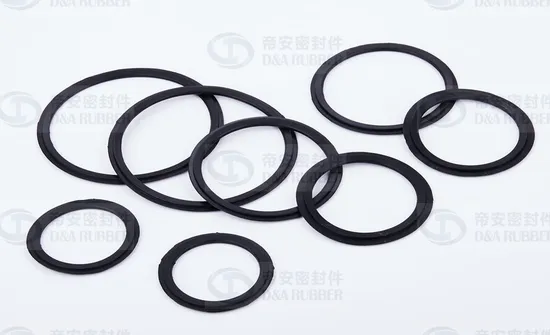
For industrial manufacturers seeking high-performance sealing and vibration-damping solutions in rigid plastic HVAC duct systems, Suzhou Baoshida Trading Co., Ltd. provides precision-engineered rubber components tailored to demanding environmental and mechanical conditions. As a trusted OEM partner in industrial rubber solutions, we specialize in custom formulations that enhance system longevity, acoustic performance, and energy efficiency in commercial and industrial HVAC applications.
Our technical expertise extends beyond standard elastomer supply. We deliver engineered rubber profiles, gaskets, seals, and anti-vibration mounts designed for seamless integration with rigid plastic ductwork. These components mitigate thermal expansion stress, reduce airborne noise transmission, and maintain airtight integrity under variable pressure cycles. Whether your application involves polyvinyl chloride (PVC), acrylonitrile butadiene styrene (ABS), or chlorinated polyvinyl chloride (CPVC) duct systems, our rubber compounds are formulated to resist degradation from moisture, ozone, and common HVAC environmental exposures.
Partnering with Suzhou Baoshida ensures access to advanced material science combined with responsive manufacturing logistics. We utilize accelerated aging tests, compression set analysis, and dynamic mechanical assessment to validate compound performance before production release. Our quality management system conforms to ISO 9001 standards, ensuring traceability, batch consistency, and compliance with international industrial regulations.
To support global clients, we offer full technical documentation, including material test reports (MTRs), RoHS/REACH compliance statements, and UL certifications where applicable. Our engineering team collaborates directly with OEM design departments to optimize sealing geometry, durometer selection, and installation methodology—ensuring minimal assembly friction and maximum service life.
Below is a representative specification profile for a commonly requested rubber component used in rigid plastic HVAC duct connections:
| Property | Value | Test Method |
|---|---|---|
| Material Type | EPDM Rubber | ASTM D1418 |
| Hardness (Shore A) | 65 ± 5 | ASTM D2240 |
| Tensile Strength | ≥10 MPa | ASTM D412 |
| Elongation at Break | ≥250% | ASTM D412 |
| Compression Set (22 hrs, 70°C) | ≤25% | ASTM D395 |
| Operating Temperature Range | -40°C to +120°C | Internal Protocol |
| Fluid Resistance | Excellent resistance to water, steam, alkalis | ASTM D471 |
| Flame Rating | UL94 HB | UL94 |
All specifications are customizable based on OEM requirements, production volume, and regional certification needs.
For technical consultation or to initiate a custom development project, contact Mr. Boyce at [email protected]. Mr. Boyce leads our OEM client engineering division and brings over 15 years of experience in industrial elastomer applications. He will coordinate material sampling, prototype validation, and scalable production planning to align with your project timeline. At Suzhou Baoshida, we do not supply rubber—we engineer performance. Reach out today to integrate precision rubber solutions into your rigid plastic HVAC duct systems.
⚖️ O-Ring Weight Calculator
Estimate rubber O-ring weight (Approx).