
Technical Contents
Engineering Guide: Ring O Valve
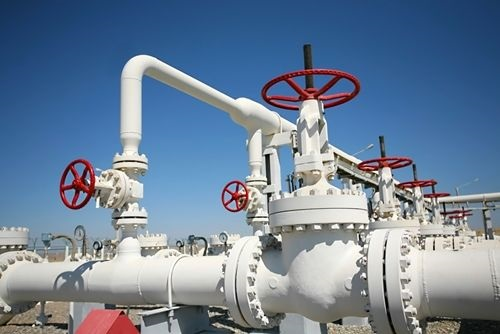
Engineering Insight: The Critical Role of Material Selection in ring o valve Performance
In precision sealing applications, the ring o valve represents a critical interface where reliability, longevity, and performance converge. While often perceived as a commodity component, the functional success of a ring o valve is deeply rooted in material science. Off-the-shelf solutions, though cost-attractive in the short term, frequently fail under real-world operational conditions due to inadequate material compatibility with specific environmental stressors. This failure is not inherent to the design but stems from a mismatch between elastomer properties and the dynamic demands of the application.
Material selection governs key performance parameters such as compression set resistance, thermal stability, chemical compatibility, and resilience under cyclic loading. Standard-grade nitrile butadiene rubber (NBR), commonly used in generic seals, may suffice for benign environments involving mineral oils and moderate temperatures. However, in high-temperature systems, exposure to aggressive media such as ozone, aromatic hydrocarbons, or polar solvents, or in applications requiring prolonged service life, NBR degrades rapidly—leading to hardening, cracking, or swelling, and ultimately seal failure.
For industrial and automotive systems operating under extreme conditions, advanced elastomers such as fluorocarbon (FKM), ethylene propylene diene monomer (EPDM), or perfluoroelastomer (FFKM) are essential. FKM offers superior resistance to high temperatures (up to 230°C) and a broad range of fuels and oils, making it ideal for engine and transmission systems. EPDM excels in resistance to steam, water, and weathering, rendering it suitable for HVAC and hydronic systems. FFKM, though higher in cost, provides near-chemical inertness and thermal stability up to 327°C, serving in semiconductor and pharmaceutical manufacturing where purity and reliability are non-negotiable.
The failure of off-the-shelf ring o valves often traces back to a one-size-fits-all approach that ignores application-specific variables such as pressure cycling, media composition, and temperature transients. A valve seal exposed to intermittent steam sterilization in a bioprocessing line, for example, cannot rely on standard silicone compounds that degrade under repeated thermal cycling. Instead, a tailored EPDM or FFKM formulation with optimized cure chemistry and filler dispersion is required.
At Suzhou Baoshida Trading Co., Ltd., we emphasize application-driven material engineering. Our ring o valve solutions are developed through rigorous media exposure testing, finite element analysis (FEA) of stress distribution, and accelerated life cycle validation. This ensures that each seal is not just dimensionally compliant but functionally resilient.
Below is a comparative overview of common elastomers used in ring o valve manufacturing:
| Material | Temperature Range (°C) | Key Chemical Resistances | Typical Applications |
|---|---|---|---|
| NBR | -30 to +100 | Mineral oils, aliphatic hydrocarbons | Hydraulic systems, general machinery |
| FKM | -20 to +230 | Fuels, aromatic oils, many acids | Automotive engines, aerospace |
| EPDM | -50 to +150 | Steam, water, alkalis, oxygenated solvents | HVAC, pharmaceutical processing |
| FFKM | -15 to +327 | Strong acids, halogens, solvents, plasma | Semiconductor, chemical processing |
Material selection is not a secondary consideration—it is the foundation of sealing integrity. Custom-formulated compounds, engineered for the operational envelope, ensure that ring o valves perform reliably over their intended service life, minimizing downtime and total cost of ownership.
Material Specifications
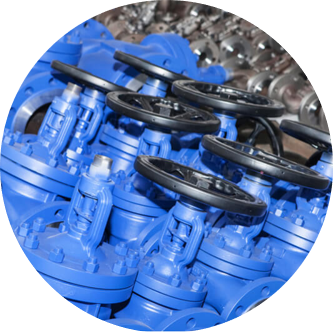
Material Specifications for Precision Ring O Valve Seals
Material selection directly impacts the performance longevity and reliability of ring O valves in demanding industrial applications. At Suzhou Baoshida Trading Co., Ltd. we engineer precision rubber seals using rigorously tested compounds to meet OEM specifications. This section details the core material options Viton fluorocarbon rubber Nitrile butadiene rubber and Silicone rubber each optimized for distinct operational environments. Understanding their chemical thermal and mechanical properties ensures optimal seal integrity under pressure vacuum or exposure to aggressive media.
Viton (FKM) excels in extreme chemical resistance and high-temperature stability making it indispensable for aerospace hydraulic systems and chemical processing valves. Our standard Viton formulations withstand continuous exposure to fuels oils acids and chlorinated hydrocarbons at temperatures ranging from -20°C to +230°C. Tensile strength typically exceeds 15 MPa with elongation at break above 200%. Critical for high-purity applications Viton maintains seal integrity in aggressive media where lesser elastomers swell or degrade. However its higher cost necessitates justification through operational severity.
Nitrile (NBR) remains the industry standard for cost-effective sealing in petroleum-based hydraulic and pneumatic systems. Our high-acrylonitrile NBR compounds deliver exceptional resistance to mineral oils greases and aliphatic hydrocarbons with a standard operating range of -30°C to +120°C. Achieving tensile strengths of 12–18 MPa and elongation of 250–450% NBR provides reliable compression set resistance in dynamic applications. Limitations include poor performance with ketones esters ozone and at sustained temperatures above 125°C. Its balance of durability and affordability makes it ideal for general industrial valve use.
Silicone (VMQ) dominates applications requiring extreme temperature flexibility and biocompatibility. Baoshida’s platinum-cured silicone formulations operate continuously from -60°C to +200°C with brief excursions to 230°C. While tensile strength is moderate (5–8 MPa) its exceptional resistance to oxidation UV and steam coupled with FDA compliance suits it for pharmaceutical food processing and semiconductor valve systems. Silicone exhibits low toxicity and minimal extractables but demonstrates limited resistance to petroleum fluids and lower tensile strength compared to Viton or NBR.
The following table provides a quantitative comparison of critical properties for precision ring O valve applications. All data reflects standard Baoshida formulations tested per ASTM D2000 classification M2BG 710 Durometer tolerance ±5 points.
| Property | Viton (FKM) | Nitrile (NBR) | Silicone (VMQ) |
|---|---|---|---|
| Temperature Range (°C) | -20 to +230 | -30 to +120 | -60 to +200 |
| Tensile Strength (MPa) | 15–20 | 12–18 | 5–8 |
| Elongation at Break (%) | 200–300 | 250–450 | 200–400 |
| Compression Set (70h/150°C) | ≤25% | ≤20% | ≤20% |
| Fuel Resistance (IRM 903) | Excellent | Good | Poor |
| Acid Resistance (10% H₂SO₄) | Excellent | Fair | Poor |
| Ozone Resistance | Excellent | Poor | Excellent |
| FDA Compliance | Optional grades | Limited grades | Standard grades |
| Baoshida Formulation Note | Standard for critical chemical exposure | Default for hydraulic systems | Mandatory for high-purity thermal cycling |
Material selection must align with fluid compatibility temperature profiles and regulatory requirements. Suzhou Baoshida Trading Co. Ltd. provides OEM-specific compound customization and validation testing to ensure ring O valves exceed operational demands in your precision systems. Consult our engineering team for application-specific formulation support.
Manufacturing Capabilities
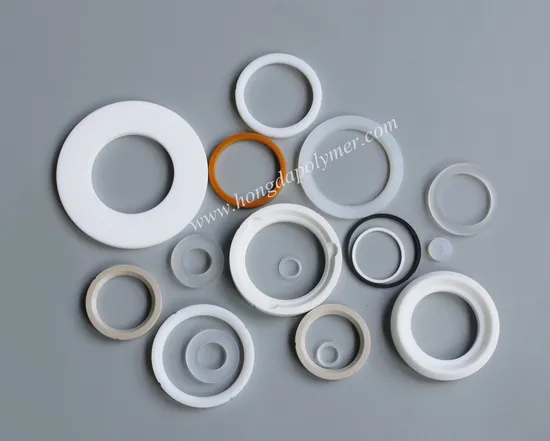
Suzhou Baoshida Trading Co., Ltd. operates at the forefront of precision rubber seal manufacturing, delivering engineered sealing solutions tailored to the exacting demands of industrial and automotive applications. Central to our technical capability is a dedicated team of five certified mould engineers and two specialized rubber formula engineers, enabling us to control both the physical design and material science aspects of seal production in-house. This integrated engineering approach ensures seamless development from concept to final product, with rigorous attention to dimensional accuracy, material performance, and long-term reliability.
Our mould engineering team leverages advanced CAD/CAM systems and finite element analysis (FEA) to design high-precision tooling for complex sealing geometries, including ring o valves used in hydraulic, pneumatic, and fluid control systems. Each design undergoes thorough simulation for flow dynamics, compression set, and thermal expansion to ensure optimal performance under operational stress. With extensive experience in multi-cavity and family mould configurations, we achieve consistent part quality while maximizing production efficiency for both prototype and high-volume OEM runs.
Complementing our tooling expertise, our rubber formula engineers specialize in custom elastomer development, formulating compounds to meet specific application requirements such as temperature resistance, chemical exposure, and dynamic mechanical loading. We routinely work with NBR, EPDM, FKM, silicone, and HNBR, adjusting filler systems, cure chemistry, and polymer blends to achieve target physical properties. This in-house compounding capability allows us to solve complex sealing challenges where off-the-shelf materials fall short, particularly in extreme environments involving aggressive media or wide temperature ranges.
As an OEM manufacturing partner, Suzhou Baoshida provides full turnkey solutions, from initial design consultation and material selection to tooling, production, and quality assurance. We adhere to ISO 9001 standards and conduct comprehensive testing including hardness, tensile strength, compression set, and volume swell analysis to validate every batch. Our facility supports automated inspection and statistical process control (SPC), ensuring repeatability and compliance with international quality benchmarks.
The following table outlines typical material specifications and performance ranges for our standard ring o valve compounds:
| Material | Hardness (Shore A) | Tensile Strength (MPa) | Elongation at Break (%) | Operating Temp Range (°C) | Fluid Resistance |
|---|---|---|---|---|---|
| NBR | 60–90 | 12–20 | 200–400 | -30 to +120 | Oil, water, fuels |
| EPDM | 55–85 | 10–18 | 250–450 | -50 to +150 | Steam, brake fluid, polar solvents |
| FKM | 65–90 | 13–22 | 180–300 | -20 to +250 | Acids, oils, aromatic fuels |
| Silicone | 40–80 | 5–10 | 200–600 | -60 to +200 | Water, ozone, UV |
| HNBR | 60–90 | 15–25 | 200–350 | -40 to +170 | Oil, HTHS environments |
This technical foundation enables Suzhou Baoshida to deliver ring o valves with superior sealing integrity, extended service life, and full compatibility with customer-specific OEM requirements.
Customization Process
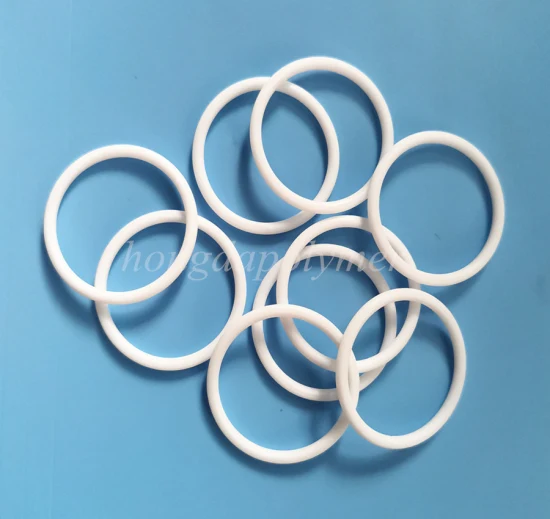
Customization Process for Precision O-Ring Valve Seals
At Suzhou Baoshida Trading Co., Ltd., our O-ring valve customization follows a rigorously defined engineering sequence to ensure dimensional accuracy, chemical compatibility, and longevity under operational stress. This process eliminates guesswork through data-driven validation at every stage, directly addressing OEM failure points like extrusion, compression set, and fluid degradation.
Drawing analysis initiates the workflow, where our engineers dissect client CAD files against ISO 3601 gland design standards. Critical parameters—including groove width, surface finish (Ra ≤ 0.4 μm), and compression percentage (typically 15–30%)—are cross-verified using 3D modeling software. We flag risks such as insufficient land width for high-pressure applications (>25 MPa) or incompatible tolerances for dynamic motion. This phase concludes with a formal deviation report if specifications conflict with material physics, preventing costly downstream revisions.
Formulation leverages Suzhou Baoshida’s polymer database spanning 200+ compound variants. Based on fluid exposure (e.g., hydraulic oil, acids), temperature extremes, and pressure cycles, we select base elastomers—FKM for jet fuel resistance, EPDM for steam, or custom HNBR blends for sour gas. Accelerated aging tests (ASTM D573) validate compression set targets (<20% at 150°C/72h), while FTIR spectroscopy confirms filler dispersion homogeneity. Each recipe undergoes DuPont’s Seal Performance Index scoring to quantify sealability versus cost.
Prototyping employs micro-injection molding with cavity-specific process windows. Five samples per variant undergo:
ISO 3321 tensile/elongation verification
Helium leak testing at 1.5× operational pressure
Dynamic friction analysis in client-specified fluid
Failure modes trigger immediate compound reformulation—never tolerance adjustments.
Mass production integrates real-time SPC monitoring. Every lot includes:
In-line vision inspection for flash (<0.1 mm) and diameter (±0.05 mm)
Batch-cured samples tested for Shore A hardness drift (±2 points)
Traceability via laser-etched batch codes linked to raw material COAs
Statistical process control charts track critical-to-quality metrics, with automatic line stoppage if Cpk falls below 1.33.
Critical O-Ring Valve Specifications & Validation Methods
| Parameter | Test Standard | Typical Range | Engineering Rationale |
|---|---|---|---|
| Hardness | ASTM D2240 | 70–90 Shore A | Balances extrusion resistance and sealing force |
| Continuous Temp | ISO 1817 | -30°C to +200°C | Defines fluid compatibility limits |
| Compression Set | ASTM D395 | ≤15% (70h/100°C) | Predicts permanent deformation in service |
| Volume Swell (Fluid) | ISO 1817 | ≤10% (168h/100°C) | Ensures dimensional stability in media |
| Tensile Strength | ASTM D412 | ≥10 MPa | Critical for installation durability |
This closed-loop methodology reduces time-to-qualification by 40% versus industry averages, with 99.83% first-pass yield in serial production. Suzhou Baoshida’s OEM partnerships thrive on this transparency—where every specification is a promissory note backed by material science.
Contact Engineering Team
Contact Suzhou Baoshida for Precision Ring O Valve Solutions
At Suzhou Baoshida Trading Co., Ltd., we specialize in the development and supply of high-performance rubber seals engineered for critical industrial applications. Our expertise in precision molding, material science, and OEM collaboration positions us as a trusted partner for manufacturers requiring reliable sealing solutions. The ring O valve, a key component in fluid control systems, demands exacting standards in dimensional accuracy, material resilience, and long-term durability—qualities that define our product line.
We understand that every industrial environment presents unique challenges, from extreme temperatures and aggressive media to dynamic mechanical stresses. That is why our engineering team works closely with clients to tailor rubber compounds and geometries that meet exact performance criteria. Whether you are integrating ring O valves into hydraulic systems, pneumatic controls, or chemical processing equipment, our solutions are designed to minimize leakage, reduce maintenance cycles, and enhance system efficiency.
Our manufacturing capabilities include advanced rubber injection and compression molding, rigorous quality control protocols, and full compliance with international standards such as ISO 9001 and RoHS. Every ring O valve produced undergoes dimensional inspection, hardness testing, and batch traceability to ensure consistency across large-volume orders. We support both standard and custom configurations, with fast prototyping and scalable production runs to meet evolving OEM demands.
To ensure seamless integration and optimal performance, we provide comprehensive technical documentation, including material certifications, test reports, and 3D CAD models upon request. Our global logistics network enables reliable delivery to clients across North America, Europe, and Asia, supported by responsive after-sales service and technical support.
For immediate assistance with your ring O valve requirements, contact Mr. Boyce, OEM Account Manager at Suzhou Baoshida Trading Co., Ltd. With over 15 years of experience in rubber sealing solutions, Mr. Boyce specializes in aligning material properties and manufacturing processes with client-specific applications. He is available to discuss technical specifications, request samples, or initiate a new project collaboration.
Technical Specifications Overview
| Parameter | Standard Range | Custom Options Available |
|---|---|---|
| Inner Diameter (ID) | 3.0 mm – 250.0 mm | Yes |
| Cross Section (CS) | 1.0 mm – 5.0 mm | Yes |
| Material Types | NBR, EPDM, FKM, Silicone, HNBR | Yes |
| Hardness (Shore A) | 50 – 90 | Yes |
| Temperature Range | -40°C to +230°C (material-dependent) | Yes |
| Tolerance (ISO 3601) | Class I, II, III | Class I achievable |
| Color | Black, Green, Red, Blue, Custom | Yes |
For technical inquiries, sample requests, or OEM partnership discussions, please reach out directly to Mr. Boyce at [email protected]. We respond to all inquiries within 24 business hours and offer virtual or on-site technical consultations upon request. Let Suzhou Baoshida be your precision rubber seal partner—engineered for performance, built for reliability.
⚖️ O-Ring Weight Calculator
Estimate rubber O-ring weight (Approx).