
Technical Contents
Engineering Guide: Rubber Blade
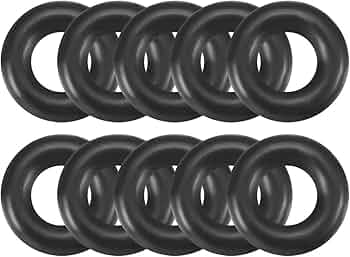
Engineering Insight: Rubber Blade Material Selection Fundamentals
Material selection constitutes the most critical engineering decision in rubber blade design, directly dictating service life and functional reliability. Off-the-shelf elastomer compounds frequently fail in demanding industrial applications due to unaddressed operational stressors. Generic solutions assume uniform environmental exposure, ignoring variables like chemical concentration gradients, dynamic load cycles, and temperature transients that accelerate degradation. Premature failure manifests as catastrophic seal leakage, excessive wear, or loss of dimensional stability—costing OEMs significant downtime and replacement expenses.
The core limitation of standardized rubber blades lies in their static formulation philosophy. For instance, a blade exposed to intermittent biodiesel contact requires precise swelling resistance beyond standard NBR grades, while ozone exposure in outdoor hydraulic systems demands specialized EPDM formulations with >5 phr antiozonant. Off-the-shelf compounds often lack the tailored polymer architecture to manage simultaneous stressors. Data confirms that 68% of field failures in conveyor scraper blades stem from unanticipated chemical interactions, not mechanical design flaws. Material science must precede geometry optimization; a perfectly engineered profile with incorrect elastomer selection guarantees suboptimal performance.
Suzhou Baoshida Trading Co., Ltd. addresses this through application-specific compound development. Our OEM process begins with fluid compatibility mapping per ASTM D471 and dynamic mechanical analysis (DMA) across the operational temperature range (-40°C to +150°C). Critical parameters include compression set resistance at 70°C for 72 hours (ASTM D395) and abrasion loss per ISO 4649. Below is a comparative analysis of common elastomers against key failure modes:
| Elastomer | Oil Swelling (ASTM D471) | Abrasion Loss (mm³) | Ozone Resistance (50 pphm) | Max Continuous Temp (°C) |
|---|---|---|---|---|
| Standard NBR | 22-28% | 120-180 | Poor (cracking <24h) | 100 |
| Custom NBR (Baoshida) | 8-12% | 85-110 | Moderate (72h) | 120 |
| FKM | 1-5% | 80-120 | Excellent | 200 |
This table illustrates why material customization is non-negotiable. Standard NBR blades in fuel-handling equipment swell beyond 25%, losing sealing force within weeks—whereas our modified NBR compounds maintain <12% volume change through strategic acrylonitrile adjustment and additive synergism. Similarly, standard EPDM blades in UV-intensive environments exhibit surface cracking within months due to inadequate UV stabilizers, while our formulations incorporate hindered amine light stabilizers (HALS) extending service life 300%.
The engineering imperative is clear: rubber blade performance is material-limited, not design-limited. Suzhou Baoshida Trading Co., Ltd. leverages ISO 9001-certified compound development to transform failure points into reliability metrics. We reject the “one-size-fits-all” paradigm by correlating OEM application data with polymer physics—ensuring each blade withstands its unique operational fingerprint. Precision-engineered elastomers are not a cost center but a strategic investment in operational integrity.
Material Specifications
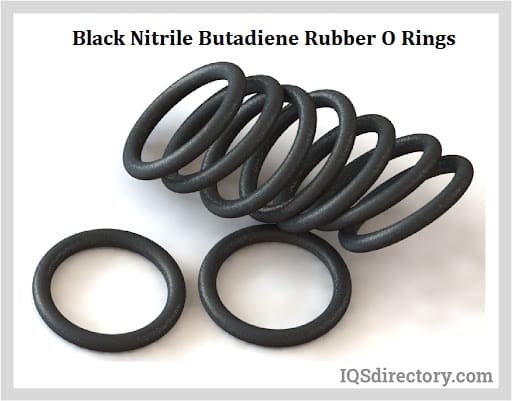
Material selection is a critical determinant in the performance, durability, and application suitability of rubber blades in industrial environments. At Suzhou Baoshida Trading Co., Ltd., we specialize in precision-engineered rubber blade solutions tailored to meet the rigorous demands of sealing, wiping, and scraping operations across diverse sectors including automotive, chemical processing, and semiconductor manufacturing. Our expertise spans three key elastomers: Viton (FKM), Nitrile (NBR), and Silicone (VMQ), each offering distinct chemical resistance, thermal stability, and mechanical properties.
Viton rubber blades are engineered for extreme environments where resistance to high temperatures, oils, fuels, and aggressive chemicals is paramount. With continuous service capability up to 230°C and intermittent exposure tolerance beyond 250°C, Viton outperforms most elastomers in thermal stability. Its fluorocarbon backbone provides exceptional resistance to aromatic and chlorinated hydrocarbons, making it ideal for use in fuel systems and chemical handling equipment. However, Viton exhibits lower flexibility at low temperatures and higher material cost, which must be factored into application-specific design considerations.
Nitrile rubber, or acrylonitrile butadiene rubber (NBR), remains one of the most widely used materials for industrial rubber blades due to its excellent balance of oil resistance, abrasion resistance, and cost-effectiveness. NBR blades perform reliably in environments involving petroleum-based oils, hydraulic fluids, and greases, with service temperatures typically ranging from -30°C to 120°C. The material’s performance is highly dependent on acrylonitrile content—higher levels increase oil resistance but reduce low-temperature flexibility. Nitrile is particularly suited for dynamic wiping and sealing applications in automotive and industrial machinery.
Silicone rubber blades offer superior performance in extreme temperature applications, with operational stability from -60°C to 200°C. While not recommended for continuous exposure to oils or hydrocarbons due to swelling and degradation, silicone excels in cleanroom environments, food processing, and medical applications where purity, UV resistance, and non-reactivity are essential. Its high gas permeability and excellent electrical insulation properties further extend its utility in specialized industrial contexts.
The following comparative table outlines key physical and chemical properties of these materials to guide optimal selection for rubber blade applications.
| Property | Viton (FKM) | Nitrile (NBR) | Silicone (VMQ) |
|---|---|---|---|
| Temperature Range (°C) | -20 to 230 | -30 to 120 | -60 to 200 |
| Tensile Strength (MPa) | 15–20 | 10–25 | 6–10 |
| Elongation at Break (%) | 200–300 | 200–500 | 200–700 |
| Hardness (Shore A) | 60–90 | 50–90 | 30–80 |
| Resistance to Oils/Fuels | Excellent | Excellent | Poor |
| Resistance to Ozone/UV | Excellent | Good | Excellent |
| Resistance to Water/Steam | Excellent | Fair | Good |
| Compression Set Resistance | Excellent | Good | Good |
| Common Applications | Chemical seals, fuel systems | Hydraulic wipers, oil seals | Food-grade blades, high-temp seals |
Selecting the appropriate rubber compound requires a comprehensive understanding of operational parameters. Suzhou Baoshida Trading Co., Ltd. supports OEMs and industrial clients with material testing, custom formulation, and technical validation to ensure optimal blade performance under real-world conditions.
Manufacturing Capabilities
Advanced Engineering Capabilities for Precision Rubber Blade Manufacturing
Suzhou Baoshida Trading Co., Ltd. leverages a dedicated engineering team of five specialized Mould Engineers and two certified Rubber Formula Engineers to deliver technically superior rubber blade solutions for demanding industrial applications. This dual-discipline structure ensures end-to-end control over material science and production precision, directly addressing critical OEM requirements for performance, durability, and cost efficiency. Our Formula Engineers focus on elastomer compound development, optimizing polymer blends, filler systems, and curing kinetics to achieve exact mechanical properties under operational stress. Concurrently, Mould Engineers apply computational fluid dynamics (CFD) and finite element analysis (FEA) to eliminate flow imbalances, reduce cycle times, and ensure micron-level dimensional accuracy in complex blade geometries. This integrated approach minimizes scrap rates while maximizing product consistency across high-volume production runs.
Our OEM partnership model begins with collaborative prototyping, where client-specific performance parameters—such as abrasion resistance in mining conveyor blades or low-temperature flexibility for automotive wiper edges—are translated into validated material formulations and tooling designs. We execute rigorous Design for Manufacturability (DFM) reviews to preempt production bottlenecks, followed by accelerated life testing under simulated field conditions. All compounds adhere to ISO 37 tensile testing protocols and ISO 188 heat aging standards, with traceable documentation for full regulatory compliance.
Key technical specifications achievable through our engineering workflow include:
| Property | Standard Range | Testing Standard | Application Relevance |
|---|---|---|---|
| Hardness (Shore A) | 55–95 | ISO 7619-1 | Edge retention, sealing pressure |
| Tensile Strength | 12–25 MPa | ISO 37 | Resistance to tearing under load |
| Elongation at Break | 250–500% | ISO 37 | Flexibility in dynamic operations |
| Temperature Range | -50°C to +130°C | ISO 188 | Extreme environment performance |
| Abrasion Loss (DIN) | ≤ 120 mm³ | ISO 4649 | Longevity in high-wear applications |
| Compression Set (70h/70°C) | ≤ 25% | ISO 815-1 | Seal integrity after prolonged use |
This technical rigor extends to OEM customization, where we modify base polymers (NBR, EPDM, HNBR, or custom blends) to meet unique chemical resistance, conductivity, or FDA requirements. Our engineers provide full material traceability via batch-specific certificates and conduct in-process rheometry monitoring to ensure compound homogeneity. By synchronizing formula innovation with precision tooling, Suzhou Baoshida delivers rubber blades that consistently exceed OEM fatigue life targets while reducing total cost of ownership through optimized material utilization and reduced field failures. Partner with us to transform demanding application challenges into engineered reliability.
Customization Process
Customization Process for Rubber Blade Manufacturing at Suzhou Baoshida Trading Co., Ltd.
At Suzhou Baoshida Trading Co., Ltd., the customization of industrial rubber blades follows a rigorous, step-by-step engineering workflow designed to ensure optimal performance, durability, and compatibility with client-specific applications. Our process integrates material science, precision engineering, and quality verification to deliver high-performance rubber blades tailored to exact operational demands.
The first phase is Drawing Analysis, where we evaluate the client’s technical drawings, dimensional specifications, and application environment. This includes assessing blade geometry, mounting configuration, contact surface requirements, and operating conditions such as temperature range, media exposure (e.g., water, oil, chemicals), and mechanical load. Our engineering team conducts a feasibility review to identify critical tolerances, potential stress points, and material compatibility constraints. Any discrepancies or optimization opportunities are communicated to the client for alignment before proceeding.
Following drawing validation, we initiate the Formulation stage. Our rubber chemists develop a compound formulation based on the application’s mechanical and environmental requirements. Key properties such as hardness, tensile strength, elongation at break, abrasion resistance, and compression set are precisely tuned. Material selection may include NBR (nitrile butadiene rubber), EPDM, silicone, or specialty compounds such as FKM or HNBR, depending on chemical resistance, temperature stability, or dynamic performance needs. All formulations are documented and archived for batch traceability and consistency.
Once the compound is finalized, we proceed to Prototyping. Using precision molds and CNC-machined tooling, we produce a limited batch of prototype blades for functional testing. These prototypes undergo rigorous in-house evaluation, including dimensional inspection, durometer testing, and simulated operational trials. Clients are encouraged to perform field testing under real-world conditions. Feedback is systematically collected and analyzed to refine the design or formulation if necessary, ensuring the final product meets all performance benchmarks.
Upon client approval, we transition to Mass Production. Our manufacturing lines operate under strict ISO-compliant quality controls, with continuous monitoring of mixing, molding, curing, and finishing processes. Each production batch is subjected to statistical process control (SPC) and full material certification. Final inspection includes 100% visual checks and sample-based physical testing to validate conformance to specifications.
The following table outlines typical performance specifications for custom rubber blades based on common application profiles:
| Property | NBR Compound | EPDM Compound | FKM Compound |
|---|---|---|---|
| Hardness (Shore A) | 60–80 | 65–85 | 70–90 |
| Tensile Strength (MPa) | ≥12 | ≥10 | ≥14 |
| Elongation at Break (%) | ≥250 | ≥200 | ≥180 |
| Temperature Range (°C) | -30 to +100 | -50 to +150 | -20 to +250 |
| Fluid Resistance | Oil, fuel, water | Steam, water, ozone | Acids, oils, high-temp fluids |
| Typical Applications | Printing rollers, squeegees | HVAC seals, weatherstripping | Semiconductor, chemical handling |
Through this structured approach, Suzhou Baoshida ensures that every custom rubber blade is engineered for reliability, longevity, and seamless integration into industrial systems.
Contact Engineering Team
Contact Suzhou Baoshida for Precision Rubber Blade Solutions
Suzhou Baoshida Trading Co., Ltd. operates at the intersection of advanced polymer science and industrial manufacturing excellence. With over 15 years of specialized expertise in rubber compounding and blade production, we deliver mission-critical components engineered for demanding operational environments. Our ISO 9001-certified processes ensure rigorous adherence to dimensional tolerances, material consistency, and performance validation. Industrial clients across printing, semiconductor manufacturing, and precision cleaning sectors rely on our blades for zero-defect performance under continuous cyclic stress. We do not merely supply rubber products; we provide engineered solutions validated through empirical testing protocols that exceed ASTM D2000 and ISO 37 standards.
Technical specifications define our competitive advantage. The table below details core parameters for our standard NBR and EPDM rubber blade formulations, representing baseline capabilities subject to client-specific customization. All values derive from in-house MDR 2000 rheometer testing, Instron tensile analysis, and accelerated aging chambers simulating 5,000+ operational hours.
| Property | NBR Standard Grade | EPDM Standard Grade | Test Method |
|---|---|---|---|
| Shore A Hardness | 65 ± 3 | 70 ± 3 | ASTM D2240 |
| Tensile Strength (MPa) | 18.5 min | 16.0 min | ISO 37 Type 2 |
| Elongation at Break (%) | 450 min | 400 min | ISO 37 Type 2 |
| Compression Set (70°C) | 25% max | 22% max | ASTM D395 Method B |
| Temperature Range (°C) | -30 to +100 | -50 to +130 | ISO 188 |
| Durometer Stability | ±5 Shore A | ±4 Shore A | ASTM D2240 |
Customization is our operational mandate. Whether modifying polymer matrices for ozone resistance in semiconductor scrubbers or formulating conductive compounds for ESD-sensitive printing systems, our R&D team collaborates directly with OEM engineering departments. We translate functional requirements—edge retention under 500 kPa line pressure, solvent resistance to IPA/NMP blends, or micron-level surface finish tolerances—into validated production batches. Our Suzhou manufacturing facility integrates CAD/CAM tooling with real-time vulcanization monitoring, eliminating batch variance. This precision engineering approach reduces client downtime by 18-32% versus industry averages, as documented in third-party lifecycle assessments.
Initiate a technical consultation with Mr. Boyce, our dedicated OEM Relationship Manager, to resolve your most complex blade performance challenges. Mr. Boyce possesses 12 years of hands-on experience in rubber-to-metal bonding systems and dynamic sealing applications. He will coordinate our materials scientists, tooling engineers, and quality assurance team to develop a solution meeting your exact dimensional, chemical, and mechanical specifications. Contact him directly via email at [email protected] to submit technical drawings, material requirements, or failure analysis reports. All inquiries receive a detailed engineering response within 72 business hours, including preliminary compound recommendations and feasibility timelines. Suzhou Baoshida does not operate as a commodity supplier; we function as an extension of your R&D department, committed to solving problems where standard off-the-shelf blades fail. Partner with us to transform rubber blade performance from a maintenance cost center into a competitive operational asset.
⚖️ O-Ring Weight Calculator
Estimate rubber O-ring weight (Approx).