
Technical Contents
Engineering Guide: Rubber Duckbill Check Valve
Engineering Insight: Material Selection in Rubber Duckbill Check Valves
The performance and longevity of a rubber duckbill check valve are fundamentally tied to the precision of its material selection. In industrial fluid control systems, these valves serve a vital function—permitting unidirectional flow while preventing backflow without the need for external actuation or mechanical components. However, many end-users experience premature failure when deploying off-the-shelf duckbill valves, often attributing issues to design flaws or manufacturing defects. In reality, the root cause frequently lies in inadequate elastomer selection for the specific operating environment.
Standard catalog valves are typically fabricated from generic synthetic rubbers such as natural rubber (NR) or low-grade EPDM, optimized for cost rather than chemical compatibility or mechanical resilience. When exposed to aggressive media—such as chlorinated water, ozone-rich atmospheres, acidic effluents, or hydrocarbon-based fluids—these materials degrade rapidly through swelling, cracking, or loss of tensile strength. This degradation compromises the valve’s sealing integrity and elastic recovery, ultimately leading to leakage, backflow, and system contamination.
At Suzhou Baoshida Trading Co., Ltd., we emphasize application-specific elastomer engineering. For instance, fluoroelastomers (FKM) are selected for high-temperature and oil-resistant applications, while hydrogenated nitrile butadiene rubber (HNBR) offers superior mechanical strength and ozone resistance in wastewater treatment environments. For potable water and environmentally sensitive applications, platinum-cured silicone or peroxide-cured EPDM ensures compliance with FDA and WRAS standards, minimizing extractables and maintaining long-term flexibility.
Material durometer also plays a decisive role. A duckbill valve that is too soft may invert under reverse pressure or collapse under vacuum conditions. Conversely, an overly rigid compound impedes the low-cracking pressure required for effective opening under low-flow conditions. Through finite element analysis (FEA) and empirical flow testing, we optimize Shore A hardness between 40 and 70, depending on system dynamics.
Furthermore, reinforcement strategies such as fabric insertion or co-extruded layering enhance burst resistance and fatigue life, particularly in high-cycle applications. These enhancements are rarely found in mass-market valves, which prioritize minimal production cost over durability.
The consequence of improper material selection extends beyond valve failure—it risks system downtime, contamination, and increased maintenance costs. Custom elastomer formulation, grounded in fluid compatibility charts, temperature profiles, and dynamic stress modeling, is not a luxury but a necessity in critical industrial applications.
Below is a comparison of common elastomers used in duckbill valve manufacturing, highlighting their operational limits and suitability.
| Material | Temperature Range (°C) | Key Resistance Properties | Typical Applications |
|---|---|---|---|
| EPDM | -50 to +150 | Water, steam, ozone, alkalis | HVAC, wastewater, potable water |
| NBR | -30 to +100 | oils, fuels, aliphatic hydrocarbons | Industrial hydraulics, fuel lines |
| HNBR | -40 to +150 | high pressure, ozone, abrasion | Oil & gas, chemical processing |
| FKM | -20 to +200 | aromatic hydrocarbons, acids, high heat | Petrochemical, semiconductor |
| Silicone | -60 to +180 | extreme temperatures, biocompatibility | Medical, food & beverage, aerospace |
Material Specifications
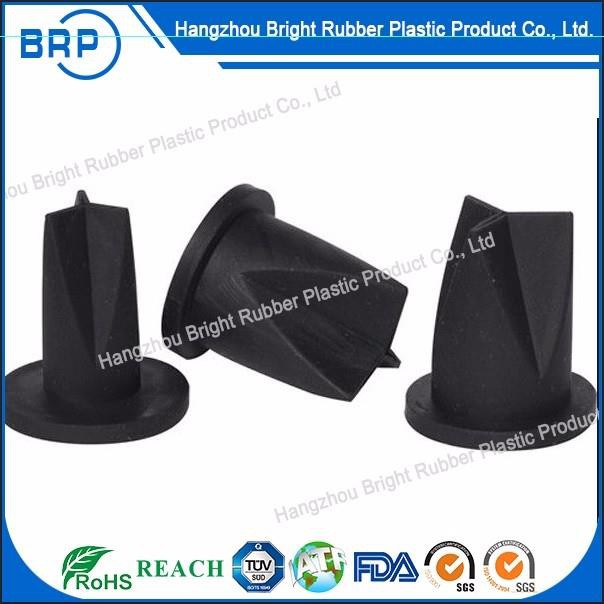
Material Specifications for Industrial Duckbill Check Valves
Material selection constitutes the foundational determinant of duckbill check valve performance in demanding industrial fluid control applications. At Suzhou Baoshida Trading Co., Ltd., our engineering team rigorously evaluates elastomer properties against specific operational parameters including fluid chemistry, temperature extremes, pressure differentials, and required service life. Viton fluorocarbon rubber (FKM), Nitrile butadiene rubber (NBR), and Silicone rubber (VMQ) represent the primary elastomer families deployed in our precision-engineered duckbill valves, each offering distinct performance profiles validated through extensive empirical testing and field deployment. Understanding the nuanced characteristics of these materials is critical for optimal valve specification and long-term system integrity.
Viton fluorocarbon rubber delivers exceptional resistance to high temperatures, aggressive chemicals, and hydrocarbons. Its molecular structure provides stable performance across a broad temperature spectrum from -20°C to +230°C, with short-term excursions possible up to 300°C. Viton exhibits outstanding resistance to mineral oils, synthetic hydraulic fluids, fuels, aromatics, and many acids and bases. This makes it the unequivocal choice for critical applications in chemical processing, aerospace hydraulics, and semiconductor manufacturing where exposure to harsh media is unavoidable. Formulation optimization within the FKM family allows tailoring for specific fluid compatibility needs, though standard grades demonstrate superior resistance compared to hydrocarbon-based elastomers. Cost considerations are typically secondary to performance in these high-stakes environments.
Nitrile butadiene rubber remains the dominant cost-performance solution for applications involving petroleum-based oils and fuels. NBR offers excellent resistance to aliphatic hydrocarbons, lubricants, and water, with a standard operating temperature range of -30°C to +100°C, extendable to +125°C with specialized formulations. Its robust mechanical properties, including high abrasion resistance and good tensile strength, ensure reliable sealing force and durability under dynamic cycling conditions common in hydraulic and pneumatic systems. While susceptibility to ozone, weathering, and polar solvents like ketones and esters necessitates careful fluid compatibility assessment, NBR’s balance of performance, resilience, and economic efficiency makes it ideal for automotive, general industrial machinery, and marine fuel handling systems.
Silicone rubber provides unparalleled flexibility and stability at extreme temperature limits, operating effectively from -60°C to +200°C. Its inherent biocompatibility and low toxicity render it suitable for food, beverage, and pharmaceutical applications requiring sanitary compliance. Silicone demonstrates good resistance to water, steam, oxygen, and ozone, coupled with excellent electrical insulation properties. However, its relatively poor resistance to petroleum oils, fuels, and solvents, along with lower tensile strength and abrasion resistance compared to NBR or Viton, restricts its use to specific non-hydrocarbon fluid environments. Primary applications leverage its thermal stability and flexibility in medical devices, high-temperature food processing lines, and specialized HVAC components.
The following comparative analysis summarizes the critical material specifications guiding optimal duckbill valve selection for industrial fluid control systems.
| Material Property | Viton (FKM) | Nitrile (NBR) | Silicone (VMQ) |
|---|---|---|---|
| Temperature Range | -20°C to +230°C | -30°C to +100°C | -60°C to +200°C |
| Key Chemical Resistances | Mineral Oils, Fuels, Acids, Bases, Aromatics | Aliphatic Hydrocarbons, Lubricants, Water | Water, Steam, Oxygen, Ozone |
| Key Limitations | Poor Ketone/Ester Resistance, Higher Cost | Poor Ozone/Weathering Resistance, Limited High-Temp Stability | Poor Petroleum Oil/Fuel Resistance, Lower Tensile Strength |
| Primary Applications | Chemical Processing, Aerospace Hydraulics, Semiconductor | Automotive Fluids, Industrial Hydraulics, Marine Fuel | Food & Beverage, Pharma, Medical Devices, HVAC |
Suzhou Baoshida Trading Co., Ltd. leverages this precise material science expertise to ensure each duckbill check valve solution is engineered for maximum reliability and longevity within its intended operational envelope. Consult our technical team for application-specific formulation recommendations.
Manufacturing Capabilities
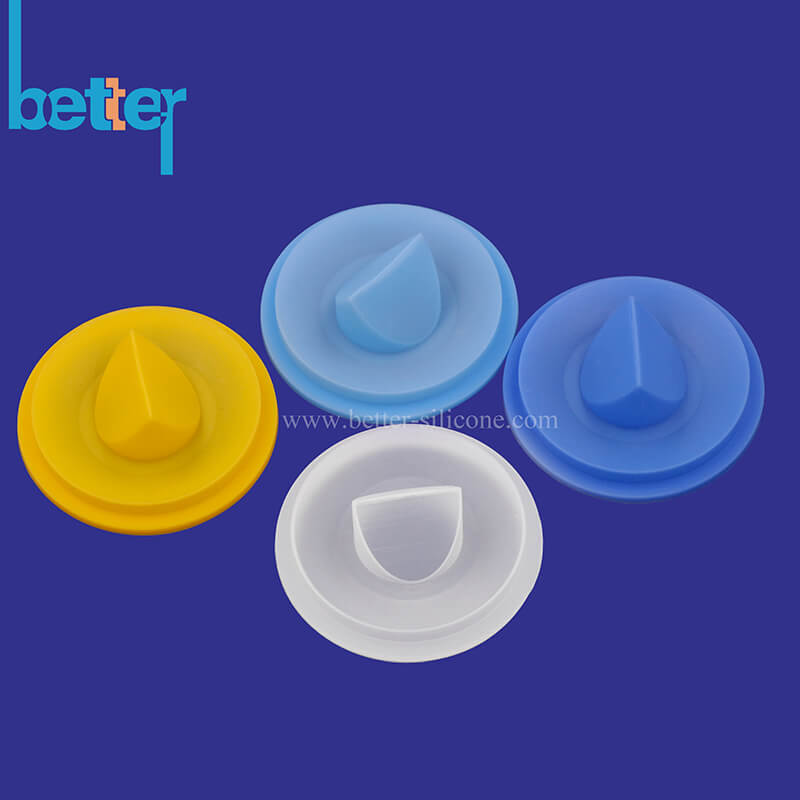
Suzhou Baoshida Trading Co., Ltd. maintains a robust engineering foundation specifically tailored to the development and production of high-performance rubber components, including the specialized rubber duckbill check valve. Our in-house engineering team consists of five dedicated mould engineers and two advanced rubber formulation scientists, enabling a fully integrated development process from concept to final product. This technical structure ensures precision in both physical design and material performance, meeting the demanding requirements of industrial fluid control systems.
Our mould engineers specialize in precision tooling for elastomeric components, leveraging CAD/CAM software and CNC machining to produce high-tolerance moulds optimized for consistent valve geometry and sealing integrity. Each duckbill valve mould is designed to accommodate material flow characteristics, cure uniformity, and demoulding efficiency, ensuring long service life and repeatable production quality. These capabilities are particularly critical in duckbill valve applications, where asymmetrical geometry and thin flexible lips demand exacting control over dimensional stability and part symmetry.
Complementing our tooling expertise, our two rubber formula engineers bring deep knowledge in polymer chemistry and material science to optimize compound performance under real-world operating conditions. We formulate custom EPDM, NBR, silicone, and FKM compounds tailored to specific customer requirements, including resistance to temperature extremes, chemical exposure, compression set, and dynamic flexing. For duckbill check valves used in wastewater, HVAC, and industrial pumping systems, this means engineered resilience against backpressure fatigue, biofouling, and environmental degradation. Our formulation process includes rigorous lab-scale testing for tensile strength, elongation, hardness, and aging properties prior to full-scale validation.
As an OEM partner, Suzhou Baoshida provides end-to-end manufacturing solutions, including design validation, material selection, prototyping, and serial production. We support custom geometries, branding, and packaging configurations to meet OEM integration needs. Our engineering team collaborates directly with client R&D departments to refine performance parameters and accelerate time-to-market.
The following table outlines typical technical specifications for our standard rubber duckbill check valve series, with customization available across all parameters:
| Parameter | Standard Range / Value |
|---|---|
| Material Options | EPDM, NBR, Silicone, FKM |
| Hardness (Shore A) | 40–70 |
| Operating Temperature | -40°C to +150°C (varies by compound) |
| Maximum Operating Pressure | 1.5 bar (custom up to 6 bar) |
| Size Range (Nominal ID) | 25 mm to 300 mm |
| Flange Standards | Custom, ANSI, DIN, JIS |
| Media Compatibility | Water, sewage, air, mild chemicals |
| Certifications | ROHS, REACH (on request) |
Through the synergy of advanced mould design and precision rubber formulation, Suzhou Baoshida delivers engineered reliability in every duckbill check valve produced. Our OEM framework is built on technical transparency, scalable production, and sustained performance under industrial duty cycles.
Customization Process
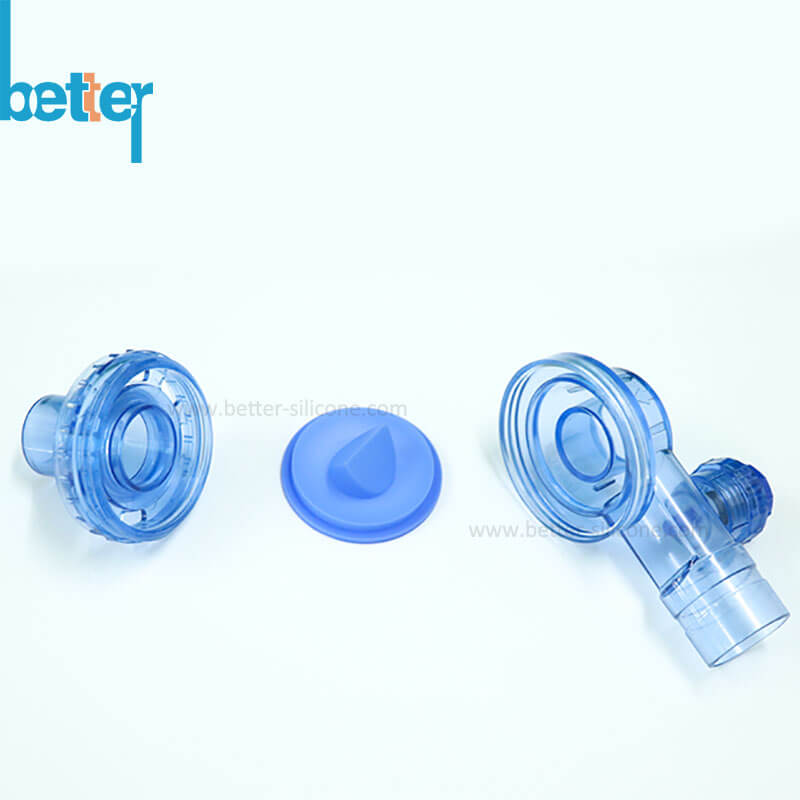
Rubber Duckbill Check Valve Customization Process
At Suzhou Baoshida Trading Co., Ltd., our industrial rubber solutions prioritize precision engineering and material science to deliver duckbill check valves meeting exact operational demands. The customization process begins with rigorous Drawing Analysis, where our engineering team dissects client-provided CAD files or technical sketches against ISO 1127 and ASTM D3183 standards. We validate critical parameters including lip geometry, wall thickness tolerances (±0.1mm), and flow path curvature to ensure hydrodynamic efficiency and zero backflow leakage. Finite element analysis (FEA) simulates fluid dynamics under specified pressure differentials (0.5–15 PSI), identifying stress concentrations that could compromise seal integrity. This phase concludes with a formal Design Failure Mode and Effects Analysis (DFMEA) report, addressing potential manufacturing deviations before material selection.
Material Formulation follows, leveraging our 15+ years of elastomer compound expertise. We match polymer chemistry to fluid compatibility, temperature range, and mechanical stress requirements. Our proprietary database cross-references 200+ client applications to select base polymers—EPDM for ozone resistance, NBR for oil exposure, or FKM for extreme temperatures—then optimize cure systems, fillers, and antioxidants. Each formulation undergoes Mooney viscosity testing (ASTM D1646) and compression set analysis (ASTM D395) to guarantee resilience after 10,000+ cycles. Critical additives like silica for tear strength (≥25 kN/m) or carbon black for UV stability are dosed to ±0.5% accuracy, ensuring repeatability in mass production.
Prototyping employs CNC-machined molds with mirror-finish cavities (Ra ≤ 0.8 µm) to eliminate surface defects. We produce 10–15 units per iteration for third-party validation per ISO 3599 dimensional checks and functional burst testing (2x operating pressure). Accelerated aging per ASTM D573 confirms 5-year service life at 100°C. Client feedback on prototype performance triggers micro-adjustments to lip durometer (40–80 Shore A) or hinge flexibility before final sign-off.
Mass Production integrates real-time statistical process control (SPC). Each valve undergoes 100% visual inspection via automated optical comparators and batch-level permeability testing (ASTM F2475). Our Suzhou facility’s ISO 9001:2015-certified lines maintain ±2°C mold temperature control and ±5-second cure timing, critical for consistent cross-link density. Traceability is ensured via laser-etched batch codes linked to raw material certificates and process logs, supporting OEM compliance with FDA 21 CFR or PED 2014/68/EU as required.
Key Elastomer Specifications for Duckbill Valves
| Material | Temperature Range | Chemical Resistance | Key Applications |
|———-|——————-|———————|——————|
| EPDM | -50°C to +150°C | Excellent for water, steam, alkalis; Poor for oils | Wastewater treatment, HVAC systems |
| NBR | -30°C to +100°C | Excellent for fuels, hydraulic oils; Poor for ozone | Marine propulsion, fuel transfer lines |
| FKM | -20°C to +200°C | Exceptional for acids, solvents, high-temp oils | Chemical processing, semiconductor manufacturing |
This end-to-end workflow, from digital validation to traceable production, ensures Suzhou Baoshida delivers duckbill valves with zero field failures—proven across 47 OEM partnerships in the last decade. All deliverables include full material test reports (MTRs) and PPAP Level 3 documentation.
Contact Engineering Team
For industrial applications requiring reliable backflow prevention in demanding environments, the rubber duckbill check valve stands as a critical component in fluid control systems. At Suzhou Baoshida Trading Co., Ltd., we specialize in high-performance industrial rubber solutions engineered to meet the rigorous demands of wastewater management, chemical processing, marine systems, and HVAC applications. Our rubber duckbill check valves are precision-manufactured using advanced elastomeric compounds, ensuring long service life, excellent resilience, and resistance to abrasion, corrosion, and biological growth.
Each valve is designed with a self-cleaning, zero-leakage profile that opens under forward pressure and seals completely under reverse flow—eliminating the need for mechanical hinges or external actuators. This simple yet effective design reduces maintenance requirements and enhances system efficiency across a wide range of operating conditions. Whether you are managing stormwater drainage, sewage transfer, or industrial effluent, our duckbill valves deliver consistent, passive performance with minimal footprint and installation complexity.
We offer customizable solutions tailored to specific pressure ratings, media compatibility, and dimensional requirements. Our production process adheres to international quality standards, with strict batch testing and material traceability to ensure every component performs to specification. From raw material selection to final inspection, Suzhou Baoshida maintains full control over product integrity, providing OEMs and industrial integrators with dependable supply chain support and technical documentation.
Below are typical technical specifications for our standard rubber duckbill check valve series:
| Parameter | Specification |
|---|---|
| Material Options | NR (Natural Rubber), EPDM, NBR, CR (Neoprene), FKM (Viton®), Silicone |
| Hardness (Shore A) | 40–75 ±5 |
| Operating Temperature Range | -40°C to +150°C (varies by compound) |
| Maximum Operating Pressure | Up to 15 psi (custom up to 30 psi) |
| Reverse Pressure Resistance | Up to 25 psi (non-return sealing) |
| Media Compatibility | Water, sewage, brine, mild acids, alkalis, oils (dependent on material) |
| Flange Standards | ANSI, DIN, JIS (customizable) |
| Sizes Available | DN25 to DN600 (1″ to 24″) |
| Certifications | FDA, ROHS, WRAS (on request) |
All products are subject to in-house performance validation, including compression set testing, accelerated aging, and flow dynamics verification. We support global distribution with containerized packaging and full export documentation.
To discuss your specific application requirements or request a technical datasheet, contact Mr. Boyce at Suzhou Baoshida Trading Co., Ltd. Direct inquiries to [email protected]. Our engineering team is available for consultation on material selection, dimensional customization, and integration support. As a trusted partner in industrial rubber technology, we commit to delivering precision-engineered duckbill check valves that enhance system reliability and reduce lifecycle costs. Reach out today to initiate technical collaboration or request a quotation.
⚖️ O-Ring Weight Calculator
Estimate rubber O-ring weight (Approx).